



Connect with us

Tech

Rhino’s John Coltrane 100 6LP Box Set Spans Five Labels. Is It Worth $150?

Published

on

John Coltrane would have turned 100 on September 23, 2026, and the jazz reissue industry was never going to let that milestone pass quietly. That is hardly a complaint. We have spent a fair amount of 2026 listening to Coltrane again at eCoustics, including Craft Recordings’ excellent new Original Jazz Classics edition of his 1957 Coltrane debut.

We also recently reviewed the all-analog mono reissue of A Love Supreme, another reminder that the strongest parts of Coltrane’s catalog continue to reward both new listeners and those of us who have bought some of these records more than once.

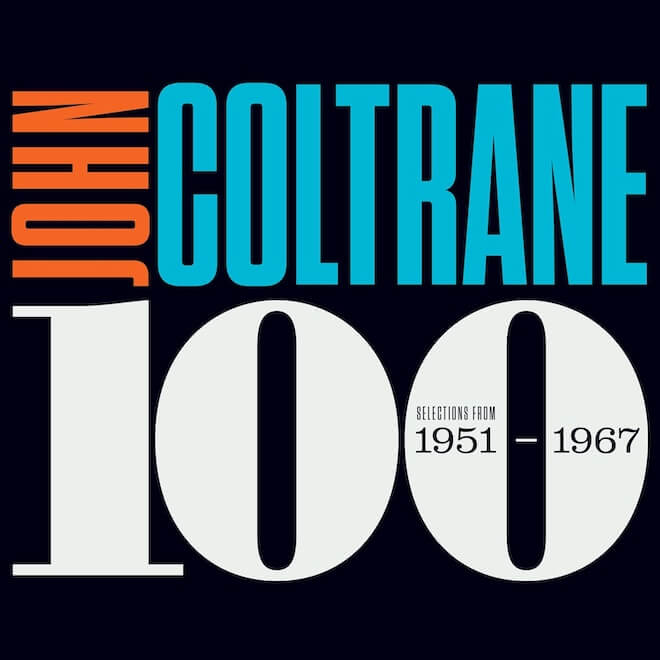
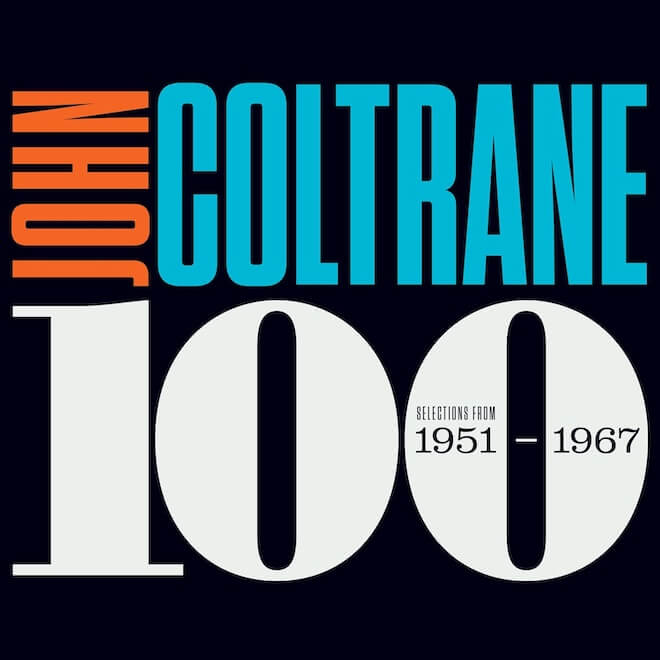
Rhino is taking a different approach with John Coltrane 100: Selections From 1951-1967, a six-LP retrospective arriving October 2 for $149.99. Rather than concentrating on one album or one label period, Rhino has licensed recordings from Prestige, Blue Note, Atlantic, Columbia, and Impulse! to follow Coltrane from his early work as a sideman through the increasingly adventurous music of his final years. That makes this far more useful than another greatest-hits collection.

Five Labels, One Very Short Career

One of the difficulties with building a Coltrane collection is that his recorded history is scattered across multiple catalogs. The early years intersect with Dizzy Gillespie, Miles Davis, Thelonious Monk, Paul Chambers, and Art Blakey before Coltrane’s recordings as a leader begin to dominate the story. From there, the collection moves through Blue TrainGiant StepsMy Favorite Things, the Impulse! period, collaborations with Duke Ellington and Johnny Hartman, live recordings, A Love Supreme, and finally material from Stellar Regions.

Advertisement

Rhino has sequenced the box chronologically, which is important because Coltrane’s musical evolution happened at a pace that still feels almost ridiculous. The first LP includes early recordings such as the Dizzy Gillespie Sextet’s “We Love To Boogie,” an alternate take of “Two Bass Hit” with the Miles Davis Quintet, Paul Chambers’ “John Paul Jones,” and Miles’ “If I Were A Bell.” By the second record, “Blue Train” has arrived. The middle of the collection moves through “Giant Steps,” “Naima,” “My Favorite Things,” “Equinox,” and a live version of “India,” before the final side reaches “My One And Only Love,” a live “Alabama,” “A Love Supreme, Pt. 1 – Acknowledgement,” and “Stellar Regions.”

The value here is not merely having those tracks in one box. It is hearing the changes in Coltrane’s playing, compositions, ensembles, and priorities unfold in sequence, something that is much harder to appreciate when the albums are purchased piecemeal and listened to without much historical context.

john-coltrane-100-1951-1967

There Are 37 Selections, Not 23

There is one odd discrepancy in Rhino’s own announcement. The company describes Coltrane 100 as having a 23-song track list, but the published six-LP sequence contains 37 selections across 12 sides. We counted them, and the published side timings add up to approximately 239 minutes, or just under four hours of music.

For anyone trying to determine exactly how much material is included, 37 selections is the number that actually matches Rhino’s own track listing. It is a strange error in the promotional copy, especially for a box built around a centennial celebration where collectors are going to look rather closely at what they are getting.

Technical Details

The six records are being pressed on 180-gram vinyl at Optimal Media in Germany, with mastering handled by Bernie Grundman. The set is packaged in a slipcase and includes a 12-page booklet featuring a new essay by Coltrane scholar Ben Ratliff. Rhino also says copies purchased through Rhino.com and participating independent retailers may include a limited 12 x 12 typography poster.

Advertisement

Those are all encouraging details, but there are still some important unanswered questions for audiophile buyers. Rhino does not describe the box as AAA, does not identify the source used for every selection, does not state whether the lacquers were cut directly from analog tape or from digital files, and does not specify the mono/stereo configuration of every track.

None of that means the records were poorly sourced or will not sound excellent. Bernie Grundman’s involvement carries considerable weight, but “remastered by Bernie Grundman” is not the same thing as documenting the entire mastering chain.

Advertisement. Scroll to continue reading.

That matters because Rhino has been much more explicit when it wants to promote an all-analog release. Its John Coltrane: 1960-1964 Mono Rhino High Fidelity six-LP box was advertised as AAA, cut by Kevin Gray from the original mono master tapes, and pressed at Optimal.

Advertisement

Craft has been equally clear with its new OJC edition of Coltrane, while Blue Note specifies the analog mastering chain for its Tone Poet edition of Blue Train. Until Rhino provides more information, Coltrane 100 should not be described as an all-analog release.

Is $150 a Good Deal?

For six 180-gram records, the price works out to almost exactly $25 per LP, which is hardly outrageous in 2026, particularly for a box involving five different label catalogs, Bernie Grundman mastering, Optimal pressings, and nearly four hours of music. The more useful comparison is what happens if you start buying major Coltrane albums individually.

Current audiophile-oriented editions of ColtraneBlue TrainGiant StepsMy Favorite Things, and A Love Supreme generally sell for around $39 each. Buying those five alone pushes the total close to $200, and you would still be missing the Miles Davis, Thelonious Monk, Dizzy Gillespie, Duke Ellington, Johnny Hartman, live Village Vanguard, and later Impulse! material represented here.

The comparison is not entirely one-sided, however. Those standalone purchases give you five complete albums, often with more elaborate jackets and, in several cases, clearly documented all-analog mastering. Coltrane 100 gives you selected performances from a much broader section of his career, and there are no previously unreleased recordings being promoted as part of the package. For anyone who already owns a substantial Coltrane collection, the question becomes less about price and more about duplication.

Advertisement

Who Is This For?

For someone beginning a serious Coltrane vinyl collection, the six-LP set makes a lot of sense because it provides almost four hours of music while connecting periods of his career that normally sit in different record bins and under different label logos. The chronological sequence also gives the listener context, which matters with Coltrane because the distance between his early sideman work and the final Impulse! recordings is enormous despite the relatively short span of time involved.

There is also a cheaper route. Rhino is releasing a two-LP Highlights From 1957-1964 edition for $34.98, featuring 11 selections including “Straight Street,” “Blue Train,” “Milestones,” “So What,” “Giant Steps,” “Naima,” “My Favorite Things,” “Equinox,” and “Acknowledgement.” A CD edition will sell for $14.98, which may be the smarter choice for listeners who want a well-selected introduction without committing to the full box.

Established collectors have a different calculation to make. If mastering provenance and owning complete albums are the priorities, I would still build the collection around the best OJC, Tone Poet, Acoustic Sounds Series, and Rhino High Fidelity releases. We have reviewed enough of those recently to know how good they can be, and the better individual editions offer a level of technical transparency that Rhino has not yet provided for this set.

john-coltrane-100-6lp-box-set

The Bottom Line

Rhino’s John Coltrane 100 succeeds because it approaches Coltrane as a career rather than a collection of famous songs. Bringing Prestige, Blue Note, Atlantic, Columbia, and Impulse! material together creates a coherent path from the early sideman sessions through one of the most important artistic transformations in jazz history, and at $149.99 the six-LP set is priced fairly for what it includes.

Advertisement

Newer Coltrane listeners may find it more useful than buying five or six famous albums first and trying to connect the historical dots afterward. Longtime collectors should study the track list more carefully, because if Blue TrainGiant StepsMy Favorite ThingsA Love Supreme, and the Prestige sessions are already sitting on your shelves in high-quality editions, much of the music will be familiar.

Where to buy: $149.99 at Amazon | Rhino Store

Source link

Advertisement
Continue Reading
Click to comment

You must be logged in to post a comment Login

Leave a Reply

Tech

The ascent of autonomous attacks and the race to contain them

Published

on

Cyber risk is now a board room issue, and we have seen clear examples of this in the UK. The 2025 Jaguar Land Rover attack left the carmaker with a £485m loss, swallowing up the £398m profit it had generated just 12 months before.

Production lines were halted for more than a month as the company shut down parts of its network, showing how quickly a cyber incident can affect business performance, operational continuity and the wider supply chain.

Ian Bowell

Virtual Chief Information Security Officer at Thrive.

Source link

Continue Reading

Tech

5 Of The Most Reliable Car Brands To Consider If You’re Buying A Used Pickup Truck

Published

on


While automakers have been trying to find ways to lower the price of cars, the skyrocketing price of new vehicles continues to be a major issue for buyers. The price of the average new vehicle overall now sits at around $50,000, and if you’re looking for a pickup truck, the numbers are even tougher to swallow. The full-size pickup truck, which regularly tops America’s sales charts, now has an average selling price of nearly $67,000, and some mid-size trucks aren’t too far behind. 

Needless to say, these high prices are pushing a lot of pickup buyers to the used market, whether they’re looking to save a bit of money by choosing a truck that’s just a few years old or save a lot by buying something much older that ideally still has lots of life left in it. That last part is important, because a used truck can still be a significant investment, and nobody wants to be plagued with issues or have to do lots of costly repairs.

Exactly which used truck model you should pick will depend on a lot of things — like whether you’re in the market for a full-size, mid-size, compact, or even electric truck model, for starters —  but if reliability is your goal, there are a few commonly recommended brands to start with.

Advertisement

Ford

If you’re shopping for a new or used pickup truck, Ford might have more options than any other brand. It makes a pickup for every type of buyer, from the compact and fuel-efficient Ford Maverick to the best-selling F-150 to the beefy Super Duty line. There’s even the all-electric Ford F-150 Lightning.

Advertisement

When it comes to the used pickup market, the mid-sized Ford Ranger is ranked highly by Car & Driver, as is the Ford Maverick, which tops the compact class (where it admittedly doesn’t have many direct rivals). U.S. News & World Report also ranks the 2020 model-year Ranger as the most reliable used pickup truck, while giving high marks to the Maverick as well. Looking at the larger Super Duty Trucks, the Ford F-450 is ranked by iSeeCars as the third longest-lasting truck on the market, with a 28.5% chance of lasting over 250,000 miles, with other Super Duty models ranked closely behind.

However, you’ll probably also want to consider depreciation in your purchase decision. Before you settle on a used Maverick, Ranger, or another Ford truck model, remember that many of these trucks are known for having excellent resale value, and might not offer the large up-front savings you were expecting. You might save a few bucks, but you’ll also want to make sure you aren’t overpaying for a used truck compared to what you can buy a new one for. 

Advertisement

Toyota

Toyota’s inclusion in this group should come as no surprise. The brand’s got a reputation for building reliable vehicles, and when it comes to its trucks, the data largely backs that up. On the iSeeCars rankings of longest-lasting pickups, both the mid-size Toyota Tacoma and full-size Toyota Tundra are in the top five, with both models twice as likely to make it to 250,000 miles compared to the average truck.

Used Toyota trucks get high marks elsewhere too, with the 2022 Tacoma earning JD Power’s Dependability Award in the mid-size pickup segment, and the 2020 model year Tundra getting an Editor’s Choice Award in U.S. News & World Report’s ranking of the most reliable used pickup trucks. Notably, though, if you’re looking for a used Tundra with high reliability, you may want to avoid the 2022 and newer models, which have been plagued with ongoing, and at times significant, engine issues. 

Not surprisingly, that reputation for reliability coincides with high Toyota truck prices on the used market, and that might draw you toward examples with more miles on them. While having high mileage certainly isn’t a dealbreaker on a used Tacoma or Tundra, there are definitely some important things to consider before buying a high-mileage Toyota.

Advertisement

Ram

While Stellantis vehicles have suffered from fairly significant quality issues recently, used Ram trucks generally perform pretty well when it comes to reliability. In the ultra-popular half-ton truck segment, Car & Driver ranks the Ram 1500 as its top pick among used models, with the 2022, 2023, and 2024 models all earning high marks.

U.S. News & World Report placed the 2023 model year Ram 1500 at number five on its list of most reliable used pickups, and the newer model Ram 1500, which we greatly enjoyed driving, has also scored very well in JD Power’s Vehicle Dependability Study. The hope is, of course, that the Ram’s record of initial dependability will continue as the trucks age.

Advertisement

The heavier-duty Ram 2500 and Ram 3500 might perform even better when it comes to long-term reliability, with both of those models ranking in the top 10 of trucks most likely to last 250,000 miles. While high resale value on a vehicle isn’t always directly proportional to having excellent reliability, it’s generally a good sign, and iSeeCars ranks the Ram 1500 second in resale among full-size trucks, while the larger Ram 3500 does even better, beating out all other trucks in the heavy-duty pickup category.

Advertisement

Honda

Honda might not be heavily associated with the pickup market, as it only makes one truck model. However, the current, second-generation unibody Honda Ridgeline has been around since the 2016 model year, and it has earned high marks for reliability. Long-term road tests have shown the Ridgeline to be without major issues, and the truck is also rated above the class average in its likelihood of reaching the 250,000 mark.

When looking at reliability scores, the Ridgeline gets high marks from JD Power, and notably, even though it’s starting to show its age in some ways, the Honda was chosen by Consumer Reports as the top pick in the mid-size truck category. Indeed, despite being a unibody pickup rather than a more rugged body-on-frame model, the Ridgeline’s reliability has always been among the best in the mid-size segment. 

The Honda Ridgeline occupies a unique place in the truck market, and if your needs include towing heavy trailers, carrying huge payloads, or venturing far off the beaten path, the more car-like Honda might not be a good fit. However, if the Ridgeline’s capabilities sound good to you, it should make for a reliable, versatile, and easy-to-live-with pickup for the everyday grind.

Advertisement

Chevy and GMC

While Chevrolet and GMC are two separate brands, we’ve listed them together because their trucks are nearly identical mechanically and should deliver the same overall record of reliability. These GM offerings range from the mid-size Chevy Colorado and GMC Canyon up to the heavy-duty Chevy Silverado and GMC Sierra pickup models. 

JD Power gave awards to both the 2022 Chevy Silverado 1500 and 2022 Silverado 2500 in its most recent dependability rankings , and JD Power’s reliability scores for the Silverado’s GMC twins are equally strong. Likewise, the 2022 Silverado 1500 and 2020 GMC Sierra 1500 are both ranked among the top 10 most reliable used pickups by U.S. News & World Report. 

When it comes to long-term, high-mileage reliability, GM’s heavy-duty pickups do especially well. The 2500 and 3500 variants of both the Chevy Silverado HD and GMC Sierra HD are all ranked by iSeeCars among the trucks most likely to last beyond 250,000 miles. Also not to be left out are the smaller, cheaper Chevy Colorado and GMC Canyon pickups, which also earn high reliability scores tp help make them solid recommendations on the used truck market.

Advertisement

Methodology

The brands on this list were chosen based on reliability scores, data, and used-vehicle recommendations from a variety of sources, including iSeeCars, JD Power, Consumer Reports, Car & Driver, and U.S. News & World Report. In some cases, like with the Honda Ridgeline, current model-year reliability and quality ratings were considered, as that vehicle has carried over for several years without major mechanical changes.

Advertisement


Source link

Advertisement
Continue Reading

Tech

Canonical backs quest to translate mountains of C into safe Rust with AI

Published

on

SOFTWARE

Bungs banknotes at Bristol boffins to find out if mature code survives the machine

Canonical’s fondness for AI and Rust is no secret. Now it is co-funding a three-year PhD project investigating whether the former can translate large C codebases into the latter.

Engineering veep Jon Seager announced the investment on Ubuntu’s Discourse forum. The PhD project will be conducted at the University of Bristol’s Programming Languages Research Group.

Advertisement

So don’t panic. This is not an announcement that Canonical will turn the bots loose to rewrite all of Ubuntu as Rusty slop. (For a start, nobody can afford that many tokens.) Instead of burning dosh on bots, Canonical will pay a proto-boffin to spend several years investigating whether the idea can be made to work. That is welcome. In an industry overflowing with hype, the project should produce evidence about whether this approach can be useful.

The Reg FOSS desk interviewed Seager last year, and he struck us as sensible and pragmatic, but not lacking in boldness. Under his guidance, Ubuntu 25.10 adopted a Rust implementation of sudo as well as the entirely separate Rust-based uutils coreutils. The sudo command did hit some problems but they were quickly fixed.

Both uutils and sudo-rs were pre-existing independent projects, however. They are human-written replacements designed to reproduce the functionality of existing tools using entirely new codebases. Certainly, those human developers may have studied the original source code – that’s one of the good things about FOSS, after all – but these are new implementations.

The new project will investigate whether an LLM can take programs “comprising hundreds of thousands of lines of C” and decompose them into smaller components before using an LLM to rewrite those components in “safe, behaviourally correct and maintainable Rust.”

Advertisement

Seager’s post runs to just over 1,000 words and addresses several objections that sprang to mind. For instance, existing tools attempt something similar, but their results leave much to be desired.

As Seager puts it: “Traditional source-to-source translators can process substantial amounts of code, but often preserve the structure of the C too literally. The result may compile as Rust, but still rely heavily on unsafe operations, retain awkward C idioms and require significant manual work before it resembles code a Rust maintainer would choose to own.”

We suggest reading the post before attacking the idea. It sets out a relatively detailed and measured plan. One admirable aspect is its acknowledgment that mature codebases contain knowledge their programmers never consciously documented. Years of fixes and patches encode responses to real-world corner cases that nobody anticipated at the outset. This is the key argument of Joel Spolsky’s 2000 essay: Things You Should Never Do, Part I. Such knowledge is rarely documented outside the code itself or, if you’re lucky, a few comments. A machine translation might preserve some of that behavior, while a clean human rewrite based on the original design could miss it.

The proposal names two specific tools that the effort intends to examine: snap-confine and AppArmor We may be excessively cynical, but openSUSE 16 replaced AppArmor with SELinux last year. Outside the Ubuntu family, enterprise Linux has largely consolidated around the more complex SELinux, although Debian and several smaller distributions continue to support AppArmor. A hardened Rust implementation could therefore benefit AppArmor’s remaining users. Snap, of course, has a narrower constituency still.

Advertisement

This is not a solo Canonical project. The company is co-sponsoring it with UK Research and Innovation, a public body sponsored by the UK’s Department for Business, Innovation, Science and Trade. Seager will oversee the project alongside the University of Bristol’s Professor Meng Wang and Dr Cristina David.

Three years is a conventional duration for a UK PhD – provided it does not overrun, of course. It’s not as if someone could go into a PhD program in 1998 and then get two decades’ worth of comic strips out of it or something.

The Reg FOSS desk remains staunchly skeptical of generative AI outside the narrow domain of translation between human languages. As such, we have grave doubts that this will prove viable. We suspect the difficult part will not be translating the code, but decomposing a large codebase into smaller components that bots can digest. The challenge recalls the long-running effort to divide arbitrary algorithms automatically into tasks that can be farmed out to parallel processes. Decades of research have produced useful techniques for particular cases, but no general solution. It may yet prove to be an incomputable problem, like the Halting Problem – and as that article says, if it could be solved, it would lead to solutions to the Busy Beaver function or even Goldbach’s conjecture.

As with much of generative AI, more evidence is needed, and producing it is exactly what a PhD research project should do. We salute Canonical for putting real money behind the question and would be delighted to have our skepticism proved wrong. As we speculated in 2024, automatic translation between programming languages could become immensely valuable for improving software reliability – not by fixing problems automatically, but by exposing previously unknown errors. ®

Advertisement

Source link

Continue Reading

Tech

Auto Enthusiast Recreates the Mazda Suitcase Car from the 90s

Published

on

DIY Mazda Suitcase Car
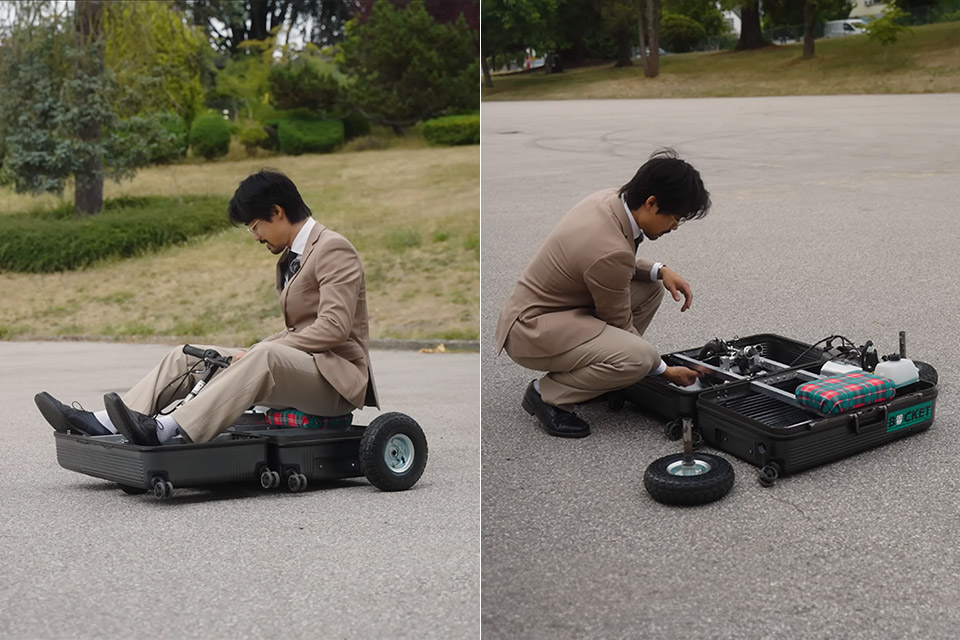
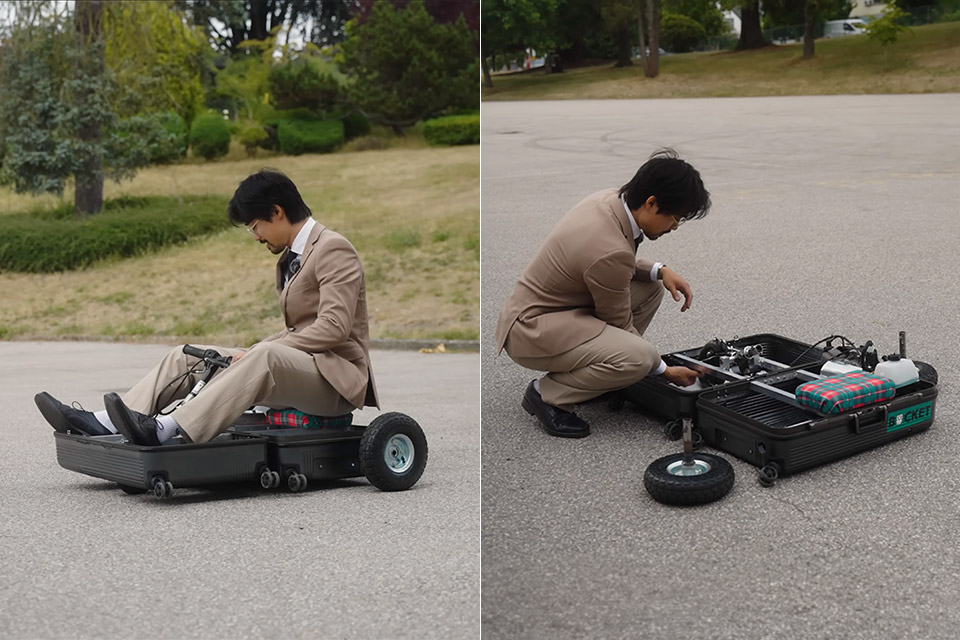
In 1991, seven Mazda transmission research engineers combined a hard-shell Samsonite and a pocket bike to create something no airline would ever allow. Their submission for the company’s Fantasyard contest was a three-wheeled motorcycle that folded into luggage, weighed seventy-one pounds, and could reach speeds of nearly nineteen miles per hour with a 33.6-cubic-centimeter two-stroke engine. Assembly takes approximately one minute. The thing was highlighted on Oprah and at major auto shows, but just one original remains today.


Years later, the team behind the YouTube channel Bucket decided it was time to take on the challenge. They began gathering information about the prototype, tracking down its caretaker to get the lowdown on measurements and mechanics. Contact was eventually made, and with the owner’s OK, the crew took the necessary measurements and hit the ground running to try to build a working replica. They’ve collaborated with ArcCaptain to arrange welding equipment and make metalwork possible.

DIY Mazda Suitcase Car
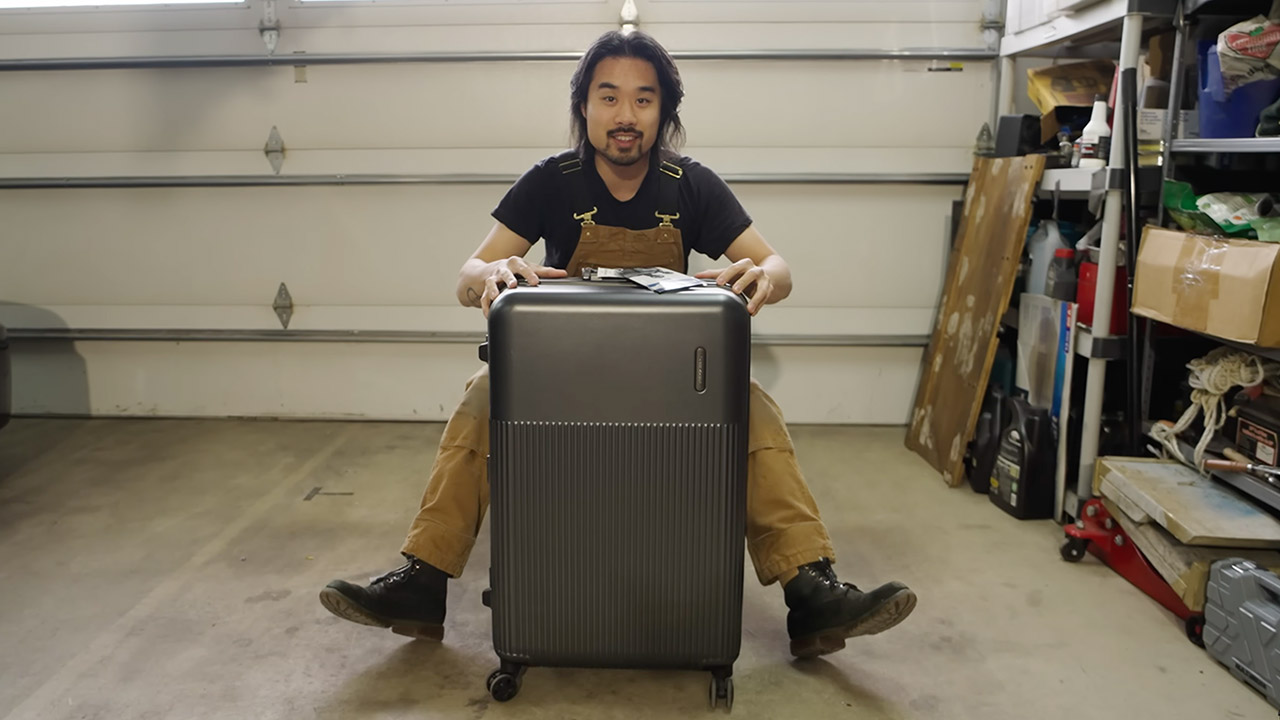
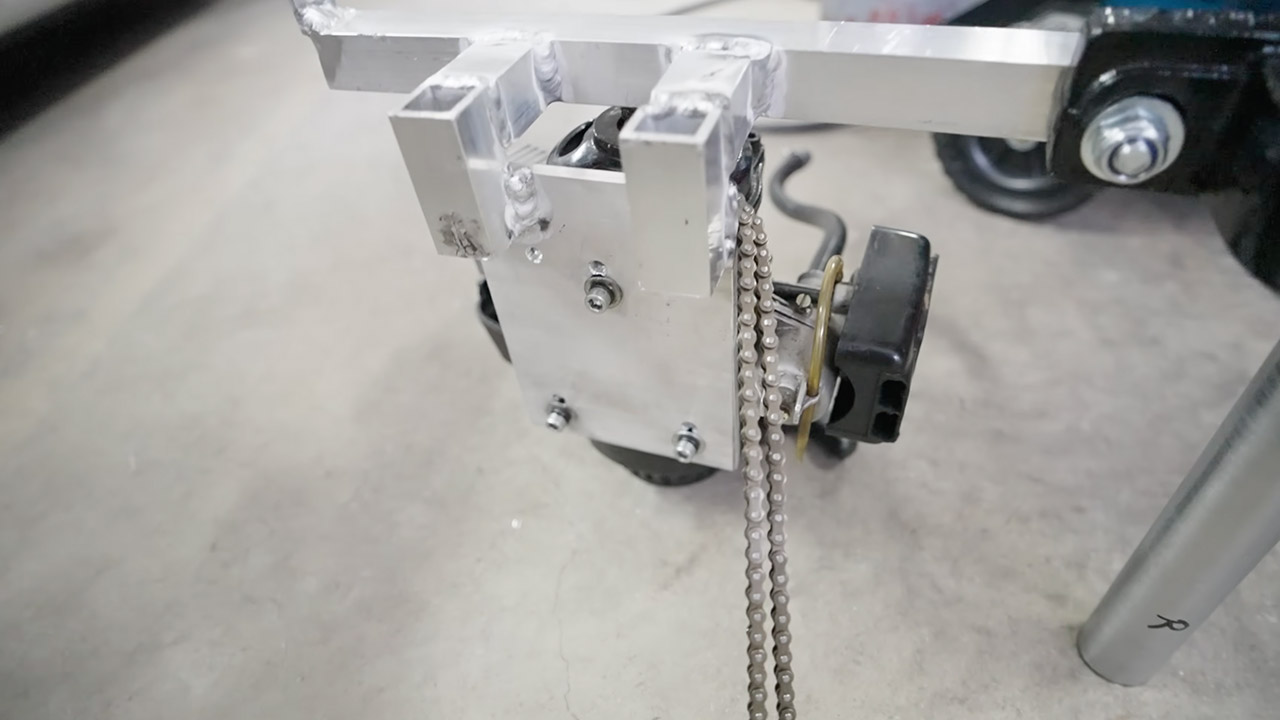
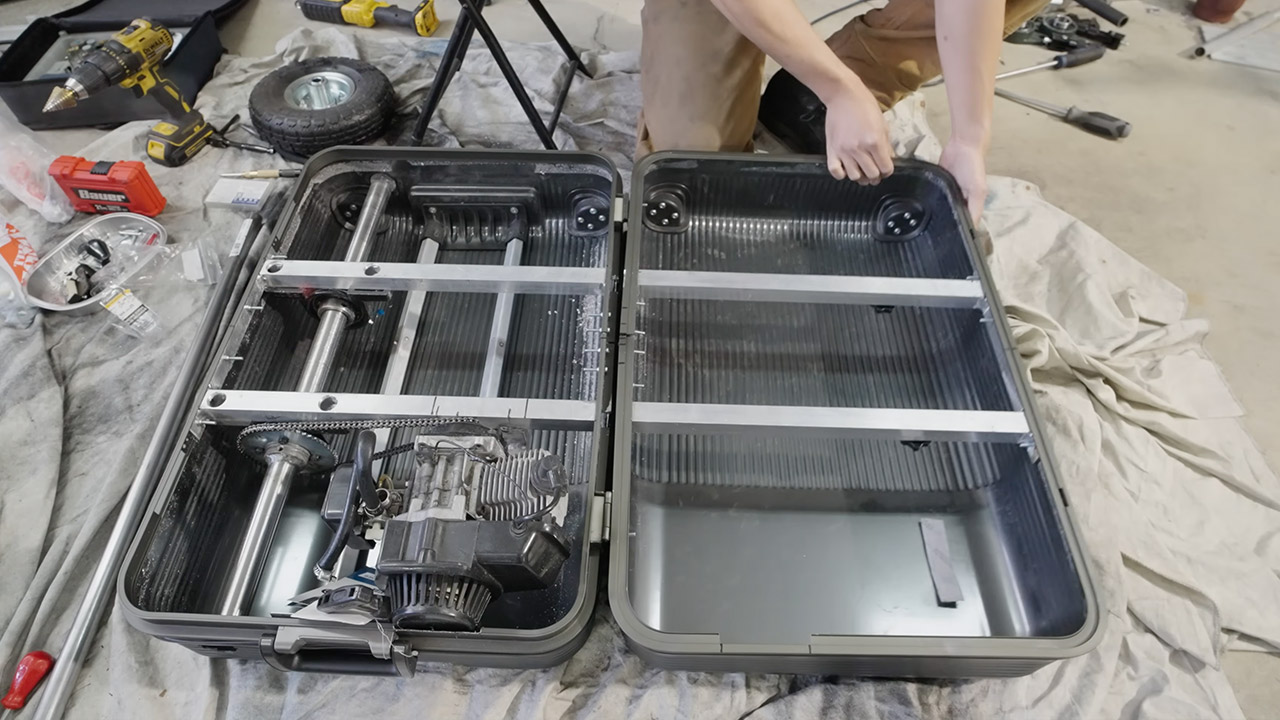
They started with a heavy-duty Samsonite Rexton hard case, which gave them a little more room to work with than the original. They then ground down the inside frame so that the aluminum tubing would fit snugly against it. Some of the rear chassis components were made from square tube and flat stock, which they put together with a TIG welder (although they were still learning how to weld aluminum with that machine) – holes for the axle bearings also had to be punched out precisely. The engine mounting plate came out incorrectly the first time, failing to line up properly with the small two-stroke engine. Luckily, a second plate constructed of thicker quarter-inch aluminum solved the problem.

DIY Mazda Suitcase Car
When it came to driving, they welded a sprocket from a Razor E300 to the axle using a MIG machine. The front end components came from a Razor scooter (can’t remember which one), and the fork and wheel need a stronger mount after the initial batch of quick-release hardware became too soft, so they replaced them with solid aluminum blocks and captive nuts instead. To allow the thing to turn without binding, they welded pillow-block bearings together around the axle, allowing the one rear wheel to freewheel. This one-wheel-drive system avoided the tight-radius problem, which would have rendered a solid axle useless.

DIY Mazda Suitcase Car
Some slots were carved into the suitcase shell with a Dremel to let the front & rear frames slide together on pins, while threaded knobs secure the two parts firm once the pins are home. The plywood seat base received some foam and batting to increase weight, and the upholstery came from an old rice bag (they were striving for a retro look), since the foot pegs were created using a 3D printer and they were able to slip the seat into place fast. Throttle cable, exhaust, chain guard, and a small fuel tank completed the mechanical side of things.

DIY Mazda Suitcase Car
The finished weight was 56.8 pounds, which is lighter than the original Mazda. On a quiet stretch of road, it reached 33 km/h, somewhat faster than the 1991 version. The setup is quite straightforward: unlock the latches, remove the stored wheels, drop the seat onto the pegs, slide the frame pins home, lock the handlebars, and attach the rear wheels. Overall, it takes minutes rather than hours.

DIY Mazda Suitcase Car
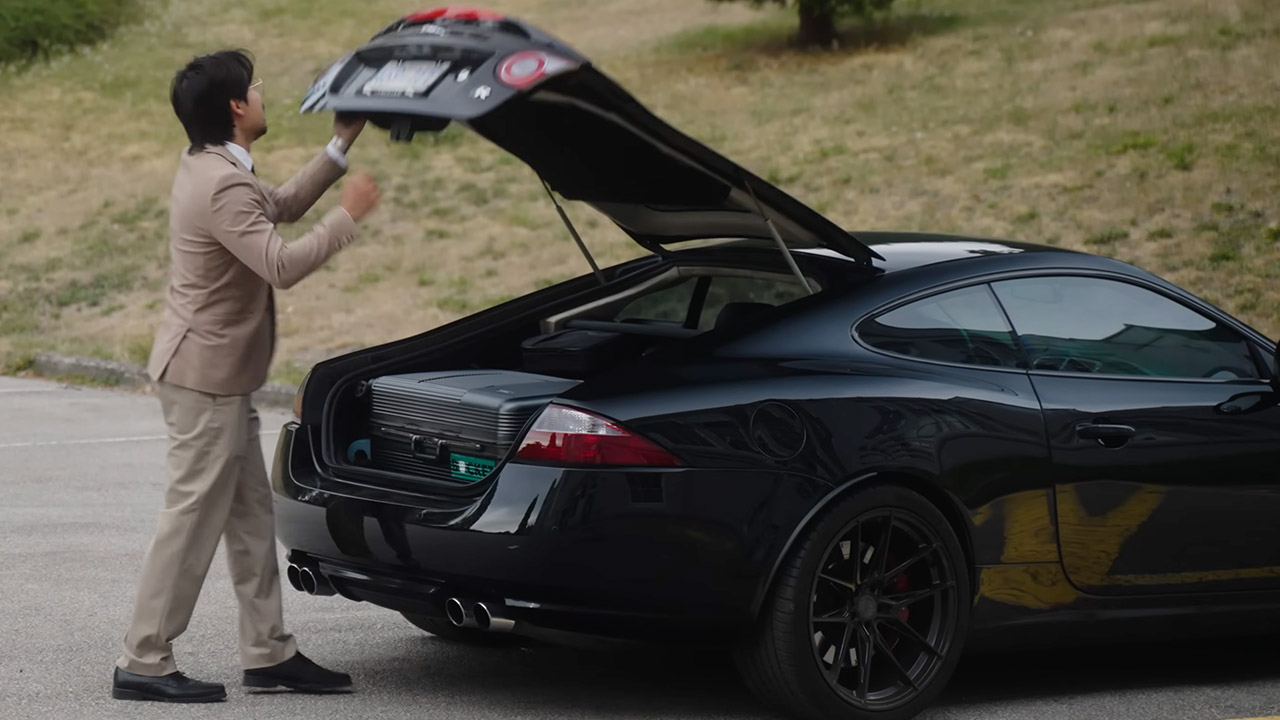
This closed-up case can easily fit into the trunk of a regular automobile, ensuring portability. It barely makes the standard airline weight limit, so you might get strange looks if you try to sneak it aboard. Carrying 70 pounds of metal and plastic through an airport will still feel like a chore, but this contraption does exactly what Mazda engineers imagined 35 years ago: it opens up like a typical suitcase and changes into a little, noisy, three-wheeled vehicle that travels on its own.

DIY Mazda Suitcase Car
Bucket’s version includes a few upgrades that the original didn’t require. The custom freewheeling axle, reinforced front mounting, and aluminum structure were all developed through real-world testing rather than from a textbook. The finished product is a rather nice replica that nevertheless feels homemade, complete with tiny defects indicating that the person who created this thing was learning to weld in a hurry and still managed to get it to move.

Source link

Advertisement
Continue Reading

Tech

HP Introduces First HyperX Open-Back Headset, Lightweight Carbon Fiber Mouse and More

Published

on

HP might not be ready to bring any new gaming laptops or desktop computers into the fray just yet, but it debuted a healthy heaping of new peripherals under its HyperX gaming brand to keep casuals, hard-core gamers and streamers happy.

HyperX announced its first open-back headphones and most lightweight mouse, along with a few other goodies that might upgrade your gaming experience. HyperX keeps the focus on gamers, but there are a few pieces of tech here, like the SoloCast 2 Pro mic, that I think will function best in the hands of content creators. There’s a little something for everyone, with products featured at variable prices throughout the lineup.

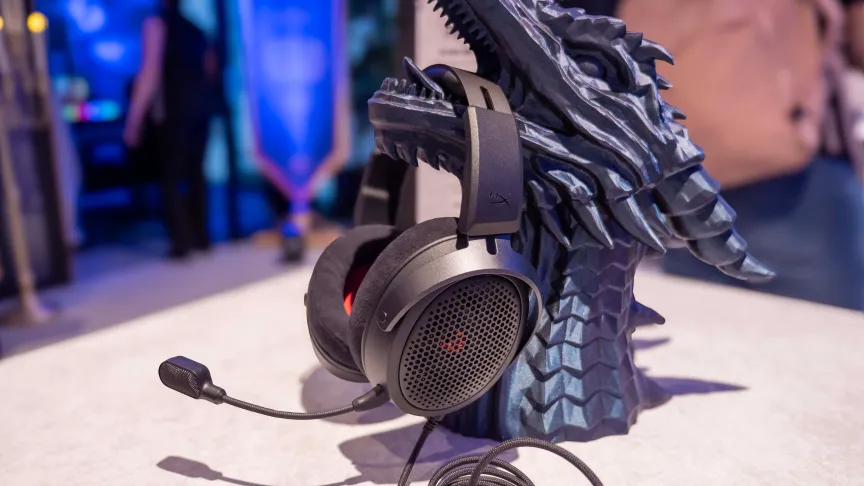
HyperX Cloud Air Alpha open-back headphones set up inside of a 3D-printed dragon mouth.
These open-back headphones might provide more situational awareness, if you can wrest them from the dragon’s maw.Josh Goldman/CNET

The Cloud Air Alpha is HyperX’s first open-back gaming headset

Any parent struggling to get their kid’s attention while they’re crushing a Fortnite lobby will probably be happy about new open-back headphones because they allow more outside noise to filter. And gamers themselves will be happy that the Cloud Air Alphas don’t sacrifice game audio quality.

I tried out HyperX’s first open-back headphones in a dedicated testing room at a press event in New York, and I’ll attest to the fact that it’s easier to hear people in the real-world than when I was wearing the Cloud 3 headset. My colleagues’ voices still sounded a bit too quiet for my liking, even when I was trying to focus on what they were saying, but my awareness was cranked up: With the Cloud Air Alphas on, I have no doubt that it’s easier for someone to get your attention.

I couldn’t shake the urge to remove one of the headphones when I wanted to engage with the conversation, but maybe that’s something that can only be remedied with time, patience and muscle memory as one grows used to the Cloud Air Alpha headphones.

Advertisement
  • First HyperX headset with open earcup design
  • Integrated bass tube to boost low-end audio
  • USB-C, USB-A, 3.5mm audio jack and USB dongle connectivity
  • HyperX Ngenuity software provides audio customization capabilities
  • Price: $150
  • Release date: September 2026
The HyperX Pulsefire Haste 3 wireless and wired mice sit side by side, dongle included.
The Pulsefire Haste 3 wireless mouse (left) and wired mouse (right) share a very similar form, especially when the dongle is present.Josh Goldman/CNET

A full suite of new mice: The Pulsefire Haste 3 collection

HP will be releasing three new HyperX Pulsefire Haste 3 mice, targeting different subsets of casual, hobbyist and hard-core gamers (with a price to match).

Pulsefire Haste 3 wired mouse

The Pulsefire Haste 3 wired mouse is the entry-level product in the new mouse lineup. It clocks in at 68 grams with its cable, and feels fairly weightless despite always being wired up to your setup. Despite not having the highest sensitivity or mouse acceleration speeds, the wired mouse is able to achieve more than enough precision mouse movement for the average gamer — especially at its low $40 price.

  • 68 grams including non-detachable USB-A cable
  • Up to 16,000 DPI sensitivity, 300 IPS speeds, 35G acceleration
  • Price: $40
  • Release date: September 2026

Pulsefire Haste 3 wireless mouse

The Pulsefire Haste 3 wireless mouse features pretty massive DPI sensitivity, IPS speed and acceleration gains over its wired counterpart, and it’s slightly lighter to boot.

With wireless mice, battery life becomes a variable you need to worry about between gaming sessions. The Pulsefire Haste 3 wireless mouse performs fairly well in that department: It ekes out 150 hours of battery life at 1K polling and 35 hours of battery life at 8K polling (and frankly, the average PC gamer will be just fine operating at 1K polling speeds). 

This is the midrange mouse in HyperX’s new lineup, coming in at a respectable $90 price.

  • Weighs 52 grams without cable and 78 grams with cable
  • Up to 42,000 DPI sensitivity, 800 IPS speeds, 70G acceleration
  • 150 hours of battery life at 1K polling, 35 hours of battery life at 8K polling
  • Optional glass skates to reduce friction
  • Price: $90
  • Release date: September 2026
The Pulsefire Haste 3 Pro mouse sits flat against a white surface.
The Pulsefire Haste 3 Pro is the one mouse in the lineup that looks radically different than its counterparts. Its carbon fiber grip looks good and molded better to my grip.Josh Goldman/CNET

Pulsefire Haste 3 Pro wireless mouse

The carbon fiber Pulsefire Haste 3 Pro is the most lightweight (and most expensive) mouse in the lineup. Its buttons and grip have a rough, nearly grainy texture that creates a solid grip — it certainly feels good to hold, and though I usually prefer weightier mice, I appreciated the way the Haste 3 Pro molded to my hand.

The mouse touts a 150-hour battery life at 1K polling and glass skates to reduce friction — it’s very similar to the regular wireless Pulsefire Haste 3 aside from its physical form. 

Advertisement

At its $130 price, the Pulsefire Haste 3 Pro is a more premium product than most folks will need, but will likely find its niche among hard-core PC gamers.

  • 47-gram carbon fiber shell
  • Up to 42,000 DPI sensitivity, 800 IPS speeds, 70G acceleration
  • 150 hours of battery life at 1K polling, 35 hours of battery life at 8K polling
  • Price: $130
  • Release date: September 2026
The HyperX SoloCast 2 Pro microphone sits tilted upwards on a table.
The SoloCast 2 Pro looks similar to its original counterpart, with a new 3.5mm audio jack. There’s a lot more going on inside the device.Josh Goldman/CNET

The SoloCast 2 Pro desktop mic offers quality-of-life bumps

At a glance, the SoloCast 2 Pro looks strikingly similar to the existing SoloCast 2 desktop microphone: It still has the rubberized bottom that holds firm to your desk, the tap-to-mute button at the top and boom arm connection capabilities. But those with a more astute eye will notice the 3.5mm audio jack on the back and additional RGB light features that indicate when your vocals are peaking and not being picked up by the mic properly.

The big change inside the SoloCast 2 Pro is that it is changing from a single condenser capsule design to a dual condenser setup, which will convert vocals into clearer sound for anyone listening on the other end. All of these features make the Pro 50% more expensive than the original SoloCast 2, though, and I’m not sure the average person will spend an additional $30 on a desktop microphone — this $90 peripheral is almost certainly aimed at streamers and content creators.

  • Two-capsule condenser setup
  • 3.5mm audio jack
  • Built-in pop filter
  • Bottom RGB light communicates peaking audio and mute status
  • Can connect to boom arm
  • Price: $90
  • Release date: September 2026
HyperX Omen 35L gaming desktop computer with AMD processor and a white case sits on a wood-grain desk.
The new configs with AMD processing power are the big deal here, but check out this clean, white case.Josh Goldman/CNET

New silicon options for the Omen 35L gaming desktop

One of HyperX’s high-end gaming PCs is getting a few new configurations. The Omen 35L desktop computers have been tapping into Intel’s processing power for a couple years, with top-of-the-line models toting Core Ultra 9 CPUs. Now you’ll have the option to purchase your Omen 35L gaming desktop with AMD silicon.

The most powerful new models include an Ryzen 9 9950X3D processor, a 16-core, 32-thread desktop processor built on AMD’s Zen 5 architecture. All of the other specs are on par with the Intel versions — the only other new customization option here is a white-colored case. These new configurations will be released throughout fall 2026.

Old HyperX headset models -- the Cloud 3 and Cloud 3 S -- shown off with their new accent colors.
There are new color choices for the Cloud 3 and Cloud 3 S headsets — all of them feature these understated cool-tone magnetic accents.Josh Goldman/CNET

A splash of new color on existing headsets

HyperX’s Cloud Air Alpha is the star of the show, but older headsets like the Cloud 3, Cloud 3 S and Cloud Flight 2 are receiving some cutesy pastel color options to round out the lineup. Many of these color choices add understated pink and blue metallic accents to primarily black and white headphones, but the Cloud Flight 2 is getting a totally lavender model that really pops under direct lighting.

Source link

Continue Reading

Tech

What airports can teach us about the power of invisible business AI

Published

on

A seamless airport journey can feel effortless. From check-in to baggage handling and take-off, everything appears coordinated, predictable and, for the most part, smooth. When delivered without any hitches, the entire process feels remarkably simple.

But, beneath that simplicity sits one of the most complex operational environments imaginable. Airlines, baggage handlers, security teams, retailers, air traffic control and countless other stakeholders must all coordinate in real time to keep passengers and aircraft on the way to their next destination.

Source link

Continue Reading

Tech

Claude outage hits multiple models again

Published

on

Anthropic’s Claude AI is showing signs of overload again.

On Monday morning, users trying to work with Claude encountered failed requests and a “529 Overloaded” error. The message says the problem is a temporary server-side issue, then sends users to Anthropic’s status page. A screenshot shared with TNW shows the error appearing in the Claude interface.

Anthropic’s own incident report is broader, and more cautious. At 05:06 UTC on 24 August, the company said it was investigating elevated errors affecting requests to Claude Mythos 5, Claude Fable 5, Claude Opus 5, and Claude Opus 4.8. The incident also affects claude.ai, the Claude API, Claude Code, and Claude Cowork.

At 05:27 UTC, Anthropic said it had identified the cause and was working on a fix. Its latest update, posted at 06:42 UTC, says the company is still working to resolve the issue. The status page does not yet provide a recovery time or a technical explanation.

Advertisement

The distinction matters. “529 Overloaded” describes what at least some users are seeing, but Anthropic has not said that overload is the root cause of the wider incident. For now, the public record establishes elevated errors across several models and products, not why they occurred.

Claude’s busy August

This is not the first Claude service problem this month. Anthropic’s status history includes a degraded-performance incident affecting multiple models on 18 August, followed by another incident involving Opus 5 and Haiku 4.5 on 19 August. A separate disruption affecting multiple models was reported on 20 August.

Independent coverage has also documented the latest interruption. Frandroid reported that some users could not access Anthropic’s models and that the company had identified the problem. Online discussions on Hacker News and other forums show users posting the same 529 error while trying to use Claude.

Those reports do not establish the scale of the outage. They do show how quickly an infrastructure issue becomes visible: in a broken chat request, a failed coding session, or an API call that needs to be retried.

Advertisement

The cost of shared infrastructure

Claude is no longer one product. It is a family of models exposed through consumer chat, developer tools, an API, and Cowork. When several surfaces fail together, users do not experience separate incidents. They experience one unavailable dependency.

That is the more important story here. Anthropic has identified the cause, but it has not yet explained whether the problem sits in a shared service, model routing, capacity, or another part of the stack. Any of those explanations would be speculation at this stage.

The fix is still being monitored. Until Anthropic publishes more detail, the question is not simply when Claude comes back. It is whether users can build on it without treating failure as part of the interface.

For developers, that distinction may matter later. During the outage, the practical question is simpler: whether to wait, retry, switch providers, or close the laptop and play with the cat.

Advertisement

Source link

Continue Reading

Tech

If one PC creates 20dB of noise and another makes 40dB, how louder is the second PC?

Published

on

Also: what are humming, rattling and whining PC noises?

Read Entire Article
Source link

Continue Reading

Tech

SoftBank plans record $6.3bn retail bond sale in Japan

Published

on

SoftBank plans a record 1 trillion yen retail bond sale, about $6.3bn, the largest by any issuer in Japan, to fund investment commitments to OpenAI. Analysts say banks were reluctant to take the risk, leaving the deal dependent on retail investors.

SoftBank has found a lender of last resort for its AI bet, and it is Japanese households. The group plans a record ¥1 trillion retail bond sale, about $6.3bn and the largest by any issuer in Japan, to fund its investment commitments to OpenAI.

The terms are built to be tempting. The seven-year bonds are expected to price on 4 September with an indicative coupon of 4.3% to 4.9%, and SoftBank says it expects an A rating from Japan Credit Rating Agency.

International raters see it differently. S&P has SoftBank at BB+, one notch below investment grade, having revised its outlook to stable from negative in July.

Advertisement

The reason it is going to retail is not enthusiasm. “Banks are finding it difficult to take on the risk given weak deposit growth, the credit rating and the seven-year duration, leaving the deal more reliant on retail investors,” said Yuuki Fukumoto of NLI Research Institute, in a pattern that has already forced Oracle to find anchors outside the banking system.

It is also becoming routine. This is SoftBank’s third retail bond of the year, after raising ¥418bn in April and ¥260bn in June.

Even ¥1 trillion does not close the gap. Bloomberg Intelligence’s Sharon Chen says a shortfall above $20bn remains after this issue, making offshore issuance likely in the near term.

The commitments behind it are enormous. SoftBank has pledged more than $60bn to OpenAI and has separately sought a $10bn margin loan secured against its stake in the company.

Advertisement

Everyone is raising at once. Alphabet, Meta, Microsoft and Amazon have committed nearly $2.4tn to AI-related spending, and Alibaba raised about $10bn in Hong Kong on Monday for chips and data centres.

A European issuer could not do this the same way. Bond prospectuses across the EEA routinely carry a prohibition on sales to retail investors, because the PRIIPs rules require a key information document that most issuers decline to produce.

That sits awkwardly with what Brussels says it wants. The Savings and Investments Union, adopted in March 2025, exists to move some of the €10tn European households hold, roughly 70% of it sitting in bank deposits, into capital markets, at a moment when Masayoshi Son calls bubble talk absurd.

Japan has now shown what mobilised savings look like in practice. A retail saver funding a seven-year bet on a company that does not yet know how the technology will pay.

Advertisement

Source link

Continue Reading

Tech

Harvey’s first in-house model for legal work is here

Published

on

Harvey has launched Tenet, its first proprietary model for legal work, post-trained on Kimi K3, the open-weight model from Chinese startup Moonshot. The company is backed by OpenAI, whose models Tenet is designed to displace inside Harvey’s own product.

Harvey has stopped renting the thing its business depends on. The legal software company has launched Tenet, its first proprietary model, after years of routing customer work through models from OpenAI, Anthropic and Google.

The base it chose is the detail worth stopping on. Tenet is post-trained on Kimi K3, the open-weight model released in July by the Chinese startup Moonshot, in work Harvey says it did with Fireworks AI.

Consider who is on the cap table. OpenAI is an investor in Harvey alongside Sequoia and Andreessen Horowitz, so a company valued at $15.5bn has built its flagship on a Chinese base to reduce its dependence on its own backer.

Advertisement

The commercial logic is unsubtle. Every model call Harvey makes on a customer’s behalf is an invoice from a rival, and owning the engine turns a variable cost into a fixed one.

Quality is the other argument. Cofounder Gabe Pereyra, formerly of Google DeepMind, says Harvey already routes tasks to whichever model suits them, and Tenet adds an option shaped around legal work specifically.

The training material was manufactured. Harvey hired lawyers, on staff and through firms including Mercor and Snorkel, to invent mock disputes and case files and then grade how well models reasoned through them.

Europe’s answer to Harvey is Swedish. Legora is chasing a $10bn valuation and selling to many of the same firms, which makes the choice of base model a competitive question as much as a technical one.

Advertisement

For a European buyer the AI Act is the next question. A company that modifies someone else’s general purpose model becomes the provider of the modified version only when the change is significant, with the Commission’s guidelines using roughly a third of the original training compute as the indicative marker.

A post-train almost certainly falls well below that. Which means most of the obligations stay upstream, and a European law firm deploying Tenet ends up relying on a documentation chain that begins in Beijing.

The licence has a threshold of its own. Kimi K3 permits derivative models, but requires a separate agreement with Moonshot for model-as-a-service operators above $20mn of revenue in any 12 months, and Harvey runs at more than $350mn annualised, in a market already shaped by free Chinese models.

The open-weight debate has mostly been about capability and price. Harvey has quietly turned it into a question about who your counterparty is when the work is covered by privilege.

Advertisement

Source link

Continue Reading

Trending

Copyright © 2025