About 1,600 federal employees who work at the General Services Administration have been forced to relocate from their office on F Street in Washington, DC, to the Theodore Roosevelt Federal Building, roughly two blocks away. Workers say the new building, which also houses staff from the Office of Personnel Management has mice, a caved-in bathroom ceiling, and drinking water that needs to be run for five to 10 seconds before it is clear.
The federal workforce has been rocked by changes made by Elon Musk’s so-called Department of Government Efficiency (DOGE) since January 2025. DOGE effectively fired tens of thousands of workers and forced those who remained to commit to in-person schedules and, in some cases, zero-based budgeting. GSA, the agency in charge of the federal government’s IT services and real estate assets, was hit early by DOGE, and in addition to major workforce cuts also rolled out plans to sell hundreds of federal office buildings. A year after the cuts, GSA announced it planned to hire about 400 workers.
“We’ve all been through a lot, but this really made me finally understand that they don’t care about us,” says one GSA employee who asked to remain anonymous, as they aren’t authorized to speak to the press. “We’re left wondering what else is going to collapse or break—do we need to look at the ceiling before going to the bathroom? Can we actually trust the water is safe to drink?”
Courtesy of GSA employee
Photos obtained by WIRED show a toilet in a men’s room on the third floor covered in debris from the ceiling, a gaping hole in said ceiling, and a dead mouse caught in a trap. Workers said the mouse wasn’t “entirely shocking” since many federal buildings allegedly have vermin, but the ceiling pushed them over the edge. An additional sign in the office recommends workers filling up water bottles to “run the water without your bottle for 5-10 seconds and wait for the water to run clear.”
Advertisement
GSA and OPM did not immediately respond to a request for comment.
A federal judge has entered a final judgment requiring Guardant Health to pay more than $245 million to Seattle biotech TwinStrand Biosciences and the University of Washington over DNA sequencing technology developed at the university.
The judgment, entered Friday in U.S. District Court in Delaware, follows a 2023 jury verdict that found Guardant willfully infringed two patents covering TwinStrand’s Duplex Sequencing technology.
The case also establishes a continuing revenue stream for the university and TwinStrand from some of Guardant’s products.
Jesse Salk, co-founder of TwinStrand. (TwinStrand Photo)
The court’s final judgment includes $83.4 million in damages awarded by the jury for infringement through June 2023, plus $19.5 million in supplemental damages, $119.4 million in accrued royalties and $22.9 million in interest.
Going forward, Guardant is required under the judgment to pay a 6% royalty on covered sales through March 2033, when the patents expire.
The technology at the center of the case traces back to research at the University of Washington, where scientists, including co-founder Jesse Salk, developed Duplex Sequencing as a way to make DNA sequencing more accurate. Salk — who stepped down as CEO of TwinStrand in 2022 — now is the co-founder of cancer diagnostics startup CytoTerra.
Advertisement
The molecular biologist and clinical oncologist is the grandson of the late Jonas Salk, the scientist who discovered and developed the polio vaccine.
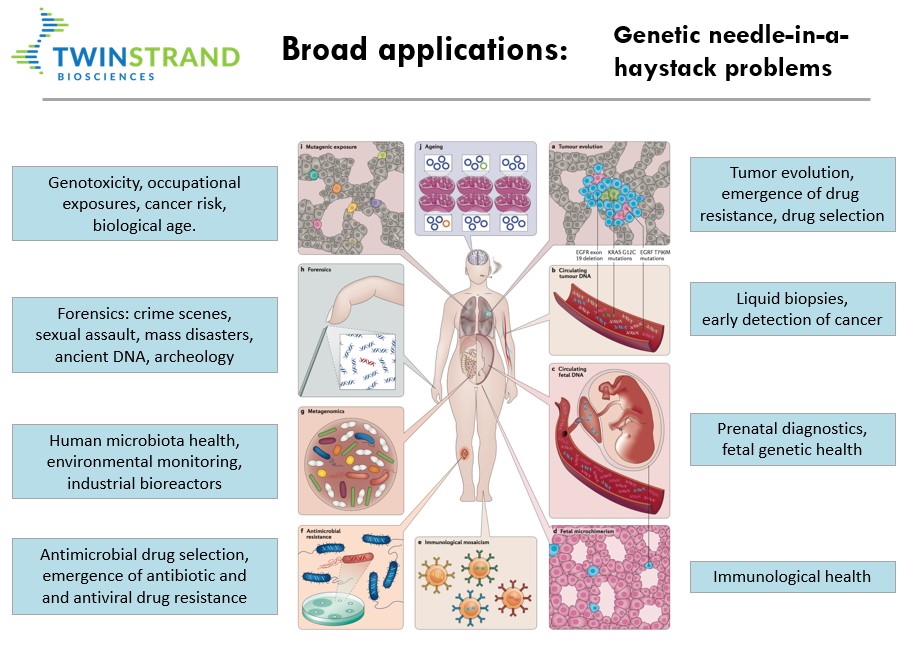
TwinStrand says its Duplex Sequencing technology can improve the accuracy of next-generation sequencing by more than 10,000-fold, allowing researchers to detect extremely rare genetic mutations that can be obscured by sequencing errors.
“Duplex Sequencing solved an accuracy problem the sequencing field had worked on for years, and this judgment affirms the jury’s finding that Guardant Health built products on that invention without a license,” said Chad Waite, chair of the TwinStrand board of directors, in a press release. “We remained steadfast in our conviction that the facts would prevail, and they have. We intend to see this through and stand firmly behind the intellectual property at the core of our technology.”
Salk and his colleagues from the University of Washington launched TwinStrand in 2015 to commercialize the technology. Based in Seattle, the startup raised funding from Madrona Venture Group, Soleus Capital, Janus Henderson Investors, Ridgeback Capital, Alexandria Venture Investments. Section 32 led a $50 million series B round in the company in 2021.
Advertisement
A jury found in November 2023 that Guardant willfully infringed the patents through 11 products and services. The products identified in the judgment include Guardant360, Guardant Reveal, Guardant Shield and other cancer-testing products.
The Delaware court subsequently rejected Guardant’s effort to overturn the verdict or obtain a new trial. In June, the court also awarded TwinStrand and UW ongoing royalties and supplemental damages. The final judgment now formalizes those awards.
Guardant is not accepting the ruling.
The California-based precision oncology company said Monday that it plans to appeal the judgment, arguing that the court’s order covers products that existed at the time of the 2023 trial and that many have since been discontinued or substantially upgraded. Guardant also said current versions of its Reveal and Shield products are excluded from the final district court order.
Advertisement
Guardant — founded in 2012 — said the judgment and collection of potential royalties will be stayed pending the appeal.
“We strongly disagree with this decision and will promptly be appealing for its overturn,” said John Saia, Guardant Health Chief Legal Officer, in a press release. “We have full faith in the strengths and merits of Guardant’s intellectual property and R&D and are confident we will ultimately prevail on appeal.”
The International Remote Baggage Screening platform allows U.S. customs agents to analyze X-ray images of checked baggage during an inbound flight. (GeekWire File Photo / Kurt Schlosser)
While passengers are cruising at 35,000 feet, their checked luggage is already passing through a very different kind of cloud.
In a move designed to eliminate one of the more frustrating friction points of international travel, Richland, Wash.-based Pacific Northwest National Laboratory has co-developed a mid-flight luggage scanning system to streamline arrivals for inbound U.S. travelers.
PNNL has teamed up with federal security agencies and major airlines to launch the International Remote Baggage Screening (IRBS) platform. The cloud-based system screens and analyzes scans of checked luggage before a flight even touches down in the U.S..
Cleared bags are moved straight to a passenger’s connecting flight without the hassle of retrieving and rechecking them through security — unless Customs and Border Protection explicitly flags a bag for a manual check.
Over the past year, the system has rolled out on select international routes into major U.S. hubs—including Hartsfield-Jackson Atlanta, Minneapolis-St. Paul, and Detroit—on flights arriving from hubs like London-Heathrow and Seoul-Incheon. PNNL and federal agencies developed IRBS alongside key airline partners, including Delta Air Lines, Korean Air, and Virgin Atlantic.
Advertisement
This isn’t PNNL’s first time reshaping airport security — the Department of Energy lab also engineered the millimeter-wave body scanners used in airport checkpoints worldwide. For IRBS, PNNL managed the complex data engineering and privacy compliance needed to stream sensitive imaging between foreign security agencies, private airlines, and U.S. border officials.
The system feeds into the TSA’s “One Stop Security” push to streamline international arrivals. Additional international routes and airports are expected to join the network soon, according to PNNL.
PayPal reportedly rejected a takeover offer last month over concerns it was being undervalued.
Plans for a joint acquisition of PayPal have fallen through, according to Bloomberg News, weeks after the company’s board reportedly rejected a $53bn-plus offer from Stripe and US private equity firm Advent International.
Talks of a potential Stripe acquisition of PayPal have swirled for months. According to reports last month, Stripe and Advent offered to buy PayPal at $60.50 per share, which would have valued the fintech at more than $53bn and represented a 28pc premium to its share price in mid-July.
That offer was, however, reportedly rejected by PayPal’s board over concerns that it undervalued the company. Sources told Bloomberg that Stripe and Advent have now abandoned talks.
Advertisement
Founded in the late 1990s, PayPal has struggled in recent years to modernise against emerging rivals in the payments space such as Apple, Google and Stripe. PayPal’s shares have dropped dramatically over recent years as a result, but picked up somewhat last month after promising reports of a takeover by the $159bn Stripe.
PayPal’s shares have jumped nearly 10pc over the last month, now giving the company a market capitalisation of $52.5bn – up from roughly $43bn in February, when Bloomberg first reported on a potential acquisition. The fintech also recorded a 5pc growth in net revenue in the second quarter.
PayPal and Stripe would each benefit from the possible acquisition, according to Chris Jones, managing director at PSE Consulting.
“PayPal’s wallet could build on the early success of Link, Stripe’s consumer-facing accelerated checkout, which already counts more than 200m consumer accounts, and would create further opportunities to exploit Stripe’s $1.1bn investment in stablecoin infrastructure through its purchase of Bridge,” he told SiliconRepublic.com last month.
Stripe, meanwhile, is investing heavily in product development and making strategic acquisitions, including the programmable wallet company Privy, stablecoin orchestration platform Bridge and billing platform Metronome.
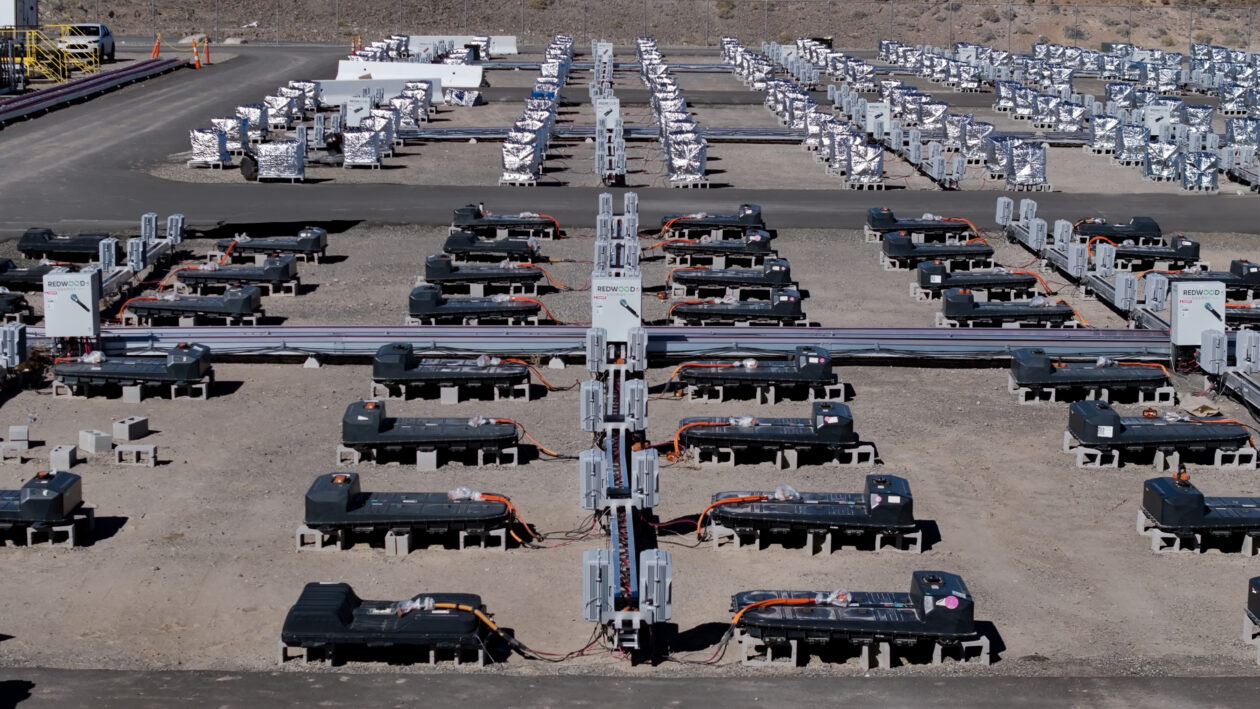
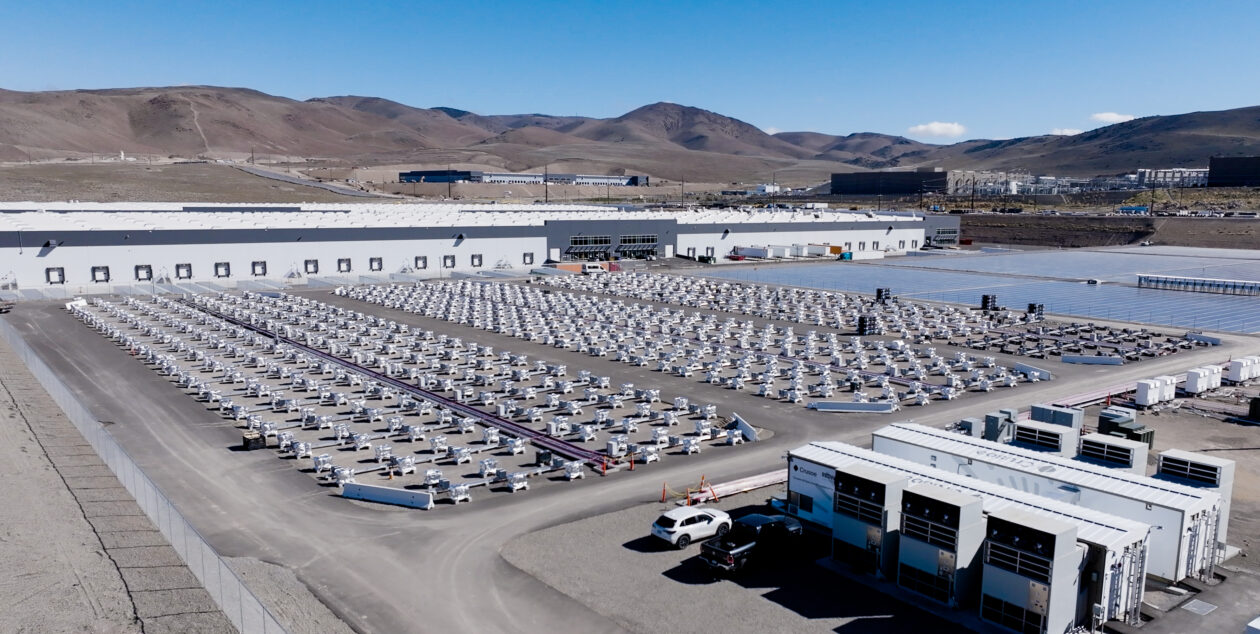
In the foreground are battery packs just as they would look installed in an EV, now repurposed by Redwood Materials and plugged into the microgrid serving Crusoe’s data center at Redwood’s campus in Nevada. (Redwood Photo)
geekwire.com/positivecharge (publish that page or it 404s).
============================================================ –>
.pc-sub-wrap{container-type:inline-size;}
.pc-sub{background:#0f3d33;border-radius:6px;padding:12px 16px;margin:14px 0;font-family:Helvetica,Arial,sans-serif;font-size:14px;line-height:1.5;color:#fff;}
.pc-sub strong{color:#a3e635;}
.pc-sub a{color:#fff;text-decoration:none;white-space:nowrap;}
/* collapse when the strip’s own width is tight */
@container (max-width:620px){
.pc-sub{font-size:13px;padding:10px 12px;white-space:nowrap;overflow-x:auto;-webkit-overflow-scrolling:touch;}
.pc-sub .pc-full{display:none;}
}
/* fallback for browsers without container-query support */
@media (max-width:560px){
.pc-sub{font-size:13px;padding:10px 12px;white-space:nowrap;overflow-x:auto;-webkit-overflow-scrolling:touch;}
.pc-sub .pc-full{display:none;}
}
A decade or two on the road will drain an EV battery’s range and hobble its acceleration. But while it peters out for daily commutes, that battery still has a lot of juice left.
A cohort of battery entrepreneurs is giving these units a second life, powering off-grid communities, industrial sites and energy-hungry data centers. Industry leaders — British Columbia’s Moment Energy and Redwood Materials in Nevada — are rapidly scaling up as the supply of aging batteries surges.
Advertisement
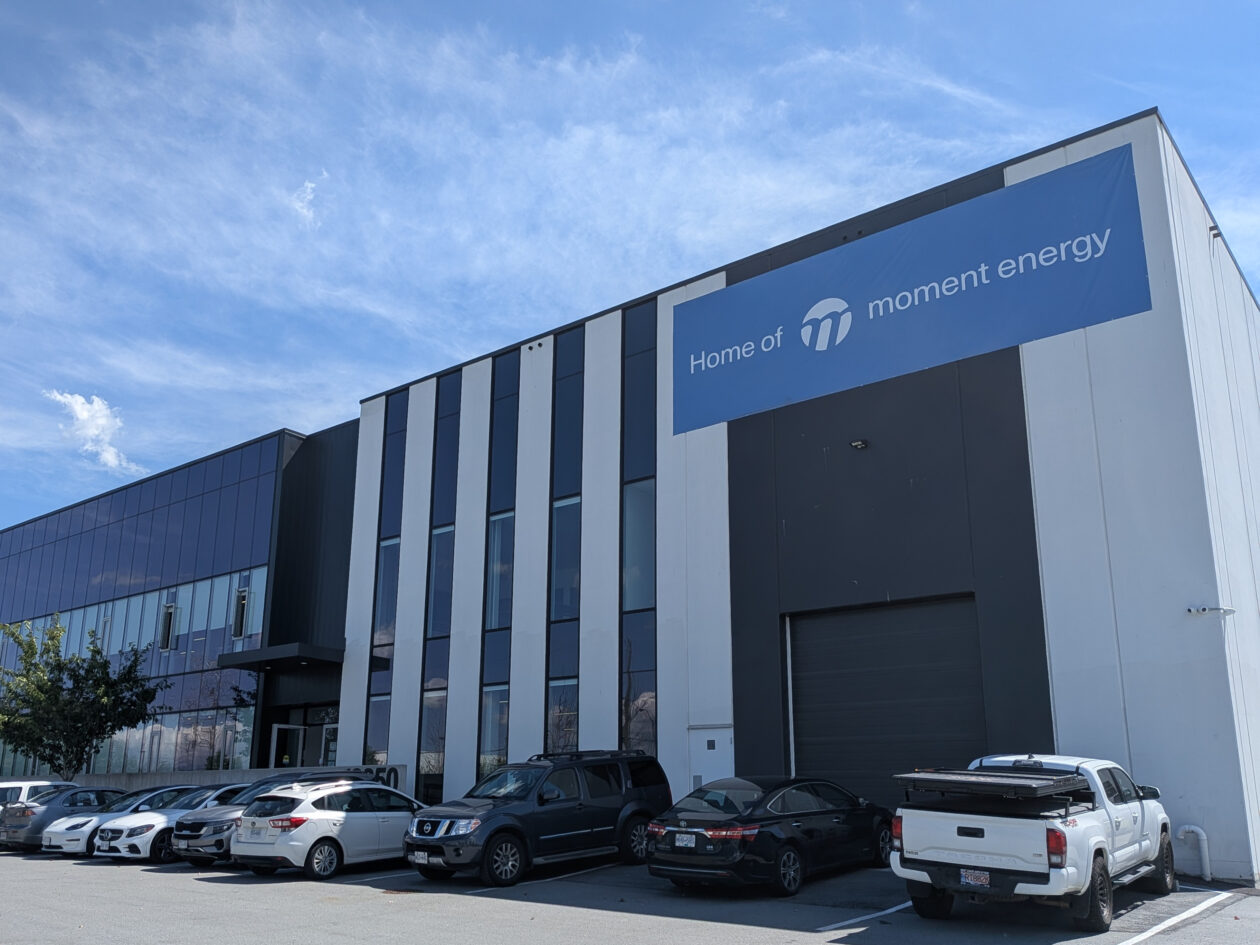
This summer, Moment moved into its 100,000-square-foot Megafactory 1 near Vancouver, converting a shell into its new HQ and manufacturing space in six weeks. It’s also building a Texas Gigafactory expected to open in January.
Redwood is likewise ramping up after unveiling the world’s largest used-EV battery system in June 2025: A 63-megawatt-hour solar and battery installation powering a Nevada data center run by AI infrastructure company Crusoe.
Absent reuse, these batteries end up in landfills or recycling shredders.
“Why recycle this battery prematurely when there’s over 95% life left?” asked Eddy Chiang, CEO and co-founder of Moment. When the batteries get recycled, some companies send the material to China for refinement, exporting valuable raw materials.
Advertisement
The market’s potential is massive. Chiang estimates that the used batteries available today could match Denver’s electricity use 20 times over — and 90 times over in four years.
The ‘Christmas light’ problem
Moment Energy moved into its new 100,000 square foot MegaFactory 1 in Surrey, B.C., which will allow it to increase manufacturing of its repurposed EV battery storage systems. (GeekWire Photo / Lisa Stiffler)
So why pull an EV battery that still has 80% or more of its life left? Think Christmas lights, says Chiang.
Particularly with lights sold in the past, “if one light bulb burnt out, the whole string burns out,” he said. “And that’s what’s happening in the battery pack. The actual failure mode for EVs is actually due to a single cell failure, like that light bulb.”
EV battery packs contain hundreds or thousands of cells that are grouped into modules, which are housed in large metal shells affixed under the vehicle’s floorboard. The cells can be similar to the AA batteries in consumer electronics, while others are larger blocks or pouches.
When Moment receives used batteries, it first runs diagnostics to test their performance. Then it breaks down the packs into modules, and racks them in cooled shipping containers. Moment uses proprietary software to redirect energy away from weak cells to healthy ones to extend battery life.
Advertisement
The company’s largest storage system is called Luna, delivering up to 1 megawatt hour of energy, which is enough electricity to power roughly 49 Seattle households for 24 hours. It’s preparing to launch a new model, but keeping the details under wraps.
Moment customers range from God’s Pocket Resort, an eco-lodge on a tiny Canadian island where its system slashed the use of diesel generators, to Vancouver International Airport, which avoided up to $20 million in grid upgrades to power fast chargers for its EV fleet, Chiang said. “Instead, they bought a couple of our batteries.”
From recycling to reusing
The rows of silver-wrapped cubes contain repurposed EV battery packs providing power to a Crusoe data center, which is in the bottom right of the photo, paired with solar panels to the right that are part of the microgrid. (Redwood Photo)
Redwood Materials began nearly a decade ago as a battery recycler led by former Tesla executives. But in recent years, they recognized a missed opportunity.
“We had a group of people standing around watching our recycling operation, looking at these giant battery packs that we’re going to so much effort to disassemble, and just wondering, ‘Can we do more with these before we shred them?’” said Colin Campbell, Redwood’s chief technology officer.
Advertisement
Now 95% of the EV batteries Redwood receives are reused rather than recycled. And despite its Tesla roots, the startup accepts batteries from any automaker and has created a “universal translator” that manages battery packs with different voltages, power and chemistry.
Campbell touts the conversion of the EV devices to stationary storage as straightforward.
In its simplest terms, Redwood’s energy storage sites are “an electric vehicle parking lot with the wheels removed,” he said. “So it’s just literally the battery that was in the car. There’s lots of them arranged in a grid together and plugged in.”
That plug-and-play approach solved major headaches for Crusoe. By pairing repurposed EV batteries with solar power for its new AI data center in Nevada, Crusoe bypassed multi-year grid-connection delays, saved money and avoided emissions from diesel generators.
Advertisement
Scott Williams, vice president of energy at Crusoe, said the solution has worked well for his company, which builds data centers and offers its own AI cloud services.
“We’ve signaled to Redwood that we’re going to grow with them,” Williams said, including “multiple gigawatt hours paired with our modular units, which is super exciting.”
Industry headwinds
Despite the momentum, the sector faces headwinds. Communities have resisted large battery projects due to fire concerns, sparked by high-profile incidents like California’s Moss Landing fire.
The companies emphasize that EV batteries are built to survive high-speed crashes, making them inherently safer than standard stationary battery storage. The Moss Landing fire involved older, non-EV batteries in a very different setup than the startups are using. Additionally, Moment’s systems hold extensive UL safety certifications and Redwood has passed a UL fire-safety test.
Advertisement
Another industry hurdle is competition. Overbuilt recycling capacity — plus U.S. and European mandates requiring recycled content in new batteries — creates competition for used EV packs.
Yet from a climate perspective, repurposing is vital. Batteries are almost always “the most carbon-intensive component” in any electronic device, said Grayson Shor, executive director of the Pacific Northwest Battery Collaborative and co-founder of the startup Buckstop.
Repurposed EV systems can extend that initial carbon investment by providing clean power for 20 to 30 years and meet urgent energy demand.
“Everybody’s like, ‘Where are we going to get electricity?’” Campbell says. “And we have a really excellent option already here.”
In a nutshell: Cloudflare has cut the memory used by the DNS cache behind its 1.1.1.1 resolver by more than half, freeing about 100TB of RAM across its network. The company did not replace server hardware or remove memory modules. Instead, engineers changed how cached DNS data is stored in software.
The optimization work was centered on Big Pineapple, Cloudflare’s DNS caching platform behind the popular 1.1.1.1 resolver, DNS Firewall, and several other DNS services they offer. In a technical blog post, systems engineer Sebastiaan Neuteboom detailed five changes to the Rust codebase that shrank a typical cache entry from 953 bytes to 420 bytes.
The changes also made the cache faster. Cloudflare reported that insert throughput rose from 625,000 to 893,000 entries per second, while lookup latency fell from 828 nanoseconds to 670 nanoseconds. During the rollout, from mid-May to early July, p99 memory use per instance dropped from 9.3GB to 5.3GB.
Cloudflare says Big Pineapple holds more than 250 billion DNS entries at any given time, and at that scale even small amounts of wasted memory add up fast. The company estimates that a single unnecessary byte in each cache entry costs more than 250GB across its fleet.
Advertisement
Big Pineapple, Cloudflare’s DNS caching platform, was redesigned in Rust to free about 100TB of RAM.
One of the biggest changes involved Rust’s Vec and String types. Those containers are designed to grow, so they store capacity data in addition to the data itself. But DNS records do not need to expand after they enter the cache. Cloudflare replaced those structures with fixed-size boxed slices, eliminating metadata that was no longer useful. The company said that change alone saved more than 15TB of RAM.
Engineers also rethought how DNS responses are laid out in memory. Big Pineapple used to store three separate record lists per response. The new design puts the records in one buffer and identifies them with two-byte offsets.
The cache no longer retains owner names when they simply repeat the queried domain. Cloudflare rebuilds those names when it serves the response. It also now stores record data as length-prefixed raw wire-format bytes. That change addresses a mismatch in the earlier design. A four-byte IPv4 A record occupied the same 144 bytes as the largest DNS record type Cloudflare caches, the relatively uncommon NAPTR record. Storing raw data in a variable-length format reduces that waste.
Advertisement
The 100TB of RAM Cloudflare recovered across its fleet is roughly equal to the memory in 130 of its Gen 13 servers, each of which carries 768GB of DDR5-6400. The company had considered a 1,152GB configuration for that server generation but passed on it after weighing the cost of higher-capacity RAM.
With the RAM savings, Cloudflare plans to allocate the memory to larger DNS caches. Keeping more records locally should improve cache hit rates and reduce the traffic it sends to authoritative DNS servers.
This project follows another major memory-efficiency effort completed last year, when Cloudflare rewrote its FL2 request-handling layer in Rust. That’s probably a good way to spend resources and squeeze more out of its existing infrastructure as server memory gets pricier.
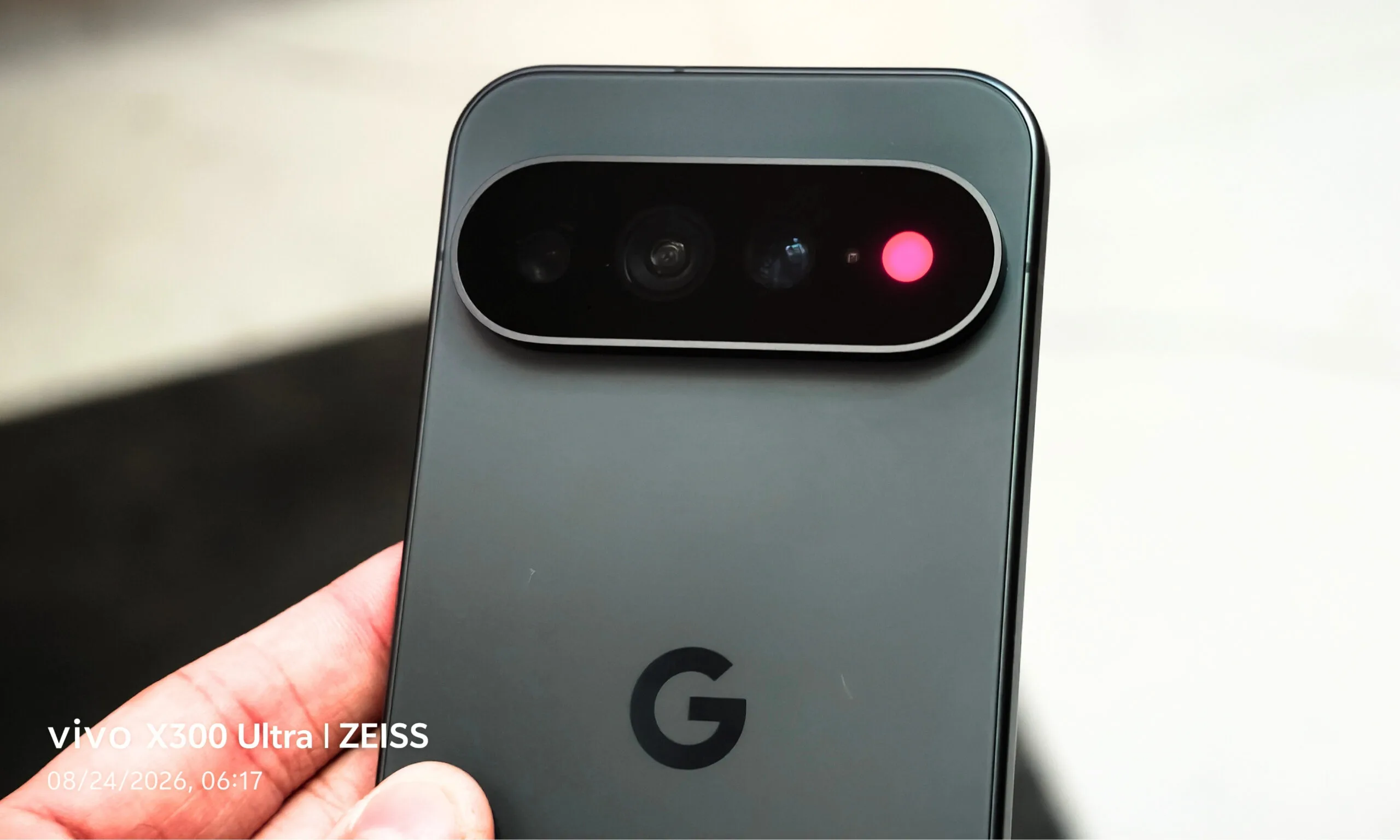
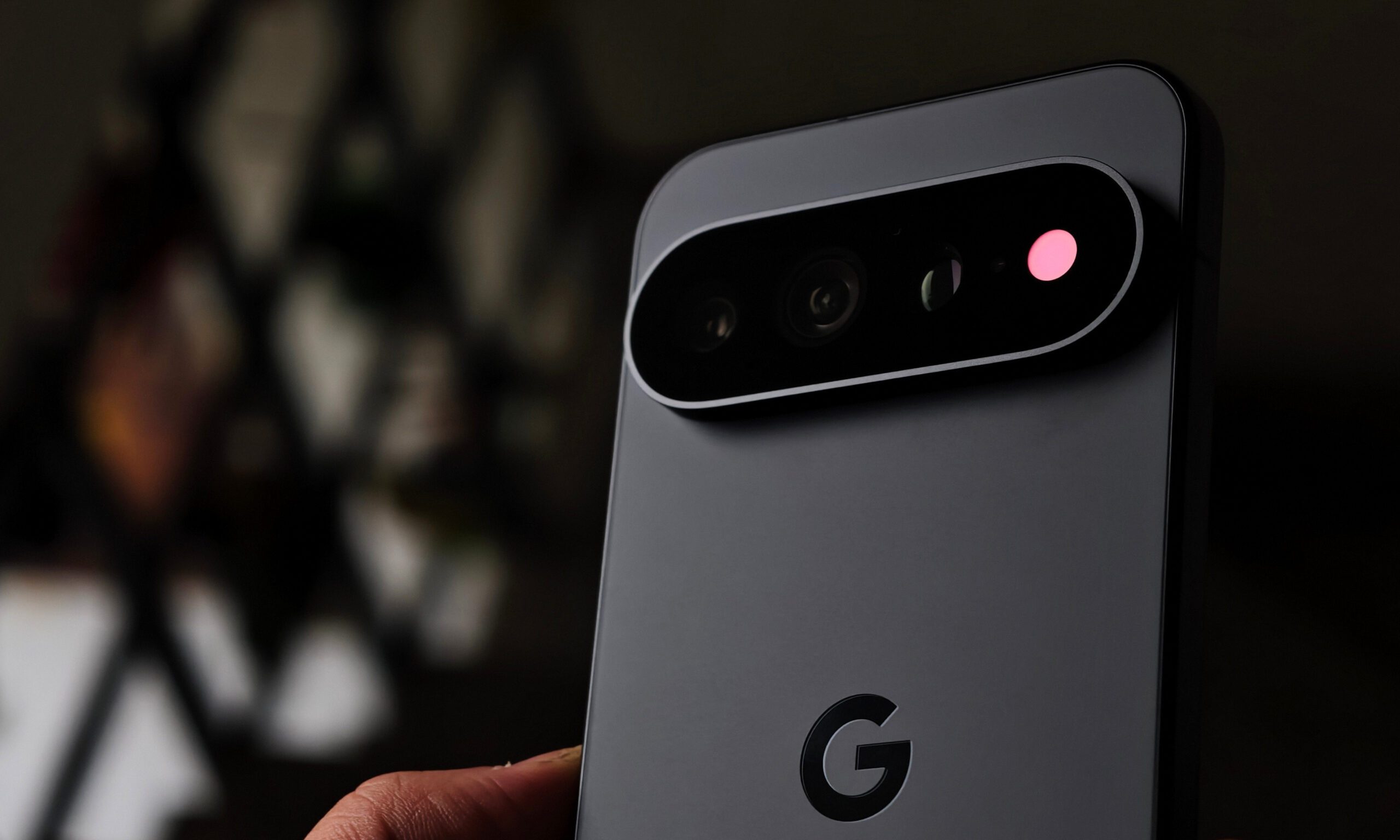
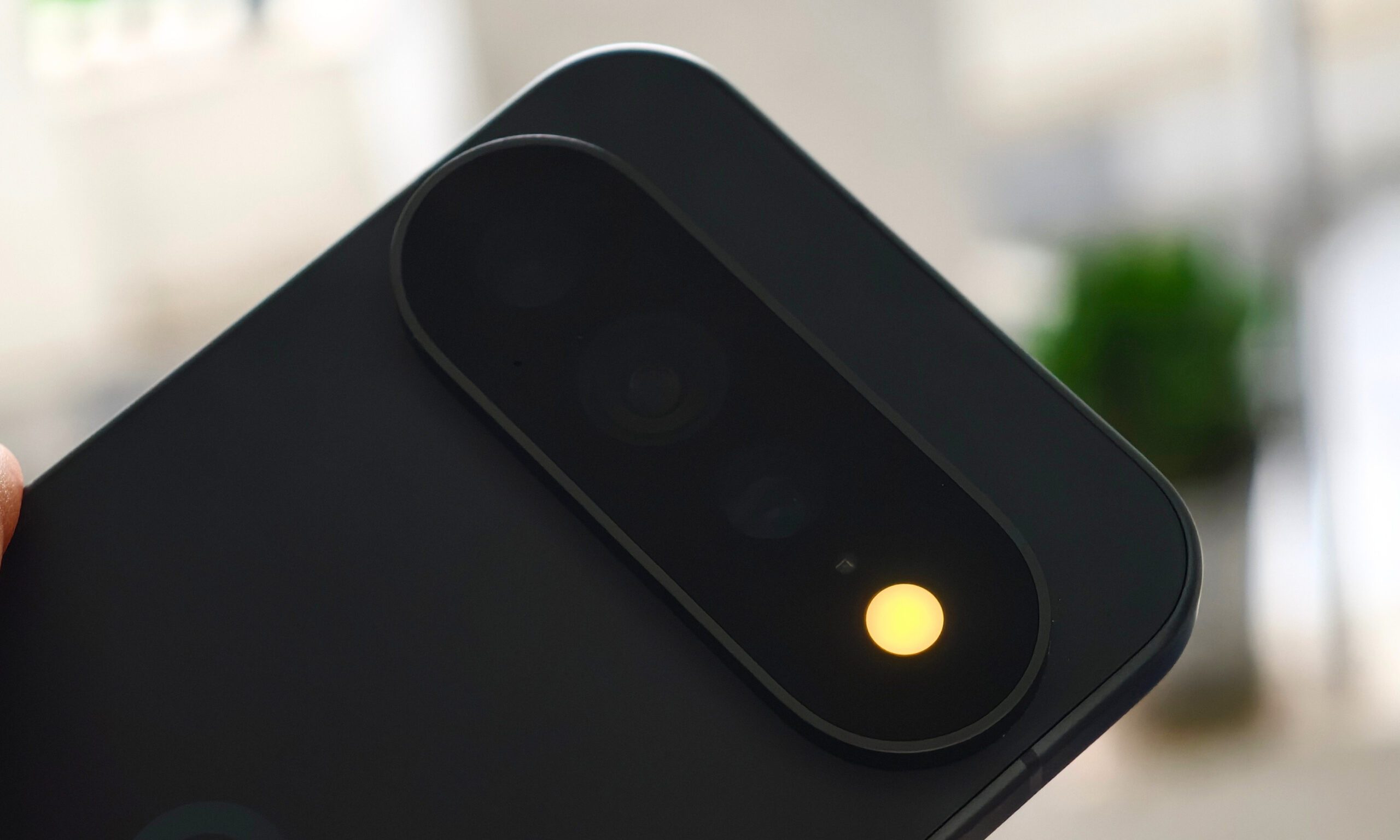
Before Google announced the feature, I was actually excited about it, thinking about all the potential use cases; the light could have been a subtle notification queue for users, one that doesn’t compel them to unlock the phone right away. However, Google tied the hardware to two use cases: Gemini interactions and calls from favorite contacts.
Shikhar Mehrotra / Digital Trends
That is exactly why tech content creator @Dhananjay_Tech (DhananjayBhosale) created an app called HiLight Studio, with a simple pitch: unlock HiLight’s true potential by opening it up to third-party apps and letting you have some fun with it. After spending a few days with the app on a Pixel 11 Pro XL, I have some thoughts, both about what the HiLight is actually capable of, and how much Google actually left on the table with it.
That’s where HiLight Studio comes in
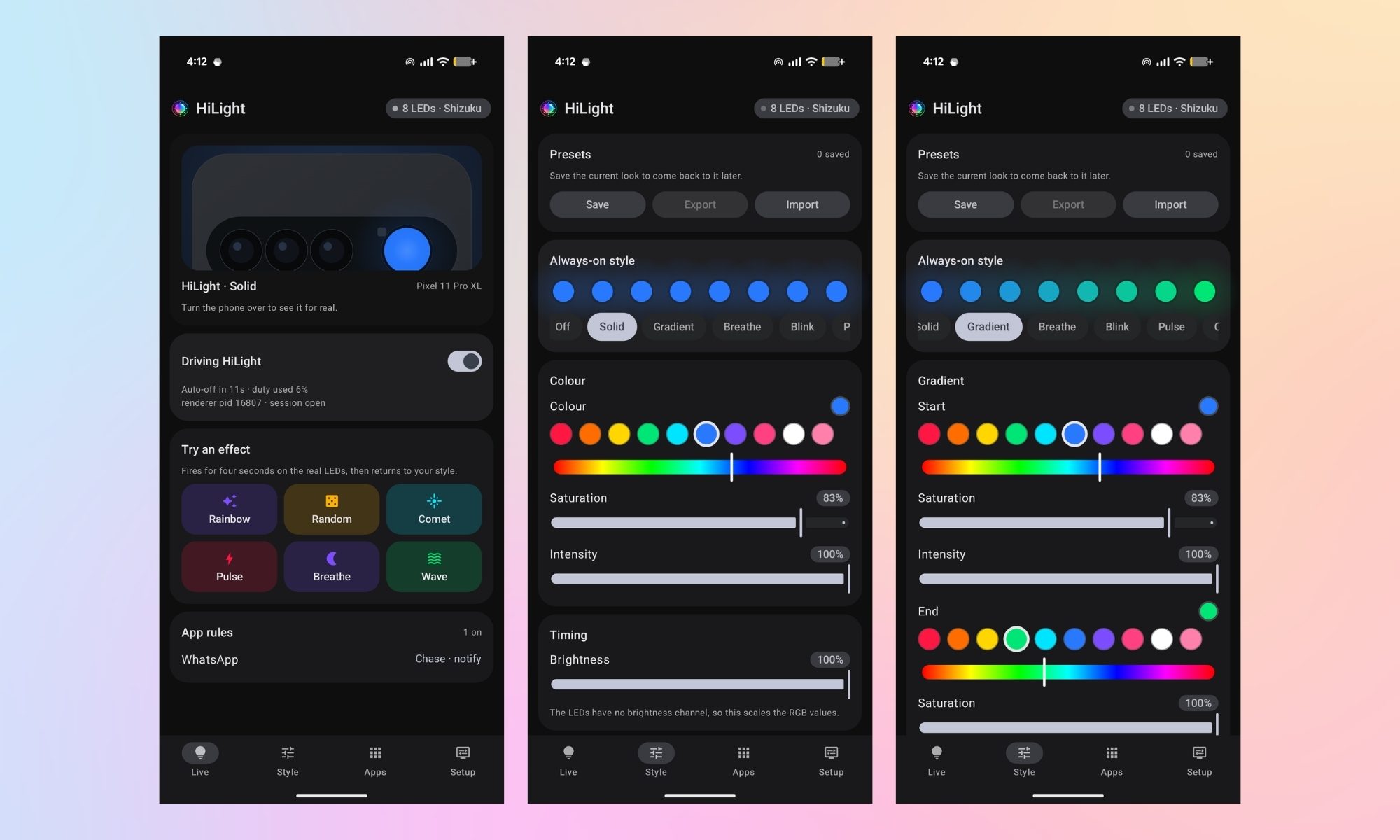
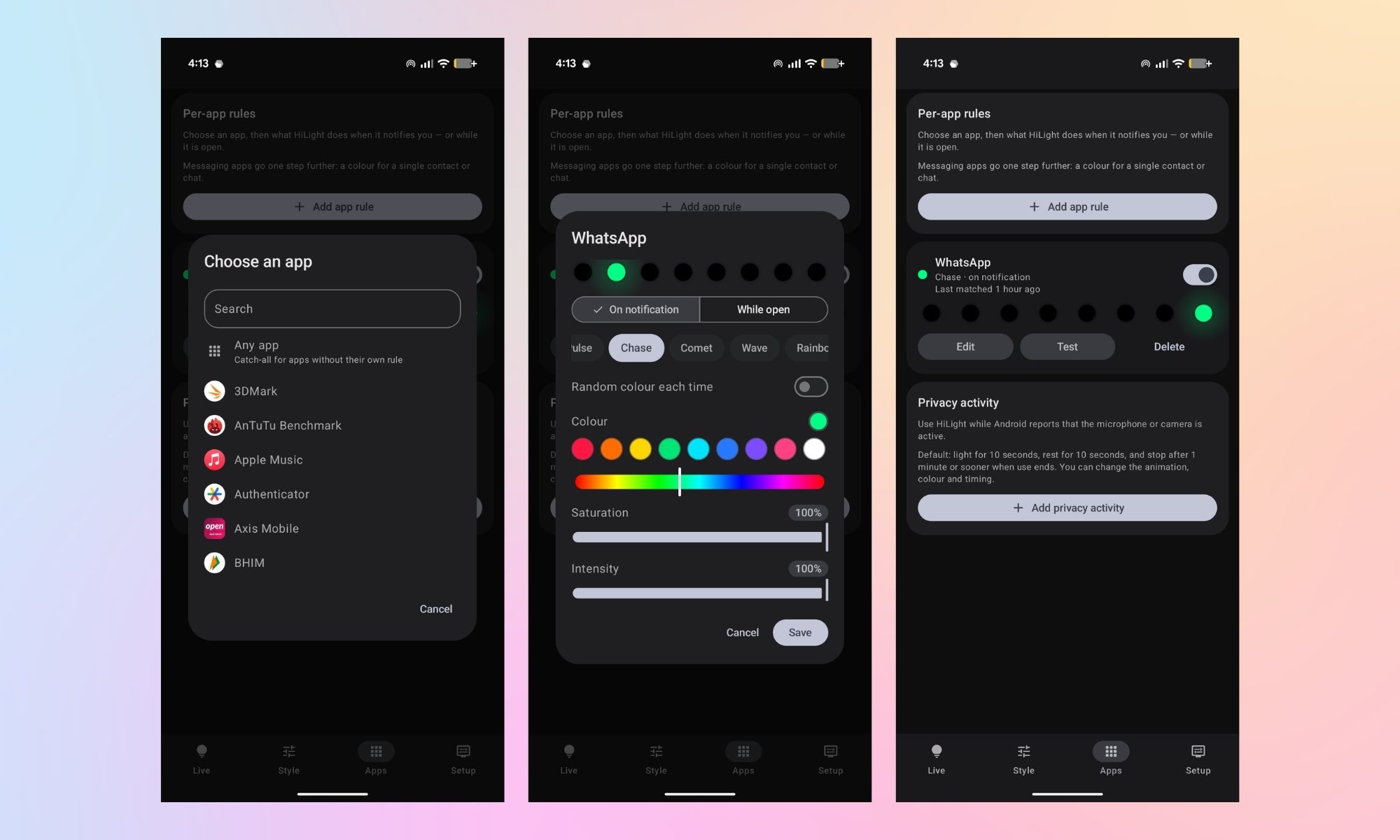
On the home page, you can try out plenty of HiLight effects. The Rainbow effect comes closest to what we’ve seen in the promotional materials so far, with the modules lighting up in a rotating gradient. You also get five other effects to choose from: Random, Comet, Pulse, Breathe, and Wave. While this page is called Live (designated at the bottom of the screen), the Style page to the right lets you enable HiLight as an always-on light.
Shikhar Mehrotra / Digital Trends
You can also choose different ways you want the LED modules to light up, including a gradient finish (with the option to select the start/end color), a breathing look (with the option to set the timing per cycle), and more.
There’s an Apps section as well, wherein you can customize how the HiLight module glows up upon receiving a notification from an app. In my case, I’ve set a Chasing green light for WhatsApp, set as “on notification” rather than “while open.” Similarly, you can also create per-app rules for Instagram, Messenger, Teams, Gmail, or Slack.
Advertisement
Shikhar Mehrotra / Digital Trends
This is where the hardware finally makes sense
This is one of the most intuitive and natural use cases of HiLight in my opinion, something that I’d like to remain this way. For what it’s worth, the app genuinely makes Google’s HiLight module interesting. It turns the boring system implementation into something that I always imagined it would be: a glanceable notification system.
Here’s the catch: enabling wireless debugging locks me out of the banking and payment apps I use daily, for security reasons that are frankly fair, not paranoid. So even though I like what HiLight Studio does, I can’t run it full-time. Second, and more importantly, actually getting the app working is a genuinely arduous process for a regular user.
Shikhar Mehrotra / Digital Trends
Getting to what Google left behind is more tedious than it should be
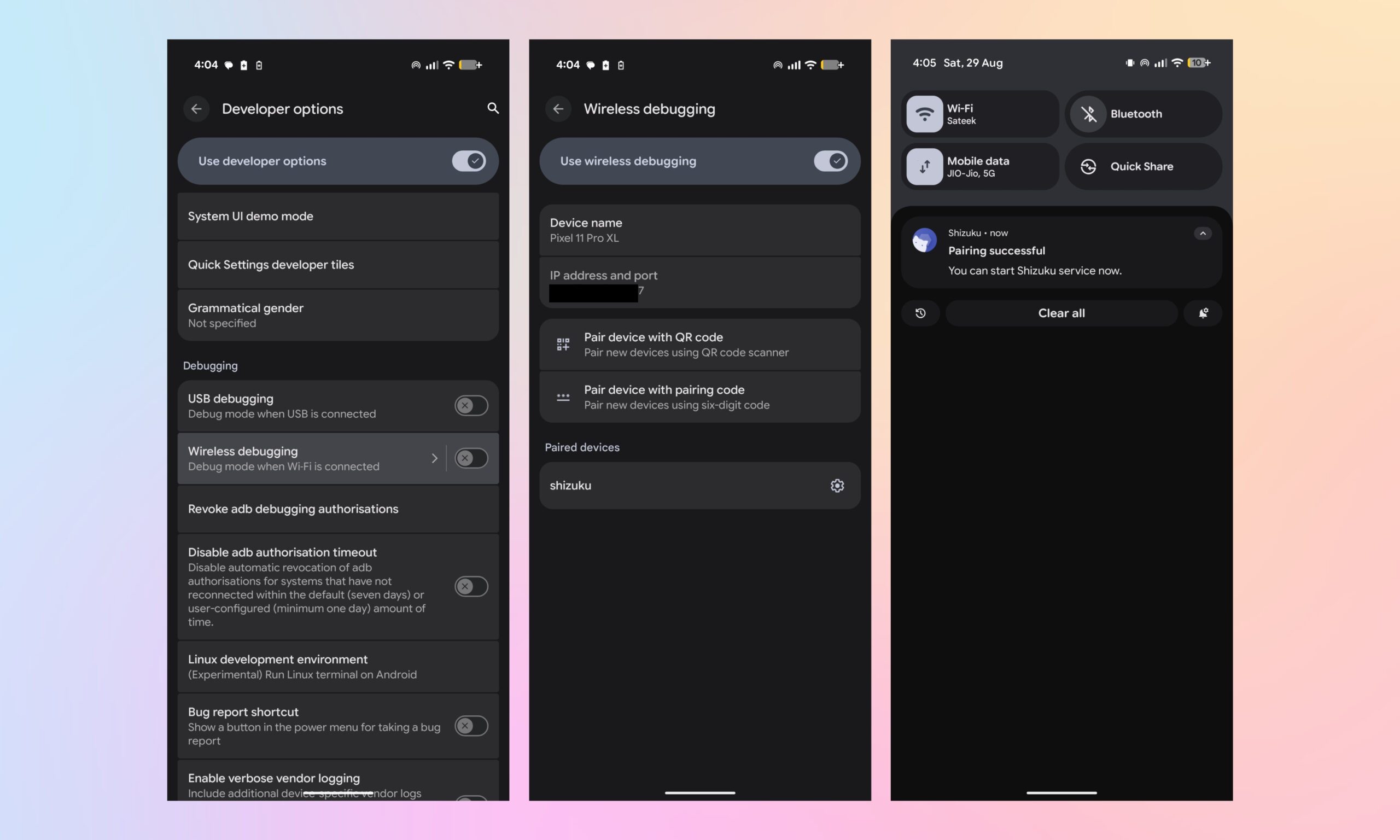
You need two apps installed: HiLight Studio and Shizuku. First, enable Developer Options by tapping the build number seven times under “About phone,” because apparently that’s still how we’re gatekeeping settings in 2026. Then enable wireless debugging, install Shizuku, pair it using the six-digit code from the notification, and tap “Start.”
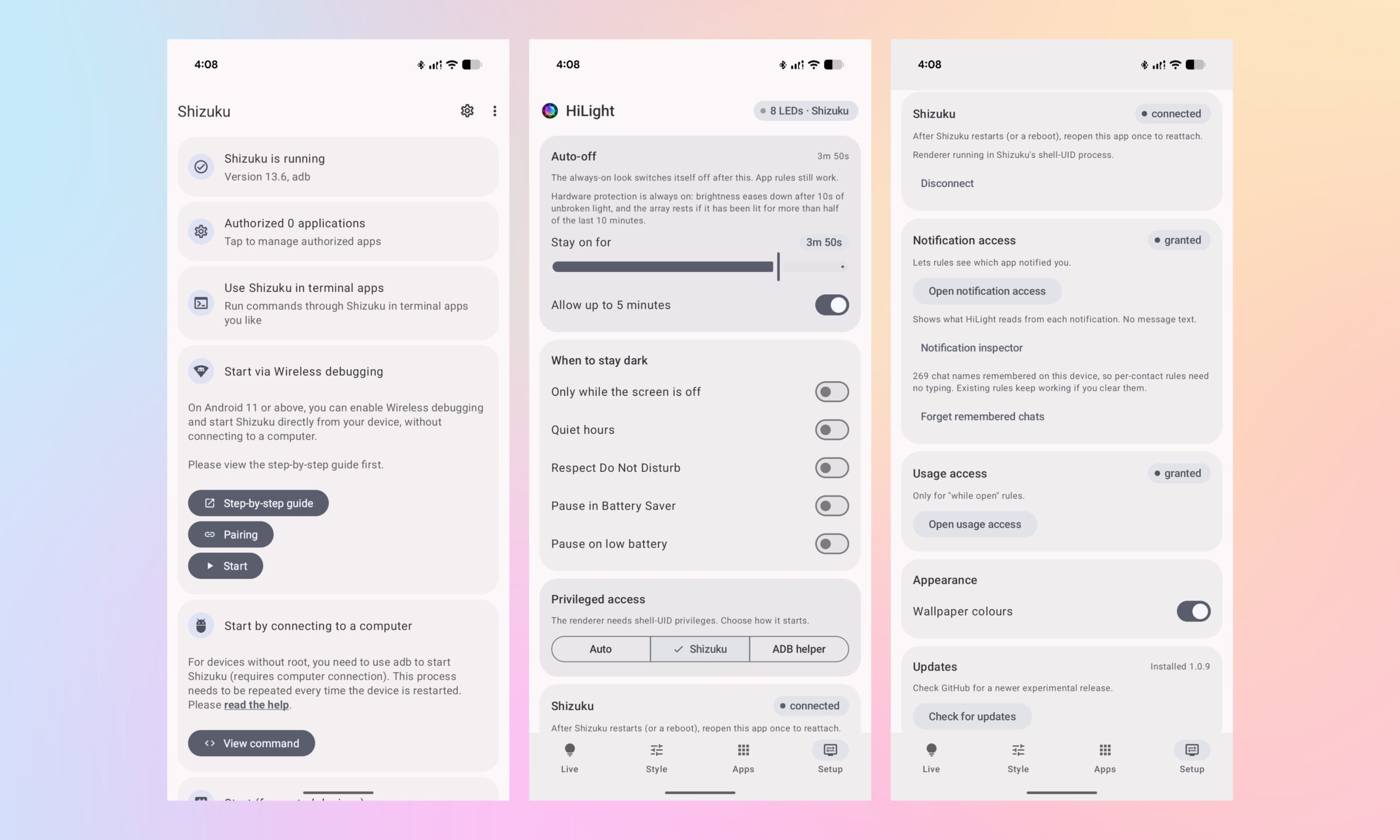
Shizuku, for the uninitiated, lets third-party apps borrow first-party system permissions, which in this case means the HiLight module. It’s only on the Play Store for Android 16 devices, so it wasn’t even available for my Pixel 11 Pro XL running Android 17, forcing a sideload instead. However, some of you might already know that the app was recently exploited by RedHook malware, which would also keep most users from installing it.
Steps to enable wireless debugging on Pixel 11 Pro XLShikhar Mehrotra / Digital Trends
From there, open HiLight Studio, head to Setup, and under “Privileged access,” select Shizuku. Grant notification access too. Get everything right, and you’ll see a small “8 LEDs · Shizuku” confirmation appear, followed by one final toggle next to “System has HiLight” that unlocks the effects at the bottom.
Getting here is easier said than done
You see? It took me around 150 words to explain how the process works, and it would probably take you around 10 to 15 minutes to set everything up, provided you’re familiar with Developer Options and apps like Shizuku.
The app works about 70 to 80% of the time, but sometimes a WhatsApp notification doesn’t trigger the effect. Further, rebooting the phone disrupts the connection between HiLight Studio and Shizuku, and you have to re-establish it to use the lights.
Advertisement
Steps to connect Shizuku with HiLight StudioShikhar Mehrotra / Digital Trends
I’d have to give up access to the payment apps I use every day, keep wireless debugging enabled, and rely on a third-party bridge that might or might not be a security issue, all to unlock functionality that Google could have offered natively. These aren’t things that a regular user would want to do on their smartphone.
For me, HiLight Studio proves what Google is missing
I really appreciate the creator of the app, as it lets users explore HiLight’s true potential. However, a third-party app can’t beat a native, system-level implementation that would make the feature much more useful and worthwhile for everyone, not just enthusiasts.
Shikhar Mehrotra / Digital Trends
The app simply proves that the hardware can do much more than Google currently allows, and that’s the key takeaway. If someone at Google is reading this, I genuinely hope you’re planning to add some fun HiLight functionality in one of the upcoming Pixel Drops, because otherwise, this feels like a missed opportunity.
It used to be that Vijay Pande was better known in academic circles than investor circles. That changed pretty abruptly a dozen years ago, when Marc Andreessen and Ben Horowitz — who’d spent their firm’s first five years explicitly avoiding healthcare and life sciences — decided the category was worth betting on after all and handed the keys to Pande. At the time, he was a Stanford chemistry professor who was best known for building Folding@home, the distributed-computing project that turned millions of home PCs into a supercomputer for disease research. Over the next decade-plus, he grew a16z’s bet into a practice managing close to $4 billion.
So it was somewhat unexpected when in June of last year, Pande walked away from it all to start something much smaller. In fact, his new firm, VZVC, co-founded with longtime investor Zach Werner, is built around a handful of concentrated bets a year rather than dozens, it has no associates, and it relies heavily on AI for its day-to-day operations.
To learn more about Pande’s hard pivot, we talked with him this week about why he’s making just a handful of concentrated bets rather than spreading himself thin in the current market — and about one of the more interesting conundrums in AI-driven biotech: unlike text, biological data can’t be scraped off the internet, so nearly every company ends up building its own walled-off dataset. What does that mean for all the advances AI in medicine has promised, and who actually gets access to them?
This conversation has been edited for length and clarity. You can also listen to the fuller conversation (below).
Advertisement
You’ve said biology is moving from a “science of discovery” to something you can engineer. What does that mean?
For a lot of the way drugs have been developed, there was very much a fortuitous aspect to it. I think what’s shifted is that AI and machine learning allow computers to wrap their type of understanding around something very, very complicated… to try to figure out what targets you want your drugs to hit, for specific diseases, to be able to make those drugs, and now even to help in the clinical trials — which are the most expensive part of the process.
I thought clinical trials were getting cheaper because drug developers are using more synthetic data, so not as many people are needed for these trials.
That’s, I think, very much an aspiration.
Advertisement
The cost and time to get to clinical trials has been shrinking, especially with AI, but it could still cost hundreds of millions of dollars to run a trial, which is why drugs are very expensive. The probability of a drug going successfully from the first trial to the end of the third trial is just 20%. If 8 out of 10 fail, and these things cost hundreds of millions of dollars, the amortized cost gets really high. The reason they fail typically is not that the biologist did something wrong; it’s that all the experiments these drugs were designed on were on animal models like mice, and in the end, animal models are just not very predictive of humans. The AI model is not going to be perfect, but it’s going to be way better than any animal model would be, and once it crosses that bar, that’s where it gets really exciting.
[The phase after that is]: Is the drug the right drug for me?
You mean personalized medicine. . .
The jargon here is so-called precision medicine. If you go to a doctor with something not trivial, they have to guess what’s going on, because there’s only so much they can tell. Then they give you a drug — and if that doesn’t work, they give you another drug, then another drug. This happens in cancer, it happens in lots of different areas. We would all be much better off if the first drug was the right one. Typically, your blood test values are compared to population averages. But really, they should be compared to: is this [result] weird for you? What we’re starting to do also on the medicine side is [the ability] to just understand what would be right for the individual.
Advertisement
Would you say the path to this moment has been slow and steady, or did it spike more recently?
I think it’s lots of different things [coming together]. So for instance, precision medicine for the longest time was based on genomics. But the reality is your genome is kind of like the blueprint for your house on day one, but your house is fairly different now compared with the moment it was built. So there are many other things that people can now measure in proteomics and so on that are much more relevant for understanding disease and where your body is now. There has also been [a lot of] automation in robotic measurements that is naturally tied into AI, and those two go hand in hand really well.
Over the last decade, there’s been this steady clip fforin both AI for biology and AI for chemistry. The biology part is like, how can we treat this disease? And then the chemistry part is, how can we come up with a drug to go after that specific protein? There have actually been very significant advances over those 10 years.
You mentioned that biology is one of the few places AI can’t just scrape data off the internet. What does that mean for how the field develops?
Advertisement
It’s a place where you don’t have any of this data that people can just all train the same thing, and your data can’t be distilled from one model to another. It’s a really interesting play from just the pure AI sense.
Doesn’t that echo a familiar problem in medicine, though — doctors operating in [territorial, often competitive] silos?
You’re onto something really big here. Let’s say [someone] has some type of cancer, and it’s both an issue in oncology and endocrinology — those two doctors really don’t sync together very well. What is really intriguing about AI is that it can, in principle, be a specialist in everything, and it can start to see things that really any single human being couldn’t. It would be equivalent to having a team of the very best doctors all clamoring together in that moment.
But is there enough data sharing for that vision to actually be realized? I understand why founders and investors want to protect their [respective findings], but . . .
Advertisement
I think one of the bigger trends is that we’re starting to see a shift toward building these atlases of biological information — which, from a technology standpoint, are typically foundation models. And as they become more common, I think we’ll see the same thing that’s happened with open-source LLMs, which do very well against the corporate ones: open-source foundation models in biology having a very broad impact.
You’re involved with Genesis Therapeutics, which came out of your lab at Stanford, and Insitro, the drug-discovery company launched by Daphne Koller, a former colleague at Stanford. You say you’re also incubating a company with a founder you’ve known for 20 years. What are you looking for in founders, and in what areas?
There are two areas that I’ve been spending most of my time on. One is AI for healthcare delivery, which I did a ton at a16z as well, and then AI for clinical trials.
One of the things that’s most important to me [about founders] is that we can really trust each other — founders that have high integrity, that do what they say they’re gonna do… I’m expecting this relationship to be 5, 10 years plus into, ideally, their next company. I want to work with people who are thinking long term like that. Ideally, these are people who are not just trying to win and beat other people, but really thinking about the question: how do we win together?
Advertisement
What have you gotten right and wrong in your investing career so far?
When I started talking about AI and machine learning and technology and medicine and bio 10 plus years ago, there was a lot of resistance and a lot of people saying, ‘Oh, that’s never going to happen. That’s never going to be useful,’ and so on. That resistance is largely gone and seeing this arc is very fulfilling.
I think it took me some time to really appreciate that as seductive as the coolest technologies are, it really always comes back to go-to-market. I tell my founders, especially the ones who are coming from the science or the product side, for them to take all their brilliance and creativity and really apply it to the go-to-market side, that the go-to-market part is at least as hard or harder than the technology side.
Help us understand how you’re designing this new firm differently, compared with what you were running at a16z.
Advertisement
Right now, we’re doing something really quite different… VZ is named after me, Vijay, and my co-founder, Zach Werner — he’s the Z. We’re intentionally really quite small… on the investment side, it’s really just the two of us. We were actually intending on hiring associates, but it turned out, with the agents that we’ve built up, not to be something that we need to do.
How concentrated is “concentrated”?
We’re [not] driving 30 bets per year… we’re talking about probably five, not a lot of investments — very concentrated. Adding a company at a typical fund is like adding a Facebook friend — that’s something you do pretty quickly. For Zach and I, it’s more like . . . wanting to have another child. This is a big deal for us.
With that structure, who are you competing against for deals?
Advertisement
The funny thing about this model is that typically we’re not trying to compete for a hot round — people make room for us. It’s a very different thing than trying to get the hot Series A or Series B. Largely, people want us as investors because of what Zach and I can do, and how hands-on we can be. When I look at people who are inspirations, I look at someone like Antonio Gracias at Valor — he’s well-known now because of the SpaceX deal, but he’s been doing what he’s been doing for 20 years. What Thrive has done, with a more concentrated portfolio, is also a real inspiration. Obviously, a16z is sort of in my DNA as well, but I think those other ones are new additions to how we think about things.
What’s overhyped right now in AI and biotech?
The reality is that AI can find insights that we can’t get from just humans alone. The thing that always gets tricky is when there’s this call that AI is going to cure all everything. The reason for hesitance there is not because of any doubt about AI — it’s about doubt of the data. LLMs work because there’s so much data to learn from. When the data is just simply not there, then AI can’t magically solve that problem.
Advertisement
When you purchase through links in our articles, we may earn a small commission. This doesn’t affect our editorial independence.
Some of the world’s largest music publishers filed a blockbuster lawsuit against Anthropic late Friday night, alleging “one of the largest and most blatant ongoing thefts of intellectual property in history.”
The suit is the opening salvo in what is now likely to be a yearslong fight over music, AI, and how intellectual property is protected in a new era of technology… The Sony/Warner lawsuit is notable because it’s broad. It alleges Anthropic unlawfully trained its models off “tens of thousands” of music publishers’ copyrighted compositions, whereas other lawsuits have focused on a narrower set of works. BMG’s lawsuit against Anthropic, for example, claims infringement against 493 compositions.
What they’re saying: “Defendants Anthropic and its founders Dario Amodei and Benjamin Mann have conducted a brazen campaign of illegally torrenting, scraping, and downloading copyrighted works on a massive scale in order to develop, operate, and reap enormous profits from Anthropic’s ‘Claude’ series of artificial intelligence (‘AI’) models,” the plaintiffs write in the 48-page complaint. They also claim that Anthropic pirated thousands of copyrighted musical works…
Advertisement
More details from The Verge:
The companies are asking for up to $150,000 per work, plus up to $25,000 for each instance when identifiable copyright data was stripped. In total, the damages could amount to several billion dollars if a court finds in Sony and Warner’s favor and awards the maximum amount…
The suit alleges that Mann used BitTorrent to download over five million pirated books, and that employees downloaded at least two million more from Pirate Library Mirror. It also claims that Anthropic scraped lyrics from sites like MusixMatch and LyricFind, which paid to license content from the labels.
Anthropic is permanently increasing Claude Code’s standard weekly usage limits by 25% for Pro, Max, Team, and seat-based Enterprise plans, but it’s not as good as it sounds.
If you use Claude, you’re actually getting a 17% reduction compared to what you have today.
Claude Code currently has a temporary 50% increase in weekly limits, which Anthropic says will remain in place until September 14.
“Starting September 14, we’re permanently raising standard weekly limits in Claude Code by 25% for Pro, Max, Team, and seat-based Enterprise plans,” Anthropic wrote on X. “Until then, the current 50% increase will be in place.”
It’s a clever way to frame words, as it almost sounds like you’re winning as a customer, but you’re not, and it’s a downgrade.
Advertisement
If Claude Code’s original weekly allowance was 100, the temporary boost gives you 150 today. On September 14, that drops to 125.
In other words, you will have 25% more Claude Code usage than you did before the temporary promotion, but about 17% less than you have right now.
Anthropic says more Claude Code usage changes are coming
Anthropic later deleted the original thread and posted a clarification, where it clearly admits the reduction.
“Compared to today, this works out to a 17% reduction in weekly limits on Claude Code,” the company said.
Advertisement
“We’re working on exciting changes that will make it feel like you’re getting more from Claude, while having more visibility and control of your usage. Can’t wait to share them.”
Anthropic says Claude usage can vary based on factors including conversation length, model choice, tool usage, and effort level, so the weekly allowance does not translate into a fixed number of Claude Code prompts.
The current 50% temporary increase remains available through September 13, with the new permanent limits taking effect on September 14.
Overall prevention scores can hide what happens after initial access. Once attackers are using valid credentials, prevention drops sharply.
The Blue Report 2026 measures defenses technique by technique across 338 million simulations run in customer production environments.
We spend hours testing every product or service we review, so you can be sure you’re buying the best. Find out more about how we test.
Noble Audio Vanguard review
Right out of the box, the Noble Audio Vanguard look and feel unlike any other in-ear monitors (IEMs) that I’ve tried before. Their medieval-like outer casework, their shield-shaped ear tip case, and their ink-black cable all caught my eye in a way that few rivals have in my years testing audio gear.
The striking visuals are undeniable. But what of their sound? Well, Noble Audio says that the Vanguard are “designed for control, clarity, and balance,” aiming to deliver excellent clarity across the frequency range through their triple driver configuration.
Advertisement
But are the Vanguard actually able to compete with the very best wired earbuds around? Here’s my verdict after extensive testing and many an hour of listening.
Latest Videos FromTechRadar
Let’s start by taking a look under the hood. The Noble Audio Vanguard make use of three drivers — all of which are focused on specific roles. For the low frequencies, there’s a 10mm dynamic driver, but there are also two custom balanced armature drivers on board — one for the mid-high frequencies, and another for the ultra-high domain. You can connect to an audio device with the standard 4.4mm connector, although there’s also a USB-C adapter included if you want to listen to tracks on your phone or desktop PC, for instance. Unfortunately, there’s no 3.5mm option out of the box, so you’ll need to use an adapter if you need access to that.
Advertisement
The Vanguard also come with a shield-shaped case filled with an outrageous number of extra ear tips, including gel and foam options. And with the right seal, the Vanguard are able to offer very solid noise isolation, with sounds such as typing and chatter in my office subdued to great effect. As well as the shield case for ear tips, you also get a fabric pouch for the IEMs. It’s a neat addition, although it’s incredibly susceptible to picking up fibers from a pocket or bag.
One thing that I have to discuss is the actual shape of the IEMs. They’re very chunky, and stuck out from my ears a fair bit, creating a slightly odd feel in-use. Their broad construction meant that they weren’t the most comfortable wired in-ears I’ve ever used, but I still felt that they were secure and fine to keep in for an hour or so at a time.
From a purely aesthetic perspective, the Vanguard fare a bit better in my eyes. They appear to be inspired by medieval-style fantasy, with a shield on each bud containing a splash of gold deep black outer casing. The buds are also constructed from aluminium and a “precision-machined shell,” and they feel highly premium — perhaps even more than their price would suggest. The black, intertwined wire is also a thing of beauty, and I was never subjected to distracting cable noise.
Sign up for breaking news, reviews, opinion, top tech deals, and more.
Advertisement
(Image credit: Future)
But you want to know how they sound now, don’t you? Well, I’ve kept you waiting long enough. And it’s good news, because for the price you pay, these IEMs sound exceptional.
In All’Acqua Ghiacciata by Marco Castello, the Vanguard performed brilliantly across the board. Acoustic guitars occupied a distinct pocket, and came through with gorgeous tonality. They were well separated from the vocals, which sounded textured and natural. The real highlight, though, was the energetic drums, which came through with incredible clarity and precision, and sounded tastefully prominent without feeling overly bright. Smooth bass was also perfectly balanced in the mix, communicated with impact and warmth without overstepping.
More generally, bass is well-balanced on the Vanguard — though it can hit hard if needed. For instance, on First Night by Vitess, the kick came through with tremendous impact and power, really immersing me in the cosmic house banger. And this was never at the expense of spacey synths or animated drums, which were perfectly weighted in the mix.
Advertisement
As you may expect from the driver configuration — with one specifically tailored for upper treble, and another for mids-highs — the higher frequencies sound excellent on the Vanguard. I’d say they sound a little forward, but tastefully so, emphasizing excitement and detail in the upper echelons of the frequency range. This may not be ideal for those who want the most neutral monitoring solution, but for sheer music-listening enjoyment it’s a welcome decision.
While the Vanguard perhaps don’t provide the enveloping, super-expansive soundstage that some listeners may like, I personally love their dynamic, tight, and detailed approach. And they still provide impressive instrument separation, enabling each component of your favorite tracks to breathe. The dynamic drivers provide weighty yet controlled bass, and the duo of balanced armature drivers are fantastic at supplying textured vocals and clear mids, and especially talented in plating up expressive highs. So the Vanguard are a hit as far as sound quality is concerned.
At $325 / £299 / AU$467, the Noble Audio Vanguard feel well worth the outlay. Sure, they’re a bit chunky, and could be a bit more snug in-use. But the level of detail and precision they supply is spectacular at this price-point. With high build quality and multiple connectivity options, the Vanguard are an excellent affordable-to-mid-range option that audiophiles are sure to love.
(Image credit: Future)
Advertisement
Noble Audio Vanguard review: price & release date
Priced at $325 / £299 / AU$467
Released in July 2026
At $325 / £299 / AU$467, the Noble Audio Vanguard sit in the affordable-to-mid-range section of the IEM market. They were released in July 2026, as something of a successor to 2025’s Noble Audio Knight IEMs.
For this money, their closest competition might be the Activo Q1, at $349 / £299 (about AU$600), from audiophile staple Astell & Kern’s affordable sub-brand. And while the ethereal aesthetic of those wired buds is very different to that of the Noble, the star-rating is just as competitive.
One thing: they may be a little hard to find online, with no planned availability on Amazon or other big third party retailers. But that does not mean I encourage you to stop searching — in fact, the opposite is true.
Noble Audio Vanguard review: specs
Swipe to scroll horizontally
Drivers
Advertisement
1x 10mm dynamic; 2x custom balanced armature
Weight
8g (per bud)
Frequency range
Advertisement
Not stated
Connectivity
4.4mm, USB-C
(Image credit: Future)
Advertisement
Should I buy the Noble Audio Vanguard?
Swipe to scroll horizontally
Attribute
Notes
Score
Features
Advertisement
Good noise isolation, handy USB-C adapter, multiple eartips, no 3.5mm option out of the box.
4.5/5
Performance
Excellent sound with controlled yet impactful bass, textured mids, and expressive highs.
Advertisement
5/5
Design
Unique aesthetic, high-quality build, but a bit chunky in-ear.
4/5
Advertisement
Value
Affordable for the sonic qualities they offer up.
4.5/5
Advertisement
Buy them if…
Don’t buy them if…
Noble Audio Vanguard review: also consider
Swipe to scroll horizontally
Header Cell – Column 0
Noble Audio Vanguard
Activo Q1
Advertisement
Meze Audio Alba
Price
$325 / £299 / AU$467
$349 / £299 (about AU$600)
Advertisement
$159 / £139 / AU$239
Drivers
1x 10mm dynamic; 2x custom balanced armature
1x 9.8mm dynamic; 1x balanced armature
Advertisement
10.8mm dynamic
Weight
8g (per bud)
Not stated
Advertisement
14g
Frequency range
Not stated
20Hz-20kHz
Advertisement
15Hz-25kHz
Connectivity
4.4mm, USB-C
3.5mm; 4.4mm
Advertisement
3.5mm; 4.4mm, USB-C
How I tested the Noble Audio Vanguard
(Image credit: Future)
Tested over the course of multiple days
Mainly tested using Tidal
Paired with Astell & Kern A&ultima SP4000
I tested the Noble Audio Vanguard across multiple days and spent hours upon hours listening to music. Typically, I had the Vanguard hooked up to the Astell & Kern A&ultima SP4000 media player, though I did also try them out with my Windows laptop and Xiaomi 17 phone.
To begin with, I sifted through tracks in the TechRadar reference playlist, which features tunes from a wide variety of genres, but I also bumped a bunch of songs from my personal library. I also made sure to compare the Vanguard to affordable IEM rivals like the Sennheiser IE 200.
More generally, I’ve spent years testing audio gear here at TechRadar, where I serve as an in-house Senior Reviews Writer. I’ve covered everything from portable DACs through to premium wireless headphones such as the Sony WH-1000XM6, and have reviewed a number of IEMs, meaning I know exactly what it takes for a model to stand out in a competitive market.






























































You must be logged in to post a comment Login