Anthropic is permanently increasing Claude Code’s standard weekly usage limits by 25% for Pro, Max, Team, and seat-based Enterprise plans, but it’s not as good as it sounds.
If you use Claude, you’re actually getting a 17% reduction compared to what you have today.
Claude Code currently has a temporary 50% increase in weekly limits, which Anthropic says will remain in place until September 14.
“Starting September 14, we’re permanently raising standard weekly limits in Claude Code by 25% for Pro, Max, Team, and seat-based Enterprise plans,” Anthropic wrote on X. “Until then, the current 50% increase will be in place.”
It’s a clever way to frame words, as it almost sounds like you’re winning as a customer, but you’re not, and it’s a downgrade.
Advertisement
If Claude Code’s original weekly allowance was 100, the temporary boost gives you 150 today. On September 14, that drops to 125.
In other words, you will have 25% more Claude Code usage than you did before the temporary promotion, but about 17% less than you have right now.
Anthropic says more Claude Code usage changes are coming
Anthropic later deleted the original thread and posted a clarification, where it clearly admits the reduction.
“Compared to today, this works out to a 17% reduction in weekly limits on Claude Code,” the company said.
Advertisement
“We’re working on exciting changes that will make it feel like you’re getting more from Claude, while having more visibility and control of your usage. Can’t wait to share them.”
Anthropic says Claude usage can vary based on factors including conversation length, model choice, tool usage, and effort level, so the weekly allowance does not translate into a fixed number of Claude Code prompts.
The current 50% temporary increase remains available through September 13, with the new permanent limits taking effect on September 14.
Overall prevention scores can hide what happens after initial access. Once attackers are using valid credentials, prevention drops sharply.
The Blue Report 2026 measures defenses technique by technique across 338 million simulations run in customer production environments.
It used to be that Vijay Pande was better known in academic circles than investor circles. That changed pretty abruptly a dozen years ago, when Marc Andreessen and Ben Horowitz — who’d spent their firm’s first five years explicitly avoiding healthcare and life sciences — decided the category was worth betting on after all and handed the keys to Pande. At the time, he was a Stanford chemistry professor who was best known for building Folding@home, the distributed-computing project that turned millions of home PCs into a supercomputer for disease research. Over the next decade-plus, he grew a16z’s bet into a practice managing close to $4 billion.
So it was somewhat unexpected when in June of last year, Pande walked away from it all to start something much smaller. In fact, his new firm, VZVC, co-founded with longtime investor Zach Werner, is built around a handful of concentrated bets a year rather than dozens, it has no associates, and it relies heavily on AI for its day-to-day operations.
To learn more about Pande’s hard pivot, we talked with him this week about why he’s making just a handful of concentrated bets rather than spreading himself thin in the current market — and about one of the more interesting conundrums in AI-driven biotech: unlike text, biological data can’t be scraped off the internet, so nearly every company ends up building its own walled-off dataset. What does that mean for all the advances AI in medicine has promised, and who actually gets access to them?
This conversation has been edited for length and clarity. You can also listen to the fuller conversation (below).
Advertisement
You’ve said biology is moving from a “science of discovery” to something you can engineer. What does that mean?
For a lot of the way drugs have been developed, there was very much a fortuitous aspect to it. I think what’s shifted is that AI and machine learning allow computers to wrap their type of understanding around something very, very complicated… to try to figure out what targets you want your drugs to hit, for specific diseases, to be able to make those drugs, and now even to help in the clinical trials — which are the most expensive part of the process.
I thought clinical trials were getting cheaper because drug developers are using more synthetic data, so not as many people are needed for these trials.
That’s, I think, very much an aspiration.
Advertisement
The cost and time to get to clinical trials has been shrinking, especially with AI, but it could still cost hundreds of millions of dollars to run a trial, which is why drugs are very expensive. The probability of a drug going successfully from the first trial to the end of the third trial is just 20%. If 8 out of 10 fail, and these things cost hundreds of millions of dollars, the amortized cost gets really high. The reason they fail typically is not that the biologist did something wrong; it’s that all the experiments these drugs were designed on were on animal models like mice, and in the end, animal models are just not very predictive of humans. The AI model is not going to be perfect, but it’s going to be way better than any animal model would be, and once it crosses that bar, that’s where it gets really exciting.
[The phase after that is]: Is the drug the right drug for me?
You mean personalized medicine. . .
The jargon here is so-called precision medicine. If you go to a doctor with something not trivial, they have to guess what’s going on, because there’s only so much they can tell. Then they give you a drug — and if that doesn’t work, they give you another drug, then another drug. This happens in cancer, it happens in lots of different areas. We would all be much better off if the first drug was the right one. Typically, your blood test values are compared to population averages. But really, they should be compared to: is this [result] weird for you? What we’re starting to do also on the medicine side is [the ability] to just understand what would be right for the individual.
Advertisement
Would you say the path to this moment has been slow and steady, or did it spike more recently?
I think it’s lots of different things [coming together]. So for instance, precision medicine for the longest time was based on genomics. But the reality is your genome is kind of like the blueprint for your house on day one, but your house is fairly different now compared with the moment it was built. So there are many other things that people can now measure in proteomics and so on that are much more relevant for understanding disease and where your body is now. There has also been [a lot of] automation in robotic measurements that is naturally tied into AI, and those two go hand in hand really well.
Over the last decade, there’s been this steady clip fforin both AI for biology and AI for chemistry. The biology part is like, how can we treat this disease? And then the chemistry part is, how can we come up with a drug to go after that specific protein? There have actually been very significant advances over those 10 years.
You mentioned that biology is one of the few places AI can’t just scrape data off the internet. What does that mean for how the field develops?
Advertisement
It’s a place where you don’t have any of this data that people can just all train the same thing, and your data can’t be distilled from one model to another. It’s a really interesting play from just the pure AI sense.
Doesn’t that echo a familiar problem in medicine, though — doctors operating in [territorial, often competitive] silos?
You’re onto something really big here. Let’s say [someone] has some type of cancer, and it’s both an issue in oncology and endocrinology — those two doctors really don’t sync together very well. What is really intriguing about AI is that it can, in principle, be a specialist in everything, and it can start to see things that really any single human being couldn’t. It would be equivalent to having a team of the very best doctors all clamoring together in that moment.
But is there enough data sharing for that vision to actually be realized? I understand why founders and investors want to protect their [respective findings], but . . .
Advertisement
I think one of the bigger trends is that we’re starting to see a shift toward building these atlases of biological information — which, from a technology standpoint, are typically foundation models. And as they become more common, I think we’ll see the same thing that’s happened with open-source LLMs, which do very well against the corporate ones: open-source foundation models in biology having a very broad impact.
You’re involved with Genesis Therapeutics, which came out of your lab at Stanford, and Insitro, the drug-discovery company launched by Daphne Koller, a former colleague at Stanford. You say you’re also incubating a company with a founder you’ve known for 20 years. What are you looking for in founders, and in what areas?
There are two areas that I’ve been spending most of my time on. One is AI for healthcare delivery, which I did a ton at a16z as well, and then AI for clinical trials.
One of the things that’s most important to me [about founders] is that we can really trust each other — founders that have high integrity, that do what they say they’re gonna do… I’m expecting this relationship to be 5, 10 years plus into, ideally, their next company. I want to work with people who are thinking long term like that. Ideally, these are people who are not just trying to win and beat other people, but really thinking about the question: how do we win together?
Advertisement
What have you gotten right and wrong in your investing career so far?
When I started talking about AI and machine learning and technology and medicine and bio 10 plus years ago, there was a lot of resistance and a lot of people saying, ‘Oh, that’s never going to happen. That’s never going to be useful,’ and so on. That resistance is largely gone and seeing this arc is very fulfilling.
I think it took me some time to really appreciate that as seductive as the coolest technologies are, it really always comes back to go-to-market. I tell my founders, especially the ones who are coming from the science or the product side, for them to take all their brilliance and creativity and really apply it to the go-to-market side, that the go-to-market part is at least as hard or harder than the technology side.
Help us understand how you’re designing this new firm differently, compared with what you were running at a16z.
Advertisement
Right now, we’re doing something really quite different… VZ is named after me, Vijay, and my co-founder, Zach Werner — he’s the Z. We’re intentionally really quite small… on the investment side, it’s really just the two of us. We were actually intending on hiring associates, but it turned out, with the agents that we’ve built up, not to be something that we need to do.
How concentrated is “concentrated”?
We’re [not] driving 30 bets per year… we’re talking about probably five, not a lot of investments — very concentrated. Adding a company at a typical fund is like adding a Facebook friend — that’s something you do pretty quickly. For Zach and I, it’s more like . . . wanting to have another child. This is a big deal for us.
With that structure, who are you competing against for deals?
Advertisement
The funny thing about this model is that typically we’re not trying to compete for a hot round — people make room for us. It’s a very different thing than trying to get the hot Series A or Series B. Largely, people want us as investors because of what Zach and I can do, and how hands-on we can be. When I look at people who are inspirations, I look at someone like Antonio Gracias at Valor — he’s well-known now because of the SpaceX deal, but he’s been doing what he’s been doing for 20 years. What Thrive has done, with a more concentrated portfolio, is also a real inspiration. Obviously, a16z is sort of in my DNA as well, but I think those other ones are new additions to how we think about things.
What’s overhyped right now in AI and biotech?
The reality is that AI can find insights that we can’t get from just humans alone. The thing that always gets tricky is when there’s this call that AI is going to cure all everything. The reason for hesitance there is not because of any doubt about AI — it’s about doubt of the data. LLMs work because there’s so much data to learn from. When the data is just simply not there, then AI can’t magically solve that problem.
Advertisement
When you purchase through links in our articles, we may earn a small commission. This doesn’t affect our editorial independence.
About 1,600 federal employees who work at the General Services Administration have been forced to relocate from their office on F Street in Washington, DC, to the Theodore Roosevelt Federal Building, roughly two blocks away. Workers say the new building, which also houses staff from the Office of Personnel Management has mice, a caved-in bathroom ceiling, and drinking water that needs to be run for five to 10 seconds before it is clear.
The federal workforce has been rocked by changes made by Elon Musk’s so-called Department of Government Efficiency (DOGE) since January 2025. DOGE effectively fired tens of thousands of workers and forced those who remained to commit to in-person schedules and, in some cases, zero-based budgeting. GSA, the agency in charge of the federal government’s IT services and real estate assets, was hit early by DOGE, and in addition to major workforce cuts also rolled out plans to sell hundreds of federal office buildings. A year after the cuts, GSA announced it planned to hire about 400 workers.
“We’ve all been through a lot, but this really made me finally understand that they don’t care about us,” says one GSA employee who asked to remain anonymous, as they aren’t authorized to speak to the press. “We’re left wondering what else is going to collapse or break—do we need to look at the ceiling before going to the bathroom? Can we actually trust the water is safe to drink?”
Courtesy of GSA employee
Photos obtained by WIRED show a toilet in a men’s room on the third floor covered in debris from the ceiling, a gaping hole in said ceiling, and a dead mouse caught in a trap. Workers said the mouse wasn’t “entirely shocking” since many federal buildings allegedly have vermin, but the ceiling pushed them over the edge. An additional sign in the office recommends workers filling up water bottles to “run the water without your bottle for 5-10 seconds and wait for the water to run clear.”
Advertisement
GSA and OPM did not immediately respond to a request for comment.
Some of the world’s largest music publishers filed a blockbuster lawsuit against Anthropic late Friday night, alleging “one of the largest and most blatant ongoing thefts of intellectual property in history.”
The suit is the opening salvo in what is now likely to be a yearslong fight over music, AI, and how intellectual property is protected in a new era of technology… The Sony/Warner lawsuit is notable because it’s broad. It alleges Anthropic unlawfully trained its models off “tens of thousands” of music publishers’ copyrighted compositions, whereas other lawsuits have focused on a narrower set of works. BMG’s lawsuit against Anthropic, for example, claims infringement against 493 compositions.
What they’re saying: “Defendants Anthropic and its founders Dario Amodei and Benjamin Mann have conducted a brazen campaign of illegally torrenting, scraping, and downloading copyrighted works on a massive scale in order to develop, operate, and reap enormous profits from Anthropic’s ‘Claude’ series of artificial intelligence (‘AI’) models,” the plaintiffs write in the 48-page complaint. They also claim that Anthropic pirated thousands of copyrighted musical works…
Advertisement
More details from The Verge:
The companies are asking for up to $150,000 per work, plus up to $25,000 for each instance when identifiable copyright data was stripped. In total, the damages could amount to several billion dollars if a court finds in Sony and Warner’s favor and awards the maximum amount…
The suit alleges that Mann used BitTorrent to download over five million pirated books, and that employees downloaded at least two million more from Pirate Library Mirror. It also claims that Anthropic scraped lyrics from sites like MusixMatch and LyricFind, which paid to license content from the labels.
We spend hours testing every product or service we review, so you can be sure you’re buying the best. Find out more about how we test.
Noble Audio Vanguard review
Right out of the box, the Noble Audio Vanguard look and feel unlike any other in-ear monitors (IEMs) that I’ve tried before. Their medieval-like outer casework, their shield-shaped ear tip case, and their ink-black cable all caught my eye in a way that few rivals have in my years testing audio gear.
The striking visuals are undeniable. But what of their sound? Well, Noble Audio says that the Vanguard are “designed for control, clarity, and balance,” aiming to deliver excellent clarity across the frequency range through their triple driver configuration.
Advertisement
But are the Vanguard actually able to compete with the very best wired earbuds around? Here’s my verdict after extensive testing and many an hour of listening.
Latest Videos FromTechRadar
Let’s start by taking a look under the hood. The Noble Audio Vanguard make use of three drivers — all of which are focused on specific roles. For the low frequencies, there’s a 10mm dynamic driver, but there are also two custom balanced armature drivers on board — one for the mid-high frequencies, and another for the ultra-high domain. You can connect to an audio device with the standard 4.4mm connector, although there’s also a USB-C adapter included if you want to listen to tracks on your phone or desktop PC, for instance. Unfortunately, there’s no 3.5mm option out of the box, so you’ll need to use an adapter if you need access to that.
Advertisement
The Vanguard also come with a shield-shaped case filled with an outrageous number of extra ear tips, including gel and foam options. And with the right seal, the Vanguard are able to offer very solid noise isolation, with sounds such as typing and chatter in my office subdued to great effect. As well as the shield case for ear tips, you also get a fabric pouch for the IEMs. It’s a neat addition, although it’s incredibly susceptible to picking up fibers from a pocket or bag.
One thing that I have to discuss is the actual shape of the IEMs. They’re very chunky, and stuck out from my ears a fair bit, creating a slightly odd feel in-use. Their broad construction meant that they weren’t the most comfortable wired in-ears I’ve ever used, but I still felt that they were secure and fine to keep in for an hour or so at a time.
From a purely aesthetic perspective, the Vanguard fare a bit better in my eyes. They appear to be inspired by medieval-style fantasy, with a shield on each bud containing a splash of gold deep black outer casing. The buds are also constructed from aluminium and a “precision-machined shell,” and they feel highly premium — perhaps even more than their price would suggest. The black, intertwined wire is also a thing of beauty, and I was never subjected to distracting cable noise.
Sign up for breaking news, reviews, opinion, top tech deals, and more.
Advertisement
(Image credit: Future)
But you want to know how they sound now, don’t you? Well, I’ve kept you waiting long enough. And it’s good news, because for the price you pay, these IEMs sound exceptional.
In All’Acqua Ghiacciata by Marco Castello, the Vanguard performed brilliantly across the board. Acoustic guitars occupied a distinct pocket, and came through with gorgeous tonality. They were well separated from the vocals, which sounded textured and natural. The real highlight, though, was the energetic drums, which came through with incredible clarity and precision, and sounded tastefully prominent without feeling overly bright. Smooth bass was also perfectly balanced in the mix, communicated with impact and warmth without overstepping.
More generally, bass is well-balanced on the Vanguard — though it can hit hard if needed. For instance, on First Night by Vitess, the kick came through with tremendous impact and power, really immersing me in the cosmic house banger. And this was never at the expense of spacey synths or animated drums, which were perfectly weighted in the mix.
Advertisement
As you may expect from the driver configuration — with one specifically tailored for upper treble, and another for mids-highs — the higher frequencies sound excellent on the Vanguard. I’d say they sound a little forward, but tastefully so, emphasizing excitement and detail in the upper echelons of the frequency range. This may not be ideal for those who want the most neutral monitoring solution, but for sheer music-listening enjoyment it’s a welcome decision.
While the Vanguard perhaps don’t provide the enveloping, super-expansive soundstage that some listeners may like, I personally love their dynamic, tight, and detailed approach. And they still provide impressive instrument separation, enabling each component of your favorite tracks to breathe. The dynamic drivers provide weighty yet controlled bass, and the duo of balanced armature drivers are fantastic at supplying textured vocals and clear mids, and especially talented in plating up expressive highs. So the Vanguard are a hit as far as sound quality is concerned.
At $325 / £299 / AU$467, the Noble Audio Vanguard feel well worth the outlay. Sure, they’re a bit chunky, and could be a bit more snug in-use. But the level of detail and precision they supply is spectacular at this price-point. With high build quality and multiple connectivity options, the Vanguard are an excellent affordable-to-mid-range option that audiophiles are sure to love.
(Image credit: Future)
Advertisement
Noble Audio Vanguard review: price & release date
Priced at $325 / £299 / AU$467
Released in July 2026
At $325 / £299 / AU$467, the Noble Audio Vanguard sit in the affordable-to-mid-range section of the IEM market. They were released in July 2026, as something of a successor to 2025’s Noble Audio Knight IEMs.
For this money, their closest competition might be the Activo Q1, at $349 / £299 (about AU$600), from audiophile staple Astell & Kern’s affordable sub-brand. And while the ethereal aesthetic of those wired buds is very different to that of the Noble, the star-rating is just as competitive.
One thing: they may be a little hard to find online, with no planned availability on Amazon or other big third party retailers. But that does not mean I encourage you to stop searching — in fact, the opposite is true.
Noble Audio Vanguard review: specs
Swipe to scroll horizontally
Drivers
Advertisement
1x 10mm dynamic; 2x custom balanced armature
Weight
8g (per bud)
Frequency range
Advertisement
Not stated
Connectivity
4.4mm, USB-C
(Image credit: Future)
Advertisement
Should I buy the Noble Audio Vanguard?
Swipe to scroll horizontally
Attribute
Notes
Score
Features
Advertisement
Good noise isolation, handy USB-C adapter, multiple eartips, no 3.5mm option out of the box.
4.5/5
Performance
Excellent sound with controlled yet impactful bass, textured mids, and expressive highs.
Advertisement
5/5
Design
Unique aesthetic, high-quality build, but a bit chunky in-ear.
4/5
Advertisement
Value
Affordable for the sonic qualities they offer up.
4.5/5
Advertisement
Buy them if…
Don’t buy them if…
Noble Audio Vanguard review: also consider
Swipe to scroll horizontally
Header Cell – Column 0
Noble Audio Vanguard
Activo Q1
Advertisement
Meze Audio Alba
Price
$325 / £299 / AU$467
$349 / £299 (about AU$600)
Advertisement
$159 / £139 / AU$239
Drivers
1x 10mm dynamic; 2x custom balanced armature
1x 9.8mm dynamic; 1x balanced armature
Advertisement
10.8mm dynamic
Weight
8g (per bud)
Not stated
Advertisement
14g
Frequency range
Not stated
20Hz-20kHz
Advertisement
15Hz-25kHz
Connectivity
4.4mm, USB-C
3.5mm; 4.4mm
Advertisement
3.5mm; 4.4mm, USB-C
How I tested the Noble Audio Vanguard
(Image credit: Future)
Tested over the course of multiple days
Mainly tested using Tidal
Paired with Astell & Kern A&ultima SP4000
I tested the Noble Audio Vanguard across multiple days and spent hours upon hours listening to music. Typically, I had the Vanguard hooked up to the Astell & Kern A&ultima SP4000 media player, though I did also try them out with my Windows laptop and Xiaomi 17 phone.
To begin with, I sifted through tracks in the TechRadar reference playlist, which features tunes from a wide variety of genres, but I also bumped a bunch of songs from my personal library. I also made sure to compare the Vanguard to affordable IEM rivals like the Sennheiser IE 200.
More generally, I’ve spent years testing audio gear here at TechRadar, where I serve as an in-house Senior Reviews Writer. I’ve covered everything from portable DACs through to premium wireless headphones such as the Sony WH-1000XM6, and have reviewed a number of IEMs, meaning I know exactly what it takes for a model to stand out in a competitive market.
At TechBBQ in Copenhagen, the conversation among investors, founders, and operators from across Europe wasn’t just about what to build with AI, but who should control it. No matter where you were during the annual Nordic conference, from onstage to cocktail hours and after-parties, the chatter kept coming back to how Europe can gain more control over the technology powering AI.
That question of sovereignty — which fittingly matched this year’s theme of “Emerging from Agency” — was especially timely after Anthropic’s AI models Mythos and Fable became unavailable to users outside Europe earlier this year.
The incident led many in the European ecosystem to think seriously about what it means to own the models and the infrastructure underpinning this AI wave, instead of renting that power from the U.S. and China.
One startup exec told me the Mythos and Fable incident seriously disrupted his software team, while another shrugged it off. Sure, the startup exec said, relying on two other geopolitical powers for AI might one day cause Europe severe headaches, but for now, everything is still pretty much OK.
Advertisement
“TechBBQ’s theme of agency felt particularly timely this year as the conversation shifted from what AI can do to what we’re actually willing to let it do,” Ellen de Brever, an angel investor and head of partnerships at the Novo Nordisk Foundation Cellerator, told me during the conference that wrapped up August 27.
There were panels about the future of women’s health, a summit on how the Nordic and African ecosystems can collaborate on innovation and investment, and talks about how to get more growth capital into Europe. AI was an underlying theme in many of the conversations, but as de Brever pointed out, “the debates weren’t about smarter machines, but about human judgment and who gets to stay in the driver’s seat.”
“The age of AI agents isn’t really a story about machines gaining agency,” she continued. “It’s a story about humans deciding what to give up.”
An attendee told me that one of the most refreshing sessions at the event was the panel with Signal President Meredith Whittaker, which I moderated and focused on whether privacy and AI can coexist. Whittaker didn’t mince words, and spoke out against AI assistants and agents being integrated into operating systems, like what ChatGPT is doing with iMessage.
Advertisement
She said this AI era is creating a “data collection apparatus” and that AI labs are using clever marketing to make people forget “about the collateral consequences” of acquiring so much data.
“There is still a huge market need for privacy,” she said. “And particularly with the sovereignty concerns, we will have customers here.”
Elsewhere, Emad Mostaque, co-founder of Stability AI and Intelligent Internet, sat on a panel with me about how an agentic workforce will impact the economy and what that means for personal sovereignty.
“Sovereignty is the ability to resist power being exerted over you,” Mostaque said. He spoke about the concentration of power in the hands of a few AI labs and said, “Inevitably, every country will be run by AI and that “the person that controls the AI controls the country.”
Advertisement
Mia Negru, the advocacy and engagement director for the nonprofit Life With Artificials, sent me a message after the panel about what crossed her mind as she listened.
“If intelligent agents perform cognitive work and robots increasingly perform physical work, we may be approaching something much bigger than another technological revolution,” she said in the message. “We may have to rethink ownership, work, democracy, economic participation and eventually even who gets to participate in society.”
But when the panels weren’t in session, people let loose at happy hours and rooftop soirées, where more lighter conversations eventually took over.
Lovable, Nvidia, OpenAI, AWS Startups, and HSBC came together to host a rooftop barbecue where I spoke to founders about Denmark’s growing tech hubs.
Advertisement
London’s Ada Ventures hosted a gathering at the cocktail bar Bird where I chatted with one health tech founder about increased innovation in the women’s brain health space. Then, there was the speakers’ dinner on an island in the middle of Copenhagen where the international press sat together and watched fire dancers. The after-party continued upstairs, where everyone was tempted to stay for one more drink until the bar tab closed.
“In a room full of conversations about machines, the most memorable moments still come from the simplest thing,” de Brever said. “Human connection, face-to-face, building relationships, sharing ideas, and reminding each other of what technology can never quite replace.”
When you purchase through links in our articles, we may earn a small commission. This doesn’t affect our editorial independence.
Sony Music Publishing, Warner Chappell and numerous other music publishers have sued Anthropic and co-founders Dario Amodei and Benjamin Mann, alleging the AI lab conducted a “brazen campaign of illegally torrenting, scraping, and downloading copyrighted works.”
The lawsuit, which was filed late Friday in the U.S. District Court for the Northern District of California, was first reported by Music Business Worldwide. The publishers accuse Anthropic of “blatant theft” by using thousands of copyrighted works to train its AI model Claude.
“We disagree with the publishers’ claims and we intend to defend ourselves robustly in court,” an Anthropic spokesperson wrote in an emailed statement sent to TechCrunch.
This isn’t the first intellectual property lawsuit Anthropic has faced. Some of the same lawyers behind this lawsuit also represent Concord Music Group and Universal Music Group in a case filed in January and led the Bartz v. Anthropic case, in which a group of authors accused Anthropic of using copyrighted works to train products like Claude. Anthropic was ordered to pay $1.5 billion in the landmark Bartz case after a judge ruled that while it was legal for the AI lab to use copyrighted works, it was not legal to acquire that content through piracy.
Advertisement
While the cases make similar arguments, there are key differences. This latest lawsuit is particularly broad and builds off the other cases, including by accusing Anthropic of “flagrant piracy” through illegal torrenting to obtain millions of copies of books, including those that contain lyrics and sheet music.
Article was updated to include Anthropic’s comment.
This week Debian voted on whether to ban AI-assisted contributions. The winning proposal? “Debian neither endorses nor prohibits the use of generative AI tools” in its projects, documentation, and packaging… Generative AI “is neither exempt from nor subject to special rules beyond the standards already expected of Debian contributors.”
“The responsibility for every contribution rests with the contributor who submits it, who remains accountable for its technical quality, legal acceptability, and suitability for inclusion in Debian.”
“We recognize that such tools can substantially improve the productivity of contributors when used responsibly, allowing volunteers to spend more of their limited time on work that requires technical expertise, judgment, review, and collaboration.
The Debian Project nevertheless expects that all contributions submitted to Debian, regardless of how and with which tools they were produced, satisfy the same standards of quality, correctness, maintainability, and legal compliance. The use of a generative AI tool does not diminish the contributor’s responsibility for the work they submit. Contributors are expected to understand, review, test, and, where appropriate, modify AI-assisted output before incorporating it into Debian. Blindly accepting or uploading AI-generated material without appropriate human review is inconsistent with Debian’s established development practices.
Advertisement
We enourage our contributors to disclose whether a contribution was made with AI assitance, but do not require them to do so.
Debian acknowledges that the legal status of material produced by generative AI systems remains the subject of ongoing discussion in many jurisdictions, including questions relating to copyright… The Project does not seek to resolve these unsettled legal questions through this General Resolution, nor does it adopt a position on whether AI-generated output is, in whole or in part, copyrightable or derived from copyrighted works. Instead, Debian continues to rely on the judgment and responsibility of its individual contributors. Project members are expected to exercise appropriate care when using generative AI tools, to consider the provenance and licensing implications of material they contribute, and to avoid introducing content whose legal status they cannot reasonably justify. Existing Debian policies governing licensing, copyright, software freedom, and the acceptance of contributions continue to apply irrespective of the tools used to produce those contributions.
It also cautions contributors to keep keys, credentials, and embargoed security reports from leaking to
third-party AI services.
But discussion continues on Debian’s mailing list. “I regret the loss of contributors,” wrote the author of the winning proposition (while acknowledging it would have happened with either option winning).
“It is just too early to take a final decision on the matter. Let’s revisit this in two years or so, and let this mess of a GR be a warning for our future selves.”
Advertisement
Other comments from the mailing list:
“On a very personal note, I regret that the winning option does not
acknowledge all the legitimate concerns around AI: environmental impact,
copyright and licensing uncertainty, the health of Free Software
communities, and the strain of aggressive scraping on the open web… [W]e have a lot of work ahead of us to act as a community and understand how we can continue to accommodate the very large minority that would have preferred to ban or discourage AI.
“I also think that our next discussion should distinguish between locally running LLMs and cloud LLMs. The way things are going, locally running LLMs will be an alternative, and then you can much better control what was the training data and the Freeness of the thing.”
Thanks to long-time Slashdot reader Robbat2 for sharing the news.
Under the influence of psychedelics, the usual organization of the human brain loosens. That’s what scientists have generally thought, with several studies showing that when we take these substances, the signals pinging between our neurons become more diverse and unpredictable. This increased entropy in our gray matter may underlie the strange, random, and often memorable experiences of psychedelic trips.
But in one of the largest neuroimaging studies on the effects of psilocybin to date, researchers uncovered a hidden order in the apparent chaos. The study, published in Nature, indicates that while psilocybin blurs some of the boundaries within the brain, our neurological reactions to what we’re experiencing in that moment become even more distinct.
The researchers tracked moment-by-moment changes across 332 regions of the brain using functional magnetic resonance imaging and electroencephalography, two methods of measuring brain activity. The 62 participants, who had no prior experience with psychedelics, took 19 milligrams of psilocybin in an oral capsule and then meditated, listened to music, or watched a movie.
With the help of artificial intelligence, the researchers identified patterns in the brain for each kind of activity the participants were engaged in. But surprisingly, the more intense the psilocybin experience, the clearer those neural signals were. Rather than becoming lost in the midst of an increasingly unpredictable trip, reality seemed to be leaving a more distinct imprint.
Advertisement
These findings weren’t just apparent in the biological measurements but also in participants’ personal experiences. Those who exhibited the most defined patterns of brain activity also tended to describe more intense experiences of immersion and unity with the world around them, the boundaries between themselves and the environment sometimes feeling blurred.
“Under psilocybin, brain networks that help us process our inner world and the world around us became less distinct, but reorganized into patterns that reflected what people were experiencing,” explained Devon Stoliker, the study’s lead author and a researcher at Monash University’s School of Psychological Sciences in Melbourne, Australia.
In addition to providing a biological explanation for the sense of oneness that many people describe during a psychedelic trip, the findings also provide nuance to the idea that psilocybin simply makes the brain “chaotic.” This understanding is especially important in the emerging field of psychedelic therapy.
“This shows that context is not just background to the psychedelic experience,” Adeel Razi, a professor at Monash and the senior author of the study, emphasized in a press release. “For treatment, that reinforces why the environment and what a person does and experiences during the psychedelic session matter.”
Advertisement
This story originally appeared onWIRED en Españoland has been translated from Spanish.
Using a popular postpaid plan with one of the three major phone carriers (AT&T, T-Mobile or Verizon) isn’t cheap. Most of them cost at least $50 per month and can get close to $100/month for a single person. You have to join the priciest plans to take advantage of many “on us” phone deals, and they frequently inflate the cost with bundled extras you might not even use.
Thankfully, these carriers aren’t your only option. There’s a whole fleet of low-cost mobile providers, known as mobile virtual network operators (MVNOs), that provide reliable service for a fraction of the price. I’ve been using these services for over a decade and would recommend them to pretty much everyone.
Advertisement
Understanding MVNOs
Khairil Azhar Junos/Shutterstock
The big carriers like Verizon and AT&T are officially known as mobile network operators (MNOs). They’re the businesses that control all the infrastructure involved in making cell connections happen, like towers and radio access networks. In contrast, MVNOs are “virtual” because they run a network without owning any of what powers it. These companies lease huge amounts of access from the network operators, then sell it to customers at lower rates.
This means when you subscribe to an MVNO like Mint Mobile, you’re still on the network that company rents from (in Mint’s case, T-Mobile). Direct customers get priority when the network is busy, so its MVNO subscribers might see slowdowns during congestion.
Most of these services are prepaid (service is charged upfront monthly or yearly) instead of postpaid (after each month’s usage) like the big carriers. Traditionally, postpaid plans locked you into a contract, but this is no longer common. Instead, they promote “free” phones that are covered by bill credits over 24 to 36 months. If you leave before the device is paid off, you have to cover the balance. Credit checks are also required for postpaid plans.
Aside from not worrying about network ownership, MVNOs keep costs down in other ways. Many of them lack physical stores; support is on the phone or online. If you finance a phone purchase, it goes through services like Affirm instead of the carrier. And they rarely offer bundled subscriptions like streaming services with your plan. Keeping it simple makes business easier for the MVNO and means you pay less as a customer.
Advertisement
Exploring MVNO options
sdx15/Shutterstock
While most MVNOs work in the same way overall, each has slightly different plans and options. Mint Mobile (which is owned by T-Mobile) is known for its paid-upfront plans; it costs less per month depending on whether you pay for three, six or 12 months at once. The best rate is $15/month on the 12-month 6GB plan. If you need more data, other tiers include 17GB, 23GB and “unlimited” (50GB).
Visible is Verizon’s MVNO; it offers three tiers. The core Visible plan is $275/year (or $25/month), including taxes and fees. It provides unlimited data, even when using your phone as a mobile hotspot. Higher tiers include access to Verizon’s Ultra Wideband 5G for faster streaming, along with a few other perks like several days of international usage.
US Mobile offers greater flexibility if you haven’t found what you like elsewhere. It supports all three major networks; you’ll pick one during setup and can switch to another for $2 (or whenever you want with the Unlimited Premium plan). Aside from the unlimited offerings, US Mobile features family plans where multiple lines share one pool of data. If none of those click, try building a custom plan with the minutes, text and data you need.
Advertisement
Google Fi Wireless is yet another option that’s great if you regularly travel internationally. The Unlimited Premium plan is pricey at $65, but it includes 50GB of monthly data that works in most countries. You don’t have to purchase a separate pass or worry about overages; your phone works as soon as you land. If your data usage differs by month, the Flexible plan costs $20/month for talk and text, plus $10/GB of data (which is also available internationally).
The MVNO experience
wisely/Shutterstock
Moving to an MVNO isn’t difficult, but as with any switch, it does require a few steps. The sites for most of them have tools to check if where you live is within coverage and whether your phone will work on the network. If you’re currently paying for a phone with a carrier like AT&T, you’ll have to pay it off when switching. If you plan to use that phone with your new carrier, follow the outgoing company’s policy to get the device unlocked; otherwise, you can purchase a phone from the new carrier.
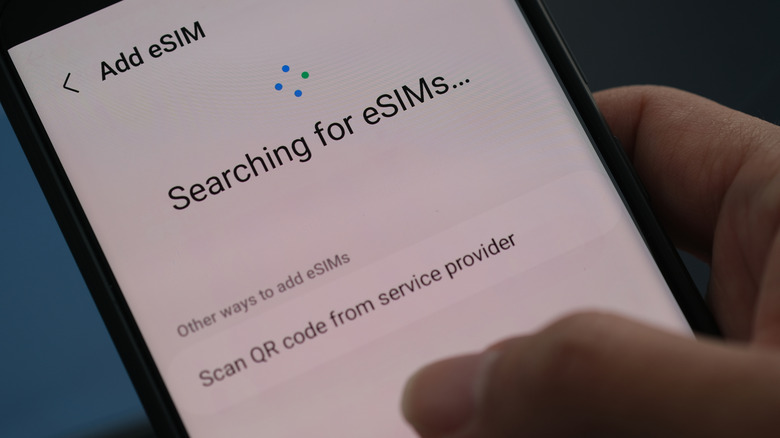
You’ll be guided through moving your phone number to your new plan. Most phones today support eSIM (the iPhone 14 and newer lack a physical SIM slot), which makes it easy to get connected without waiting for a physical SIM in the mail. Your MVNO’s app will walk you through this process.
Advertisement
I’ve been using MVNOs since the end of 2015. I used Google Fi (back when it was called Project Fi) until mid-2020, when I switched to Mint Mobile. Aside from rare hiccups, I’ve never felt like I’m on a second-rate network. The network speeds are plenty fast enough to do everything you need. I only use a few gigabytes of data per month, buy unlocked phones from the manufacturer, and keep my subscription list slim. That’s why the “free” devices, “unlimited” data and bundled extras of big carriers aren’t worth the high cost for me.
In the time I’ve been with Mint, the company has upgraded the amount of data on each tier multiple times, at no extra cost. The cheapest plan was 3GB when I joined, which shifted to 4GB in 2021, 5GB in 2023, and then 6GB in 2026. Given how the cost of everything else constantly goes up while simultaneously dropping in quality, I appreciate this.
Chances are, if you use one of the big three carriers, you’re overpaying. The devices they offer “on us” come at the cost of paying for a top-tier phone plan. You’ll save in the long run by purchasing a phone outright and pairing it with a cheaper mobile plan. Evaluate how much data you actually use and don’t worry about “unlimited” if you only need a few gigabytes per month.
Fosi Audio used to be rather easy to categorize. Affordable desktop amplifiers, DACs, and other compact components were its bread and butter, usually with enough performance to make considerably more expensive competitors a little uncomfortable.
That description no longer tells the whole story.
Over the past year, Fosi Audio has pushed much harder into the personal audio category with headphones, IEMs, headphone amplifiers, portable components, and streaming products. We have covered a lot of them at eCoustics, and while not every new product is aimed at the same listener, the broader strategy has become increasingly clear: Fosi wants a much larger piece of the Head-Fi market.
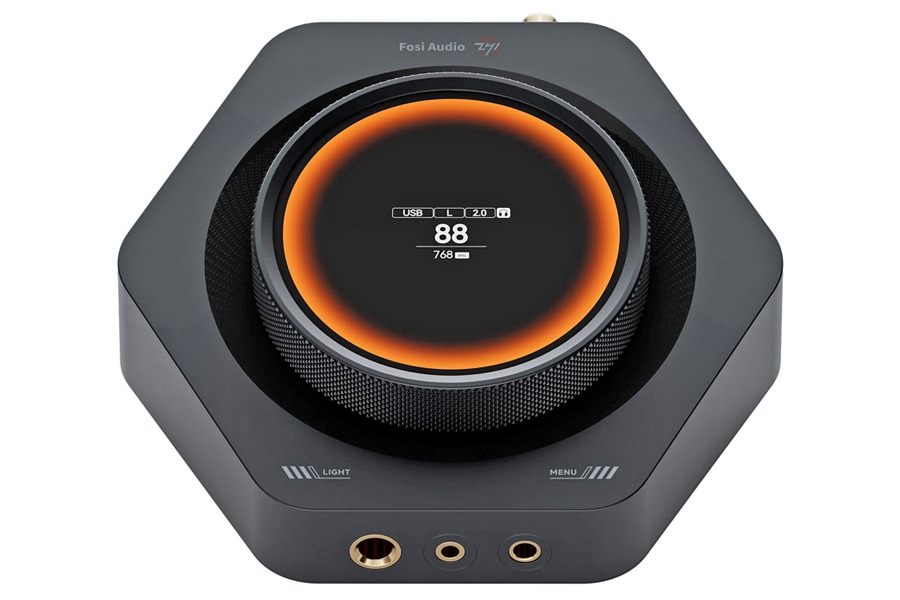
CanJam SoCal 2026, which takes place August 29-30 at the Irvine Marriott in Orange County, will give the company another opportunity to make that case. Fosi Audio is bringing four new products for attendees to see and hear: the ZH1 Desktop DAC & Headphone Amp, Carbon12 IEM, DISC Nano Portable CD Player, and S3 Lite Streaming Digital Transport.
Advertisement
All four are interesting for different reasons, particularly as Fosi continues to stretch beyond the inexpensive desktop amplifiers that established the brand. But we are saving the most intriguing one for last. The S3 Lite takes a decidedly different approach to affordable network streaming, and at $199.99, it could become a rather disruptive little black box for listeners who already own a DAC they have no intention of replacing.
ZH1 Desktop DAC & Headphone Amp
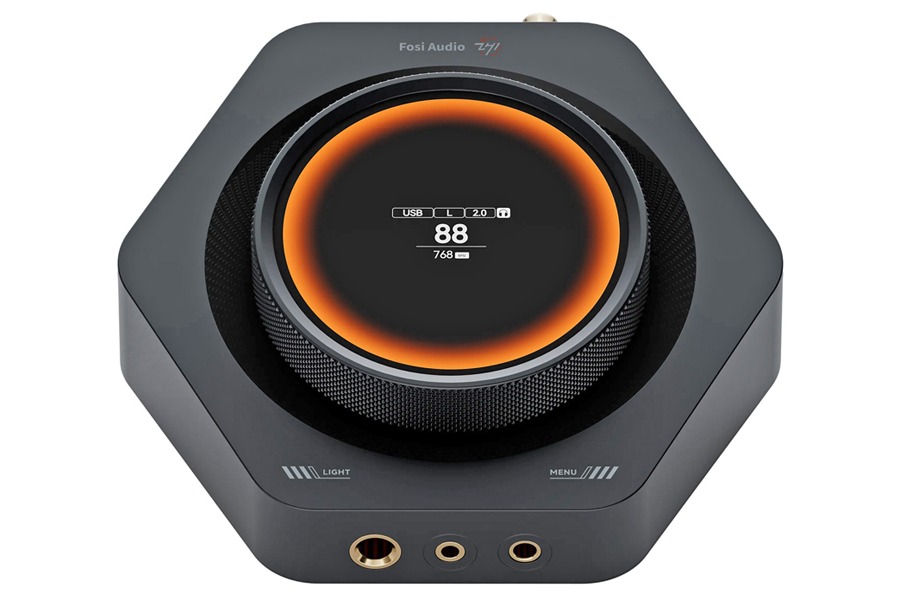
To start things off, the ZH1 Desktop DAC & Headphone Amp is designed to bridge music, entertainment, and gaming in a compact desktop component.
According to Fosi Audio’s latest specifications, the ZH1 uses an ESS ES9039Q2M DAC and supports PCM playback up to 768kHz and DSD512. That is notably different from the prototype we saw at CanJam London, which was built around a pair of Cirrus Logic CS43131 DACs, suggesting Fosi has made some significant changes ahead of production. The balanced headphone output is rated at up to 2,000mW, which should give it enough power for a wide range of full-size headphones.
The ZH1 also incorporates Fosi Audio’s AI-assisted EQ system. Rather than requiring users to manually adjust individual parameters, Fosi says the system can create a personalized EQ curve based on the listener’s stated sonic preferences. Customizable RGB ambient lighting is also included for those who want their desktop audio system to look a little more like their gaming rig.
Multiple input and output options are designed to make the ZH1 suitable for both conventional desktop listening and gaming setups. It also expands Fosi Audio’s growing gaming and personal audio lineup alongside the C3 Gaming DAC & Headphone Amp.
Advertisement
Fosi Audio has not provided a complete set of specifications ahead of CanJam SoCal, but the ZH1 is expected to be available in late September for $149.99.
Carbon12 In-Ear Monitor (IEM)
The next new product Fosi Audio is showing at CanJam SoCal 2026 is the Carbon12 In-Ear Monitor (IEM), and it represents another significant step into a category the company was barely involved in a year ago.
Advertisement. Scroll to continue reading.
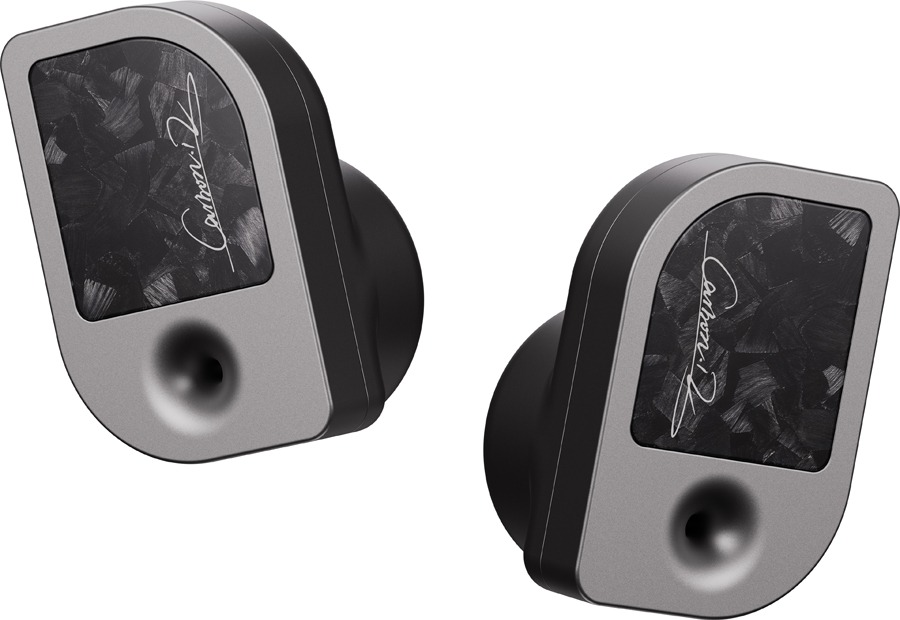
Fosi is positioning the Carbon12 as a premium HiFi IEM built around what it describes as the world’s first UTPT ultrathin pure carbon-fiber diaphragm. Unlike more common composite diaphragms that incorporate carbon fiber with other materials, Fosi says its UTPT design uses pure carbon fiber to combine very low mass with high rigidity.
The Carbon12 uses a 12mm dynamic driver housed inside a TC4 titanium alloy body with a forged carbon-fiber faceplate. Internally, Fosi has incorporated a dual-chamber acoustic structure and balanced pressure-relief system designed to control airflow and driver behavior.
Advertisement
Fosi is tuning the Carbon12 for a warmer presentation with an emphasis on vocals, which should make it rather different from some of the brighter and more analytical IEMs currently crowding the $150 segment. We will reserve judgment on that until we actually hear it at CanJam.
Key Specifications
Fosi Audio Model
Carbon12
Product Type
In-Ear Monitor (IEM)
Driver
12mm Dynamic Driver with UTPT™ Thin-Ply Carbon Diaphragm
Housing Material
TC4 Titanium Alloy with Carbon Fiber Faceplate
Frequency Response
20Hz–40kHz
Impedance
37Ω
Sensitivity
108dB/Vrms @1kHz
THD
≤0.5% @1kHz
Weight (Per Earbud)
7.5g
Price & Availability
The Fosi Audio Carbon12 is expected to be available in late September 2026 for $149.99 MSRP.
DISC Nano Portable CD Player
Physical media has found new life over the past few years, and CDs are increasingly part of that conversation. New CD players are appearing at almost every price point, which makes Fosi Audio’s next CanJam SoCal 2026 debut rather timely.
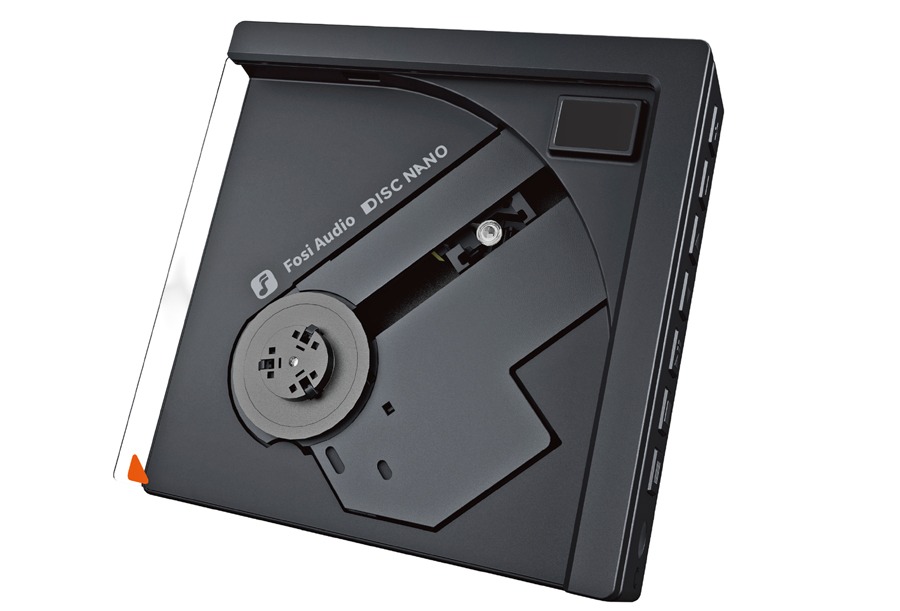
The DISC Nano Portable CD Player is designed for listeners who want to take their discs with them without carrying something the size of an early 1990s Discman. Fosi describes the DISC Nano as the world’s smallest portable CD player, a claim we would like to see backed up with final dimensions before handing over the trophy.
Its distinctive half exposed disc design puts the CD itself on display, combining some of the tactile appeal of physical media with features that did not exist when portable CD players ruled backpacks and airline tray tables.
Advertisement
The DISC Nano uses a Cirrus Logic CS43198 DAC and incorporates ESP electronic anti-skip protection to improve playback stability when used on the go. Fosi has also equipped it with an internal rechargeable lithium battery, so it does not need to remain tethered to an external power source.
Connectivity is unusually comprehensive for something this small. The DISC Nano provides 3.5mm and balanced 4.4mm headphone outputs, along with an optical digital output for use with an external DAC or audio system. Bluetooth transmission also allows CDs to be played through compatible wireless headphones, earbuds, and speakers.
Fosi has also incorporated an N52 magnetic rear panel, allowing the player to attach to compatible magnetic mounts and accessories. Some early descriptions refer to this as MagSafe compatibility, although we would not interpret that as MagSafe wireless charging unless Fosi confirms that capability.
Key Specifications
Fosi Audio Model
Nano
Product Type
CD Player
Disc Compatibility
CD-DA; additional disc format compatibility not provided at this time – more details upon product release.
The Fosi Audio DISC Nano is expected to arrive in late September 2026 for $99.99 MSRP.
Advertisement
At that price, the DISC Nano might be more than a novelty. A genuinely portable CD player with balanced headphone output, Bluetooth, optical digital output, an internal battery, and a $100 price tag is exactly the sort of product that could make the CD revival a little more interesting.
Advertisement. Scroll to continue reading.
S3 Lite Streaming Digital Transport
Rounding out the new products Fosi Audio is bringing to CanJam SoCal 2026 is the S3 Lite Streaming Digital Transport, and this might be the most interesting of the four.
The S3 Lite takes its inspiration from the previously released S3 Streamer/DAC/Preamp, but removes the onboard AKM DAC, analog output stage, and physical audio inputs. The idea is straightforward: if you already own a DAC that you like, why pay for another one?
That makes the S3 Lite less of an all in one streamer and more of a dedicated digital bridge between streaming services and an existing HiFi system. It supports dual band Wi-Fi 6 and Bluetooth 5.3, along with Google Cast, AirPlay 2, DLNA, Spotify Connect, TIDAL Connect, Qobuz Connect, and Bluetooth. Fosi also lists Roon Ready support, although the company said in July that certification was still being completed, so we would like to see final confirmation on that point.
Advertisement
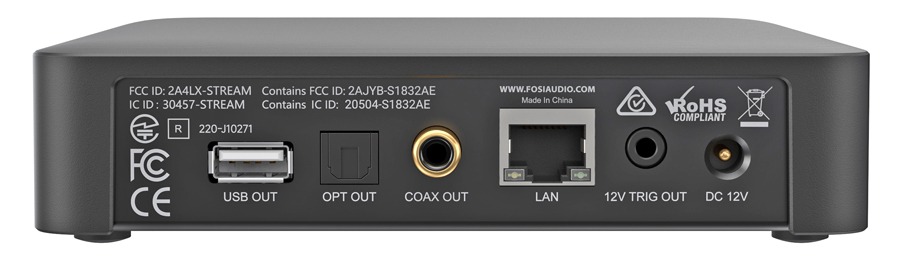
More importantly, calling it the S3 Lite undersells one aspect of the design. The S3 Lite provides USB-A, optical, and coaxial digital outputs, whereas the full S3 does not offer USB or coaxial digital output. For anyone planning to use an external DAC, that actually makes the less expensive model more flexible.
The USB output supports PCM up to 32-bit/768kHz, although DSD is not currently supported. Fosi also includes a 10 band graphic EQ, a Bluetooth remote with a claimed 15 meter operating range, and a 12V trigger output that can power compatible downstream components on and off with the streamer. The chassis measures just 147mm wide, making it easy to integrate into a desktop or compact two channel system.
Ultimately, the S3 Lite is not trying to replace your DAC, preamplifier, or entire system. It is designed for listeners who already spent money on those things and simply want to add modern streaming, including USB digital output, without dismantling everything else.
The Competition
FiiO’s SR11, currently selling for around $119.99, is probably its most direct rival because it is also a dedicated digital streamer with USB, optical, and coaxial outputs and support for PCM up to 32-bit/768kHz. The catch is that its streaming ecosystem is considerably narrower, concentrating primarily on Roon Ready and AirPlay.
Advertisement
The WiiM Pro at $169 and WiiM Pro Plus at $249 offer considerably broader software and streaming service support, along with excellent app integration, but their optical and coaxial digital outputs top out at 24-bit/192kHz and neither offers USB audio output. If you are only feeding an external DAC, the Pro Plus’ upgraded internal DAC becomes largely irrelevant.
Moving up to $349, the WiiM Ultra adds USB digital output, HDMI ARC, analog and phono inputs, a 3.5 inch touchscreen, an internal ESS DAC, subwoofer output, and much more extensive EQ capability. Its digital outputs, including USB, are limited to 24-bit/192kHz, but it is clearly the more comprehensive system hub if you actually need all of those additional features.
The Bluesound NODE NANO, at roughly $429, is another strong alternative with BluOS, an ESS ES9039Q2M DAC, USB, coaxial, and optical digital outputs, Roon Ready certification, AirPlay 2, Spotify Connect, TIDAL Connect, and access to a much broader streaming ecosystem. It tops out at 24-bit/192kHz, but BluOS remains one of the more mature streaming platforms available at this end of the market.
Fosi Audio’s presence at CanJam throughout 2026 makes one thing increasingly clear: the company is no longer content being known primarily for affordable desktop amplifiers. Personal audio has become a significant part of its strategy, and the four products heading to CanJam SoCal cover a surprisingly broad range of categories.
Advertisement. Scroll to continue reading.
The ZH1 looks like a lot of desktop DAC/headphone amplifier for $149.99, while the Carbon12 represents Fosi’s most ambitious move yet into IEMs. The DISC Nano is certainly the most visually distinctive of the group and arrives at an intriguing $99.99, although portable CD players with balanced headphone outputs and Bluetooth already exist.
The S3 Lite is the one we find most interesting. Dedicated digital transports are nothing new, but Fosi’s combination of USB, optical, and coaxial outputs, support for PCM up to 768kHz over USB, eight streaming protocols, Wi-Fi 6, and a $199.99 price makes it an unusually focused option for listeners who already own a DAC they have no desire to replace. Instead of adding more hardware simply to make the specification sheet longer, Fosi removed the parts that audience does not need. That makes a lot of sense.
Advertisement
Of course, specifications and aggressive pricing only tell us so much. The eCoustics team will be at CanJam SoCal 2026 on August 29 and 30, where we will get a closer look at all four products and share our listening impressions after the show.
































































You must be logged in to post a comment Login