
Crypto World
Fed’s Barkin says economy may be firming, inflation not limited to energy, tariff shocks


By Howard Schneider
BALTIMORE, Sept 22 (Reuters) – US economic conditions “are, if anything, firming,” with continued consumer spending and strength beyond the boom in artificial intelligence keeping the Federal Reserve’s focus on inflation, Richmond Fed President Tom Barkin said on Tuesday.
“The risks to inflation outweigh the risks to maximum employment. That’s why we raised rates,” at last week’s meeting, Barkin said in comments prepared for delivery to the CFA Society Baltimore, adding that the quarter-percentage-point hike “will help” restore inflation to the Fed’s 2% target.
“Will additional hikes be required, and how many? We’ll see,” said Barkin, who is not a voting member of the central bank’s rate-setting Federal Open Market Committee this year.
The Fed last week raised its policy interest rate to the 3.75%-4.00% range, with investors anticipating more increases.
Barkin’s comments follow those of other Fed officials who have broadened their concerns about inflation that they feel is being driven increasingly by strong demand in the economy, and not just by energy, tariff and other supply issues that might be expected to fade on their own.
Even those “‘passing’ shocks aren’t proving to be short-lived, or one-off events,” but are producing more persistent price pressures than at first expected, Barkin said.
“It is tempting to try to blame high inflation on a handful of categories with particularly high exposure to the Middle East conflict or to tariffs,” he said. But much of the Personal Consumption Expenditures Price Index is increasing at greater than a 3% annual rate.
“I am hearing momentum outside of data centers, too. The defense sector is hot. Manufacturing contacts are starting to sound more upbeat. Bankers tell us pipelines are healthy,” Barkin said.
(Reporting by Howard Schneider; Editing by Paul Simao)

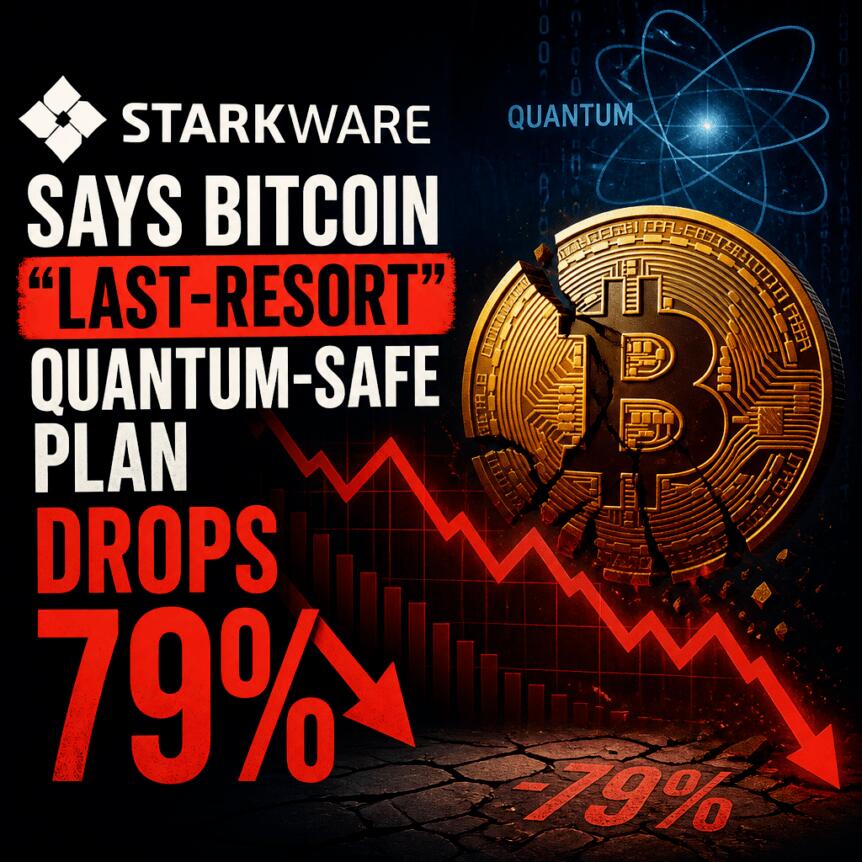
StarkWare says the estimated computing cost to construct a “quantum-safe” Bitcoin transaction has dropped sharply after a week of optimization work, falling to around $67—down from roughly $320 for the first such mainnet transaction in August.
The improvement comes from participants in the Quantum-Safe Bitcoin Optimization Challenge, which targeted the GPU-heavy steps needed to build a transaction using the Quantum-Safe Bitcoin (QSB) design. StarkWare cautions that the newest figures are based on benchmark results rather than fresh on-chain deployments, but the direction suggests the approach could become more practical for emergency use.
Key takeaways
- StarkWare reports the estimated QSB transaction preparation cost is now about $66–$67, down from about $320 in August.
- The cost reduction followed optimization contributions from the Quantum-Safe Bitcoin Optimization Challenge, which ran for about a week.
- StarkWare says the challenge produced 62 accepted improvements across two tasks needed to prepare QSB transactions.
- Despite the lower estimates, StarkWare notes the latest gains are demonstrated in benchmarks, not confirmed through additional mainnet transactions.
- QSB is presented as a quantum-resilience “emergency” measure that does not require changes to Bitcoin consensus rules—though StarkWare still favors protocol-level upgrades for long-term protection.
Cost of quantum-safe construction falls again
StarkWare said that after a week of iterative optimizations by challenge participants, the computational estimate for preparing a QSB transaction fell by roughly 79%. In its Sept. 23 update, the company argued that moving from “a few hundred dollars” toward the $60s brings the method closer to what a Bitcoin holder could consider during an urgent scenario.
StarkWare adds that the live dashboard for the QSB challenge now displays the current estimate at $66. The company previously pointed out that earlier demonstrations involved higher GPU requirements and therefore higher costs.
What QSB is—and why the network doesn’t need to change
QSB was first published by StarkWare researcher Avihu Levy in April. The design aims to provide hash-based protection intended to reduce the risk posed by future quantum attacks, while avoiding changes to Bitcoin’s consensus rules. In Levy’s earlier framing, the approach was considered a “last resort” option because of cost, complexity, and limited applicability—concerns that the new optimization work is directly addressing.
The underlying idea is to add a layer of defense without requiring the Bitcoin network to adopt new rules. That “no consensus changes” property matters for holders because it can allow quantum-resistance steps to be taken with specialized tooling rather than waiting for a widely deployed protocol upgrade. However, that same constraint can limit how broadly such a system can be used in the near term.
From the first mainnet transaction to benchmark-driven reductions
StarkWare ties the earlier baseline to the first QSB transaction mined and confirmed on Aug. 26. The company previously reported engineering work from Tomer Giladi and submission through MARA’s Slipstream service, with preparation requiring approximately 3,100 GPU-hours across roughly 100 GPUs.
StarkWare estimated the compute cost for that first mainnet transaction at about $320, excluding Bitcoin network fees. The latest update changes the picture on estimated preparation expense: StarkWare says the optimization challenge reduced the estimated computing cost based on benchmarks.
To find efficiency gains, StarkWare, Yukon Research, and Eigen Labs launched the Quantum-Safe Bitcoin Optimization Challenge on Sept. 16, inviting developers, researchers, and AI agents to improve the transaction-building pipeline. In the latest update, StarkWare said the effort resulted in 62 accepted improvements across two computational tasks needed for QSB transaction preparation.
While that work is reflected in benchmark cost estimates now shown on Yukon’s QSB dashboard, StarkWare’s update still leaves an important gap: readers should treat the new $66–$67 figure as an estimate for construction workflows, not as proof that the same cost can be reproduced for additional live on-chain transactions yet.
Why holders may care—and what remains uncertain
The renewed focus on cost comes as concern continues to grow in the crypto community that a sufficiently powerful quantum computer could eventually undermine Bitcoin’s elliptic-curve digital signature system. If attackers can exploit that weakness, coins exposed by their public keys could become vulnerable—though real-world timelines and feasibility depend on engineering breakthroughs that remain uncertain.
Against that backdrop, StarkWare positions QSB as an “emergency” measure—useful if and when quantum risks become immediate enough to justify expensive operational work. The sharper cost estimates may increase the likelihood that QSB could move from a proof-of-concept into a more realistic option for holders with a larger balance who can justify special preparation in advance.
At the same time, StarkWare reiterates a key strategic tension: the company still prefers a soft fork—meaning changes to Bitcoin’s consensus rules—as the better “long-term answer” for broad, durable quantum protection. The optimizations therefore appear to strengthen the near-term toolkit around QSB, while the longer-term debate over protocol-level defenses continues.
What to watch next is whether the benchmark-driven reductions can translate into additional on-chain QSB transactions at similar cost levels, and whether broader community attention shifts from experimental benchmarking toward practical integration and planning for quantum-era safeguards.
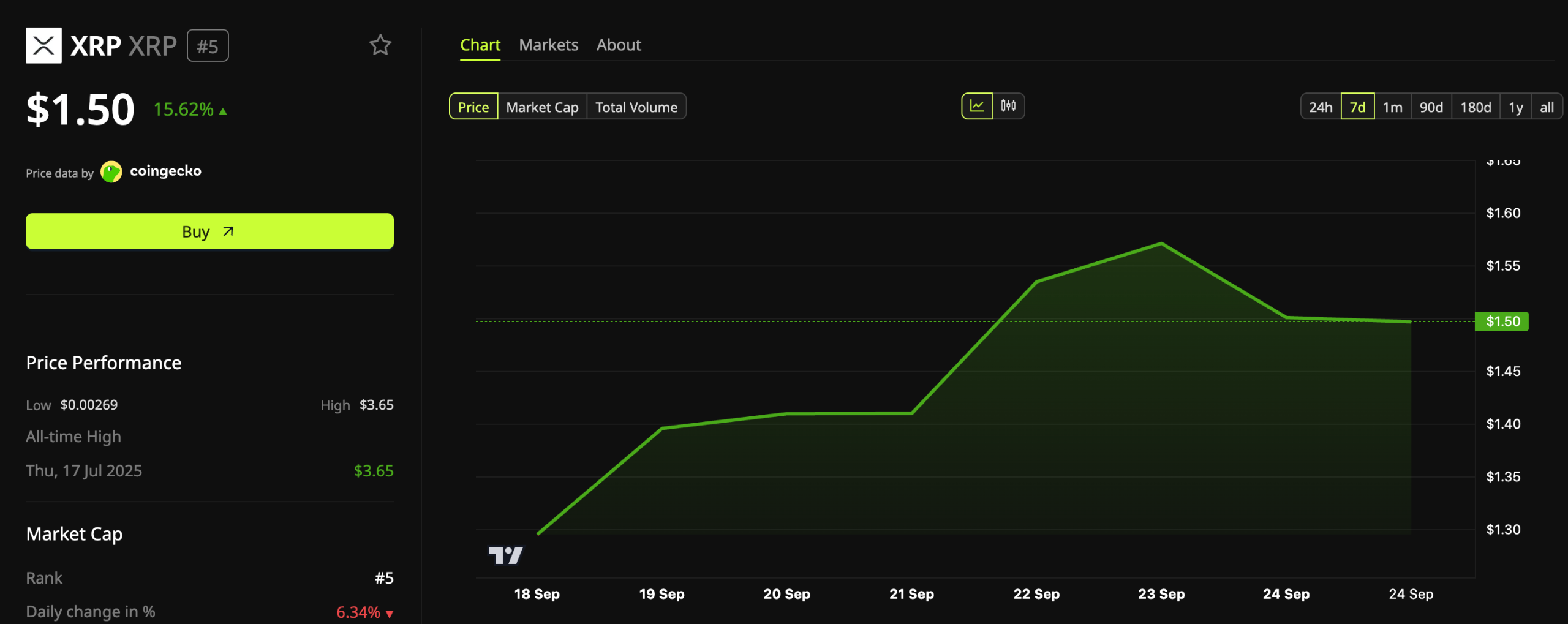
XRP (XRP) is still flashing 3 bullish signals across its holders, derivatives, and ETF data. These signals come as the token gave back part of its September gains on Thursday.
The token traded near $1.50 at press time, down about 6.3% over 24 hours, according to BeInCrypto Markets data. The pullback still leaves XRP up over 15.6% on the week, a gain that tracks a broader market rally.

Follow us on X to get the latest news as it happens
Year-Long XRP Holders Are Still Underwater
The first signal comes from wallets that have held XRP over the past year. The altcoin’s 365-day market value to realized value (MVRV) ratio sits near -11.75%, according to data from Santiment. A negative reading means the average wallet active over that period sits at a loss.
Bitcoin (BTC), Ethereum (ETH), and Chainlink (LINK) hover slightly over 0%, while Dogecoin (DOGE) sits deeper at -19.26%.
According to Santiment, a low MVRV tends to limit downside because fewer holders have profits to take. XRP holders stayed in the red after last week’s rebound.
“Buying during that pain has historically offered better long-term setups,” the post read.

Futures Traders Return in Numbers Last Seen in January
While long-term holders nurse losses, futures traders have started adding exposure again. XRP futures open interest (OI) on Binance has climbed to nearly $600 million, a January-level reading.
CryptoQuant analyst Darkfost flagged the jump. OI tracks the value of futures contracts still open.
OI has also broken decisively above its 180-day moving average near $445 million. Darkfost read this as speculation returning after months of muted activity. Positive funding rates, he added, suggest buyers are driving the build-up.
“This return of positive sentiment on XRP’s derivatives markets is therefore an encouraging signal for the current momentum. That said, it’s worth keeping in mind that OI remains dangerous in case of excess. That’s not the case today,” the analyst added.
XRP ETF Buyers Keep Showing Up Every Week
Lastly, demand for XRP’s spot exchange-traded funds (ETFs) has held steady. The funds have drawn net inflows every week since mid-July, SoSoValue data shows. That streak now covers 11 weeks, including the current week through September 23.
Bitcoin and Ethereum funds lacked that consistency. Bitcoin ETFs posted outflows in 3 of those weeks, including $462.7 million in the week ending September 11. Ethereum products lost $140 million in the week ending September 18.
The XRP inflows are smaller, however. Most weeks brought in between $1 million and $20 million, although the week ending August 28 drew $110.5 million. Cumulative net inflows have now climbed to $1.75 billion.

2 Signals Keep the Bulls in Check
Not every measure of US demand has kept pace with the ETFs, however. XRP’s Coinbase premium over Binance has narrowed to about 0.0055%, CryptoQuant analyst Arab Chain noted. Traders often read that premium as a gauge of US spot buying.
A sustained premium would point to stronger demand on Coinbase, and the current gap shows none yet.
The calendar adds a second caution, with October only a week away. XRP has closed October lower in 8 of 13 years, averaging a -5.14% monthly return, CryptoRank data shows. The token also fell 11.9% last October.

XRP therefore heads into a historically soft month with 3 signals leaning bullish. Whether Coinbase spot buyers join ETF investors could decide how much of that strength holds.
Subscribe to our YouTube channel to watch leaders and journalists provide expert insights
The post XRP Is Flashing 3 Bullish Signals Heading Into a Historically Weak October appeared first on BeInCrypto.

The work addresses a possible future threat to Bitcoin. A sufficiently powerful quantum computer could use a wallet’s exposed public key to work out its private key and steal the coins. StarkWare’s method adds a form of protection based on hashes, which are expected to withstand that attack. It fits within Bitcoin’s existing rules, so trying it did not require the network to approve an upgrade.
As such, the method is an emergency option for moving eligible coins if the quantum threat arrives before Bitcoin adopts a broader fix. Using it widely would be expensive at $320 of computing per transaction — and a lower bill could make the option more practical.
Read More: Quantum-safe bitcoin now possible without a soft fork, but costs $200 a pop, new research shows
The $66 figure remains an estimate drawn from a test of the computation. The improved code has not been shown preparing another transaction mined on Bitcoin.
Applying the speedups displayed on the contest site to its listed $320 cost breakdown yields about $83, according to CoinDesk calculations. The site says later record-setting runs go beyond those measurements, without showing which results bring its transaction estimate to $66.
Meanwhile, the method also has limits beyond cost. These transactions have to be sent directly to a miner because they do not travel through the network in the usual way, and they do not protect coins whose public keys are already exposed, which is the group a quantum attacker would reach first.

Paramount Skydance CEO David Ellison has at long last gotten his prize. After fighting off Netflix in a bidding war and state attorneys general in an antitrust lawsuit, the path is finally clear for Paramount to close its acquisition of Warner Bros. Discovery. On Monday, Paramount settled an antitrust lawsuit led by California Attorney General Rob Bonta that also included…
Copyright ©2026 Investor’s Business Daily, LLC. All rights reserved. 87990cbe856818d5eddac44c7b1cdeb8
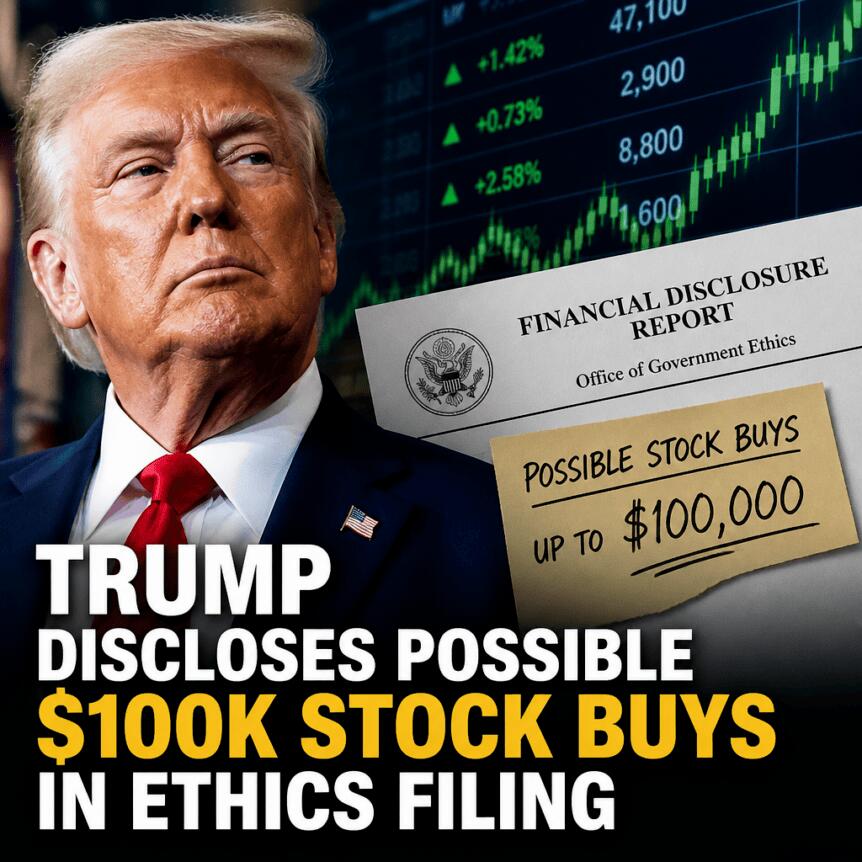
U.S. President Donald Trump disclosed purchases of Strategy shares worth between $50,001 and $100,000 in July, according to a filing published by the U.S. Office of Government Ethics on Tuesday. The disclosure adds to a pattern of reported holdings in several crypto-adjacent companies, as Trump’s administration continues to push for parts of a broader pro-crypto agenda.
The latest report indicates that Trump bought Strategy shares on July 27 for $50,001 to $100,000, after a smaller purchase three days earlier. The filing also lists other crypto-related transactions during July, including activity involving Coinbase and sales of shares in Bitcoin mining companies MARA Holdings and CleanSpark.
Key takeaways
- According to the Office of Government Ethics filing, Trump bought Strategy shares worth $50,001 to $100,000 on July 27.
- A prior Strategy purchase reported in the same filing covered $1,001 to $15,000 made three days earlier.
- The July 27 Strategy purchase is the largest crypto-linked transaction described in the filing, and Trump previously disclosed a similar $50,001 to $100,000 Strategy buy on Feb. 12.
- The filing reports transaction values in ranges, so it does not reveal how many Strategy shares remain in Trump’s portfolio.
- The disclosures come as regulators have advanced limited crypto-related initiatives even though comprehensive market-structure legislation has stalled in Congress.
What the ethics filing shows about Strategy holdings
The Office of Government Ethics filing reports that Trump’s Strategy transactions in July included two buys: $1,001 to $15,000 on July 24 and $50,001 to $100,000 on July 27. Strategy is widely described as the largest publicly traded corporate holder of Bitcoin; BitcoinTreasuries.net data cited in the filing context places Strategy’s holdings at 846,000 BTC.
The filing’s approach matters for how investors interpret it. Because disclosures are made as dollar value ranges rather than as running share totals, readers cannot determine the number of Strategy shares Trump currently holds after these transactions.
Strategy purchases also appear consistent with earlier disclosures. BitcoinTreasuries.net data referenced in the article notes that Trump previously disclosed a Strategy purchase in the same $50,001 to $100,000 range on Feb. 12. The filing context further indicates that Trump’s accounts have also reported smaller Strategy buys and sells during the year.
Broader portfolio moves and third-party management
While Strategy is the most prominent crypto-linked holding disclosed for July, the filing indicates Trump’s overall portfolio activity was not limited to crypto-adjacent equities. It includes sales of $5 million to $25 million each of Microsoft and Amazon stock on July 20, along with additional purchases and sales in other ranges between $1 million and $5 million.
Separately, the White House told CNBC that Trump’s stock and bond portfolio is independently managed by third-party financial institutions, with no input from Trump or his family. That statement is relevant because the ethics disclosures detail transactions without describing investment decision-making or timing beyond the reported dates.
Strategy stock gains and what traders should watch
Following the July disclosures, Strategy shares have moved higher in the near term. According to Yahoo Finance data referenced in the reporting, Strategy’s stock has gained nearly 30% over the past five trading days and roughly 37% over the past month.
For market participants, the key question is how much these price moves relate to broader corporate and Bitcoin market dynamics rather than to the individual disclosure itself. The filing describes transactions rather than portfolio effects, and the disclosure does not indicate how the trades were executed beyond the reported date and value range. Traders are therefore likely to focus more on Strategy’s underlying Bitcoin exposure and market sentiment than on the specific disclosure as a standalone catalyst.
Disclosure amid stalled legislation and regulatory workarounds
Trump’s Strategy disclosure arrives during an ongoing policy push that targets parts of the U.S. crypto market, even as comprehensive market-structure legislation remains stalled in Congress. The article notes that the Senate did not advance the CLARITY Act on Sept. 15, but that regulators have used existing authorities to move forward on narrower issues.
In the period after the failed advance, the Securities and Exchange Commission cleared a limited form of onchain trading for tokenized U.S. stocks under a temporary exemption, according to earlier coverage cited in the article from Cointelegraph. The Commodity Futures Trading Commission also eased registration requirements for certain software providers that offer access to regulated derivatives markets, again according to Cointelegraph reporting cited in the article.
The CFTC also submitted a broader crypto market rulemaking initiative for White House review on Sept. 17, with the article noting that it remains preliminary rather than a formal proposal. The initiative is described as “Regulation Crypto Asset Transactions and Regulation Crypto Asset Markets.”
Beyond regulatory actions, the administration’s agenda has extended to Bitcoin directly. The article states that the House Financial Services Committee voted 28-21 to advance legislation to codify Trump’s proposed Strategic Bitcoin Reserve and to require any Bitcoin placed into that reserve be held for at least 20 years. The report also references Arkham Intelligence data suggesting the U.S. government holds an estimated 324,527 BTC.
Read together, the disclosures and policy developments point to a consistent theme: even where broad legislative frameworks face delays, regulators and lawmakers have pursued incremental steps that shape how tokenized assets, trading access, and crypto market oversight may evolve.
Closing perspective
Investors and builders should watch whether additional ethics filings continue to show increased exposure to Bitcoin-linked corporate vehicles like Strategy, and whether regulators’ limited pathways for tokenized assets and trading access expand into more comprehensive market-structure rules. The next signal to track is whether stalled legislation such as the CLARITY Act regains traction—or whether further regulatory action fills the gap.
Crypto World
Caris Life Sciences Coasts Past A Buy Point; Why This Texas Biotech Researcher Deserves A Look

Texas might not be the initial state that pops into mind when thinking about leading-edge companies in the field of biotechnology. But Irving, Texas-based Caris Life Sciences (CAI) is carving a name for itself within the stock market. Caris, Tuesday’s IBD 50 Stocks To Watch pick is rebounding fast after bottoming at 14.19 in May. Those investors looking for an entry…
Copyright ©2026 Investor’s Business Daily, LLC. All rights reserved. 87990cbe856818d5eddac44c7b1cdeb8
The Trump administration is reportedly considering an initiative to promote the use of dollar-backed stablecoins overseas as part of an effort to reinforce the US dollar’s position as the world’s reserve currency.
Citing people familiar with the plans, Bloomberg reported on Wednesday that the US government could support stablecoin projects by creating joint ventures with private-sector firms. The effort could involve several federal agencies, including the Treasury Department, State Department and the US International Development Finance Corporation (DFC).
The initiative would seek to expand the international use of dollar-denominated stablecoins while potentially boosting demand for US Treasurys, a common reserve asset for dollar-backed stablecoins.
The potential overseas push also comes as other nations are developing their own digital payment infrastructure. China’s digital yuan is among the central bank digital currencies used in Project mBridge, a platform for cross-border CBDC transactions, while the European Central Bank is preparing a 12-month digital euro pilot expected to begin in the second half of 2027.
Cointelegraph reached out to the US Treasury, the DFC and several US-based stablecoin companies for comment, but did not receive a response before publication.
US ties stablecoin growth to dollar dominance
Senior US officials repeatedly linked the growth of dollar-backed stablecoins to maintaining the dollar’s global role and increasing demand for US government debt.
In February 2025, venture capitalist David Sacks, who served as the White House crypto and AI czar at the time, said stablecoins could “extend the dollar’s dominance internationally” and potentially generate trillions of dollars in additional demand for US government debt.
Related: CFTC chair pushes tokenization as SEC opens door to onchain stocks
In July 2025, US Treasury Secretary Scott Bessent said the GENIUS Act, which established a federal regulatory framework for payment stablecoins, could strengthen the dollar’s status as the global reserve currency, expand access to the dollar economy and increase demand for US Treasurys.
The Treasury also continued implementing the GENIUS Act. On Aug. 17, it issued a notice of proposed rulemaking seeking public comment on provisions governing the issuance, offering and sale of payment stablecoins. Bessent said the rules would help “cement” the US dollar’s status as the world’s reserve currency.
Magazine: Winners and losers of the SEC’s new tokenized stocks rules
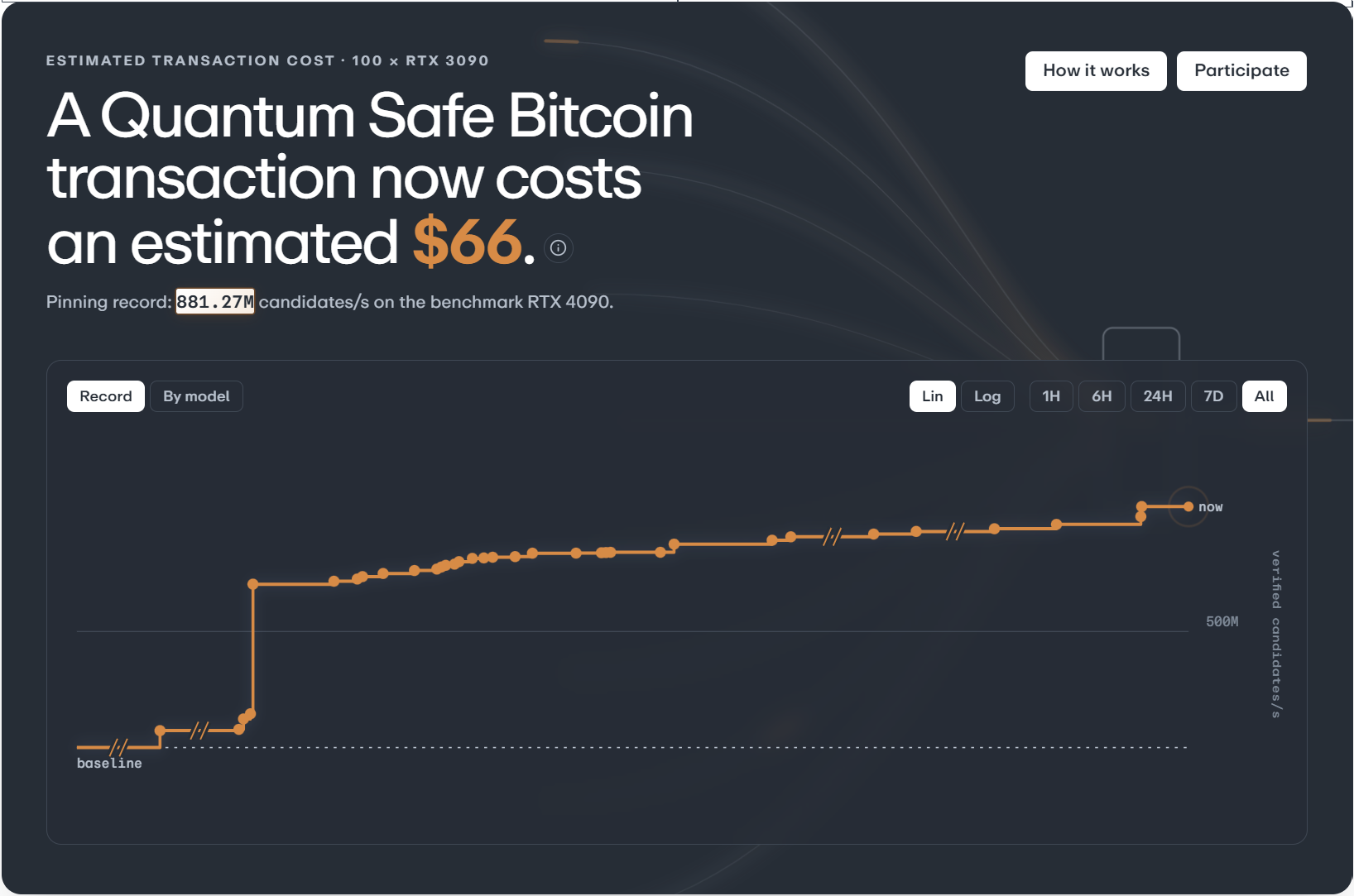
The estimated computational cost to prepare a quantum-resistant Bitcoin transaction has fallen below $67 after a week of optimization, down from the roughly $320 spent on the first such mainnet transaction in August, according to StarkWare.
The results came after participants in the Quantum-Safe Bitcoin Optimization Challenge found ways to push down the GPU computation needed to build a quantum-safe Bitcoin transaction.
The reduction could make the experimental defense (which doesn’t require changes to the network’s consensus rules) against future quantum attacks more practical for Bitcoin holders. However, the latest optimizations have only been demonstrated in benchmark tests.
“A construction that costs a few hundred dollars per transaction is a demo. One that costs $67 is closer to something a holder with a large unexposed balance might reach for in an emergency,” StarkWare wrote in its Sept. 23 update. The dashboard now shows the estimated cost has dropped to $66.
Quantum-Safe Bitcoin an “emergency” solution
StarkWare researcher Avihu Levy published the Quantum-Safe Bitcoin (QSB) design in April, outlining a way to add hash-based protection against quantum attacks without changing Bitcoin’s consensus rules. At the time, he described it as a “last resort measure” due to costs, complexity and limited applicability, while continuing to advocate for protocol-level changes.
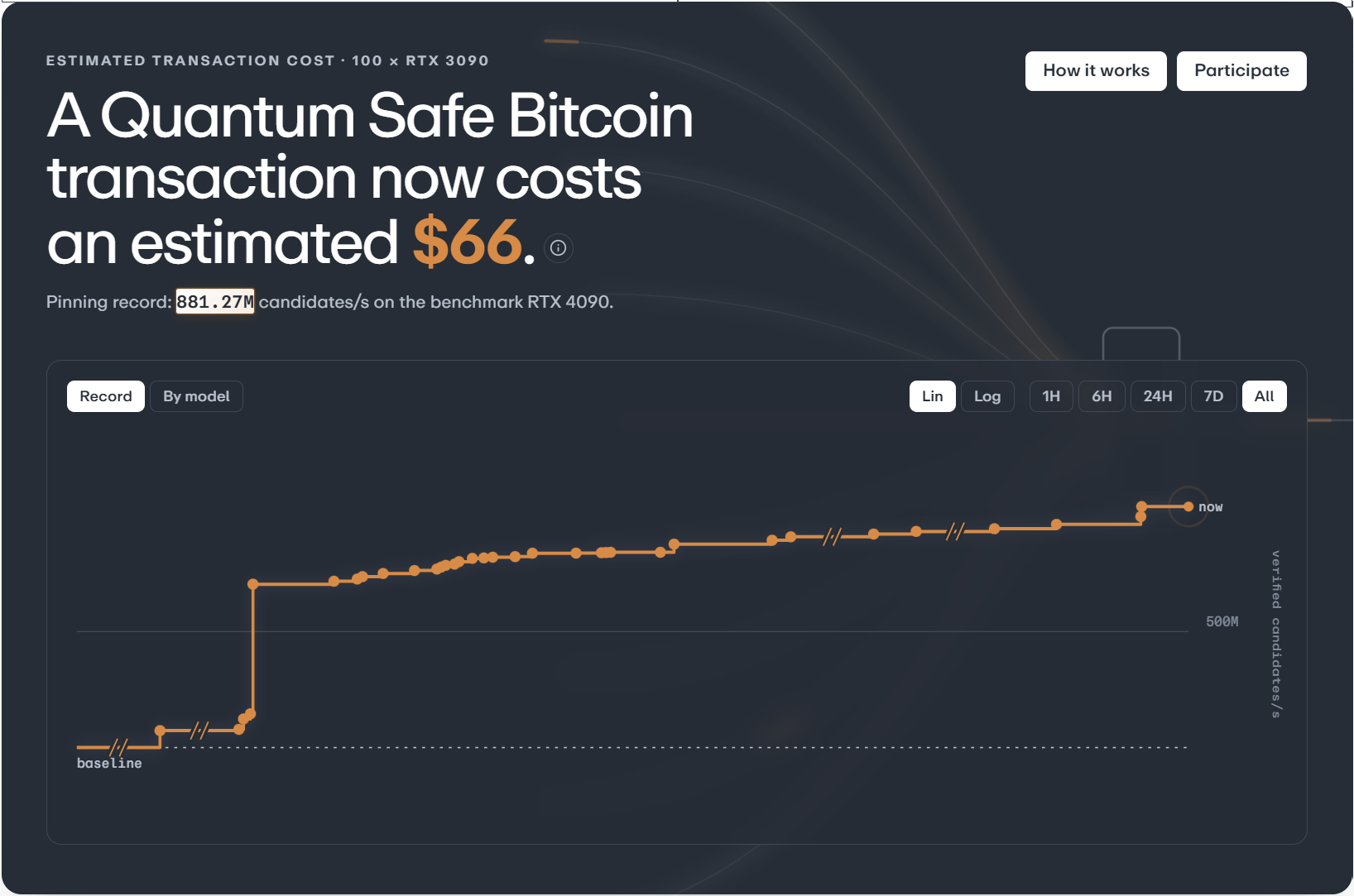
The estimated cost fell by another dollar since publication. Source: Yukon
According to StarkWare, the first QSB transaction was mined and confirmed on Aug. 26, with engineering work from Tomer Giladi and direct submission through MARA’s Slipstream service. Preparing it required approximately 3,100 GPU-hours across roughly 100 GPUs, at a compute cost of about $320, excluding Bitcoin network fees.
Related: Crypto’s first quantum attack will look like unexplained breach: Quantus founder
To find ways to bring that cost down, StarkWare, Yukon Research and Eigen Labs launched the QSB challenge on Sept. 16, inviting developers, researchers and AI agents to make the transaction-building software faster and more efficient.
In its latest update, StarkWare said the challenge produced 62 accepted improvements across two computational tasks needed to prepare a QSB transaction. According to StarkWare, this ended up cutting the estimated computing cost by about 79%, based on benchmark tests.
The development comes amid increasing concern that a sufficiently powerful quantum computer could break the elliptic-curve digital signatures used by Bitcoin, potentially allowing attackers to steal coins whose public keys are exposed.
Researchers are developing quantum-resistant protections, including QSB. However, StarkWare said it still favors a soft fork — a change to Bitcoin’s consensus rules — as a better “long-term answer” for broad quantum protection on Bitcoin.
Magazine: A quantum roadmap would push Bitcoin much higher: Charles Edwards


GE Vernova (GEV) is giving investors another reason to focus on its long-term growth opportunity as surging electricity demand drives a sharp expansion in its order book. The company ended the second quarter of 2026 with a record $176 billion backlog, up $13 billion from the previous quarter, and CEO Scott Strazik recently said GE Vernova remains on track to reach $200 billion in 2027.
The milestone is arriving sooner than the company’s earlier expectations, reflecting strong demand for gas power, electrification, and grid infrastructure as utilities and data center operators invest to meet rising power needs.
More News from Barchart
With backlog visibility improving and demand expected to remain strong, the $200 billion milestone could provide an important catalyst for GEV stock as investors assess the company’s growth prospects through the end of the decade.
About GE Vernova Stock
GE Vernova is a Cambridge, Massachusetts-based energy technology company focused on power generation, electrification, and wind solutions. The company operates through three primary segments: Power, Electrification, and Wind and provides technologies and services spanning gas power, nuclear, grid infrastructure, energy storage, and renewable energy. GE Vernova became an independent public company following its spin-off from General Electric in April 2024 and currently boasts a market cap of $254 billion.
GE Vernova has delivered a strong gain in 2026 despite a recent pullback in the shares. As of the Sept. 18 close, GEV stock was up 46% year-to-date (YTD) and 48% over the past 52 weeks. However, the stock has faced some near-term pressure, declining 1% over the past month and 17% over the past three months.
The recent weakness comes after a substantial rally that pushed the shares to a 52-week high of $1,195.94 in early July, with investors reassessing the valuation and sustainability of the AI-driven power infrastructure boom.
Still, the broader performance reflects strong investor interest in GE Vernova’s exposure to rising electricity demand, gas power and grid infrastructure. The company’s announcement that its backlog is on track to reach $200 billion early in 2027 provides another potential catalyst for investors focused on its longer-term growth trajectory.


Circle has expanded its Cross-Chain Transfer Protocol beyond USDC on Arc, bringing native EURC and cirBTC transfers into the network while preparing Gateway and Bridge Kit for additional multi-asset workflows.
Summary
- Circle expanded CCTP beyond USDC, enabling native transfers for EURC and cirBTC across Arc routes.
- EURC currently moves through CCTP across Arc, Avalanche, Base, Ethereum, and World Chain routes today.
- cirBTC CCTP support currently connects Arc and Ethereum, while Gateway integration remains planned for later.
- Gateway currently unifies USDC balances on Arc and Ethereum, with additional asset support coming later.
- Arc launched September 16 with USDC gas, institutional validators, and interoperability across twenty-plus blockchain networks.
Arc’s Sept. 23 update said Interop on Arc is now live with CCTP, Gateway and Forwarding Service integrated into the Layer 1, giving developers separate tools for native Circle-issued assets, third-party tokens, new multichain assets and unified balances.
The latest deployment does not mean every Circle product already supports all three assets in the same way. CCTP is live for USDC, EURC and cirBTC on specific routes, while Gateway remains limited to USDC at launch. Circle says EURC and cirBTC support for Gateway is planned over time.
Circle expands CCTP beyond USDC on Arc
CCTP now handles native crosschain transfers for USDC, EURC and cirBTC, extending a system that was originally built around USDC burn-and-mint transfers.
Circle’s current CCTP product page describes the protocol as infrastructure that lets supported assets move 1:1 between chains. For Circle-issued assets, CCTP burns tokens on the source network and mints native tokens on the destination, avoiding liquidity pools used by some traditional bridge designs.
EURC entered the system earlier this month. Circle said on Sept. 2 that CCTP had expanded from USDC to native EURC transfers, initially between Ethereum and Base. The Arc launch has since extended EURC coverage to Arc, Avalanche, Base, Ethereum and World Chain.
cirBTC now follows a similar route. Interop on Arc lists CCTP support between Arc and Ethereum for Circle Wrapped Bitcoin, creating a native crosschain path for the BTC-backed token across the two networks.
Circle separately brought cirBTC to Arc on Sept. 21. The company says each token is backed 1:1 by native BTC held for cirBTC holders, with reserve information available for onchain verification. The wrapped asset is issued by Circle International Bermuda Limited, which holds a Class F Digital Asset Business license from the Bermuda Monetary Authority.
Circle launched Bitcoin-backed USDC borrowing through cirBTC on Arc and Ethereum, allowing eligible Circle Mint institutions to post cirBTC to third-party lending markets and receive USDC. Morpho was the first supported lending protocol when the service went live.
EURC and cirBTC get different routes at launch
The three assets do not share identical network coverage. USDC remains CCTP’s most established asset and can use all compatible routes offered through the current Arc interoperability stack. EURC supports Arc, Avalanche, Base, Ethereum and World Chain, while cirBTC currently supports Arc and Ethereum.
Circle says CCTP Fast Transfer can complete transfers in “sub-10-second” times on supported Arc routes. The company cautions in its terms that transfer times and fee estimates are not guaranteed because results depend on the selected chain, route and network conditions.
Forwarding Service handles another part of the flow. It can relay the destination-chain transaction after CCTP completes the asset movement, removing the need for users to separately hold the destination network’s gas token for supported transactions.
Circle updated CCTP earlier in September with prepaid Fast Transfer fees. CCTP now lets developers quote and collect certain crosschain fees on the source network, allowing an application to show the recipient amount before the transfer executes.
Arc routes receive preferential CCTP pricing, according to the Sept. 23 announcement, although rates depend on the asset and route. Circle has not published one universal Arc transfer fee for USDC, EURC and cirBTC.
Gateway still supports USDC before multi-asset expansion
The product creates a unified balance from supported funds held across different networks, allowing applications to treat eligible crosschain liquidity as one available balance. On Arc, Gateway currently supports USDC balances on Arc and Ethereum.
EURC and cirBTC Gateway support is listed as “coming soon.” Circle has not disclosed a launch date for either asset, so CCTP support should not be confused with live Gateway balance support.
Circle’s current legal disclosures likewise describe Gateway as USDC-only. The company says Gateway is non-custodial software infrastructure and does not itself hold, control or transfer customers’ assets. It has not been reviewed or approved by the New York State Department of Financial Services or another regulator, according to the product disclosures.
The company has been building toward multi-asset interoperability for several months. In an April product roadmap, Circle said CCTP had already processed more than $140 billion in cumulative USDC transfers across more than 20 chains and that future versions would extend the same model to assets including EURC and cirBTC.
The Sept. 23 release turns part of that roadmap into production infrastructure, while Gateway’s asset expansion remains unfinished.
Arc lets third-party assets use separate crosschain models
Circle’s interop stack is not limited to tokens issued by Circle. Interop on Arc supports third-party assets through wrapping and a Crosschain Token Standard, or CTS. Developers and issuers can use CTS when they require controls such as allowlists, transfer rate limits, pausing, upgrades and governance rules.
The company says it does not retain override authority over CTS or custom third-party token contracts. Issuers remain responsible for their token structures, operating rules and regulatory obligations.
For new assets, CTS provides a standardized contract structure that can be deployed across chains. Circle describes the system as an alternative to maintaining different token contracts and bridge integrations for each network.
CCTP’s updated architecture supports both burn-and-mint and lock-and-mint models. Native supported assets can move through burn-and-mint, while third-party assets can use wrapping infrastructure where appropriate.
Bridge Kit packages these flows into an SDK for application developers. Arc Studio provides a separate development environment where teams can build applications using the same interop stack without manually connecting every service.
Circle launched Arc Studio as an AI-assisted tool for building applications on Arc, with examples ranging from cross-border payments to software billing and machine-to-machine transactions.
Arc interoperability builds on September mainnet launch
Arc went live publicly on Sept. 16 with USDC used for transaction fees, deterministic sub-second finality and a permissioned founding validator set.
Circle said more than 100 institutional and ecosystem builders and more than 100 applications were participating at launch. Founding validators include BlackRock, DTCC, Galaxy, ICE, Mastercard, MoneyGram, SBI Group, Standard Chartered, Sumitomo Corporation, Visa and Worldpay.
Arc mainnet launched with USDC gas and institutional validators including BlackRock and Visa. Circle said the network began with interoperability across more than 20 blockchain ecosystems through CCTP and Gateway.
Arc’s asset layer has expanded quickly since launch. cirBTC became available on Sept. 21, followed by StableFX on Sept. 22 and the integrated Interop product on Sept. 23. StableFX uses Arc for 24/7 stablecoin-based foreign-exchange settlement with request-for-quote pricing and atomic payment-versus-payment settlement.
Circle says cirBTC can already serve as collateral in Arc lending markets, including supported Aave and Morpho applications. Eligible Circle Mint customers can deposit native BTC, mint cirBTC, provide it to approved third-party lending markets and receive borrowed USDC through Circle’s Digital Asset-Backed Borrowing workflow.
The mainnet roadmap extends beyond interoperability. Circle minted a 10 billion ARC genesis supply before the network launch and is exploring a transition from its current Proof-of-Authority structure toward Proof of Stake in 2027. The company says the genesis mint does not constitute a commitment to publicly launch the ARC token.
Gateway support for EURC and cirBTC remains among the next published interoperability steps. Circle has not provided a launch date, while its Sept. 23 Arc documentation continues to list both assets as “coming soon” for unified balances.

Meta Ray-Ban Display Getting Feature Updates Including Holographic Avatar Support

Financial freedom #success #savings #investment

Forgotten Mozart notebook reveals how a young woman learned to compose




-

 Fashion6 days ago
Weekend Open Thread: Talbots – Corporette.com
-

 Tech3 days ago
Researchers escape OpenAI Codex sandbox to run commands on host
-

 Crypto World5 days ago
Circle launches Arc Studio AI agent for building onchain apps
-

 Crypto World3 days ago
Who Needs CLARITY Anyway? ARB Could See 70X Increase: Hodler’s Digest
-
 NewsBeat5 days ago
Trump says US has reached an agreement to take permanent control of Greenland’s security
-

 Crypto World1 day ago
Goldman Sachs and Deutsche Bank Agree: The S&P 500 Rally Isn't Over
-

 Crypto World5 days ago
Trading Bitcoin on Robinhood? Why 2% Spread Has Traders Worried
-

 Crypto World6 days ago
Mortgage and refinance interest rates today, Thursday, September 17, 2026
-

 Crypto World5 days ago
Bitcoin price breaks channel as RSI climbs to 63
-

 Tech3 days ago
Google’s $899 Googlebook is a bet that you’ll buy a new laptop for Gemini
-

 Business3 days ago
Analog Devices (ADI) Bets $1.35 Billion on Chips that Let Machines Think for Themselves
-

 Crypto World3 days ago
Coinbase, Robinhood, Circle Seen as Tokenized-Stock Winners
-
 Business1 day ago
Oil Price Today (September 23): Crude oil below $100 on hopes of US-Iran talks. What did Trump say?
-

 Tech6 days ago
GPT-6 Astra Reached the Nether in Minecraft, Lost Its Stash to a Creeper, and Farmed Potatoes for Hours
-

 Crypto World5 days ago
World Money launches in 150+ countries with Stripe
-

 Tech4 days ago
Trump suggests rebranding AI with a new name, says he’s also creating an AI Force
-

 Crypto World6 days ago
Silver prices recover quickly, hitting weekly high today
-
 NewsBeat5 days ago
US was ‘on brink of war’ with China over false AI report of nukes moving in Middle East
-

 Crypto World3 days ago
Bitcoin price holds above $81K as key catalysts line up
-
 Crypto World2 days ago
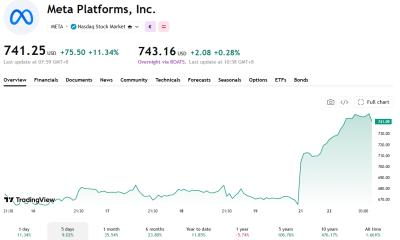
Meta Jumps 11% As Muse Shines and Investors Show an Appetite for Advancing AI
You must be logged in to post a comment Login