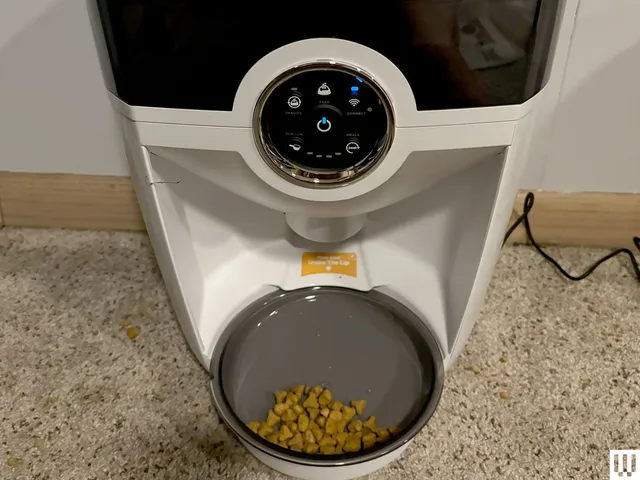
I always tell people that the best thing I’ve ever tested for my job here on the WIRED Reviews team is my automatic litter box from Litter-Robot. I recommend that every cat owner invest in an automatic litter box. If they can swing it, the Litter-Robot is the best option. You’ll be able to say goodbye to the days of scooping and unpleasant smells while this nifty machine does the grunt work for you.
Photograph: Molly Higgins
Litter-Robot is the OG automatic litter box, and the name itself has become synonymous with the concept. That’s not by accident, as the brand makes incredibly well-made, ergonomic products that make life easier for pet parents everywhere. Along with their famous automatic litter boxes, they also make a sleek automatic pet feeder that I’ve tested (and loved). These gadgets are an investment and can be pricey, but we here at WIRED love the brand so much that we’ve rounded up some of the best Litter-Robot promo codes, coupons, and deals to make these life-changing pet machines more affordable. Because your pet (and you) deserve it.
Whisker’s Litter-Robot name has become synonymous with the automatic litter box. We’ve tested the entire lineup and can help you choose the best model for your household.
Get $75 Off Litter-Robot Bundles This Month: No Promo Code Needed
One of the best ways to save big without a Litter-Robot promo code is to buy in a bundle. Litter-Robot offers several bundles that include all the essentials you’ll need to get started with your automatic litter box, such as a litter-trapping mat, replacement waste bags, odor eliminators, litter, and more. Bundles are a great way to save money on the purchases you’ll already need to make, without a Litter-Robot coupon. You can get $75 off several bundles, including Litter-Robot 4 models, as well as the newly released Litter-Robot 5 and Litter-Robot EVO models.
Get the Best Deals on the Litter-Robot 4
I’ve tested well over a dozen automatic litter boxes from different brands, including several from Litter-Robot. The one I keep coming back to is my personal favorite, the Litter-Robot 4. Even though the 5 is the newest model (I’ve tested it and I’m in the process of writing the review now), I just can’t quit you, Litter-Robot 4! I still think it’s one of the best automatic litter boxes you can buy: it has a user-friendly, intuitive connected app that isn’t overcrowded or confusing; the drawer is easy to pull out to remove waste; it has buttons on the top to manually change; and it doesn’t take up a large footprint on the floor. Plus, with a variety of discounted bundles to choose from, you won’t even need a Litter-Robot promo code.
Photograph: Molly Higgins
Litter-Robot 5 Pro Insights Bundle Discount: $150 Off
As previously mentioned, I just tested the Litter-Robot 5 Pro, part of Litter-Robot’s recently released line of new models. I was seriously impressed with this model, which looks very similar to the Litter-Robot 4 but has a built-in camera to see what’s going on inside and outside the box. The newest model isn’t cheap, but right now the Litter-Robot 5 Pro Insights Bundle is only $999 ($152 off). This bundle includes the newest Litter-Robot 5 Pro with built-in camera, plus a litter-tracking mat and waste drawer liners to get you started. And as an added bonus, Litter-Robot offers a 90-day in-home trial, a one-year warranty, and free shipping to the lower 48.
Photograph: Molly Higgins
Whisker
Litter-Robot 5 Pro
Advertisement
Take $50 Off the Litter-Robot EVO Starter Bundle
The Litter-Robot EVO is another newly released model from Litter-Robot, but it’s a more pared-down, basic version that’s streamlined and compact. I personally love the simpler models (hence my paragraph-long love letter to the Litter-Robot 4 above). If you don’t need to watch a camera feed of your cat peeing and pooping, the EVO is a more affordable, basic option that gets the job done efficiently. Right now, the Litter-Robot EVO Starter Bundle is $782 ($50 off) and includes everything you need to get settled with your new auto box, including waste drawer liners, a litter trap mat, a bag of litter, and odor traps to keep things smelling fresh.
Photograph: Louryn Strampe
Photograph: Louryn Strampe
Start Your 90-day In-Home Trial With Litter-Robot
Investing in an automatic litter box can feel a little scary. It’s a big investment, and you never know whether your cats will take to it or whether it fits your needs or space. Litter-Robot wants to make that decision easier for you—if you aren’t satisfied, you can return the product within 90 days for a full refund. All you need to do is pay for return shipping. Check out the full return policy here, and happy shopping!
It occurs to me that, as a new(ish) father, and someone who reviews products for a living, I am a nightmare to get gifts for. I’m not alone. Most of my friends have no idea what to get their dad, and end up brainstorming in group chats with anyone they can get their hands on.
Fear not, I’m here to make gifting a little easier this year (or at the very least, contribute to the brainstorm). Below are some of the best WIRED-tested gifts for the dad or father figure in your life, including travel gadgets, dad-approved apparel, and best-in-class earbuds. I’ve personally gifted a few of these to my dad, with great results.
Updated September 2026: I completely overhauled this guide with 27 new picks, including tech accessories, headphones, dad-approved apparel, fitness gear, and more.
For the Travel Dad
Anker
Advertisement
Nano Power Bank With Instacord
This is my favorite power bank, full stop. If I am traveling, going abroad, camping, or just headed to work, I take this power bank. It’s the built-in, retractable USB-C cord that does it for me—it’s there when you need it, and out of the way when you don’t. It’s small enough to pack in any bag and light enough that I barely notice it. Plus, it has an extra USB-A and USB-C port built in, so you can charge multiple devices at once if you want.
Apple
AirTag (2nd Generation)
Advertisement
I’ve lost count of how many times my Apple AirTag Bluetooth tracker has saved me from the hassle of looking for something. Keys: located. Luggage: tracked. Backpack: safe and sound. Sure, it’s not the most exciting gift in the world, but it’s the epitome of useful and practical. As long as they use an iPhone, that is.
GoRuck
Huckberry X GoRuck GR1 Slick Backpack (26L)
“If you told me I could only have one bag in my life, the 26L version of the GoRuck GR1 would be my pick,” says WIRED operations manager and outdoor expert Scott Gilbertson (he’s also a dad). It’s absolutely in buy-it-for-life territory, built with ultra-durable, water-resistant 1000D Cordura and tested by US Army Special Forces. It’s technically made for rucking, but it can do basically anything you throw at it, travel included. This Huckberry version omits the exterior MOLLE webbing, giving it a sleeker look. You can read more in Gilbertson’s full GoRuck GR1 review.
Advertisement
Rimowa
Original Cabin
The best aluminum carry-on suitcase. Aluminum luggage is sleek and durable, with a shell that just looks better with little dents and dings (unlike polycarbonate luggage). Aluminum itself is recyclable and repairable, and the clamps that hold the Rimowa together won’t fail or break as easily as your typical zipper. Rimowa is obviously the “it” brand for this type of luggage, but you can get similar options from Away and Level8 for well under half the price.
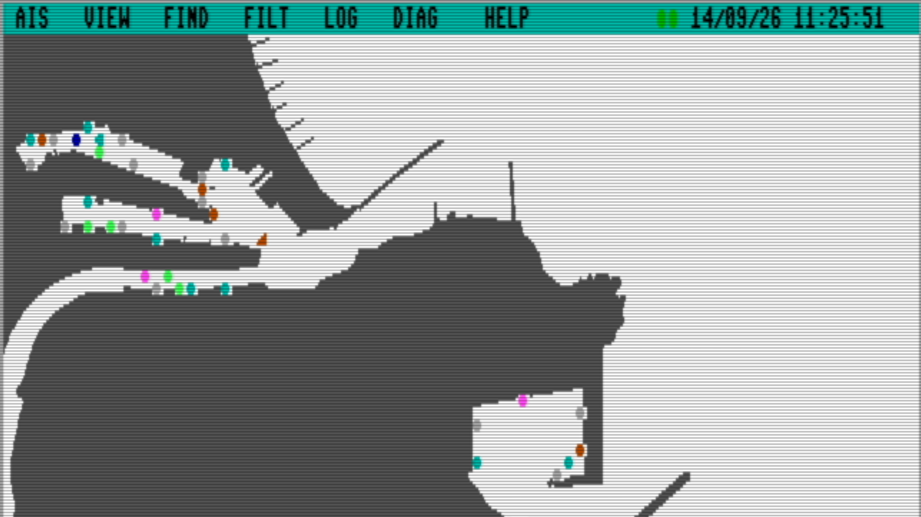
The Automatic Identification System (AIS) is a maritime radio communications tool used to allow different vessels to identify each other and communicate their movements and other telemetry. You can readily view a variety of AIS trackers online. Alternatively, you could build your own, and display the data on a retrocomputer from 40-plus years ago.
The concept is straightforward enough—it’s a Commodore 128 displaying vessel tracks from AIS data. The team behind AIS4CBM implemented this with assembly code to receive data over serial, parse and decode the AIS reports, and manage vessel data. Meanwhile, the front end is coded in BASIC 8, which provides useful graphic routines for plotting vessels on a map. There’s also a BASIC 7 text interface if you prefer to view the vessel data that way.
It’s worth noting that you can’t just run this on a barebones C128. AIS4CBM requires a 512 KiB REU RAM expansion, as well as 64 KiB VDC memory. You also need a SwiftLink compatible serial interface to get the data into the machine in the first place from your AIS receiver or other source. The project website notes that an Ultimate-II+ unit is a great way to fulfill most of these requirements with a single piece of hardware.
Advertisement
If you dig the project, you can check out a live stream from the C128 doing its thing below. We wouldn’t recommend a Commodore 128 if you’re a harbor master or otherwise commanding ships on the water. Still, it’s a fun project, and much like the NES that was set up to track planes with ADS-B data. Video after the break.
From businesses exhausting yearly AI budgets in just months to some imposing limits on staff AI use, it’s clear heavy token consumption or ‘tokenmaxxing’, is reaching its limits.
Instead of incentivizing and measuring business output, many are measuring consumption and usage.
While cutting AI usage seems like the natural solution, this doesn’t always work in practice. In fact, this can result in genuinely useful projects being pulled.
Advertisement
Latest Videos FromTechRadar
Without a reliable way to measure AI ROI, companies cut against the only metric they can see: consumption.
Greg Holmes
EMEA Field CTO at Apptio, an IBM Company.
We know a lack of performance benchmarks and traceability is translating to poor ROI with Gartner estimating that 84% of finance leaders have not been able to measure the ROI of AI initiatives.
To give enterprises the confidence to navigate this next phase, business leaders need to prioritize getting a clear picture of AI spend from beginning to end.
Advertisement
How We Got Here
The rapid adoption of generative AI has introduced a new consumption model and traditional IT financial management needs to adapt to keep up. For a long time, organizations optimized their budgets around cloud and on premises workloads.
Sign up to the TechRadar Pro newsletter to get all the top news, opinion, features and guidance your business needs to succeed!
However, these new tools function in a different way. Costs vary based on the complexity and accuracy of a prompt or even the type of model being used. In other words, the inherent variability of LLMs has made accurate cost tracking more difficult.
Advertisement
The problem is only being made more complex by the introduction of AI agents which can increase expenses because of unpredictable token consumption, heavy GPU usage and fast scaling. Unlike standard AI chatbots, these are not static tools.
These agents work using continuous, background loops independent of human operators which can generate multiple queries to solve difficult tasks. Because this reasoning loop happens autonomously, it can make it trickier to understand how much it’s costing to run an agent.
Advertisement
The Blind Spot
Another hurdle is visibility. Because of the rapid adoption of AI tools, spend is rarely centralized, distributed across a complex mix of business units, infrastructure, vendor APIs and engineering teams. Enterprise cloud and API bills are also unlikely to be updated, or interpreted in real-time meaning it gets even harder to understand what has been spent.
As a result, this is forcing a shift in how organizations measure success and spend. It is not enough to track the raw, isolated figure of cost per token. To make sure that enterprises have a clear understanding of what they are paying for and what they are getting in return, it’s important that team leaders have the frameworks in place to keep a firmer hold on budgets.
A business’s financial practices must evolve at the same pace as its technology adoption.
Advertisement
Value Over Volume
So, what replaces the trial-and-error approach that has defined AI adoption so far? Having spent years working with businesses, first through the cloud transition and now enterprise AI, I’ve seen that sustainable returns depend on rethinking how we define and measure productivity in the first place.
Many businesses have been encouraging workers to use AI wherever possible, but few have implemented specific AI metrics that can tie together, higher usage to improved outcomes.
For example, has the process of taking a product from concept to production sped up or become less expensive? Just measuring intermediate steps like code check-ins, ticket closures and cases doesn’t necessarily align with business value.
To do this, a benchmark must be established. Businesses need to know what a process, from manpower to tools already costs them without AI so they can make the right call. Without that baseline, any gain is guesswork.
Advertisement
This is where frameworks like Technology Business Management and FinOps earn their place. Both practices are aimed at making sure that every aspect of spend is understood and tied to a key business objective. In my experience they also help build a culture that instils accountability amongst teams when it comes to their role in managing IT spend.
There is a need to dismantle the silos that can keep costs out of sight and instead focus on treating technology spend as a real-time product variable.
Sustained Financial Intelligence
To make true progress and create value with AI, teams must see it as a measurable business driver. This transition requires leaders not to see success as how many times an employee has turned to AI or logged into the latest tool, or just having an AI tool as a part of a business process. Real ROI comes when enterprises can connect money spent directly to improved outcomes, that affect the business output.
Advertisement
Put simply, it’s about getting a clear and honest picture of spending so smarter choices can be made and investment in the right areas can be prioritized. The result? A more accurate understanding of costs and what AI projects are pushing the business forward as opposed to just being vanity projects.
This article was produced as part of TechRadar Pro Perspectives, our channel to feature the best and brightest minds in the technology industry today.
The views expressed here are those of the author and are not necessarily those of TechRadarPro or Future plc. If you are interested in contributing find out more here: https://www.techradar.com/pro/perspectives-how-to-submit
“F-Droid, a third-party app repository that only distributes free and open-source software packages for Google’s Android mobile platform, on Thursday announced version 2.0 of its Android app,” reports The Register.
Though they also note “a big banner across the top of the F-Droid site” pointing to a site describing pending changes from Google that threaten the future of F-Droid…
[D]evelopers who want their apps broadly distributed outside the official Google Play Store will need to register with Google and verify their identities. Google’s Full Distribution option includes paying a one-time $25 fee, handing over a copy of a government-issued ID to verify one’s identity, and conforming to Google’s terms of service. Google also offers a free Limited Distribution option that doesn’t require government ID verification but restricts distribution to 20 authorized devices, while apps from unverified developers can still be installed by users who enable Android’s advanced installation flow.
The potential death warrant hanging over its head hasn’t stopped the F-Droid team from rolling out a bunch of new features for an app it says it intends to keep working on for years to come… The team also credited the EU’s many Digital Markets Act decisions against Google for making the installation experience smoother for users. F-Droid can now use a unified installation service for its apps thanks to the availability of a pre-approval API that allows users to approve an installation when they request it, rather than waiting until the app has finished downloading. That, said the F-Droid team, “brings the F-Droid install experience on official Android devices much closer to what the built-in app store can provide.” Additionally, F-Droid 2.0 can fetch and install app updates automatically, which it now does by default.
Advertisement
All of those changes, however, won’t matter much if Google pushes ahead undeterred with its plans to force registration onto non-Play Store developers. F-Droid’s announcement on Thursday makes it seem that the team isn’t going to go quietly.
F-Droid has gone 10 years without a major update, notes Ars Technica — and spent over a year developing F-Droid 2.0:
The new F-Droid client was redesigned from scratch in Kotlin Compose, which is the standard for modern Android apps. This makes the store much more responsive, and there’s optional support for Android’s Material theming. The interface has also been cleaned up considerably, making the most important functions easier to access and hiding some others in overflow menus… Unlike the Play Store, F-Droid doesn’t track your taps and installs to push ads and suggestions — it helps you find things and gets out of the way.
F-Droid now includes a huge number of categories, drilling down to specialized niches like firewalls, password managers, and VPNs. You can see all these groups in the search tab. There are also higher-level categories listed on the main Discover page. When searching for apps, F-Droid will now be able to return results based on app descriptions rather than just names.
“One of the goals of the rewrite was to lower the barrier for new contributors,” F-Droid said in their announcement. “We are excited to begin rolling out F-Droid 2.0 to users over the coming weeks after 14 test releases.” (And if you want the 2.0 release right now, it’s available on the versions page.)
Cryptocurrency exchange Bitget disclosed today that suspected North Korean hackers have stolen $351.6 million from its hot and warm wallets.
The company discovered the breach Thursday evening after its security systems flagged multiple unauthorized transfers from a limited number of crypto wallets.
Bitget has temporarily suspended all withdrawals while investigating the incident with help from law enforcement agencies, on-chain security institutions, and cybersecurity experts at Mandiant and SlowMist.
It also said its self-custodial Bitget Wallet was not affected, as it operates on infrastructure independent of Bitget Exchange and was not impacted by the attack, and added that the User Protection Fund (which holds 5,500 BTC currently worth about $464 million) will cover all losses.
Advertisement
“Based on our current assessment, approximately $351.6 million in assets were affected. Bitget’s cold wallets and the overwhelming majority of platform assets remain secure and unaffected,” it said.
“The incident falls within the coverage of Bitget’s User Protection Fund, which currently holds more than $464 million. Customer account balances remain accurate, and deposits and trading continue to operate normally.”
The company has yet to share more information on how the attackers accessed its key backend wallet-service system to forge transfer information and trigger the authorization-signing process.
Bitget CEO Gracy Chen said the incident involved the Ethereum, XRP Ledger, Arbitrum, Avalanche, Optimism, BSC, and Base chains and affected multiple assets, including ETH, XRP (single-chain loss is the largest), BNB, AVAX, USDT, USDC, and other tokens.
Advertisement
Chen added that some chains have also confirmed that the hacker wallet addresses have been frozen since the attack and linked the theft to North Korean hackers.
“Based on IP behavior patterns and on-chain analysis, the attack method in this incident is highly consistent with known patterns of North Korean hacker organizations. We have reported to relevant institutions and are fully cooperating in conducting a global investigation,” Chen said.
“The attacker compromised a critical backend system within our wallet infrastructure, used it to spoof transaction data, and triggered our authorization process to move funds out. No further unauthorized transfers are possible. The specific method of system intrusion remains under active investigation.”
In its latest update, Bitget said it will restore withdrawals as soon as possible, after investigators confirm it’s safe to resume normal operations.
Advertisement
North Korean hackers have previously been linked to many other major crypto theft incidents, including the Bybit heist, in which they stole $1.5 billion from the crypto exchange’s ETH cold wallet.
Join Mikko Hyppönen and security leaders from the NFL, CHANEL, and Atlassian for a two-hour digital summit on what AI-speed attacks change, what defenders should stop doing, and how to validate, decide, fix, and re-validate at machine speed.
An advertiser paid for editorial consideration of this deal. Our editorial experts vetted the deal based on our independent expertise. Because we determined that the deal will save money for our readers, we wrote the content.
Save 15%: Buy a Japanese data eSIM from Ubigi and save 15% off when you enter our exclusive discount code CNETJP15 during checkout. If you’re traveling to Japan and want to be able to use your phone without worrying about roaming charges, this is the deal for you.
You’ll save 15% on your first purchase with 8-, 15- and 30-day data eSIMs available, all with unlimited data throughout Japan. Japanese data eSIMs start at $21 with our code, and you’ll save the most money when choosing the longer plans.
Save 15% with code CNETJP15
Advertisement
Ubigi Japanese eSIM plans
Ubigi offers three Japanese data eSIMs for you to choose from. The eight-day unlimited data plan is down to $21 from $25 once our 15% discount has been applied. For those staying in the country longer, the 15-day unlimited data plan now costs $33, down from the usual $39. Anyone lucky enough to be in Japan for a full month can choose the 30-day unlimited data plan for $55 — down from $65.
Advertisement
There are tons of reasons to head to Japan, whether you’re checking out the local wrestling scene or hunting for some hard-to-find classic video games. And that’s before we get into the amazing scenery and architecture that’s just waiting to be explored. Whatever your plans, having to worry about data costs shouldn’t be part of them.
These data-only eSIMs are easy to set up and use, with a single Ubigi app handling data connections for over 200 destinations, including Japan. You only need to install one app no matter your destination, so there’s no scanning of QR codes or complicated setup here.
Why this deal matters
Whether you’re visiting Japan for a vacation or for work, you’re going to need to use your phone. Sure, you can roam using your carrier, but data costs can be extortionate and unpredictable. Buying a Ubigi eSIM takes the guesswork and worry out of using your phone abroad, and saving 15% is just the icing on the cake.
Oliver Haslam has been writing about phones, computers, games, and anything else that takes a battery or plugs in for more than he’d like to admit.
With a focus on mobile and laptops, Oliver is never too far away from whatever social network is trending today and is never short of an opinion to share.
See full bio
Electricity is the once and future drivetrain for automobiles, but until the advent of lithium batteries their capabilities were somewhat modest. One EV blip on the automotive timeline is the XP-512E commuter prototype by GM.
The 60s saw a wide variety of interesting experiments in the automobile space, and both GM and AMC were evaluating the possibilities of a return to electric cars for short journeys. GM wasn’t set on a particular drivetrain for their new experimental commuter cars, so the XP 512 became a trio with conventional, hybrid, and electric variants. Each car was a two seater with a fiberglass body and steel chassis. The canopy could lift and a small door in the front swung to the side for access to the cockpit. Some images from the time show the car without the canopy and just the rollbar, giving you a very small convertible (83″/2108 mm long).
Lead acid was the only viable traction battery until the 1990s, so the 1,250 lb vehicle was limited to a top speed of 30 mph and a range of 50 miles. GM was exploring a number of alternatives at the time including another blast from the automotive past, steam power, in an effort to reduce the issues of smog and air pollution that plagued cities beset by droves of V-8 powered sedans. While the XP-512E and the AMC Amitron never made it to production, they’re an interesting reminder that technologies that seem infeasible today may just need to bake a bit longer.
Meta’s newest smart glasses are an iterative, expensive update.
Meta
Meta announced a slew of new smart glasses at Meta Connect 2026, including its first camera-free options, but the company’s Ray-Ban Meta models remain the flagship. The Ray-Ban Meta Gen 3 carry over many of the improvements introduced in smaller updates over the last year, like the more prescription-friendly Ray-Ban Meta Optics or the affordable Meta Glasses, with new features that mostly rely on software rather than reinvented hardware.
Other than new colors and frame options, it’s hard to tell how the Ray-Ban Meta Gen 3 glasses differ from the Ray-Ban Meta Gen 2, unless you really dig into the specs. And you kind of need to, since understanding those differences is the only way to justify the new $449 starting price.
Advertisement
The Ray-Ban Meta Gen 3 last longer and listen better
The biggest changes Meta introduced to the Gen 3 are a longer battery life and the addition of more microphones. The Ray-Ban Meta Gen 3 lasts up to 9 hours on a charge — one hour more than the Gen 2 — and up to 50 hours with its charging case, two hours more than the Gen 2’s 48 hours. In day-to-day usability this might not make a huge difference, especially when compared to the 12 hours of battery life the company is promising on the Ray-Ban Meta Audio. We’ll need to do a full review of the glasses to see what the battery life improvements mean in real-world use.
The Gen 3’s six-mic array, one more mic than what Meta offered on the Gen 2, is a similarly modest change. Meta says adding the extra mic and redesigning the microphone layout on the Gen 3 model has allowed for better background noise reduction for calls and AI interactions, but that will have to be tested to see if it’s meaningfully different. One way the new mic on the Gen 3 could allow it to stand out from the Gen 2 is support for listening to and recording Dolby Atmos spatial audio, a feature the company says is launching later in 2026.
Meta has also ported over the action button it introduced on the Ray-Ban Meta Optics and Meta Glasses to the Gen 3. The button can summon Meta AI, act as a capture button, or be assigned as a shortcut for a variety of other Ray-Ban Meta features. The Gen 2 features a capture button that only works with Meta’s camera features.
Advertisement
The Ray-Ban Meta Gen 3 are smaller and available in new styles
Meta
Smart glasses are fashion as much as they are anything else, so another way the Gen 3 are differentiated from the Gen 2 is the addition of two new frame styles. The Ray-Ban Meta (Gen 3) Aviator features lenses shaped like Ray-Ban’s classic aviator glasses, with thick frames in multiple translucent and tortoiseshell colors. For something a little less in-your-face, the Ray-Ban Meta (Gen 3) Zena comes with more of a cat-eye shape in translucent, black and tortoiseshell colors. The only frame shape that’s carrying over from the Gen 2 is the Wayfarer, Ray-Ban’s most well-known frame. That doesn’t mean Meta won’t port more Gen 2 styles over in the future given its penchant for mid-cycle refreshes, but for now most Gen 3 glasses will look pretty different.
They’re also, technically, a bit smaller. The best comparison point is the Ray-Ban Meta Wayfarer. The standard-fit Gen 2 model is 131mm from hinge to hinge, while the Gen 3 model is only 129mm. The temples on the Gen 3 model are also slightly shorter at 149mm compared to 150mm on the Gen 2. The relationship is reversed when it comes to weight, though, where the Gen 3 model is a slightly heavier 51.5 grams compared to the Gen 2’s 51 grams. Those changes might not be noticeable unless you have the glasses side-by-side, but it does suggest Meta is mostly trending towards smaller glasses overall.
Advertisement
Meta’s new software features are coming to older models
Software and AI access define the experience of using Ray-Ban Meta smart glasses. And the vast majority of features the company announced alongside its Gen 3 model will be available on older Gen 2 models, too. That includes using the smart glasses’ FDA-cleared hearing enhancement feature, interacting with the company’s Muse AI agent, and taking photos with the glasses’ new dynamic photo capture feature, which captures multiple shots at once and lets you pick the best framing.
Combined with the Ray-Ban Meta Gen 3’s higher starting price of $449, $70 more than the Ray-Ban Meta Gen 2, that makes justifying an upgrade hard. The company’s new smart glasses will likely be a great way to jump into Meta’s growing ecosystem, but if you can buy a used Gen 2 pair (assuming you don’t need a prescription) you’ll likely get a better deal.
Watch the Laver Cup 2026 live streams as the ninth edition of the tournament gets underway on 25 September at the O2 Arena in London.
Yannick Noah and Andre Agassi will serve as team captains once again this year, returning from the previous year. Last year’s winners were Team World, as they defeated Team Europe 15–9 to earn their third title. Each team has confirmed six participants for the tournament in the United Kingdom.
Acting as tennis’ version of the Ryder Cup, the competition sees six players from Team World face off against six players from Team Europe. There are nine singles matches and three doubles matches, giving 12 matches in total, with each day seeing four matches take place.
Advertisement
Unlike a normal tournament, players aren’t simply knocked out after losing, on Friday, a win is worth one point, on Saturday a win is worth two points and on Sunday a win is worth three points. With 12 matches taking place, there are 24 total points available. The winner is the team that amasses the most points across the three days.
Here’s how to watch the Laver Cup 2026 from anywhere in the world. We’ve also listed the the players, recent winners and prize money below.
Can you watch the Laver Cup 2026 for FREE?
Yes. Free Laver Cup 2026 coverage is being provided by RTVE in Spain and onL’Équipe in France
Advertisement
Traveling abroad right now? You can use a VPN to watch the Laver Cup 2026 for free as if you were right at home.
Use a VPN to watch Laver Cup 2026 live streams
A VPN is handy piece of software that can make your device appear as if it’s back in your home country, so you can unlock your usual service. The best VPN right now? We recommend NordVPN – it does everything and comes with up to 75% off.
Advertisement
How to watch Laver Cup 2026 live streams in the US
Laver Cup 2026 coverage is being provided by Tennis Channel in the US.
Tennis Channel which has US broadcast rights for the US, starts their subscription plan pricing at $11.99/month for full streaming access.
You can also access the Tennis Channel via cord-cutting subscription with all of Sling, YouTube TV and Fubo having it with their sports add-on packages.
Outside of the US? Use a VPN while you’re traveling away from home to unlock your stream.
Advertisement
How to watch Laver Cup 2026 live streams in the UK
(Image credit: Other)
In the UK, live Laver Cup 2026 coverage is being provided by Sky Sports.
Sky Sports packages start at £35/month with £20/month pricing available for those who are already customers. You can also tune in via a NOW Sports membership that carries the Sky Sports channels.
If you’re out of the UK but still want to tune in, explore the VPN route set out above, which will help you access your accounts from anywhere.
Advertisement
How to watch Laver Cup 2026 live streams in Australia
(Image credit: free)
Stan Sport will have exhaustive coverage of all three days of the tournament. Stan Sport costs AU$20/month on top of a Stan subscription, which itself starts at AU$9.99/month.
Not in Australia right now? You can simply use a VPN like NordVPN to watch all the action as if you were back home.
Advertisement
How to watch Laver Cup 2026 live streams in New Zealand
The Laver Cup 2026 will be shown exclusively in New Zealand on Sky Sport.
You can access Sky Sport through satellite TV or get a live stream, with the Sky Sport Now subscription service starting at NZ$29.99 per day or NZ$59.99 per month.
Not in New Zealand right now? You can simply use a VPN like NordVPN to watch all the action as if you were back home.
Advertisement
How to watch Laver Cup 2026 live streams in Canada
(Image credit: Other)
In Canada, the Laver Cup 2026 is exclusive to TSN.
If you don’t have cable, the TSN Plus streaming service costs CA$24.99/month or CA$249.99/year.
Outside Canada? The VPN route set out above will help you access TSN from anywhere in the world.
Advertisement
Laver Cup 2026 FAQs
What is the Laver Cup 2026?
Laver Cup 2026: Explained
The Laver Cup is a unique team tennis competition that sees some of the world’s best players go head-to-head as part of either Team Europe or Team World.
First held in 2017, the event was created by Roger Federer and his management company, TEAM8, in partnership with Tennis Australia and the ATP. It is named after Australian tennis legend Rod Laver, who is widely regarded as one of the greatest players in the history of the sport.
Advertisement
Unlike the four Grand Slam tournaments, where players compete individually, the Laver Cup is a team event. Six players represent Team Europe, while six players represent Team World. The teams are led by captains, with legendary former players often taking charge. For 2026, Yannick Noah is captaining Team Europe, while Andre Agassi is leading Team World.
The competition takes place over three days, with four matches played each day. There are singles and doubles matches throughout the weekend, with players representing their respective teams rather than competing for individual ranking points.
One of the most distinctive aspects of the Laver Cup is its scoring system. Matches become increasingly valuable as the weekend progresses.
On Friday, each match win is worth one point. On Saturday, a win is worth two points, while Sunday’s matches are worth three points each. With 12 matches scheduled across the three days, there are 24 points available in total.
Advertisement
The first team to reach 13 points wins the Laver Cup.
Who is competing at the 2026 Laver Cup?
Confirmed: Laver Cup 2026 players
Team Europe
1. Carlos Alcaraz 2. Alexander Zverev 3. Flavio Cobolli 4. Rafael Jodar 5. Jakub Mensik 6. Casper Ruud
Advertisement
Team World
1. Taylor Fritz 2. Alex de Minaur 3. Learner Tien 4. Alexander Bublik 5. Brandon Nakashima 6. Francisco Cerúndolo
Who are the recent Laver Cup winners?
Past winners
2017 Prague 🇨🇿 🇪🇺 Team Europe (15–9)
Advertisement
2018 Chicago 🇺🇸 🇪🇺 Team Europe (13–8)
2019 Geneva 🇨🇭🇪🇺 Team Europe (13–11)
2020 Not held due to Covid-19
2021 Boston 🇺🇸 🇪🇺 Team Europe (14–1)
Advertisement
2022 London 🇬🇧 🌎 Team World (13–8)
2023 Vancouver 🇨🇦 🌎 Team World (13–2)
2024 Berlin 🇩🇪 🇪🇺 Team Europe (13–11)
2025 San Francisco 🇺🇸 🌎 Team World (15–9)
Advertisement
What is the Laver Cup 2026 schedule?
Friday 25 September
13:00, day session: match 1 (singles)
Followed by: match 2 (singles)
19:00, night session: match 3 (singles)
Followed by: match 4 (doubles)
Saturday 26 September
13:00, day session: match 5 (singles)
Followed by: match 6 (singles)
19:00, night session: match 7 (singles)
Followed by: match 8 (doubles)
Sunday 27 September
12:00, day session: match 9 (doubles)
If required, followed by: match 10 (singles)
If required, followed by: match 11 (singles)
If required, followed by: match 12 (doubles)
What is the Laver Cup 2026 prize money?
For the 2026 Laver Cup, the total prize purse is US$1.5 million.
The official Laver Cup confirms that each of the six players on the winning team receives $250,000, while there is no prize money for the losing team.
But there is another payment, as the players also receive an appearance fee, which is separate from the $250,000 prize money.
That fee is determined by each player’s ATP singles ranking immediately after the 2026 French Open. So the players aren’t simply playing for the $250,000 — everyone receives an appearance fee for taking part, regardless of whether their team wins or loses.
Advertisement
For example, Carlos Alcaraz, who was ranked No. 2 after Roland-Garros, receives the highest appearance fee among the 2026 players, according to Sporting News.
We test and review VPN services in the context of legal recreational uses. For example: 1. Accessing a service from another country (subject to the terms and conditions of that service). 2. Protecting your online security and strengthening your online privacy when abroad. We do not support or condone the illegal or malicious use of VPN services. Consuming pirated content that is paid-for is neither endorsed nor approved by Future Publishing.
Waiting until tomorrow means paying whatever this keyboard usually costs, which makes tonight the only window left to get Touch ID and a full numeric keypad locked in at $149.99 before the listing resets for good.
Advertisement
Touch ID built into the keyboard means unlocking a Mac or approving an online payment takes a single tap instead of typing out a password every time a screen locks itself during the working day.
That same keyboard has built a reputation among its own owners for a remarkably comfortable typing feel, with reviewers consistently pointing to the precision of every keystroke as the reason they keep coming back to it.
Advertisement
The extended layout adds a full numeric keypad alongside dedicated document navigation controls, turning what would otherwise be a simple typing accessory into something built for spreadsheets, finance work and long documents, with full-size arrow keys thrown in for gaming too.
Advertisement
It runs wirelessly on a rechargeable battery that lasts about a month between charges, and pairs with a Mac automatically the moment it switches on. That leaves a keyboard that is simply ready every time it is picked up, with nothing to plug in first.
The same keyboard pairs just as easily with an iPad or an iPhone, which means one purchase covers a Mac at the desk and a tablet or phone used everywhere else in the house too.
For anyone who spends real time typing, browsing spreadsheets, or logging into a Mac throughout the day, tonight is the moment to get the Magic Keyboard with Touch ID for $149.99 before the deal disappears.




.jpg)
.jpg)




























































You must be logged in to post a comment Login