

Connect with us
DAPA Banner

Business

New era of trade volatility: What the court’s decision and Trump’s tariff pivot mean for commodities

Published

on

New era of trade volatility: What the court’s decision and Trump’s tariff pivot mean for commodities
The recent U.S. Supreme Court ruling striking down President Donald Trump’s broad tariff measures has reshaped the global trade landscape, bringing both clarity and fresh uncertainty. The U.S. Supreme Court ruled that the International Emergency Economic Powers Act (IEEPA) does not give authority to the president to impose sweeping import tariffs, effectively blocking one of Trump’s key trade tools.

However, within a day of the verdict, Trump signalled that he would continue pursuing new tariffs. He invoked a temporary global tariff—first 10%, then raised to 15%, the maximum allowed under the US trade law.

Global response

The Supreme Court’s decision to strike down Trump’s earlier tariff framework prompted varied global reactions. The European Commission immediately rejected any increase in tariffs and said that existing agreements must be honoured. India postponed a planned trade visit to Washington to reassess the implications of the ruling, reflecting broader uncertainty among U.S. trading partners. This shifting tariff landscape may create instability in global trade flows, as businesses and governments reassess supply chains and tariff exposures. Existing trade deals face renewed strain: some partners may reconsider agreements struck at higher tariff rates, while others may challenge the legality or longevity of the new levies.

Advertisement

Impact on the US dollar

The U.S. dollar showed a mixed response following the Supreme Court’s ruling against Trump’s earlier tariffs. It initially rose, reflecting a brief boost in confidence, but later fell, as investors reassessed the ruling’s implications and shifted toward safe-haven assets like gold and silver. Trump’s swift introduction of a 15% global tariff added fresh uncertainty, further pressuring the dollar as markets priced in potential trade disruptions and weaker economic sentiment.

Renewed interest in bullion

Gold and silver surged following the U.S. Supreme Court’s decision, as investors sought safe-haven assets amid sudden policy uncertainty. Gold futures jumped past $5,200, while silver rose nearly 9% on the day of the ruling. When Trump quickly responded with a new 15% global tariff, safe-haven demand strengthened further, supported by a weaker dollar and renewed trade concerns. Overall, both metals gained sharply as uncertainty over U.S. trade policy drove investors toward bullion.
Against this backdrop, bullion is likely to remain supported in the coming days. Periods of policy instability and fluctuating trade frameworks often weaken sentiment toward the U.S. dollar, prompting investors to shift towards assets perceived as more stable.

Impact on energy commodities

For energy commodities, the impact is likely to be felt through two key channels: currency volatility and trade-flow uncertainty. Any pressure on the U.S. dollar—caused by legal ambiguity, shifting tariff frameworks, or perceived political risk—tends to influence crude oil prices, since oil is globally priced in dollars. A weaker dollar typically supports higher energy prices, while a stronger one may exert downward pressure.

However, the shifting tariff landscape could indirectly influence global purchasing behaviour. If tariff related uncertainty disrupts trade flows or prompts buyers to diversify away from higher-tariff sources, Russian exporters may see changes in market dynamics. In this backdrop, countries like India—already a major buyer of discounted Russian crude, could further lean towards Russian supplies as a cost-effective alternative, especially if U.S. tariff actions make other import routes more expensive or less predictable.

Advertisement

Renewed volatility in base metals

For base metals such as copper and aluminium, the near-term outlook is likely to be shaped by dynamics like policy instability, currency fluctuations, and shifting supply-chain expectations. Copper, closely tied to global manufacturing and investment sentiment, tends to react sharply to uncertainty in trade policy. If tariff-driven instability pressures the U.S. dollar or clouds the outlook for industrial demand, copper may experience renewed volatility as markets reassess consumption prospects.

Aluminium, meanwhile, remains highly sensitive to trade flows and cost structures. Any tariff-related disruption to cross-border metal movement, or shifts in demand from sectors like autos and construction, could temper price gains and keep volatility elevated. Overall, with tariff pathways still unsettled and markets awaiting clarity, base metals are poised for cautious, choppy trading in the days ahead.

This shifting trade landscape has already generated “huge uncertainty” for companies and U.S. trading partners, heightening concerns over rising costs, supply-chain realignments, and the resilience of existing trade agreements. Ultimately, the Supreme Court ruling has not concluded the debate over U.S. tariff policy; it has opened a new and unpredictable chapter. With the administration pursuing alternative legal pathways, such as the newly imposed 15% global tariff, the long-term direction of U.S. trade strategy remains unclear. Until greater clarity emerges, commodity markets are likely to remain on uneven footing, shaped by caution, exchange-rate fluctuations, and evolving global policy risks.


(The author Hareesh V is Head of Commodity Research, Geojit Investments)

(Disclaimer: Recommendations, suggestions, views, and opinions given by experts are their own. These do not represent the views of the Economic Times)

Advertisement
Continue Reading
Click to comment

You must be logged in to post a comment Login

Leave a Reply

Business

Progressive Green Solutions’ Mid West solar, battery project to cost $1b

Published

on

Progressive Green Solutions’ Mid West solar, battery project to cost $1b

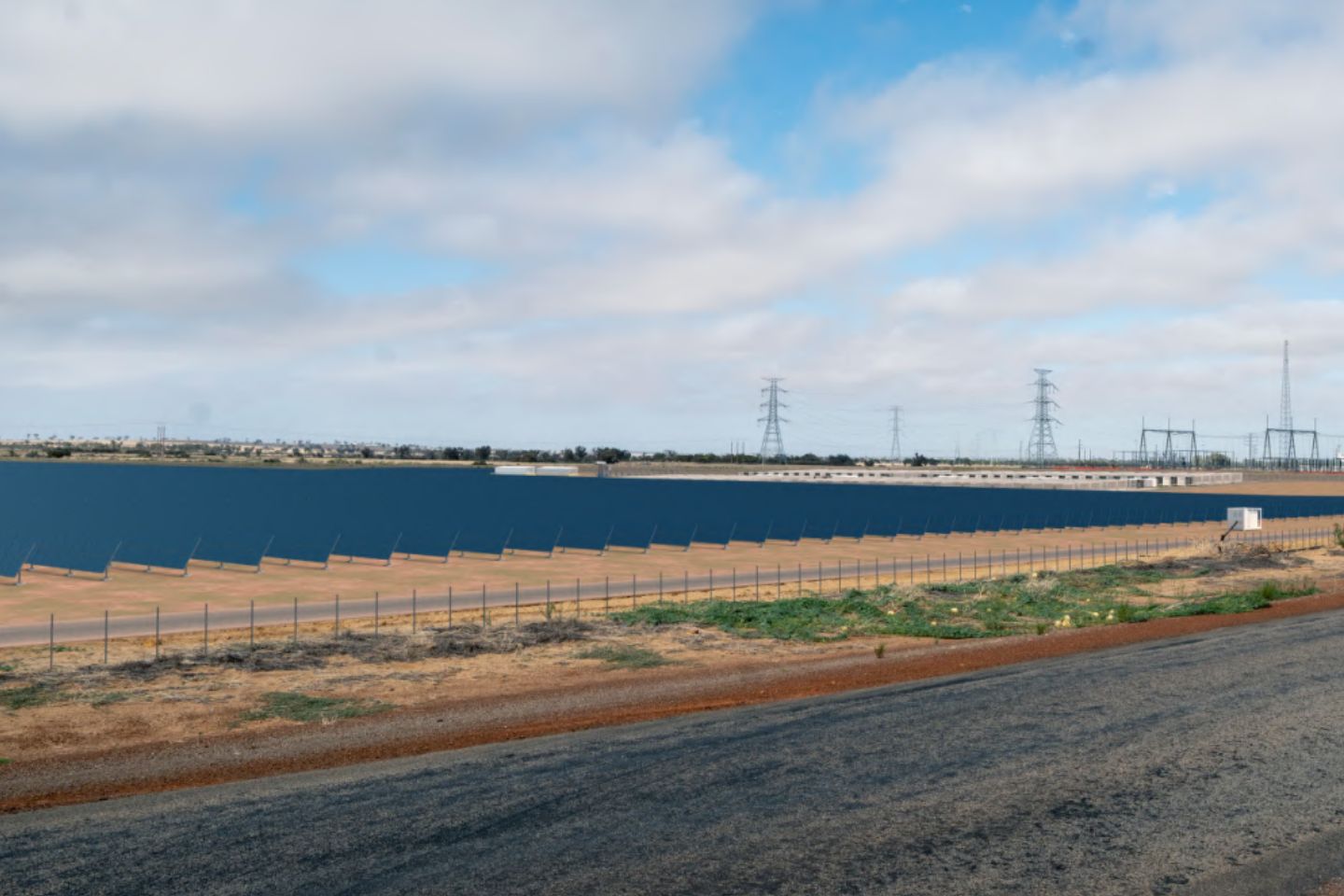
Progressive Green Solutions’ proposed renewable energy project in the state’s Mid West is estimated to cost $1 billion, planning documents show.

Continue Reading

Business

Japan Issues Tsunami Warning Following Magnitude 7.5 Earthquake

Published

on

Evacuation Sign
Evacuation Sign
Nyok Wirya / Unsplash

A tsunami warning has been issued for certain areas in northern Japan following a magnitude 7.5 earthquake.

The government has warned that tsunami waves three metres high may hit the country.

Tsunami Warning Issued After 7.5 Earthquake

According to a report by CNN, the earthquake struck off the northeastern coast of Japan. The Japan Meteorological Agency (JMA) has since issued a tsunami warning for the Iwate prefecture, as well as parts of Hokkaido and Aomori.

The report notes that a CNN producer in Tokyo noted that the earthquake lasted around seven minutes.

The Japanese government, led by Prime Minister Sanae Takaichi, is now calling for those in the affected areas to evacuate immediately.

Advertisement

“At this time, we are still confirming the extent of human and material damage, but we will receive detailed reports shortly and proceed with disaster response efforts,” Takaichi told reporters.

Tsunami Waves Already Recorded in Different Locations

According to the live coverage of ABC News, tsunami waves have begun to hit different locations in Japan.

A wave 80 centimetres high has been recorded in Kuji Port, while a wave measuring 40 centimetres was detected at Miyako Port.

Abnormalities have not been reported in the nuclear plants in the area, which are located in Aomori and Miyagi.

Advertisement
Continue Reading

Business

Banned director Blumenthal elusive in liquidators' probe

Published

on

Banned director Blumenthal elusive in liquidators' probe

Liquidators of collapsed medicinal cannabis company Melodiol Global Health want to question banned director Adam Blumenthal, but lawyers are struggling to serve him while he is overseas.

Continue Reading

Business

UDIA calls for half a billion govt spend

Published

on

UDIA calls for half a billion govt spend

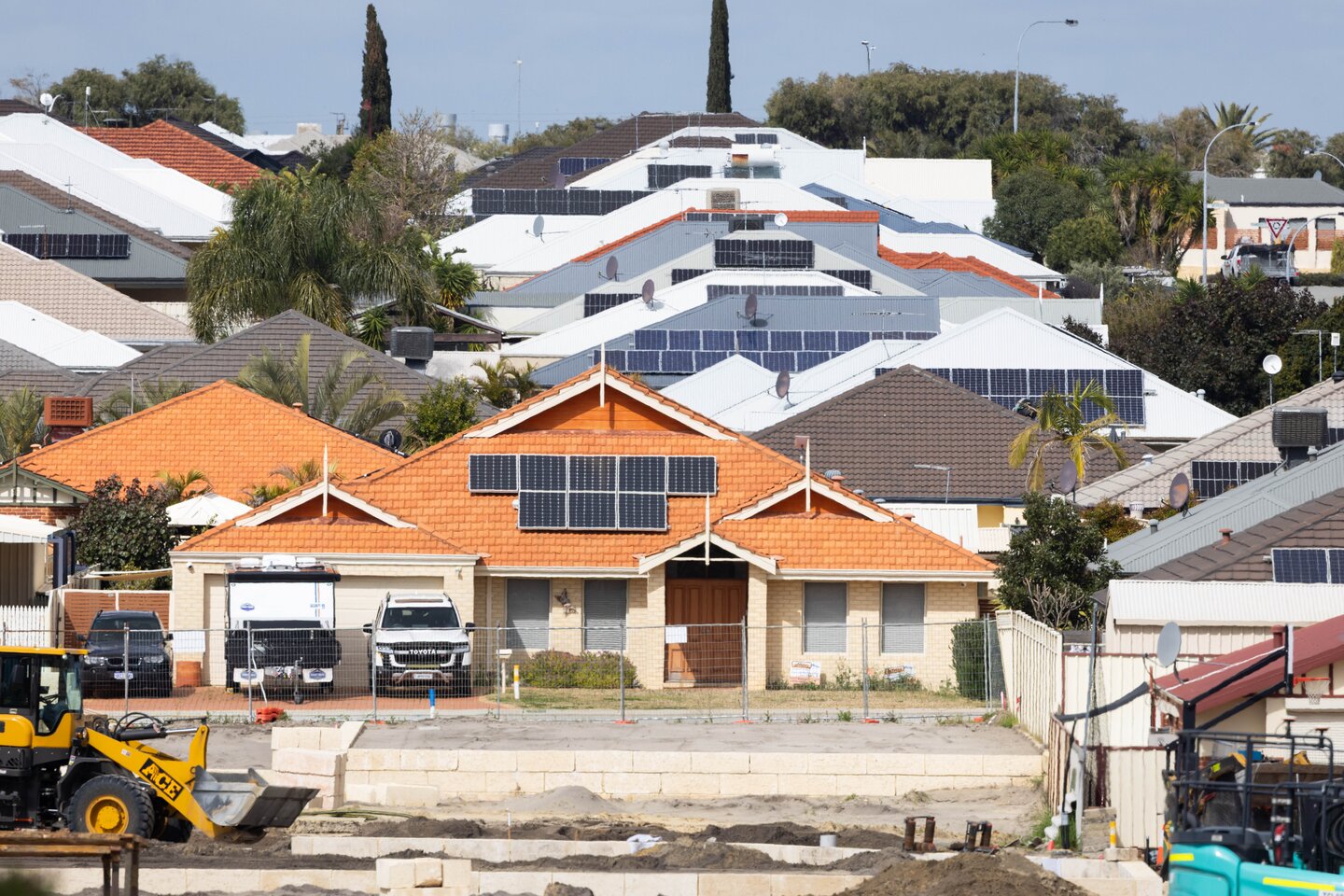
The peak body for land developers has outlined what’s required to unlock 115,000 new homes in Western Australia.

Continue Reading

Business

BofA sees Turkey central bank holding rates or hiking to 40%

Published

on


BofA sees Turkey central bank holding rates or hiking to 40%

Continue Reading

Business

Faisal Islam: What people in power think the impact of the Iran war will be

Published

on

Faisal Islam: What people in power think the impact of the Iran war will be

Faisal Islam talks to some of the world’s most powerful people about the conflict and the economy.

Continue Reading

Business

Renishaw expects higher profits amid rising demand from defence and electronics sectors

Published

on

Business Live

The precision manufacturer told the stock market on Monday its order book had expanded

GloucestershireLive Business Awards' past winners

Renishaw New Mills headquarters (Image: Renishaw )

Gloucestershire engineering firm Renishaw has raised its revenue and profit guidance for the full year after a “substantial” expansion of orders. The FTSE-250 company told investors on Monday (April 20) it had seen “particularly strong demand” from customers in the semiconductor and electronics manufacturing equipment, and aerospace and defence sectors.

This has led to the business increasing revenue expectations from £775m to £805m and adjusted profit before tax from £145m to £165m.

“We are actively managing the challenges and increasing costs imposed by ongoing economic and geopolitical uncertainties and supply chain pressures,” Renishaw said in a statement.

The listed group, which was established by the late Sir David McMurtry and John Deer in 1973, said it would provide an update on its revenue performance for the 12 months to the end of March on May 6.

Advertisement

Last month, Renishaw announced it had refreshed its board with three appointments, including a renowned British academic as its new chair.

The news came just months after the precision manufacturer confirmed it had made ownership changes to the business as part of a succession plan.

Continue Reading

Business

Evercore ISI reiterates IBM stock rating on Q1 beat expectations

Published

on


Evercore ISI reiterates IBM stock rating on Q1 beat expectations

Continue Reading

Business

Dr. Drasko Acimovic on Securing a Seat at the New Global Table

Published

on

Dr. Drasko Acimovic on Securing a Seat at the New Global Table

Renowned economist and diplomat Dr. Drasko Acimovic has officially unveiled his paradigm of the “Third Gutenberg Moment,” signaling a fundamental transformation in global institutional identity.

According to Acimovic’s latest analysis, the world has moved beyond mere uncertainty and has entered the operational phase of a new economic and social model.

“The world as we knew it is reaching its sunset,” states Dr. Acimovic. “Just as the printing press broke the monopoly on knowledge and financial management in the 15th century, today Artificial Intelligence (AI) and Central Bank Digital Currencies (CBDC) are redefining the core pillars of human power and national sovereignty.”

Acimovic outlines this historical cyclicity through three pivotal stages:

  1. The First Gutenberg Moment: The invention of the printing press, which democratised knowledge.
  2. The Second Gutenberg Moment: The internet and mobile revolution, which accelerated global flows.
  3. The Third Gutenberg Moment (Current): The definitive transition toward an AI-driven and digital-first economy.

According to Acimovic, this third stage signifies the end of the era of traditional intermediaries. He argues that CBDCs and advanced AI systems are not merely technical innovations but the foundations of a new architecture for the global economy and the future of international diplomacy.

Dr. Acimovic emphasises that this transition offers a unique window of opportunity. While the previous global hierarchy was largely static, the “Third Gutenberg Moment” acts as a great equaliser. Nations and organisations that proactively integrate these technologies today are securing a seat at the new global table where the rules of the next century are being drafted. For emerging economies, the adoption of an AI-CBDC framework is no longer optional it is the only way to ensure economic relevance in a decentralised world.

Advertisement

Unlike abstract futuristic theories, Acimovic warns that this transformation is already functional. “We are not waiting for change; we are living it. The institutional framework is transforming in real-time. Those who fail to grasp this tectonic shift will remain tethered to obsolete structures,” the diplomat cautioned.

About Dr. Drasko Acimovic:

Dr. Drasko Acimovic is a distinguished diplomat and economist recognised for his strategic insights into global financial systems. His career includes high-level leadership roles, such as serving as Ambassador in Brussels and as the President of the largest financial services brokerage firm in Eastern Europe, managing operations across 11 nations. Currently, he serves as a Member of the Board of the NGO East West Bridge in Bosnia and Herzegovina, contributing to international strategic cooperation.

Advertisement
Continue Reading

Business

At Close of Business podcast April 20 2026

Published

on

At Close of Business podcast April 20 2026

Mark Pownall speaks to Ella Loneragan about the recently-completed Perth Film Studios.

Continue Reading

Trending

Copyright © 2025