Gaza is rapidly running out of its limited fuel supply, and Palestinians are reported to be “frantically buying groceries” after Israel closed all crossings into the strip following the US-Israeli attacks on Iran.
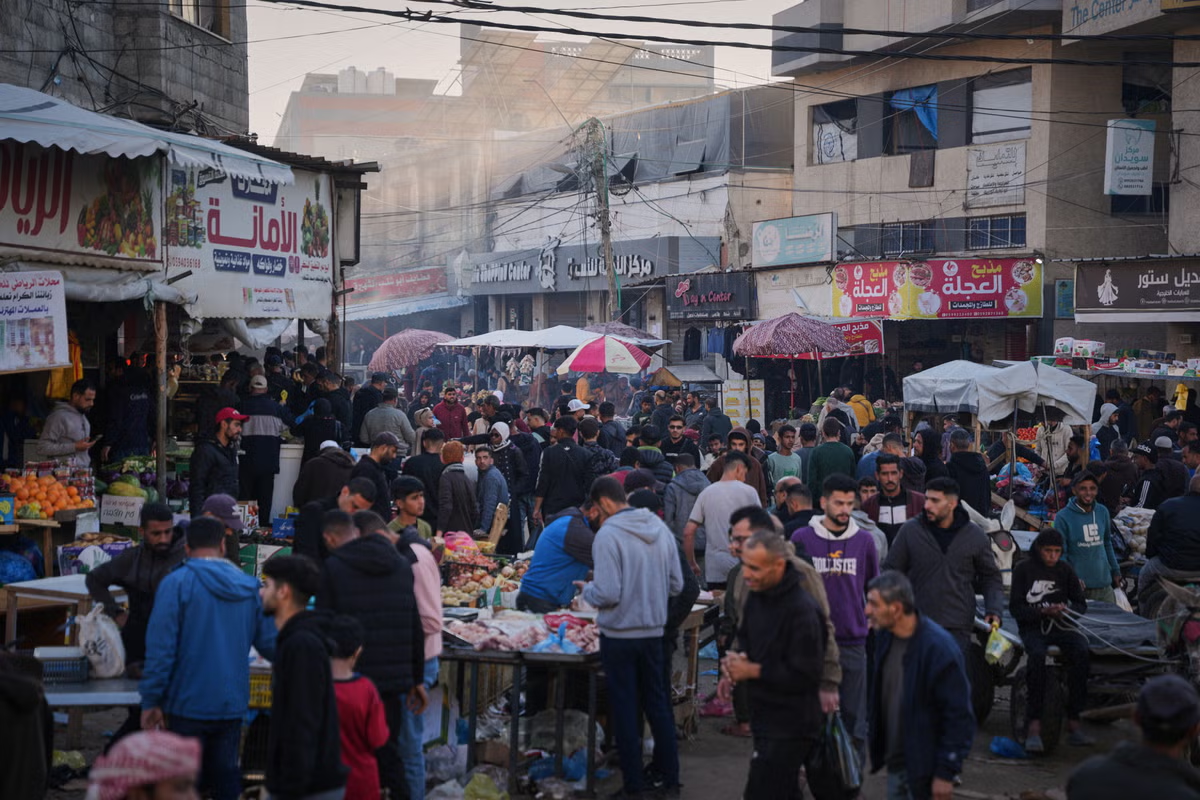
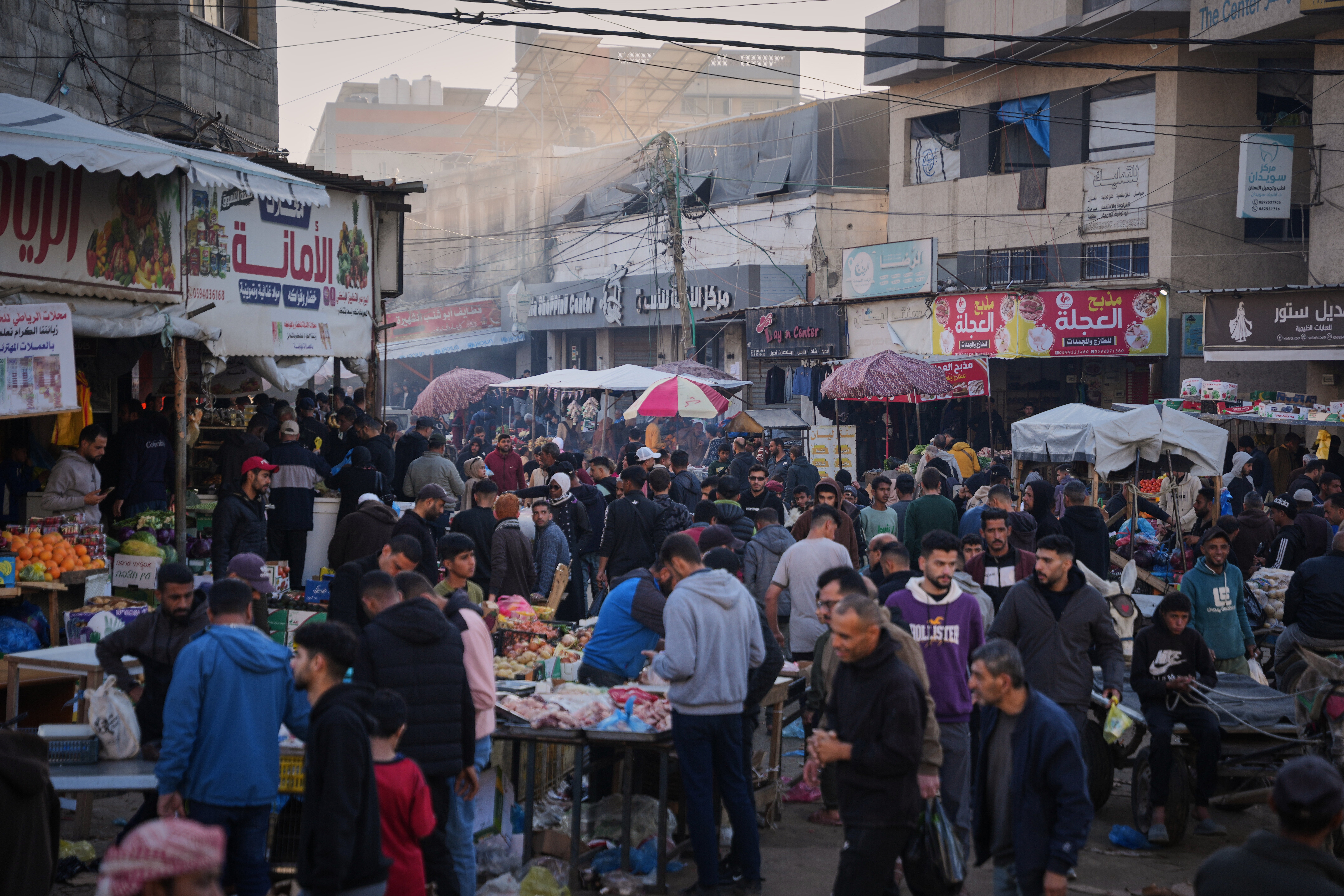
Locals have been rushing to markets to buy food, just months after facing painful food scarcity due to an Israeli blockade last year, which led to famine in some areas, according to Associated Press and Al Jazeera.
“All the people rushed to markets, and they all wanted to shop and hide,” said Abeer Awwad, who was displaced from Gaza City during the war.
Israeli government agency COGAT said the conflict with Iran meant new “security adjustments” necessitated the closures, which would last “until further notice”.
Advertisement
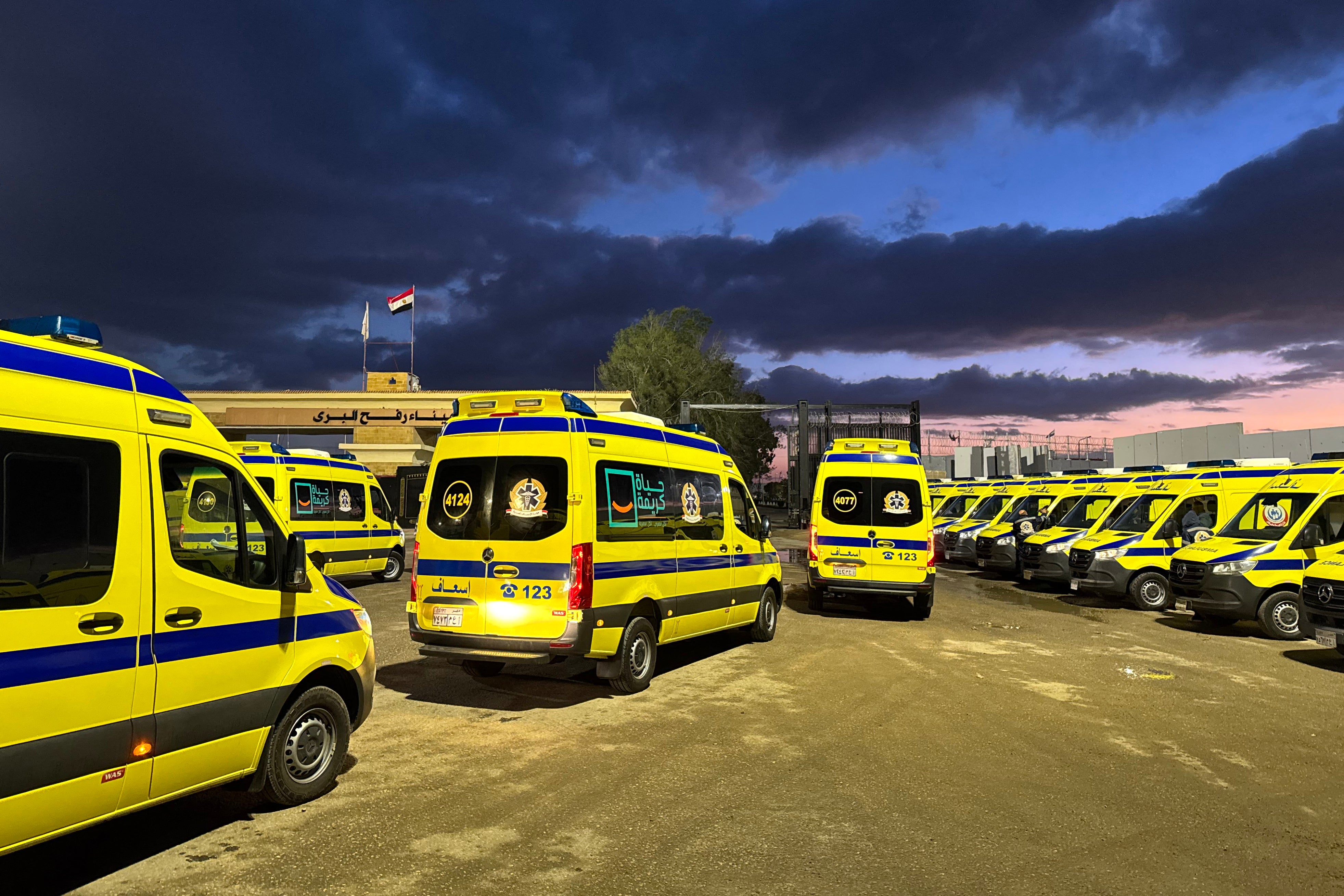
The Rafah crossing, on the Palestinian territory’s southern border with Egypt, was only reopened at the beginning of February this year to allow a small number of Palestinians to cross for the first time in months, including patients requiring urgent medical attention.
Ambulances wait on the Egyptian side of the Rafah border crossing with the Gaza Strip on 4 February 2026 after the crossing reopened (AFP via Getty)
Since Israel’s devastating offensive on the territory, almost all of its 2 million residents have been displaced, and it is now almost entirely dependent on humanitarian aid – which the border crossing closures have now suspended.
According to local reports, shelves have been emptied and key supplies, including sugar, flour, cooking oil and yeast, are in high demand, sending the price of essential goods soaring.
Advertisement
Residents have said they are fearful of further neglect and deprivation, while the UN had already warned in February that aid missions continue to face obstacles in their attempts to deliver essential support, including food and medicines to Gaza.
In the statement, Israel’s COGAT officials claimed the territory had sufficient food to last “an extended period”.
They said: “Several necessary security adjustments have been implemented, including the closure of the crossings into the Gaza Strip, among them the Rafah Crossing, until further notice. The rotation of humanitarian personnel is postponed at this stage.
“It should be emphasised that the closure of the crossings will have no impact on the humanitarian situation in the Gaza Strip.
Advertisement
“The substantial quantities of food that have entered since the beginning of the ceasefire amount to four times the nutritional needs of the population, according to the UN methodology. Therefore, the existing stock is expected to suffice for an extended period.”
Palestinians shop at a market last week in Deir al-Balah during Ramadan (AP)
One resident told Al Jazeera: “I lived through famine like everyone else. The worst days were when I had to buy a sack of flour for more than 1,000 shekels [£241]. I don’t want to relive that experience.”
He added: “Goods run out quickly, and the conditions we live in may spoil whatever we store. All we need is for someone to reassure us that the closure of the crossings will not last.”
Advertisement
As well as food, Gaza is wholly dependent on trucks for fuel brought in from Israel and Egypt and a lack of fresh supplies would put hospital operations at risk and threaten water and sanitation services, local officials say.
“I expect we have maybe a couple of days’ running time,” said Karuna Herrmann, the Jerusalem director of United Nations Office for Project Services (UNOPS), which manages fuel distribution in Gaza.
Enzo Fernandez’s two-game suspension by the club has passed so all eyes will be on whether he is included in the starting XI or remains out in the cold.
Chelsea will still be without a lengthy list of injury casualties including Levi Colwill, Trevoh Chalobah and Jamie Gittens, with Reece James and Benoit Badiashile both unlikely to feature.
Predicted Chelsea XI: Sanchez, Gusto, Fofana, Hato, Cucurella, Caicedo, Santos, Palmer, Fernandez, Neto, Pedro
Advertisement
Mike Jones18 April 2026 17:18
How can I watch it?
Viewers in the UK can watch the game live on TNT Sports and HBO Max.
Coverage begins on TNT Sports 1 at 7pm.
Advertisement
Mike Jones18 April 2026 17:12
When is Chelsea v Man Utd?
Chelsea host Man Utd at Stamford Bridge on Saturday 18 April, with kick-off at 8pm BST.
(Reuters)
Mike Jones18 April 2026 17:06
Advertisement
Chelsea vs Man Utd
Chelsea face off against Manchester United in a battle for European spots between two teams who have enjoyed huge highs this season – but have suffered something of a comedown in recent weeks.
Mike Jones18 April 2026 17:00
Advertisement
Good afternoon!
Welcome to The Independent’s coverage of tonight’s Premier League action as Chelsea host Manchester United in a crucial clash near the top of the table.
What I mean by that is that both clubs are challenging for a place in the Champions League next year and are hoping to secure a place in the top four.
Man Utd come into the match sitting third in the table with Chelsea sixth and seven points behind.
A win for Michael Carrick’s visitors would cement their place in the top four while Chelsea would get the gap should they prove victorious at Stamford Bridge.
Advertisement
We’ll have all the updates, team news and more throughout the afternoon so stick with us as we build up to kick off at 8pm.
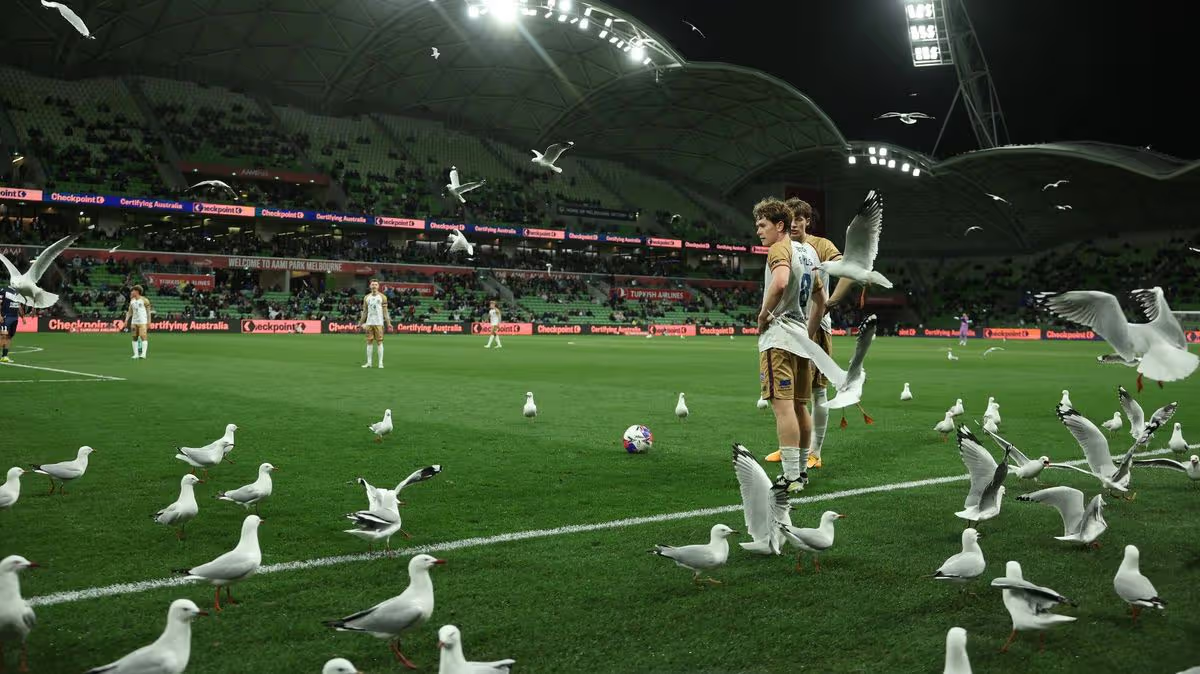
A flock of seagulls brought Melbourne Victory and Newcastle Jets’ A-League match to a standstill after descending onto the pitch during a free kick in the 90th minute at AAMI Park
A top-flight football match in Australia had to temporarily halt after a swarm of seagulls began congregating around the spot of a free-kick in the closing stages.
Advertisement
The peculiar intrusion occurred during the A-League encounter between Melbourne Victory and Newcastle Jets at AAMI Park in Melbourne on Friday (April 17).
In the 90th minute of the contest, seagulls abruptly swooped onto the turf.
They all flew near to where Lachlan Bayliss was preparing to deliver a free-kick.
The troublesome birds are infamous for pinching chips. However, they appear to have shifted their focus to football by encircling the free-kick taker.
Their match finished 2-2, but despite the gripping action, it was the seagulls who captured the headlines after clips of the episode spread rapidly online. One X user commented: “Seagulls love their football!”
Another remarked: “Peak A-League when the pitch is covered by seagulls. Pure, unadulterated chaos.”
Other supporters were making jokes about Premier League club Brighton & Hove Albion, suggesting this is more akin to how their home fixtures should unfold.
Some more were also querying exactly why there were so many seagulls in that section of the pitch. Others speculated that certain fans may have hurled food from the terraces.
Despite the unusual spectacle, Victory manager Arthur Diles declined to acknowledge the seagulls in his post-match interview but did identify positives in his team’s draw. He said: “I think we deserve more out of these two games, and we got bit in the end.
Advertisement
The performance is something I’ve got to focus on, and the performance was good for a lot of that game, so that’s a pleasing sign.
“We want to play well as well, not just pick up points, but the points in the end should correlate with a good performance. When you don’t get the three points, when you feel like you probably can, that’s disappointing, it’s hard to take, but we’ll go again.”
Meanwhile, Newcastle Jets, who currently sit top of the A-League, also chose not to raise the issue of the seagulls.
Advertisement
That was despite the birds disrupting a late free-kick that could well have presented a golden chance to snatch all three points.
Join our new WhatsApp community and receive your daily dose of MirrorFootball content. We also treat our community members to special offers, promotions, and adverts from us and our partners. If you don’t like our community, you can check out any time you like. If you’re curious, you can read our Privacy Notice.
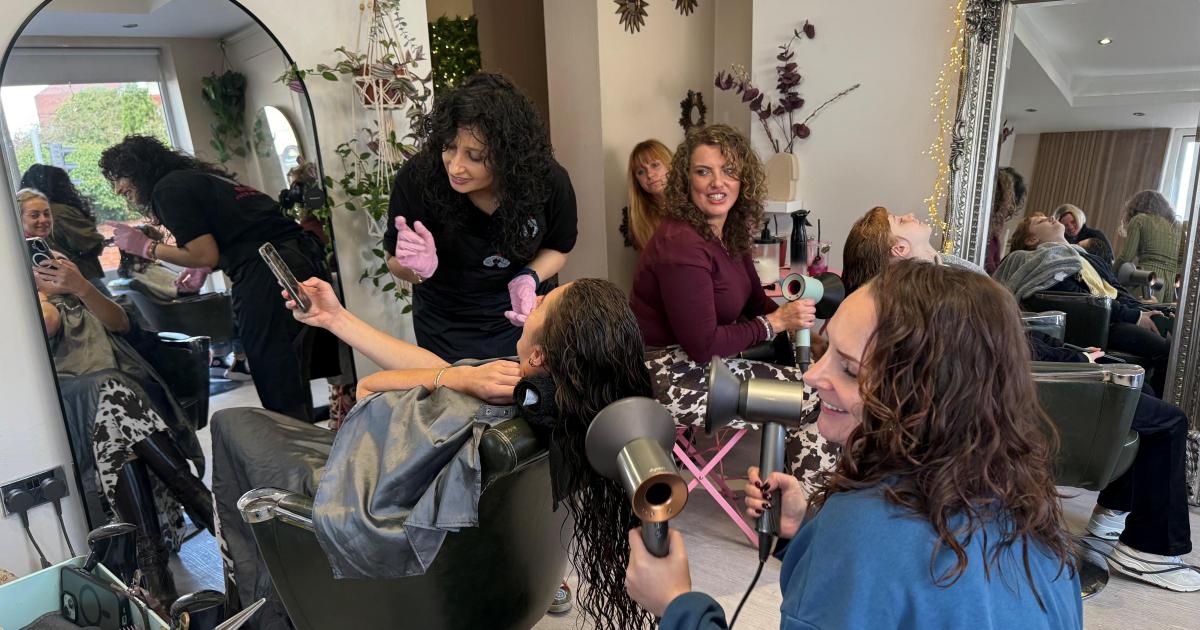
“We’re all about encouraging the confidence that your hair can give you” (Image: NQ)
From 10am until 4pm on Market Street, the first 50 people through the door will receive free Curl Jar gift bags.
There will be styling bookings available for just £10, as well as free 15-minute walk-in demonstrations and consultations, offering expert haircare advice.
Advertisement
All demonstrations require clean, freshly washed hair without product.
A prize table will also be available, with raffle entries open throughout the day and winners announced at 8pm.
Prizes include a Bellissima Diffon hairdryer, a Curl Jar £100 gift set, a free curl transformation appointment, Milk Maids merchandise and vouchers, and a one-month supply of Glowwa hair vitamin supplements.
In keeping with The Curly Cow theme, Milk Maids will be at the event serving up their famous ice cream.
Advertisement
To find out more about Curl Jar, visit: curljar.com
To find out more about The Curly Cow, visit: thecurlycow.com
BBC Arabic’s correspondent Carine Torbey reports from the border town of Khiam, as the ceasefire between Israel and Hezbollah in southern Lebanon goes into its second day.
The Lebanese army has set up a barrier to stop residents from returning to their homes in Khiam, after loud explosions continued to be heard in towns that are partly under Israeli occupation.
On Friday, the Lebanese President, Joseph Aoun, declared his country was entering a new phase which could transform the temporary ceasefire into a permanent peace settlement.
Many reported seeing a light or staircase (Picture: Getty Images)
Seeing dead loved ones, white light and open doors are among the most common dreams people have shortly before death, a new study has revealed.
Researchers at Azienda USL–IRCCS di Reggio Emilia found terminally ill patients often report vivid dreams and visions in their final days – and that many of them are comforting rather than frightening.
A survey of 239 palliative care professionals in Italy found patients commonly spoke about being reunited with relatives who had died, or seeing symbolic images such as staircases, bright light and doorways.
The study, published in the journal Death Studies, looked at end‑of‑life dreams and visions (ELDVs) shared with doctors, nurses, psychologists and hospice volunteers.
Advertisement
The most common theme across these – some of which occurred while people were awake – was reuniting with loved ones, with many saying a late spouse, parent, relative or even a beloved pet appeared to them.
In one case, a woman dreamed of her dead husband telling her: ‘I’m waiting for you.’
Over 200 palliative care professionals were surveyed (Picture: Getty Images)
Others reported more symbolic visions tied to crossing over or moving from one state to another, such as ‘climbing barefoot toward an open door filled with light’, while others spoke of stairways, thresholds and bright spaces.
There were also more surreal, almost cinematic images, like ‘a white horse galloping along the shoreline’.
The scientists said these ELDVs ‘carry an important relational potential’, allowing people to ‘approach otherwise unspeakable topics through a symbolic mode of expression, bypassing the obstacles of rational language, which can instead trigger defensive reactions such as denial.’
Advertisement
In other words, they may help patients work through fears and hopes around dying, and come to terms with their situation in a way conversation can’t.
How do you feel about the findings that people experience vivid and often comforting dreams before death?
Comforted, it feels reassuring.
Intrigued, it’s very interesting.
Skeptical, I need more evidence to believe this.
Advertisement
Scared about what it means for me.
Sign up to Metro’s The Slice newsletter for your guide to what’s on in London, with trusted reviews, offers and giveaways.
Advertisement
But while most were said to feel ‘comforted’ or ‘peaceful’ as a result of what they saw, not all the visions were soothing.
About one in 10 were distressing, including one report of a monster with the patient’s mother’s face dragging her down.
According to the researchers, these darker experiences may ‘indicate unmet clinical or emotional needs’, from unresolved conflicts and traumatic memories to physical pain.
Still, study leader Elisa Rabitti said the ELDVs lack a ‘clear cultural and clinical understanding’, despite how often they appear to happen.
Advertisement
ELDVs can occur while awake or asleep (Picture: Getty Images)
This study bolsters the findings of previous research showing that dreams about deceased loved ones are common in the terminally ill, and become more frequent as death approaches.
‘What’s really interesting is it’s not random who comes to you – it’s always those people who loved and secured you,’ commented Christopher Kerr, lead author and chief medical officer at Hospice Buffalo in New York state.
ELDVs about ‘preparing to go’ were prevalent too, with Kerr noting: ‘Patients often describe dreams about packing or getting on a bus.’
‘We’ve also had lots of veterans, and whatever wounds or burdens they’re carrying are often addressed in their end-of-life dreams,’ he added.
Ted’s Convenience Store on Derby Street was investigated after Bolton Council’s trading standards department received “numerous complaints”.
A local resident said they’d seen “multiple visits” being made to the shop “during all times of the day and night” and suspected the illegal products were being kept in a car parked to the side of the shop.
Trading standards officers said this is a “widely recognised” strategy to “try and distance a business premises from being linked to illegal business practices, to appear legitimate to the authorities”.
They said a second person, or ‘runner’, will wait outside to quickly grab the goods to return to the shop after a sale has occurred.
Advertisement
If officers visit, “the second person can simply walk away, or drive the storage vehicle away, to evade detection by removing the goods from the scene”.
Ted’s Convenience Store (Image: Bolton Council)
In a joint operation with Greater Manchester Police (GMP) on February 3, 2025, trading standards investigated a number of shops on Derby Street.
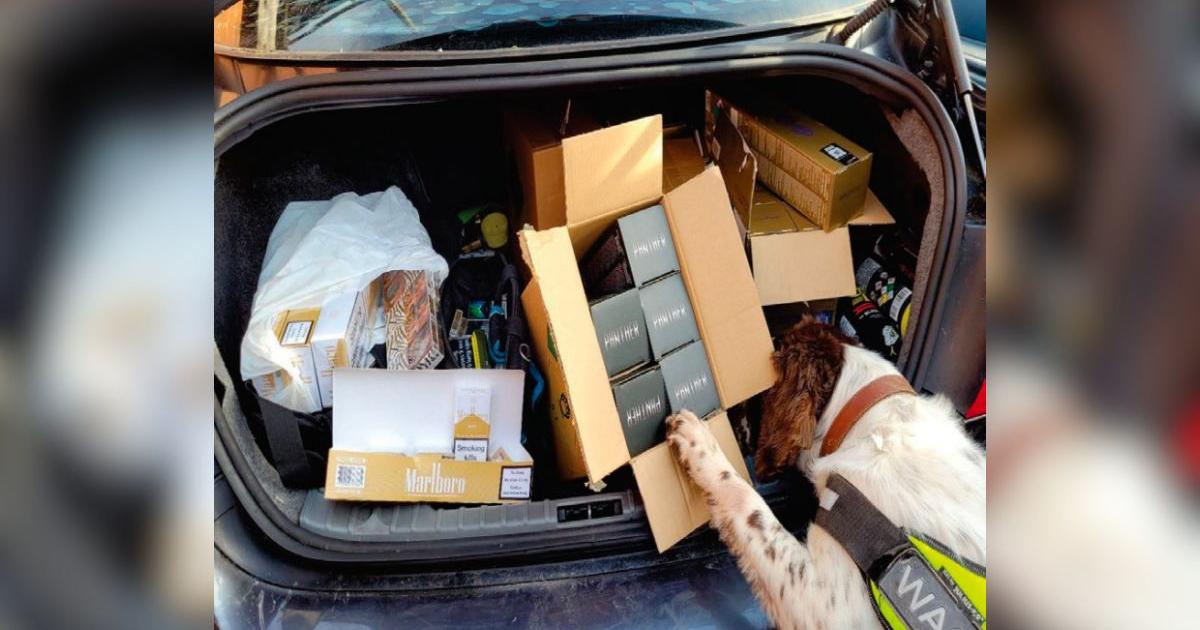
They were tipped off that a black BMW parked to the side of Ted’s was being used to store illegal tobacco and got a positive indication from their tobacco detection dog.
The boot was searched and 3,780 illegal cigarettes, 0.7kg of suspected counterfeit rolling tobacco and a quantity of nitrous oxide was discovered inside and seized.
Advertisement
Bolton Council received another complaint on March 4, 2025, that said the shop was still selling “nitrous oxide, illicit tobacco, vapes and other drugs” from a car parked outside.
Illegal tobacco and laughing gas were discovered in the boot (Image: Bolton Council)
GMP and trading standards visited Ted’s again on October 23, 2025, and found two opened packets of cigarettes under the till during a search.
Trading standards said: “The packets were of different brands, indicating that cigarettes were being sold as ‘singles’”.
During the visit a car was again spotted on land opposite to the shop and the boot was searched after the tobacco detection dog gave a positive indication.
Advertisement
Inside, officers discovered “4,240 sticks of illicit tobacco and 0.3kg of suspected counterfeit hand rolling tobacco”.
Illegal tobacco and laughing gas were discovered in the boot (Image: Bolton Council)
After this, an investigation was launched to link the supply of illegal products in nearby cars to sales made within the shop.
On November 7, 2025, a test purchase of suspected counterfeit Lambert and Butler cigarettes was made – with the test purchaser charged £5 for the packet.
He reported that after asking for cigarettes the shopworker “made a phone call” and a second man then entered the shop before leaving and returning two minutes later with the cigarettes.
Advertisement
Trading standards said a legitimate 20 pack of Lambert and Butler currently costs between £14.95 and £15.84.
After inspecting the purchased pack they said there were “irregularities” including no security label – required since May 20, 2024 – which means they are “not legal for sale”.
20 pack of Lambert and Butler bought at Ted’s (Image: Bolton Council)
Another complaint was made on December 11, 2025, that nitrous oxide canisters were being sold by “several mini markets on Derby Street” including Ted’s
The complainant said that “groups of youths are openly inhaling nitrous oxide and dumping the empty canisters in the back streets, in turn creating severe public safety and environmental issues”.
Advertisement
Trading standards said that though laughing gas is used “across a range of demographics” it is “most prevalent among young people, with users reporting to recreationally use nitrous oxide in their cars whilst driving”.
They also linked it to antisocial behaviour such as “group gatherings to abuse the drug in public spaces, such as children’s parks or high streets”.
Police officers investigating a robbery not connected to the shop on August 5, 2025, said they “had difficulty obtaining evidential CCTV footage from Ted’s”.
Ted’s Convenience Store (Image: Bolton Council)
They had to obtain a warrant to search the premises – stating that “staff were hostile”, the CCTV hard drive was seized and the shop had to close “due to not functioning CCTV”.
Advertisement
GMP said they believe Ted’s “has demonstrated an ongoing inability or unwillingness to operate responsibly or lawfully”.
They added that “the premises has been repeatedly linked to criminality over a sustained period, despite interventions, warnings and opportunities to improve”.
They’ve asked Bolton Council’s licensing sub-committee to consider revoking the shop’s premises licence and they will meet on Tuesday, April 21, at 1pm to make a decision.
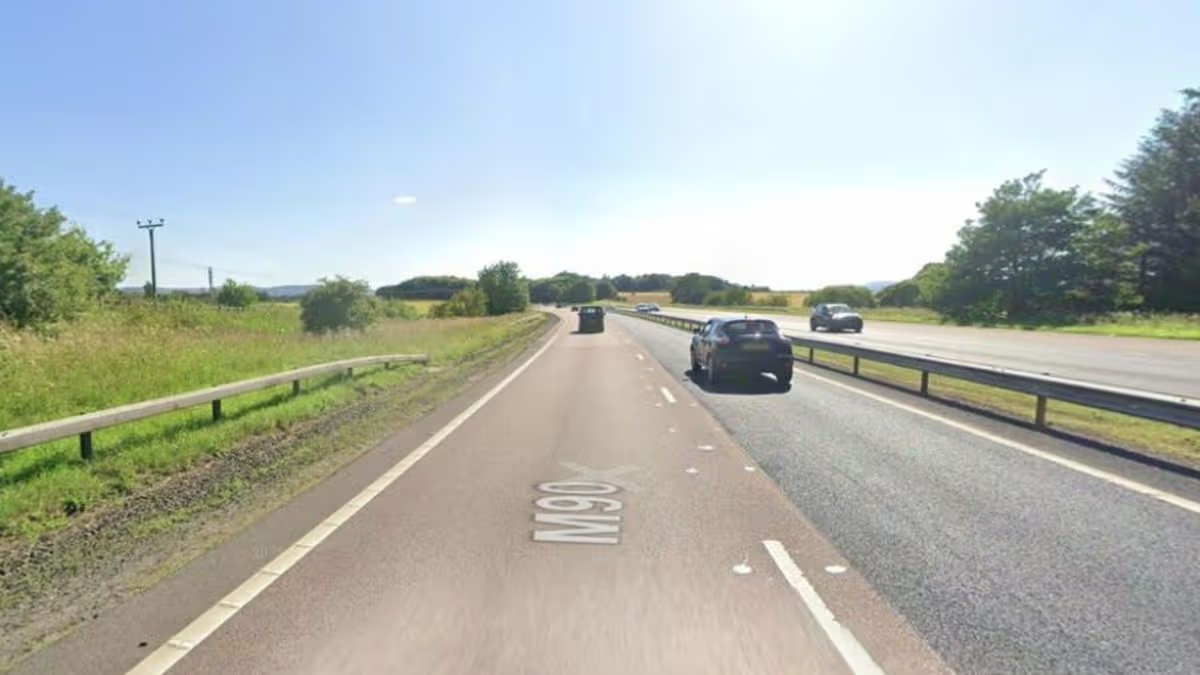
A Ford Kuga and Vauxhall Corsa crashed on the M90 late last night.
16:14, 18 Apr 2026Updated 16:15, 18 Apr 2026
Advertisement
Two men have died in a horror two-car crash where one of the vehicles was travelling the wrong way down the motorway.
Emergency services raced to the M90 near Kinross happened around 10.30pm on Friday.
A grey Ford Kuga was seen driving northbound on the southbound carriageway, near junction seven. It then collided with a white Vauxhall Corsa which was travelling southbound.
The 44-year-old male driver of the Kuga and the 20-year-old male driver of the Corsa sustained fatal injuries and were pronounced dead at the scene. Their families have been made aware.
Advertisement
The road was closed for around 16 hours between junctions six and nine to allow emergency services to carry out enquires and has since reopened. The northbound carriageway was also closed for a short time overnight.
Chief Inspector Lyne Williamson, Operational Support Division, said: “My thoughts are with the families of both the men who died following this tragic incident.
“An investigation is underway to establish the full circumstances of the crash.
“Anyone who was travelling on the M90 at the time and witnessed what happened, or has dashcam footage that could assist our enquiries, is asked to contact officers on 101 as soon as possible.”
A spokesperson for the Scottish Fire and Rescue Service said: “We received the call at 10.40pm to a two-vehicle crash on the M90. Three appliances were dispatched, with the last one leaving the scene at 2.36am.”
Advertisement
Get more Daily Record exclusives by signing up for free to Google’s preferred sources. Click HERE
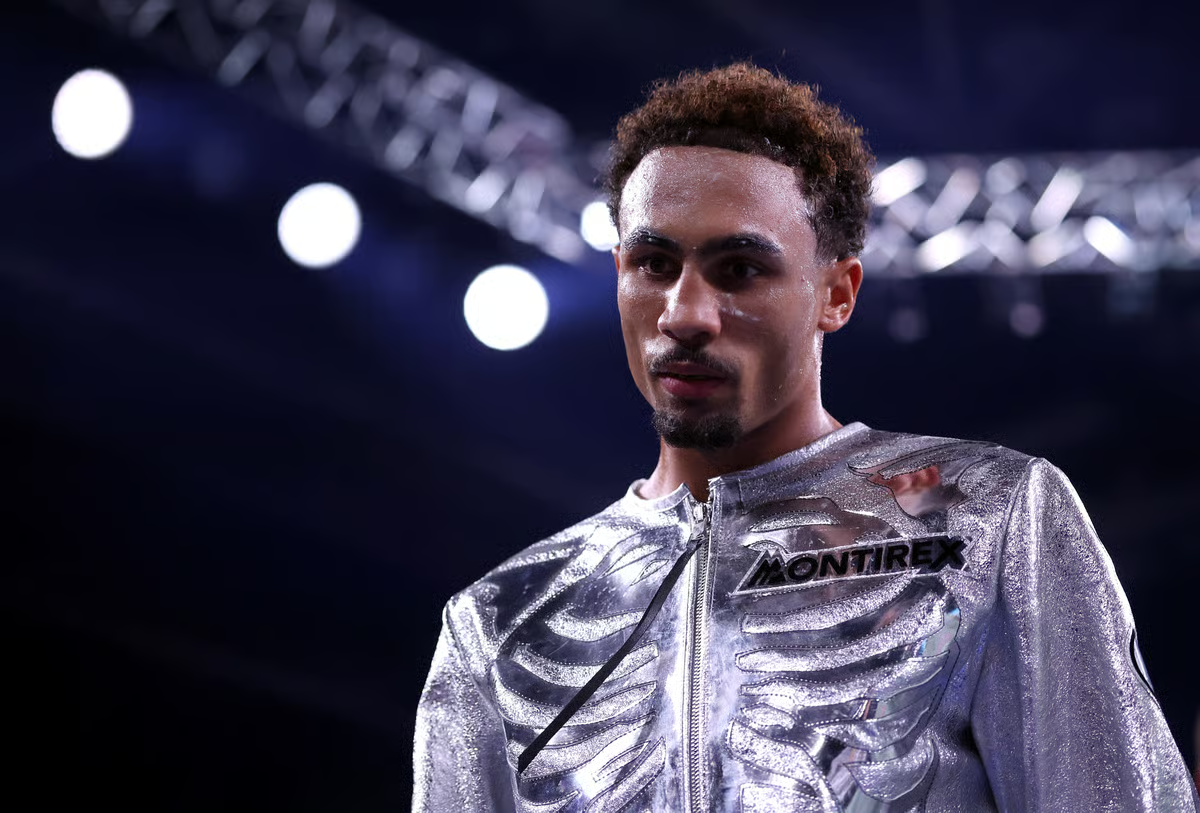
Now, he faces Suarez in Liverpool in what is his 12th professional bout. Whittaker has 10 wins in his pro career so far, with just one draw.
Now signed to Eddie Hearn’s Matchroom Boxing, Whittaker has been elevated to the main event on Merseyside after local favourite Callum Smith withdrew injured from his WBO interim light-heavyweight title clash against David Morrell.
Whittaker vs Suarez fight date and venue
Whittaker vs Suarez takes place tonight on Saturday April 18, 2026 at the M&S Bank Arena in Liverpool, England.
Advertisement
Whittaker vs Suarez fight time and ring walks
Saturday night’s main card is due to begin at 5pm BST, which is 12pm ET and 9am PT in the United States.
Whittaker and Suarez are set to make their way to the ring for approximately 9.20pm BST (4.20pm ET, 1.20pm PT). As ever, those exact timings are subject to change.
How to watch Whittaker vs Suarez
Advertisement
TV channel and live stream: Whittaker vs Suarez will be broadcast live in the UK on DAZN.
Whittaker vs Suarez undercard
Ben Whittaker vs Braian Suarez
Molly McCann vs Ashleigh Johnson
Advertisement
Peter McGrail vs Ckari Cani Mansilla
Joe McGrail vs Aaron Hayden
Leo Atang vs Viktor Chvarkou
Whittaker vs Suarez prediction
Advertisement
Whittaker is the undefeated fighter here and comes into this bout with home advantage – admittedly not in his own city.
Suarez, meanwhile, is an experienced professional, boasting a 21-4 record with 20 knockout victories. His recent form, however, is patchy.
He defeated Sergio Santos Dantas in an all-Argentine bout in his most recent outing in Buenos Aires. His three previous fights outside of Argentina, however, have all ended in losses.
His most recent came in Russia against Vasily Voytsekhovsky, and before that it was Sharabutdin Ataev.
Advertisement
He has fought once before in Britain, but it did not go well. He faced Lyndon Arthur in Bolton for the IBO light-heavyweight title in 2023, but was counted out in the 10th round after being knocked down by a vicious left hook to the body.
Promotional partnership: Ben Whittaker joined forces with Eddie Hearn and Matchroom last year
Getty
Suarez had already missed weight and could not win the title regardless.
Advertisement
With that in mind, and considering Whittaker’s brutal knockout of Gavazi in November, you would expect the Englishman to produce another statement performance here.
Whittaker to win by stoppage.
Whittaker vs Suarez weigh-in results
On Friday, Whittaker weighed in at a career-heaviest 182.14lbs, while Suarez tipped the scales at 182.1lbs.
Advertisement
Whittaker vs Suarez latest odds
Whittaker to win on points or by decision: 9/2
Whittaker to win by knockout, technical knockout or disqualification: 2/9
Suarez to win on points or by decision: 30/1
Advertisement
Suarez to win by knockout, technical knockout or disqualification: 11/1
“Research it, look it up, ask the questions, and don’t take no for an answer.”
16:29, 18 Apr 2026
Eileen Brannigan on Developmental Dysplasia of the Hip (DDH)
For months after her children were born, Eileen Brannigan had to be careful about how she held them as they were carefully positioned in harnesses to help their hips develop properly.
When her daughter, Eíbhí, was just 16 weeks old, a routine check with a health visitor found she had an uneven skin roll on her thigh, an indicator for hip dysplasia. However, the health visitor said she wasn’t too concerned, but would refer her just to make sure.
Advertisement
A few weeks later, Eileen received a letter about bringing Eíbhí for a scan, which discovered the little one had a severe hip dislocation and would need to wear a pavlik harness for up to 20 weeks.
When her second child, Connor Óg, was born, he was automatically referred for a scan as the sibling of a child with hip dyslasia. He was also found to have the condition, and was put into a harness at eight weeks old.
The pavlik harness is a soft, fabric orthotic device used to treat developmental dysplasia of the hip (DDH) in infants, usually from birth to six months. The condition means an infant’s hip joint doesn’t fit together properly, ranging from mild instability to full dislocation.
Advertisement
Treatment with the harness means the baby’s hips and knees are held in a bent, slightly spread position to encourage proper socket development. The way in which the harness is adjusted can be tricky, as if it’s too tight it can cause pain, but if too loose it won’t do its job properly.
Speaking to Belfast Live at her home in Co Down, Eileen said she hadn’t heard of the condition before, adding they were very lucky it was picked up.
The 29-year-old said: “My daughter Eíbhí was 16 weeks old and at her review at home, the health visitor was measuring her weight and height. For that, you have to strip the baby right down, and the health visitor does a few hip exercises with her.
“She then noticed an uneven skin roll on Eíbhí’s thigh, she had three on one thigh and two on the other. In her experience, the health visitor said that might suggest a little bit of hip dysplasia, but said she presented fine. She said she wasn’t concerned, but would do a referral.
Advertisement
“Within a few weeks, I received a letter to bring Eíbhí up for a scan and thought nothing of it. Everyone looked at her, every consultant looked at her as she was a wee bit sick when she was first born.
“Everyone told me this child is presenting really fine. Then we went in for our scan, and I was told she had a really severe hip dislocation, and she would immediately be put into a pavlik harness for 12 if not 20 weeks, depending on if she meets her numbers. She ended up doing the whole 20 weeks in the harness.
“I feel very lucky Eíbhí was picked up on a complete whim, otherwise she would have slipped through the net and around the age of two or three, she would have started walking differently than other children. She probably would have had sore hips playing sports, she would have ended up needing surgery.”
Advertisement
Her son was found to have a shallow hip, a less severe condition than her daughter’s dislocation, and remained in a harness for 12 weeks.
Eileen said she wasn’t given much guidance on the condition, and parents she tried speaking to about it had never heard of it before.
“I was a first time mum and didn’t know what I was doing anyway, so to be faced with a baby in a pavlik harness and not have support or guidance, there was nowhere to look up tips and tricks, it was difficult,” she explained.
“There weren’t any other parents really talking about it, I saw a few accounts on TikTok that I looked up, but anyone I spoke to didn’t know anything about it. I was the mum at the mums and toddlers group with the child in the harness, I felt really lonely.
Advertisement
“I felt completely alone, like there was no one I could talk to about it. I was getting a lot of sympathy but I didn’t want that, I wanted other parents to know about hip dysplasia.”
As a way to share her story and raise awareness of DDH to help other parents, Eileen started documenting her day-to-day life on TikTok, sharing aspects of her children’s lives with the condition.
From talking to more people about hip dysplasia, she said many don’t realise how common it is. Mild hip instability affects approximately one in 10 newborns.
Advertisement
Only around one in 100 infants require treatment for DDH, and one in 500 have a completely dislocated hip, with a higher incidence in girls, first-borns, and those with a breech family history.
Eileen said she would like to see automatic referrals for scanning for infants whose family have history with hip issues, to help prevent the condition from going undetected and showing up later in life.
She explained: “I want to raise awareness as there’s a lot of parents out there who don’t know anything about it. Maybe their grandparents had a bad hip, or their uncle is getting hip surgery. Of course you have sports injuries and different things which may mean you need hip surgery, but when it comes to it, not much is shared about it.
“They don’t ask about it during your booking scan when you go in at 12 weeks and are asked all your family history about diabetes, DVTs and heart problems. You’re not asked about DDH, you’re not asked about hip problems. That’s what I just really want to happen.
Advertisement
“I want expectant parents to be aware of this, both antenatally and postnatally. If it’s not discussed antenatally, then once the child is born, a leaflet before you leave the hospital, have you thought about this? Go and get your child checked.
“It’s not easy for consultants and GPs to pick it up just by looking at the child. It does require an ultrasound scan, which is why a lot of babies are falling through the net, so I want people to just be at least aware of it.
“They don’t have to go and get the child scanned, they don’t have to tick the box, but I would like there to be a box there to be ticked if you felt concerned or just wanted that peace of mind in getting your baby scanned.”
Content cannot be displayed without consent
Since sharing her story on social media, Eileen said she has had a lot of parents reaching out about the condition.
Advertisement
“I had a mum contact me saying she watched the videos, and noticed her daughter crawling and walking a bit funny, so she got her looked at and she needs hip surgery in a few weeks, and she’s two years old,” she said.
“I had another mum in Derry who was literally given a harness and told to go home, and was given no information. I had to send her a step by step tutorial on taking the harness off and putting it back on, as it’s a skill in itself using it.
“A lot of people are aware of it once they hear about it, it clicks with them and they’re like ‘oh actually I have a bit of a bad hip and I’m 26.’”
As for the advice she would give to parents concerned about the condition, or interested in finding out more, Eileen said: “Research it, look it up, ask the questions, and don’t take no for an answer. Speak to your family and your parents if you can, to any family members who may have had hip problems.
Advertisement
“Just as much as we talk about diabetes in pregnancy, we talk about taking our folic acid, we should be talking about DDH. A simple scan will give the child a proper childhood, a proper adulthood instead of years down the line, being in severe pain due to something that could have easily been detected at birth.
“I think if there’s a family history of DDH or hip dysplasia, it should be an automatic referral. Giving up holding your child for 12 weeks or 20 weeks in my case is definitely worth it, compared to years of pain for them down the line because they don’t have a voice.
“I want to be the voice for them, as well as other children out there who may go undetected. A simple scan is all it takes.”
Symptoms of Developmental Hip Dysplasia (DDH)
Symptoms vary by age, with infants (0-6 months) showing signs of uneven skin folds on thighs or buttocks, limited abduction shown by being unable to move one leg to the side as far as the other during nappy changes, one leg appearing shorter than the other, or a clicking/popping sound in hips.
Advertisement
Toddlers may show signs of a limp, a waddling gait, walking on their toes, or dragging one leg which can be observed while crawling.
If the condition is undiagnosed earlier, it can appear in teenagers and young adults through groin pain often related to activity, a feeling of hip instability or reduced range of motion, or early arthiritis due to chronic misalignment.
For more information on the condition, click here.
Video by Belfast Live videographer Justin Kernoghan.
Hello and welcome to our coverage of United’s clash with Chelsea.
Today could be a huge day in the race for Champions League football. A win for United would almost guarantee they will finish the season ahead of today’s opponents, but a defeat really would get those at Old Trafford looking over their shoulders.
We’ll have team news for you at 6:45pm and kick-off is at 8pm, so stick with us for build-up, updates and reaction from today’s game.












































You must be logged in to post a comment Login