
Business & Hustles
Security Breaches, Wall Street Deals and Tax Headaches Define a Turbulent Week in Crypto


Article by: Claudio
Business Stock Exchange Trading Concepts
The crypto industry spent the past week juggling three very different identities at once: a target for sophisticated hackers, an increasingly attractive partner for traditional finance, and a source of mounting frustration for ordinary taxpayers trying to make sense of new IRS rules. Together, the developments paint a picture of an industry that is scaling up fast while its security and compliance infrastructure struggles to keep pace.
The most dramatic story came from Bitget, which revised its estimate of losses from Thursday’s security breach upward to roughly $388 million, about $35 million more than the exchange first disclosed. In a Friday update, Bitget said the higher figure reflects a more complete accounting of transfers on the Zcash and TRON networks that were missed in its initial tally, not new unauthorized activity. The exchange said the incident, which touched Ethereum Virtual Machine networks, the XRP Ledger, Zcash and TRON, is now contained and that no further transfers are possible. Withdrawals remain paused, and Bitget has launched a bounty program aimed at incentivizing the freezing or recovery of stolen funds.
CEO Gracy Chen has pointed to a possible North Korean connection, telling users during a live Q&A that investigators had matched IP addresses to VPN services previously associated with a known DPRK-linked hacking group. Chen said she did not believe the breach was an inside job and that some funds had already been recovered, though she declined to give a specific figure. If confirmed, North Korean involvement would extend a grim pattern: state-linked hackers were tied to an estimated $2.02 billion in crypto theft in 2025 alone, including the roughly $1.5 billion Bybit hack that the FBI attributed to Pyongyang. Even with Bitget’s revised numbers, that Bybit breach remains the largest in the industry’s history.
Bitget wasn’t the only exchange dealing with the fallout of a bridge exploit this week. KelpDAO filed a lawsuit against cross-chain protocol LayerZero and its CEO, Bryan Pellegrino, over the roughly $292 million exploit of its rsETH bridge earlier this year. KelpDAO alleges LayerZero failed to disclose known risks in its technology and had signed off in writing on Kelp’s bridge configuration before the attack. Pellegrino has called the suit “meritless” and says he intends to fight it in Vancouver, setting up a legal fight that could clarify where responsibility lies when shared cross-chain infrastructure fails — with the bridge provider, the protocol built on top of it, or both.
Not every retreat this week involved hackers. French semiconductor firm Sequans Communications sold its last 314 Bitcoin, formally abandoning a corporate treasury strategy that once held more than 3,200 BTC. The company, which launched its Bitcoin bet in mid-2025 alongside a $384 million capital raise, began unwinding the position within months and is now refocusing entirely on its core cellular IoT business. Sequans joins at least nine other public companies — including Bitdeer, Genius Group and Prenetics — that analysts say have fully liquidated Bitcoin treasury strategies this year, a reminder that the corporate-treasury playbook popularized by Strategy has not worked for everyone.
Strategy itself, meanwhile, is pressing further into financial engineering rather than retreat. The company is asking shareholders to approve a shift of its four preferred stocks, including its flagship STRC, to daily dividend payments, without altering total payouts or dividend rates. The move follows Bitcoin treasury rival Strive, which adopted daily dividends on its SATA preferred stock earlier this year. Strategy CEO Phong Le recently acknowledged that STRC’s sharp June selloff — when it dropped to an intraday low of $71.25 — was driven by investors borrowing against Bitcoin to arbitrage the spread between cheap leverage and STRC’s yield, a trade that unwound painfully once Bitcoin’s price fell. STRC has since recovered to around $98, and Strategy says it wants to attract steadier, longer-term institutional holders going forward.
Beyond the drama of hacks and treasuries, crypto’s slow merger with traditional finance continued apace. Binance took a $100 million equity stake in stablecoin issuer Circle alongside a five-year commercial deal to expand USDC usage on its platform. Canada’s six largest banks began jointly testing tokenized Canadian-dollar deposits as a new payment rail, and the New York Stock Exchange struck a deal with Blockchain.com to bring tokenized US stocks and ETFs to crypto users. Chainalysis data underscored the shift toward real-world utility, showing cross-border stablecoin flows jumped nearly 78% to $220 billion even as overall crypto market capitalization shrank by more than a third — a sign that stablecoins are increasingly being used for trade and remittances rather than speculation.

That growing legitimacy hasn’t made life easier for individual investors, however. A survey by Awaken Tax found that a fifth of US crypto investors were still waiting on tax documents from exchanges as filing deadlines loomed, while another fifth said the new 1099-DA forms were incomplete or inaccurate. Under the IRS’s new digital-asset reporting rules, brokers must report gross proceeds from crypto sales but not the original cost basis, leaving many taxpayers to reconstruct their own trading history across multiple platforms and years just to figure out what they actually owe.
Taken together, the week’s headlines suggest an industry maturing on multiple fronts simultaneously but unevenly — courted by banks and exchanges, still vulnerable to state-sponsored hackers, and leaving retail investors to sort out the paperwork.
WordUp Morning
Ten stories, both sides of each, in five minutes. Free, every weekday at 7am, plus a Saturday weekend edition.
We'll email you a link to confirm. Unsubscribe any time.

Business & Hustles
Heathrow third runway faces £19bn gap as BA owner IAG calls £49bn plan ‘doomed to failure’

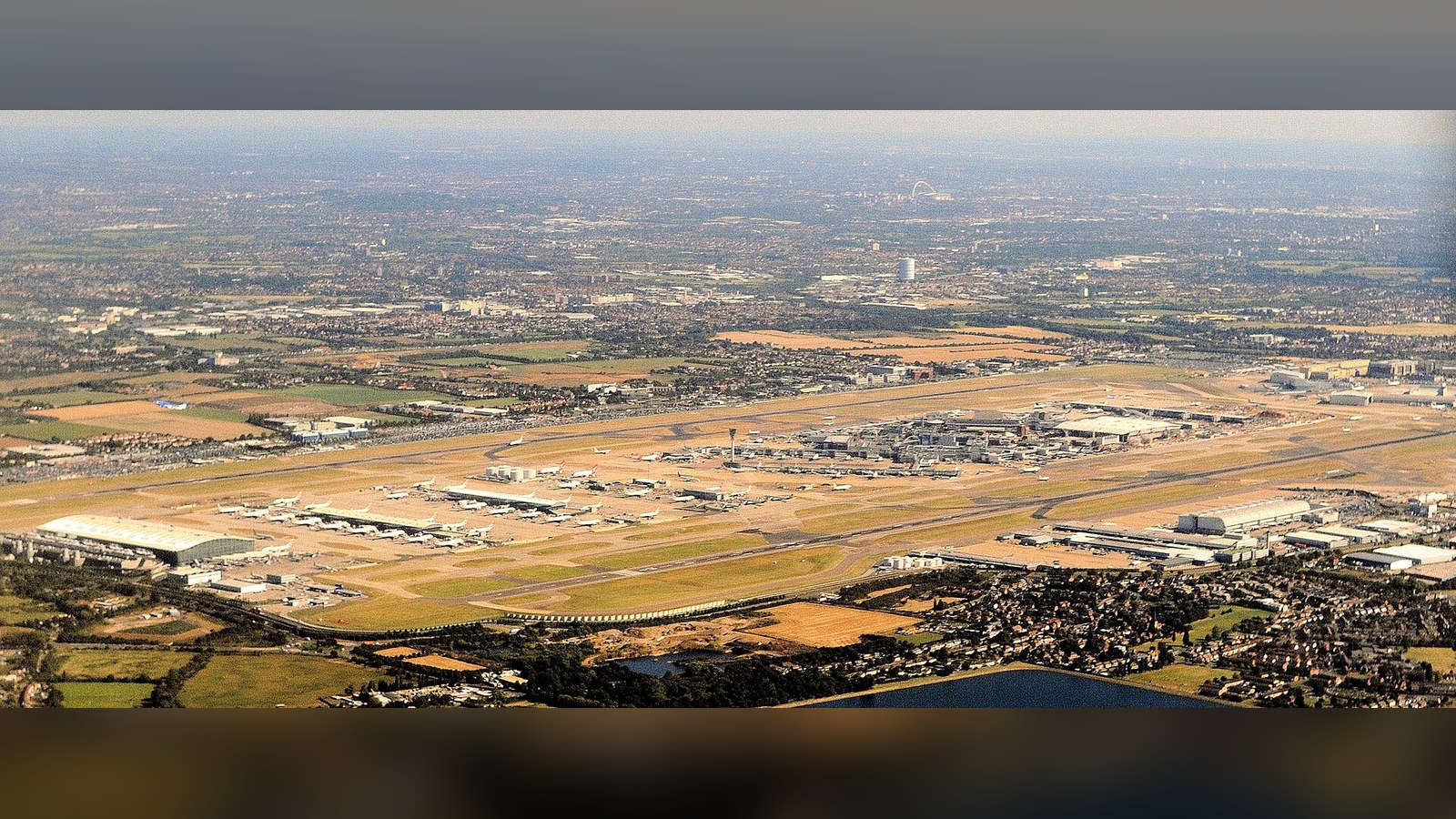
The £49bn Heathrow third runway plan is unaffordable in its current form and “doomed to failure”, according to the boss of British Airways’ parent company, who has written to the prime minister to say so. The letter, first reported by The Times, adds a high-profile warning from Heathrow’s biggest airline customer just as the government is weighing how the project should be paid for.
A £19bn gap that talks have not closed
Luis Gallego, chief executive of International Airlines Group (IAG), told Andy Burnham that his company and Heathrow have been unable to settle a £19bn difference. On one side is the airport’s estimated cost of building the runway. On the other is what IAG believes passengers could realistically bear through higher airport charges.
According to the Evening Standard’s account, IAG thinks expansion should cost no more than £30bn, well below Heathrow’s £49bn figure. The airline group argues the £19bn difference cannot reasonably be passed on to travellers. IAG also owns Aer Lingus, Iberia and Vueling, and has a big stake in how those charges are set.
“Unfortunately, in our view and given our knowledge of a market that is so important to us, we are convinced that the preferred scheme for expansion to date is too expensive and, as it stands, is unaffordable and doomed to failure,” Gallego wrote.
Support for expansion, but not on these terms
The letter is not an attempt to kill the project. Gallego stressed that IAG still backs expanding Heathrow. His objection is to the price and to how it would be financed. He told the prime minister that “if we want to move forward with the current project, private investment will not be enough.”
IAG offered two ideas to close the shortfall. The first is to use the extra air passenger duty revenue that expansion would generate to help pay for construction. The second is direct government investment, particularly to cover land purchases and early engineering work. Gallego suggested the state “could take an active investment role in expansion so that the project succeeds in the public interest.”
A national project, not just a London one
Gallego also took aim at the prime minister’s framing of the issue. Burnham has described expansion as “a matter for London and Londoners”. Gallego called it a “project of national importance that will benefit every region and nation of the UK”. He pointed to Heathrow’s role as Britain’s main international hub, connecting regional airports with long-haul destinations worldwide.
That argument matters politically. If the Heathrow third runway is seen as a regional London concern, the case for national funding is weaker. If it is seen as national infrastructure, a public financial role is easier to defend.
Heathrow says the gap is narrowing
Heathrow responded by welcoming IAG’s continued support and insisting that talks are moving. A spokesperson said the airport is “working more closely than ever with airlines to make expansion affordable” and has “made good progress in narrowing the gap, but there’s more to do.” The airport said it is going through the plans with airlines “line by line, challenging costs and stripping out anything that doesn’t deliver value.”
The spokesperson also set out the test the scheme must pass. Expansion has to be affordable for airlines and passengers and “financeable for investors”. The Standard reports the airport added that airlines agree the project would give the whole country a major economic boost, and that what is needed now is “political certainty to get on with it.”
The two sides therefore agree on the destination and differ on the bill. Neither has said how much of the £19bn gap has been closed. Whether the government steps in with money or tax revenue, as IAG proposes, or Heathrow trims its costs, will probably decide whether the Heathrow third runway moves from argument to construction.
Explore more on this topic with Vexel Search.
File photo: London’s Heathrow Airport (28001768897).jpg by Mike McBey, CC BY 2.0, via Wikimedia Commons.
WordUp Morning
Ten stories, both sides of each, in five minutes. Free, every weekday at 7am, plus a Saturday weekend edition.
We'll email you a link to confirm. Unsubscribe any time.
Business & Hustles
26% energy price cap rise to £2,166 looms as charities call £100 support ‘a drop in the ocean’

Header image: AI-generated illustration by WordUp News.
An energy price cap rise of 26% is expected to hit households in January, and charities say the Government’s help so far will not come close to covering it. Ofgem is due to confirm the cap for January to March on Wednesday 25 November. Analysts at Cornwall Insight predict it will reach £2,166, the highest level in four years.
If the forecast is right, a typical household bill would climb by more than £400 a year. Many families are already struggling with high costs, and campaigners say they have little room left to absorb more.
What the Government has offered
Ministers have announced a £100 energy payment for up to 20 million households. They have also temporarily cut 5% VAT from electricity bills until the end of June next year, which the Government says saves about £45 a year. In the autumn Budget, the Chancellor said gas standing charges would be scrapped in England, Scotland and Wales.
Energy Secretary Miatta Fahnbulleh said the Government has taken “immediate action” on bills. Critics argue the measures are dwarfed by the scale of the increase.
Why charities say it falls short
Citizens Advice used 2025 usage data and applied Cornwall Insight’s predicted increase. It concluded that £100 would cover less than two weeks of energy for most households this winter. A spokesperson said the payment “is not going to touch the sides” for anyone already in significant debt. They noted that the average person’s energy debt runs to hundreds or even thousands of pounds.
The charity is bracing for a surge in people seeking emergency help, which it estimates will be at least a fifth higher than last winter. Its spokesperson warned of cold-related deaths, acute illness and hospital admissions, with knock-on pressure on the NHS and social care.
Age UK welcomed the “limited support” but said it was “dwarfed” by the scale of the rise. Director Caroline Abrahams said many older people “will be terrified” about coping and “simply just don’t have the money” to do so. She called for an emergency support package and said no one should have to choose between warmth and other essentials.
Criticism of how help is targeted
Simon Francis, co-ordinator of the End Fuel Poverty Coalition, described people heating a single room, wearing coats indoors and skipping hot meals while damp and mould spread. He said a cold home is especially dangerous for older people, disabled people and those with long-term illness.
He also criticised the decision to link the £100 payment to council tax bands, arguing it would miss many of the people who need it most. He said households are being left to absorb a crisis they did not cause “while the energy industry banks billions in profit”. In the longer term, he urged ministers to help people “get off gas for good” to prevent a repeat.
Wholesale relief arrives too late
There is some better news in the markets. Wholesale energy prices have fallen in recent weeks on hopes of a resolution to the Middle East conflict. But that relief has not come soon enough to head off the January bill shock.
Wednesday’s announcement will show whether the predicted energy price cap rise holds. Whatever the final figure, the charities’ message is that the current package does not match the pressure on households this winter.
Explore more on this topic with Vexel Search.
WordUp Morning
Ten stories, both sides of each, in five minutes. Free, every weekday at 7am, plus a Saturday weekend edition.
We'll email you a link to confirm. Unsubscribe any time.
Business & Hustles
Hotel Chocolat recall: Christmas boxes bought 2-8 October pulled over salmonella risk

A Hotel Chocolat recall has pulled some of the retailer’s Christmas chocolate boxes from customers’ hands, after a pistachio ingredient was flagged as a potential salmonella risk. The company says no contamination has been found in any finished product, and it describes the move as precautionary.
What the Hotel Chocolat recall covers
The recall applies to certain Christmas boxes bought between 2 and 8 October. The Daily Mail reports that these include the classic Christmas boxes, which range from nine to 48 pieces. The Food Standards Agency (FSA) has asked shoppers to compare any boxes they hold against the specific lot codes listed in the official recall notice. According to the reports, no other Hotel Chocolat products are affected.
The company has not said how many boxes are involved. A spokesperson told the Mail only that the quantities were “very limited”, and the company’s own notice refers to a “small number of products”.
Why the chocolates were pulled
The trigger came from further up the supply chain rather than from testing of the chocolates themselves. Hotel Chocolat said it was notified that raw pistachios used to make a pistachio paste “may be linked to a salmonella contamination incident”. That paste is used in the affected products. The company stressed that “salmonella has not been detected in any finished Hotel Chocolat products”, but said it decided to start a recall anyway.
The wording matters. The risk is described as potential, and none of the coverage reports confirmed illnesses linked to the chocolates. The Hotel Chocolat recall appears to be a case of a retailer acting on an upstream warning before any problem has turned up on its own shelves.
What customers should do
The FSA’s advice is simple: do not eat any affected product. Instead, take it back to the store where it was bought, where customers will be offered a replacement or a refund. Anyone with questions can contact Hotel Chocolat Customer Care on 03444 932323 or at help@hotelchocolat.com.
Salmonella is a bacterium that commonly causes food poisoning. Symptoms usually include fever, diarrhoea and abdominal cramps. The FSA says anyone with these symptoms should stay away from work, school or nursery until they have been symptom-free for at least 48 hours, to avoid passing the infection on to others.
With Christmas boxes often bought early and stored for gifting, the narrow purchase window is the key detail. Anyone who bought a box in the first week of October, particularly as a present put away for December, should check the lot code before it is handed over. The full list of codes is in the FSA’s recall notice.
- Hotel Chocolat recalls some Christmas boxes over salmonella risk (standard.co.uk)
- Hotel Chocolat issues urgent recall of some Christmas boxes over salmonella risk in pistachio paste (dailymail.com)
- Hotel Chocolat issues urgent alert for Christmas boxes over salmonella infection warning (mirror.co.uk)
Explore more on this topic with Vexel Search.
File photo: HOTEL Chocolat in Newport Retail Park – geograph.org.uk – 7773633.jpg by Jaggery, CC BY-SA 2.0, via Wikimedia Commons.
WordUp Morning
Ten stories, both sides of each, in five minutes. Free, every weekday at 7am, plus a Saturday weekend edition.
We'll email you a link to confirm. Unsubscribe any time.
Business & Hustles
SNP wipes £60,000 Peter Murrell loan from its books before 7 December confiscation hearing

Header image: AI-generated illustration by WordUp News.
The SNP has formally written off the Peter Murrell loan, ending any prospect that its jailed former chief executive will get back £60,000 he lent the party in 2021. The party’s National Executive Committee agreed the move at a meeting on Saturday, and the sum has been removed from the party’s accounts.
Murrell, the estranged husband of former first minister Nicola Sturgeon, pleaded guilty in May to embezzling more than £400,000 from the SNP. He was later sentenced to more than five years in prison. The party’s argument is simple: having been convicted of taking its money, he has no claim on it.
What the SNP said about the Peter Murrell loan
An SNP spokesperson said Murrell “was convicted of embezzling over £400,000 of our members’ money, which we are taking steps to recover through the courts”. The spokesperson added: “In light of Mr Murrell’s conviction, the party now considers it has no liability to him, as such the loan has been cancelled and has been removed from accounts.”
The decision was not a surprise. Party accounts published in August showed the £60,000 was still outstanding, and an SNP spokesman said then that it would not be repaid because of the conviction. Saturday’s meeting turned that stated position into a formal NEC decision.
A loan with no paperwork
The accounts also suggest the arrangement was always informal. A note said there was “no formal loan agreement in place, no interest is charged on the outstanding balance, and no specific repayment terms have been agreed.” It also said the former chief executive “has not formally requested repayment of the outstanding balance.”
That detail matters. No repayment had been demanded, so the cancellation does not appear to settle a dispute between the two sides. It closes off a liability that sat on the party’s books and removes the question of whether a convicted former official could ever be repaid.
Confiscation hearing next
The bigger financial question is still to come. A Proceeds of Crime Act hearing is due on 7 December. It will determine the confiscation of the funds Murrell embezzled over the 12 years he served as chief executive. The SNP has said it is taking steps to recover the money through the courts, so that hearing is the next test of how much the party might get back.
The sources do not say how the hearing will treat the cancelled loan, or what Murrell’s assets are worth. They do show the party’s position: it will not repay him, and it intends to pursue the money taken from its members. For the SNP, writing off the Peter Murrell loan is a small step in a much larger effort to draw a line under the case.
- SNP cancels £60,000 owed to former chief executive Peter Murrell (standard.co.uk)
- SNP cancel £60,000 owed to jailed former chief exec Peter Murrell (dailyrecord.co.uk)
Explore more on this topic with Vexel Search.
WordUp Morning
Ten stories, both sides of each, in five minutes. Free, every weekday at 7am, plus a Saturday weekend edition.
We'll email you a link to confirm. Unsubscribe any time.
Business & Hustles
Lauren Neustadter Exit Leaves Hello Sunshine Without Its Film and TV Chief After Nearly a Decade

Header image: AI-generated illustration by WordUp News.
The Lauren Neustadter exit adds another major change at Hello Sunshine. The company’s president of film and television will step down at the end of the year, after nearly a decade at Reese Witherspoon’s production house, the two announced on Friday. The Hollywood Reporter was first to report the news.
A departure on the heels of a buyback
The timing is hard to miss. Last month Witherspoon partnered with the French group Mediawan to buy Hello Sunshine back from Candle Media. Candle, which is backed by Blackstone, had acquired the company in 2021 in a deal valued at $900 million, according to The Hollywood Reporter. Mediawan’s other holdings include Chernin Entertainment, Slow Horses producer See-Saw Films and Brad Pitt’s Plan B.
The deal was followed by deep staff cuts. Variety reports that roughly half of Hello Sunshine’s employees were let go, and Deadline puts that figure at around 30 people. The Hollywood Reporter describes the layoffs as hitting the company’s direct-to-consumer division. The outlets differ somewhat on the details, but all three present the Neustadter news as part of a broader reshuffle rather than an isolated move.
What Neustadter built at Hello Sunshine
Neustadter joined in 2017, shortly after the company’s launch. Witherspoon founded it with Seth Rodsky in 2016. She became the creative executive behind much of its prestige television slate, executive producing The Morning Show, Big Little Lies, Little Fires Everywhere, The Last Thing He Told Me, Truth Be Told and Surface. She also oversaw adaptations of Reese’s Book Club picks, including Daisy Jones & the Six and Tiny Beautiful Things.
On the film side, her credits include Where the Crawdads Sing, Your Place or Mine and You’re Cordially Invited. TriStar’s The Nightingale is still to come. This past summer the company launched the Legally Blonde prequel Elle on Prime Video and Lucky on Apple TV. Deadline notes that The Morning Show is heading into its fifth and final season and that Big Little Lies is set for a third.
Before Hello Sunshine, Neustadter was a senior vice president of programming at Fox, where she worked on Brooklyn Nine-Nine, The Mindy Project and Lethal Weapon. Earlier she was a film executive at Miramax and Twentieth Century Fox.
What the statements say, and what they leave out
Both principals kept their comments warm. Witherspoon credited Neustadter’s “taste, passion and leadership” and the “lasting foundation she built around telling powerful, complex female-driven stories.” Neustadter called the job “the privilege of a lifetime” and said she will “always be cheering for Hello Sunshine.” Neither statement gives a reason for the departure or names a successor, and none of the reports say who will take over her responsibilities.
She will stay through the end of the year to support the transition, according to The Hollywood Reporter. Variety adds that the company plans to concentrate on premium film and television and Reese’s Book Club, while expanding into new storytelling formats and distribution models.
What to watch next
For now, the Lauren Neustadter exit is best read as a sign of how much Hello Sunshine is changing under new ownership. The company is smaller, backed by a growing European media group and led once more by its founder. The open question is who will steer its film and TV development and whether that person will keep to the female-driven storytelling Neustadter helped define. Given the lack of any announced replacement, that answer is likely to come in the new year.
WordUp Morning
Ten stories, both sides of each, in five minutes. Free, every weekday at 7am, plus a Saturday weekend edition.
We'll email you a link to confirm. Unsubscribe any time.
Business & Hustles
EasyJet takeover: Profits Expected to Drop 80% to £130m Before £5.7bn Apollo Deal

The easyJet takeover is about to reach a symbolic milestone. On Wednesday 25 November, the airline will publish what is expected to be its final annual results as a listed company, and the numbers are not expected to be pretty.
Forecasts point to underlying pre-tax profit of around £130 million for the past year, an 80% fall on the year before. That would be a stark reversal for a carrier that has long been a bellwether for European budget travel. It comes just as US investment firm Apollo prepares to take it private in a £5.7 billion deal.
What the easyJet takeover involves
Apollo agreed to buy the airline in July, making easyJet the latest British company to attract an overseas bidder. The offer values shares at 715p each. It came after rival interest from the investor Castlelake, though the sources do not detail that approach.
Shareholders have now settled the matter. Around 97% backed the offer earlier this month. Completion is pencilled in for March next year, ending more than 26 years on the London stock market and putting the airline under US ownership. Apollo is no stranger to UK consumer-facing brands, as it also owns The Restaurant Group, the company behind Wagamama.
Why profits have fallen so sharply
The main culprit is fuel. Conflict in the Middle East disrupted oil supplies and pushed up the price of jet fuel, and easyJet is far from alone in feeling the squeeze, with airlines generally weighed down by rising costs.
The airline’s July trading update gave an early taste of the damage. Profit for the quarter to June slumped 70%, with fuel costs for those three months alone rising by £105 million. An April profit warning had already signalled trouble.
A share price propped up by the bid
Investors have not suffered as the operational picture darkened, largely because of the bid. Richard Hunter, head of markets at Interactive Investor, noted that the share price has risen 51% over the past 12 months, including 34% this year. In his view, that gain reflects the takeover premium, which “masks some of the challenges which the group has been facing”.
That distinction matters. Without a buyer offering 715p a share, the market might have been far less forgiving of an 80% profit decline. Shareholders who voted in favour effectively chose a certain price over the uncertainty of riding out volatile fuel costs as an independent company.
Consumer demand is the next test
Beyond the headline profit figure, the results should show how holidaymakers are behaving. EasyJet is expected to give an indication of consumer sentiment, at a time when higher household energy prices are squeezing budgets and could curb spending on trips.
For passengers, nothing changes immediately, since the deal is not due to complete until March. But Wednesday’s update will give the clearest picture yet of the business Apollo is buying: a major European airline emerging from a costly year, with fuel prices and cautious consumers as the main questions ahead of the easyJet takeover completing.
- EasyJet expected to unveil profit fall ahead of £5.7 billion takeover (The Independent)
- EasyJet expected to unveil profit fall ahead of £5.7 billion takeover (standard.co.uk)
Explore more on this topic with Vexel Search.
File photo: Berlin Brandenburg Airport easyJet Europe Airbus A320-214 OE-IDO (DSC07809).jpg by MarcelX42, CC BY-SA 4.0, via Wikimedia Commons.
WordUp Morning
Ten stories, both sides of each, in five minutes. Free, every weekday at 7am, plus a Saturday weekend edition.
We'll email you a link to confirm. Unsubscribe any time.

Header image: AI-generated illustration by WordUp News.
A global tech rout deepened on Friday, pushing the FTSE 100 to a 5.1% loss for the week and leaving analysts debating whether the artificial intelligence boom is running out of road or just catching its breath.
London’s blue-chip index closed down 106.34 points, or 1.0%, at 10,346.34. The damage was worse further down the market. The FTSE 250 fell 2.2% to 23,651.73, and the Aim all-share dropped 2.4% to 706.98. Over the week, the mid-cap index lost 4.7% and Aim shed 6.7%.
A sell-off that crossed every major market
The tech rout was not confined to London. In Europe, the Cac 40 in Paris fell 1.9% and the Dax in Frankfurt lost 1.6%. Asia had already taken a heavy hit, with Tokyo’s Nikkei 225 down 5.1% and SoftBank sliding 14% on its own.
On Wall Street the tech-heavy Nasdaq Composite dropped 3.0% and the S&P 500 fell 1.7%. The Dow Jones Industrial Average, with less exposure to technology, slipped only 0.3%. Among the individual casualties were Micron Technology (down 11%), Advanced Micro Devices (10%), Broadcom (9.3%), SpaceX (6.7%) and Nvidia (6.2%).
Newly listed Anthropic had a rough start as a public company. Its shares fell 10% to around $87 on their second day of trading. Kathleen Brooks, research director at XTB, noted that this was still above the $83 IPO price. She called that “the level to watch” and warned that a further slide could push the stock below it.
London’s AI-linked names feel the pain
The FTSE 100 has few pure technology giants, but several of its constituents are tied to the AI build-out. Polar Capital Technology Trust fell 8.3% and Scottish Mortgage Investment Trust lost 4.9%. Computacenter, which supplies hardware and implementation services for AI and cloud infrastructure, dropped 5.1%. Halma, whose photonics and optical switches are used in AI data centres, declined 6.8%.
Russ Mould, investment director at AJ Bell, said the “slightest bit of bad news” was sending shivers through tech investors. He described cracks appearing in a growth narrative that has long been a route to wealth creation, with some investors locking in profits.
Late-cycle jitters versus solid fundamentals
Barclays analyst Emmanuel Cau said markets were “giving off late-cycle vibes”, with IT outages and cyber incidents adding to fragile sentiment. Yet he stressed that the gap between the mood and the fundamentals remains “striking”. Data surprised positively this week, and earnings-per-share momentum is still positive.
His house view is that “the AI hype may have peaked, but not the investment race”. Worries about overcapacity, monetisation and whether returns can justify the scale of capital spending are likely to keep the trade on shakier ground. Brooks put it more broadly, arguing that widespread risk aversion had taken hold as investors fret about several issues at once.
UK data offers a mixed backdrop
Away from the tech rout, a batch of UK figures gave investors plenty to weigh. Retail sales rebounded more strongly than expected in October, rising 0.7% on the month after a revised 0.6% fall in September. Economists had forecast no change. Annual growth hit 2.3%, against expectations of 1.7%. The Office for National Statistics said supermarkets reported stronger demand for long-life goods such as tinned food and UHT milk, following Government advice on emergency preparedness.
The public finances were less cheerful. Government borrowing in October rose 5.2%, or £800 million, from a year earlier to £17.0 billion. That was below the £18.0 billion forecast but still the third-highest October figure since monthly records began in 1993, and £800 million above the Office for Budget Responsibility’s March projection. Higher debt interest costs were behind the rise.
Consumers remain gloomy. GfK’s confidence index edged up two points to minus 22 in November, recovering only slightly from October’s 11-point collapse and still lower than a year earlier.
Politics added to the day’s news flow. Prime Minister Andy Burnham said his new deal with the EU would add up to £17 billion a year to the British economy. The package covers food and agriculture exports, emissions trading and a youth experience scheme. Even so, it was the tech rout that dominated trading screens, and whether Anthropic can hold above its IPO price may be an early test of how far the sell-off runs.
- FTSE 100 tumbles as global tech rout takes hold (The Independent)
- FTSE 100 tumbles as global tech rout takes hold (standard.co.uk)
Explore more on this topic with Vexel Search.
WordUp Morning
Ten stories, both sides of each, in five minutes. Free, every weekday at 7am, plus a Saturday weekend edition.
We'll email you a link to confirm. Unsubscribe any time.
Business & Hustles
Pensions dashboard to launch summer 2027, with 75 million records already connected

Header image: AI-generated illustration by WordUp News.
The long-delayed pensions dashboard now has a target launch window: summer 2027. Pensions minister Torsten Bell confirmed the timing on Thursday, saying the government-backed MoneyHelper service is on track to open the tool to the public in less than a year.
The dashboard is meant to let savers see their pensions, including state pension entitlements, in one place. The aim is to show whether they are heading for the retirement they want or facing a shortfall. Bell said it would give millions of savers “a clear picture of their finances that helps them plan ahead with confidence.”
A narrower window, but no exact date
The announcement tightens an earlier timeline that pointed only to some point in the 2027/28 financial year. Bell did not say when in the summer the service will go live, so savers should treat “summer 2027” as a target rather than a fixed date.
Progress on the technical groundwork looks substantial. Pension providers and schemes had until 31 October 2026 to connect to the dashboard infrastructure. More than 2,400 are now linked, covering around 75 million records, plus millions of state pension records. Yvonne Braun of the Association of British Insurers noted the project has taken nearly a decade.
Why lost pensions are the big prize
Much of the case for the dashboard rests on lost pensions. Research from the Pensions Policy Institute, supported by the Money and Pensions Service, estimates that more than three million UK pots are “lost”, with an average value of around £6,000. City AM reported the institute’s figure as about 3.3 million pots worth a combined £18.7bn. A pot counts as lost when the provider cannot contact its owner. Around 2.5 million of them are thought to belong to people under 55.
The wider savings picture adds urgency. In May, the Pensions Commission estimated that about 15 million people are under-saving for retirement. That figure could reach 19 million without action. Women, low and middle earners, and the self-employed were identified as being at particular risk.
Seeing a pension is only the first step
Industry voices were broadly welcoming, with some describing the launch as a “game-changer”, but many stressed that visibility alone will not fix under-saving. Braun said “seeing your pension is only half the story,” predicting many people will want to save more, combine pots or seek help. AJ Bell’s Rachel Vahey said it will be up to individuals to decide whether to raise contributions, change investments or consolidate.
Standard Life’s Jenny Holt called for a broader range of regulated support, including commercial dashboards. Braun likewise hoped private dashboards would follow soon so savers can act through platforms they already use.
PensionBee’s Lisa Picardo expects many people to want to consolidate once they can see everything together, and said that demand will only be met if transfers are quick, simple and digital. The same comments carried a caution: consolidating needs careful thought, because some pensions carry valuable benefits that savers may want to keep.
Is the system ready for the public?
Connecting providers is only one hurdle. Maurice Titley of Lumera said ensuring information is accurate, that members can be matched to their records and that administration teams can cope with public demand is “another” challenge. The Pensions Regulator’s Ben Gunnee urged schemes to make sure the data members see is accurate, complete and up to date, and to be ready to support people who get in touch.
Aviva’s Mike Ambery said the clearer timeframe gives the industry a “finishing line” to make sure the dashboards are safe, secure and well tested before savers use them. Oliver Morley, chief executive of the Money and Pensions Service, called the launch a “once-in-a-generation opportunity”.
For savers, the practical message is that the pensions dashboard is coming, but it is not here yet. Anyone with old workplace pensions can already start gathering details of past employers and schemes. When the service opens, the test will be whether the data is accurate, the matching reliable and the follow-up support good enough to turn a clearer picture into better retirement decisions.
Explore more on this topic with Vexel Search.
WordUp Morning
Ten stories, both sides of each, in five minutes. Free, every weekday at 7am, plus a Saturday weekend edition.
We'll email you a link to confirm. Unsubscribe any time.
Business & Hustles
DEATH BETS Act Clears Senate, Would Ban Prediction Market Contracts on War and Assassination

Header image: AI-generated illustration by WordUp News.
The DEATH BETS Act has cleared the US Senate, putting federally regulated prediction markets one step closer to losing some of their most controversial products. The chamber passed the bill by voice vote on Thursday, and it now heads to the House of Representatives.
Introduced in March by Democratic Sen. Adam Schiff, the legislation would amend the Commodity Exchange Act. Exchanges registered with the Commodity Futures Trading Commission (CFTC) would be barred from listing or clearing contracts tied to war, terrorism, assassination or events primarily determined by a person’s death. The Senate adopted an amendment by unanimous consent before the final vote. The sources reviewed here do not describe what that amendment changed.
What the DEATH BETS Act would prohibit
The bill’s reach goes beyond the headline categories. It also covers contracts that reference US military operations. It gives the CFTC authority to identify similar activities that should fall under the ban, which could let the regulator widen the restrictions over time.
A contract on a death would be prohibited if, when it is listed, it is reasonably expected to be settled primarily on an individual’s death. That language is aimed at the design of the contract rather than at any single market.
The Iran trades behind the push
Concern over insider trading helped drive the bill. Six Polymarket traders reportedly earned about $1 million betting on the timing of US strikes against Iran. Several of those wagers were reportedly placed just hours before the first reported explosions in Tehran. That timing raised suspicions that some traders had access to nonpublic information. The reports do not establish that anyone broke the law.
When he introduced the bill, Schiff argued that letting people profit from violent events could encourage misuse of classified information, threaten national security and create incentives for violence. The argument has two parts. One is an informational risk: people with sensitive knowledge could cash in on it. The other is a moral-hazard risk: a financial payoff tied to a death or an attack could, in theory, reward causing one.
What happens next
A voice vote means no individual senators’ positions were recorded. It suggests little organized resistance on the floor, but it is not a guarantee of an easy path in the House. The bill must pass there before it can go to President Donald Trump for his signature. The sources do not say whether the House has scheduled any action or how the White House views the measure.
The DEATH BETS Act is not law yet. If it is enacted, it would be one of the clearest federal limits on what regulated prediction platforms can offer, and it would set a template for how lawmakers respond when event contracts overlap with national security. Whether the House takes it up, and whether the CFTC uses its new authority aggressively, will determine how far the restrictions go.
Explore more on this topic with Vexel Search.
WordUp Morning
Ten stories, both sides of each, in five minutes. Free, every weekday at 7am, plus a Saturday weekend edition.
We'll email you a link to confirm. Unsubscribe any time.

Header image: AI-generated illustration by WordUp News.
A landscape painted in the last weeks of Vincent van Gogh’s life has set a new van Gogh record, selling for $190.4 million (about £145 million) at Sotheby’s in New York. The figure includes fees, and it comfortably beats the artist’s previous auction high of $117.2 million, paid in 2022 for “Verger avec cyprès” at Christie’s.
The painting, “Châtaigniers en fleurs” (Chestnut Trees in Blossom), had been estimated at $180 million. It went under the hammer on Wednesday as the centrepiece of a dozen Impressionist and post-Impressionist works from the collection of the late Argentine collector Nelly Arrieta de Blaquier and her husband, sugar magnate Carlos Pedro Blaquier.
A sale that nearly didn’t happen
The price was only part of the story. The sale was in doubt until the day before the auction, when Sotheby’s announced an agreement between the Blaquier-Arrieta family, which has owned the painting since 1975, and the descendants of Hedwig and Samuel Fischer. The Fischers, a Jewish family and the German publisher’s heirs, sold the work in 1936. Their descendants say that sale took place under duress, as Nazi persecution forced the family to flee Berlin.
A lawyer for the Fischer heirs had pushed for the auction to be postponed until Sotheby’s could show the painting had not been sold under pressure. Instead, the two families reached what the auction house called a “mutually satisfactory resolution”, acknowledging the painting’s “complex Nazi-era history and the suffering endured by the Fischer family during the Holocaust.” The terms were not disclosed, and the sources do not say whether the heirs will receive any share of the proceeds.
In their own statement, the Fischer heirs thanked Sotheby’s and the Blaquier-Arrieta family for a “trusting and fair negotiation”. They said it made it possible to acknowledge the family’s suffering and to honour Gisela Berman Fischer, Samuel Fischer’s granddaughter, who spent years campaigning for the return of family artworks. Her efforts included a successful lawsuit over a Pissarro looted from the family’s Vienna home in 1938.
Why this van Gogh was so prized
Van Gogh painted the work after leaving the psychiatric asylum at Saint-Rémy in May 1890. He moved to a village north-west of Paris and, according to Sotheby’s, was swept up in a surge of optimism and energy that made this “the most urgent and expressive period of his career”. He took his own life two months later, so the canvas dates from the final stretch of his short career.
Rarity also played a part. This was the painting’s first time at auction, which gave buyers a chance at a late work that had been out of the market for decades.
How it ranks, and what else sold
Despite the van Gogh record, the painting is not the most expensive work Sotheby’s has ever sold. Standard reporting says it ranks second, behind Gustav Klimt’s “Portrait of Elisabeth Lederer”, which fetched $236.4 million at the auction house a year ago.
The rest of the Blaquier collection performed strongly too. Paul Cézanne’s portrait “Arlequin” sold for $111 million, and the 12 works together brought in $412 million. Claude Monet was among the other artists represented.
The outcome shows how provenance can shape the high-end art market. A dispute that might have pulled a headline lot from the sale was settled privately within hours of the auction, and the result was both a record price and a public acknowledgement of the Fischer family’s history.
Explore more on this topic with Vexel Search.
WordUp Morning
Ten stories, both sides of each, in five minutes. Free, every weekday at 7am, plus a Saturday weekend edition.
We'll email you a link to confirm. Unsubscribe any time.

Police investigate Strictly Come Dancing disruption after phone seized at live Blackpool show

Heathrow third runway faces £19bn gap as BA owner IAG calls £49bn plan ‘doomed to failure’

Brighton Beach Rape Charge: Man, 28, Faces Two Counts and a Lewes Crown Court Date on 18 December


-

 Sports3 days ago
Premier League Legal Costs: 18 of 20 Clubs Back Cover for Board if Man City Sponsors Sue
-

 Tech & AI4 days ago
Jensen Huang Return Unlikely: Nvidia’s Board Isn’t Considering It as Stock Sits 10% Down
-

 Business & Hustles2 days ago
Pensions dashboard to launch summer 2027, with 75 million records already connected
-

 Tech & AI6 days ago
Vulcan rocket failure destroys 40 Amazon Leo satellites and ends ULA’s 20-year clean record
-

 Business & Hustles6 days ago
Instagram Amazon Affiliate Links: Creators Can Now Tag 30 Products Per Reel, and Meta Takes No Cut
-

 Business & Hustles4 days ago
TG Jones Sale Launched 18 Months After Takeover, With Up to 150 Shops Set to Close
-

 Sports7 days ago
Hendon match abandoned seven minutes into first game since Ezekiel Williams’ death
-

 Crime6 days ago
Depardieu drops appeal: 18-month suspended sentence stands after first public apology
-

 Crypto6 days ago
Supreme Court Rejects Custodia’s Fed Master Account Bid, Ending Last Legal Path
-

 Crime7 days ago
Rex Ryan arrest: Analyst returns to ESPN set with six misdemeanor charges pending
-

 Business & Hustles6 days ago
Nvidia earnings and Anthropic IPO loom as FTSE 100 slips to 10,881.55 and Nasdaq falls 1.4%
-

 Crime6 days ago
Life sentence for Dublin school knife attack that lasted just 15 seconds and sparked riots
-

 Gaming6 days ago
Pokémon Pokopia’s Apples to Applin Event: 80 Syrupy Apples Unlock Every Reward
-
 Sports4 days ago
Alonso Dakar Rally return: Aston Martin sends 3 cars into a 12-stage, 6,805km test
-

 Entertainment6 days ago
Joker’s Wild Reboot Brings Howie Mandel and a $50,000 Jackpot to CBS Stations in Fall 2027
-

 Gaming4 days ago
Expedition 33 Leads GTA 6 in Game Awards Nominations, but Its Narrative Lead Has Already Left Sandfall
-

 Gaming4 days ago
Ocarina of Time Remake Sells 1 Million Physical Copies in a Week, and 3 Tips for Starting Your Adventure
-

 Entertainment7 days ago
Chris Pratt Would “Love” Guardians of the Galaxy 4 With James Gunn After His Sudden DC Exit
-

 Gaming4 days ago
New Zealand trick lets GTA 6 players start up to 18 hours early, but PS5 owners may have to buy it twice
-

 Crypto6 days ago
Quantum-Safe Ethereum: Buterin Backs leanPCS as Signatures Balloon From 65 Bytes to Up to 6,000
You must be logged in to post a comment Login