

Business
5 Greatest NBA ‘What If’ Careers Without Injuries

Luka Doncic’s Grade 2 left hamstring strain, suffered April 2 during the Los Angeles Lakers’ blowout loss to the Oklahoma City Thunder, has sidelined the superstar for the remainder of the 2025-26 regular season and cast doubt on his availability for the playoffs. The injury, confirmed by MRI and announced by the Lakers, has fueled fresh debate about durability in the modern NBA and revived timeless questions about careers derailed by injuries.
Doncic, leading the league in scoring before the setback, will miss critical games and faces an uncertain return timeline despite seeking specialized treatment in Europe. His absence highlights how even elite talents remain vulnerable, echoing the “what if” stories of legends whose primes were cut short or altered by injuries. Here are five of the most compelling NBA players whose trajectories might have changed dramatically — and potentially rewritten history — had injuries not intervened.
1. Bill Walton
Bill Walton stands as the ultimate “what if” in NBA lore. The 1977 NBA champion and MVP with the Portland Trail Blazers was a revolutionary big man: a transcendent passer, elite defender and dominant rebounder whose basketball IQ rivaled any player ever. In his first three healthy seasons, Walton averaged 18.9 points, 13.5 rebounds and 4.0 assists while leading Portland to its only title.
Chronic foot and ankle injuries, including multiple surgeries, limited him severely afterward. He played just 209 games over his final nine seasons, often as a role player with the Boston Celtics. Without the foot issues that plagued him from college onward, Walton could have sustained a 15- to 18-year career at an MVP level, potentially stacking multiple championships and entering the conversation among the greatest centers ever alongside Kareem Abdul-Jabbar and Wilt Chamberlain. His blend of size, skill and vision might have redefined team concepts decades earlier.
2. Grant Hill
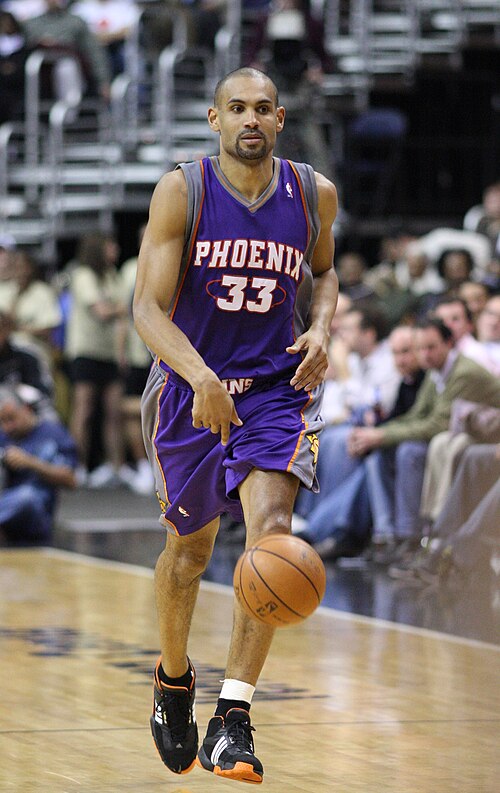
Grant Hill entered the league as a can’t-miss superstar. The 1994 No. 3 pick averaged 21.1 points, 9.8 rebounds and 6.0 assists in his first six seasons with the Detroit Pistons, earning co-Rookie of the Year honors and six straight All-Star selections. His athleticism, scoring versatility and playmaking drew comparisons to a young Michael Jordan.

A devastating ankle injury in 2000 — a compound fracture and subsequent infections — derailed everything. Hill missed most of the next four seasons and never regained his explosive first-step or full athleticism, though he reinvented himself as a solid contributor with the Phoenix Suns. Had the ankle held up, Hill likely would have been a perennial MVP candidate, led the Pistons to deeper playoff runs alongside a healthy roster and possibly challenged for multiple titles. Many analysts believe a healthy Hill would rank among the top 20-25 players all time.
3. Tracy McGrady
Tracy McGrady possessed perhaps the purest scoring talent of his generation. From 2000 to 2004 with the Orlando Magic and Houston Rockets, T-Mac averaged over 25 points per game, won two scoring titles and delivered iconic moments like his 13-point streak in 35 seconds against the San Antonio Spurs. His step-back jumper, handle and elevation made him nearly unguardable in isolation.
Back spasms and knee injuries began eroding his explosiveness by age 26, forcing him into diminished roles later with the Rockets and New York Knicks. A healthy McGrady, paired longer with Yao Ming or in a stronger supporting cast, might have led multiple deep playoff runs and challenged Kobe Bryant and Allen Iverson as the decade’s premier shooting guard. Some projections place a fully healthy T-Mac among the top 15 scorers and most dominant wings in league history, with a realistic shot at multiple All-NBA First Team selections and possibly a championship.
4. Derrick Rose
Derrick Rose’s story remains one of the NBA’s most heartbreaking. The youngest MVP in league history at age 22, Rose led the Chicago Bulls to the 2011 Eastern Conference finals with explosive athleticism, fearless drives and elite court vision. He averaged 25 points and 7.7 assists that season while carrying a young, injury-plagued roster.
Torn ACL and subsequent knee injuries in 2012 and beyond robbed him of his burst and confidence. Rose never again approached his MVP form, though he carved out a respectable veteran career. Without the knee damage, Rose could have anchored the Bulls for a decade, potentially delivering the franchise’s first title since Michael Jordan. Many believe a healthy Rose would have been a lock for multiple MVPs, several championships and a place in the top 50 all-time players, altering the Eastern Conference landscape for years.
5. Penny Hardaway
Anfernee “Penny” Hardaway burst onto the scene as a dynamic 6-foot-7 point guard with Magic Johnson-like vision and unparalleled athleticism. Alongside Shaquille O’Neal, he led the Orlando Magic to the 1995 NBA Finals as a rookie and followed with two more deep playoff runs. Hardaway’s crossover, size and passing made him a nightmare matchup.
Knee and abdominal injuries starting in 1997 curtailed his prime. He never again reached the All-NBA levels of his first four seasons. A fully healthy Penny, remaining the perfect complement to Shaq or leading his own contenders, might have secured multiple titles and entered the Hall of Fame as one of the greatest combo guards ever. Some “what if” lineups pair him with other injury-plagued stars to form dream teams that could have dominated the late 1990s and early 2000s.
These five players — and others like Yao Ming, Brandon Roy and Greg Oden — illustrate how injuries can derail even the most gifted athletes. Walton’s foot problems, Hill’s ankle nightmare, McGrady’s back issues, Rose’s knees and Hardaway’s knees all robbed fans of potential dynasties and individual greatness.
Doncic’s current hamstring strain, while not yet career-altering, serves as a reminder of the fragility that even superstars face. At 27 and already a multiple-time All-NBA selection with MVP-caliber seasons, the Slovenian phenom has shown remarkable durability until now. His recovery and return will be closely watched, especially as the Lakers navigate the postseason without their leading scorer for the regular-season finale.
The NBA has seen medical advances — better load management, regenerative treatments and improved rehabilitation protocols — that might spare modern players the fates of past generations. Yet the physical demands of today’s faster, more physical game keep the risk ever present.
As fans speculate on Doncic’s playoff status and long-term outlook, the “what if” conversations about Walton, Hill, McGrady, Rose and Hardaway endure. Their stories remind us that basketball greatness often hinges on more than talent: it requires the cruel luck of staying healthy. In a league where one wrong step or awkward landing can change everything, these hypothetical careers continue to fascinate, offering a glimpse of alternate NBA histories that might have included more rings, records and legendary moments.
For now, the focus remains on Doncic’s rehabilitation in Europe and whether he can contribute when the Lakers’ playoff journey begins. His situation adds another chapter to the long book of NBA injury what-ifs — one that fans hope ends far more favorably than those of the game’s most tragic near-greats.


Jobs report on tap for soaring US stocks as rate path, bond yields eyed as risks

The offerings come at a time when the IPO market has seen a lull for a few weeks in a tepid 2026. While several companies have secured regulatory approvals in recent weeks, many have put off their IPO plans due to market volatility.
The first issue to hit the market next week will be CMR Green Technologies. The company’s IPO will open on June 3 and close on June 5. The issue is priced in the range of Rs 182-192 per share and aims to raise Rs 630.9 crore. Equirus Capital is managing the offering.
CMR Green Technologies operates in the metal recycling and circular economy segment, manufacturing recycled aluminium and zinc products for automotive and industrial applications. The company counts several leading automotive manufacturers among its customers and is positioned to benefit from increasing adoption of recycled metals and sustainability-focused manufacturing practices.
The company is expected to attract investor interest given the growing focus on resource efficiency, electric vehicles and environmental regulations that are encouraging the use of recycled materials.

The second mainboard issue scheduled for next week is Hexagon Nutrition.
The IPO will open on June 5 and close on June 9. The company has fixed a price band of Rs 42-45 per share and plans to raise Rs 138.9 crore through an offer for sale of 3.09 crore shares. Since the issue is entirely an OFS, the company will not receive any proceeds from the public offering.Hexagon Nutrition is a research-driven nutrition company engaged in manufacturing micronutrient premixes, wellness and clinical nutrition products, therapeutic formulations and ready-to-use nutritional foods.
Founded in 1993, the company operates manufacturing facilities in Maharashtra, Tamil Nadu and Uzbekistan and exports products to more than 75 countries. Its products are sold through both business-to-consumer and business-to-business channels and include brands such as Pentasure, Obesigo, Pediagold and Nutrone.
The company has reported steady financial growth in recent years. Profit after tax rose to Rs 24.4 crore in FY25 from Rs 12.2 crore in FY24 and Rs 5.8 crore in FY23, while total income increased to Rs 331 crore.
At the upper end of the price band, Hexagon Nutrition is valued at around 15 times post-issue earnings.
Market participants will closely watch subscription trends in both issues as they could provide a signal on investor appetite for new listings after months of fluctuating market sentiment.
The broader market environment remains mixed. Indian equities have faced pressure this year from elevated crude oil prices, geopolitical tensions in West Asia and foreign institutional investor outflows. However, strong domestic liquidity and continued retail participation have helped support primary market activity.
SME segment
Apart from the mainboard issues, the SME segment is also expected to remain active next week.
Genxai Analytics plans to raise about Rs 55 crore through its NSE SME IPO, which opens on June 5 and closes on June 9. The issue is priced at Rs 110-116 per share. Vahh Chemicals will launch a fixed-price SME issue worth Rs 13.5 crore between June 4 and June 8 on the BSE SME platform.
Merritronix will also tap the SME market with a Rs 70 crore issue opening on June 1 and closing on June 3.
While SME offerings continue to attract investor interest, listing performance has remained mixed in recent months, making subscription quality and valuation discipline increasingly important factors for investors.
(Disclaimer: Recommendations, suggestions, views and opinions given by the experts are their own. These do not represent the views of Economic Times)
Saudi Arabia stocks higher at close of trade; Tadawul All Share up 0.46%

Intellia Therapeutics – Steady Progress, Historic Commercial Approval In Sight

Piotr Swat | Lightrocket | Getty Images
An experimental lung cancer drug from Akeso and Summit Therapeutics reduced the risk of death by 34% in a closely watched late-stage trial, according to results released Sunday.
When combined with chemotherapy, the drug kept people with squamous non-small-cell lung cancer alive for a median of four months longer than the standard combination of immunotherapy and chemotherapy, a result that was statistically significant, according to an abstract released Sunday ahead of a presentation at the American Society of Clinical Oncology’s annual meeting. The Phase 3 trial was conducted in China, and a global Phase 3 study is ongoing.
“The fact that it shows an improvement in overall survival in a difficult-to-treat patient population is very encouraging,” said Dr. Suresh Ramalingam, executive director of the Winship Cancer Institute of Emory University. “I’m mindful of the fact that this trial was done exclusively in China, and that brings up the question of how do these data apply to patient populations outside of China, and that will require future investigations.”
Called ivonescimab, the bispecific antibody targets PD-1 — similar to Merck’s best-selling drug Keytruda —and VEGF — similar to Roche’s Avastin. It’s become the subject of intense debate in the oncology and investment communities. Some say ivonescimab and similar drugs could be a successor to Merck’s wildly successful cancer drug Keytruda, while others warn it’ll disappoint like other once-promising ideas such as drugs targeting TIGIT, an immune receptor.
The dueling narratives are reflected in the stock price of U.S.-based Summit Therapeutics, which licensed the rights to ivonescimab outside of China from Akeso. Shares of Summit have skyrocketed nearly 600% in the two years since Summit said ivonescimab more effectively controlled tumors than Keytruda in a separate China trial. The stock has slid in the past month over concerns the drug won’t be as effective in a global population.
Cancer drug targets
- PD-1: A protein that helps cancer cells hide from the immune system.
- VEGF: A protein that promotes the growth of new blood vessels and can help cancer cells thrive.
Previous studies have showed ivonescimab can effectively control tumors, an endpoint known as progression-free survival. That’s typically not enough to seek approval from the U.S. Food and Drug Administration, which wants proof that cancer drugs can keep people alive longer. Older VEGF drugs that effectively controlled tumors struggled to improve survival, which raised doubts that ivonescimab’s early promise would hold.
In the Harmoni-6 trial being presented Sunday, ivonescimab combined with chemotherapy kept people alive for a median of 27.9 months versus 23.7 months for people who received a standalone PD-1 drug and chemotherapy, an improvement of four months.
“It’s not clear how meaningful that is,” said Dr. Deborah Doroshow, associate professor of medicine, hematology and medical oncology at the Icahn School of Medicine at Mount Sinai. “It’s certainly, it’s not two months, but it’s also not a huge difference, and I think in terms of whether or not living four months longer is meaningful absolutely depends on the person who is living it.”
People receiving immunotherapy in the control group lived an average of six months longer than expected, raising questions about whether the trial enrolled a representative patient population and whether the advantage of ivonescimab might be better than reported in the study, said Doroshow, who serves on the steering committee for the ongoing Harmoni-3 global trial of ivonescimab.
One possible reason for the discrepancy is that the study was conducted in China, where people have historically responded better to standalone PD-1 and VEGF drugs, said Emory’s Ramalingam. The only way to determine whether combining the two in one molecule produces different results for broader populations is to run additional studies in the West, he said.
Until then, Ramalingam called the trial results “good news” for Chinese patients.
“There is a new approach in squamous cell lung cancer that extends survival by about four months, which is a substantial improvement given that this is a patient population where progress has come in small steps,” he said.
Summit plans to report progression-free survival results from squamous patients in the global Harmoni-3 trial in the second half of this year. It expects to share results from non-squamous patients in the first half of next year.
Kateryna Kon/science Photo Library | Science Photo Library | Getty Images
One purported benefit of PD-1/VEGF-targeting drugs is the ability to give them safely to people with squamous lung cancer, a subset most commonly caused by smoking. These tumors tend to crop up near major blood vessels in the lungs, and blocking VEGF can prevent those blood vessels from repairing themselves, leading to potentially fatal hemorrhaging.
In the trial being presented Sunday, bleeding of any severity occurred in almost one-quarter of people in the ivonescimab group, twice as much as in the control group. Less than 3% of the cases were considered severe versus about 1% of people who received the PD-1 drug tislelizumab, according to slides that will be presented Sunday where the presenter describes ivonescimab’s safety as comparable.
More broadly, drugmakers and investors alike want to know whether PD-1/VEGF drugs will succeed Keytruda and similar drugs like Bristol Myers Squibb’s Opdivo as mainstay treatments. Checkpoint inhibitors like Keytruda have transformed the treatment of lung cancer and are now used in dozens of other cancers. Keytruda alone has 44 indications and generated more than $30 billion in sales for Merck last year.
Replacing Keytruda everywhere it’s used today and potentially expanding into new indications would create “a very large market,” said Leerink Partners analyst Daina Graybosch. That prospect has prompted a rush of dealmaking.
Licensing deals involving PD-1 drugs reached $30 billion last year, nearly doubling the previous peak of $16 billion in 2017, a few years after Keytruda and Opdivo reached the market. Merck and Bristol Myers Squibb were part of the recent rush, with both companies signing potentially multibillion dollar deals for PD-1/VEGF drugs.
But it’s unlikely that ivonescimab and similar drugs will be as broadly used, said Ethan Smith, oncology director at Norstella, especially as they face more competition from other emerging drugs like antibody drug conjugates than Keytruda had when it entered the market more than a decade ago.
Data from one antibody drug conjugate from Merck and partner Kelun is also being presented this weekend at the ASCO meeting. The experimental drug cut the risk of tumor progression by 65% in a study of lung cancer conducted in China, according to an abstract released ahead of the meeting.
While Merck thinks there will be places for PD-1/VEGF drugs and is excited about the one it’s developing, the company doesn’t expect them to become the next Keytruda, said Dr. Marjorie Green, Merck’s head of global oncology clinical development.
“It’s an exciting time in oncology,” said Green. “I never thought that we would be in a position in lung cancer to debate about which of the new therapies is the best because there just have not been a lot of advances. Keytruda has just been a cornerstone therapy and people are like, ‘What’s going to displace it?’ And I think it’s good news for people who are unfortunately diagnosed with lung cancer that we’re in position to say, you know what, there might be multiple options of things that we can do, and then hopefully add them together and help even more.”
Business
Equity mutual funds deliver up to 7% return last week; international funds lead. Check top 8 performers with over 3% gains

Equity mutual funds generated strong returns last week, with international funds dominating the performance chart. Mirae Asset Global X Artificial Intelligence & Technology ETF FoF emerged as the top performer, while several global, emerging market and thematic funds delivered gains of more than 3%, according to ACE MF data.

Revolution Medicines reports phase 3 pancreatic cancer trial results


I am an avid investor with a major focus on small cap companies with experience in investing in US, Canadian, and European markets. My investment philosophy to generating great returns on the stock market revolves around identifying mispriced securities by understanding the drivers behind a company’s financials, and ultimately, most often revealed by a DCF model valuation. This methodology doesn’t limit an investor into rigid traditional value, dividend, or growth investing, but rather accounts for all of a stock’s prospects to determine the risk-to-reward.
Analyst’s Disclosure: I/we have no stock, option or similar derivative position in any of the companies mentioned, and no plans to initiate any such positions within the next 72 hours. I wrote this article myself, and it expresses my own opinions. I am not receiving compensation for it (other than from Seeking Alpha). I have no business relationship with any company whose stock is mentioned in this article.
Seeking Alpha’s Disclosure: Past performance is no guarantee of future results. No recommendation or advice is being given as to whether any investment is suitable for a particular investor. Any views or opinions expressed above may not reflect those of Seeking Alpha as a whole. Seeking Alpha is not a licensed securities dealer, broker or US investment adviser or investment bank. Our analysts are third party authors that include both professional investors and individual investors who may not be licensed or certified by any institute or regulatory body.

Wordle enthusiasts logging into The New York Times’ popular daily word game on Sunday encountered a musical challenge as the answer for puzzle No. 1807 was revealed as “ETUDE.”

The five-letter word, a term familiar to musicians and classical music aficionados, refers to a short composition designed to practice a specific technique while often holding artistic value. According to Webster’s New World College Dictionary, an etude is “a musical composition for a solo instrument, designed to give practice in some special point of technique, but often performed for its artistic worth.”
Players who started their guesses with common openers like “RAISE” or “TOUCH” found themselves navigating vowel-heavy patterns, as “ETUDE” features three vowels and a repeated “E.” The puzzle’s solution aligned with many players’ experiences of medium difficulty, with solvers frequently reporting four or five attempts.
The Enduring Appeal of Wordle
Since its acquisition by The New York Times in 2022, Wordle has maintained a dedicated global following. The game’s simple premise — guess a five-letter word in six attempts with color-coded feedback — continues to draw millions daily. Green tiles indicate correct letters in the right position, yellow shows correct letters in the wrong spot, and gray eliminates letters entirely.
On May 31, 2026, social media platforms lit up with reactions ranging from satisfaction to playful frustration. Many noted the musical theme as a refreshing departure from more common vocabulary. Puzzle No. 1807 followed Saturday’s solution, “SMILE,” which had generated lighter, more upbeat conversations.
Wordle’s daily reset at midnight local time creates a shared cultural moment across time zones. In Seoul, where many international players participate during evening hours, discussions often blend with local K-pop and classical music communities.
Breaking Down Today’s Puzzle
For those seeking strategic insights, effective starting words for Sunday’s puzzle included those testing multiple vowels early. “ETUDE” begins and ends with “E,” with “T,” “U,” and “D” filling the middle. The repeated “E” added an extra layer for players avoiding duplicate guesses too early.
Hints circulating before the solution included references to music practice pieces and piano studies famously composed by figures like Frédéric Chopin, whose etudes remain staples in conservatory training. One subtle hint shared across gaming sites: “A piece of music.”
The New York Times’ official review for puzzle No. 1807 confirmed the solution and provided context on its linguistic and cultural significance, helping players understand not just the word but its place in artistic lexicon.
Community and Strategy
Wordle solvers often develop personal rituals. Some swear by consonant-heavy openers like “SLATE” or “CRANE,” while others prefer vowel tests with “AUDIO” or “ADIEU.” For Sunday’s puzzle, players who tested “E” early gained an advantage.
Online forums and Reddit threads dedicated to Wordle saw spikes in activity, with users sharing grids and celebrating streaks. One common theme: the satisfaction of connecting everyday gaming with cultural knowledge. “ETUDE” rewarded those with even passing familiarity with music education.
The game’s accessibility — free with a NYT subscription for additional features — has helped sustain its popularity years after its viral peak. Unlike more complex puzzles, Wordle’s daily commitment fosters habit without overwhelming players.
Historical Context and Wordle Milestones
Wordle’s journey from a personal project by software engineer Josh Wardle to a media phenomenon remains remarkable. Launched publicly in 2021, it tapped into a universal desire for simple, satisfying challenges during uncertain times.
By 2026, the game has produced thousands of unique puzzles, each carefully curated by the NYT Games team to balance difficulty and fairness. Puzzle numbers like 1807 mark steady progression, with players tracking personal statistics and global solve rates.
Past May 31 puzzles varied widely, from “MANOR” in earlier years to “CHAOS” and “HABIT” in others, showing the game’s broad vocabulary range.
Tips for Future Success
Experts recommend several strategies for consistent performance:
- Start with words containing multiple vowels and common consonants.
- Use information from each guess efficiently — eliminate impossible letters quickly.
- Consider word frequency and common patterns in English.
- Avoid repeating eliminated letters.
- For hard mode, which forces use of known correct letters, practice builds intuition.
Sunday’s puzzle highlighted the value of musical vocabulary. Players unfamiliar with “ETUDE” may have arrived through process of elimination, reinforcing how Wordle gently expands users’ lexicons.
Global Reach and Cultural Impact
In South Korea, Wordle integrates with strong English learning culture and interest in classical music performance. Many students and professionals play during commutes or breaks, turning the daily puzzle into a small educational moment.
The game’s influence extends beyond entertainment. Educators note its value in building vocabulary, pattern recognition and resilience through trial and error. Families compete across generations, creating bonding opportunities.
As artificial intelligence and advanced algorithms influence many games, Wordle’s human-curated simplicity stands out. Each puzzle undergoes review to ensure solvability and appropriateness.
Looking Ahead
Monday’s puzzle awaits, promising another fresh challenge. Wordle’s predictable yet surprising nature keeps players returning. Whether solving in two attempts or stretching to six, the shared experience connects millions.
For those who missed Sunday’s solution, “ETUDE” offered a harmonious end to the weekend — a reminder that even simple games can carry artistic echoes.
The New York Times continues refining the experience with occasional variants and connections to other puzzles like Connections and Mini Crossword. Wordle’s core remains unchanged: a daily invitation to think, guess and learn.
As players reset their streaks and share results with green and yellow emoji grids, the community thrives on collective curiosity. Sunday’s musical answer added a melodic note to the ongoing Wordle story.


Daniel is an avid and active professional investor.
He runs Crude Value Insights, a value-oriented newsletter aimed at analyzing the cash flows and assessing the value of companies in the oil and gas space. His primary focus is on finding businesses that are trading at a significant discount to their intrinsic value by employing a combination of Benjamin Graham’s investment philosophy and a contrarian approach to the market and the securities therein. Learn more.
Analyst’s Disclosure: I/we have no stock, option or similar derivative position in any of the companies mentioned, and no plans to initiate any such positions within the next 72 hours. I wrote this article myself, and it expresses my own opinions. I am not receiving compensation for it (other than from Seeking Alpha). I have no business relationship with any company whose stock is mentioned in this article.
Seeking Alpha’s Disclosure: Past performance is no guarantee of future results. No recommendation or advice is being given as to whether any investment is suitable for a particular investor. Any views or opinions expressed above may not reflect those of Seeking Alpha as a whole. Seeking Alpha is not a licensed securities dealer, broker or US investment adviser or investment bank. Our analysts are third party authors that include both professional investors and individual investors who may not be licensed or certified by any institute or regulatory body.

Newcastle nature trail opened for schoolboy Archie York

Jobs report on tap for soaring US stocks as rate path, bond yields eyed as risks

Trace Mayer says bitcoin’s (BTC) falling volatility signals institutional maturity, not weakness


-

 Business7 days ago
NYT Strands Answers May 24 2026 Revealed for Puzzle No. 812 Theme Summer Essentials
-

 NewsBeat4 days ago
Israel says it has killed new Hamas military leader in Gaza City airstrikes
-

 Tech4 days ago
NASA taps Blue Origin to deliver lunar rovers for Moon Base initiative
-
 Politics6 days ago
Bridgerton Season 5: Cast, Release Date And Everything We Know So Far
-

 News Videos4 days ago
XRP *JUST* SUCCEEDED!!!! CLARITY ACT EXPOSED!!! (SHE EXPOSED IT)
-

 Sports5 days ago
2026 NBA Finals schedule, odds: Knicks await Thunder or Spurs after winning East
-
 Crypto World5 days ago
Micron Crosses $1 Trillion Market Cap as AI Demand Reshapes Memory Sector
-

 Business5 days ago
Selena Gomez Reportedly Upset Over Benny Blanco’s Comments on Her ‘Terrible’ Diet
-
Crypto World7 days ago
Brian Armstrong Outlines Crypto Vision for the Future Financial System
-

 News Videos2 days ago
This is BROKEN! INSANE 5x MONEY CAR WASH WEEK! The NEW GTA Online UPDATE Today! (GTA5 New Update)
-

 Business6 days ago
BTS Sells Out Four Las Vegas Shows at Allegiant Stadium for ARIRANG World Tour
-
 Tech5 days ago
China assigns ID codes to 28,000+ humanoid robots
-
 NewsBeat6 days ago
Hottest May day ever as London hits 34.8C in 2C leap from previous records
-

 Tech6 days ago
Microsoft’s quiet Claude Code retreat and the real cost of enterprise AI
-

 Tech2 days ago
Waymo dominates autonomous vehicle registrations as Tesla trails behind
-

 Business6 days ago
Nikkei 225 Surges Past 65,000 for First Time as Iran Peace Hopes Fuel Record Rally
-
Tech4 days ago
The Samsung pay deal is the moment Korean unions changed register
-

 Tech6 days ago
Westone Audio and Etymotic Acquired by Fidelity Collective in Major IEM Market Move
-
 Entertainment6 days ago
‘Breaking Bad’ Star’s Easy-to-Binge 6-Part Crime Series Spin-Off Is Finally Heading to Free Streaming
-

 NewsBeat6 days ago
Crowds find riverside shade in York as temperatures soar
You must be logged in to post a comment Login