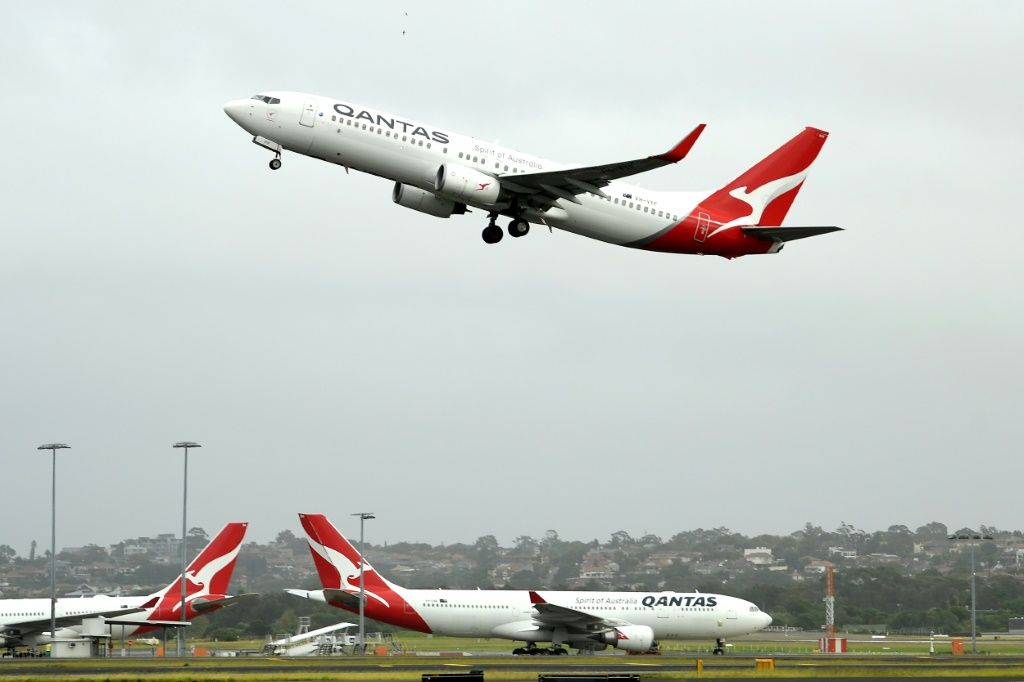
MELBOURNE — A Qantas international flight from Melbourne to Dallas was diverted to Tahiti on Friday after a male passenger allegedly bit a flight attendant during a mid-air altercation, forcing authorities to remove him from the aircraft and prompting the airline to issue a lifetime ban across its entire network.
The incident occurred on Qantas flight QF21, a Boeing 787-9 Dreamliner roughly seven hours into the journey. According to statements from the airline and witness accounts, the passenger became disruptive and refused crew instructions before allegedly biting the attendant on the arm. Other passengers and crew members assisted in restraining him until the aircraft could make an emergency landing in Papeete, French Polynesia.
Qantas confirmed the diversion was made for safety reasons and that the flight later continued to Dallas after refuelling, arriving approximately three and a half hours late. The affected flight attendant received medical treatment but did not sustain serious injuries. The airline has referred the matter to the Australian Federal Police for investigation.
“This behaviour is completely unacceptable,” Qantas said in a strongly worded statement. “We have zero tolerance for any form of violence or threatening conduct towards our crew. The passenger has been placed on a lifetime ban from flying with Qantas or Jetstar.”
Detailed Timeline of Events
Passengers described the man as heavily intoxicated and increasingly agitated several hours into the flight. Crew members first approached him after reports of disruptive behaviour near the economy section restrooms. When asked to return to his seat, the situation escalated rapidly, culminating in the alleged bite.
Video footage shared by several passengers on social media shows chaos in the cabin as crew and fellow travellers worked together to subdue the man. One clip, which has been viewed millions of times, captures raised voices and the moment crew members called for assistance from able-bodied passengers.
The diversion to Tahiti was chosen due to its proximity and the availability of local law enforcement. Upon landing, French Polynesian police boarded the aircraft and took the passenger into custody. He remains in custody as authorities coordinate with Australian officials on potential charges.
Qantas Response and Crew Support
Qantas CEO Vanessa Hudson personally addressed the incident, expressing full support for the crew. “Our flight attendants work incredibly hard to ensure passenger safety on long-haul flights,” she said. “Incidents like this are rare but they have a real impact on our people. We stand firmly behind our crew and will take every step necessary to protect them.”
The airline has offered counselling and trauma support to the bitten attendant and other crew members involved. It is also reviewing its procedures for handling disruptive passengers on ultra-long-haul routes, where alcohol service and fatigue can exacerbate tensions.
The Flight Attendants Association of Australia welcomed Qantas’s swift action but called for stronger government measures. “Cabin crew are on the frontline every day,” a union spokesperson said. “We need better legal protections and harsher penalties for those who assault aviation workers.”
Industry-Wide Problem of Air Rage
This latest incident adds to a troubling global trend of rising unruly passenger behaviour since the end of COVID-19 travel restrictions. Long-haul flights, particularly those crossing multiple time zones, have seen increased reports of intoxication-related disturbances. Airlines worldwide have responded by tightening policies on alcohol service and implementing stricter no-fly lists.
Qantas has one of the strongest records in the industry for decisive action. The lifetime ban issued in this case is consistent with previous high-profile incidents and sends a clear message to potential offenders. Similar bans have proven effective deterrents, with most individuals respecting the restriction to avoid legal consequences.
Aviation safety experts note that while such events remain statistically rare compared to the millions of passengers carried annually, each incident carries significant risks. Crew members are trained to de-escalate situations, but physical assaults can quickly endanger everyone on board.
Passenger and Public Reaction
Social media reaction has been swift and largely supportive of the crew. Hashtags such as #QantasCrew and #RespectTheCrew trended in Australia, with many users sharing stories of positive experiences with flight attendants and calling for greater respect toward aviation workers.
Some passengers on the affected flight praised the crew’s professionalism and the calm manner in which the situation was handled. “The team did an amazing job under pressure,” one traveller wrote online. “They kept everyone safe and got us to our destination despite the drama.”
Others used the incident to call for stricter pre-flight screening and limits on alcohol service on long-haul routes. The event has sparked broader conversations about passenger responsibility and the pressures faced by cabin crew on extended flights.
Legal Consequences and Investigation
The Australian Federal Police confirmed they are investigating the matter in coordination with French Polynesian authorities. Potential charges in Australia could include assault and endangering the safety of an aircraft, which carry substantial penalties including fines and imprisonment.
The passenger’s identity has not been publicly released, but reports suggest he is an Australian national. French Polynesian police are expected to determine whether initial charges will be pursued locally before any extradition or transfer to Australian jurisdiction.
Qantas has cooperated fully with authorities and provided all available cabin footage and witness statements. The investigation is expected to take several weeks as statements are collected and evidence reviewed.
Lessons for Future Travel
For travellers, the incident serves as a reminder of the importance of respecting crew instructions and maintaining appropriate behaviour on aircraft. Airlines encourage passengers who witness disruptive conduct to alert crew members calmly and avoid direct confrontation.
Qantas and other carriers continue to invest in crew training for de-escalation techniques and have implemented better support systems for affected staff. Technology such as improved cabin monitoring and faster communication with ground support also helps manage such situations more effectively.
As summer travel peaks and long-haul routes return to full capacity, both airlines and regulators are reinforcing the message that violence against crew will not be tolerated. The swift response in this case demonstrates that airlines are prepared to act decisively to protect their teams and maintain safety standards.
The Melbourne-Dallas flight eventually reached its destination safely, and Qantas has offered compensation and goodwill gestures to all passengers affected by the diversion. The airline continues to operate its full international schedule without further disruption.
This unfortunate event highlights both the professionalism of aviation workers and the rare but serious challenges they face. As investigations continue, the focus remains on supporting the crew member involved and ensuring the highest standards of safety and respect in air travel.






















































You must be logged in to post a comment Login