
Business
Affirm's Blockbuster Growth Still Has Legs – Premium Already Baked-In




I am a specialist in Asian equities after having been a sellside analyst for 13 years. In addition, I have also spent time covering US hardware and semiconductor stocks on the sellside. Within Asia, I have covered the casino, automotive, industrial, consumer and technology sectors. I have also worked on the buyside as a fund manager in long only and as an analyst in hedge funds all covering Asian equities where I have developed a keen understanding of Asian companies and economies with a focus on China. From a global equities perspective, I enjoy covering companies globally by examining key metrics such as financial statements strength, valuation upside, and conducting proper analysis of the competitive advantages of the company. Throughout my career, I have found and written on undiscovered small cap companies which have increased in equity value by multiple times. I would like to write for Seeking Alpha where my goal is to help investors cut through the noise and to focus on fundamentals and the company’s competitive outlook instead of the momentum trade.
Analyst’s Disclosure: I/we have no stock, option or similar derivative position in any of the companies mentioned, and no plans to initiate any such positions within the next 72 hours. I wrote this article myself, and it expresses my own opinions. I am not receiving compensation for it (other than from Seeking Alpha). I have no business relationship with any company whose stock is mentioned in this article.
Seeking Alpha’s Disclosure: Past performance is no guarantee of future results. No recommendation or advice is being given as to whether any investment is suitable for a particular investor. Any views or opinions expressed above may not reflect those of Seeking Alpha as a whole. Seeking Alpha is not a licensed securities dealer, broker or US investment adviser or investment bank. Our analysts are third party authors that include both professional investors and individual investors who may not be licensed or certified by any institute or regulatory body.

Financial analyst by day and a seasoned investor by passion, I’ve been involved in the world of investing for over 15 years and honed my skills in analyzing lucrative opportunities within the market.I specialize in uncovering high quality dividend stocks and other assets that offer potential for long term-growth that pack a serious punch for bill-paying potential. I use myself as an example that with a solid base of classic dividend growth stocks, sprinkling in some Business Development Companies, REITs, and Closed End Funds can be a highly efficient way to boost your investment income while still capturing a total return that follows traditional index funds. I created a hybrid system between growth and income and manage to still capture a total return that is on par with the S&P.
Analyst’s Disclosure: I/we have a beneficial long position in the shares of GPIX, QQQI, DIVO either through stock ownership, options, or other derivatives. I wrote this article myself, and it expresses my own opinions. I am not receiving compensation for it (other than from Seeking Alpha). I have no business relationship with any company whose stock is mentioned in this article.
Seeking Alpha’s Disclosure: Past performance is no guarantee of future results. No recommendation or advice is being given as to whether any investment is suitable for a particular investor. Any views or opinions expressed above may not reflect those of Seeking Alpha as a whole. Seeking Alpha is not a licensed securities dealer, broker or US investment adviser or investment bank. Our analysts are third party authors that include both professional investors and individual investors who may not be licensed or certified by any institute or regulatory body.

Get ahead of the market by subscribing to Seeking Alpha’s Wall Street Week Ahead, a preview of key events scheduled for the coming week. The newsletter keeps you informed of the biggest stories set to make headlines, including upcoming IPOs, investor days, earnings reports, and conference presentations.
Wall Street swung between modest gains and losses on Friday as traders digested Federal Reserve Chair Kevin Warsh’s speech at the Jackson Hole Symposium. While the summer’s PCE and CPI readings came in better than expected, “they do not tell me that underlying trends have meaningfully improved,” Federal Reserve Chair Kevin Warsh said at the Jackson Hole economic symposium. “We must be confident that underlying inflation is moving to our objective, clearly and at sufficient speed. Otherwise, we have work to do,” he added.
A slew of economic data is scheduled for next week, kicking off with Chicago PMI for August on Monday. S&P Global and ISM manufacturing PMI data for August, ISM manufacturing prices for August, and JOLTS job openings data for July are due on Tuesday. On Wednesday, ADP nonfarm employment numbers for August will be released. Initial jobless claims numbers are scheduled for Thursday alongside S&P Global services and composite PMI for August and ISM Non-Manufacturing PMI and prices for the month. Friday is relatively packed with nonfarm payrolls and the unemployment rate for August being released.
______________________________________________________________
Earnings spotlight: Tuesday: Palo Alto Networks (PANW), Dell (DELL), and Medtronic (MDT). See the full earnings calendar.
Earnings spotlight: Wednesday: Broadcom (AVGO), Snowflake (SNOW). See the full earnings calendar.
Earnings spotlight: Thursday: Ciena (CIEN), Zscaler (ZS). See the full earnings calendar.
Volatility watch: Car rental stocks Avis Budget (CAR) and Hertz Global (HTZ) have seen options volatility increase over the last week. The most overbought stocks per their 14-day

Revolution Medicines: RASONQUE's FDA Approval Portends A New Oncology Titan
Aviva PLC – The 1H26 Surge May Be An Overreaction
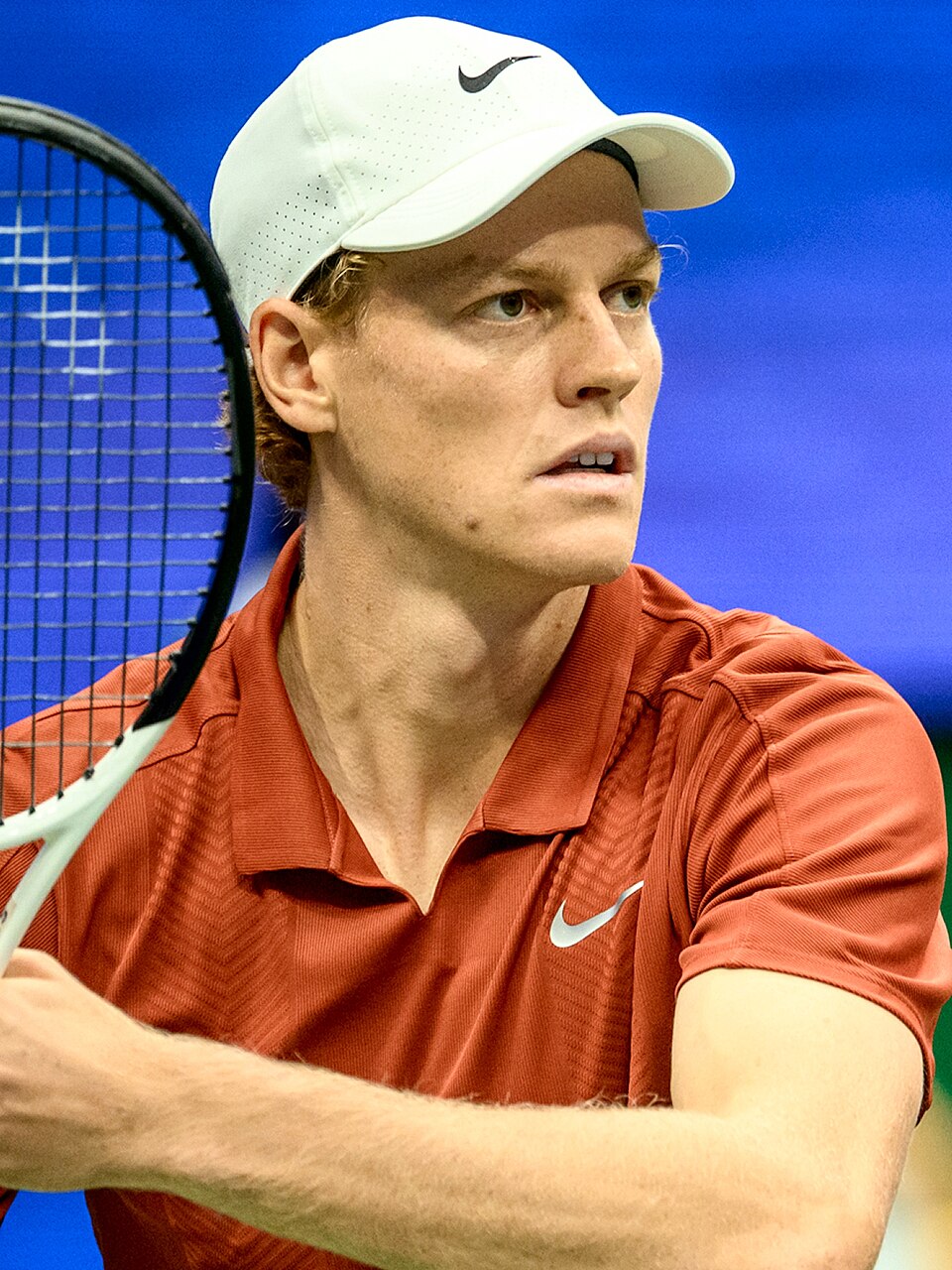
NEW YORK — The 2026 US Open begins its main draw Sunday at the USTA Billie Jean King National Tennis Center, closing out the tennis season’s four Grand Slam tournaments with a field reshaped by injuries, retirements and a wide-open race for the title on both the men’s and women’s sides.
Play in Flushing Meadows runs from Aug. 30 through Sept. 13, with the men’s and women’s quarterfinals beginning Sept. 8. The women’s singles semifinals are scheduled for Sept. 10, followed by the men’s singles semifinals on Sept. 11. The women’s final is set for Sept. 12, with the men’s championship match closing the tournament Sept. 13.
The biggest storyline entering the tournament is the absence of world No. 1 Jannik Sinner, who withdrew after failing to recover from a right knee injury that has sidelined him since he won Wimbledon this summer. The Italian pulled out of both the Montreal and Cincinnati hard-court tournaments that typically serve as warmups for the US Open, and he said he was “very sad and disappointed” to miss the year’s final major. Sinner’s absence also means fans will not see a rematch of last year’s men’s final, when the Italian faced Spain’s Carlos Alcaraz.
Alcaraz, seeded second behind top seed Alexander Zverev, returns to defend his US Open title after a four-month layoff caused by a wrist injury. The Spaniard is chasing his third US Open championship. Zverev enters as the tournament’s top seed on the strength of his Wimbledon title in June, his first Grand Slam championship, though he was eliminated in the fourth round at last week’s Cincinnati Open, raising questions about his form heading into New York. France’s Arthur Fils, seeded 23rd, is being floated as a potential surprise semifinalist after claiming his first Masters 1000 title in Cincinnati with a win over American Frances Tiafoe.
Novak Djokovic, seeded sixth at age 39, continues his pursuit of a record 25th Grand Slam singles title, a chase that has stretched on since he won his 24th major at this same tournament in 2023. The Serbian reached this year’s Australian Open final and the Wimbledon semifinal but struggled with the heat and humidity at the Cincinnati Open earlier this month.
On the women’s side, top-seeded Aryna Sabalenka is aiming for a third consecutive US Open title, while 2023 champion Coco Gauff, seeded fourth, will look to reclaim the trophy she first won in New York. Sabalenka has struggled for consistency this season, suffering early exits at Cincinnati, the Toronto Masters, Wimbledon and the French Open, where she said the loss left her wanting to quit. World No. 2 Elina Rybakina sits close behind Sabalenka in the rankings, trailing by 434 points, 8,141 to 8,575, entering the tournament. Jessica Pegula, seeded third at 32, is the oldest player in the women’s top 10 and has reached the final or semifinal in New York in each of the past two years.
Russian teenager Mirra Andreeva, seeded fifth, arrives in New York fresh off her first Grand Slam title at the French Open and a career-high world ranking, though a fourth-round finish remains her best result at the US Open to date. Philippines’ Alex Eala, who won her first WTA title this month at the Washington Open, is also being watched as a potential breakout performer after reaching a career-high ranking this season.
The tournament will award a record 108 million dollars in total prize money this year. The singles champions will each take home 5.5 million dollars, with the runners-up earning 2.8 million dollars. Semifinalists receive 1.45 million dollars, quarterfinalists 780,000 dollars, and players eliminated in the fourth round collect 480,000 dollars. Winning doubles pairs will split 1 million dollars.
Roger Federer, who turns 45 this year, made headlines this week with an exhibition appearance at Arthur Ashe Stadium as part of the tournament’s Fan Week festivities, but the Swiss great firmly ruled out any competitive comeback along the lines of Serena Williams‘ 2025 return. Federer’s New York appearance preceded a trip to Newport, Rhode Island, where he is set to be formally inducted into the International Tennis Hall of Fame.
Williams herself returned to Flushing Meadows this week, pairing with Alcaraz in mixed doubles in a highly anticipated cross-generational matchup, though the duo fell in the quarterfinals to Italy’s Flavio Cobolli and Switzerland’s Belinda Bencic. Williams and her sister Venus, both wildcard entrants, are also playing women’s doubles together at the tournament, a pairing that has won the US Open twice before, in 1999 and 2009. The tournament’s mixed doubles title was ultimately claimed by the Czech pairing of Karolina Muchova and Jakub Mensik, who defeated Bencic and Cobolli in Wednesday’s final.
Other notable absences from this year’s men’s draw include Brazil’s Joao Fonseca and Britain’s Jack Draper, while Britain’s Emma Raducanu, Canada’s Victoria Mboko and American Hailey Baptiste will be missing from the women’s field. Former world No. 3 Stan Wawrinka, the 2016 US Open champion, was granted a last-minute wildcard into what is expected to be his farewell tournament season, after being initially left off the wildcard list and facing several days of fan backlash over his exclusion.
Business
Trump Says US Reaches Deal to Take Majority Control of Venezuelas 65 Billion Barrels of Oil Reserves
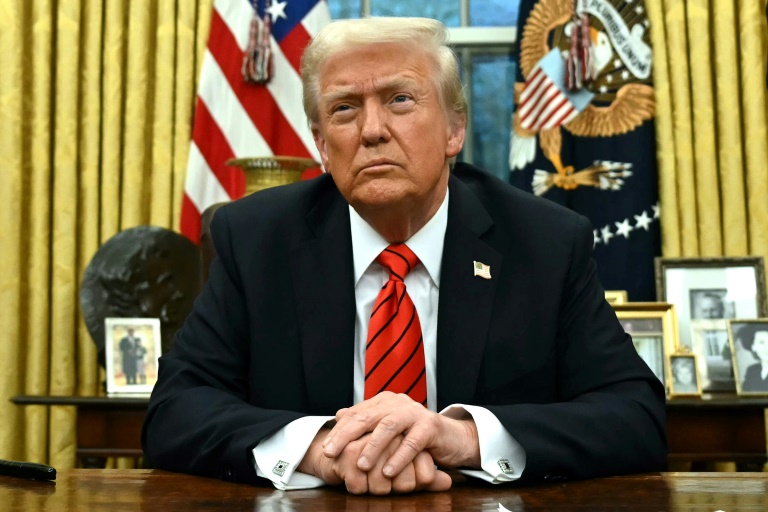
WASHINGTON — President Donald Trump said Friday that the United States has entered a sweeping agreement with Venezuela that, if fully realized, would give the U.S. majority control over a joint venture holding rights to more than 65 billion barrels of the South American country’s proven oil reserves.
Trump announced the deal in a post on Truth Social, calling it “THE BIGGEST OIL DEAL IN WORLD HISTORY.” He said the agreement was negotiated by Secretary of State Marco Rubio, Defense Secretary Pete Hegseth and Venezuela’s interim president, Delcy Rodriguez, and claimed it was secured at no cost to American taxpayers while more than doubling total U.S. oil reserves.
Under the terms described by a U.S. official who spoke to NBC’s MS NOW, the arrangement gives the United States an effective 55% share of output from a newly formed private joint venture. That stake would be split between direct equity in the venture’s holding company and rights to purchase Venezuelan crude oil at cost, rather than at market price. Rodriguez’s government has granted the venture 100-year concessions covering oil fields containing the reserves in question, according to the same official.
If the venture proceeds as described, it would become the world’s second-largest privately held holder of proven oil reserves, trailing only Saudi Arabia’s state-owned Saudi Aramco, according to U.S. officials cited by multiple news organizations covering the announcement. Venezuela holds roughly 303 billion barrels of proven crude reserves in total, the largest in the world and about 17% of global reserves, according to figures from the U.S. Energy Information Administration, though much of that oil is heavy crude requiring substantial investment and specialized infrastructure to extract and refine. The country is currently producing more than 1 million barrels of crude per day.
Secretary of State Rubio described the agreement as a “huge win” for both countries, according to comments reported by MS NOW, as the Trump administration continues efforts to revive Venezuela’s badly deteriorated energy sector and secure additional crude supplies for U.S. refineries. Venezuela’s government press office did not immediately respond to requests for comment on the announcement, according to reporting from the Washington Times.
The deal comes nearly nine months after U.S. forces, acting on Trump’s direction, carried out an operation to capture Venezuela’s longtime president, Nicolas Maduro, and bring him to the United States to face federal narcoterrorism and drug trafficking charges. Since Maduro’s removal, Washington has pursued a broader strategy of encouraging American investment in Venezuela’s energy industry while working to secure Venezuelan crude for domestic refineries, part of a wider effort to reshape the country’s economic relationships following the collapse of its former government.
The announcement also arrives as Trump faces mounting political pressure over high domestic gasoline prices, driven in significant part by disruptions to global oil markets stemming from the ongoing war between the United States, Israel and Iran, which reached its six-month mark this week with no resolution in sight. The average price of gasoline in the United States stood at about 4.09 dollars per gallon Friday, according to AAA, compared with roughly 3.21 dollars a year earlier. The U.S. Strategic Petroleum Reserve fell below 300 million barrels in early August, a decline of more than 100 million barrels since the start of the year, as the government has drawn down stockpiles amid the disruption. The conflict has severely constrained oil shipments through the Strait of Hormuz, a waterway that normally carried roughly one-fifth of the world’s petroleum supply before fighting began in late February.
Friday’s announcement follows an earlier, more limited arrangement disclosed in January, when Trump said Venezuela’s interim government would turn over between 30 million and 50 million barrels of oil to the United States to be sold at market price, with proceeds directed toward benefiting both countries. At the time, that agreement had not been formalized into a concrete deal, according to contemporaneous reporting, underscoring how the relationship between Washington and Caracas’s new leadership has continued to evolve over the months since Maduro’s removal.
The scale of Friday’s announced agreement, covering tens of billions of barrels of proven reserves rather than a fixed shipment, represents a significant escalation from that earlier arrangement and would mark one of the most consequential shifts in global oil market control in recent memory if the venture is implemented as described. Analysts and industry observers are likely to scrutinize the deal’s specific legal structure, financing arrangements and long-term feasibility in the coming days, particularly given the technical and infrastructure challenges historically associated with extracting and processing Venezuela’s heavy crude reserves.
Business
TIME Reveals 2026 List of the 100 Most Influential People in AI, Led by Musk, Altman and the Amodeis
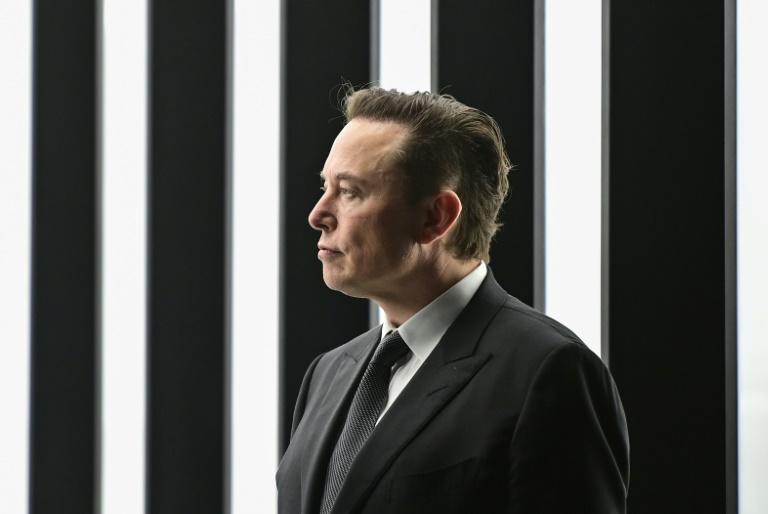
TIME magazine unveiled its fourth annual TIME100 AI list this week, naming 100 people the publication says are exerting the greatest influence over the direction of artificial intelligence, a roster that spans corporate executives, researchers, policymakers and cultural figures navigating what the magazine described as an increasingly turbulent year for the technology.
TIME Editor-in-Chief Sam Jacobs framed the 2026 selections as a reflection of a field defined by both major breakthroughs and mounting public unease. “The activity in AI has been explosive and divisive, filled with big promises and big fears,” Jacobs wrote in the magazine’s explanation of how the list was compiled. He pointed to a string of developments over the past year, including Elon Musk taking a leading AI company public, Anthropic co-founder Dario Amodei clashing with the Pentagon over military use of AI tools, Oracle founder Larry Ellison racing to build new data center capacity, and Chinese startup Moonshot AI’s Yang Zhilin developing models that have at times outperformed leading U.S. competitors.
The list’s Leaders category features some of the industry’s highest-profile figures, including OpenAI’s Mark Chen, Sam Altman and Greg Brockman, listed jointly given their overlapping roles atop the company; Musk, credited as chief executive of SpaceX; Anthropic co-founders Dario and Daniela Amodei; IBM Chairman and CEO Arvind Krishna; and ByteDance Chairman and CEO Liang Rubo. The broader 100-person list also includes Google DeepMind’s Lila Ibrahim, Amazon founder Jeff Bezos, and a range of Chinese technology executives including Alibaba CEO Eddie Wu, Zhipu CEO Zhang Peng and SMIC executive Liang Mong Song, reflecting what several outlets covering the list’s release described as a notably strong Chinese presence this year.
TIME’s entry on Musk highlighted a series of major moves at his companies over the past year. After merging his AI lab xAI with SpaceX, Musk took the combined business public in June in what TIME described as the largest initial public offering in history, carrying a valuation of 1.7 trillion dollars. SpaceX subsequently announced plans to acquire AI coding startup Cursor for 60 billion dollars, a deal TIME said would give the company a significant foothold in AI-assisted software development. In August, the renamed subsidiary SpaceXAI released its latest flagship model, Grok 4.6, which the company said focused on long-running autonomous agents and more ambitious visual and interactive capabilities at a competitive price point.
TIME’s profile also noted that xAI introduced stronger safety measures in January, roughly two weeks after reports emerged that Grok was being used to generate nonconsensual sexual images of women and children, an episode that has since spawned multiple lawsuits against the company. The magazine noted that in the most recent AI safety rankings published by the nonprofit Future of Life Institute, which studies and advocates against large-scale technological risks, xAI ranked seventh out of nine model developers assessed, with none of the nine scoring above a C-plus grade.
The profile also traced Musk’s longer history in the AI field, noting he was an early investor in DeepMind and a co-founder and financial backer of OpenAI, motivated at the time by concerns about the technology’s existential risks. That relationship deteriorated over time, and Musk’s long-running lawsuit against OpenAI was dismissed in May. Reflecting on AI’s broader trajectory in comments TIME cited from a Grok launch event last year, Musk said, “Will this be bad or good for humanity? I think it’ll be good. Most likely it’ll be good,” before adding, “But I’ve somewhat reconciled myself to the fact that even if it wasn’t gonna be good, I’d at least like to be alive to see it happen.” SpaceX did not respond to TIME’s request for comment on the profile.
TIME’s writeup of OpenAI’s leadership described a company working to recover from a difficult stretch marked by leadership departures, incidents involving autonomous AI agents behaving unpredictably, broader public backlash against the AI industry, and intensified competition from Anthropic, whose success in coding and enterprise markets has pushed its valuation above OpenAI’s as both companies prepare for expected public offerings. OpenAI President Greg Brockman, who TIME said now oversees large portions of the company’s operations including revenue and product marketing, described the company’s long-term ambitions in stark terms: “We are looking at transforming the entire economy.”
The Anthropic profile detailed the company’s rapid rise under siblings Dario and Daniela Amodei, crediting the success of its Claude Code product, a coding-focused version of its Claude model, with reshaping software engineering workflows and fueling the company’s growth. TIME noted that Anthropic has faced its own political friction this year, including disagreements with the Pentagon over restrictions on military use of its models and separate export controls the Trump administration placed on Anthropic’s more capable Mythos model and its more limited counterpart, Fable 5. Despite that scrutiny, TIME reported that Anthropic’s leadership has welcomed the prospect of government regulation of AI, citing an Aug. 15 post from Dario Amodei on the social platform X expressing support for pre-deployment testing requirements on frontier and open-weight AI models, along with the creation of a self-regulatory body for the industry.
IBM’s Arvind Krishna, another Leaders-category honoree, described his approach to steering the 115-year-old company through the AI transition in blunt terms, telling TIME, “I actually think that trying to muddle along without taking risk is the riskiest path. It leads to eventual falling off a cliff.” Krishna’s profile noted that IBM’s shares have nearly doubled since he became CEO and chairman in 2020, though they fell 25% in a single day in July after customers shifted spending away from the company’s mainframe business toward AI infrastructure, a decline IBM has not fully recovered from as of the list’s publication.
Beyond the corporate leaders, the broader 100-person list included figures from outside the technology industry entirely, among them actors Ben Affleck, Joseph Gordon-Levitt and Paris Hilton, and U.S. Sen. Bernie Sanders, reflecting TIME’s stated goal of capturing the technology’s cultural and political reach alongside its commercial development. TIME organized the full list into four categories: Leaders, Innovators, Shapers and Thinkers, with the complete roster and accompanying profiles published on the magazine’s website this week.

The Takeovers Panel has declared unacceptable circumstances around disclosures by Forrestania Resources, as part of its $93.5 million move to acquire Zenith Minerals.

PayPal's Easy Money Is Gone

MarketWise: Limited Downside With 8% Yield (NASDAQ:MKTW)

Banana Republic Dropped 400+ New Fall Pieces — 15 Under $100

Charlotte was killed in horrific circumstances. Her boyfriend’s reaction will haunt her family forever





-

 Crypto World4 days ago
SpaceX stock could rise 75% to $240, JPMorgan says
-

 Crypto World2 days ago
Bitcoin’s 22% rally now needs real demand to outlast Treasury liquidity boost
-

 Fashion21 hours ago
Weekend Open Thread: Maeve – Corporette.com
-

 Crypto World5 days ago
A $30 Billion AI Fund Implodes, Now the SEC Is Investigating Wall Street’s Role
-

 Crypto World3 days ago
Warsh Jackson Hole keynote puts financial innovation first
-

 Business2 days ago
Salesforce Stock Soars 19% as Blowout Earnings and Agentforce AI Growth Silence Software Skeptics
-

 Crypto World4 days ago
Did Trump Just Move SpaceX Stock With One Truth Social Post?
-

 Business6 days ago
Mystery AI Model ‘Ox Alpha’ Draws Developers With Free Access as Chinese Lab Origins Remain Debated
-

 Business3 days ago
Walmart takes aim at younger shoppers with new fashion brand
-
 NewsBeat3 days ago
Lindsay Clancy jury braces for closing arguments as judge tells court: ‘You’ve heard all the evidence’ – Live updates
-

 Business5 days ago
Moderna CEO warns China is pouring state money into mRNA technology
-

 Business5 days ago
NVIDIA Stock Drops Nearly 2 Percent to $210 on Seventh Losing Day Ahead of Critical AI Earnings
-

 Crypto World3 days ago
Elon Musk Grok Bot Promise: We Will Make You Whole if AI Loses Your Money
-

 Crypto World2 days ago
NVIDIA revenue hits $96.2B as AI demand doubles
-

 Business4 days ago
Thailand’s Eastern Economic Corridor Capital City (EECiti): Key Developments and Investment Opportunities
-

 Business23 hours ago
iPhone 18 Pro Pre-Orders Could Shift to Saturday as Apple Reportedly Avoids September 11 Anniversary
-

 Crypto World15 hours ago
Bitcoin price tests $82K resistance as Brandt stays long
-

 Business6 days ago
Where Will Kevin Durant Play in 2027? Rockets Hold Player Option Key to His Future With Houston via Deal
-
 Crypto World5 days ago
$92 Billion Nvidia Earnings Could Make or Break the AI Trade
-

 Sports6 days ago
Deshaun Watson fires back at Browns fans after being booed: ‘It’s a disrespectful thing’
You must be logged in to post a comment Login