
Business
AI Search for Local Businesses (2026 Guide)


The market is not the only thing that shrinks to a city radius. The evidence an assistant needs before it will name a business shrinks too, and most local operators have never audited whether that evidence actually exists.
Why does a city-level market behave differently to a national one in AI search?
A national brand can earn a citation through scale: enough content, enough backlinks, enough independent coverage that an assistant has plenty of material to draw on regardless of exactly who is asking. A city-level business does not get that luxury.
SOCi’s 2026 Visibility Index found ChatGPT recommends just 1.2% of those locations, compared to a 35.9% appearance rate in the Google local 3-Pack. AI search is roughly 30 times more selective than traditional local search, which means a city-level business does not have the volume of corroborating signals to absorb inconsistency the way a national brand can.
Its entire addressable market is often 200,000 people, and the pool of independent sources able to mention it is proportionally small: a handful of local directories, 1 or 2 industry bodies, a council register, and occasionally a regional trade press mention.
That means a local business has far less room for error. A missing or inconsistent detail that a national brand can absorb across thousands of other signals becomes, for a local business, 1 of only a dozen or so signals an assistant has to work with. Get 3 of those wrong and there is nothing left to build a confident answer from.
What are the 3 inputs that decide local AI visibility?
Local visibility comes down to 3 inputs, and all 3 need to be right at the same time. None of them substitutes for the others.
BrightLocal’s 2026 consumer survey found 45% of consumers now use AI tools for local business recommendations, up from 6% the year prior. Getting these 3 inputs right is no longer a technical preference. It is a commercial requirement.
| Input | What it covers | What breaks it |
| Profile completeness and consistency | Business name, category, hours, service area, and contact details across the places layer | The same business listed slightly differently in 2 places (a different suburb spelling, an old phone number, an outdated category) |
| Local third-party mentions | Council registers, chamber of commerce listings, industry-body directories, local press | A business that only exists on its own website and nowhere else independent |
| Service-area phrasing | Content that names the suburb, region or city the same way buyers actually search for it | Generic copy that never states where the business actually operates, or states it once in a footer |
Each input answers a different question an assistant is implicitly asking: is this business real and current, does anyone besides the business itself vouch for it, and does its content actually match the phrase a local buyer typed in. A business that gets 2 of the 3 right and skips the third is not two-thirds visible. It is invisible on exactly the questions the third input was meant to answer, because an assistant weighing whether to name a business rarely has enough local evidence to compensate for 1 input that returns nothing at all.
What Does “Consistent” Mean for Profile Completeness?
Consistency means the business’s core facts, name, category, hours, service area, and contact details, read identically everywhere they appear, not just accurately on the business’s own site. Google’s local ranking guidance is explicit that local rankings depend on relevance, distance, and prominence, and that complete, accurate information is what allows a business to be matched correctly against a search in the first place.
Relevance is the input a business controls most directly, and it is also the one most often left half finished. A trade business that lists 6 services but only names 2 of them anywhere in its profile description is asking Google, and by extension any assistant drawing on that data, to guess at the other 4. A profile with an outdated service area, a category that no longer matches what the business does, or hours that haven’t been updated since a public holiday last year, all quietly reduce that relevance score before an assistant even reaches the content on the website itself.
A pattern worth checking specifically: businesses that update their own website regularly but treat their places profile as a one-time setup task. The website gets a new services page every few months. The profile, set up 3 years ago, still lists an old address format, an outdated category, or a service area that hasn’t kept pace with where the business now actually works. An assistant weighing the profile against the website sees 2 sources describing 2 slightly different businesses, and resolves that inconsistency by trusting neither fully.
It’s why specialist teams such as Intelligent Resourcing, a Melbourne answer engine optimisation team, start a local audit at the profile layer before touching citations or content. It’s the fastest gap to close, and the first thing an assistant checks.
Why Do Council, Chamber and Industry-Body Citations Carry Weight?
A profile a business controls is a claim. A council register, a chamber of commerce directory, or an industry body’s member list is a claim made by someone else, and that distinction matters more at city scale than at national scale, because a local business has so few of these independent sources available to it in the first place.
A Perth-based water filtration company is a useful illustration of exactly this gap. Its own site named its services and location clearly and consistently, everything the first input above would ask for, yet it still went unnamed when local buyers asked an assistant which water treatment company to use, because almost nothing beyond its own homepage corroborated what the homepage said. No local trade directory listing, no chamber of commerce mention, no industry-association page repeating the same facts independently.
That gap is what local third-party mentions close. Whitespark’s 2026 ranking factors, the first edition to specifically track AI search visibility alongside the traditional local pack, found that citation signals and third-party authority carry weight across both surfaces: “In AI SEO, mentions (citations) are the new link.” A city-level business with 3 or 4 credible independent mentions is working from a materially stronger position than one relying on its own website alone.
This is also where a generic backlink strategy misreads the problem. A link from an unrelated national blog does very little for a city-level business, because it says nothing about whether this business operates in this city and does this specific work. A single line in a chamber of commerce member directory, by contrast, is a small signal that says exactly that, and it is the kind of signal an assistant weighing a local query is specifically looking for.
Why Do the Same Tactics Not Transfer Between Local and National Businesses?
The clearest way to see why local and national visibility need different playbooks is to put a city-level trade business and a national software company side by side.
| Melbourne trade business | National SaaS company | |
| Addressable market | 1 metro area, tens of thousands of potential buyers | Every business in the country that fits the ICP |
| Available third-party sources | A handful: local directories, chamber, industry body, regional press | Hundreds: review platforms, integration partners, press coverage, analyst mentions |
| What “consistency” protects against | A handful of listings going stale removes most of the available evidence | A handful of listings going stale is invisible against everything else that’s correct |
| What content needs to prove | That the business serves this specific suburb or region, in the phrasing buyers use | That the product solves this specific problem, regardless of where the buyer is |
| Where effort pays off fastest | Local third-party mentions, because there are so few available | Passage-level content and case studies, because the third-party pool is already large |
A national SaaS company that spends a quarter chasing 2 more local directory listings has wasted the quarter, because those listings are a rounding error against everything else already vouching for it. A Melbourne trade business that spends the same quarter writing more blog content instead of fixing its council and chamber listings has made the same mistake in reverse. The tactic that wins for one is close to irrelevant for the other, because the size of the available evidence pool is what decides where the marginal hour of work actually pays off.
The practical takeaway is not that content or backlinks stop mattering for a local business. It is that the order of operations flips. A national company can afford to treat citations as a background task while it invests most of its effort in content, because it already has hundreds of citations working in its favour. A city-level business gets the opposite return on the same hour: closing 1 citation gap changes more than writing 1 more page, simply because it is filling 1 of a dozen slots rather than 1 of several hundred.
LocaliQ’s 2026 SEO statistics confirm 46% of all Google searches carry local intent. That volume is weighted against evidence pools of very different sizes: a national brand may have hundreds of independent sources vouching for it, whereas a city-level business has a handful.
When Is It Worth Bringing in Outside Help for a Local AI Audit?
Alt Text Image 03: Five-day local AI visibility audit timeline showing three stages: business profile audit, third-party citation check, and local content review, with icons connected in a horizontal process flow.
Five-day local AI visibility audit timeline showing three stages: business profile audit, third-party citation check, and local content review, with icons connected in a horizontal process flow.
A local business does not need external help to run a first pass on all 3 inputs. It needs a week and a checklist.
Day 1 to 2: Profile completeness
- Confirm the business name, category, hours, and service area match exactly across every places listing the business controls
- Fill in every service the business actually offers, not just the top 2 or 3
- Check the phone number and address are current everywhere, including on old directory listings the business no longer actively manages
Day 3 to 4: Third-party mentions
- List every council register, chamber of commerce, and industry body the business is eligible to join or already belongs to
- Confirm the business is actually listed, and that the listing states the same facts as the profile
- Identify the 2 or 3 gaps that are realistic to close within a month
BrightLocal’s expert citation survey found 90% of local SEO experts say accurate citations are important to local search ranking. The third-party mention step is where that accuracy gap is most commonly found.
Day 5: Service-area phrasing
- Read the site’s own content and check whether it names the suburb or region the way a local buyer would actually type or ask it, not just once in a footer
- Rewrite the first sentence of any page that never states where the business operates
That week produces a clear list of gaps, and closing the easy ones takes another few weeks of a business owner’s own time. Where it usually pays to bring in outside help is the third-party mention gap specifically, because building relationships with the right local directories, associations, and press contacts is slower and less DIY-friendly than fixing a profile field.
It is also worth treating this as an ongoing check rather than a one-off project. A council register or industry-body listing that was accurate this year can drift out of date after an office move or a rebrand, and a competitor entering the same directories resets the comparison an assistant is implicitly making. Reviewing all 3 inputs once a quarter, rather than once and never again, is what keeps a local business’s evidence pool from quietly going stale.
A specialist team with working relationships across local citation sources can close that gap in weeks rather than the months it takes a business owner doing it alone alongside their actual job.
The businesses that get named are not always the best ones. They are the ones an assistant has enough independent evidence to name confidently, and for a city-level business, that evidence pool is small enough that every gap actually matters.

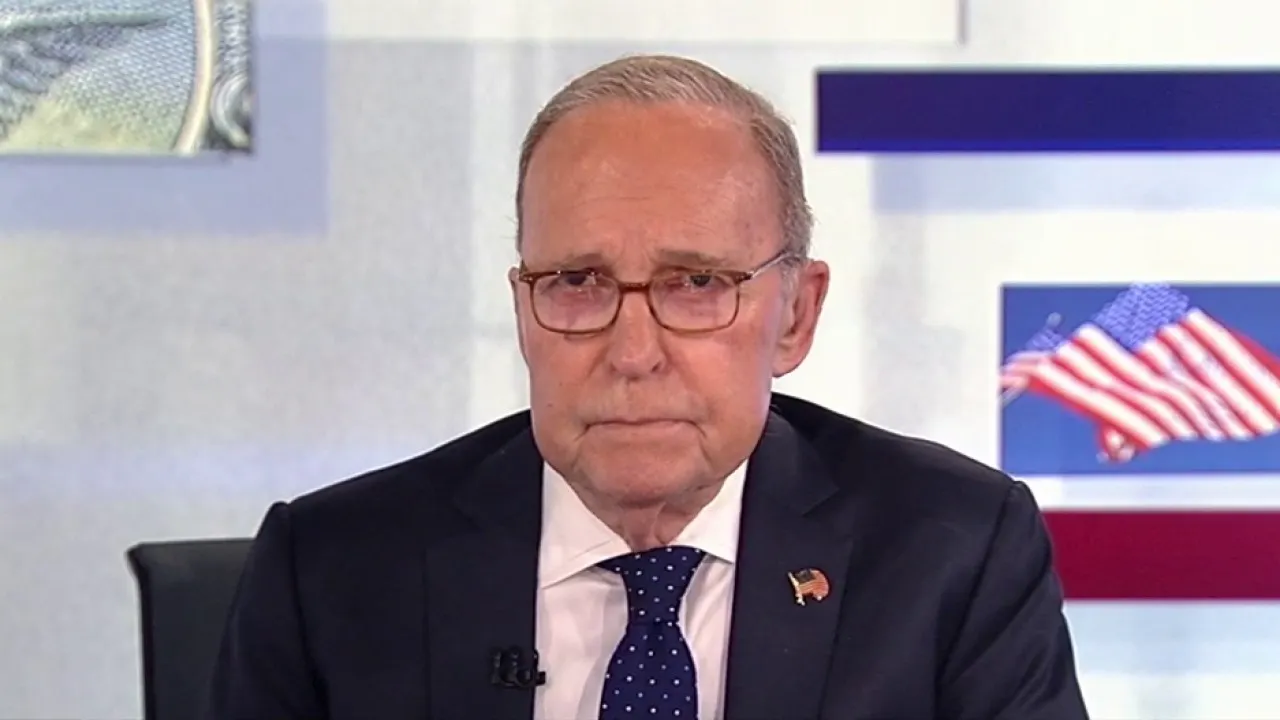
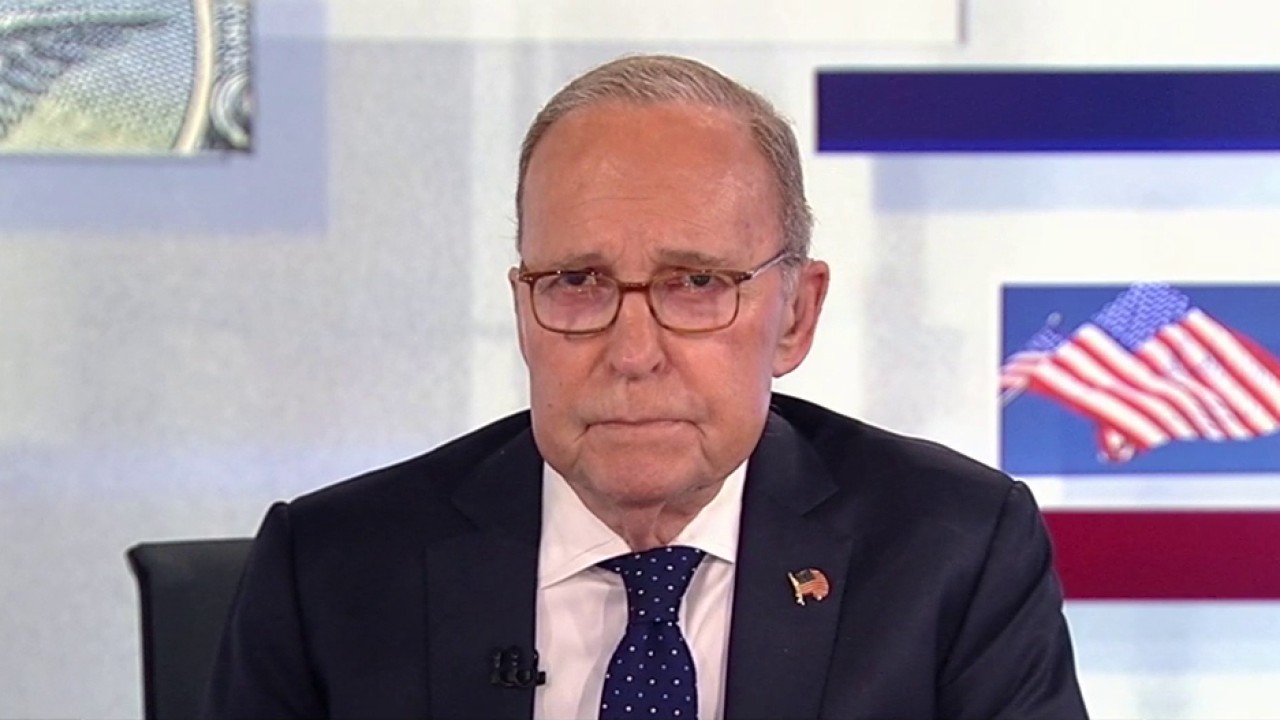
Now all the headlines from President Trump’s United Nations speech are focused on his prior statements warning Iran that the Tehran regime has to either make a deal or face annihilation.
I believe annihilation refers to the regime. And he warned them not to focus on the midterm elections because he’s going to be president for another two and a half years. So, in effect, Mr. Trump discounted the midterm elections, and took them off the table. A bad day for Iran.
As Mr. Trump said: “They’re waiting to see how I do in the midterm election. What they don’t realize is that I’m not running. I did that already and won in a landslide. We won in a giant landslide, and I’ll be here for two and a half years.” He added that “I gave absolutely no credence and will not give credence to the election. When it comes to Iran. It doesn’t even enter my mind. The only thing that does is that Iran will never have a nuclear weapon. The cowards and traitors —” here applause interrupted the president.
Please note carefully that big applause when he said Iran will never have a nuclear weapon. The UN is not usually, the member’s not usually applauding Mr. Trump, but they did actually on several occasions as we will discuss. Again, another bad day for Iran.
The point is, even the UN hates Iran. So we’ll see about all of that and how it works out after the election. Before he got to the Iran warning, he talked about America having the hottest economy in the world. Creating a million new jobs, record-low poverty, and high real incomes in the 2025 Census, of course cutting taxes, getting rid of regulations, record stock market, by the way the Nasdaq tech rallied again to a new record high.
Then there was the issue of AI — which is now super intelligence now — is here to stay. And there will be no radical climate change type hoax or doomsday scenarios with our super intelligence. Nor will there be any global regulation of our super intelligence. By the way, no global regulation of anything. Including the International Criminal Court, UN agencies who won’t protect our children from transgenderism, or the persecution of Christians. Or promoting mass migration.
He emphatically said no to any global carbon tax, and in fact generalized “there will be no global taxes.” End quote. Full stop. Good for him. How about that? In front of the UN, Mr. Trump makes a no new tax pledge. Phenomenal. And the Nasdaq index hits another record high.
Yet on all these points, Mr. Trump struck a positive, constructive, optimistic tone. This was a different kind of speech. This was a speech that had praise and applause that was unusual for his UN meetings. Yes, even the UN hates Iran and wants to stop them from having a nuclear weapon. For sure.
New York Post columnist Miranda Devine analyzes President Donald Trump’s U.N. General Assembly address, his meeting with New York City Mayor Zohran Mamdani and Israeli Prime Minister Benjamin Netanyahu’s response to Mamdani on ‘Kudlow.’
Yet several times, Mr. Trump praised the UN, and its Security Council. For, say, helping on Iran, and for endorsing his 20 point Gaza peace plan, and approving the Board of Peace. And permitting the first lady, Melania Trump, to preside over a meeting of the Security Council, which has never been done before by a president’s wife.
Yet there’s more. Mr. Trump praised the leaders of Pakistan, Rwanda, Armenia, and Azerbaijan, for helping him in making peace deals.
To be sure, he mentioned the successful regime change and world oil implications of Venezuela. And he issued a very tough warning to Cuba — where Secretary of State Marco Rubio is working hard for some kind of regime change.
And of course, the new security arrangement in Greenland, which will protect the Western hemisphere and Europe from Chinese and Russian threats. But Mr. Trump had good things to say about NATO, which has come around toward his view on the need for 5 percent of GDP spending on defense.
We really haven’t heard him praise NATO much before. He talked about stopping the drug cartels throughout Latin and South America.
Yet importantly, he had very positive things to say about Mexican cooperation. Again, optimistic, positive, constructive. And then finally, well, no one seems to want to report on this toward the back end of the speech. I believe the president spoke movingly to all of the UN members about “the enemies of humanity.”
He declared: “That is the challenge for every nation in this room. If we go forward strong and united against the enemies of all humanity, if we reject the voices who would have us give in to fear and doubt, if we refuse to shrink from our duties to our people, then together, through bold action, we will make this world far safer and a far better place.”
And he concluded again by reaching out to all those UN nations who really are not our best friends, but he exhorted them to “leave our nations far stronger.”
He said: “We will grow our economies far bigger, and we will not just speak of peace, prosperity, and justice. Here at the United Nations. We will stand for them all over the world. Together, we will build a future for our people that is brighter, more hopeful, and more magnificent than ever before. Thank you. God bless the nations of the world and God bless America”
This is why I’m calling this a historic speech.
This is an optimistic vision of freedom, peace, and prosperity, where this 47th President of the United States is asking all the nations to join him in this great crusade. Mr. Trump’s optimism was Reaganesque. I’d say this was pretty great stuff.

Explainer-Ban on US diesel exports would hurt, not help fuel markets, analysts say
Business
Cancom SE (CCCMF) Presents at Berenberg and Goldman Sachs 15th German Corporate Conference 2026 – Slideshow

Cancom SE (CCCMF) Presents at Berenberg and Goldman Sachs 15th German Corporate Conference 2026 – Slideshow

Qantas Airways plans to start selling seats on its first nonstop between New York and Sydney next August, with flights set to launch in 2028, as the Australian carrier fills out the details for another marathon route with a special Airbus plane.
The route will take about 18 hours, which puts it close to what is currently the world’s longest flight. The route that has that designation right now, nonstop service on Singapore Airlines from New York’s John F. Kennedy International Airport to Singapore, can top 19 hours.
But Qantas is set to take the crown next fall when it debuts nonstops between London Heathrow and Sydney that take about 20 hours. Flight times vary based on direction and time of year.
Qantas CEO Vanessa Hudson told CNBC that the new flights come after strong demand for another ultra-long-haul route: its Perth, Australia, to London service, which is more than 17 hours and is flown on a Boeing 787 Dreamliner.
“What we have been able to learn from that is that there is absolutely a customer who wants this and is prepared to pay a premium for it,” she said in an interview in New York, adding that travelers are trying to avoid having to connect in other airports.
The Qantas Airbus A350-1000 ULR, which stands for ultra-long range, will be equipped with first class, business class, premium economy and standard economy cabins. Those aircraft have an extra fuel tank for the trip.
Singapore Airlines, meanwhile, operates its New York to Singapore flight with only business class and premium economy seats.
As part of its ultra-long-haul program, which it calls Project Sunrise, Qantas spent years working with sleep scientists to study jet lag. Hudson said the carrier has looked at ways to minimize the effects of traveling long distances by using things like different lighting schemes so customers can get used to the time zone at their destination.

Liverpool against Arsenal is no longer a Halloween Saturday fixture. The Anfield meeting has been moved to Sunday 1 November at 16:30 GMT, with Sky Sports broadcasting the game in the UK.
For anyone checking the market through vippari, the important question is not only which team is stronger. It is how much of each first-choice XI survives October at full intensity.
Arsenal are the defending Premier League champions. Liverpool, now coached by Andoni Iraola, opened their Champions League campaign with a 2–1 win over Atlético Madrid, while Arsenal won 1–0 at Napoli. By the time they meet, those results will be almost two months old.
October Gives Liverpool Almost No Empty Space
Liverpool host Manchester City on 11 October, then travel to LASK on 14 October for Champions League Matchday 2. Brentford away follows on 17 October, before Villarreal visit Anfield on 20 October.
Brighton then come to Anfield on 25 October, followed by Liverpool’s Carabao Cup fourth-round tie against Chelsea during the week beginning 26 October. Arsenal arrive on 1 November.
That sequence puts Premier League, Champions League and cup football into the same three-week block.
Iraola’s style also makes workload relevant. His Liverpool are built around aggressive pressing and repeated high-intensity actions, so midfield and wide-player minutes matter more than a simple league-table comparison.
Arsenal Have Their Own Travel Problem
Arsenal’s calendar is hardly cleaner.
They host Leeds on 10 October, then face Lille at the Emirates on 13 October. Nottingham Forest away follows on 18 October, before the hardest trip of the month: Bayern Munich away on 21 October.
Everton visit on 24 October, and Arsenal also have a Carabao Cup fourth-round tie at Fleetwood during the final week of the month. Three days after Liverpool, they travel to Slavia Praha in the Champions League on 4 November.
That gives both clubs two Champions League matches, three league fixtures and a domestic cup tie before they meet.
The Market Should Follow Minutes, Not September Form
The 1X2 can still begin with basic team quality, home advantage and Arsenal’s status as champions. The Asian handicap and player markets need more detail.
A full-strength Arsenal midfield after managed minutes against Everton is one version of the game. The same midfield after 90 minutes in Munich is another.
Liverpool face the same problem. City, LASK and Villarreal can all take heavy minutes out of the same core group before Arsenal arrive.
Before taking a position, the most useful checks are:
- 1X2 and handicap after the Champions League midweeks, not immediately after City or Bayern;
- totals and both teams to score once the likely midfield and defensive combinations are clearer;
- shots and scorer props only after the confirmed XI;
- live markets with the October workload in mind if one side starts strongly but fades after the hour.
A price posted early in October is still working with assumptions. By 1 November, those assumptions will have been tested several times.
Player Markets Should Be the Last Ones Priced
This is where the second half of October matters most.
A striker who starts against Villarreal, Brighton and Chelsea is not necessarily the same player-market proposition against Arsenal. The same applies to an Arsenal attacker used heavily against Bayern, Everton and in the cup.
Checking updated markets through vippari indir closer to the confirmed line-ups is therefore more useful than relying on an early scorer or shots price.
The first goal will also change the live picture quickly. A Liverpool side leading after a heavy October may protect territory rather than press for a second. Arsenal in the same situation may slow possession instead of opening the game.
The Calendar Comes Before the Table
Liverpool–Arsenal will still be treated as a major title fixture, but the league table alone will not explain the price.
The more useful evidence comes from the weeks immediately before it: who played 90 minutes in Munich, who started against Villarreal, who was rested in the Carabao Cup and which midfield still has enough legs to press at Anfield.
The match takes place on 1 November, but its betting market is built through October. By kick-off, the schedule may have told more about both teams than their opening Champions League results ever could.


JEFFERSON, wIS.— Kikkoman Foods, Inc., the US manufacturing arm of Kikkoman Corp., has opened its third US production facility in Jefferson.
The soy sauce manufacturer broke ground on the facility in 2024 and expects to begin shipping a range of Kikkoman products — including soy sauce, teriyaki sauce and non-soy sauce related seasonings — to retail, foodservice and food manufacturing customers this fall.
Kikkoman also has manufacturing facilities in Walworth, Wis., and Folsom, Calif.
“This facility gives us proximity to key agricultural suppliers, access to high-quality water our brewing process demands, and a workforce rooted in the same values that have guided Kikkoman for generations,” said Yuzaburo Mogi, director chairman of the board and honorary chief executive officer at Kikkoman Foods, Inc. “As global culinary influences continue to shape what people want on their tables, this facility also strengthens our ability to meet that evolving demand by bringing the depth and authenticity of international flavors to more people, faster.”

It is a small problem that consumes a disproportionate amount of time, and it is one of the few genuinely solved problems in the current wave of AI tooling.
Why music licensing is confusing on purpose
The reason business owners find this hard is that the market is deliberately fragmented.
Royalty-free stock libraries charge either per track or by subscription, typically £10–£30 a month for the entry tier. The licence usually covers your own channels but excludes broadcast and paid advertising, which is exactly where most SMEs eventually want to use the video. Upgrading to a licence that covers paid media often costs several times the base rate.
Per-track marketplaces sell single tracks for £20–£60, which seems reasonable until you are producing video monthly and discover you have spent more than a year of subscription on six clips.
“Free” music from social platforms’ built-in libraries is genuinely free, and genuinely constrained — usable inside that platform only. Download the video and post it elsewhere and the licence does not travel with it. This catches people constantly.
Actually free music — Creative Commons and public domain — exists, is legal, and requires attribution formatting that most businesses get wrong, which converts a free track into a compliance liability.
The through-line is that the cheap options have restrictions you discover late, and the unrestricted options are priced for production companies rather than for a plumbing firm making a fortnightly explainer.
What generated music changed
The technology now produces instrumental backing tracks that are, for the purposes of a two-minute business video, indistinguishable from library music. Not chart music — nobody is releasing this — but the corporate-uplifting, acoustic-warm, minimal-tension register that business video actually uses.
Three practical advantages over library music:
It fits your runtime. Library tracks are fixed lengths and you cut to them or fade awkwardly. Generated tracks can be produced to length, which removes the most annoying part of the edit.
It is not on your competitor’s video. Popular library tracks appear thousands of times. If you have ever watched two firms in the same sector use the same swelling piano, you have seen the problem.
No takedown risk from automated matching. Platform content-ID systems flag library tracks with surprising frequency when licences are ambiguous, and disputing a claim on a video that is mid-campaign is a genuinely bad afternoon.
The pricing model is different, so budget differently
Here is where business owners get caught out. This is not billed like a subscription.
Generative audio is billed per generation, because each track costs the provider real computation. A track you generate and reject costs the same as one you use — and you will reject most of them. The realistic ratio is a handful of attempts before something fits.
So the number that matters is not the monthly headline price. It is: how many tracks do you need per year, multiplied by five or so for discards, multiplied by the per-generation rate. For a business producing one video a month, that total typically lands well below a mid-tier stock subscription — the current rates for the Flow Music API and comparable music models give a sense of the range, which varies more between providers than the output quality does.
For a firm producing video weekly, the gap widens considerably in generation’s favour. For a firm making two videos a year, a stock subscription cancelled after a month is still simpler.
The commercial rights question
This is the part to get right before you put anything behind paid media.
Terms differ meaningfully between providers. Some grant full commercial use on paid tiers including broadcast. Some restrict free-tier output to personal or internal use. Some retain rights to reuse what you generate. A few offer indemnification; most do not.
Before you standardise on anything, read the licence section specifically for: commercial use, paid advertising, broadcast, and whether the rights survive cancelling your account. That last one catches people — a track licensed under an active subscription may not remain licensed after you stop paying, which is a problem for evergreen content.
If your video is going on your website and social channels, most paid tiers are straightforward. If it is going on television or into a paid campaign, get the specific clause in writing.
What it does not replace
A composer writing to brief for a brand film is doing something this cannot do — responding to a creative argument, matching a brand’s existing sonic identity, iterating against feedback that is emotional rather than technical.
And music is not the reason a business video works. Clear script, decent audio on the voice, and a single idea per video matter enormously more than what plays underneath. A business that fixes its soundtrack problem and still films in a noisy office has optimised the wrong variable.
The practical answer
For most SMEs making regular video, the sensible setup is: generate backing tracks per project, keep the licence documentation, and stop paying a subscription for a library you use four times a year.
It is a small saving and a meaningful reduction in faff. Given how much of running a small business consists of small savings and reduced faff, that is not nothing.


Business
(VIDEO) Meghan Markle Photographed in UK for First Time Since Move, Lunching With Ellen DeGeneres

LONDON — Meghan, the Duchess of Sussex, was photographed Monday at an Oxfordshire pub with Ellen DeGeneres and Portia de Rossi, the first public pictures of her since the Sussexes returned to Britain last month.
Page Six published images of the trio at the Three Horseshoes, an 18th-century inn near Burford, at about 2 p.m. An eyewitness told the outlet they were “chatting and laughing” and that Meghan said goodbye before leaving. She wore white trousers, a light blue shirt with rolled sleeves, white sneakers and sunglasses. A security officer walked behind her.
The Sussexes’ office was asked to confirm the sighting. There was no immediate public comment. Earlier this month she was reported at Soho Farmhouse; those accounts produced no photographs.
Prince Harry attended the WellChild Awards on Monday night at the Royal Lancaster Hotel in London without her. Asked by a reporter whether he had spoken to his uncle Charles Spencer in recent days, he smiled and waved and did not answer.
DeGeneres, 68, and de Rossi, 53, left California for the Cotswolds in 2024. They were Montecito neighbors of the Sussexes. Meghan appeared on “The Ellen DeGeneres Show” in 2021. The couples attended DeGeneres and de Rossi’s 2023 vow renewal. Archie, 7, and Lilibet, 5, are in British schools after the family arrived Aug. 26.
The pictures landed as “Swan Song: Diana, My Sister,” by Charles Spencer, 9th Earl Spencer, was published Tuesday after Daily Mail serialization. Spencer writes that days after Diana’s death in 1997 he argued with the then-Prince of Wales over whether William, 15, and Harry, 12, should walk behind their mother’s coffin. He called the plan something Diana would not have wanted.
In the book he says Charles “went nuts” and said, “That’s the problem with your family. They’ve got no bloody sense of duty.” He writes that Charles then “unleashed down the phone what I have always taken to be his pent-up contempt for Diana” and said, “Rest assured, we’ll forget her soon enough!” Spencer writes that he answered, “I can’t believe you just said that,” and hung up. He also writes that on the night of the crash Charles “sounded giddily elated, like a lottery winner.” Penguin Random House confirmed to CNN that Mail excerpts match the book.
Buckingham Palace issued a rare response: “While we do not comment on books as a matter of principle, His Majesty is mindful that the pain of fraternal grief can cloud reason, affect judgment and color memory in ways others do not recognize, even many years after such a loss.” The palace later said it had nothing further to add.
Spencer told the BBC’s Laura Kuenssberg he stood by the account. “I can tell you here and now, those are exactly the words he said.” On the palace line he asked: “Well, is he furious? Is he furious, or is he embarrassed?” He also said press treatment of Harry and Meghan echoed criticism of Diana. “She was really brought low by all that criticism. I suppose it’s a pity when I see echoes of that now.” He spoke of a “lack of obvious care” for Harry in 1997.
A palace rebuttal of a family memoir is uncommon. The king’s friends, speaking anonymously to magazines, have described anger; those remarks are not on the record from the palace. William has not commented in the excerpts’ wake.
Monday’s split itinerary — Meghan in the Cotswolds with California friends, Harry at a children’s charity in London — is the first visual of how the couple are moving through Britain after six years in California. It is not a statement on Spencer’s book. The book is a statement on 1997. The two stories share a week and a surname. They do not share a quote from Meghan.


Goldman Sachs and Deutsche Bank Agree: The S&P 500 Rally Isn't Over

England v Sri Lanka first ODI: Hosts win by 89 runs at Chester-le-Street – Highlights

NYT Strands hints and answers for Wednesday, September 23 (game #934)




-

 Fashion4 days ago
Weekend Open Thread: Talbots – Corporette.com
-

 Tech2 days ago
Researchers escape OpenAI Codex sandbox to run commands on host
-

 Crypto World4 days ago
Circle launches Arc Studio AI agent for building onchain apps
-
 NewsBeat4 days ago
Trump says US has reached an agreement to take permanent control of Greenland’s security
-

 Crypto World2 days ago
Who Needs CLARITY Anyway? ARB Could See 70X Increase: Hodler’s Digest
-

 Crypto World4 days ago
Bitcoin price breaks channel as RSI climbs to 63
-

 Crypto World4 days ago
Trading Bitcoin on Robinhood? Why 2% Spread Has Traders Worried
-

 Crypto World6 days ago
US Charges Robinhood Engineers Over Crypto Listing Trades
-

 Crypto World7 days ago
What Is the Status of the U.S.-Iran Peace Talks? Here's What Both Sides Are Saying
-

 Tech7 days ago
Webb’s IC 348 Mosaic Includes Two-Jupiter Dwarfs, Twin Jets, and a Nursery Still Making Worlds
-

 Crypto World5 days ago
Mortgage and refinance interest rates today, Thursday, September 17, 2026
-

 Crypto World4 days ago
World Money launches in 150+ countries with Stripe
-

 Crypto World5 days ago
Silver prices recover quickly, hitting weekly high today
-

 Entertainment7 days ago
Big Brother Update: Melody Explodes at Drew as Illness Sweeps BB28 House
-

 Business2 days ago
Analog Devices (ADI) Bets $1.35 Billion on Chips that Let Machines Think for Themselves
-

 Tech5 days ago
GPT-6 Astra Reached the Nether in Minecraft, Lost Its Stash to a Creeper, and Farmed Potatoes for Hours
-
 NewsBeat4 days ago
US was ‘on brink of war’ with China over false AI report of nukes moving in Middle East
-

 Crypto World2 days ago
Coinbase, Robinhood, Circle Seen as Tokenized-Stock Winners
-

 Crypto World2 days ago
Bitcoin price holds above $81K as key catalysts line up
-

 Business7 days ago
Federal Reserve expected to hike interest rates 25 basis points at FOMC meeting
You must be logged in to post a comment Login