







Connect with us
DAPA Banner
DAPA Coin
DAPA
COIN PAYMENT ASSET
PRIVACY · BLOCKDAG · HOMOMORPHIC ENCRYPTION · RUST
ElGamal Encrypted MINE DAPA
🚫 GENESIS SOLD OUT
DAPAPAY COMING

Business

Are Target and Publix Open Today on Memorial Day 2026? Last-Minute Shoppers Amid Holiday Travel Surge

Published

on

Shoppers exit a Target store during Black Friday sales in Brooklyn, New York, U.S., November 26, 2021.

WASHINGTON — As millions of Americans hit the roads and beaches for the Memorial Day weekend, major retailers Target and Publix are keeping their doors open on Monday, May 25, 2026, offering convenient access for groceries, grilling supplies and household needs during the busy holiday.

Target stores across the country are operating under normal business hours, with most locations open from approximately 8 a.m. to 10 p.m., though times can vary by store. Publix supermarkets, popular in the Southeast, are also open during their standard hours — typically 7 a.m. to 11 p.m. — while their in-store pharmacies remain closed for the federal holiday.

The decision by these chains reflects a broader trend among retailers to accommodate consumer demand during one of the busiest shopping weekends of the year, even as the nation pauses to honor fallen service members. While some businesses like Costco close entirely, Target and Publix have become go-to destinations for holiday errands.

Retail analysts note that Memorial Day shopping combines practical needs with seasonal promotions. Many consumers stock up on items for backyard barbecues, outdoor furniture and summer apparel as temperatures rise across much of the United States.

Advertisement

For Target, the holiday aligns with ongoing sales events. Shoppers can find deals on everything from patio sets to electronics and apparel. A company spokesperson confirmed that stores would follow typical operating schedules, advising customers to use the retailer’s store locator tool for precise local hours.

Publix, known for its strong presence in Florida, Georgia and other Southern states, follows its policy of closing only on Thanksgiving, Christmas and Easter. The supermarket chain provides fresh produce, deli items and ready-to-grill meats, making it a popular stop for families preparing holiday meals. Pharmacies at Publix locations are closed, however, so customers needing prescriptions should plan ahead.

Holiday retail patterns have evolved in recent years. With more flexible work arrangements and extended travel, consumers increasingly rely on big-box and grocery stores that remain accessible. AAA projections indicate record travel numbers this weekend, with millions driving or flying, boosting demand at stores near highways and tourist areas.

Local variations exist. Some Target locations in high-traffic areas may extend hours slightly, while others in smaller communities could close earlier. Shoppers are encouraged to check individual store pages or call ahead. Similarly, Publix hours can differ marginally by location, though the vast majority maintain consistent schedules.

Advertisement

The retail landscape on Memorial Day balances commerce with respect for the holiday’s solemn purpose. Many stores participate in community tributes, such as displaying American flags or supporting veteran causes through donations and events. Target has historically run initiatives tied to military appreciation, while Publix supports local veterans’ organizations in its operating regions.

Economic data shows the Memorial Day weekend generates significant sales. The National Retail Federation and other groups have tracked billions in spending on food, beverages, home goods and travel-related items. Both Target and Publix contribute to this activity through in-store and online fulfillment options.

Online shopping complements physical store access. Target’s website and app allow for same-day pickup or delivery in many markets, providing flexibility for those attending parades or ceremonies. Publix offers similar services, including curbside pickup for busy families.

Weather across the country this Memorial Day is mixed, with some regions experiencing rain that could drive more indoor shopping. In the Southeast, where Publix dominates, forecasts call for typical late-spring conditions ideal for outdoor gatherings — and last-minute supply runs.

Advertisement

Consumer experts recommend planning ahead. Popular items like charcoal, paper plates, snacks and beverages often see high demand, potentially leading to temporary shortages in the afternoon. Both retailers have ramped up inventory for the weekend.

For those in areas with limited options, alternative stores like Walmart, Kroger and Aldi are also open, creating widespread availability for essential purchases. Banks and post offices, however, are closed in observance of the federal holiday.

The accessibility of Target and Publix highlights the modern interpretation of Memorial Day as both a day of remembrance and the unofficial start of summer. Families across the nation will gather for cookouts, beach trips and community events, often relying on these retailers for support.

In urban centers, suburban neighborhoods and rural towns alike, the stores serve diverse customer bases. Target appeals to a broad demographic with its mix of trendy and practical goods, while Publix maintains a reputation for quality service and fresh selections that resonate strongly in the South.

Advertisement

Retail workers at both chains will be on duty, many earning holiday pay or working shifts that allow them to participate in personal observances. Companies emphasize safety and customer service during peak periods.

Looking beyond today, the retail calendar moves quickly toward summer promotions and back-to-school preparations. Memorial Day sales at Target often preview larger events, while Publix continues its steady focus on everyday value and regional favorites.

As the sun sets on this Memorial Day 2026, shoppers who visit Target or Publix will find normal operations, providing convenience without compromising the day’s deeper meaning. Whether picking up flowers for a gravesite visit or ingredients for an evening barbecue, these retailers stand ready to serve.

Travelers returning home late in the day may particularly appreciate extended grocery access. With many Americans on the move, the ability to stop at familiar chains eases logistical challenges of the long weekend.

Advertisement

In summary, yes — both Target and Publix are open today. Checking local hours remains the best practice, as slight differences occur based on location, staffing and regional demand. This accessibility ensures that holiday preparations and celebrations can proceed smoothly across the country.

Continue Reading
Click to comment

You must be logged in to post a comment Login

Leave a Reply

Business

ECB should raise rates in June, even if Iran peace deal is struck, Schnabel says

Published

on

ECB should raise rates in June, even if Iran peace deal is struck, Schnabel says


ECB should raise rates in June, even if Iran peace deal is struck, Schnabel says

Continue Reading

Business

TACHI-S Co., Ltd. 2026 Q4 – Results – Earnings Call Presentation (OTCMKTS:TCISF) 2026-05-26

Published

on

OneWater Marine Inc. (ONEW) Q1 2026 Earnings Call Transcript

This article was written by

Seeking Alpha’s transcripts team is responsible for the development of all of our transcript-related projects. We currently publish thousands of quarterly earnings calls per quarter on our site and are continuing to grow and expand our coverage. The purpose of this profile is to allow us to share with our readers new transcript-related developments. Thanks, SA Transcripts Team

Continue Reading

Business

Ferrari unveils first fully electric car

Published

on

Ferrari unveils first fully electric car

The new Luce model has divided opinion on social media, and comes despite intense pressure from Chinese EV makers.

Continue Reading

Business

Asia Pacific Firms Shift to Multi-Hybrid Cloud Amid AI and Technical Debt

Published

on

The Environmental Cost of AI’s Gold Rush

A landmark IDC study commissioned by Dell Technologies reveals a sweeping and far-reaching infrastructure transformation currently underway across eleven distinct Asia-Pacific markets, signaling a profound shift in the way organizations across the region are building, managing, and modernizing their technology foundations.

Key takeaways

  • 46% of Asia Pacific organizations rank cloud migration as their top infrastructure modernization priority, yet most have not fully built out strong hybrid environments.
  • 94% of surveyed enterprises are considering or planning cloud repatriation, signaling a decisive shift toward multi-hybrid models driven by data sovereignty, cost, and security concerns.
  • AI workloads and rising technical debt are accelerating the move to private and hybrid cloud, with enterprises demanding open, scalable architectures that avoid vendor lock-in.

Across the Asia Pacific, the era of all-in public cloud adoption is giving way to something more nuanced. Pressured by tightening IT budgets, mounting technical debt, and the voracious compute demands of artificial intelligence, enterprises throughout the region are engineering a quiet but decisive infrastructure reset, one built on the flexibility of multi-hybrid cloud.

That is the central finding of a comprehensive new study commissioned by Dell Technologies and conducted by IDC, published in the InfoBrief titled Unlocking Business Agility Through Private Cloud Modernization in Asia/Pacific. Drawing on multiple IDC data sources and surveys conducted in 2025 across eleven markets, including Australia, Greater China, India, Indonesia, Japan, Korea, Malaysia, New Zealand, the Philippines, Singapore, and Thailand, the research paints a vivid picture of a region in the midst of fundamental change.

Cloud Migration as a Top Imperative

The numbers are striking. Nearly half of all organizations in the Asia Pacific, 46%, have named cloud migration as their top strategy for infrastructure modernization, citing the need for resilient, adaptable IT environments that can evolve alongside rapidly shifting business demands.

Yet ambition is outpacing execution. While 46 percent of organizations see cloud migration as their top modernization priority, fewer have fully built strong hybrid environments, a gap that signals both a significant challenge and a substantial opportunity for technology vendors and enterprise IT leaders alike.

The Great Cloud Rethink

If the first wave of digital transformation was defined by a rush to the public cloud, the second wave appears to be more considered. Organizations today are shifting away from single-provider or rigid cloud-first strategies, with leading enterprises embracing multi-hybrid cloud models that require infrastructures that are sufficiently dynamic, reliable, and agile to support new business models. These architectures allow enterprises to build purpose-fit digital ecosystems and deploy or migrate applications seamlessly across private, public, or hybrid environments.

Advertisement

Nowhere is this recalibration more apparent than in the trend toward cloud repatriation, the practice of moving workloads back from public cloud environments to on-premises or private infrastructure. 94% of surveyed organizations in the Asia Pacific indicated they are considering or planning some degree of cloud repatriation, a figure that underscores how profoundly priorities around data control, security, and cost management have shifted.

Data sovereignty in cloud computing is emerging as a key factor influencing how organizations design their cloud environments. In India, this is especially visible as companies rethink where workloads should reside, often choosing to move some of them back from public cloud environments to maintain better control over security and performance.

AI: The Infrastructure Accelerant

Artificial intelligence is no longer a peripheral consideration in cloud strategy; it is increasingly its primary driver. AI is rapidly becoming a major priority for organizations seeking to unlock greater value from their data, with modern AI initiatives requiring high-performance compute, scalable storage, and robust networking that carefully planned hybrid and private cloud environments can deliver.

ai agent

The maturation of enterprise IT is closely linked to hybrid and multi-cloud approaches, with organizations seeing hybrid cloud as the most efficient, practical path to leverage AI’s capabilities while managing the challenges of scale, security, and compliance required by modern data workloads.

Technical Debt: A Ticking Clock

One of the study’s more sobering findings concerns the accumulation of technical debt across the region. The Asia Pacific region is beginning to experience the impact of technical debt that is expected to grow significantly, making future-proofing all the more critical to ensure organizational sustainability.

Advertisement

Organizations are responding by seeking open, scalable architectures that grow with their needs while avoiding vendor lock-in. The integration of modern private clouds leverages disaggregated infrastructure, giving organizations the power to scale compute, storage, and networking independently while avoiding the risks and costs of being locked into restrictive cycles, supporting faster innovation, less complexity, and greater business value.

The path is not without obstacles. The top three challenges in cloud journeys cited by respondents were the integration of existing infrastructure, maintaining cybersecurity and compliance, and managing complex hybrid or multi-cloud environments.

Industry Voices

Dell Technologies executives were unambiguous about what the findings signal for enterprise strategy. “Organizations are telling us that continuous modernization isn’t just an IT directive, it’s a business necessity,” said Sumash Singh, Managing Director, South Asia and Emerging Markets at Dell Technologies. “With the rise of multi-hybrid cloud and new demands from AI, companies want the freedom to choose, evolve, and innovate, backed by flexible, open architectures.”

The Road Ahead

The IDC findings arrive at an inflection point for technology investment across Asia Pacific. The move toward multi-hybrid models is helping businesses align workloads with cost and performance needs more effectively. By distributing workloads across different environments, enterprises can optimize spending while ensuring that critical applications receive the resources they need, a balance between cost and performance that is becoming a key part of modern cloud strategy.

Advertisement

For technology leaders, the message is clear: the question is no longer whether to modernize, but how quickly infrastructure can be transformed to meet the twin demands of AI readiness and operational resilience. In the Asia Pacific, that transformation is already well underway.

Continue Reading

Business

GR books multiple contracts, Brightstar reaches FID

Published

on

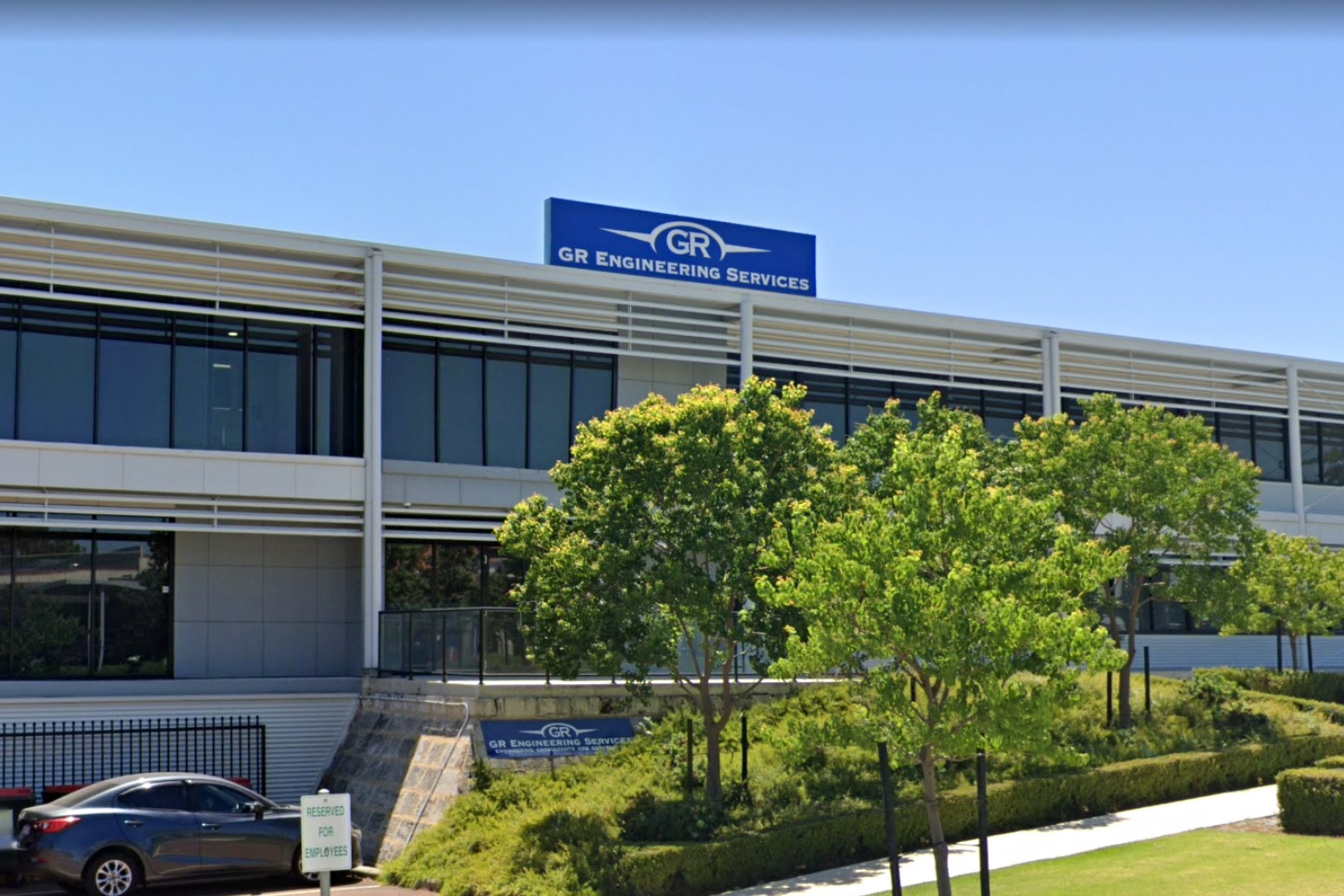
GR books multiple contracts, Brightstar reaches FID

Tony Patrizi-led GR Engineering Services has secured multiple EPC contracts, with one of these enacted courtesy of Brightstar Resources’ Goldfields Hub reaching FID.

Continue Reading

Business

Sunday Times best places to work list 2026: 22 South West companies named

Published

on

Business Live

All the businesses included are headquartered in the West Country

The team at Goughs Solicitors which is headquartered in Wiltshire

The team at Goughs Solicitors which is headquartered in Wiltshire(Image: Goughs)

A South West brewery group, law firm and free range egg producer have been named among the best places to work in the UK. The annual rankings are compiled by the Sunday Times and its research partner – employee experience platform WorkL – and recognise the country’s top employers.

There were 22 South West companies included for 2026, with businesses across a range of industries such as hospitality, technology, legal, financial services and education.

The list – now in its fourth year – highlights the best small, medium, big and very big organisations for workplace culture – from those with hybrid working policies and career development opportunities to unique initiatives that support staff.

Inclusion is determined by an independent survey that covers six aspects of employee engagement, such as wellbeing, empowerment and job satisfaction, and is voted for by a company’s staff.

Advertisement

West Country pub operator and brewer Butcombe was recognised for the second year running. The Wrington-based group – formerly known as Liberation – said its inclusion reflected “the environment we have worked hard to create”.

Jonathan Lawson, chief executive of Butcombe Group, said: “At the heart of our success is the dedication and collaboration shown by our people every day, whether they are welcoming guests, creating memorable moments, or supporting one another behind the scenes.

“In what continues to be a challenging environment for the hospitality sector, their commitment to delivering exceptional experiences for our customers continues to make a real difference.”

Wiltshire-based law firm Goughs Solicitors, which employs some 130 staff across seven offices, was included for the third year in a row.

Advertisement

“We are incredibly proud to receive this recognition from The Sunday Times,” said Matthew Drew, managing partner at Goughs Solicitors. “To be acknowledged consistently in this way is a real reflection of the firm’s culture and the values that guide us.

“As our people are at the centre of everything we do, we strive to creating a workplace where colleagues feel valued, supported, and empowered to achieve their full potential, both professionally and personally.”

Elsewhere, Cheltenham-based business transformation firm Commercial also made the list. The company employs nearly 300 people and generates an annual turnover of around £98m.

Recent employee-focused developments include the refurbishment of its headquarters, with workspaces tailored to support neurodiverse staff. It also has a multi-faith room and dedicated spaces for employees with children or dogs.

Advertisement
Commercial: Back row: Dean Chester, Katie Lund, Jay Colling, Zaneta Rydzewska, Larrisa Castro. Front Row:  Guy Ward, Craig Baldwin, Jenny Hodgson (People & Culture Director), Simone Hindmarch (Co-Founder and MD), Craig Tomes, Jordan Thomas

Commercial: Back row: Dean Chester, Katie Lund, Jay Colling, Zaneta Rydzewska, Larrisa Castro. Front Row: Guy Ward, Craig Baldwin, Jenny Hodgson (People & Culture Director), Simone Hindmarch (Co-Founder and MD), Craig Tomes, Jordan Thomas(Image: Copyright © 2026 Fred van Leeuwen)

Simone Hindmarch, co-founder and managing director of Commercial, said the recognition was “especially meaningful” because it reflected the culture the business had worked to build over more than three decades.

“This means a huge amount to us because it’s based on what our people think and feel about working at Commercial. Right from the start, we wanted to create a company where people genuinely wanted to come to work, felt connected to the business and each other, and knew their voice mattered,” she said. “To have that recognised in this way is incredibly special.”

In other parts of the South West, Cornwall-based egg producer St Ewe Free Range Eggs also made the list, along with Swindon marketing agency Mole Digital and Exeter construction group Coreus.

Zoe Thomas, editor of The Sunday Times Best Places to Work, added: “In an evolving world of work Britain’s leading employers are helping staff forge careers that count today – and in the future. In turn, the Best Places to Work have the resilience to weather the current economic storms baked in, thanks to engaged workers who go above and beyond with a smile.

Advertisement

“Our winning employers span sizes and sectors – from tiny charities and specialist law firms, to multinational fast-food chains and utility giants, and everywhere in between. The thread joining them is the belief that a happy workforce is a stepping stone to better performance, faster growth, and bigger profits.”

The South West companies on the Sunday Times best places to work list 2026

In alphabetical order…

  1. Awdry Law, Legal Services, Devizes, Wiltshire
  2. Butcombe Group, Hospitality, Bristol
  3. Commercial, Business and Management Services, Cheltenham, Gloucestershire
  4. Compass CHC, Legal Services, Barnstaple, Devon
  5. Coreus Group, Construction and Building Materials, Exeter
  6. Family Adventures Group, Education and Research, Weston-super-Mare, Somerset
  7. Goughs Solicitors, Legal Services, Melksham, Wiltshire
  8. Hall & Woodhouse, Hospitality, Blandford St Mary, Dorset
  9. InterWorks, Technology, Christchurch, Dorset
  10. iplicit, Technology, Bournemouth
  11. Joint Operations, Health and Social Care, Royal Wootton Bassett, Wiltshire
  12. Mole Digital, Marketing and Advertising, Swindon
  13. Oculus Legal Group, Business and Management Services, Bristol
  14. Paragon Skills, Education and Research, Bournemouth
  15. Parmenion, Financial Services, Bristol
  16. Rappor, Construction and Building Materials, Cheltenham
  17. Shaping Lives, Education and Research, Bournemouth
  18. St Ewe Free Range Eggs, Manufacturing of Consumer Goods, Truro, Cornwall
  19. Taxi Studio, Architecture & Design, Bristol
  20. The Cinnamon Trust, Non-Profit Organisations and Charities, Hayle, Cornwall
  21. Xpedite, Defence, Bath
  22. Zestec Renewable Energy, Energy and Utilities, Bournemouth

Continue Reading

Business

The next phase of India manufacturing: HDFC AMC’s Rakesh Sethia breaks down real winners in EMS, aerospace & auto

Published

on

The next phase of India manufacturing: HDFC AMC’s Rakesh Sethia breaks down real winners in EMS, aerospace & auto
India’s manufacturing sector is shifting from basic assembly to deep tech localization, driven by massive domestic demand and targeted policy incentives. In this exclusive interview, Rakesh Sethia, Fund Manager at HDFC AMC, breaks down the multi-year supercycle by explaining where the real structural winners lie across EMS, aerospace, and auto ancillaries, and how to navigate increasingly expensive valuations.

Edited excerpts from a chat with Rakesh Sethia:

How compelling is the India manufacturing story over the next 5–10 years, and what are the biggest structural triggers that can sustain this cycle?
We remain positive on India manufacturing over the next 5–10 years. The biggest structural advantage is India’s large domestic market. Outside China, India is now one of the few large demand pools across categories such as autos, mobiles, air conditioners, solar modules, motors, cement and steel. This scale allows companies to build volumes, localise vendors and gradually become cost competitive.The second driver is policy support through Production Linked Incentive (PLI), capex incentives, infrastructure spending and supply-chain realignment. The story is no longer only about low labour cost. It is now about domestic scale, improving technology depth, better infrastructure, targeted policy support and India’s gradual integration into global supply chains.

Which manufacturing sub-sectors currently offer the best risk-reward — capital goods, industrials, defence, EMS, auto ancillaries, railways, or chemicals?
Most of these manufacturing sub-sectors have structural tailwinds, but the risk-reward differs by valuation and execution visibility.
While we are selectively positive on capital goods and industrials because the cycle is supported by renewables, transmission, electrification, automation and data centres however valuations in general has become very expensive In Electronics Manufacturing Services (EMS), the opportunity is large, but we prefer companies that can move beyond assembly into components, design, testing and exports. In auto ancillaries, we like powertrain-agnostic businesses with higher content per vehicle, premiumisation and export relevance.

Defence and railways are structurally attractive, but valuations and execution cycles need to be watched carefully. Chemicals are more mixed. Commodity chemicals remain cyclical, while specialty chemicals and Contract Research, Development and Manufacturing Organisation still have long-term opportunities from supply-chain diversification.

Advertisement

At the portfolio level, we are not buying only because a sector is attractive. We are focused on bottom-up selection: quality of business, return ratios, execution track record, margins, cash flow, balance sheet strength and valuation comfort.

EMS has emerged as a major market theme over the last two years. Do you believe the opportunity is still underpenetrated, or are valuations now running ahead of fundamentals?
We believe that the EMS opportunity is still underpenetrated, but stock selection is now very important.

The first phase of growth was largely around assembly. The next phase of value creation should come from backward integration into components. Some consumer EMS areas such as mobiles and AC assembly are now relatively more mature. But the component ecosystem is still at a very early stage. For example, PCB manufacturing in India is less than 1% of the US$100bn global market, while import dependence remains above 90%.

This is where the next growth leg can come from. Under the Electronics Manufacturing Services (EMS) scheme, ~₹55,000 crore of investment has already been committed across 46 applications. This should support deeper localisation and higher domestic value addition over time. The opportunity is large, but valuations already reflect a lot of optimism in some names.

Advertisement

Are Indian EMS players now moving up the value chain beyond assembly into design, exports, and higher-margin manufacturing?
Yes, Indian EMS players are moving up the value chain, but this remains a gradual process.

India has moved beyond basic assembly in several areas. Companies are now doing PCB assembly, testing, box-build, tooling, plastics, chargers, battery packs, supply-chain management and early Original Design Manufacturer work. But India is still far from China or Taiwan, where component ecosystems, supplier clusters and design capabilities were built over decades.

The positive change is that policy support is becoming more targeted. ECMS is focused on components and sub-assemblies, while the India Semiconductor Mission is supporting fabs, display fabs, compound semiconductors, ATMP/OSAT and chip design.

The direction is positive, but value creation will be selective. Pure assemblers can grow revenues, but sustainable margins will come from companies that build localisation, design capability, testing depth, vertical integration and export relationships.

Advertisement

Auto ancillaries remain a core manufacturing theme. How are you positioning the portfolio amid EV transition, premiumisation, and export opportunities?
Auto ancillaries remain a core manufacturing theme for us, but we are selective. Our positioning is towards companies benefiting from premiumisation, higher content per vehicle and exports.

We are not playing EV as a binary theme; we prefer powertrain-agnostic businesses. We also like segments where India has a durable advantage, such as forging, casting, machining and precision engineering. So, the focus is on durable growth, export relevance, execution quality and valuation comfort — not just the EV narrative.

Aerospace stocks have seen significant traction in the last 1–2 months. How strong is the tailwind for the sector and are valuations still attractive?
We like aerospace from a top-down perspective. India is one of the fastest-growing aviation markets globally, and local manufacturing of components is still at an early stage. Over time, this can become a meaningful opportunity as global Original Equipment Manufacturers (OEMs) diversify supply chains and Indian companies build precision manufacturing capabilities.

However, listed opportunities are still limited. A large part of the deeper aerospace manufacturing ecosystem is currently in private entities, including certain conglomerates that have stronger integration with OEM supply chains. In the listed space, there are only a few names. Some are too small, while valuations in others have already become expensive. So, the sector tailwind is strong, but public-market risk-reward is not uniformly attractive.

Advertisement
Continue Reading

Business

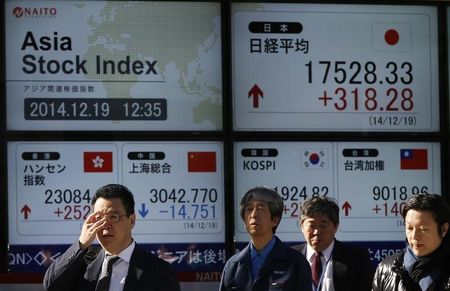
Asia stocks mixed as new US strikes curb Iran peace hopes; KOSPI hits record high

Published

on


Asia stocks mixed as new US strikes curb Iran peace hopes; KOSPI hits record high

Continue Reading

Business

Indigenous entrepreneurs needed to plug Kimberley mining gap

Published

on

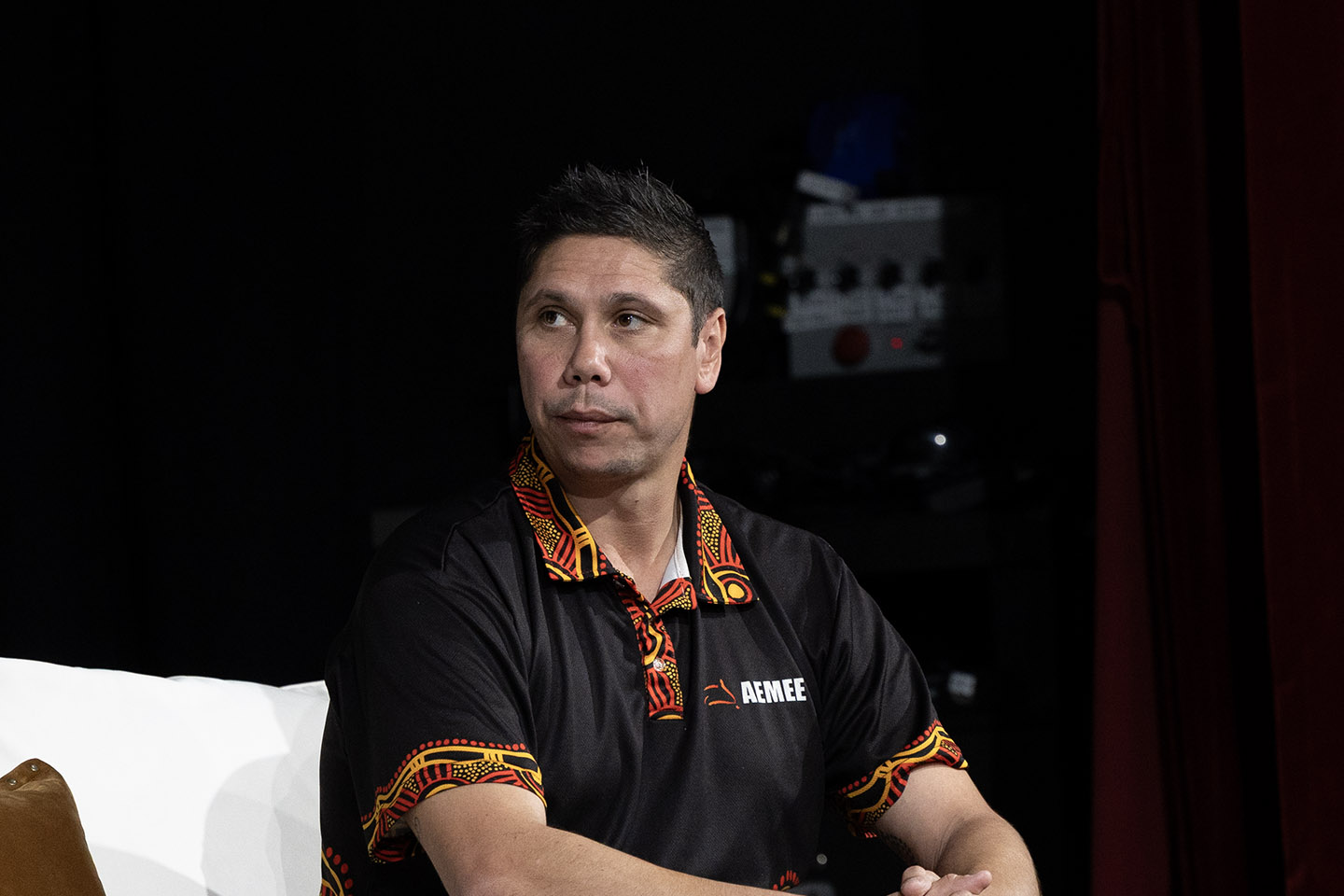
Indigenous entrepreneurs needed to plug Kimberley mining gap

A serious lack of Indigenous businesses operating in the mining industry presents a compelling case for entrepreneurship to plug the gap in the Kimberley.

Continue Reading

Business

Rubio says Iran deal could take days as US launches fresh strikes

Published

on

Rubio says Iran deal could take days as US launches fresh strikes


Rubio says Iran deal could take days as US launches fresh strikes

Continue Reading

Trending

Copyright © 2025