
Business
AST SpaceMobile: Sovereign Satellite Strategy Wins More Contracts; Launch Risks Explored



I am a full-time analyst interested in a wide range of stocks. With my unique insights and knowledge, I hope to provide other investors with a contrasting view of my portfolio, given my particular background.If you have any questions, feel free to reach out to me via a direct message on Seeking Alpha or leave a comment on one of my articles.
Analyst’s Disclosure: I/we have no stock, option or similar derivative position in any of the companies mentioned, and no plans to initiate any such positions within the next 72 hours. I wrote this article myself, and it expresses my own opinions. I am not receiving compensation for it (other than from Seeking Alpha). I have no business relationship with any company whose stock is mentioned in this article.
The analysis is provided exclusively for informational purposes and should not be considered professional investment advice. Before investing, please conduct personal in-depth research and utmost due diligence, as there are many risks associated with the trade, including capital loss.
Seeking Alpha’s Disclosure: Past performance is no guarantee of future results. No recommendation or advice is being given as to whether any investment is suitable for a particular investor. Any views or opinions expressed above may not reflect those of Seeking Alpha as a whole. Seeking Alpha is not a licensed securities dealer, broker or US investment adviser or investment bank. Our analysts are third party authors that include both professional investors and individual investors who may not be licensed or certified by any institute or regulatory body.

Business
(PHOTO) China Unveils 288-Meter Glass Cliff Elevator That Cuts Kids’ Perilous 3-Hour School Trek to 30 Minutes

XUANWEI, China — A new 288-meter glass elevator clinging to the sheer walls of a remote canyon in southwestern China has transformed a dangerous multi-hour mountain climb into a swift, safe journey for local schoolchildren, while simultaneously boosting tourism in one of Yunnan province’s most isolated communities.
The Fuyao elevator, which began operating on July 31, rises along the vertical cliff face of the Nizhu River Grand Canyon in Xuanwei city’s Puli Township. It stands beside the 268-meter Qingyun elevator that opened in 2022. Together the two lifts, combined with a cable car and shuttle buses, have reduced the one-way trip from Nizhuhe village at the canyon floor to Guanzhai Village Primary School on the rim from more than three hours to about 30 minutes.
For generations, children living in the deep valley faced a perilous commute. Nizhuhe village sits at roughly 1,100 meters above sea level. The primary school is perched near 1,650 meters, leaving a vertical drop exceeding 500 meters. Students and parents once negotiated steep, exposed trails, ladders and slippery rock faces. Round trips could approach six hours, and many children boarded at the school, returning home only every 10 days or so.
“The Fuyao is faster and much more spacious than the Qingyun,” said Lei Xin, a 12-year-old from Nizhuhe village who attended Guanzhai Primary School until the previous year, after taking one of the first rides on the new lift.
The Fuyao climbs at about 5 meters per second, completing the ascent in roughly 50 seconds. Its fully transparent 360-degree glass curtain wall offers panoramic views of the canyon and its winding streams. The cabin can carry up to 81 passengers, nearly three times the capacity of the older elevator. Combined, the two lifts move as many as 1,200 people per hour.
Cai Xiong, chairman of Xuanwei Yatuo Tourism Development, the company behind the project, said the new structure’s shaft is 20 meters taller than its predecessor. “The Fuyao goes from the bottom to the top in just 50 seconds, which is nearly twice as fast as the Qingyun, and it can carry up to 81 passengers at a time, nearly double the capacity,” Cai said, adding that the canyon views are unbeatable.
Local residents and students ride free of charge, with a dedicated school commute lane and staff support to keep children separate from tourist crowds. The system functions as what local media have called a “sky school bus.”
The project is part of a broader tourism development that has already drawn more than 1 million visitors since the first elevator opened. Daily visitor capacity in the scenic area has risen from about 4,000 to 15,000 with the second lift in operation. Cai projected that if trends continue, the site could see more than 600,000 tourists next year, with elevator revenue exceeding 3 million yuan.
China already holds the Guinness World Record for the tallest outdoor elevator: the Bailong Elevator in Zhangjiajie National Forest Park, which rises 326 meters. The Yunnan installations are shorter but serve a dual purpose of daily local transport and sightseeing. The Fuyao and Qingyun are outdoor glass elevators fixed to the cliff face, engineered for the humid, foggy canyon environment with multiple power backups and monitoring systems.
Construction of the second elevator began in late 2024. The main structure was completed in 2025, and final work enabled the late-July opening. Ningbo Hongda Elevator, based in Zhejiang province, built both lifts. Engineers had to contend with long travel distances, mountain moisture and structural movement on the steel framework.
Before the elevators, local authorities had tried to improve the trail by cutting footholds and installing chains, yet the route remained hazardous, especially in rain. The combination of sightseeing shuttles, the cliff elevators and the cable car has eliminated the need for that climb for most daily travel.
Around 20 children from Nizhuhe and nearby villages use the route regularly. Guanzhai Primary School serves as a boarding school for students from the surrounding mountain communities. Parents rotate accompaniment duties, and dedicated staff and police help oversee the children’s passages.
The elevators have also changed how residents view their landscape. One 10-year-old student told state media that riding the lift made her realize how beautiful her hometown was. Cai, who grew up in the mountains, recalled walking the dangerous path many times and said safety was a primary motivation for the project.
Tourism growth has brought additional benefits. Job opportunities and higher incomes have followed the influx of visitors drawn by the dramatic canyon scenery, glass bridges, observation decks and the elevators themselves. The dual-lift system has eased congestion that previously built up around the single Qingyun elevator.
Officials emphasize that the infrastructure prioritizes local access. Villagers and students retain free priority use even as tourist numbers climb. The scenic area includes other attractions such as a high glass footbridge and viewing platforms, positioning the canyon as a destination that pairs natural drama with engineering spectacle.
The Fuyao’s 288-meter height and transparent design allow passengers to experience the full vertical drama of the canyon in under a minute. At 5 meters per second, the ride is faster than the original Qingyun, which traveled at about 3 meters per second. The increased capacity and speed address both the practical needs of school transport and the demands of growing visitor traffic.
In a region long isolated by its steep topography, the elevators represent a practical solution that also generates economic returns. The shift from a life-threatening trek to a short, scenic ride has altered daily routines for families in Nizhuhe. Children who once spent hours climbing can now reach class more reliably and return home more frequently.
As the second elevator settles into regular service, local leaders expect the combined system to sustain both educational access and tourism growth. The “sky school bus” continues to carry students upward each school day while offering visitors a brief, dramatic ascent along one of Yunnan’s most striking canyon walls.
The project illustrates how targeted infrastructure can address long-standing isolation in China’s mountainous interior. For the children of Nizhuhe, the glass elevators have turned a once-dreaded journey into a routine half-hour trip that ends with a view of the canyon they once had to climb.

StubHub: Still A Buy, Still Strong, Still Underrated

InvestingPro’s Fair Value spotted TTM’s 38% drop before it happened

SYDNEY — A New South Wales tribunal has become the first known legal body in Australia to explicitly factor the potential impact of artificial intelligence on the job market into a worker’s compensation payout, awarding an injured former warehouse worker nearly $1 million after finding his future earning capacity had to account for growing workplace uncertainty tied to AI.
The NSW Personal Injury Commission assessed earlier this month that Andrew Duong, a 34-year-old former warehouse worker for Aldi and a home delivery service, suffered damages totaling $950,000 following a head-on car collision on his way to work in 2023. The award included $400,000 specifically tied to Duong’s future economic loss, after the commission found he could continue working only with significant restrictions, and that his ongoing injuries and pain would further limit his ability to find alternative employment if he were to lose his current position.
Duong was working roughly 70 hours per week across his warehouse roles for Aldi and the home delivery service before the crash. The collision caused injuries to his right hand and wrist, shoulder, elbow and lower back, along with a psychological injury, and required two separate operations on his wrist. He ultimately lost his position at Aldi because he was not medically cleared to return to full-time work, though he remained employed by the delivery company on reduced hours following the accident.
Commission member Philip Carr, who assessed the case, found that Duong had 33 years of working life remaining that would be affected by his reduced capacity. Carr determined that Duong should receive what he described as a “significant buffer” to account for broader uncertainty surrounding his future earning potential, explicitly citing the disruptive potential of artificial intelligence as one of several contributing factors. “[And] with the uncertainty of any occupation in today’s workforce, especially with the advent of artificial intelligence and its workplace challenges during his working life, which requires an allowance for his future continuing loss of capacity,” Carr wrote in his determination.
Importantly, the tribunal did not find that artificial intelligence had already cost Duong his job, nor did it predict with certainty that AI would do so in the future. Instead, Carr’s reasoning centered on the idea that AI-driven disruption could contribute to broader job market uncertainty in the years ahead, a dynamic that could disproportionately affect an injured worker who requires greater workplace accommodations than an uninjured colleague performing the same role. Carr identified artificial intelligence as one of several considerations factored into his overall assessment of Duong’s future earning capacity, alongside his physical injuries, ongoing medication needs, and the general risk that he could eventually lose his current, accommodated position.
The ruling arrives amid broader national debate over how significantly artificial intelligence is currently reshaping, or is likely to reshape, the Australian labor market. Dr. Leonora Risse, an associate professor in economics at Queensland University of Technology, said substantial uncertainty remains regarding AI’s overall impact on employment. “There’s no one definitive clear result. In some ways it’ll be positive, in other aspects, it will be negative,” Risse said. She noted that even in industries or roles not directly threatened by automation, AI is still likely to reshape the specific tasks and skills required within many jobs. “Work and tasks are going to look very different,” Risse said, adding that labor markets have historically undergone continuous change in response to technological shifts of various kinds.
The tribunal’s decision follows the Australian federal government’s first-ever formal analysis of AI’s impact on the national jobs market, which found no clear evidence of broad, AI-driven disruption within Australia’s labor force to date. Modelling conducted by the Department of Employment and Workplace Relations suggested that employment in occupations more heavily exposed to AI technology was running approximately 2% lower by February than would have been expected under pre-ChatGPT employment trends. However, the department cautioned repeatedly that this finding did not constitute proof that AI itself had directly caused job losses, noting that occupations more exposed to the technology had already been experiencing slower employment growth even before ChatGPT became widely available to the public. The government indicated it would continue monitoring available data as further evidence emerges regarding AI’s longer-term effects on the labor market.
A separate economic analysis from consultancy firm Deloitte, referenced alongside coverage of the Duong ruling, suggested that the organizations most likely to succeed amid AI-driven workplace changes will be those that effectively combine human judgment with machine capabilities, with recruiters interviewed for that report emphasizing that human decision-making will remain a critical factor even as AI tools become more deeply integrated into various industries.
The Duong case is likely to draw significant attention from personal injury lawyers, insurers and tribunal members across Australia, given its status as what is believed to be the first instance of a legal body explicitly incorporating AI-related job market uncertainty into a formal compensation calculation. Legal and insurance industry observers may view the ruling as an early indicator of how tribunals and courts could increasingly grapple with quantifying the economic risk artificial intelligence poses to injured workers’ future earning capacity, particularly as AI adoption continues expanding across a broader range of industries and job functions.
As the debate over AI’s economic and employment impact continues to develop in Australia, both within government policy circles and now within the legal system itself, further cases addressing similar questions of AI-related occupational uncertainty may follow, particularly as additional workers navigating injury-related compensation claims seek to account for the same kind of long-term labor market unpredictability that shaped the commission’s assessment in Duong’s case. The federal government has indicated it considers it too early to draw firm conclusions about AI’s current or future effect on job losses in Australia, but has committed to continuing to monitor emerging data as the broader technology continues to evolve and become more widely adopted across the national workforce.

Nvidia: It's All About SpaceX Now
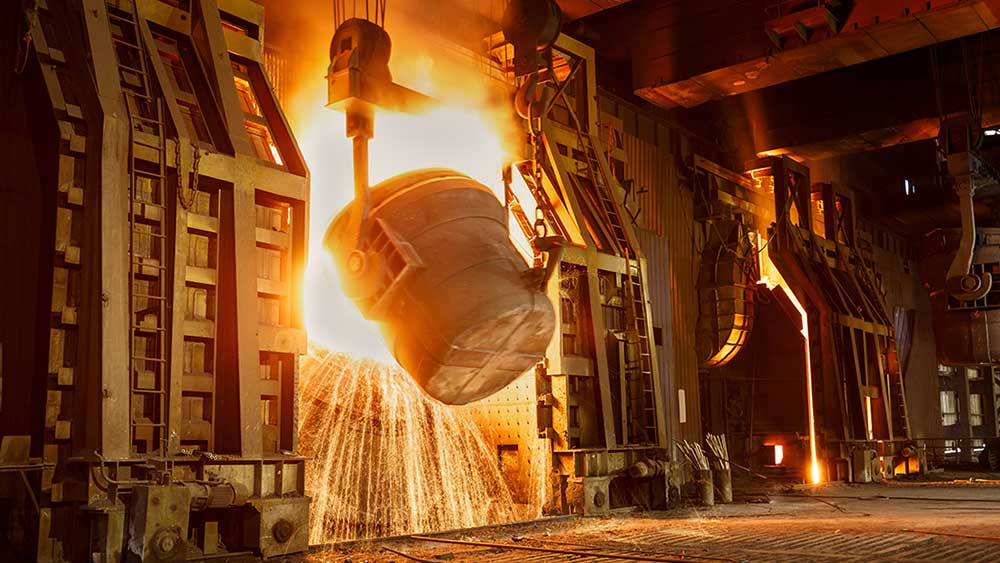
Nucor, Steel Dynamics, Cleveland-Cliffs and Century Aluminum could be winners from U.S.-Canada trade talks breaking down. Last week those stocks tumbled on the prospect of a Canada trade deal that would lower U.S. tariffs on steel and aluminum. New 50% tariffs on a $20 billion worth of Canadian goods, including liquor, electrical equipment and hockey gear, took effect on Saturday.…
Copyright ©2026 Investor’s Business Daily, LLC. All rights reserved. 87990cbe856818d5eddac44c7b1cdeb8
Business
GoFundMe for Lindsay Clancy’s Parents Tops $1 Million as Murder Trial Draws Polarized Public Reaction

PLYMOUTH, Mass. — A GoFundMe fundraiser established to help the parents of Lindsay Clancy, the Massachusetts woman on trial for killing her three children, has surpassed $1 million in donations, drawing support from more than 27,000 contributors even as the campaign has sparked significant public debate.
The fundraiser, titled “The Musgrove Family Fund,” was created to support Mike and Paula Musgrove, Clancy’s parents, who organizers say have depleted their savings while remaining close to their daughter throughout the more than three-year legal process following the January 2023 deaths of Clancy’s three children in the family’s Duxbury home. According to the campaign page, the fund is intended to cover “accumulated costs of travel, lodging, living expenses, and other family expenses” the Musgroves have absorbed while supporting their daughter through pretrial proceedings and her ongoing murder trial.
The fundraiser was started by Brandee Mulligan, who launched the campaign Aug. 14 with an initial goal of $500,000. According to Court TV, by Aug. 17 that goal had already been raised to $2 million after donors had contributed more than $849,000 within just a few days of the campaign’s launch. As of the most recent update, the fund had raised $1,003,758, according to Fast Company.
Mulligan has been explicit in clarifying what the donated funds can and cannot be used for, given GoFundMe’s policies regarding fundraising connected to individuals facing criminal charges. “You can’t do that,” Mulligan told her followers on social media, addressing questions about whether donations could go toward Clancy’s legal defense. “You cannot make GoFundMes that support legal stuff.” A GoFundMe representative confirmed to Fast Company that the campaign has been verified and that funds will go directly to Mike Musgrove as the designated beneficiary, though the platform did not offer detailed comment on how the fundraiser fits within its broader policy framework. GoFundMe maintains a policy against fundraising for the legal defense of anyone accused of a violent crime, though the platform’s terms do not explicitly address fundraisers benefiting family members of accused individuals rather than the accused person directly.
The campaign page itself addresses the parents’ continued support for their daughter directly, without asking donors to weigh in on the underlying criminal case. “They have not walked away from their daughter,” the page states, “and they have never been unclear about why: they love her. Nothing about this fund asks anyone to share their view of Lindsay or the criminal case.”
Among the fundraiser’s notable contributions, a $10,000 gift was recently listed on the campaign page, according to Newsweek, part of a wave of both large and small donations that have continued arriving even as the fundraiser has drawn public scrutiny.
Reaction to the fundraiser has been sharply divided. According to Newsweek, supporters of the campaign argue that the Musgroves have endured significant emotional and financial hardship while remaining steadfastly committed to their daughter throughout the legal process, and that the fund simply provides practical relief for costs unrelated to Clancy’s legal defense. Critics, meanwhile, have questioned the broader appropriateness of raising substantial sums of money for relatives of a woman who has admitted to killing her three children, even as she maintains a not-guilty plea based on her defense’s argument that she was experiencing severe postpartum psychosis at the time of the killings.
Clancy, 36, has acknowledged in court documents that she strangled her children — Cora, 5; Dawson, 3; and 8-month-old Callan — but has pleaded not guilty to three counts of first-degree murder, arguing she should not be held criminally responsible due to the severe mental illness her defense says she was experiencing at the time. Her trial, now well into its fourth week in Plymouth Superior Court, has drawn extensive national attention, with thousands of people following daily testimony and case developments across social media platforms.
Paula Musgrove is expected to provide testimony offering a family member’s firsthand perspective on Clancy’s mental state and the changes she observed in her daughter in the period leading up to the killings, as the defense continues building its case that Clancy’s actions stemmed from a profound mental health crisis rather than deliberate intent.
The current fundraiser for Clancy’s parents is not the only significant crowdfunding effort connected to the case. A separate GoFundMe campaign established shortly after the killings in 2023 to support Patrick Clancy, Lindsay’s husband and the father of the three children who died, also surpassed $1 million in donations at the time, according to earlier reporting. That fund, created and managed by Matthew Glaser, drew contributions from more than 15,000 individuals, families, corporations and community groups, with donations ranging from as little as $15 to as much as $7,500. Organizers of that earlier fund said the money was intended to help Patrick Clancy cover medical bills, funeral services and legal expenses, given that he would be unable to work for an extended period following the tragedy. Donors to that campaign left messages of support and solidarity, including one from a group at Massachusetts General Hospital, where Lindsay Clancy had previously worked as a nurse, which contributed $5,125 to the fund.
As the current fundraiser for the Musgroves continues climbing toward its stated $2 million goal, the scale and speed of the donations reflect the broader intensity of public interest surrounding the Clancy case more than three years after the deaths first drew national attention. Whether the fundraiser continues its rapid pace toward its full fundraising target is likely to remain closely tied to ongoing developments in the trial itself, which continues in Plymouth Superior Court as jurors weigh extensive testimony regarding Clancy’s mental state at the time of the killings against prosecutors’ arguments that she bears full legal responsibility for her actions.
Business
ChatGPT on Mac Can Now Read and Reply to iMessages With New Plugin Amid Apple-OpenAI Legal Fight
OpenAI has released a new plugin that lets ChatGPT read, search and send messages through Apple’s Messages app on Mac, an integration that arrives at a notably tense moment in the relationship between the two technology companies, according to multiple outlets covering the rollout.
The Apple Messages plugin, released Aug. 20, allows ChatGPT to interact with iMessage, SMS and RCS conversations stored on a Mac, enabling users to search past messages, summarize conversations, draft replies, and send messages directly through the app on their behalf. According to Dataconomy, the integration is available across all ChatGPT subscription tiers, including free accounts, and functions within the ChatGPT Work and Codex modes of the macOS desktop application.
The feature carries specific hardware and software requirements. According to MacRumors, the plugin requires an Apple silicon Mac and does not support older Intel-based machines. Users must also grant several system-level permissions for the integration to function, including macOS Full Disk Access, along with access to contact names and automation controls. OpenAI has published example prompts to demonstrate the plugin’s intended use, including one that instructs the assistant to “check my calendar and reply to [name] with a few times I’m free for dinner next week.”
According to 9to5Mac, OpenAI built the integration using established macOS system technologies, specifically AppleScript and the operating system’s Accessibility settings, the same underlying tools that power other ChatGPT desktop features such as its broader Computer Use capability. Archyde similarly confirmed that the plugin relies on sanctioned, officially documented Apple automation interfaces rather than any reverse-engineered method of accessing Apple’s messaging protocols.
Privacy protections built into the feature center on a default approval requirement before any message is sent. According to Business Standard, ChatGPT asks users to confirm both the content of a proposed message and its intended recipients before it is actually transmitted, giving users a final opportunity to review outgoing communications. Users do have the option to grant standing, persistent approval for a specific chat, allowing future messages in that conversation to be sent without repeated confirmation prompts. However, OpenAI has explicitly cautioned against doing so. According to 9to5Mac, the company’s plugin guide warns that persistent approval “removes the final opportunity to review a message before it is sent,” and recommends that users retain per-message approval, particularly for conversations that could potentially contain misleading or untrusted instructions.
OpenAI has emphasized that the plugin was designed with privacy considerations in mind, particularly around how message data is processed. According to Dataconomy, the company said the plugin processes data locally on the user’s device and avoids creating any general, standing index of all of a user’s messages. Engadget’s coverage of the rollout similarly noted that the feature operates in an opt-in manner, requiring users to actively install and configure the plugin through the ChatGPT Plugins interface, where it is listed under the platform’s Public category, rather than being enabled automatically for existing users.
The integration also documents a known technical limitation involving certain automation configurations. According to Implicator.ai, OpenAI has acknowledged that tasks configured with “Full access” permissions, which disable standard approval prompts, can prevent the Apple Messages plugin from displaying the confirmation screen it needs before sending a message. OpenAI’s guidance for resolving that issue instructs affected users to “switch to Ask for approval or Approve for me and try again.”
The plugin’s release comes at a particularly complicated moment in the broader relationship between OpenAI and Apple. According to Archyde and MacRumors, Apple has filed a lawsuit against OpenAI alleging theft of trade secrets, with Apple’s filing claiming that OpenAI deliberately targeted and hired away Apple employees specifically to obtain confidential corporate information. Neither company has publicly confirmed the extent to which that ongoing legal dispute directly involves or is separate from the newly released Messages integration, and Apple has not issued any public statement specifically addressing OpenAI’s new iMessage-related plugin, according to Blockonomi.
The move also revives longstanding questions about third-party access to Apple’s Messages ecosystem, a topic that has drawn scrutiny in the past. Archyde noted that in 2024, Apple repeatedly disabled the third-party chat app Beeper Mini’s access to iMessage until the app’s developers ultimately abandoned efforts to restore that integration, an episode widely viewed at the time as evidence of Apple’s historically cautious approach toward allowing outside applications to interact directly with its messaging platform. Because OpenAI’s new plugin relies on sanctioned macOS automation frameworks rather than any workaround targeting Apple’s underlying messaging protocols directly, the situation differs technically from the earlier Beeper dispute, though Archyde noted that the current legal battle between the two companies adds an additional layer of regulatory and operational uncertainty to the feature’s long-term viability on Apple’s platform.
The Apple Messages plugin is not the only recent example of OpenAI expanding ChatGPT’s access to sensitive, device-level personal data on Apple hardware. According to Blockonomi, OpenAI recently introduced a separate capability allowing ChatGPT to access Apple Health data on iPhone and iPad devices, representing another category of highly personal information the company has moved to integrate into its assistant’s capabilities. Blockonomi characterized the Messages plugin as part of a broader, ongoing pattern in which OpenAI has steadily expanded ChatGPT’s reach into private data repositories across Apple’s broader device ecosystem.
Consumer privacy advocates have raised concerns regarding third-party AI systems gaining access to private communications data, even when such access is governed by permission-based controls, according to Blockonomi’s reporting. OpenAI has maintained that its layered, multi-step authorization process, requiring explicit system permissions alongside default message-by-message send approval, adequately addresses those underlying privacy concerns.
As of this report, Apple has not issued a formal public statement addressing OpenAI’s newly released Apple Messages plugin. With the feature currently limited to Apple silicon Macs running ChatGPT Work or Codex modes, and unavailable within standard ChatGPT chats, on the web, on mobile devices, or through the Codex command-line interface, users interested in trying the integration will need to specifically opt in through the ChatGPT desktop app’s Plugins section, granting the required system permissions before the assistant can begin reading, searching or sending messages through Apple’s native Messages application on their behalf.
World Kinect’s 64% surge validates InvestingPro Fair Value analysis

 ETMarkets.com
The broader technical structure remains range-bound, with Nifty continuing to negotiate an important cluster of resistance immediately overhead. The index has taken support on the rising trendline drawn from the April 2026 lows, keeping the underlying recovery structure intact for now. However, the 24,450–24,750 zone remains a formidable resistance area, as it houses a confluence of the 200-day, 50-week and 100-week moving averages. This makes a sustained move above 24,750 important for the index to regain directional momentum and open room for a stronger extension on the upside. Until that happens, Nifty is likely to remain contained within its broader range. On the downside, the 23,900–24,100 support cluster remains intact; any decisive violation of this zone would weaken the present structure and increase the possibility of renewed corrective pressure.
The coming week is likely to see a quiet to modestly positive start, provided Nifty continues to defend the 24,100 area. However, the index will need to move past the overhead resistance cluster before any meaningful directional strength can emerge. The immediate resistance levels are expected at 24,450 and 24,700, while supports are likely to come in at 24,100 and 23,900.
The weekly RSI stands at 50.11, remaining almost exactly around its neutral 50 mark with no bullish or bearish divergence visible on the weekly chart. The weekly MACD continues to improve: the MACD line is above its signal line, while the histogram remains positive, indicating that underlying momentum has strengthened despite the absence of a price breakout.
Pattern analysis shows Nifty continuing to trade within a large consolidation structure, while the rising trendline from the April low provides an important dynamic support. The more immediate technical challenge comes from the dense moving-average resistance around 24,450–24,750. This concentration of technical levels on either side suggests that a convincing move outside these boundaries will be required before a sustainable trend develops.

Given this setup, aggressive directional exposure may not be warranted while Nifty remains trapped beneath the 24,450–24,750 resistance zone. Participants should remain selective with fresh purchases, protect gains in positions that have moved sharply, and maintain a stock-specific approach rather than chasing broad-market moves. A sustained breakout above 24,750 can justify progressively increasing long exposure, while a breach of 23,900 would call for greater defensiveness. Until either boundary gives way, the coming week is best approached with controlled position sizes, disciplined risk management, and selective participation on both sides of the range.
The following Relative Rotation Graphs compared various sectors against the CNX500 (NIFTY 500 Index), representing over 95% of the free-float market cap of all the listed stocks.
ETMarkets.comETMarkets.comThe Relative Rotation Graph (RRG) shows that the Nifty, Realty, and Media Sector Indices are inside the leading quadrant. While the Media Index is showing a slowdown in relative momentum, these groups may collectively outperform the broader Nifty 500 Index.
The Pharma Index has rolled inside the weakening quadrant. The Midcap and the Energy Indices are also inside the weakening quadrant. Baring some individual performance, the collective performance from these groups may taper down.
The Metal Index has rolled inside the lagging quadrant. The PSE, Infrastructure, and FMCG Indices are also inside this quadrant. However, these groups are showing some improvement in their relative momentum against the benchmark.
The PSU Bank Index has rolled inside the improving quadrant, indicating a likely start of a phase of its relative outperformance. Besides this, the IT, Financial Services, BankNifty, and Services Sector Index are also inside the improving quadrant.
Important Note: RRG™chartsshow the relative strength and momentum of a group of stocks. In the above Chart, they show relative performance against the NIFTY500 Index (Broader Markets) and should not be used directly as buy or sell signals

Khloé Kardashian Teases ‘Crazy’ New Direction For Her Podcast

XRP CLARITY ACT WHITE HOUSE MEETING CONFIRMED!!??!

Seven people, including two police, dead in A66 South Bank crash





-

 Fashion20 hours ago
Weekend Open Thread: Madewell – Corporette.com
-

 Business4 days ago
SMA Solar Technology AG (SMTGY) Q2 2026 Earnings Call Transcript
-

 Tech4 days ago
Qwen3.8-27B runs frontier-class coding agents and reasoning locally, no cloud API required
-

 Crypto World5 days ago
OCC Greenlights Trump Family Crypto Firm for Trust Charter
-

 Crypto World5 days ago
NAVI Prime launches institutional lending framework on Sui
-

 News Videos2 days ago
Don’t Leave Your Financial Future To Chance | August 19, 2026
-

 Crypto World6 days ago
Data of 54K Wallet Users Leaked, Clarity Odds Just 10%: Hodler’s Digest, Aug. 16
-
 NewsBeat6 hours ago
The ‘Lucky Dip Gang’ causing carnage for clicks: After five thugs were killed speeding in the wrong direction on a motorway, GUY ADAMS investigates a sick new trend… and why police aren’t even allowed to pursue them
-

 Business7 days ago
Stephen Curry Trade Rumors Persist as Warriors Insist Superstar Remains Committed to Golden State
-

 Politics6 days ago
Britain is facing a housing disaster
-

 Tech6 days ago
What are the rumors about the AirPods Pro 4?
-

 Business6 days ago
Rebel Creamery files Chapter 11 with $23.8M Van Leeuwen judgment on appeal
-

 Business7 days ago
(VIDEO) Frozen 3 First Look Reveals Anna’s Wedding, Olaf’s New Love Interest And A Mysterious Villain
-
 Crypto World5 days ago
Dow’s 3-Year Winning Run Isn’t a Crash Signal, Still 49% Odds of Double-Digit Gains
-

 Business4 days ago
Stock Market Today: Tech Futures Slide As Treasury Yields Jump; Nvidia, Micron, Sandisk Sell Off
-
 Tech7 days ago
DeepSeek’s innovative harness treats everything as a plug-in
-

 Tech7 days ago
Three new Windows flaws can bypass security, gain system privileges, and even install malware remotely
-
 Tech6 days ago
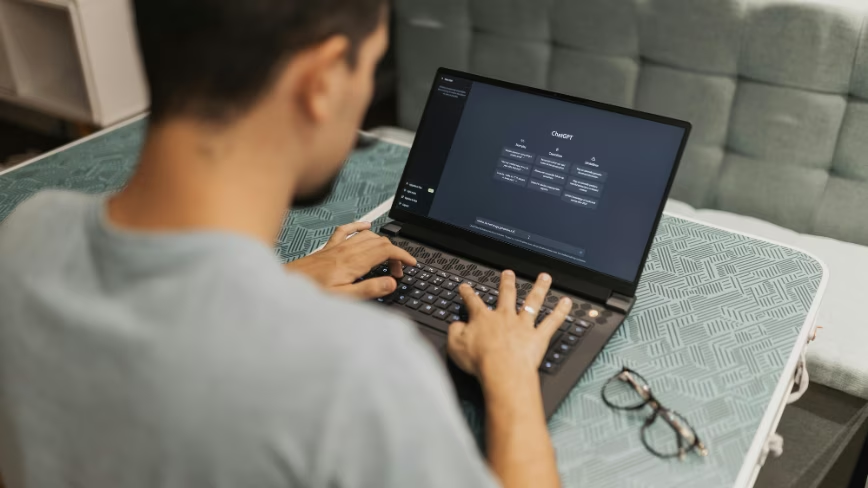
OpenAI’s new ChatGPT feature logs your keystrokes and stores them in plain text
-

 Tech5 days ago
Straight Up the Cliff, Yunnan’s New Fuyao Ladder Turns a Three-Hour Climb Into a 50-Second Ride for Students
-

 Politics3 hours ago
6 months on, Irish renters crushed by effects of government housing bill
You must be logged in to post a comment Login