
Business
At Close of Business podcast July 10 2026



Thornburg Investment Management is a privately owned global investment firm that offers a range of multi-strategy solutions for institutions and financial advisors. A recognized leader in fixed income, equity, and alternatives investing, the firm oversees mutual funds, institutional accounts, separate accounts for high-net-worth investors, and UCITS funds for non-U.S. investors. Thornburg was founded in 1982 and is headquartered in Santa Fe, NM. Note: This account is not managed or monitored by Thornburg Investment Management, and any messages sent via Seeking Alpha will not receive a response. For inquiries or communication, please use Thornburg Investment Management’s official channels.

Investing wisely does not have to be rocket science. It is about discipline and running the numbers. You don’t have to be like a grandmaster chess player playing the game twenty moves ahead of your opponent, you just need to understand how the pieces work.
Analyst’s Disclosure: I/we have no stock, option or similar derivative position in any of the companies mentioned, and no plans to initiate any such positions within the next 72 hours. I wrote this article myself, and it expresses my own opinions. I am not receiving compensation for it (other than from Seeking Alpha). I have no business relationship with any company whose stock is mentioned in this article.
Seeking Alpha’s Disclosure: Past performance is no guarantee of future results. No recommendation or advice is being given as to whether any investment is suitable for a particular investor. Any views or opinions expressed above may not reflect those of Seeking Alpha as a whole. Seeking Alpha is not a licensed securities dealer, broker or US investment adviser or investment bank. Our analysts are third party authors that include both professional investors and individual investors who may not be licensed or certified by any institute or regulatory body.


Commercial baker expands capabilities in cookie category.

Tom Holland stars as Peter Parker, aka Spider-Man in Sony and Marvel’s “Spider-Man: Brand New Day.”
Sony
There’s a new king of the domestic box office.
Sony and Marvel’s “Spider-Man: Brand New Day” webbed up more than $360 million during its opening weekend in the U.S. and Canada, breaking the record for the highest-grossing debut of all time. The previous record was $357 million, set by “Avengers: Endgame” in 2019.
Globally, the latest Spider-Man installment tallied $932 million, shy of the $1.2 billion record still held by “Endgame.”
The Tom Holland-led “Brand New Day” kicked off with record-shattering Thursday preview sales and snared $169.3 million on Friday, including presales, and $101.5 million on Saturday. Sony had initially projected an $84 million Sunday, but moviegoers flocked to theaters, driving ticket sales to $88.7 million for the day.
The film’s opening weekend also marked the biggest opening weekend in Sony Pictures history and the biggest debut for the Spider-Man franchise.
The feat comes even as “Brand New Day” was boxed out of Imax screens, which were snapped up for Christopher Nolan’s and Universal’s “The Odyssey.” Rival premium large formats thrived, however, as Dolby Cinema, ScreenX and 4DX all reported record-breaking ticket sales over the weekend.
“Brand New Day” is on pace to be the fourth billion-dollar film of 2026, joining Pixar’s “Toy Story 5,” Lionsgate’s “Michael” and Universal and Illumination’s “The Super Mario Galaxy Movie.”
Altman Brothers Real Estate Owner Josh Altman discusses LeBron James facing California’s wealth tax despite moving to Philadelphia on ‘Varney & Co.’
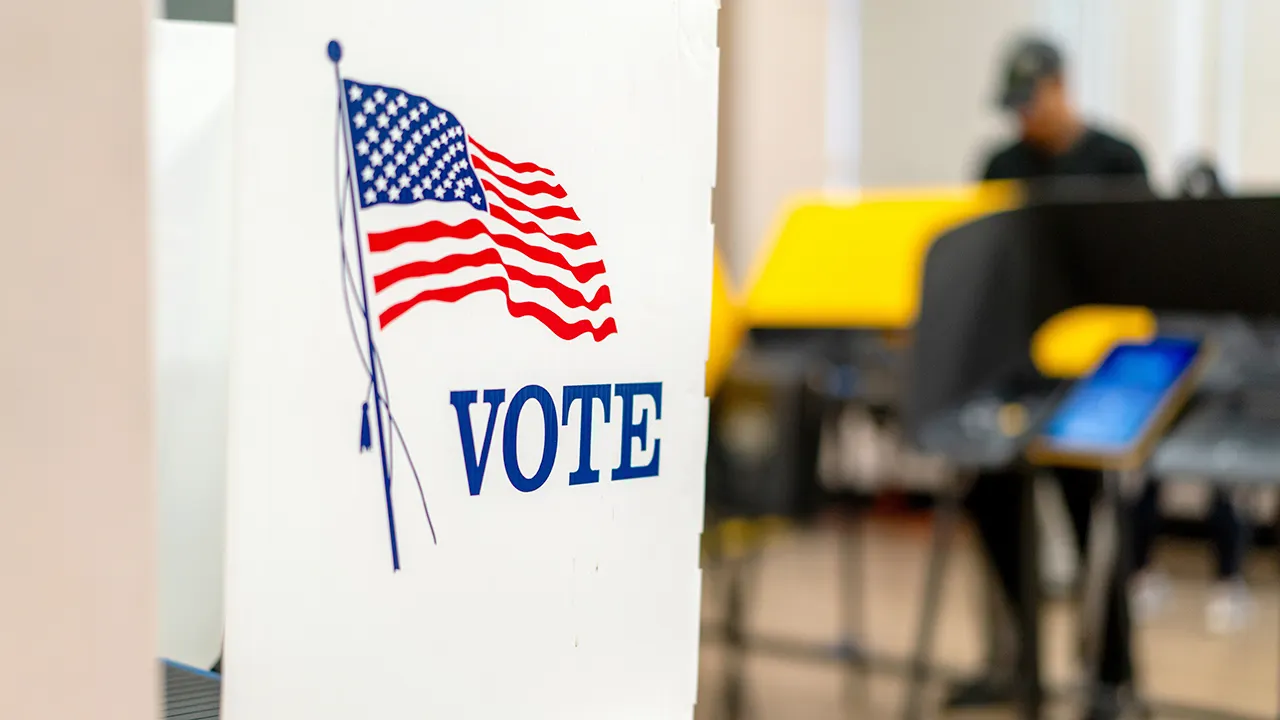
The California Democratic Party is supporting a proposed one-time wealth tax on billionaires of up to 5%.
Californians will decide whether to adopt the proposal during the 2026 midterm election.
The party’s executive board voted in favor of backing the proposal on Sunday, according to The Sacramento Bee.
BILLIONS IN TAXPAYER INCOME ARE LEAVING TWO ICONIC STATES — AS A NEW ECONOMIC MAP EMERGES

A supporter with the Billionaire Tax Now coalition holds a placard during a media briefing in Los Angeles on April 27, 2026. (Frederic J. BROWN / AFP via Getty Images / Getty Images)
The San Francisco Standard reported that according to Jane Natoli, who sits on the party’s resolutions committee, an initial vote barely failed to clear the 60% bar required for ratification, earning 59.2% support. But another vote cleared the threshold, scoring about 61.7% support, the outlet noted.
As the close votes demonstrated, Democrats are divided on the issue.
SOME RICH CALIFORNIANS ARE GIVING AWAY CASH TO SKIRT THE STATE’S PROPOSED BILLIONAIRE TAX
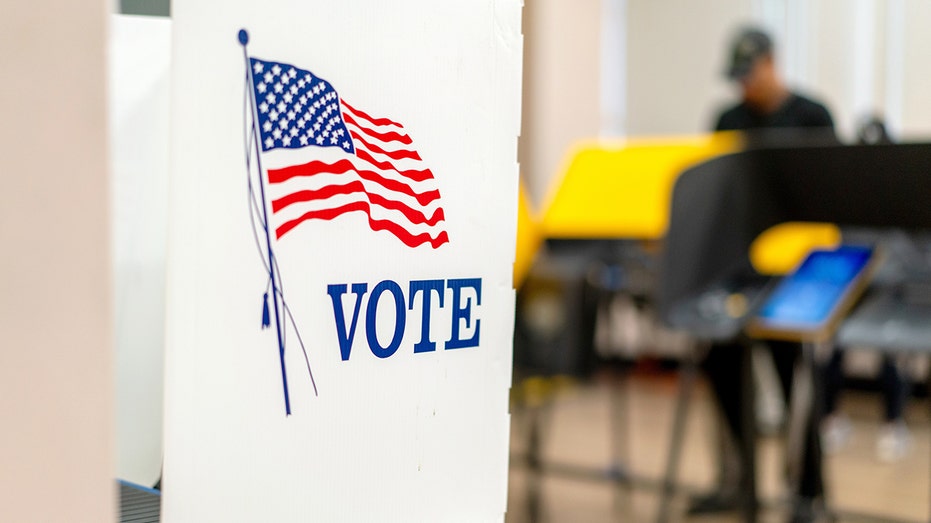
A voting booth as a voter casts their ballot at a polling location inside Echo Park Branch Library during a primary election in Los Angeles on Tuesday, June 2, 2026. (Kyle Grillot/Bloomberg via Getty Images / Getty Images)
U.S. Rep. Ro Khanna, D-Calif., supports the proposal.
But Gov. Gavin Newsom, who is term-limited from running for re-election, has said he will vote against it.

California Gov. Gavin Newsom speaks during a press conference for a bill signing for a housing affordability reforms event in Oakland, California, on July 13, 2026. (Tayfun Coskun/Anadolu via Getty Images / Getty Images)
CLICK HERE TO DOWNLOAD THE FOX NEWS APP
“But I’m voting no because this measure dedicates almost all of the revenue it raises to a single category of state spending,” he wrote in a June Substack post. “So here is what I support: A national billionaires’ tax. A true minimum tax on billionaires — a modern Buffett Rule — that ensures the people at the very top pay at least the tax rate their own workers pay.”
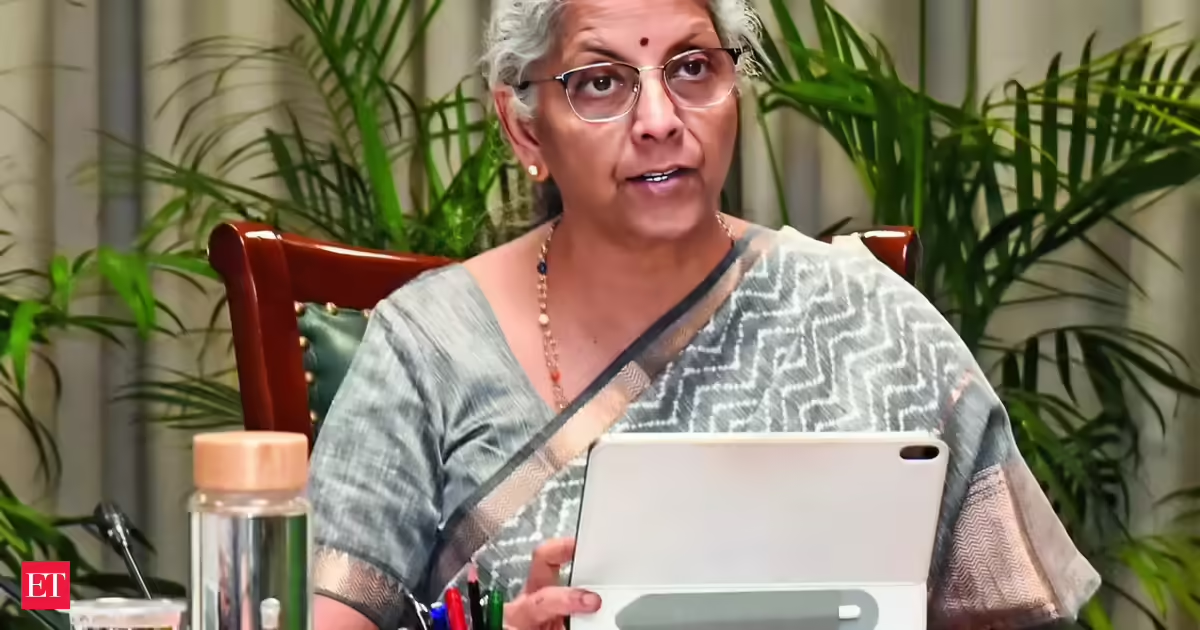
India, like many developing economies, “remains largely peripheral to both the origination and propagation of global imbalances; yet, we continue to face their spill-over effects”, the minister said.
Sitharaman made the statements while representing India at a virtual meeting on the Global Convergence for Growth Summit, presided over by French President Emmanuel Macron, the finance ministry said in a post on microblogging site X.
“In today’s interconnected world, prosperity and challenges are shared, but the consequences of conflicts and uncertainty fall disproportionately on developing countries and the Global South. The situation demands coordinated global action,” the minister said during her intervention at the summit.
“We must strengthen multilateral cooperation to build resilient economies, accelerate sustainable development and ensure inclusive growth that benefits all,” she added.

The summit was held to bring together leaders of advanced and emerging economies to deliberate on ways to support a balanced and efficient global framework. The senior leadership of all the G7 nations and India, Brazil, China, Kenya, South Korea and the International Monetary Fund participated in the summit.
Making her observations on global imbalances, the minister said: “Not all imbalances are alike, some reflect differences in demographics, development stages, resource endowments, or economic structures.””Our focus should, therefore, remain on excessive and persistent imbalances while recognising that the scale of domestic needs varies significantly across countries,” she said.
Medium-term growth, MDB reforms
India’s growth is projected to remain strong at about 7% over the medium term, the minister said, stressing that the country remains the world’s fastest-expanding major economy.
The country’s growth is primarily led by domestic demand, with a largely market-determined exchange rate, she added.
Sitharaman called for better, bigger, more effective and more representative multilateral development banks (MDBs) that can deliver greater financing to developing countries and emerging economies. Bolstering their financing capacity, operational agility and responsiveness will be critical, she said.

EasyJet aligns Apollo and Castlelake deadlines as bidding war nears climax

Not all vessels are deterred from passing through because the Houthi threat is only targeted at Saudi shipping, with the total number sitting at about 50% of pre-attack levels.
But the number of ships loading crude oil for export to Asia passing through has dropped to about four per day, Kpler added, the lowest point since the start of the war.
A spokesperson for Hapag-Lloyd, the global shipping giant, said some of its vessels were still passing through the Red Sea but that it would “monitor developments closely and will adjust the network if circumstances change”.
“If the Strait of Hormuz reopened, most ships could probably leave the region fairly quickly. However, restoring normal cargo flows would take much longer.
“Services have been suspended and ships redeployed elsewhere, so a return to normal flows would most likely take three to four months.”
Despite the talks with Oman, Iran has said that no deal is imminent that would reopen the strait to normal traffic.
Its foreign ministry ministry spokesman Esmaeil Baqaei said any agreement would not lift the current restrictions while US “aggression” continued.
Peter Sand, chief analyst at Xeneta, another ship-tracking company, said the fighting had taken the shipping industry “back to to square one” and that things were in “a terrible state, regardless of which shipping type you’re you’re looking at”.
“The alternatives for getting cargo, whether that’s hydrocarbons or container shipping, are really not great… it is really still troubling times with no clarity and no change of fortunes within sight.”

Chip Motors plans to produce a four- or six-seat low-speed vehicle, which it is calling a “life utility vehicle, named Chip.
Courtesy image
The next big idea in the U.S. automotive industry may be small.
A growing number of companies, including auto giant Stellantis, are betting Americans are ready to embrace smaller, less expensive vehicles amid yearslong affordability concerns for the U.S. auto industry.
But the vehicles aren’t technically “cars.” They’re electric low-speed vehicles, or LSVs, that are essentially a step above a traditional golf cart but below a typical light-duty car or truck sold in the U.S.
“We have seen the popularity of many different form factors of electric, small low-speed vehicles continuing to grow,” Keith Simon, CEO and cofounder of Waev, which owns several LSV brands such as ex-Polaris brand GEM, told CNBC. “I think it’s evident by the number of new entrants across many different vehicle types. There’s a lot of new players. … It’s been growing significantly.”
Attention on such vehicles has been magnified during the past year by President Donald Trump. He has discussed opening U.S. roadways and regulations to better allow for smaller vehicles, including LSVs from Europe and Japan’s “Kei cars,” on U.S. roadways.
“I’m giving all American car companies the right to build what are known as tiny little tiny cars,” Trump said during a speech last week at General Motors’ Milford Proving Grounds in Michigan. “I go over to Europe and I see these little cars all over the place and I say, ‘Why aren’t we making them?’”
Small cars have historically not performed well in the U.S., but those involved with LSVs believe they could be a growth market for Americans who want an affordable, easy-to-drive vehicle for short distances. They also can typically be charged overnight with a traditional household outlet compared with typical, more expensive EVs that need special chargers that can cost thousands of dollars.
Waev’s lineup of GEM low-speed vehicles, starting at
Courtesy image
Reliable data on the U.S. LSV market is limited since of the vehicles don’t need to be registered, but they’re part of a larger “micromobility” segment, which consulting firm McKinsey & Company last year estimated could more than double in size globally by 2030.
“The global micromobility market is on the upswing. McKinsey estimates that the market was worth about $160 billion in 2022; by 2030, it’s estimated to reach $340 billion,” according to its McKinsey’s Center for Future Mobility. That includes North America’s market growing from $20 billion in 2022 to $35 billion by 2030.
For U.S. consumers, companies such as Stellantis’ Fiat, Waev and startup Chip Motors are focusing on electric streel-legal LSVs, many of which are starting around $15,000, a fraction of the nearly $50,000 average price tag for a new traditional car or truck.
Tiny cars, tiny market
LSVs vary in form and can be heavily customized, including the number of seats, electric range and available features, such as optional doors. They’re typically used for short distances, often for people living in closed community settings such as retirement homes or condominium complexes. Their main competition has traditionally been golf carts, not small cars.
“The use case for these kind of vehicles has become more interesting as people have evolved their lifestyles, and a vehicle like this fits into their lifestyles,” Simon said.
The market is loosely regulated compared to the light-duty vehicle market that dominates the U.S.. but the vehicles must not go faster than 25 mph and have to be equipped with standard safety features such as headlamps, turn signals, mirrors and a windshield that conforms to the federal motor vehicle safety standard. They’re not required to have airbags and they’re allowed on roadways with speed limits of up to 35 mph.
Stellantis plans to offer the Fiat Topolino, an all-electric quadricycle vehicle, in the U.S.
Stellantis
“The market demand is here now and you don’t need nearly as much capital to bring a LSV to market,” said Jameson Detweiler, CEO of Chip Motors, which last month revealed a new LSV that’s expected to go into production early next year. “What we’ve seen in the market … is just incredible latent demand.”
Detweiler estimates the street-legal LSV market to currently be in the hundreds of thousands of units in annual sales, but below 500,000. He believes as more companies such as his enter the market, the more awareness and sales will grow.
But for now, they’re small vehicles for a tiny part of the U.S. market, according to Stephanie Brinley, principal automotive analyst at Mobility Global.
“They’re less expensive than a normal car, but they’re not expected to be a normal car, and and people buy them as recreational vehicles,” she said. “There’s great uses for them, but these are not part of of a day-to-day work-life commute for most people.”
New entrants
Detweiler’s company describes its vehicles as a “life utility vehicle,” named Chip. It looks like a beefed-up golf cart with a smiley, digital interactive face. The four-passenger vehicle is expected to start at $15,000 for an entry-level model, and it can also come in a six-seat model.
Detweiler plans to grow Chip to eventually be capable of self-driving technologies. In the meantime, he said the privately funded company expects it to be used more as a second vehicle, with plans to offer a service in which Chip employees can virtually remote into the vehicle to assist with driving and parking, he said.
The Chip “life utility vehicle” positioned between two Ford F-150 pickup trucks.
Courtesy image
“I really value and like the idea of when the future seems fun and promising,” said Detweiler, a Florida native, wearing a Timon and Pumbaa shirt from Disney’s “Lion King.” “A lot of technology is probably headed more ‘Blade Runner.’ We want to head more ‘Jetsons’ era.”
The company expects to begin sales in Miami, which officials say is a popular market for such vehicles.
The Florida coastal city also is where Stellantis’ Fiat brand is first offering its Topolino vehicle, which also starts around $15,000 and features the styling of the Italian brand’s iconic 500 city car.
The Topolino, which translates to “little mouse” in Italian, is actually a quadricycle. It has grown in popularity in Europe and the company is starting to sell it in limited numbers in the U.S.
Fiat CEO Olivier Francois is using the vehicle as a test bed to potentially refocus the famed Italian brand, which has struggled for years in the U.S., to focus on micromobility rather than traditional cars.
“I want Fiat to become the brand of micromobility within Stellantis,” Francois told CNBC. “I want to use America to test and learn. And, hey, if along the way I do some good volumes and good business, it doesn’t hurt.”
2026 Fiat Topolino Dolce Vita.
Courtesy Fiat
The brand re-entered the U.S. market in 2011 after a nearly 30-year absence with its small Fiat 500, but it never become a mass market success like it is in Europe.
In the brand’s first full year in the U.S. in 2012, Fiat sold 43,772 vehicles domestically. Those sales dwindled to roughly 1,300 Fiat vehicles sold last year in the U.S., with its only vehicle being an all-electric version of the Fiat 500.
Francois admits while the 500 EV, starting at $35,700, may be too expensive and too small for many Americans, he remains optimistic about the Topolino testing micromobility in the U.S.
“While everyone is explaining to me that small is a limit in the U.S., I think that now we go so small that it’s going to become exciting. We will see the reaction,” he told CNBC. “The fun thing with Topolino is we double down on small.”
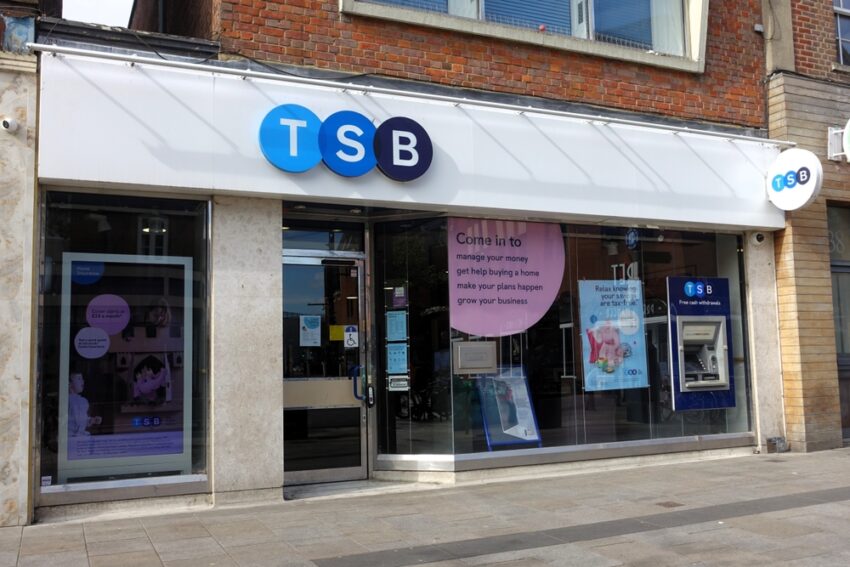
Unions at Santander and TSB have opened negotiations over how staff in duplicate roles will be assessed for redundancy, following the completion of Santander’s acquisition of TSB from Spanish owner Sabadell.
The deal, agreed at £2.65 billion, completed on 30 April, according to Santander UK’s announcement of the completed cash acquisition. The combined group employs about 23,000 people and is targeting £400 million in cost savings.
Santander has not confirmed how many jobs will go across the enlarged business. TSB has already announced 130 redundancies ahead of the formal transfer of staff under the Transfer of Undertakings (Protection of Employment) regulations, and further cuts are expected as the group pursues its savings target.
The two banks use different metrics for assessing staff performance. It is understood that unions at both are in talks about how to create a single system for evaluating individuals in the redundancy process.
One source said: “It goes without saying that in any merger there are going to be synergies that the banks will realise. And there is going to be an impact on jobs.
“There will be duplication of roles. I’m sure every role will be evaluated, wherever there are people doing similar roles.”
A spokeswoman for Santander said: “We have not yet made operational decisions on jobs [as part of the integration]. However, we will ensure that our colleagues are informed of any changes at the appropriate time.”
A spokesman for TSB said: “Whenever we make any changes to our business, the priority is to consult first with impacted colleagues to ensure they’re fully supported.”
Under government guidance on business transfers and TUPE, employees’ jobs, terms and conditions and continuity of employment usually transfer to the new owner, with redundancy among the exceptions. The regulations apply regardless of the size of the business.
Speaking to Bloomberg last year, José García Cantera, chief financial officer of Banco Santander, said cost savings would “come from projects that TSB is currently running that we will not need to do when the two banks merge”.
He said: “Yes, we think there will be savings; yes, we think these savings will offer us better products at lower cost to the customers; but not all of these costs [savings] will come from job cuts or branch closures.”
Sources said staff at Santander were broadly relieved at the merger with TSB, after news reports had at one stage suggested the bank’s Spanish owner might seek to exit the UK market entirely. It is understood some TSB staff have started looking for new jobs in anticipation of cuts.
The redundancy talks follow a separate dispute over working patterns. TSB told its workforce of about 5,000 that they will be required to work in an office three days a week from April 2027, and the TBU union is preparing to take cases to the Employment Tribunal over members it says cannot change their arrangements for personal or medical reasons. TSB did not previously have a formal office attendance requirement.
Santander has also confirmed it will retire the TSB brand and fold the lender into its UK arm, ending a name that dates to a Dumfriesshire parish savings scheme founded in 1810. TSB operates around 175 branches and has roughly five million customer accounts.
Sabadell acquired TSB from Lloyds Banking Group for £1.7 billion in 2015. Mahesh Aditya, chief risk officer of Banco Santander, took charge of Santander UK at the beginning of March to lead the integration.

Amy Ingham
Amy Ingham is a reporter at Business Matters, covering UK business news with a focus on breaking news, business policy, late payments and insolvency. She joined the magazine in 2026 after completing the NCTJ Diploma in Journalism at Harlow College’s journalism school. Her recent reporting includes British Steel’s nationalisation and its impact on SME suppliers, the decline in late payments by large firms, and Insolvency Service director disqualifications. Reach her at aingham@cbmeg.co.uk.

Christopher Phillips kept mum’s body in dining room freezer in Porthcawl for years ‘couldn’t let her go’

Thornburg Municipal Bond Funds Q2 2026 Commentary

Blanche Wins GOP Backing After Rescinding ‘Anti-Weaponization Fund’


-

 Business5 days ago
Why Trees Belong on the Risk Register
-

 Fashion3 days ago
Weekend Open Thread: Wit & Wisdom
-

 Politics3 days ago
Meta enters AI-training agreement with far-right ‘propaganda rag’ Newsmax
-
 Entertainment6 days ago
‘Stargate’ Creator’s New Sci-Fi Series Returns for Season 3 Tomorrow
-

 Crypto World2 days ago
MicroStrategy Post-Earnings CLARITY Act Push Could Add New Catalyst for Its Stock
-

 Politics6 days ago
The Part of the Electric Transition Nobody Wants to Discuss
-

 Business5 days ago
Major shareholder moves on Canyon
-

 Crypto World2 days ago
XRP Ledger v3.3.0 brings five institutional features
-

 News Videos4 days ago
Bitcoin Enters the 3rd Stage of the Bear Market
-

 Crypto World6 days ago
Kraken Enables Retail Access to Jersey Mike’s IPO via Tokenized Shares
-

 Tech7 days ago
New macOS Sequoia & Sonoma security updates for older Macs
-

 Politics4 days ago
Luke Littler’s dominance sparks GOAT debate
-

 News Videos6 days ago
Claude: Build Financial Dashboards in Minutes (2026)
-

 Business6 days ago
Johnson & Johnson agrees to $5.5B settlement over talc cancer claims
-

 Sports4 days ago
Seema Kaliramna Wins Discus Throw Bronze, Takes India’s CWG Medals Tally To 17
-

 Crypto World1 day ago
Crypto PAC spending tops $2M in Michigan House race
-

 Business3 days ago
Trump Announces Hamas Disarmament Agreement as Iran Strikes Kuwait Air Base and US Attacks Pause Overnight
-

 Crypto World3 days ago
New York sues Kalshi over prediction market gambling
-

 Tech5 days ago
Gemini can now summarize the messiest comment threads in Google Docs
-

 Tech1 day ago
ESET tracks rise in malicious AI skills and adaptable malware
You must be logged in to post a comment Login