As this represents the first full quarter of results for Baron SMID Cap ETF ® [BCSM], we thought it would be helpful to introduce ourselves and outline BCSM’s investment philosophy. The ETF is managed by Laird Bieger and Randy Gwartzman. Laird and Randy have co-managed the Baron Discovery Fund (BDFIX) ® together since 2013, and have known each other since meeting in 1997 as classmates at Columbia Business School. Both joined Baron in the early 2000s, where they worked alongside Baron’s current COO, Cliff Greenberg, as analysts on the Baron Small Cap Fund (BSCIX) ® . We believe our long-standing partnership and complementary skill sets have been key drivers of Baron Discovery Fund’s ® * long-term outperformance, and we are excited to bring this proven investment approach to the SMID-cap growth space.
ETF Overview
BCSM is a natural extension of what we have been doing for the past 12-plus years managing the Baron Discovery Fund ® . The key distinction is that BCSM makes its initial investments across both small-cap and mid-cap growth companies ((i. e. SMID)), whereas Baron Discovery Fund ® focuses exclusively on initial investments in small-cap businesses. This expanded mandate gives us the flexibility to initiate positions in slightly more mature companies at the outset. Therefore, the overall size of the companies in BCSM (in terms of the weighted average market capitalization of the companies) is about three times that of Baron Discovery Fund ® .
The Compelling Opportunity in SMID-Cap Growth Stocks
Many SMID-cap companies are under-researched and remain off Wall Street’s radar. By identifying these businesses early, we can invest at the beginning of their growth phase and often at valuations that are discounted relative to larger-cap companies with comparable growth prospects. In addition, SMID-cap stocks tend to be driven more by idiosyncratic, company-specific factors rather than by broader industry or macro-driven events. Together, these characteristics make the SMID-cap growth universe particularly attractive for alpha creation and relative outperformance by fundamental stock pickers like us.
Advertisement
Investment Philosophy
Our investment philosophy at Baron SMID Cap ETF ® is the same as that of Baron Discovery Fund ® . We focus on small, fast-growing businesses with outsized long-term growth potential, durable competitive advantages, exceptional management teams, and compelling valuations. We prioritize companies with high-quality earnings streams — specifically, businesses with recurring, predictable revenue and strong margins. Through a full market cycle, we have found that these characteristics are most likely to drive superior long-term performance versus the broader market. We target market-leading businesses operating in fastest-growing areas of the economy and, as a result, we have historically been overweight the Information Technology sector and certain Health Care sub-industries such as life sciences tools & services and health care equipment. Finally, we take a longer-term view than most of our peers. We believe that by analyzing our investments over a longer time horizon, we can gain an advantage over market participants who are focused primarily on the short term.
Investment Process
Our investment process is designed to take advantage of market dislocations, and it begins not with valuation, but with quality. We call this process “investing in reverse. ” It starts with a simple question posed to each sector analyst on the investment team: “Removing current valuation, what are the companies in your particular sub-industry that best fit the criteria we look for in an investment — typically fast-growing, high-margin businesses with favorable long-term prospects? ” Those conversations lead to a “shadow list” of potential investments we would like to own if the companies are selling at attractive valuation levels. We call it “investing in reverse” because most investors start their investment process by screening for valuation first and then, after narrowing it down to a select group of companies, use certain quality metrics (revenue and earnings growth, operating margins, and balance sheet leverage) to determine which stocks they should consider investing in. We do the reverse. We screen for companies that hit our quality criteria first, and then we patiently wait for their stocks to get to attractive valuation levels where we believe we can generate outsized returns.
This shadow list is constantly refreshed throughout the year. We track these companies closely, listening to their earnings calls and meeting with their management teams as frequently as possible. Because these companies are typically the fastest-growing and highest-margin businesses in their sectors, they tend to trade at premium valuations in normal market environments — levels that do not meet our return hurdle rate. During market dislocations or company specific stumbles unrelated to the main investment thesis, however, almost every stock trades lower. When the market “throws the baby out with the bathwater” we are poised to make investments that historically have produced some of our highest returns.
Risk Management
Complementing our investment process is an equally disciplined approach to risk management, with a singular focus on balancing portfolio construction. Our objective is to generate alpha primarily through bottom-up stock selection rather than sector allocation, while also seeking to protect capital during market downturns.
Advertisement
The following are the key tenets to our risk management process:
Sector exposures are kept broadly aligned with the Russell 2500 Growth Index (the Benchmark), reflecting our belief that superior long-term results are best achieved through fundamental stock picking rather than making thematic or macro-driven sector calls.
We balance the strategy across three growth profiles: “high growth, ” “growth, ” and “other. ” High growth positions typically consist of earlier-stage companies with novel products or services and a higher risk/return profile, typically growing revenue by more than 20% and exhibiting above-market beta. Growth holdings are more established businesses that generate positive free cash flow and tend to have a beta closer to the market. The “other” category serves as the portfolio’s ballast — consisting of lower-beta companies that are less correlated to market movements. Companies in this latter category include special situations—such as activist involvement, management changes, or restructurings—as well as “fallen angels, ” or high quality businesses experiencing temporary share price declines unrelated to their long term fundamentals. We believe this balance has meaningfully dampened portfolio volatility over time for Baron Discovery Fund® and believe it will do the same for BCSM.
We also limit individual position sizes such that no single holding exceeds a 4% weight for an extended period. Typically, the portfolio’s 10 largest holdings will account for around 30% of assets, with our largest holdings emphasizing predictable revenue and cash flow characteristics.
Advertisement
Valuation discipline is another core element of our risk management framework. We conduct extensive fundamental research to assess each company’s intrinsic value over one, three, and five year time horizons, and we invest when we believe a stock has the potential to double over five years. As positions approach our long term valuation targets, we trim and redeploy capital into opportunities offering greater upside potential.
Finally, we believe that the most effective form of risk management is deep knowledge of our portfolio companies. Our research process is rigorous and comprehensive, including regular engagement with management teams, customers, suppliers, competitors, and industry experts, as well as attending conferences and visiting key company assets such as manufacturing facilities, distribution centers, and retail or restaurant locations.
Taken together, these principles form a cohesive and disciplined framework that has guided our decision making across multiple market cycles. We believe that this integrated approach—combining rigorous fundamental research, patient capital allocation, and a steadfast commitment to risk management—positions us to deliver superior long term returns for our investors.
Performance
BCSM declined 10.56% (NAV) in the first quarter, underperforming the Benchmark, which declined 3.52%, by 7.04%. To understand the results, it helps to understand the current market environment.
Advertisement
During the quarter, investors rotated aggressively into a narrow group of companies perceived to be direct beneficiaries of AI capital spending and electrification — what the market has come to call AI “winners. ” At the same time, they sold and shorted companies viewed as AI “losers, ” regardless of underlying business performance. This dynamic was amplified by the growing influence of algorithmic and quantitative traders, whose momentum-driven strategies accelerated the divergence between winners and losers and pushed many stock prices further away from their fundamental values. For bottom-up investors like us, it was a challenging environment — one where strong business results were simply not being rewarded by the market.
That disconnect was evident across our portfolio. Several of our holdings beat their earnings estimates and raised their 2026 guidance, yet saw their stocks decline more than 30% in the period, simply because they were categorized as AI losers. Our software investments were the most significant example of this.
Roughly half of our relative underperformance in the quarter was attributable to software (with the systems and application software sub-industries detracting about 3.5% from relative performance) — an industry where we believe our particular investments are fundamentally misclassified as AI losers, a view we discuss in detail in our Baron Discovery Fund® letter for this quarter. We believe that there are four main categories of software that will co-exist with large language models (LLMs). They include: (1) companies that generate and use deterministic data (only available to the private enterprises, and NOT available to LLMs); (2) highly integrated vertical software providers with extreme domain expertise; (3) companies that combine “atoms and electrons” where the solution needs physical products combined with software; and (4) companies whose software requires regulatory approval such as health care software needing FDA approval.
Offsetting some of the relative underperformance from AI losers was meaningful exposure to several AI winners including optical networking component supplier Coherent Corp. (COHR) , programmable chip maker Lattice Semiconductor Corporation (LSCC) , and power management semiconductor designer Monolithic Power Systems, Inc. (MPWR)
Advertisement
Finally, the outbreak of the Iran conflict drove a sharp spike in energy prices which, when combined with a more challenging consumer backdrop, pressured valuations across higher growth consumer stocks. Given our preference for the fastest growing consumer companies, this headwind affected our holdings more than it did the average portfolio. This impact was compounded by our lack of exposure to the Energy sector—which we typically avoid due to its commoditized nature—resulting in no participation in the sector’s rally (which was up 26.2%), a dynamic we expect to reverse over time. Combined with weakness in Consumer Discretionary, this weighed on relative performance by detracting nearly 2%.
Kratos Defense & Security Solutions, Inc. is a defense technology provider that produces products including unmanned aerial vehicles, hypersonic test vehicles, small turbine and jet engines, solid rocket motors, ballistic missile defense transporters, radio-frequency and microwave electronics, satellite ground station software, high energy lasers, and more. Kratos rallied along with the rest of the defense industry at the start of 2026 after President Trump announced a proposed $1.5 trillion defense budget. The company has also been winning meaningful defense contracts. After shares rallied from about $76 to start the year to nearly $131 at the mid-January high, we sold the position as it had reached our long-term valuation target nearly three years early. This is an example of our risk management process in action. Early in the second quarter we were able to repurchase our position at the low $70’s per share level.
Arcellx, Inc. , is a biotechnology company that together with Gilead Sciences, Inc. (GILD) is developing a next-generation CAR-T cell therapy it calls “anito-cel” for the treatment of multiple myeloma. While we generally do not invest in emerging biotechnology companies, we took a position in Arcellx given that the market is large and proven (currently a $3.5 billion opportunity that could expand to $12 billion or more over time), and because we believe that Arcellx has a safer CAR-T therapy than the currently approved solution. Its primary competitor Carvykti already has nearly $2 billion in sales worldwide in 2025. The issue with Carvykti is that although it’s very efficacious, it appears to cause delayed neurotoxicity ((neurological damage)) in 5% to 10% of patients, and in rare cases ((2% or potentially higher)) Parkinson’s-like symptoms, which is devastating and incurable. The promise of Arcellx’s anito-cel process is that it appears to have similar efficacy to Carvykti, while avoiding these neurotoxicity risks. We were rewarded for our research when Gilead agreed to acquire the company in the quarter (with the transaction to be completed in June).
Advertisement
Coherent Corp. is a vertically integrated provider of laser-based systems. The company’s lasers are used for high power manufacturing and cutting, semiconductor manufacturing, scientific research, and defense (its legacy markets). It is also one of the leading players in photonics, which uses lasers and other components to transmit information at the speed of light. Coherent is the only major western optical transceiver manufacturer connecting servers within data centers. This is clearly a massive new market given the explosion in AI data center buildouts. In the first quarter, the excitement around AI data center buildouts drove performance in companies like Coherent that are enabling this massive wave of installations.
Coherent is led by CEO Jim Anderson who joined the company in June 2024. He has a top-shelf resume, having been the CEO of Lattice Semiconductor Corporation for the prior six years, and worked at senior positions in Advanced Micro Devices, Inc. (AMD) , Intel Corporation (INTC), and Broadcom Inc. (AVGO) before that. We have followed the company since 2010 when it was purely an industrial laser company and have owned it in various other funds at Baron. When we started BCSM, we recognized in Coherent the confluence of terrific leadership and high-quality assets with the massive buildup of AI data centers. The company believes that its existing markets for laser transceivers and optical components are valued at over $50 billion. And new products servicing AI server-oriented markets in particular could be worth an additional $20 billion. These are big opportunities for a company which put up $6.3 billion in revenue in 2025. The opportunities include products like optical circuit switches, co-packaged optics, and multi-rail optical technology. The company benefits from vertical integration as it has high-capacity manufacturing of its own lasers in multiple forms, including Indium Phosphide or InP EML’s (electro-absorption modulated lasers), InP CW’s (continuous wave lasers) and VCSEL’s (vertical cavity surface emitting lasers). Only a handful of companies can do this. And the legitimacy of Coherent’s portfolio was sealed with a $2 billion investment from NVIDIA Corporation (NVDA) made in March 2026 to expand supply and U. S. -based manufacturing of these optical technologies. We believe that over the next five years, Coherent will more than double its revenues and cash flow.
Shares of Netskope, Inc. , a cloud security and networking platform for enterprises, were down due to a combination of sector-wide and technical factors rather than fundamental weakness. The entire application software sub-industry experienced a sharp drawdown as investors weighed AI disruption risks, and recent IPOs like Netskope bore the heaviest losses. Adding to the pressure, Netskope’s lock-up expiration in mid-March made roughly 390 million shares eligible for sale, creating a supply overhang that coincided with the worst of the software industry sell-off. The business itself performed very well — fiscal fourth quarter (ended January 31, 2026) revenue grew 32%, annualized recurring revenue (ARR) reached $811 million and grew 31%, the company posted record quarterly net new ARR and the company achieved positive free cash flow for the first time. Management guided fiscal 2027 revenue above consensus expectations. We maintain conviction in Netskope’s long-term positioning in the secure access server edge market, where demand for securing cloud and AI workloads continues to grow, and view the current valuation as disconnected from the company’s growth trajectory and competitive standing.
Advertisement
Shares of Flutter Entertainment plc , the world’s largest online sports betting and gaming operator that owns FanDuel, detracted during the quarter and we exited our position. FanDuel’s handle decelerated during the fourth quarter as an extraordinary NFL hold rate created recycling headwinds that persisted longer than expected. The impact of unfavorable customer outcomes was compounded by ill-timed promotional reinvestment that failed to re-engage customers. As a result, trends in early 2026 have remain challenged. The market further discounted the stock on a $300 million prediction markets investment embedded in 2026 guidance with no offsetting revenue. The core business economics remain compelling over the long term and FanDuel’s #1 competitive position is intact, but we exited our position in favor of DraftKings Inc. (DKNG) DraftKings is a pure-play U. S. business with higher growth, cleaner FCF conversion, and a vertically integrated prediction markets exchange – a structural advantage if prediction markets prove to be a durable opportunity.
Shares of ServiceTitan, Inc. , a leading business management software platform for the trades, detracted from performance in the quarter. The company reported strong fiscal Q4 2026 earnings and gave preliminary fiscal year 2027 guidance that was ahead of expectations. Despite these strong results, the stock was weak due to industry-wide AI fears that are hard to disprove in the near term around the potential for AI companies like Anthropic (ANTHRO) to negatively impact software businesses. We sold the position to re-allocate to higher conviction SMID-cap software ideas.
We initiated a position in Waystar Holding Corp. , a provider of revenue cycle management software (RCM) to health care providers. Waystar has an AI driven, end-to-end suite of solutions that saves their clients massive amounts of working capital costs by getting claims submitted quickly and correctly, and by automating insurance appeals when necessary. With the company trading at under 11 times adjusted cash flow, while also growing cash flow in the low teens, we believe the company is competitively advantaged and very inexpensive.
We increased our position in Samsara Inc. following its fourth quarter results, which reinforced our conviction in the durability of its competitive position. Samsara is an “atoms plus electrons” winner in software. The company has built a proprietary data asset and hardware-based sensor network that, in our view, cannot be replicated by LLMs alone. With likely more than 4 million connected vehicles on the road, millions of asset tags deployed on smaller products, and approximately 25 trillion data points captured annually, Samsara is leveraging its edge sensor network to train purpose-built AI models that drive measurable returns on investment (ROI) for its customers. Critically, this dataset compounds over time. As the network grows denser, Samsara is able to release increasingly powerful versions of its products, including over 40 AI-driven safety detections, smaller and more cost-efficient asset tags, and intelligent preventative maintenance recommendations. These improvements are widening the gap relative to competitors, accelerating market share capture, and strengthening pricing power. Finally, Samsara’s asset-oriented business model — which scales with physical infrastructure rather than white-collar headcount — insulates it from the labor disruption that AI may bring to other sectors, while positioning it to grow alongside secular tailwinds such as energy infrastructure expansion and data center buildouts.
We increased our position in Dynatrace, Inc. , a provider of “observability” software which uses its own proprietary AI model to predict network and application problems so they can be remediated before they become major issues. Dynatrace is used by many of the world’s largest enterprises, including airlines, banks and defense companies. We believe that the company is a great deterministic data-oriented company, meaning that it uses data that it generates, and which is not available to general LLM providers. Dynatrace benefits from huge competitive advantages as it is complex to implement and therefore very “sticky” and hard to replace with alternative solutions. Customers have also attested to generating extremely high ROIs in Dynatrace. However, given the broad-based sell-off in software stocks, this great company is trading at a rock-bottom multiple (13 times free cash flow, with free cash flow expected to grow in the mid-teens for the next few years).
We added to our position in Guidewire Software, Inc. during the quarter. Overall, our thesis on Guidewire is playing out as expected. Cloud activity is robust and accelerating, with ARR growing through new customer wins, expansions, and migrations of the existing customer base. The approaching end-of-life of on-premise support, combined with strong references from marquee customers such as Liberty Mutual, the Hartford, and Sampo, should further accelerate the shift to the cloud. The company is also ramping investment in product development, which we expect to drive cross-sales into its deep and sticky installed base. We view AI as a meaningful tailwind for Guidewire — helping accelerate product releases and reduce implementation costs, which have historically been a barrier to broader adoption. Despite being temporarily grouped into the AI loser bucket by the market, we believe Guidewire is in fact a vertical domain AI winner. While long-term multiple assumptions remain a point of debate, we believe the stock is worth at least $400 per share when accounting for the company’s free cash flow potential in the next four to five years.
We sold our positions in Penumbra, Inc. , Clearwater Analytics Holdings, Inc. , and Exact Sciences Corporation as all three companies agreed to be acquired.
We sold our position in Zscaler, Inc. , a security software company that provides zero-trust network access to the cloud, corporate network resources and applications. We reallocated capital to increase the Fund’s investment in Netskope, Inc. , which provides similar services but is earlier on in its growth trajectory.
Outlook
Despite the challenging quarter, the fundamentals of our portfolio companies remain strong. While stock prices can diverge from underlying business performance in the short term, we do not believe this is a sustainable steady state. Over a full market cycle, it is our conviction that stocks ultimately reflect future free cash flows — not narratives. Given our focus on companies that combine high growth with strong free cash flow generation, we believe intrinsic value will assert itself over time. The AI winner versus AI loser dynamic that drove so much of the market behavior this quarter will not last forever, and when the market returns to rewarding fundamental performance, we believe our portfolio is well positioned to benefit.
Advertisement
Sincerely,
Randy Gwartzman, Portfolio Manager
Laird Bieger, Portfolio Manager
References
The Russell 2500™ Growth Index measures the performance of small to medium-sized U. S. companies that are classified as growth. The Russell 3000® Index measures the performance of the broad segment of the U. S. equity universe comprised of the largest 3000 U. S. companies representing approximately 98% of the investable U. S. equity market. All rights in the FTSE Russell Index (the “Index”) vest in the relevant LSE Group company which owns the Index. Russell® is a trademark of the relevant LSE Group company and is used by any other LSE Group company under license. Neither LSE Group nor its licensors accept any liability for any errors or omissions in the indexes or data and no party may rely on any indexes or data contained in this communication. The Fund includes reinvestment of dividends, net of withholding taxes, while the Russell 2500™ Growth and Russell 3000® Indexes include reinvestment of dividends before taxes. Reinvestment of dividends positively impacts the performance results. The indexes are unmanaged. Index performance is not Fund performance. Investors cannot invest directly in an index.
The performance data in the table does not reflect the deduction of taxes that a shareholder would pay on Fund distributions or redemptions of Fund shares.
Baron Discovery Fund’s annualized returns for the Institutional Shares as of March 31, 2026: 1-year, 5.66%; 5-year, (2.20%); 10-year, 13.41%.
Cumulative performance ((%)) for periods ended March 31, 2026
Advertisement
ETFMarketPrice ¹,²
ETFNAV ¹,²
Russell2500GrowthIndex ¹
Russell3000Index ¹
QTD
(10.75)
(10.56)
(3.52)
(3.96)
Since Inception((12/12/2025))
(12.13)
(12.24)
(5.73)
(3.90)
Performance listed in the above table is net of annual operating expenses. The total annual fund operating expense ratio as of December 5, 2025 was 0.75%. The performance data quoted represents past performance. Past performance is no guarantee of future results. The investment return and principal value of an investment will fluctuate; an investor’s shares, when redeemed, may be worth more or less than their original cost. Total returns assume the reinvestment of all distributions and the deduction of all fund expenses. Current performance may be lower or higher than the performance data quoted. For performance information current to the most recent month end, visit BaronCapitalGroup. com or call 1-800-99-BARON.
¹ The Russell 2500™ Growth Index measures the performance of small to medium-sized U. S. companies that are classified as growth. The Russell 3000® Index measures the performance of the broad segment of the U. S. equity universe comprised of the largest 3000 U. S. companies representing approximately 98% of the investable U. S. equity market. All rights in the FTSE Russell Index (the “Index”) vest in the relevant LSE Group company which owns the Index. Russell® is a trademark of the relevant LSE Group company and is used by any other LSE Group company under license. Neither LSE Group nor its licensors accept any liability for any errors or omissions in the indexes or data and no party may rely on any indexes or data contained in this communication. The Fund includes reinvestment of dividends, net of withholding taxes, while the Russell 2500™ Growth and Russell 3000® Indexes include reinvestment of dividends before taxes. Reinvestment of dividends positively impacts the performance results. The indexes are unmanaged. Index performance is not Fund performance. Investors cannot invest directly in an index.
² The performance data in the table does not reflect the deduction of taxes that a shareholder would pay on Fund distributions or redemptions of Fund shares.
Advertisement
* Baron Discovery Fund’s annualized returns for the Institutional Shares as of March 31, 2026: 1-year, 5.66%; 5-year, (2.20%); 10-year, 13.41%.
Investors should consider the investment objectives, risks, and charges and expenses of the investment carefully before investing. The prospectus and summary prospectus contains this and other information about the Funds. You may obtain them from the Funds’ distributor, Baron Capital, Inc. , by calling 1-800-99-BARON or visiting BaronCapitalGroup. com. Please read them carefully before investing.
Risks: Securities issued by small and medium-sized companies may be thinly traded and may be more difficult to sell during market downturns. The risk of investing in special situations is that the anticipated development does not occur or its impact is not what the Adviser expected.
This information does not constitute an offer to sell or a solicitation of any offer to buy securities by anyone in any jurisdiction where it would be unlawful under the laws of that jurisdiction to make such offer or solicitation. This information is only for the intended recipient and may not be distributed to any third party.
Advertisement
Investors generally incur the cost of the spread between the prices at which shares are bought and sold. Buying and selling shares may result in brokerage commissions which will reduce returns.
Prior to trading in the secondary market, shares of the fund are “created” at NAV by market makers, large investors and institutions only in block-size Creation Units. Each “creator” or “Authorized Participant” enters into an authorized participant agreement with Baron Capital, Inc. Only an Authorized Participant may create or redeem Creation Units directly with the fund.
Investors buy and sell shares of ETFs at market price (not NAV) in the secondary market throughout the trading day. These shares are not individually available for purchase or redemption directly from the ETF. Baron Capital, Inc. serves as the distributor of the Creation Units for the ETFs on an agency basis. Baron Capital does not maintain a secondary market in Fund’s shares.
The discussion of market trends is not intended as advice to any person regarding the advisability of investing in any particular security. The views expressed in this document reflect those of the respective writer. Some of our comments are based on management expectations and are considered “forward-looking statements. ” Actual future results, however, may prove to be different from our expectations. Our views are a reflection of our best judgment at the time and are subject to change at any time based on market and other conditions and Baron has no obligation to update them.
Advertisement
The Fund may not achieve its objectives. Portfolio holdings are subject to change. Current and future portfolio holdings are subject to risk.
BAMCO, Inc. is an investment adviser registered with the U. S. Securities and Exchange Commission (SEC). Baron Capital, Inc. is a broker-dealer registered with the SEC and member of the Financial Industry Regulatory Authority, Inc. (FINRA).
Whitehall has turned to one of the City’s most seasoned retail chiefs in an attempt to head off what ministers are now privately describing as the most acute youth unemployment crisis in more than a decade.
Marc Bolland, the former chief executive of Marks & Spencer, has been drafted in by the government to corral Britain’s biggest employers behind a renewed push to get young people into work, following an excoriating review by the former Labour cabinet minister Alan Milburn that warned the country risked sacrificing a generation to worklessness.
Milburn’s interim report, published this week, found that one in six 16- to 24-year-olds will be out of work, education or training within five years unless ministers act decisively. The figure currently stands at one in eight. Official data has already pushed the cohort of so-called NEETs above the one-million mark, the highest level in more than 12 years, and Milburn warned of a “generational fault line” opening up beneath the labour market.
“The problem is that for too many young people, opportunities are not growing, they’re shrinking,” Milburn wrote. His review found that six in ten NEETs have never held a job, yet 84 per cent of those surveyed said they wanted to work or train, a finding that has galvanised support inside Number 11 for a more interventionist approach.
Bolland, who also ran Morrisons and served as chief operating officer at Heineken, will report to Work and Pensions Secretary Pat McFadden and take up the role of Lead Non-Executive Director at the Department for Work and Pensions. His brief, confirmed by the government, is to convene chief executives across sectors and to advise ministers on how to respond to Milburn’s findings.
Advertisement
It is familiar territory. In 2012, in the wake of the previous summer’s riots, Bolland founded Movement to Work, the employer-led charity that has since helped more than 200,000 disadvantaged young people into employment. That track record, built on persuading rival boardrooms to pool resources rather than wait for state schemes, is precisely what ministers hope he can replicate at scale.
“I believe the government is serious about tackling this generational crisis of youth unemployment,” Bolland said on his appointment, “and I know that working hand-in-hand with business to support young people gives them the best possible chance of success.”
Alongside Bolland’s appointment, the government has secured commitments from some of the UK’s largest employers to back 300,000 work experience and training placements over the next three years. McDonald’s was first off the blocks earlier this year with 2,500 paid work experience placements, and Whitehall is now banking on a long tail of mid-market and SME employers following suit.
The push dovetails with the Treasury’s £725m package of apprenticeship reforms, which is expected to create 50,000 new roles and introduce shorter, more flexible training routes from April. Together, the measures represent the most concerted attempt to rebuild the rungs of the working ladder since the Coalition’s apprenticeship drive of the early 2010s.
Advertisement
Whether it works will depend in no small part on whether Bolland can persuade boardrooms that the cost of a placement now is cheaper than the cost of a hollowed-out talent pipeline later. As Milburn put it in his own assessment of the review’s findings, for every £1 the state spent on employment support for young people in 2024/25, roughly £25 went on benefits. That, more than any speech from the Despatch Box, is the number business will be asked to help shift.
Jamie Young
Jamie is Senior Reporter at Business Matters, bringing over a decade of experience in UK SME business reporting.
Jamie holds a degree in Business Administration and regularly participates in industry conferences and workshops.
When not reporting on the latest business developments, Jamie is passionate about mentoring up-and-coming journalists and entrepreneurs to inspire the next generation of business leaders.
French energy giant EDF said it had taken ‘months of planning and close coordination’
10:14, 01 Jun 2026Updated 10:21, 01 Jun 2026
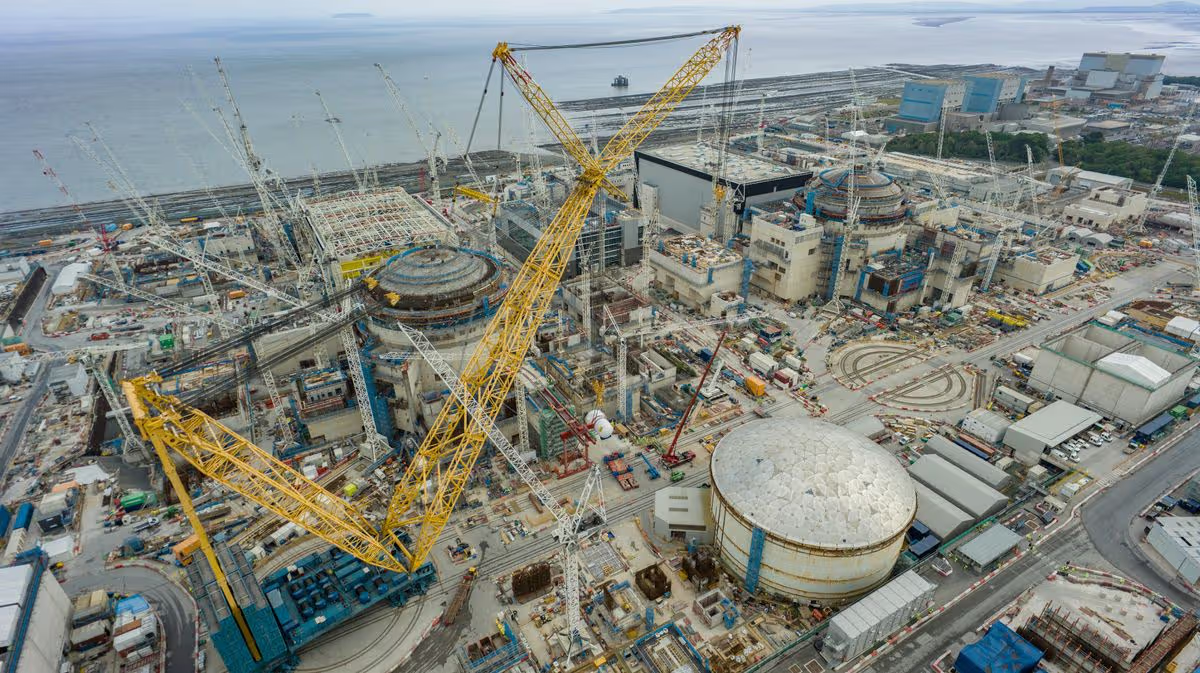
Hinkley Point C power station in Bridgwater, Somerset(Image: Hinkley Point C)
A huge crane has installed the second reactor at Hinkley Point C nuclear power station in a milestone described as “tremendous” by EDF.
The reactor was shipped from from France to Avonmouth Docks in Bristol before arriving in Somerset by barge earlier this year, with the final four miles to the Bridgwater site on a transporter.
Advertisement
Now French-owned energy giant EDF says it has used a crane – named ‘Big Carl’ – to lift the 500-tonne cylinder into place before its precision installation inside the reactor building.
Simon Parsons, Hinkley Point C’s delivery director, said: “This marks a tremendous achievement by the entire team and one that has taken months of planning and close coordination between the 10 main contractors involved.”
Once inside the reactor building, the 13-metre-long vessel was lifted and rotated into a vertical position by the large internal crane and lowered onto a support ring with just 40mm clearance on either side.
Mr Parsons said Hinkley had not used a “cut and paste” approach but had taken lessons from the first reactor’s installation in 2023 to save time, money and disruption to the site.
Advertisement
“Importantly, we are also applying those lessons to put Unit 2 well ahead of the first unit’s position at the equivalent stage, with more materials in place and more work achieved,” he said.
The Unit 2 reactor building is further ahead than at the same stage for Unit 1, EDF said, with more equipment installed, as well as more structural steel work and the outer containment layer already in place.
Big Carl lifts Hinkley Point C’s second nuclear reactor into place(Image: Hinkley Point C)
The reactor pressure vessel uses nuclear fission to make heat and steam for the world’s largest turbines, the Arabelle.
The announcement comes just months after it was revealed Britain’s first new nuclear station in a generation would face further delays at a cost of some €2.5bn to EDF, which is responsible for the project.
Advertisement
Hinkley Point C is set to provide six million UK homes with zero-carbon electricity when it is up and running but the project has been plagued by cost overruns and delays since it received government approval in 2016.
EDF said in February the first reactor at Hinkley Point C would start operating in 2030 – a year later than expected and nearly 13 years since work began on the scheme.
The delay is expected to take the cost of the project up to £35bn – far more than the original estimate of £18bn when the scheme was green lit. But, in reality, the final price tag could be far higher once inflation is considered as the French-owned energy firm has outlined its estimates in 2015 prices.
Britain’s letter writers, and the small businesses that still depend on the post for invoices, contracts and statutory notices, are paying the price for another year of underperformance at Royal Mail.
Just 75.7% of first-class mail was delivered on time in the 12 months to the end of March, the postal operator confirmed on Friday, a country mile from its 93% regulatory target and the first full-year snapshot of life under Czech billionaire Daniel Kretinsky’s EP Group, which completed its £3.6bn takeover last spring.
Performance has actually slipped since the company’s final year on the London Stock Exchange, when 76.9% of first-class and 92.2% of second-class letters arrived on time. The new figures show only 90.2% of second-class post landed within three working days, against a target of 98.5%.
The communications regulator described itself as “very concerned” by the figures. Business Matters understands Ofcom is preparing to open a formal investigation into Royal Mail’s performance as soon as next week – a move that would almost certainly lead to a further multi-million-pound fine on top of the £21m penalty imposed last October, the third-largest in the watchdog’s history.
It is six years since Royal Mail last hit its second-class target and a decade since it cleared the bar on first-class. The slump that began during the pandemic has stubbornly refused to reverse.
Advertisement
Chief operating officer Jamie Stephenson struck a contrite tone, insisting the business is on course to meet new, softer targets of 90% for first-class and 95% for second-class by this time next year.
“We’re putting significant investment into improving reliability and reaching these new delivery targets, but delivering lasting change across a network of this scale takes time,” he said.
For Britain’s 5.5 million small businesses, however, the patience required is wearing thin. SMEs remain disproportionately reliant on physical mail for cheques, payment reminders, HMRC correspondence and signed agreements. Slow post means delayed cash flow, missed deadlines and, in the worst cases, penalties from regulators whose own letters arrive late.
Advertisement
Tom MacInnes, policy director at Citizens Advice, was withering in his assessment. Poor performance at Royal Mail, he said, was “business as usual”.
“What’s worse, Royal Mail claims people will have to wait another year until it can meet its new, lower delivery targets,” he added.
In February, postal workers told the BBC that letters had been sitting undelivered in depots for weeks because staff had been instructed to prioritise parcels, which carry fatter margins. Mr Kretinsky was hauled before MPs on the Business and Trade Committee in March, where he said he was “deeply sorry for any letter that arrives late” but flatly denied that parcels were being put ahead of letters. As the House of Commons Library has documented, letter volumes have collapsed from 20 billion items in 2004-05 to around 6.6 billion last year, putting the universal service economics under unprecedented strain.
Ofcom has already eased Royal Mail’s regulatory burden. Since April, the operator has been measured against the lower targets of 90% next-day delivery for first-class and 95% three-day delivery for second-class. The regulator argued the previous benchmarks were “more stretching” than in comparable European countries and would “carry higher costs which would need to be recovered through higher prices” – an unwelcome trade-off for any SME owner who has watched a first-class stamp climb to £1.70.
Advertisement
Whether £500m and a slacker rulebook can finally turn around an institution that has failed its own customers for the best part of a decade is the question now landing on Mr Kretinsky’s desk. On the evidence of Friday’s numbers, the answer is not yet in the post.
Jamie Young
Jamie is Senior Reporter at Business Matters, bringing over a decade of experience in UK SME business reporting.
Jamie holds a degree in Business Administration and regularly participates in industry conferences and workshops.
When not reporting on the latest business developments, Jamie is passionate about mentoring up-and-coming journalists and entrepreneurs to inspire the next generation of business leaders.
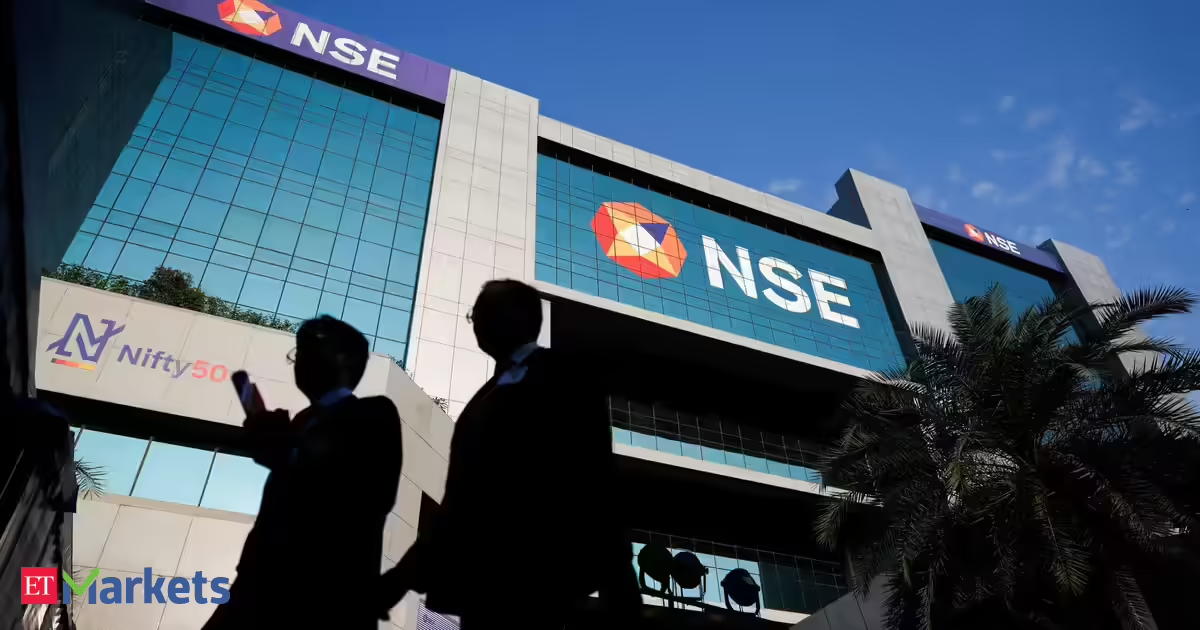
The National Stock Exchange (NSE) has announced a significant change to trading hours in the equity derivatives segment with the introduction of the Closing Auction Session (CAS) framework.
Starting August 3, 2026, the normal market closing time for equity derivatives will be extended by 10 minutes to 3:40 pm from the current 3:30 pm. While the extension is noteworthy, the bigger change lies in how closing prices for eligible securities will be determined.
The move aims to ensure a smoother transition between the cash and derivatives markets at the end of the trading day while maintaining consistency in the pricing framework across segments.
What is the closing auction session?
The CAS is a structured trading window held at the end of the trading day. During this period, market participants place buy and sell orders to determine a single closing price for a security through an auction-based mechanism.
Advertisement
Live Events
Unlike the current system where prices evolve through normal trading until market close, the auction process discovers a fair closing price based on orders entered during the designated session. According to the exchange, CAS will initially apply only to securities in the cash segment that have derivative contracts available. The framework will roll out in phases, and any future expansion will be subject to SEBI guidance and separate operational instructions from the exchange.
Why are derivatives trading hours being extended?
Although CAS applies only to the equity segment, NSE decided to extend trading hours in the derivatives segment to ensure both markets remain aligned during the closing process.
The exchange also clarified that the price bands and pre-trade risk control measures introduced as part of CAS in the cash market will be mirrored in the derivatives segment. This is intended to maintain consistency between the two segments during the closing phase of trading.
How will the closing auction session work?
The CAS will run for 20 minutes, from 3:15 pm to 3:35 pm. The process will begin with a transition phase between 3:15 pm and 3:20 pm, during which the reference price will be calculated using the volume-weighted average price (VWAP) of trades executed between 3:00 pm and 3:15 pm.
Between 3:20 pm and 3:25 pm, participants will be able to enter both market and limit orders. From 3:25 pm to 3:30 pm, only limit orders will be permitted. During this period, market orders cannot be modified or cancelled.
Advertisement
The order entry session will close randomly at any point between 3:28 pm and 3:30 pm, after which the auction process will determine the final closing price.
How will closing prices be calculated?
One key point highlighted by NSE is that there will be no change in the methodology used to calculate closing prices of derivative contracts. The volume-weighted average price (VWAP) used for derivatives closing price calculation will continue to be based on trades executed during the final 30 minutes of trading. However, because market hours are being extended, that 30-minute window will now shift to 3:10 pm-3:40 pm instead of the current 3:00 pm-3:30 pm.
For securities eligible for CAS, the closing price in the cash segment will be determined through the auction process.
Ashish Nanda, President and Digital Business Head at Kotak Securities summed up the shift by noting that the market is moving from a “continuous trading close” to an “auction discovered close”.
Advertisement
Under the current framework, closing prices are derived from the VWAP of trades executed between 3:00 pm and 3:30 pm. Under the new framework, closing prices for F&O-eligible stocks will effectively be linked to a 20-minute auction process running from 3:15 pm to 3:35 pm.
What happens if a stock is removed from F&O?
NSE clarified that eligibility for CAS is linked to the presence of derivatives on the stock. If a security is excluded from the equity derivatives segment on both exchanges, it will no longer be eligible for the CAS.
In such cases, the closing price will revert to the existing methodology and be determined using the VWAP of trades executed during the last 30 minutes of trading. However, if the security continues to be part of the derivatives segment on at least one exchange, it will remain eligible for CAS.
What happens to pending orders?
The exchange outlined operational changes relating to order management. All unexecuted special orders, including stop-loss orders and disclosed quantity orders, will be cancelled. Pending orders that fall outside the revised price band will also be cancelled automatically, and members will receive appropriate cancellation notifications.
Advertisement
Why does this matter for traders?
For many market participants, the biggest implication is that the final closing price may no longer mirror the last traded price visible on trading screens at 3:30 pm.
According to Ashish Nanda, this could require adjustments to trading strategies, particularly for option writers and arbitrageurs who rely heavily on closing prices for valuation, settlement and hedging decisions.
While the derivatives market will remain open until 3:40 pm, the broader shift is not simply about extending trading by 10 minutes. It marks a change in how closing prices for eligible securities are discovered, with the exchange moving toward an auction-based mechanism designed to determine a single closing price at the end of the trading day.
What happens to existing market timings?
Apart from the revised closing time, most trading schedules remain unchanged. The pre-open session in the derivatives segment will continue to begin at 9:00 am and the normal trading session will continue to start at 9:15 am. Similarly, the trade modification window will remain unchanged and continue until 4:15 pm.
Advertisement
(Disclaimer: Recommendations, suggestions, views and opinions given by the experts are their own. These do not represent the views of The Economic Times)
As markets wrap up the Q4 results season for the financial year 2026, Motilal Oswal highlighted that Indian corporate earnings showcased widespread outperformance across aggregates, with commodity strength driving the broad-based beat to estimates.
In its latest Indian strategy report, Motilal Oswal Financial Services said that aggregate earnings of the companies under its coverage grew 16% year-on-year, beating its estimate of 8% growth in the January-March quarter of FY26. According to the domestic brokerage, the better-than-expected earnings growth was powered by BFSI (profit grew 18% YoY vs. brokerage’s estimate of 11%) and supported by metals (profit surged 50% YoY vs. brokerage’s estimate of 24%) and OMCs (profit jumped 62% YoY vs. brokerage’s estimate of 7% growth). Further, technology (+13% YoY), telecom (+8.4x YoY), and automobiles (+13% YoY vs. brokerage’s estimate of 6% decline) propelled earnings, Motilal added.
On the other hand, aggregate earnings growth was dragged by oil & gas (excluding OMCs), which posted a profit dip of 10% YoY vs. Motilal’s estimate of 1% growth.
The Nifty 50 companies delivered 4% YoY growth in net profit, beating Motilal’s estimate of 2% growth. The domestic brokerage, however, noted that Nifty reported a single-digit earnings growth for the eighth consecutive quarter, the first time since the pandemic (June 2020).
Advertisement
“Barring Reliance Industries, which posted a profit dip of 13% YoY, and Interglobe Aviation, which posted a loss of Rs 24 billion vs. a profit of Rs 30.7 billion YoY, the Nifty Universe posted a 9% YoY earnings growth. Five Nifty companies – Bharti Airtel, JSW Steel, HDFC Bank, Infosys, and TCS – contributed 75% of the incremental YoY accretion in earnings. Conversely, Reliance Industries, Interglobe Aviation, Adani Enterprises, Power Grid, Dr Reddy’s, Cipla, Tata Motors PV, Sun Pharma, and Maruti Suzuki dragged down earnings. Within the Nifty, 15 companies reported lower-than-expected profits, while 18 posted a beat, and 17 registered in-line results,” Motilal added.
Largecaps, midcaps beat estimates, smallcaps post in-line earnings
The domestic brokerage noted that among the companies under its coverage, around 90 largecap companies on average posted an earnings growth of 12% YoY. Around 101 midcap companies, meanwhile, showed improvement and delivered earnings growth of 36% YoY (vs. the brokerage’s estimate of 25%). “Multiple mid-cap sectors, such as BFSI, metals, OMCs, and healthcare, lifted the overall performance. These sectors contributed ~89% of the incremental YoY accretion in earnings. In contrast, smallcaps (168 companies) delivered in-line performance, with earnings rising 19% YoY (our estimate of +18%). Within small-caps, 68% of the coverage universe exceeded/met our estimates. Conversely, within the large-cap/mid-cap universes, 74%/73% of the companies exceeded/met our estimates,” Motilal Oswal said. It noted that Nifty EPS for FY26 stood at Rs 1,065 per share, marking a second consecutive year of single-digit growth. It cut its Nifty EPS estimate for FY27 by 0.9% to Rs 1,235 per share, led by SBI, Reliance Industries, JSW Steel, ONGC, and Coal India. “Earnings estimates of the MOFSL Universe were cut by 1.3% for FY27, fueled by PSU Bank, Oil & Gas, Healthcare, Telecom, and Technology. The MOFSL large-cap universe reported an earnings cut of 0.9%, while the mid-cap universe recorded a downgrade of 2.2%, and the MOFSL small-cap universe posted a downgrade of 2.8% for FY27,” it added.
Q4 earnings season fared better than expectations
Motilal concluded by saying that the Q4 earnings season fared better than expectations, but forward earnings revisions continue to exhibit weakness. Following India’s sharp underperformance in FY26 and record FII outflows, a favorable base has likely been set for Indian equities, it said, adding that in the near term, however, the market will remain hostage to volatile developments arising from the West Asian crisis. “Higher commodity prices will be the key monitorables, as a prolonged elevated level could affect India’s macro parameters and engender a tight monetary policy stance. Our model portfolio broadly reflects our preference for growth visibility, structural domestic growth plays, and select global value names. We firmly believe that this is a bottom-up market, despite India witnessing both time and price corrections relative to EM peers. Our key overweight sectors are Autos, PSU Banks, Diversified Financials, Manufacturing & Industrials, Consumer Discretionary, and New-age platforms. In contrast, we are underweight on Oil & Gas, Private Banks, Metals, Consumer Staples, IT, and Commodities/Utilities,” the brokerage said.
It listed Bharti Airtel, State Bank of India (SBI), ICICI Bank, Mahindra & Mahindra (M&M), Titan, Bharat Electronics (BEL), Eternal, Tata Steel, Infosys and IndiGo as its top Nifty 50 picks, while non-Nifty 50 picks included TVS Motor Company, ICICI Prudential AMC, Groww, Indian Hotels, AU Small Finance, Dixon Tech, Lenskart, Waaree Energies, Coforge, Radico Khaitan and Delhivery.
(Disclaimer: Recommendations, suggestions, views and opinions given by the experts are their own. These do not represent the views of The Economic Times)
LISBON — Portuguese Football Federation president Pedro Proenca has cast doubt on the possibility of Cristiano Ronaldo playing at the 2030 World Cup, stating that it would require a “huge surprise” physiologically for the 41-year-old superstar to feature at age 45 when Portugal co-hosts the tournament.
Proenca, speaking at the Bola Branca Conference, acknowledged Ronaldo’s extraordinary career and enduring link to the national team but emphasized biological realities as the primary barrier to a sixth World Cup appearance. The five-time Ballon d’Or winner remains Portugal’s all-time leading scorer and a central figure for the Selecao, but questions about his long-term playing future continue to grow.
“I’ll say that, physiologically, a huge surprise would have to happen for him to be in another World Cup,” Proenca said. He added that any participation in the European Championship would depend on the coach at the time, Ronaldo’s form and various technical factors.
The comments reflect a pragmatic approach from Portuguese football’s governing body as it prepares for the 2030 World Cup, which Portugal will co-host alongside Spain and Morocco. While Ronaldo has defied age-related expectations throughout his career, Proenca suggested that expecting him to compete at the highest level in 2030 would be unrealistic without exceptional circumstances.
Advertisement
Ronaldo’s Enduring Legacy
Despite the tempered expectations for on-field participation, Proenca made clear that Ronaldo’s connection to Portuguese football will remain permanent. The forward’s global brand, marketability and contributions to the sport have elevated the profile of the national team significantly.
“Cristiano Ronaldo will be whatever he wants to be in Portuguese football,” Proenca stated. “It’s an absolutely extraordinary case, not only in terms of notoriety, capacity, and brand mobilization. Sporting-wise, I dare say it’s a unique case of talent development in Portuguese football.”
This assurance suggests that once Ronaldo decides to retire from playing, the federation envisions a significant ongoing role for him, potentially in ambassadorial, coaching, or advisory capacities. Ronaldo’s influence extends far beyond the pitch, with his presence helping secure sponsorships, boost youth development programs and maintain international interest in the Portuguese team.
Planning for the Post-Ronaldo Era
Proenca emphasized that the federation is proactively preparing for life after Ronaldo’s playing career without treating it as a crisis. The organization has diversified its revenue streams and partnerships to reduce dependence on any single player or sponsor.
Advertisement
“The Portuguese Football Federation has always been preparing its present and its future, in terms of revenue, so as not to depend on participating in international competitions solely on one or two sponsors and one or two players,” he explained.
This forward-thinking approach aims to ensure stability regardless of who wears the national team jersey. Portugal has produced several talented young players in recent years, and the federation is focused on creating a sustainable pipeline of talent to maintain competitive success.
Ronaldo’s Current Standing
At 41, Ronaldo continues to perform at a high level with Al-Nassr in Saudi Arabia and for Portugal. He was instrumental in Portugal’s Nations League success and remains a key goal threat in qualifying matches. However, the physical demands of elite international football at an advanced age present increasing challenges.
Ronaldo has repeatedly expressed his desire to play at the 2030 World Cup on home soil, viewing it as a potential fairytale ending to his international career. His dedication to fitness and recovery is legendary, but Proenca’s comments highlight the scientific limits that even the greatest athletes eventually face.
Advertisement
Broader Implications for Portugal
The 2030 World Cup represents a monumental opportunity for Portuguese football. As co-hosts, the country will benefit from infrastructure development, increased global visibility and economic gains. Ensuring a competitive national team during the tournament is a priority, but the federation appears committed to building depth rather than relying solely on Ronaldo’s star power.
Younger talents such as Rafael Leao, Bruno Fernandes and Joao Felix are expected to form the core of the team in the coming years. The transition from the Ronaldo era will require careful management to maintain fan enthusiasm and competitive performance.
Ronaldo’s Global Impact
Regardless of his playing status in 2030, Ronaldo’s legacy as one of football’s greatest players is secure. His record-breaking goal tallies, Champions League successes and influence on the sport’s commercialization have reshaped modern football. In Portugal, he remains a national icon whose achievements inspire generations of young players.
The federation’s willingness to offer Ronaldo any role he desires post-retirement recognizes both his sporting contributions and his value as a global ambassador. This approach could help ensure a smooth transition while preserving the emotional connection between Ronaldo and Portuguese supporters.
Advertisement
As the 2030 World Cup draws closer, discussions about Ronaldo’s future will intensify. For now, Proenca’s comments provide a realistic framework for expectations while celebrating Ronaldo’s unparalleled contributions to Portuguese football.
The coming years will reveal whether Ronaldo can continue defying age expectations or if 2030 will mark the beginning of his next chapter in a non-playing capacity. Whatever the outcome, his place in football history and Portuguese sporting culture remains firmly established.
BOISE, Idaho — A retired Idaho couple has filed a federal class-action lawsuit against Bitcoin Depot Inc., alleging the cryptocurrency ATM operator’s network enabled scammers to drain their entire $76,000 retirement savings over five days in August 2025 through a sophisticated social engineering scheme.
Retired Idaho Couple Sues Bitcoin Depot After Losing $76,000 Life Savings in ATM Scam
Karen and Robert Lacey filed the complaint on May 11, 2026, in U.S. District Court for the District of Idaho (Case No. 1:26-cv-00288-DKG), accusing Bitcoin Depot of processing suspicious high-value cash deposits without adequate intervention despite clear red flags. The suit claims the company profited from fraud while failing to protect vulnerable customers using its machines.
According to the 43-page filing, fraudsters posing as Norton customer service representatives and FBI agents convinced the Laceys that their accounts were linked to child pornography and illegal gambling investigations. The scammers instructed the couple to deposit large sums of cash at Bitcoin Depot ATMs between August 9 and August 13, 2025. To bolster the deception, the perpetrators allegedly caused wireless networks labeled “FBI” to appear on the couple’s phones — signals that reportedly remained visible for months afterward.
The lawsuit alleges Bitcoin Depot processed each transaction “without meaningful intervention,” despite the unusual pattern of first-time users making large cash deposits while actively speaking with unknown parties on the phone. The company charges transaction fees as high as 50 percent, and the plaintiffs describe its on-screen warning stickers as “demonstrably ineffective.”
After their son filed a federal crime complaint, Bitcoin Depot issued two $1,000 refund checks — an amount the lawsuit states did not even cover the fees collected by the company. Karen Lacey, already retired at the time of the fraud, has since returned to work with rotating hospital shifts to help rebuild their finances.
Advertisement
Broader Pattern of Bitcoin ATM Fraud
The Laceys’ experience reflects a growing national problem. Federal Trade Commission data shows Bitcoin ATM fraud losses increased nearly tenfold between 2020 and 2023, with a median victim loss of $10,000. By 2025, the FBI reported Americans lost $333 million to Bitcoin ATM scams, affecting more than 10,000 victims in a single year.
Bitcoin Depot, once one of the largest operators of crypto ATMs in North America with more than 9,000 machines, filed for voluntary Chapter 11 bankruptcy on May 18, 2026. The company had previously disclosed a $3.6 million Bitcoin theft from its own wallets in March 2026 and reported a 49.2 percent revenue decline in the first quarter of 2026. It has since shut down its entire network.
The lawsuit cites Bitcoin Depot’s own SEC filings, which acknowledge that its services “may be exploited to facilitate illegal activity such as fraud” and that its risk management “may not be sufficient.” Plaintiffs are seeking a jury trial, injunctive relief, compensatory and punitive damages, restitution of fees paid, and attorney’s fees.
How the Scam Unfolded
The complaint details a classic “pig butchering” or grandparent-style scam variant tailored to cryptocurrency. Scammers created urgency by claiming immediate action was needed to prevent legal consequences. They directed the Laceys to specific Bitcoin Depot locations and remained on the phone during transactions to guide them through the process.
Advertisement
This real-time coaching is a common tactic that allows fraudsters to bypass ATM warnings and complete large transfers quickly. The Laceys, like many elderly victims, trusted the authoritative personas presented by the callers and acted quickly out of fear.
Consumer protection advocates say Bitcoin ATMs are particularly dangerous because transactions are irreversible once completed, and many machines lack robust identity verification for high-value transfers. Critics argue operators have profited from these vulnerabilities while shifting responsibility to users through disclaimers.
Growing Regulatory Scrutiny
Bitcoin ATM operators have faced increasing legal and regulatory pressure nationwide. Several states have imposed stricter licensing requirements and transaction limits on crypto kiosks following surges in reported fraud. Consumer advocates have called for mandatory ID verification, transaction monitoring, and clearer consumer warnings at all machines.
The Lacey lawsuit seeks class-action status to represent other victims who allegedly suffered similar losses through Bitcoin Depot machines. If certified, it could expose the company to significant liability even amid its bankruptcy proceedings.
Advertisement
Bankruptcy experts note that claims related to alleged facilitation of fraud may receive different treatment than standard creditor claims. The plaintiffs argue Bitcoin Depot’s business model inherently enabled criminal activity by prioritizing volume and fees over consumer protection.
Impact on Victims and Lessons Learned
For the Laceys, the financial and emotional toll has been severe. Losing their life savings at retirement age has forced lifestyle changes and renewed employment. Their story highlights the particular vulnerability of older adults to sophisticated scams that exploit trust and fear.
Financial crime experts recommend several precautions when dealing with unsolicited calls claiming security issues. Legitimate companies rarely demand immediate cash transfers to cryptocurrency, and the FBI or tech support services will never ask for payments in Bitcoin. Victims should hang up and contact authorities or known trusted contacts independently.
The case also underscores the irreversible nature of cryptocurrency transactions. Once funds are converted and sent, recovery is extremely difficult, even with law enforcement involvement. This reality makes prevention far more effective than recovery efforts.
Advertisement
Industry Response and Future Outlook
Bitcoin Depot’s bankruptcy filing has left thousands of machines offline, temporarily reducing access points for both legitimate users and potential scammers. Other operators may face increased scrutiny as regulators examine industry practices more closely.
Consumer protection groups are pushing for federal legislation that would impose stricter oversight on crypto ATMs, including mandatory transaction monitoring for suspicious patterns and clearer liability standards for operators.
As the lawsuit proceeds, it may set important precedents for accountability in the cryptocurrency kiosk industry. The outcome could influence how similar businesses operate and the level of protection afforded to consumers using these machines.
For now, the Laceys’ case serves as a cautionary tale about the evolving tactics of financial scammers and the challenges of safeguarding retirement savings in an increasingly digital economy. Their federal complaint seeks not only compensation but systemic changes to prevent similar tragedies for other vulnerable individuals.
Advertisement
Authorities continue to urge anyone who believes they may have been victimized through Bitcoin ATMs to report incidents to the FBI’s Internet Crime Complaint Center and their state consumer protection offices. Early reporting can help identify patterns and support broader enforcement actions against fraudulent operations.






















































You must be logged in to post a comment Login