Connect with us
DAPA Banner
DAPA Coin
DAPA
COIN PAYMENT ASSET
PRIVACY · BLOCKDAG · HOMOMORPHIC ENCRYPTION · RUST
ElGamal Encrypted MINE DAPA
🚫 GENESIS SOLD OUT
DAPAPAY COMING

Business

Biogen Alzheimer’s drug moves to late stage trial

Published

on

Biogen Alzheimer's drug moves to late stage trial

A Biogen facility in Cambridge, Massachusetts.

Brian Snyder | Reuters

Biogen plans to advance an experimental drug for Alzheimer’s disease to late-stage testing despite disappointing mid-stage trial data, the company said Thursday.

Advertisement

Biogen said its experimental drug that targets tau, a protein associated with the memory-robbing disease, failed to show better responses at higher doses.

Nonetheless, Biogen plans to move it into Phase 3 testing because of signals suggesting the treatment decreases levels of tau and slows cognitive decline, particularly at the lowest dose.

Dr. Priya Singhal, Biogen’s head of development, said the results are compelling.

“We’re really excited that we’ve been able to demonstrate an unprecedented combination of tau reduction in pathology and the cognitive benefit and have been really getting close to isolating a dose,” she said. “Those are the three requirements you need to go to Phase 3.”

Advertisement

The results mark the latest example of Biogen’s uneven journey to develop drugs for Alzheimer’s. Biogen for years has been researching the brain disease. It’s brought two drugs to market designed to slow cognitive decline, though it pulled its first drug, Aduhelm, after it couldn’t overcome controversy surrounding its approval.

Both Aduhelm and Biogen’s other Alzheimer’s drug Leqembi remove a protein associated with Alzheimer’s called amyloid from the brain. Its latest experimental drug Diranersen is an antisense oligonucleotide that limits production of another protein called tau.

Rival Eli Lilly is also studying drugs that seek to decrease levels of tau.

Choose CNBC as your preferred source on Google and never miss a moment from the most trusted name in business news.
Advertisement
Continue Reading
Click to comment

You must be logged in to post a comment Login

Leave a Reply

Business

Three pieces could sell for $100 million each

Published

on

Three pieces could sell for $100 million each

A large-scale Jackson Pollock drip painting titled, “Number 7A, 1948.”

Crystal Lau | CNBC

A version of this article first appeared in CNBC’s Inside Wealth newsletter with Robert Frank, a weekly guide to the high-net-worth investor and consumer. Sign up to receive future editions, straight to your inbox.

Advertisement

Nearly $2 billion worth of art will come up for auction in New York over the next week, marking the biggest test of the art market since the start of the Iran war.

The major auction houses are counting on blockbuster works from famed collections to carry the market past the gloom of geopolitical conflict and volatile financial markets. Despite growing fears of a slowing global economy and a potential lack of buyers from the Middle East, dealers and art experts say the rapid rebound in the art market that began last fall shows no signs of slowing.

“Buyers are engaged and looking for opportunity right now,” said Philip Hoffman, chairman and founder of Fine Art Group, the art advisory and sales agency.

Hoffman said today’s megacollectors, like Ken Griffin, Steve Cohen, Jeff Bezos and the new crowd of Asian tech billionaires, have seen their fortunes skyrocket in recent years and are looking for long-term stores of value.

Advertisement

“They’re sitting on massive amounts of liquidity,” he said. “To them, this money is peanuts.”

Three works coming to auction are estimated to sell for up to $100 million, and over 20 works are estimated at $20 million or more, more than triple last year’s total. Sales for the three auction houses are expected to total between $1.8 billion and $2.6 billion, according to ArtTactic. At $2 billion, the sales would nearly double last year’s total.

Marc Porter, chairman of Christie’s Americas, said the crowds lining up to see the works for sale are the largest in nearly a decade.

“There is an energy and buzz in the rooms that we haven’t seen in a while,” he said. “It’s difficult to tease out whether that’s about the quality of the works of art, or the world situation and art is a refuge, or art is a hedge. It’s tough to tell. We’ll know in a week or two.”

Advertisement

The sales are set to continue a rapid rebound in the art market that began last fall. In 2023 auction sales started declining as sellers held back their top works. Without supply, especially at the high end, sales totals fell and many galleries started cutting back or closing.

Last fall, however, with a few big collections coming up for sale, sales snapped back. The recent auctions in London – including a $175 million “white glove” sale at Sotheby’s – showed strong bidding across almost all price points and categories, advisors say.

The success of this month’s sales in New York will hang largely on a handful of trophy works from well known collections. Christie’s is offering works from the collection of Samuel Irving “S.I.” Newhouse Jr., the media titan who died in 2017.

“Danaide,” a 1913 sculpture by Constantin Brancusi

Advertisement

Crystal Lau | CNBC

The headliner of the collection is “Danaide,” a 1913 sculpture by Constantin Brancusi estimated to sell for $100 million. A large-scale Jackson Pollock drip painting titled “Number 7A, 1948” is also estimated at $100 million.

Christie’s is also selling works from the late collector Agnes Gund, including Mark Rothko’s “No. 15 (Two Greens and Red Stripe)” estimated at $80 million.

A Rothko also headlines the collection of the late Robert Mnuchin being sold at Sotheby’s. Mnuchin, the former Goldman Sachs partner-turned-gallerist and father of former Treasury Secretary Steven Mnuchin, was a major collector of Rothko, Willem de Kooning, Franz Kline and other abstract expressionists.

Advertisement

The auction includes Rothko’s towering “Brown and Blacks in Reds” estimated at $70 million to $100 million.

Auction assistants pose with Mark Rothko ‘Brown and Blacks in Reds’ during May Marquee Modern & Contemporary Auctions press preview at Sotheby’s The Breuer in New York, NY on May 1, 2026.

Lev Radin | AP

Advisors say the previous ownership history of an art work  – known as “provenance” – matters more than ever. Art sold by famed collectors like the Rockefellers, Paul Allen, the Lauder family or Newhouse carry ever-higher premiums as new collectors look for validation.

Advertisement

Collectors like Newhouse “were connoisseurs,” said Betsy Bickar, head of art advisory at Citi Private Bank. “They were buying art because they understood the importance of the piece that they were going after. So they were willing to pay any price.”

The wild card for the auctions is the Middle East. The governments and royal families of Saudi Arabia, Qatar and the United Arab Emirates — particularly in Abu Dhabi and Dubai — have been on an art spending spree in recent years as they build new museums. Some say the war could cause the countries to focus more of their capital on rebuilding at home rather than buying art.

Dealers and art experts say Middle East buyers have mainly been active in private sales rather than public auctions, so the impact this season may be limited. And despite the war, many say the Middle East leaders remain committed to the long-term importance of building cultural institutions to diversify their economies.

Get Inside Wealth directly to your inbox

“There are Middle Eastern buyers who are still looking to bolster the holdings of these new museums, and making sure these museums have real quality work,” Bickar said. “I wouldn’t be surprised if you see a lot of Middle Eastern buying in this round of sales.”

Advertisement

Americans, however, have been the driving force in the global art market for years. Porter said that even if bidding from overseas buyers is light, the New York sales look promising.

“The bulk of buying is American buying,” he said. “Americans who have money in the stock market or who are in the financial markets or in the technology markets, even the real estate markets, are all making a lot of money and buying works of art. The Europeans have been consistent and strong. The Asians, particularly the mainland Chinese, a little bit less represented, but still very strong.”

Many of the top works carry third-party guarantees or irrevocable bids, meaning a buyer has already agreed in advance to purchase the works at a minimum price if there are no higher bids at auction. While the practice removes some of the excitement of live auctions, it’s become increasingly common as auction houses and sellers look to reduce their risk.

“We advise our clients to take guarantees,” Hoffman said. “It’s a win-win situation.”

Advertisement
Choose CNBC as your preferred source on Google and never miss a moment from the most trusted name in business news.
Continue Reading

Business

Keyera Corp. (KEY:CA) Q1 2026 Earnings Call Transcript

Published

on

OneWater Marine Inc. (ONEW) Q1 2026 Earnings Call Transcript

Keyera Corp. (KEY:CA) Q1 2026 Earnings Call May 14, 2026 10:00 AM EDT

Company Participants

Dan Cuthbertson – General Manager of Investor Relations
C. Setoguchi – President, CEO & Director
Eileen Marikar – Senior VP & CFO
Bradley Slessor – Senior Vice President of G&P and NGL Pipelines Business Unit
K. Urquhart – Senior Vice President of Liquids Business Unit

Advertisement

Conference Call Participants

Robert Hope – Scotiabank Global Banking and Markets, Research Division
Spiro Dounis – Citigroup Inc., Research Division
Robert Catellier – CIBC Capital Markets, Research Division
Benjamin Pham – BMO Capital Markets Equity Research
Theresa Chen – Barclays Bank PLC, Research Division
Patrick Kenny – National Bank Financial, Inc., Research Division
Maurice Choy – RBC Capital Markets, Research Division

Presentation

Advertisement

Operator

Good morning. My name is Joelle, and I will be your conference operator today. At this time, I would like to welcome everyone to the Keyera’s 2026 First Quarter Conference Call. [Operator Instructions] I would now like to turn the call over to Dan Cuthbertson, General Manager, Investor Relations. You may begin.

Dan Cuthbertson
General Manager of Investor Relations

Advertisement

Thanks, and good morning. Joining me today will be Dean Setoguchi, President and CEO; Eileen Marikar, Senior Vice President and CFO; Jamie Urquhart, Senior Vice President, Liquids Business Unit; and Brad Slessor, Senior Vice President, G&P and NGL Pipelines Business Unit. We will begin with some prepared remarks from Dean and Eileen, after which we will open the call to questions. I’d like to remind listeners that some of the comments and answers that we will give today relate to future events.

These forward-looking statements are given as of today’s date and reflect events or outcomes that management currently expects. In addition, we will refer to some non-GAAP financial measures. For additional information on non-GAAP measures and forward-looking statements, please refer to Keyera’s public filings available on SEDAR and on

Advertisement
Continue Reading

Business

China will order 200 Boeing jets, Trump tells Fox News

Published

on

China will order 200 Boeing jets, Trump tells Fox News

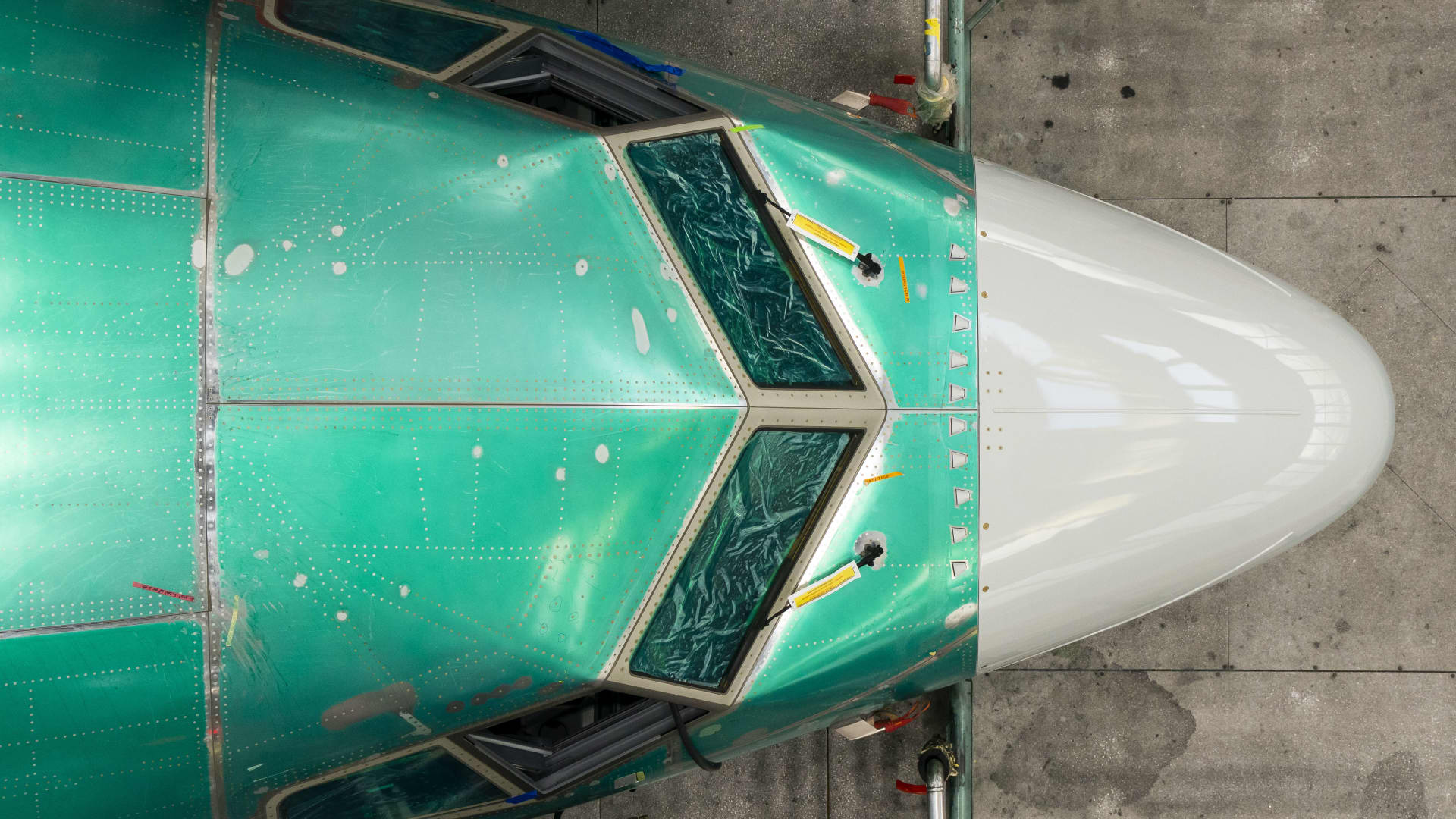
A Boeing Co. 737 Max airplane at the company’s manufacturing facility in Renton, Washington, US, on Thursday, Nov. 20, 2025.

David Ryder | Bloomberg | Getty Images

President Donald Trump told Fox News that China has agreed to buy 200 Boeing jets, according to a clip that aired Thursday.

Advertisement

“One thing he agreed to today, he’s going to order 200 jets. That’s a big thing. Boeings,” Trump told Fox News’ Sean Hannity, referring to Chinese President Xi Jinping.

Analysts had expected a big order of Boeing aircraft to come out of Trump’s visit to China, though analysts had been expecting more, with Jefferies estimating the order would be up to 500 aircraft. Boeing CEO Kelly Ortberg and other top executives from U.S. companies joined Trump on the trip.

The manufacturer hasn’t won a major order from China in almost a decade, but the country has been buying from Boeing’s main rival, Airbus.

Trump didn’t specify which aircraft China could purchase from Boeing, though analysts had expected a potential order to include hundreds of Boeing’s best-selling 737 Max planes.

Advertisement

Boeing and the White House didn’t immediately comment. Boeing shares were down more than 4% in early afternoon trading.

Ortberg said on a company earnings call last month that the U.S.-China summit could be a “meaningful opportunity for us” that could include an aircraft order.

“I’m not going to give you the number of airplanes, but it’s a big number,” he said.

Read more CNBC airline news

Choose CNBC as your preferred source on Google and never miss a moment from the most trusted name in business news.
Advertisement
Continue Reading

Business

Sebi proposes major overhaul of derivatives rules to simplify compliance for exchanges

Published

on

Sebi proposes major overhaul of derivatives rules to simplify compliance for exchanges
Capital markets regulator Sebi has proposed a wide-ranging revamp of exchange-traded derivatives regulations aimed at simplifying compliance norms, removing redundant provisions and easing operational requirements for stock exchanges and clearing corporations.

In a consultation paper released on May 14, the regulator proposed multiple changes across equity, currency, commodity and interest rate derivatives segments as part of a broader “ease of doing business” initiative for market infrastructure institutions.

Sebi said the review seeks to simplify regulatory requirements, discontinue duplication and reduce the compliance burden on exchanges by restructuring and consolidating existing master circulars governing derivatives markets.

One of the key proposals is the removal of the “Close to the Money” (CTM) option series mechanism in commodity derivatives. The regulator said the CTM framework makes the exercise mechanism complex for market participants and creates uncertainty for option sellers.

Advertisement

Sebi noted that leading global commodity exchanges do not follow the CTM concept and that simpler in-the-money and out-of-the-money structures are easier for traders to understand and execute.


The regulator has also proposed reducing the mandatory number of Product Advisory Committee meetings for non-agricultural commodity derivatives from two meetings annually to one meeting per year, aligning them with agricultural commodity norms.
According to the consultation paper, exchanges argued that non-agricultural commodity contracts generally require fewer specification changes and that attendance in such meetings has often remained weak for low-liquidity contracts.Sebi further proposed granting exchanges greater operational flexibility in advancing expiry dates of commodity contracts during sudden disruptions such as strikes, erratic weather or unexpected market closures. Under the proposed framework, exchanges would be allowed to take such decisions with approval from the managing director and provide “adequate notice” instead of the existing mandatory 10-day advance intimation rule.

Another proposal relates to position limit monitoring in derivatives markets. Sebi clarified that exchanges would continue to remain responsible for monitoring position limits but may outsource the operational work to clearing corporations through formal agreements defining roles and responsibilities.

The regulator also proposed discontinuing several outdated requirements, including lower base minimum capital norms for brokers without nationwide terminals, noting that regional stock exchanges have largely ceased operations and internet-based trading has become standard.

Similarly, Sebi proposed removing separate certification guidelines for derivatives dealers and brokers because these are already covered under the Sebi certification regulations for associated persons in securities markets.

Advertisement

In another move toward digitisation, the regulator proposed replacing newspaper disclosures of derivatives transactions with website-based disclosures by exchanges.

The consultation paper also proposes merging multiple derivatives-related circulars and chapters into consolidated frameworks for equity derivatives, currency derivatives and interest rate derivatives to reduce overlap and improve consistency.

Sebi has also suggested separating regulatory provisions applicable to stock exchanges and clearing corporations into distinct master circulars, reflecting increasingly segregated operational roles after interoperability and independent clearing member registration frameworks.

The regulator has invited public comments on the proposals until June 4.

Advertisement
Continue Reading

Business

Strait of Hormuz Remains Largely Closed Amid Iran Conflict as Trump-Xi Summit Eyes Resolution

Published

on

Strait of Hormuz Traffic Near Standstill Despite US-Iran Ceasefire: Only

DUBAI, United Arab Emirates — The Strait of Hormuz, the critical chokepoint for nearly one-fifth of global oil supply, remains effectively closed or heavily restricted as of May 14, 2026, more than two months after Iran imposed tight control amid its ongoing conflict with the United States and Israel, driving oil prices above $100 per barrel and disrupting international energy flows.

Maritime tracking data and shipping reports show only a handful of vessels successfully transiting the narrow waterway in recent days, mostly Chinese-owned tankers carrying Iraqi crude or other authorized cargoes after securing Iranian permission. The U.S. naval blockade and Iranian countermeasures have reduced daily transits from a pre-conflict average of around 138 vessels to near zero on many days, stranding more than 1,500 commercial ships and over 22,000 mariners in the Persian Gulf region.

The closure, which began in earnest after U.S. and Israeli strikes on Iran in late February, has created the largest energy supply shock in decades. The U.S. Energy Information Administration (EIA) now assumes the strait will stay effectively shut through the end of May, revising earlier projections and warning that a prolonged closure could push oil prices $20 higher in the near term. Brent crude has traded consistently above $100–$107 per barrel, with WTI near $101, reflecting both physical supply losses and a substantial geopolitical risk premium.

Iran has asserted greater control over the waterway, establishing what it calls a “Persian Gulf Strait Authority” and charging some vessels tolls paid in Chinese yuan. Tehran has struck bilateral deals with countries like Iraq and Pakistan to allow limited oil and LNG shipments, while warning that unauthorized vessels risk interception. The Islamic Revolutionary Guard Corps has conducted multiple operations, including reported seizures and attacks on commercial shipping, contributing to at least 42 confirmed maritime incidents since the conflict began.

Advertisement

A Chinese supertanker carrying two million barrels of Iraqi crude successfully crossed the strait on Wednesday, becoming one of the few large vessels to make the journey recently. Additional Chinese-managed ships have also transited under Iranian authorization, highlighting Beijing’s critical stake in stable energy routes. China, Iran’s top oil customer, has been quietly negotiating safe passage for its vessels while publicly calling for calm.

The ongoing Trump-Xi summit in Beijing has placed the strait at the center of diplomatic efforts. President Donald Trump has pressed Chinese President Xi Jinping to use Beijing’s leverage with Iran to help reopen the waterway. Early reports from the summit suggest both leaders agreed the strait “must remain open” for commercial shipping, though concrete commitments on enforcement remain unclear. U.S. Secretary of State Marco Rubio has warned China that failure to help resolve the crisis could harm its own exports and global standing.

The disruption has ripple effects worldwide. Asia, heavily dependent on Middle Eastern crude, has scrambled for alternative supplies, boosting shipments of Alaskan and U.S. crude to the region. Europe has increased reliance on U.S. LNG and other sources. Global inventories have drawn down sharply, with the EIA estimating 10.5–10.8 million barrels per day of Middle East output shut in during April and May.

U.S. gasoline prices have climbed above $4 per gallon in many areas, contributing to April’s 3.8% inflation reading. Refiners warn of further increases if the closure persists into June. Saudi Arabia and other OPEC+ producers have maintained output discipline, prioritizing price stability over flooding the market with additional barrels.

Advertisement

The humanitarian toll on mariners remains severe. Thousands of crew members are stranded aboard vessels caught in the Persian Gulf, facing supply shortages and psychological strain. Maritime unions and shipping associations have called for urgent international action to ensure safe passage and crew welfare.

Military efforts to secure the strait have been limited. The U.S. has conducted escort operations under “Project Freedom,” but Trump paused the mission earlier this month citing diplomatic progress. Australia, the UK, France and Italy have offered support for multinational missions, including surveillance aircraft and minesweepers, though full operations are not expected until after any ceasefire.

Iran continues to frame its control over the strait as a legitimate exercise of sovereignty and a key deterrent. Iranian officials have warned that U.S. or allied attempts to force open the waterway could escalate the conflict further. At the same time, Tehran has allowed limited transits for certain nations as part of bilateral arrangements, demonstrating selective flexibility.

The Trump-Xi summit offers a potential turning point. Trump has tied progress on Hormuz to broader trade and technology discussions, while Xi seeks stability to protect China’s energy imports and economic recovery. Any agreement that facilitates safer commercial shipping could ease price pressures and reduce global economic risks.

Advertisement

For now, the strait’s closure continues to reshape energy markets, shipping routes and geopolitical calculations. Alternative routes around Africa add significant time and cost to tanker voyages, while insurance premiums for Gulf transits have skyrocketed. The situation has accelerated interest in diversified supply sources, including U.S. shale, Canadian oil sands and renewable energy investments.

As the world watches the Beijing summit for signals on de-escalation, the Strait of Hormuz remains a dangerous flashpoint where military, economic and diplomatic interests collide. A resolution would bring relief to energy consumers and markets, but the path forward depends on complex negotiations between Washington, Beijing and Tehran.

The coming days and weeks will be critical. Whether the strait reopens fully or remains a contested chokepoint will influence everything from gasoline prices at the pump to global inflation trends and the broader trajectory of the Iran conflict. For now, the waterway that has long been called the world’s most important oil artery stays largely silent, a stark reminder of how quickly geopolitics can reshape energy security.

Advertisement
Continue Reading

Business

Form 13F Cedar Wealth Management For: 14 May

Published

on


Form 13F Cedar Wealth Management For: 14 May

Continue Reading

Business

POET Technologies Stock Surges 29% on AI Photonics Momentum and Strategic Developments

Published

on

Tech giants in the AI race have been spending billions of dollars for GPUs made by Nvidia, considered a leader when it comes to chips that power the technology

NEW YORK — POET Technologies Inc. shares skyrocketed more than 29% in morning trading Thursday, climbing to $18.55 as investors piled into the photonics company amid growing excitement over its role in powering artificial intelligence data centers and recent operational advancements.

The Nasdaq-listed firm, which develops advanced opto-electronic integration solutions for AI and high-speed communications, has emerged as one of the more volatile yet compelling plays in the semiconductor space this year. Today’s sharp gain extends a strong run for POET, which has seen its shares more than double in recent weeks on a combination of positive industry sentiment, partnership progress and broader AI infrastructure enthusiasm.

The rally comes as POET continues to make strides in its core business of integrating photonic components for high-performance computing applications. The company’s hybrid integration platform aims to solve critical bottlenecks in data transmission speed and energy efficiency — challenges that have become increasingly urgent as AI training models demand ever-greater bandwidth and lower power consumption.

Recent company announcements have fueled optimism. On May 12, POET appointed Dr. Sandeep Kumar as Chief Operating Officer, effective May 11. Kumar brings extensive experience in semiconductor operations and scaling manufacturing, which analysts view as a key addition as the company prepares for potential volume production ramps. The appointment signals POET’s focus on operational excellence as it transitions from development to commercial scale.

Advertisement

Earlier in late April, the company provided a purchase order update following the cancellation of orders from Marvell Semiconductor after its acquisition of Celestial AI. While that news initially weighed on sentiment, POET quickly highlighted a separate $5 million purchase order from another technology customer, helping to stabilize investor confidence. The company has emphasized its diversified pipeline and strategic focus on AI and optical networking markets.

POET’s technology centers on its proprietary POET Optical Interposer platform, which enables the integration of electronic and photonic components on a single chip. This approach promises significant improvements in speed, power efficiency and cost compared to traditional solutions. As hyperscale data center operators race to deploy more powerful AI systems, demand for such technologies has intensified, positioning POET as a potential beneficiary of the ongoing AI infrastructure buildout.

Market reaction to today’s surge was enthusiastic, with trading volume significantly exceeding recent averages. The move erased some of the volatility seen in recent sessions and pushed the stock well into positive territory for the month. Analysts have noted POET’s high-beta nature — typical for small-cap semiconductor names tied to emerging technologies — but many remain constructive on its long-term potential if it can successfully commercialize its platform.

Wall Street coverage reflects guarded optimism. While some firms highlight execution risks and the company’s history of operating losses, others point to the massive addressable market for optical interconnects in AI systems. Price targets vary widely, reflecting the speculative nature of the stock, but several analysts have raised forecasts following recent positive developments.

Advertisement

The broader AI semiconductor sector has shown strength in 2026, with leaders like NVIDIA continuing to dominate headlines. POET’s niche focus on photonic solutions for data movement complements the GPU-heavy ecosystem, potentially carving out a valuable position in the supply chain. As data centers grapple with power consumption and heat management challenges, technologies that improve efficiency become increasingly critical.

For investors, today’s surge underscores both the opportunity and risk in early-stage AI infrastructure plays. POET remains a small company with limited revenue relative to its market capitalization, meaning volatility is likely to persist. The company continues to invest heavily in research and development and manufacturing capacity, with plans for expanded production capabilities in the coming quarters.

Company leadership has emphasized disciplined growth and strategic partnerships. Recent collaborations and design wins in the AI space have generated excitement, though actual revenue ramp remains a key watchpoint in upcoming earnings reports. POET is scheduled to report first-quarter results later this month, which could provide further clarity on commercial traction.

The stock’s performance also reflects broader market enthusiasm for anything tied to artificial intelligence. Even as some high-profile names pull back on valuation concerns, smaller players with credible technology roadmaps continue to attract speculative capital. POET’s ability to maintain momentum will depend on execution and the ability to convert technical promise into commercial success.

Advertisement

Looking ahead, analysts will monitor several catalysts for POET. Successful customer adoption milestones, progress on manufacturing scale-up and evidence of growing design wins could support further upside. Conversely, any delays in commercialization or funding needs could pressure the shares given the company’s current valuation.

As trading continues Thursday, focus remains on whether the gains can be sustained or if profit-taking emerges after the sharp move. Support levels from recent ranges and resistance near recent highs will be key technical markers. Longer-term, POET’s success hinges on its ability to establish itself as a meaningful player in the rapidly expanding optical connectivity market for AI systems.

POET Technologies’ surge today highlights the intense investor interest in companies positioned at the intersection of photonics and artificial intelligence. While the road ahead includes significant execution challenges, today’s move demonstrates the market’s willingness to reward perceived breakthroughs in this critical technology area. For now, the company finds itself riding a wave of AI enthusiasm that shows few signs of abating in 2026.

Advertisement
Continue Reading

Business

Americans rethink retirement plans as longer lives, rising costs collide

Published

on

Americans rethink retirement plans as longer lives, rising costs collide

Americans are rethinking when to retire and claim Social Security as longer lifespans collide with uncertainty over the program’s future.

Social Security could reach insolvency by late 2032 or early 2033, potentially triggering automatic benefit cuts if Congress fails to act. At the same time, Americans are living longer, stretching retirement from roughly 15 years to closer to three decades in some cases, according to Realtor.com.

Advertisement

More than 68 million Americans rely on Social Security benefits as of April 2026, according to the Social Security Administration.

Waiting until age 70 to start collecting Social Security locks in the highest monthly payment, but claiming earlier may help protect against possible cuts. 

TRUMP SIGNS ORDER AIMING TO HELP EXPAND ACCESS TO RETIREMENT ACCOUNTS

Social Security

Social Security could reach insolvency by late 2032 or early 2033. (iStock)

Social Security certainly has a funding problem,” said Evan Mills, a financial analyst at Scholar Advising. “If you claim now, you’re basically making a bet that Congress does nothing about the underfunding problem.”

Advertisement

But delaying benefits carries its own risks.

“You’re also making a bet that you’re not going to live long enough to regret taking a smaller check if Congress does step in and fix the funding problem, which they have plenty of levers to pull,” he added.

Rising costs are adding pressure. Inflation, higher property taxes, insurance and healthcare expenses are also squeezing retirees, particularly those on fixed incomes, Realtor.com reported.

“Many retirees built plans assuming Social Security would cover a larger percentage of their living expenses than it realistically will,” said Elias Friedman, certified financial planner and founder at Kadima Wealth.

Advertisement

WORK MORE, LOSE LESS? NEW BILL AIMS TO END SOCIAL SECURITY PENALTY

Closeup of a senior man's hand calculating bills at home

Rising costs are adding pressure. Inflation, higher property taxes, insurance and healthcare expenses are also squeezing retirees. (iStock)

Taxes can further complicate the decision. Claiming benefits early while withdrawing from retirement accounts can trigger so-called “tax torpedoes,” leading to a sudden increase in tax liability.

“It takes a bigger bite out of your Social Security benefits than you would expect,” George Dimov, CPA and founder of Dimov Tax, told Realtor.com.

Regardless, experts say not to make decisions based on fear.

Advertisement

“I advise clients to be careful about making major Social Security decisions based purely on scary headlines,” Friedman said. “I still believe delaying benefits can make a lot of sense for healthy retirees who expect longevity, especially married couples where maximizing the higher earner’s benefit can help protect the surviving spouse down the road.”

NEARLY HALF OF GEN X WORKERS ARE DELAYING RETIREMENT AS RISING COSTS, STAGNANT WAGES DRAIN SAVINGS

Savings jar

Taxes can further complicate the decision. (iStock)

GET FOX BUSINESS ON THE GO BY CLICKING HERE

With so many unknowns, experts also say that flexibility is key, whether that means working longer, cutting costs, downsizing or adjusting spending.

Advertisement

“Living longer means finding a place to live in for longer,” Realtor.com Senior Economist Joel Berner told FOX Business in an email. “As we’re seeing, monthly budgets based on social security income may not be as certain as they used to be, so finding a low-cost housing option is essential to planning out a long and happy retirement.”

Continue Reading

Business

Reports of Outages and Glitches Spread

Published

on

Online collaboration service Slack reported outages in its service on the first workday of the new year

SAN FRANCISCO — Slack, the popular workplace messaging platform owned by Salesforce, is experiencing scattered service disruptions for hundreds of users on Thursday, May 14, 2026, according to real-time alerts and community reports circulating online, though the issues appear limited in scope rather than a full-scale outage affecting the entire platform.

The outage-monitoring account @status_is_down on X posted at approximately 10:17 a.m. GMT, stating “Slack is reportedly down for hundreds of users at the moment. Are you one of them?” and linking to a community forum discussion titled “Is Slack down May 14 2026?” The post quickly gained traction as frustrated customers sought confirmation that their connectivity problems were not isolated.

Downdetector and similar platforms showed elevated but not catastrophic reports for Slack in the past several hours. Most complaints centered on slow message loading, failed file uploads, login issues and intermittent connectivity rather than a complete service collapse. Slack’s official status dashboard indicated normal operations across major components as of mid-morning Pacific time, with no broad alerts posted.

This latest flare-up follows a relatively stable period after earlier incidents in May. On May 11, users reported elevated errors with messaging and channel loading that were quickly mitigated. A more substantial incident occurred on April 20 when Slack was unavailable for around 90 minutes, affecting thousands and sparking widespread discussion. Those events highlighted the challenges of scaling collaboration tools to meet surging demand from millions of daily active users across enterprises and remote teams.

Advertisement

Today’s reports appear more regional or device-specific. Customers in various markets described frozen loading screens, error messages during conversations and difficulties accessing advanced features like voice mode or custom integrations. Some noted that refreshing the workspace or switching networks temporarily alleviated symptoms, while others reported the problems persisting across multiple devices on the same network. The volume of complaints — hundreds rather than millions — suggests localized congestion, maintenance activity or a targeted software glitch rather than a core infrastructure failure.

Slack serves tens of millions of subscribers and free users worldwide with real-time messaging, file sharing and collaboration tools used by teams of all sizes. Peak usage hours often strain capacity, especially during business hours in major time zones. Any minor hiccups today likely coincide with heightened demand rather than systemic failure.

Users experiencing problems should follow standard troubleshooting steps recommended by Slack. Refreshing the workspace, clearing cache and cookies, trying incognito mode or switching networks frequently resolves temporary glitches. For mobile app users, force-closing and restarting the app or checking for updates can help. Slack’s support pages also suggest signing out and back in or trying a different device.

The company has invested heavily in infrastructure resilience since being acquired by Salesforce. The platform operates multiple data centers with sophisticated load balancing and redundancy systems. Despite occasional disruptions common to all major collaboration platforms, Slack maintains strong overall uptime and responds quickly to reported issues. No formal statement has been issued for today’s scattered complaints, consistent with Slack’s approach to non-catastrophic events.

Advertisement

Recent technical difficulties, such as brief model-specific errors earlier in the month, underscored the complexity of running real-time collaboration systems at scale. Slack typically offers apologies or credits for significant outages, though none appear warranted for the current limited reports.

Customer frustration is understandable. Slack has become essential for daily communication in remote and hybrid work environments, and even brief interruptions disrupt workflows for teams across industries. Social media platforms lit up with memes and complaints, with hashtags like #SlackDown and #SlackOutage trending briefly as users shared screenshots of error messages.

For businesses and enterprise users relying on Slack for critical team coordination, any downtime carries higher stakes. Dedicated support channels often provide faster resolution, but consumer and smaller workspace accounts depend on self-service tools. The service’s integration with productivity apps and developer tools continues to drive loyalty despite occasional hiccups.

As of late morning Pacific time on May 14, the situation remained fluid. Some users reported partial restoration while others continued experiencing problems. Monitoring accounts like @status_is_down play a valuable role in crowdsourcing real-time information when official channels lag. The linked forum thread showed users sharing experiences and potential fixes.

Advertisement

Looking ahead, Slack is expected to continue expanding its feature set and enterprise capabilities. These expansions increase pressure on infrastructure but also drive subscriber growth. In the meantime, users can stay informed through Slack’s status page, the app notifications and third-party trackers.

The May 14 reports serve as a reminder of how dependent modern work has become on collaboration tools. While not rising to the scale of previous major incidents, the issues affecting some users highlight ongoing challenges in maintaining flawless performance across a vast global user base. Slack has historically resolved such matters quickly and offered goodwill gestures to impacted subscribers.

Users are advised to document any prolonged disruptions for potential credits and to explore alternative communication tools until service stabilizes. The platform’s commitment to infrastructure investments suggests these types of events will become less frequent over time, though complete elimination remains unlikely in such a complex system.

For now, most Slack users appear unaffected, with the reported problems limited to a subset of subscribers. The situation underscores the importance of diversified communication options and staying informed during peak usage periods. As the day progresses, further updates from Slack or monitoring services will clarify the full scope and resolution timeline.

Advertisement

The incident also highlights the growing reliance on digital collaboration tools in the modern workplace. As companies continue to embrace remote and hybrid models, platforms like Slack have become indispensable for team coordination, project management and real-time communication. Even brief disruptions can impact productivity across organizations of all sizes, from small startups to large enterprises.

Slack’s parent company, Salesforce, has made significant investments in reliability and scalability since the acquisition. These efforts include expanded data center capacity, improved load balancing and enhanced monitoring systems. Despite these improvements, the rapid growth of AI-powered features and integrations has added complexity to the platform’s infrastructure.

Enterprise customers with dedicated instances or service-level agreements often experience higher levels of stability and priority support. For smaller teams and individual users, however, the service remains dependent on shared infrastructure that can occasionally face pressure during peak times.

The broader collaboration software market has seen similar occasional disruptions from competitors like Microsoft Teams and Google Workspace. This reflects the inherent challenges of delivering real-time, low-latency communication at global scale. As demand for these tools continues to grow, providers are under increasing pressure to maintain near-perfect uptime.

Advertisement

For users affected today, the recommended course of action remains simple troubleshooting combined with patience. Most reported issues resolve within minutes to an hour as systems automatically adjust. In the meantime, many teams have successfully shifted to alternative channels such as email, phone calls or other messaging platforms to maintain workflow continuity.

The viral nature of today’s reports on X and other platforms demonstrates how quickly workplace tool outages can capture attention. The @status_is_down post highlighting the Slack issues quickly gained visibility, reflecting the platform’s central role in daily business operations for millions of users worldwide.

As services continue to restore fully, most users are expected to regain normal access without further issues. Slack has not indicated any extended maintenance or follow-up patches at this time. Players are advised to keep their apps updated and monitor official channels for any additional information.

Today’s scattered disruptions serve as a reminder of the critical role collaboration tools play in modern work environments. While the majority of users experienced no problems, the reports from hundreds of affected individuals highlight the importance of redundancy and backup communication plans in today’s digital workplace.

Advertisement

For now, Slack remains the go-to platform for millions of teams worldwide, and today’s minor issues are unlikely to diminish its popularity or utility. The company’s ongoing investments in reliability suggest that such events will become increasingly rare as infrastructure continues to evolve.

Continue Reading

Business

Jaguar Land Rover sales recovery continues after cyber attack

Published

on

Business Live

Attack forced a five-week production shutdown and caused annual profits to plummet from £2.5bn to just £14m

Cars parked outside JLR's factory in Halewood, Merseyside

Cars parked outside JLR’s factory in Halewood, Merseyside(Image: Richard Martin-Roberts/Getty Images)

Jaguar Land Rover (JLR) has announced a continued rebound in sales following a significant cyber attack last year, which sent profits tumbling.

Advertisement

The UK’s largest car manufacturer, owned by India’s Tata Motors, reported that sales volumes surged over the past three months after its factories resumed production.

JLR was forced to suspend production across its UK plants for five weeks from September a last year due to a cyber attack, which weighed heavily on sales in late 2025.

All of the group’s manufacturing sites, including its facilities in Solihull, West Midlands, and Halewood, Merseyside, ceased operations before coming back online in October.

The company confirmed that production has since returned to normal levels.

Advertisement

On Thursday, the group posted revenues of £6.9 billion for the three months to 31 March, representing a 51.4% rise against the preceding quarter. However, this still represented an 11.1% decline year-on-year.

Full-year revenues were 20.9% lower at £22.9 billion, reflecting the severe impact of the production shutdown.

Annual volumes were also dragged down by the effects of US tariffs, “market challenges” in China and the planned “wind down” of a number of outgoing Jaguar models.

The company recorded a profit before tax and exceptional items of just £14 million, a dramatic fall from £2.5 billion the previous year.

Advertisement

Quarterly profits of £458 million were also reported, down from £875 million a year earlier, though markedly improved from a £310 million loss in the prior quarter.

PB Balaji, chief executive of JLR, said: “JLR faced a challenging year with revenue and profit impacted by multiple headwinds, including a pause in production following the cyber incident.

“We recovered well in the fourth quarter as production returned to normal levels, demonstrating the commitment of our people, suppliers and retail partners.”

Advertisement
Continue Reading

Trending

Copyright © 2025