

Business
Bitcoin Climbs Above $61,000 as Markets Eye Recovery Amid ETF Flows and Institutional Interest


Bitcoin rose more than 2.8% to trade around $61,658 on Thursday, extending a tentative recovery as cryptocurrency investors weighed mixed signals from institutional flows and broader market sentiment heading into the second half of 2026.
The world’s largest digital asset has experienced significant volatility this year, pulling back from earlier highs near $90,000 and testing lower supports amid periodic outflows from U.S. spot Bitcoin exchange-traded funds. Thursday’s gains helped lift the cryptocurrency off recent lows, reflecting renewed buying interest as some traders bet on stabilization.
Spot Bitcoin ETFs have seen substantial activity throughout 2026, with periods of strong inflows followed by notable outflows. BlackRock’s iShares Bitcoin Trust and other major funds have attracted billions in assets since their launch, marking a structural shift toward greater institutional participation even as net flows turned negative in recent months.
Analysts note that ETF outflows in June reached record levels for some periods, contributing to downward pressure on prices. However, longer-term observers point to growing corporate and institutional adoption as a counterbalance, with companies and funds continuing to allocate to Bitcoin as a store of value.
Post-Halving Dynamics and Market Cycle
The April 2024 halving, which reduced the reward for Bitcoin miners by half, continues to influence supply dynamics. Historically, such events have preceded bull runs, though the impact appears more muted this cycle due to larger overall market capitalization and institutional involvement.
Bitcoin’s price action in 2026 has deviated from strict adherence to the traditional four-year cycle, with macroeconomic factors, regulatory developments and ETF mechanics playing larger roles. After reaching peaks above $90,000 earlier in the year, the asset corrected amid broader risk-off sentiment in global markets before showing signs of bottoming.
Technical analysts have highlighted support levels near $58,000, with recent trading testing these zones. A sustained move above key resistance could signal further upside, while failure to hold supports might invite additional selling.
Institutional demand remains a key theme. Spot Bitcoin ETFs have accumulated tens of billions in assets, providing easier access for traditional investors. While outflows have dominated headlines at times, inflows during stronger periods underscore persistent interest from asset managers.
Corporate treasuries, led by examples like MicroStrategy, have also bolstered holdings, treating Bitcoin as a treasury reserve asset. This behavior has added a layer of demand less sensitive to short-term price swings.
Regulatory and Macro Influences
The regulatory environment for cryptocurrencies has evolved, with clearer frameworks in some jurisdictions supporting innovation while others maintain caution. U.S. policy shifts, including potential changes in taxation and oversight, continue to influence investor sentiment.
Broader macroeconomic conditions, including interest rate expectations and inflation trends, have weighed on risk assets. Bitcoin’s correlation with technology stocks and growth-oriented investments has increased, tying its performance more closely to traditional markets at times.
Geopolitical developments and global liquidity conditions also factor into price movements. As central banks navigate policy decisions, Bitcoin’s narrative as “digital gold” — a hedge against fiat currency debasement — has resonated with some long-term holders.
Market participants anticipate potential catalysts in the coming months, including further ETF product developments, potential corporate announcements and advancements in blockchain technology. The upcoming U.S. political cycle could introduce additional variables around crypto-friendly policies.
Technical Outlook and Volatility
Bitcoin’s price has demonstrated resilience, bouncing from multi-month lows. Trading volume and open interest in futures markets provide mixed signals, with some metrics indicating capitulation among weaker hands and positioning for a potential rebound.
Options markets reflect uncertainty, pricing in possibilities of both sharp declines and rallies. Volatility remains elevated compared to traditional assets, consistent with Bitcoin’s history as a high-beta investment.
Analysts offer a wide range of forecasts for the remainder of 2026 and beyond. Conservative estimates see consolidation around current levels or modest gains, while bullish projections point toward new highs driven by adoption and scarcity. Average predictions often cluster in the $70,000 to $100,000 range by year-end, though outcomes depend on multiple variables.
Short-term traders focus on immediate supports and resistances, while long-term investors emphasize network fundamentals such as hash rate, active addresses and developer activity. Bitcoin’s underlying blockchain has maintained high security and uptime, reinforcing confidence in its decentralized architecture.
Adoption Trends and Ecosystem Growth
Beyond price speculation, Bitcoin’s utility and adoption continue to expand. Lightning Network developments aim to improve transaction speeds and reduce costs for everyday use. Institutional custody solutions and payment integrations have grown, facilitating greater real-world application.
The ecosystem around Bitcoin, including decentralized finance protocols and non-fungible token activity on related layers, adds to overall interest. While Bitcoin itself primarily serves as a store of value, its dominance influences the broader cryptocurrency market.
Environmental considerations around mining have prompted shifts toward sustainable energy sources, with many operations reporting increased use of renewables. This evolution addresses criticism and aligns with broader ESG trends among investors.
Challenges persist, including scalability debates, regulatory uncertainty and competition from alternative cryptocurrencies. Bitcoin’s first-mover advantage and network effects have helped it maintain market leadership, with over 50% dominance in total crypto market capitalization during many periods.
Investor Sentiment and Risks
Sentiment indicators have fluctuated, with fear and greed indexes moving between extremes. Social media discussion and search trends often amplify price movements, creating feedback loops characteristic of the asset class.
Risks for Bitcoin investors include sharp drawdowns, regulatory crackdowns, technological disruptions and macroeconomic shocks. Diversification, long-term horizons and risk management remain standard advice from market observers.
Despite volatility, Bitcoin has delivered substantial returns over multi-year periods for early adopters. Its fixed supply cap of 21 million coins underpins scarcity arguments, particularly as more coins become effectively lost or illiquid over time.
As global adoption grows, with more countries and institutions exploring digital assets, Bitcoin’s role in the financial system may evolve further. Central bank digital currencies and blockchain pilots by traditional finance players could either complement or compete with decentralized alternatives.
Thursday’s price increase comes as markets digest recent economic data and anticipate corporate earnings seasons that could influence risk appetite. With Bitcoin’s correlation to equities remaining relevant, positive developments in technology and growth sectors may provide tailwinds.
Longer-term, the interplay between supply halvings, demand from new investor cohorts and technological maturation will shape Bitcoin’s trajectory. While short-term trading remains unpredictable, the asset’s underlying properties continue to attract a dedicated base of supporters who view it as a transformative innovation in money and finance.
Bitcoin’s journey reflects both the opportunities and pitfalls of emerging asset classes. As it matures, balancing innovation with stability will be crucial for broader acceptance. For now, participants remain focused on the next catalysts that could drive the market into its next phase.


Perth’s northern and south-eastern suburbs have been identified as small business hotspots, with the increased activity linked to population growth.

Moody’s places South32 on downgrade watch after $5.6 bln Alcoa asset sale
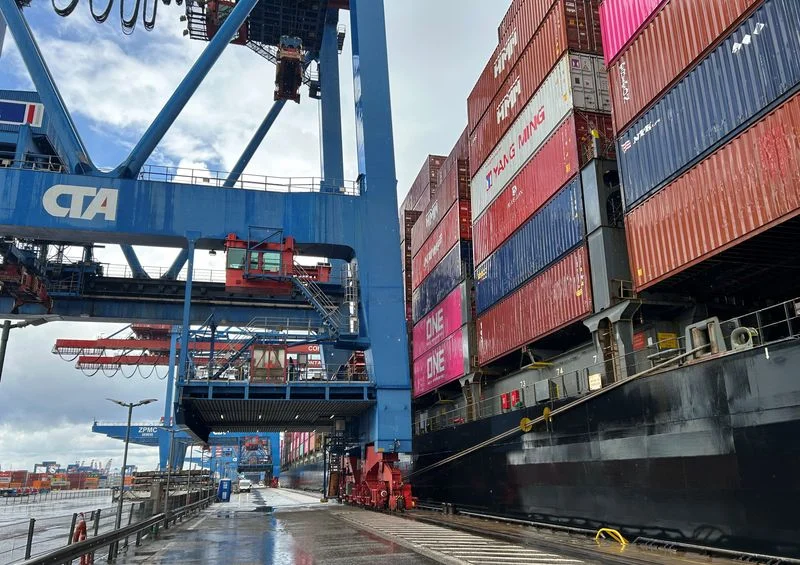

EU trade with US hits record despite tariff tensions, study shows
Business
Kawhi Leonard Returns to Toronto in Blockbuster Trade That Mirrors the 2018 Deal That Won Raptors a Title

TORONTO — Seven years after leading the Toronto Raptors to the first and only NBA championship in franchise history, Kawhi Leonard is going back to Canada in a blockbuster trade that has reshaped the Eastern Conference landscape and given Toronto the most compelling storyline in the NBA heading into the 2026-27 season.
The Los Angeles Clippers agreed to send Leonard to the Toronto Raptors in exchange for All-Star forward Brandon Ingram, guard Gradey Dick, unprotected first-round picks in 2031 and 2033, a 2027 first-round pick swap and two second-round picks in 2030 and 2033, according to ESPN’s Shams Charania, who first reported the deal Tuesday.
The transaction ends a seven-year Clippers tenure that produced three All-Star appearances, four All-NBA honors and a career-high 27.9 points per game last season but never came close to delivering the championship that both the team and Leonard sought when he chose Los Angeles over a return to Toronto in free agency in 2019. The Clippers, who went 42-40 and lost in the play-in tournament to the Golden State Warriors last season, now begin a full teardown.
The symmetry with 2018 is striking enough that analysts and commentators have noted it repeatedly since the deal became public. Eight years ago, Toronto was a strong regular-season team that could not break through in the playoffs. It traded its leading scorer, DeMar DeRozan, a recent lottery pick in Jakob Poeltl and draft capital for Leonard in the final year before his free agency. The result was an NBA title. Now, in 2026, Toronto is again a strong regular-season team that made noise before losing in the first round to the Cleveland Cavaliers. It has traded its leading scorer in Ingram, a recent lottery pick in Dick and draft capital for Leonard, again in the final year before his free agency.
Whether history repeats is an open question, but the personnel case for a strong Toronto team is real. The Raptors improved by 16 wins last season in their best offensive and defensive efficiency season in six years. Leonard, who maintained a career-high usage rate at 34 years old while playing 65 regular-season games, brings a scoring profile of the kind that Toronto has consistently lacked since the second iteration of the franchise’s championship window.
Leonard agreed to this deal for reasons ESPN sources described as grounded in familiarity and genuine competitive belief. The city of Toronto itself was a draw, as was the Raptors’ front office stability under executive vice president Bobby Webster. Most importantly, Leonard believes the Raptors can contend in the Eastern Conference. He will be eligible to sign up to a two-year, $123.7 million extension with his new team, according to ESPN’s Bobby Marks.
That extension eligibility was the single most critical variable shaping the entire trade. Leonard’s representatives had communicated to teams across the league that he was only willing to sign a contract extension with the Raptors, among teams outside Los Angeles, effectively collapsing his trade market down to one serious bidder. That leverage worked in Toronto’s favor in one sense, giving the Raptors a cleaner path to the deal without competition, but also created pressure to surrender meaningful assets since the Clippers knew Toronto was the only realistic taker willing to pay a full price.
Clippers president of basketball operations Lawrence Frank had said publicly in April, after his team’s early playoff exit, that the plan was to build around Leonard. “Our plan is to win with Kawhi,” he said at his end-of-season news conference. “At the appropriate time, we’ll sit down with Kawhi, and very similar to 2024, lay out our plan.” That plan unraveled when the Clippers made no long-term commitment to Leonard this offseason, sources told ESPN, leading Leonard’s camp to formally signal his openness to a Toronto return.
A separate but significant complication surrounds Leonard and the Clippers organization. The NBA has been investigating whether the Clippers circumvented the salary cap by channeling money to Leonard through a $28 million endorsement deal with green banking company Aspiration, which simultaneously held a $300 million, 23-year endorsement deal with the Clippers themselves. The outcome of that investigation could have implications for Leonard’s contract, though no formal ruling has been announced and the trade appears to have proceeded with full league awareness of the pending review.
For the Clippers, the Leonard trade is the final, formal acknowledgment that the organization is resetting. The franchise’s roster has been dramatically remade in a matter of months: James Harden and Ivica Zubac were moved at the trade deadline, Paul George left in free agency last summer, and now Leonard is headed to Toronto. Of the seven notable players assembled a year ago as part of an all-in championship attempt, only Brook Lopez remains. The Clippers now hold Ingram, a 28-year-old All-Star whose $40 million annual contract and recovery from a heel injury will shape what they can do next, alongside a collection of draft assets they hope to use in building a new core.
Toronto, meanwhile, wasted no time adding around Leonard’s return. The Raptors signed veteran forward Kyle Anderson, a former teammate of Leonard’s with the San Antonio Spurs, to a one-year deal. The team also confirmed a contract extension for head coach Darko Rajaković, ensuring coaching continuity as the franchise makes what is explicitly a win-now push with a player who will turn 35 during the coming season.
Scottie Barnes, Toronto’s rising young star, and Leonard together give the Raptors a forward pairing with the defensive versatility and offensive skill to compete with any team in the Eastern Conference. Whether Leonard’s body cooperates across a full playoff run, a concern that has shadowed every chapter of his career since his 2021-22 ACL season, remains the central risk in Toronto’s gamble. If he stays healthy, the Raptors have acquired one of the five best players in the NBA at a price that, relative to other recent superstar trades, analysts have described as closer to a bargain than an overpay.

A GOF Distribution Cut Is Likely Coming

In total, about 30 unique adverts appeared promoting child sexual abuse, although some of these were shared by multiple accounts.
The alias account was also shown about 20 ads featuring adult pornography.
The distribution of both child sexual abuse material and adult pornography are criminal offences in India, while Meta’s policy states that ads must not contain adult nudity, genitals or content that sexually exploits or endangers children. The BBC has reported all of the ads and the Telegram channels to the Indian authorities.
One ad showed a boy and girl, both of whom appeared to be about 12 years old, engaging in a sexual act.
Another showed a man with his arm around a girl, with text saying he was 52 and the girl was 12. “Click to watch more,” it said, linking out to a Telegram channel.
The BBC reported an advert to Instagram showing a very young girl in tears, with wording indicating that she had been sexually assaulted.
But 24 hours later, Instagram replied saying it hadn’t removed the advert because “our review team found that the advertiser’s ad does not go against our community standards”.
Meta later told the BBC that “no system is perfect, and our review process may not detect all policy violations”.
“We continue to run proactive detection technology on ads once they’re live, and anyone can report an ad to us that they think breaks our rules,” Meta said.
It added that when it becomes aware of apparent child exploitation it reports it to the National Center for Missing and Exploited Children (NCMEC), in compliance with the law. The NCMEC is the centralised global reporting system for the online sexual exploitation of children.
We reported two channels to Telegram for selling child sexual abuse videos.
One of them was subsequently taken down and replaced with a message saying: “This group can’t be displayed because it violated Telegram’s Terms of Service,” but the other continued to post new videos for sale.
Critics have previously accused the platform of not doing enough to prevent the sharing of criminal content.
The Dubai-based company is not a member of either the NCMEC or the Internet Watch Foundation, which also works with most online platforms to find, report and remove such material.
Telegram told the BBC that the company uses both automated and human moderation to eradicate child sexual abuse material (CSAM) from the app, and as a result it says it has “virtually eliminated the public spread of CSAM from its platform”.

Narendra Solanki from Anand Rathi Shares & Stock Brokers believes the upcoming results will largely reinforce the strength of domestic-facing sectors, while export-oriented industries like IT may continue to face pressure.
IT Likely to Remain Under Pressure
The IT sector is expected to remain in focus this earnings season as investors assess the impact of artificial intelligence-led disruption, delayed client spending and global uncertainty on growth prospects.According to Solanki, caution remains warranted despite attractive valuations.

“Results are around the corner, and the first results will start coming from the 9th. Coming to the IT sector, our positioning is neutral to cautious, especially in this quarter. The sector is currently facing multiple headwinds, right from AI disruption to the West Asia crisis. We are also seeing deals being delayed, with clients not committing upfront, so deal closures are not happening at the pace we used to see. These factors are likely to continue impacting the IT sector in the near term,” he said.
While near-term challenges remain, he believes the second half of the financial year could witness an improvement.
“One thing is certain: the second half is going to be better than the first half. However, one key risk remains whether there is any possibility of trimming the FY27 growth guidance, especially at the higher end. That is something the market should watch carefully in the management commentaries this quarter. The top-end guidance of around 2.5% to 3.5% now looks difficult, especially after recent commentary from Accenture. That is why our stance remains neutral to cautious in Q1,” he said.
FMCG May Spring a Positive Surprise
While markets have largely been optimistic on sectors such as auto ancillaries, manufacturing and power transmission & distribution, Solanki believes the biggest surprise could emerge from FMCG and discretionary consumption.
He points to easing inflation, lower crude oil prices and resilient demand trends as factors that could support stronger-than-expected earnings.
“Broadly, sectors like auto ancillaries, manufacturing and power T&D should continue to perform well. The surprising factor may come from the FMCG pack, where markets are currently cautious. However, there have been decent price hikes in the FMCG space, overall inflation has come down, crude oil prices have softened, and both rural and urban demand have shown resilience. So, there can be a positive surprise, especially in the FMCG or discretionary space,” he said.
He also expects domestic manufacturing, healthcare and banking to remain strong performers.
“Auto and auto ancillaries should continue to perform well. The hospitals segment within healthcare should also perform well. Banks are expected to remain strong, with overall credit growth at around 7.7%. Industrial growth data is also promising, so overall the domestic manufacturing sector should continue to perform well,” he said.
PSU Banks Continue to Outshine
Among financials, Solanki continues to favour public sector banks over their private-sector counterparts, citing consistent earnings growth, improving profitability and healthy asset quality.
“Compared with private banks, we remain committed to public sector banks because they have continuously posted better growth over the last seven straight quarters, and there is no reason for that momentum to stop. Return ratios are improving, asset quality continues to remain good, and provisioning has been very healthy, with more than an 80% provisioning run rate. We do not see any near-term risk and continue to favour public sector banks over private banks,” he said.
Real Estate Rally May Be Nearing a Pause
Although real estate stocks have staged a sharp recovery, Solanki believes much of the optimism has already been reflected in valuations. Rising inventory levels could begin to weigh on the sector in the coming quarters.
“Most of the rally has already been done. If you look at inventory build-up, it has risen from 14 months to 18 months, which is the first alarming sign. The good part of the rally is behind us, and after one or two quarters we could start seeing some consolidation or slack in the sector. Unsold inventory is steadily rising and now stands at around 18 months, which could impact the second quarter,” he said.
Management Guidance Will Be the Biggest Trigger
Beyond the headline earnings numbers, Solanki believes management guidance will play a decisive role in shaping investor sentiment, particularly in the IT sector where expectations may still be too optimistic.
“As I mentioned earlier, IT may be trading at historically lower valuations in terms of price-to-earnings ratios, but any cut in guidance by companies, especially in the first half, may not yet be fully priced in by the market. That will remain one of the key things to watch in the management commentaries,” he said.
The Bottom Line
The Q1 earnings season is shaping up as a test of sectoral divergence rather than broad-based strength. Domestic themes—including PSU banks, manufacturing, healthcare and auto ancillaries—are expected to remain resilient, while FMCG could emerge as an unexpected outperformer. In contrast, IT companies face heightened scrutiny, with investors closely tracking demand commentary and any revisions to growth guidance that could influence market sentiment in the months ahead.
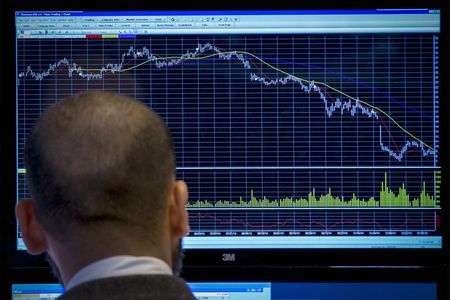
Indonesia recovers body of American pilot killed by rebels in Papua, military says
The Cook Government has known for more than a year this moment might arrive.
When former AFL star Nicky Winmar was charged over an alleged assault last May, a political risk emerged alongside the criminal proceedings.
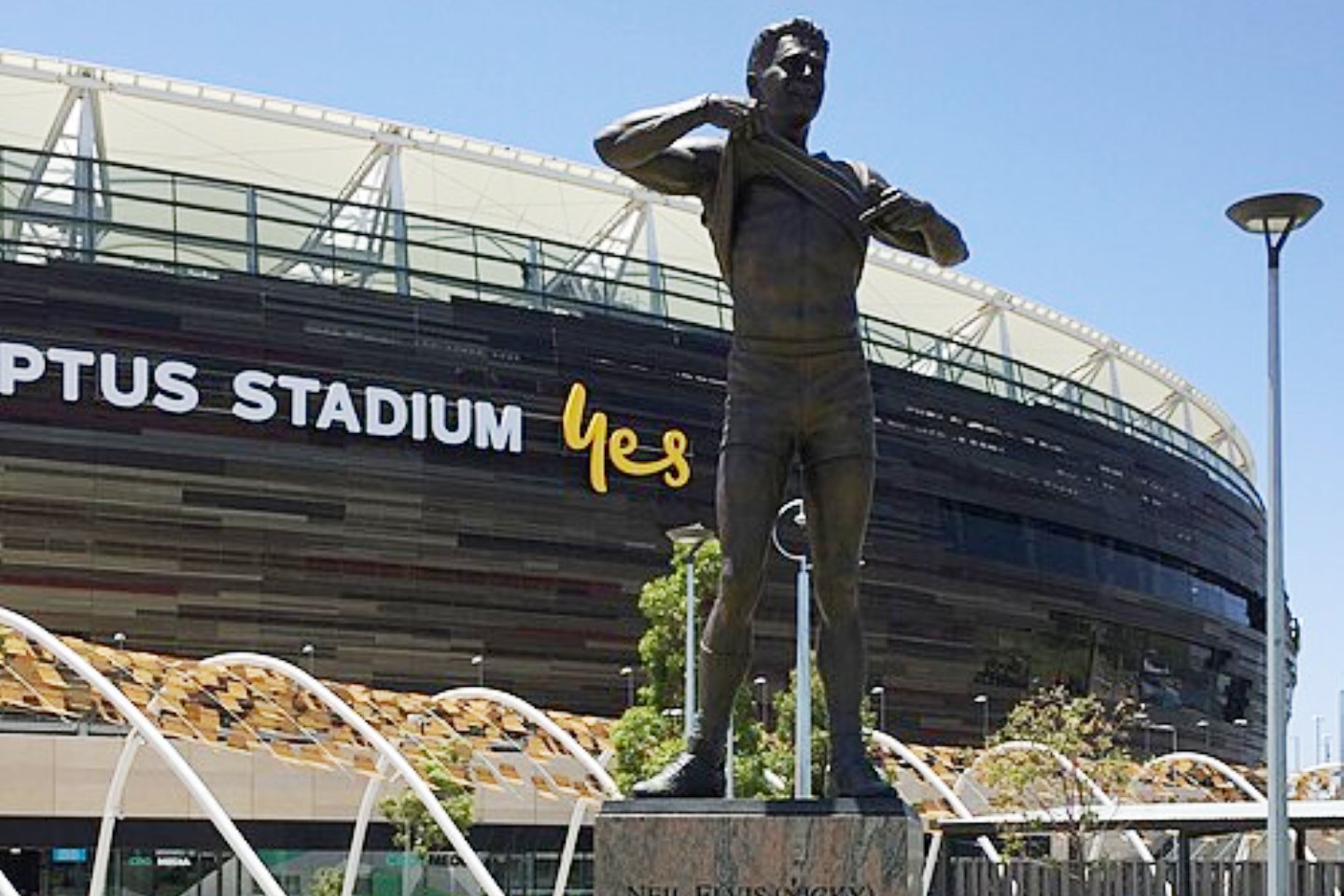
Winmar is not just another sporting great; He is the only individual honoured with a permanent statue at Optus Stadium, a monument supported by the State Government to commemorate his defining stand against racism in Australian football. It was unveiled by then-Premier Mark McGowan.
Now that Winmar has been convicted of assault offences against a female, the government can no longer avoid the question.
Does the statue stay?
Whatever answer it gives will come with political consequences.
If the government leaves the statue in place, critics will ask why Western Australia’s premier sporting venue continues to honour a man convicted of assaulting a woman.
Ministers regularly speak about respect for women and the importance of tackling family and domestic violence. Those statements will inevitably be measured against the decision they make about Winmar.
But removing the statue presents an equally difficult political challenge.
Winmar remains one of Australia’s most significant Indigenous sporting figures. His stand against racism in 1993 changed Australian football and became part of the nation’s broader story about race and reconciliation.
Imagine, for a minute, Winmar’s became just the second statue to be taken down in Western Australia because of the poor behaviour of the subject. The first featured Captain James Stirling, who led the 1834 Pinjarra Massacre for which Governor Chris Dawson has recently apologised.
Statues of John Septimus Roe (a member of the massacre party who didn’t fire a shot and also the surveyor-general charged with carving up land stolen from the Indigenous people) and the Explorer’s Monument at Fremantle that commemorates Maitland Brown (who led a punitive raid in which up to 40 Indigenous people were killed in retribution for the murder of three explorers) are still standing.
And that is where the Cook Government finds itself wedged.
This is a government that has already discovered how politically volatile Indigenous issues can become. The Aboriginal Cultural Heritage Act remains one of the defining political failures of its time in government, leaving ministers understandably cautious about decisions that intersect with Indigenous recognition and symbolism.
Against that backdrop, removing one of the city’s most prominent statues of an Indigenous person would be politically risky.
Leaving it untouched may prove no less so, and doubtless they will wait for the appeal period to expire before making the call.
Meanwhile, the AFL is no less wedged. The country’s highest-profile sporting body commissioned the statue and, presumably, still has a stake in its appearance at the stadium. Its position on this matter, given the slew of issues it has had with the poor behaviour of men, deserves scrutiny.


India’s June services growth slips to 17-month low as demand, hiring cool, PMI shows

Politics Home Article | The Lords should not be able to block legislation backed by MPs

Switzerland End 88-Year Wait With Historic World Cup Knockout Victory Over Algeria

Today’s NYT Mini Crossword Answers for July 3


-

 Fashion7 days ago
Weekend Open Thread: Staud – Corporette.com
-

 Crypto World3 days ago
Strategy authorizes up to $1.25B in Bitcoin sales under new capital plan
-

 Business7 days ago
Asia stock markets slide as tech shares slump
-

 News Videos4 days ago
MAJOR BITCOIN & MARKET UPDATE!!!! (MUST WATCH ASAP!!!)
-

 Tech3 days ago
Anonymous researcher drops 0-day ‘exploitarium’ repo
-

 Crypto World6 days ago
Coinbase, Circle Deepen Crypto Stock Losses Despite Resilient S&P 500
-

 Business3 days ago
Australia treasurer says alleged access of prime minister’s bank data ’incredibly concerning’
-

 Crypto World6 days ago
Kraken's xStocks Opens Bending Spoons IPO Registration to EEA Retail
-

 Sports6 days ago
FIH Pro League: India defeat Pakistan 7-1, register biggest win of campaign | Other Sports News
-

 Tech5 days ago
Bluekit phishing kit adopts browser-in-the-middle for login theft
-

 Tech6 days ago
Russian hackers now target Signal backup recovery keys
-

 Crypto World7 days ago
Tether (USDT) Passes Ether in Market Cap as ETH Drops Toward $1.5K
-
 Crypto World7 days ago
Hyperliquid Named on Singapore MAS Investor Alert Register
-

 Crypto World7 days ago
RTX holders must register wallets before token distribution begins
-

 Sports2 days ago
Broncos roster: OL Ben Powers (No. 74) entering final year of contract
-
 Business4 days ago
The AI boom won’t burst all at once. It will pop in ‘rolling bubbles’: Macquarie
-

 Tech5 days ago
Claude Code turned every engineer into three. Now companies need more product thinkers
-
 Crypto World7 days ago
SpaceX Called a Market Top Signal Just 2 Weeks After Its $86 Billion IPO
-

 Tech6 days ago
Silicon Valley paid to kill AI regulation, now it wants the rules back
-

 NewsBeat2 days ago
Presenter Caroline Flack’s brother Paul Flack dies aged 55
You must be logged in to post a comment Login