
Business
Block director Anthony Eisen sells $1.48m in company stock




Check out what’s clicking on FoxBusiness.com.
The U.S. Mint on Wednesday started selling $1 coins that feature President Donald Trump’s face.
“Available for purchase today at 12PM ET: 2026 President Donald J. Trump $1 Coin. These coins are also in circulation, so check your pocket change. Collect them today!” the U.S. Mint declared in a Wednesday morning post on X.
But the Trump-emblazoned coins cost a pretty penny — they are priced significantly higher than their $1 face value.
TREASURY UNVEILS $1 GOLD COIN WITH TRUMP’S IMAGE ON FRONT

The U.S. Mint is now offering these $1 Trump coins for sale. (United States Mint on X)
A roll of 25 coins is priced at a whopping $61, while the price for a bag of 100 coins is $154.50, according to the Mint’s website.
Fox News Digital reached out to the White House on Wednesday.
TRUMP URGES BIPARTISAN FEDERAL TAX INCENTIVE TO BRING FILM, TV PRODUCTION BACK TO US

President Donald Trump speaks to reporters before boarding Air Force One at Joint Base Andrews, Md., on Aug. 21, 2026. (Saul Loeb/AFP via Getty Images)
The front of the coin features the word “LIBERTY” over Trump’s likeness, and the years “1776 ~ 2026” below the president’s visage. The words “IN GOD WE TRUST” appear next to Trump’s head on the coin.
“Celebrate a historic American milestone, the official United States Mint-issued Semiquincentennial $1 Coin was struck to honor 250 years of great American heritage,” the page where the coins will be available for purchase states.
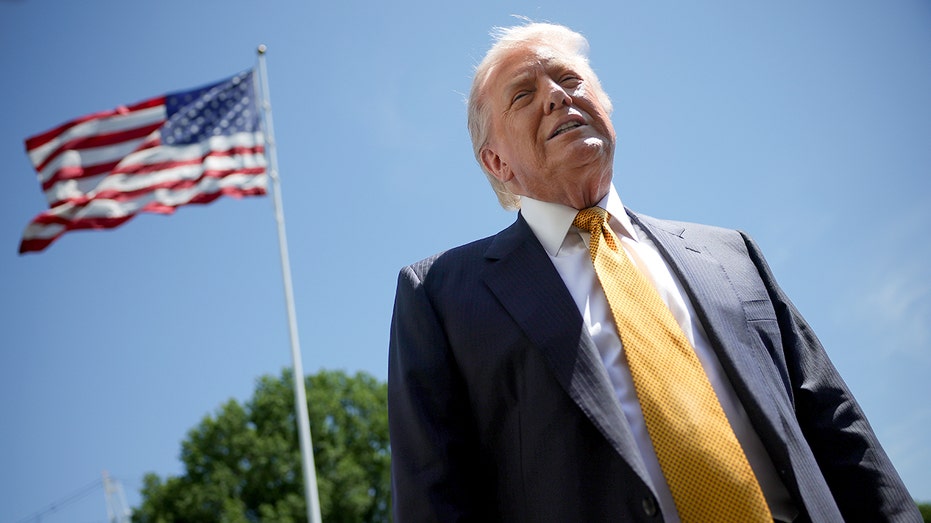
President Donald Trump speaks to the press as he departs the White House on May 12, 2026, in Washington, D.C. (Kevin Dietsch/Getty Images)
CLICK HERE TO GET FOX BUSINESS ON THE GO
“The coins — minted at the Philadelphia Mint — have circulating finishes but have never been placed into circulation. However, they may be still used as legal tender,” the product page notes.

Matternet CEO Andreas Raptopoulos discusses the race to scale drone delivery and the future of U.S. airspace economy on ‘Mornings with Maria.’
Uber is cutting roughly 10% of its workforce, or about 3,300 jobs, in an effort to streamline operations, the company announced on Wednesday.
The ride-hailing giant’s CEO, Dara Khosrowshahi, said in a memo to employees that the company is removing management layers, simplifying teams and refining where its teams are based.
“The changes we’re making today are designed to do two things: make Uber simpler and faster, and create more capacity to invest in our future,” Khosrowshahi said.
“A leaner organization will mean clearer ownership, faster decisions, and more time spent building rather than coordinating,” he said. “It will also generate savings that we intend to reinvest in growth, innovation, and the capabilities that will matter most over the coming years.”
HERTZ, UBER TEAM UP TO BUILD ROBOTAXI FLEETS IN MAJOR MOBILITY PUSH

CEO Dara Khosrowshahi said that the company is removing management layers, simplifying teams and refining where its teams are based. (Lam Yik/Bloomberg via Getty Images)
Khosrowshahi said Uber’s revenue has nearly tripled in the last roughly five years, but said the company’s expansion has also brought “more complexity.”
“That growth has also brought complexity: more layers, more coordination, more fragmented ownership, and in some cases structures that made sense when businesses were smaller but no longer serve us well at our current scale,” he said.
As part of the restructuring, Uber said it has reduced the number of employees sitting seven or more layers below the CEO by 20% and has cut the number of “micro-teams” – those with only one to two direct reports – by nearly 50%.
UBER, RIVIAN INK $1.25B DEAL TO PUT THOUSANDS OF ROBOTAXIS ON US STREETS

Khosrowshahi said Uber’s revenue has nearly tripled in the last roughly five years, but wrote that that expansion has also brought “more complexity.” (Jefferson Siegel/Reuters)
“The outcome is a simpler org chart geared toward building versus managing,” Khosrowshahi said.
The company is also combining some teams where “fragmentation was creating duplication and slowing decisions,” according to Khosrowshahi.
Uber also said it will concentrate teams in a smaller number of key hubs, including New York and San Francisco. The company is asking the majority of its remote workers to relocate to an office and said that going forward, only about 1% of employees will be remote.
LAX APPROVES RIDESHARE FEE HIKE THAT COULD PUSH UBER AND LYFT FARES SHARPLY HIGHER

The company is also combining some teams where “fragmentation was creating duplication and slowing decisions,” according to Khosrowshahi. (David Paul Morris/Bloomberg via Getty Images)
Uber will continue requiring employees to work from an office three days per week, according to Khosrowshahi.
GET FOX BUSINESS ON THE GO BY CLICKING HERE
“I realize this is a lot of change, but we decided it was better to make one big shift rather than multiple small ones,” Khosrowshahi said. “We also know organizational changes can be hugely distracting, and our job is to create an environment that allows you to focus and do your best work. With these decisions now made, our focus is on the future.”

There is another, less tangible ingredient: Lady Beckham herself.
The woman who once seemed almost comically aloof has become increasingly willing to show the person behind the brand. She’s been known to post videos demonstrating her beauty products – often with wet hair, seemingly filmed in her bathroom.
Lisa Maynard-Atem, a business strategy adviser, said this has been crucial.
“She hasn’t abandoned the polish or aspiration that you expect from a luxury brand, but she has added personality,” she said. “That creates connection and people buy into brands emotionally as well as commercially.”
Maynard-Atem added that Lady Beckham’s openness about the firm’s struggles has also helped.
“By acknowledging the losses and some of the mistakes that were made, she makes the eventual turnaround more credible. The failure hasn’t been edited out of the story. It has become part of the story,” she said.
Luxury fashion remains a competitive business, and one profitable year is no guarantee of future success.
The key is to keep innovating, according to Bedford.
“Success changes with the trends and probably the biggest factor is the creative director,” she said.
“Fashion is not an easy industry to enter and certainly not for the faint of heart. The founders who last are the ones who treat setbacks as information to learn and then build from, rather than something to hide.”
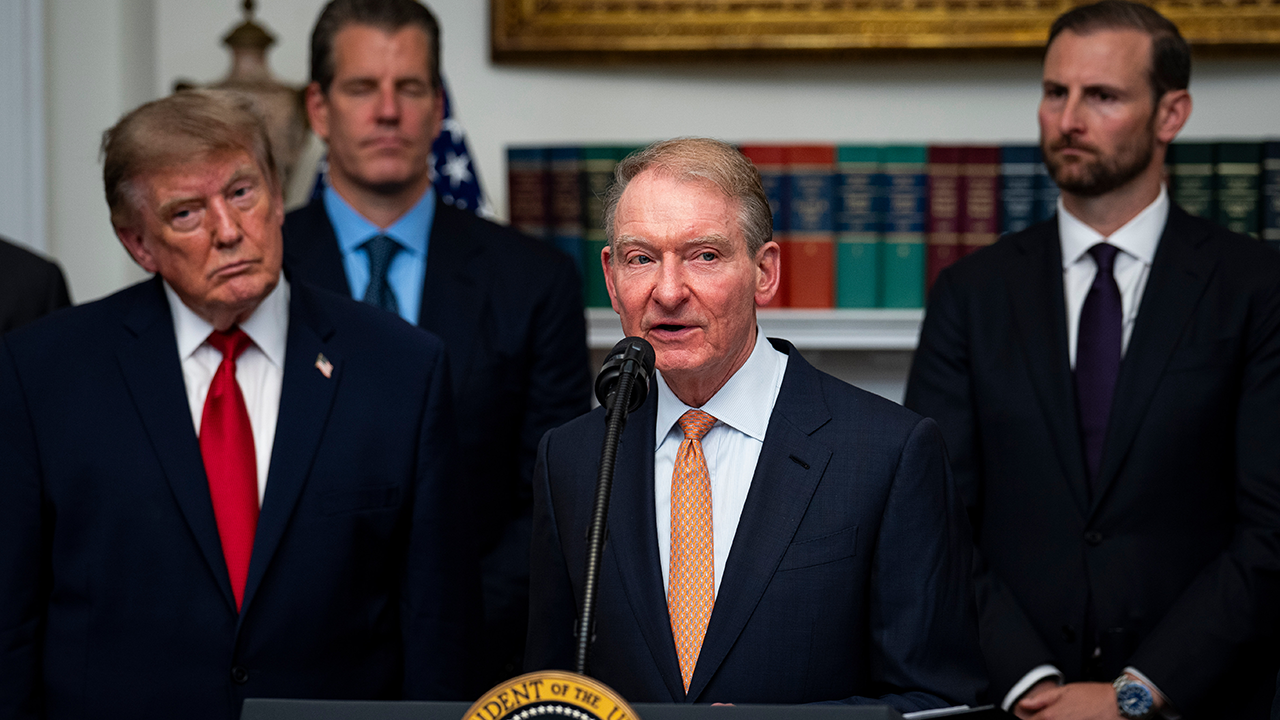
SEC Chairman Paul Atkins details what he calls the agency’s most historic step yet on crypto regulation and expresses hope that the CLARITY Act will reach President Trump’s desk.
The Securities and Exchange Commission (SEC) is moving to give crypto companies a clearer path to raise capital in the United States as the agency seeks to bring crypto-asset investment and innovation back onshore while keeping activity under U.S. law.
SEC Chairman Paul Atkins joined FOX Business’ Cheryl Casone on “Mornings with Maria” to discuss the agency’s new crypto proposal, its exemptions and the broader push to make the U.S. the “crypto capital” of the world.
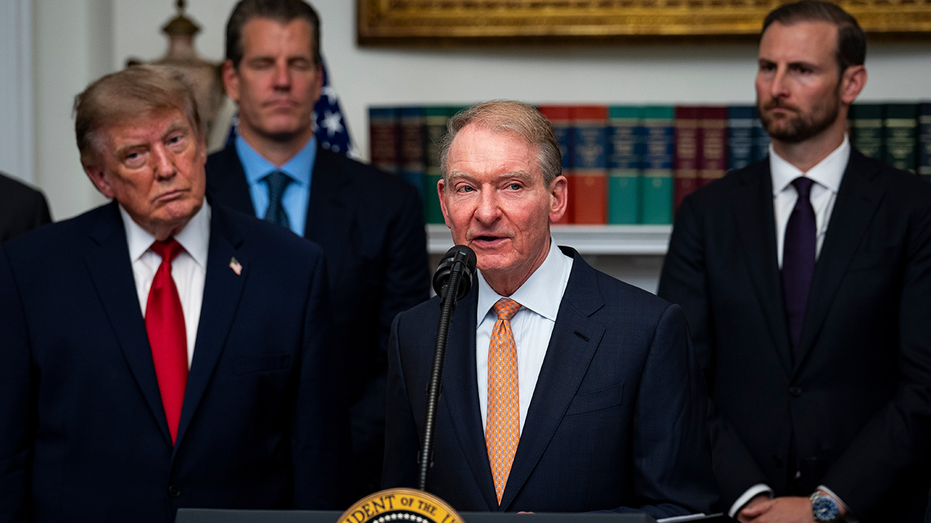
SEC Chair Paul Atkins unveils proposal to bring crypto investment back to the U.S. (Al Drago/The Washington Post/Bloomberg / Getty Images)
“Our regulation crypto assets that we’re calling it, that we’ve proposed is our most historic step yet to try to bring reality to the president’s call to make the United States the crypto capital world,” Atkins said.
The proposal comes as Congress considers the CLARITY Act, which Atkins said he hopes will ultimately reach the president’s desk. The SEC is moving ahead with its own proposal and seeking public comment as it develops a regulatory framework alongside Congress’ work on the legislation.
SEC Commissioner Mark Uyeda discusses OpenAI and Anthropic’s IPO ambitions, new crypto regulations and President Donald Trump’s digital asset agenda on ‘Mornings with Maria.’
Atkins framed the proposal as an effort to reverse an exodus of crypto innovators and give companies more reason to develop products and raise money in the United States.
TRUMP-LINKED WORLD LIBERTY CRYPTO VENTURE GETS PRELIMINARY APPROVAL FROM CURRENCY COMPTROLLER
“I think this is an important step to try to reassure, to bring back on to the United States shore, innovators whom we have over the past administration’s four year term, chased offshore, frankly, for them to develop their products and raise money abroad,” he said.
Pennsylvania Senator Dave McCormick discusses the Senate’s upcoming priorities. McCormick expresses frustration over the recess delay on the critical third reconciliation package to pass the Save America Act.
He also argued that keeping investment opportunities in the U.S. matters because Americans can already move capital across borders online.
GET FOX BUSINESS ON THE GO BY CLICKING HERE
“We can’t fool ourselves. American investors in the age of the internet can send their money anywhere. So we need to make sure that they can do it here in the United States under United States law,” Atkins said.

Junior workers can often face the biggest dilemma. Felicity, now mid-career, remembers one horror story from her first job as a teenager.
Working at a car garage aged 17, she was suddenly thrust an envelope to give money for a mechanic who was retiring. The team was small and tight-knit, so everyone was expected to contribute.
“Not only did I not really know anyone at that stage, but I also had no money to give – I was still living at home and being paid hardly anything.
“As it was after lunch, I’d used my notes. In a panic I threw in all the spare change I had left, basically a load of coppers.”
She says: “I thought I’d got away with it until the person collecting shouted ‘who on earth put in all this change’. Everyone laughed and I couldn’t ever admit it was me.”
Today, Felicity usually gives between £5 and £10 but goes up to £20 for a close work friend or long-time colleague.

Londoners are able to hail the UK’s first robotaxis – as Uber today becomes the first company to launch a self-driving minicab.
Initially, it only has 15 autonomous vehicles with a licence to operate in the city, and each one must have a human safety driver behind the wheel ready to take control if anything goes wrong.
Uber said it surveyed London-based customers via the app and more than 100,000 said they would choose a self-driving taxi if one was available, despite incidents of driverless rides malfunctioning in US cities where they already operate.
As I found out when I became the first UK journalist to hail one, it was mostly smooth but the safety driver did intervene on one occasion.
At the moment the UK fare for a robotaxi ride will be the same fare as a standard UberX, Uber Electric, or Uber Comfort journey, with upfront fares shown in the app.
Taking a self-driving ride will only appear as an option in the app after the journey has been booked, and if one of its cars is available nearby.
Uber’s global head of autonomous mobility and delivery Sarfraz Maredia said the plan was to phase them in over a period of several years.
“We always want consumers to be able to request a human ride or an autonomous vehicle, and because the market’s growing, we expect that there will be human drivers on Uber London for a long time to come,” he said.
The Ford Mustang electric vehicles which make up Uber’s current small fleet are fitted with the UK tech firm Wayve’s driverless car technology, which uses AI to analyse data about what is going on around it in real time, gathered by sensors in a bar on the roof of the vehicle and elsewhere.
The vehicles are not pre-programmed – their actions are determined on the spot depending on what is going on.
Google’s autonomous car company Waymo and the Chinese tech giant Baidu are also vying to launch services in the UK, and the competition is fierce.
Wayve chief executive Alex Kendall described developing the technology as “the space race for our generation” but added there were some “really hard problems to solve” along the way.
“What we’ve done over time is pioneer a completely new approach to autonomous driving, making it possible to bring this to a busy and complex city like London and scale it globally,” he said.
A widespread outage affecting Microsoft 365 stretched into its third day this week, with users of Outlook, Teams, SharePoint and OneDrive for Business continuing to report intermittent access problems even as Microsoft said the vast majority of the disruption had been resolved.
The outage, which Microsoft is tracking internally under the incident number MO1465074, began at 3:08 p.m. UTC on Monday, Aug. 31, according to the company. Microsoft attributed the root cause to a problem within a core authentication configuration shared across multiple Microsoft 365 services, rather than an issue isolated to any single product.
“The root cause of the outage is an issue within a core authentication configuration used by multiple Microsoft 365 services,” the company said in a status update, adding that the disruption had triggered a broader service degradation designation for Microsoft 365 Business and Enterprise customers.
Outlook was among the first and most visibly affected services, with users reporting delays and outright failures in sending and receiving email, along with authentication errors and problems searching mailbox content. User reports on the crowdsourced outage-tracking site Downdetector began surging around 11:30 a.m. ET on Monday and had climbed past 5,000 by early afternoon, with additional complaints flooding social media platforms throughout the day.
Microsoft said its investigation initially pointed to a misconfiguration affecting how authentication components were deployed across a portion of its infrastructure.
“Our investigation indicates that a misconfiguration issue may be preventing authentication components from deploying as expected to a portion of infrastructure, and we’re reexamining recent changes made to the service to determine why this is occurring,” the company said in an update posted to its Microsoft 365 Status account.
As the outage continued into Monday evening, Microsoft confirmed that its impact extended well beyond Outlook and Exchange Online, the email and calendaring backbone used by millions of businesses. The company said OneDrive for Business, SharePoint Online, Microsoft Teams, Microsoft Purview and Microsoft Defender XDR were also affected, along with the Microsoft 365 Admin Center and Universal Print.
“Additionally, we’ve confirmed that the authentication component issue impacts other services beyond Exchange Online,” Microsoft said, directing customers to its status page for details on the specific ways each affected service was behaving.
By Tuesday, the outage had not fully resolved, prompting Microsoft to continue publishing incremental updates as engineers worked through a remediation process that included restarting affected infrastructure and reapplying a targeted fix to the authentication systems at the center of the problem.
“Our mitigation actions are continuing to progress within the remaining affected infrastructure,” Microsoft said in a Tuesday update. “Indications from telemetry remain positive, and we’ve confirmed service availability is improving. We’re entering a period of extended monitoring to ensure a full resolution is in place.”
The company’s messaging throughout the incident emphasized gradual, uneven recovery rather than a single clean fix, a pattern consistent with prior large-scale Microsoft 365 outages that have often required extended monitoring periods even after initial telemetry data showed improvement.
By early Wednesday morning, Microsoft indicated that conditions had stabilized significantly for most customers.
“Service availability remains stable above 99 percent,” Microsoft said in a status update posted at 6:29 a.m. ET Wednesday, adding that “the majority of users should no longer be seeing impact from this issue.”
Even so, scattered reports of ongoing trouble continued to surface into Wednesday, including separate tracking on outage-monitoring sites showing renewed spikes in complaints specifically tied to Microsoft Teams, suggesting that while the broader authentication issue had largely subsided, some customers and services continued to experience residual effects.
Microsoft 365, the cloud-based subscription suite formerly known as Office 365, provides access to core productivity applications including Word, Excel, PowerPoint, Outlook and Teams, along with enterprise-focused services such as SharePoint and OneDrive that many businesses rely on for document storage, collaboration and internal communication. Because so many organizations depend on these tools for day-to-day operations, outages affecting the platform tend to generate an outsized wave of public complaints and business disruption relative to their technical scope, particularly when authentication systems are involved, since login failures can lock users out of multiple services simultaneously rather than affecting a single isolated feature.
This week’s incident adds to a string of significant Microsoft 365 disruptions in 2026. In January, a separate outage tied to authentication and mail-flow problems in North American infrastructure stretched for roughly ten hours, affecting Outlook, Defender and Purview before Microsoft confirmed the impact had been resolved. At the peak of that earlier incident, outage reports on Downdetector topped 15,000, with some affected businesses describing significant disruption to daily operations, including delayed communications with clients.
Independent monitoring services that track Microsoft 365’s uptime over time have noted that the platform has experienced a handful of major disruptions each year in recent years, with durations typically ranging from a few hours to, in more severe cases, closer to a full day. Analysts who study cloud infrastructure reliability have pointed to the increasing complexity of large, interconnected cloud platforms as a persistent challenge for major providers, even as those same companies continue investing heavily in redundancy and failover systems designed to prevent exactly this kind of widescale service degradation.
Microsoft has not yet published a full post-incident report detailing the underlying technical root cause of this week’s authentication misconfiguration or outlining specific steps the company plans to take to prevent similar disruptions in the future. Such detailed retrospectives typically follow major outages after monitoring periods conclude and engineering teams complete a full review of the incident.
For now, Microsoft has continued to direct affected customers to its official Microsoft 365 Status page and social media account for the most current information as monitoring continues, while cautioning that some users may still experience intermittent effects even as overall service availability holds above the 99% threshold the company reported Wednesday morning.

Operator
Good evening, ladies and gentlemen, and welcome to the Phreesia Second Quarter Fiscal 2027 Earnings Conference Call. [Operator Instructions] First, I would like to introduce Balaji Gandhi, Phreesia’s Chief Financial Officer. Mr. Gandhi, you may begin.
Balaji Gandhi
Chief Financial Officer
Thank you, operator. Good evening, and welcome to Phreesia’s earnings conference call for the second quarter of fiscal 2027, which ended on July 31, 2026. Joining me on today’s call is Chaim Indig, our Chief Executive Officer. A more complete discussion of our results can be found in our earnings press release and in our related Form 8-K submission to the SEC, including our quarterly stakeholder letter, both issued after the markets closed today. These documents are available on the Investor Relations section of our website at ir.phreesia.com.
As a reminder, today’s call is being recorded, and a replay will be available on our Investor Relations website at ir.phreesia.com following the conclusion of the call. During today’s call, we may make forward-looking statements, including statements regarding trends, our anticipated growth, our strategies, predictions about our industry and the anticipated performance of our business, including our outlook and visibility regarding future financial results.

Almost half of people in Britain live in areas where economic growth does not translate into a better quality of life with a “stark” North-South divide in the spending power of households, a new report finds.
Researchers at consultancy firm PwC said every region the north of England, midlands and Wales had a lower spending power than the country’s average, with London and the South East comfortably above.
The findings come as Prime Minister Andy Burnham has pledged to tackle the cost of living and regional inequalities in order to boost living standards.
But questions remain over the new PM’s economic policies with surges in UK government borrowing costs set to impact public spending choices.
The report released on Thursday said the equivalent of 12.5 million households – 46% – lived in parts of the country where economic growth, often seen through increased business investment and job opportunities, were not leading to better living standards.
It said households in the north east of England had a spending power 6.6% below the national average, equivalent to £1,542 less a year. The north west was £1,493 less, while Yorkshire and the Humber were worst off with spending power down £1,917 comparatively.
Meanwhile, households in the South East were found to have spending power 9% above the national average, worth an additional £2,154 a year, followed by London.
Household spending power is seen as a good measure of whether economic growth is improving living standards.
PwC says it measures this by looking at income after taxes and housing costs, and takes into account the size and makeup of a household – which is aimed at giving a better idea of the money available to meet other expenses.
The UK has seen years of weak growth, although the economy expanded by 1.2% in the first six months of this year, according to official figures.
Most countries want economic growth because it usually means people spend more, extra jobs are created, more tax is paid to the government and workers get better pay rises.
All this together, in theory, leaves people better off – but it takes time for the benefits to be felt, and it does not necessarily benefit everyone. According to PwC, “only a fraction” of a rise in GDP – which a measures economic growth – leads to increased spending power.
Researchers said while there was a clear North-South divide in the spending power of households, there were also such examples of spending power differences within areas deemed better off, such as London and the south east.
For example, Richmond’s average annual disposable income was the highest in London at £35,448 – almost double the £18,384 recorded in neighbouring Hammersmith and Fulham.
“The research shows just how differently prosperity is experienced across the UK, with stark variations not only between regions but on each other’s doorstep,” said Rachel Taylor, government and health industries leader at PwC.
Tricia McLaughlin explains how data centers in Loudoun County, Virginia, have allowed the community to slash property taxes by 30 percent while funding state-of-the-art schools, hospitals and community centers.
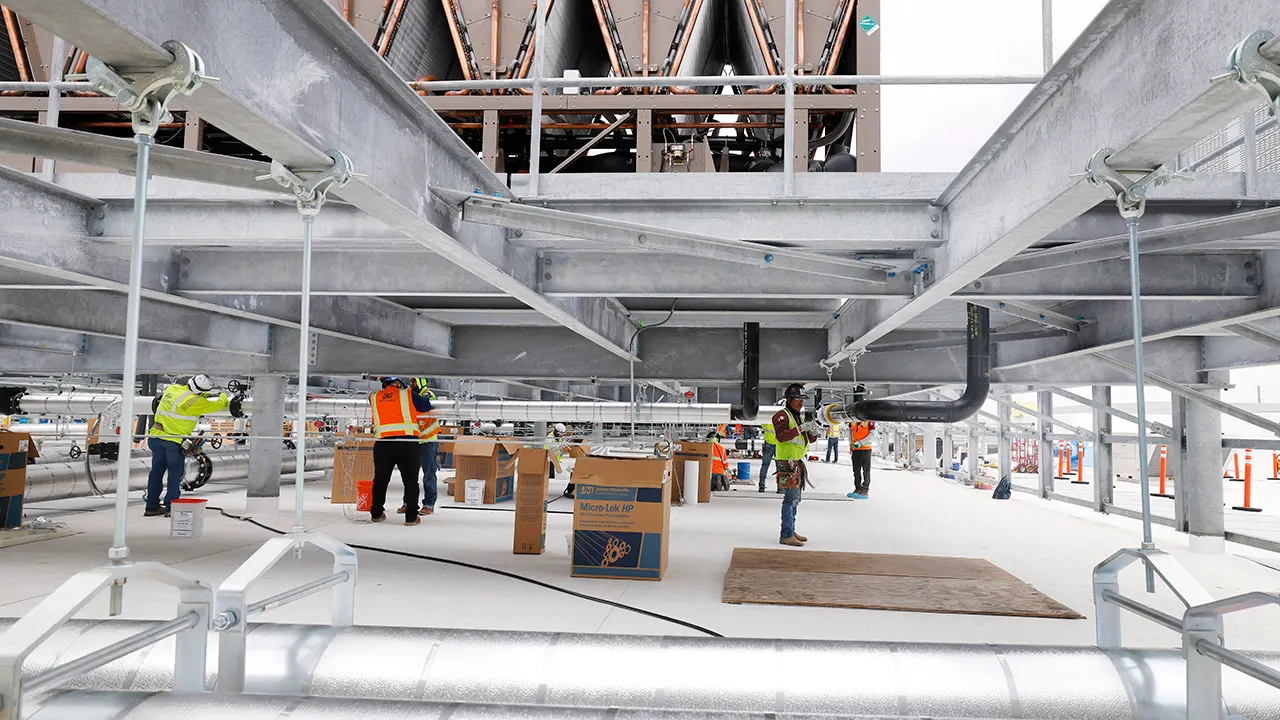
The rapid buildout of artificial intelligence (AI) infrastructure is expected to accelerate in the years ahead, with a new analysis projecting investment in the sector will top $31 trillion through 2050.
A report by PwC projects that capital expenditures on AI infrastructure will reach $31.6 trillion by 2050 as companies invest in building the computing capacity to power models, as well as upgrade the tech as it advances.
It added that the $31.6 trillion estimate represents the central scenario within a plausible range of about $22 trillion to nearly $50 trillion.
Annual investment in data centers is expected to rise from roughly $800 billion a year in 2026 to $1.8 trillion per year in 2050.
X REVEALS FOREIGN ADVERSARY BEHIND FAKE ACCOUNTS DISSEMINATING ANTI-DATA CENTER MESSAGING
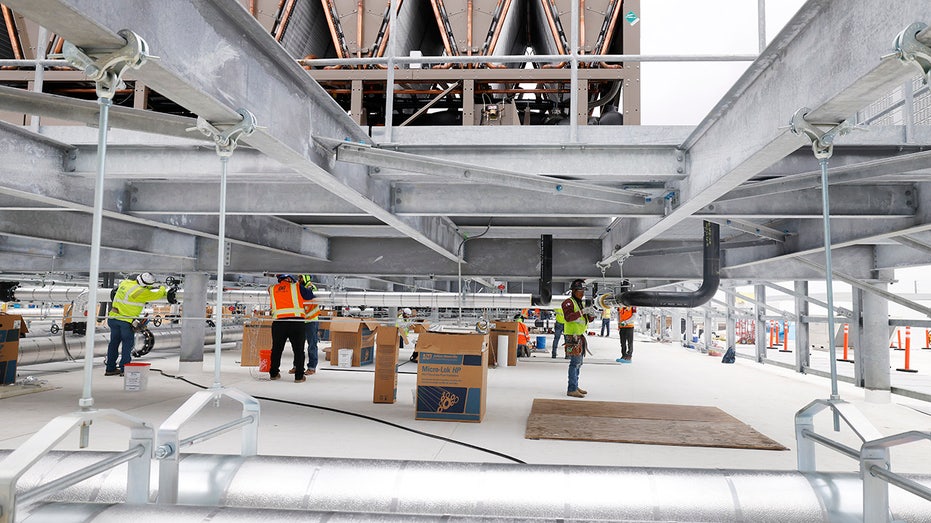
Investment in data centers is expected to top an estimated $31.6 trillion by 2050, according to an analysis by PwC. (Tom Fox/The Dallas Morning News via Getty Images)
“AI infrastructure is becoming one of the defining capital allocation challenges of the next generation. It cuts across technology, energy, real estate, supply chains, regulation and financing. This changes how infrastructure investors need to think about capital requirements, risk and returns,” said Clara Cutajar, global infrastructure leader at PwC Australia.
The Americas are projected to account for $16.5 trillion of the $31.6 trillion in estimated investment through 2050, with the U.S. alone accounting for about $15.1 trillion – or about 48% of the global total.
Cumulative capex in the Americas could rise to $27.1 trillion through 2050 in the upside scenario.
NEW REPORT WARNS AI DATA CENTER BOOM SQUEEZES MEMORY-CHIP SUPPLY, COULD RAISE EVERYDAY TECH COSTS
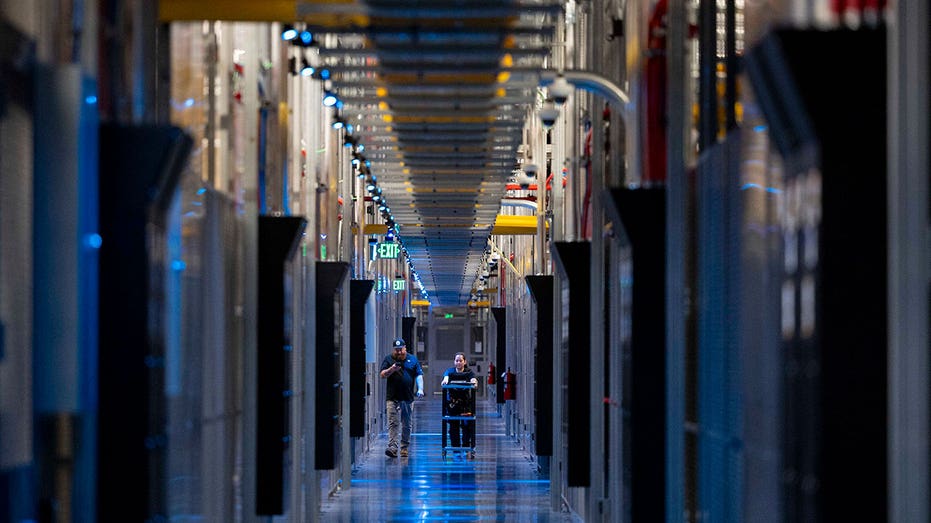
The report said the Americas would receive $16.5 trillion in investment through 2050 in the central estimate, with an upside of $27.1 trillion. (Amanda Andrade-Rhoades for The Washington Post via Getty Images)
PwC wrote that the “lead in AI infrastructure is wider than in any major industrial category since postwar manufacturing. That’s because the U.S. remains central to the advanced chip ecosystem and is home to the largest AI model developers, hyperscalers, and AI-native businesses.”
“Talent, capital, and new ventures continue to cluster around that base, and facilitative state-level policy compounds the country’s lead,” it added.
The report said that of the $31.6 trillion estimate, the Asia-Pacific region would account for $8.2 trillion in cumulative capex through 2050.
China and India are the largest sources of demand, owing to their large populations, rapidly expanding digital economies, and headroom for AI to embed in business and consumer activity.
NVIDIA CEO JENSEN HUANG RIPS ‘THE BAND-AID OFF’ AS AI CHIP GIANT RESETS EXPECTATIONS
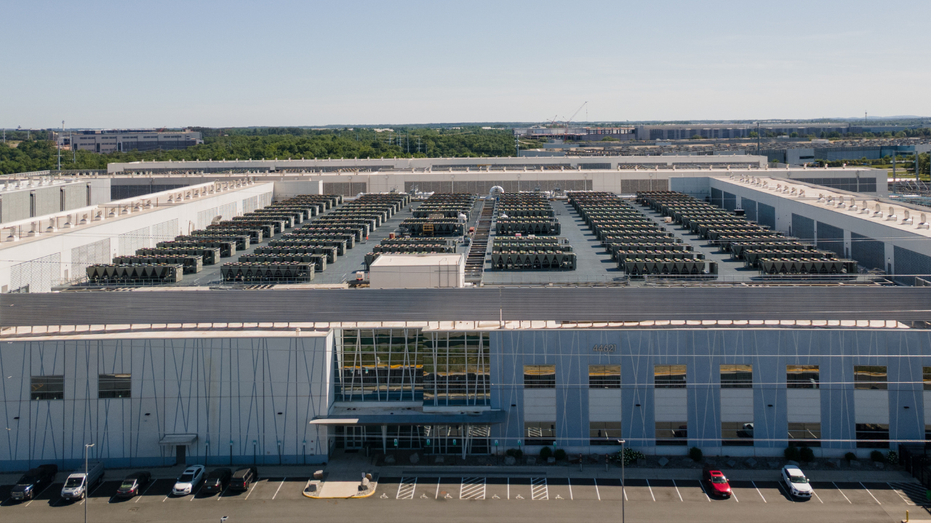
The level of investment in AI infrastructure is projected to vary across different regions of the world. (Lexi Critchett/Bloomberg)
Europe’s share of the cumulative capex estimate would be $5.6 trillion through 2050, well below its proportion of global GDP, due to power constraints, planning friction and fragmented regulation across countries.
The Nordic countries were cited as a credible alternative to constrained Western European hubs, given their energy grids that are heavy on renewables and have electricity prices 40%-50% below other parts of Europe, as well as climates that reduce cooling loads.
Other regions detailed in the report include the Middle East, which would see an estimated $1.1 trillion in cumulative capex through 2050, while Africa would see $255 billion over that period.
GET FOX BUSINESS ON THE GO BY CLICKING HERE
“The AI buildout is not a rising tide that will naturally lift all boats. Capturing this investment requires active positioning. Investors should recognize data centers as hybrid assets with a complicated risk profile,” Cutajar said.

FC Bengaluru United reappoint Mohanraj as head coach ahead of new campaign | Football News

New York bans AI in primary school, three months after Norway did

Musik Old Money vibes (tiktok version)





-

 Fashion5 days ago
Weekend Open Thread: Maeve – Corporette.com
-

 Crypto World6 days ago
Bitcoin’s 22% rally now needs real demand to outlast Treasury liquidity boost
-

 Business6 days ago
Apple Confirms September 9 Keynote and Reveals Its Full Pre-Order Schedule
-

 Business6 days ago
Salesforce Stock Soars 19% as Blowout Earnings and Agentforce AI Growth Silence Software Skeptics
-

 Business5 days ago
Onto Innovation Stock: AI’s Next Bottleneck Is Yield (NYSE:ONTO)
-

 Crypto World7 days ago
NVIDIA revenue hits $96.2B as AI demand doubles
-

 Crypto World5 days ago
Bitcoin price tests $82K resistance as Brandt stays long
-
 Tech4 days ago
Hugging Face built a $4.5 billion empire on free AI models. Now Nvidia is buying it for $12.9 billion
-

 Business5 days ago
iPhone 18 Pro Pre-Orders Could Shift to Saturday as Apple Reportedly Avoids September 11 Anniversary
-

 Tech7 days ago
Claude Cowork gets its own browser that doesn’t touch your tabs, bookmarks, or saved passwords
-

 Crypto World6 days ago
Truflation calls for Fed rate cut after PCE forecast
-

 News Videos4 days ago
Charlie Munger on Robinhood: No one should believe that Robinhood’s trades are free
-

 Crypto World7 days ago
GENIUS Act missed its deadline as OCC writes rules anyway
-

 Tech5 days ago
PaperCut releases second emergency patch for exploited flaws
-
 Entertainment6 days ago
‘Adults’ Creators Break Down Season 2’s Most Shocking Moments and Tease a Potential Season 3
-

 Tech4 days ago
Tamagotchi Ring Takes the 30-Year Digital Pet and Places it on Your Finger
-

 Business7 days ago
AI Assistant Startup Instinct Rockets to $2.5 Billion Valuation in Weeks Amid Investor Feeding Frenzy
-

 Tech6 days ago
The fix for the AI agent that hijacked a company’s DNS: it can propose the change, but it can’t approve it
-

 Tech4 days ago
As the influencer economy drives retail sales, Seattle startup raises $22M to play matchmaker
-
 NewsBeat4 days ago
Trump posts AI video of ‘Lake America’ being protected by an army of bequiffed ‘Donald Ducks’
You must be logged in to post a comment Login