
Business
BMW’s Cheaper iX3 Reportedly Coming to America in March 2027 With Two New Entry-Level EV Options, Report Says

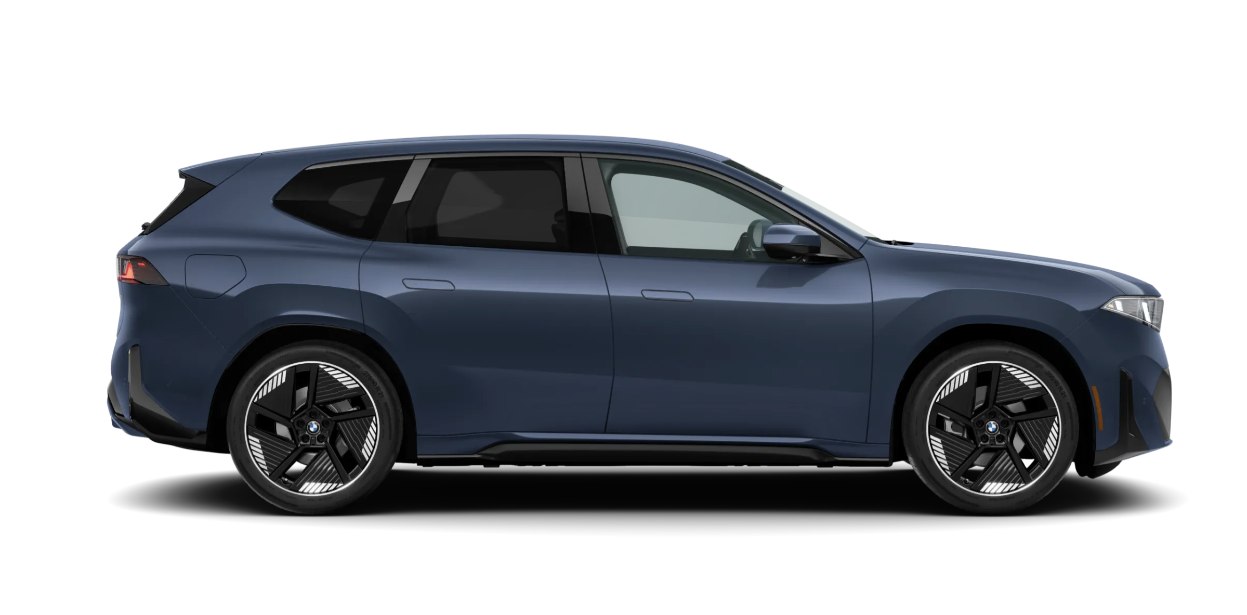
BMW’s more affordable electric SUV is reportedly headed to American showrooms next spring, according to a new report from BMWBLOG, which says the entry-level iX3 40 and iX3 40 xDrive are set to arrive in the U.S. in March 2027 — roughly four months after production is expected to begin.
The report adds specificity to a rollout plan BMW has been gradually confirming since the current-generation iX3 debuted last fall, filling out a lineup that started at the top of the price range and is now working its way down to more budget-conscious buyers.
A lineup built from the top down
BMW’s Neue Klasse-based iX3, the automaker’s next-generation electric SUV platform, launched in the U.S. earlier this year in its most powerful configuration, the dual-motor iX3 50 xDrive. That version starts at $61,500 before a $1,350 destination and handling charge, according to TopElectricSUV, and is offered in Sport, M Sport and M Sport Professional trims priced up to $65,500. The 50 xDrive produces 463 horsepower and 476 pound-feet of torque, reaching 60 mph in 4.7 seconds with a top speed of 130 mph, and BMW has said the model can travel as far as 434 miles on a single charge under EPA testing with certain wheel configurations, according to Jalopnik.
The 40 and 40 xDrive variants due next March represent a step down in both price and performance, aimed at broadening the iX3’s appeal to buyers who don’t need the top trim’s full output.
What the entry-level variants offer
The base iX3 40, which BMW has already introduced in European markets, ditches the dual-motor setup entirely in favor of a single rear-mounted motor, making it a rear-wheel-drive vehicle rather than all-wheel drive. According to BMWBLOG’s earlier reporting on the model’s European debut, the rear motor produces 315 horsepower and 369 pound-feet of torque, enough for a 0-to-62-mph sprint in 5.9 seconds and a top speed of 124 mph.
The battery pack is also smaller in the base version — 82.6 kilowatt-hours, compared with the 108.7-kWh pack in the 50 xDrive — resulting in a WLTP-rated range of 635 kilometers, or about 395 miles, roughly 106 miles less than the range-topping model offers on the same test cycle. A separate report from TopElectricSUV indicates BMW plans to introduce the all-wheel-drive 40 xDrive variant at a U.S. price under $55,000, positioning it as a mid-tier option between the base 40 and the flagship 50 xDrive.
Pricing remains unofficial
BMW has not released official U.S. pricing for either 40 variant, and the automaker has yet to formally confirm the 40 xDrive as a U.S.-market product at all, according to BMWBLOG’s most recent report. Based on how the German-market iX3 40 is priced relative to the 50 xDrive there — roughly 10% less — BMWBLOG estimated that applying the same discount to the U.S. 50 xDrive’s $61,500 starting price would put a base American iX3 40 somewhere in the mid-$50,000 range, above the sub-$55,000 figure that had circulated for the xDrive variant specifically back in April.
BMWBLOG cautioned that BMW has room to land pricing anywhere within that broader range, noting that the 50 xDrive itself ultimately launched above its earliest rumored price point when it debuted in the U.S. earlier this year.
Manufacturing and broader rollout plans
Production of the U.S.-spec entry-level models is expected to begin around four months before the reported March 2027 arrival date, meaning manufacturing would likely start in the fall of 2026. BMW has previously indicated that iX3 production for the North American market will eventually be handled at its San Luis Potosi plant in Mexico, the same facility gearing up to build the automaker’s upcoming i3 electric sedan for the U.S. market, according to earlier reporting from autoevolution.
The iX3 line is expected to keep expanding beyond the 40 and 50 xDrive variants. BMW has signaled plans for a high-performance iX3 M60 model arriving before the end of 2026, followed by a full M-badged performance variant expected toward the end of 2027, according to BMWBLOG.
Why the cheaper trims matter
Industry analysts have noted that BMW’s decision to bring more affordable iX3 variants to the U.S. reflects the competitive pressure facing automakers in America’s luxury electric SUV segment, one of the fastest-growing and most closely watched categories in the EV market. TopElectricSUV noted that BMW largely sat out that segment with the first-generation iX3 due to its limited range and lack of all-wheel-drive options, making the more fully built-out Neue Klasse lineup — spanning from the entry-level rear-wheel-drive 40 up through performance-oriented M variants — a more direct attempt to compete across the full range of buyer budgets.
BMW has not issued an official statement confirming the March 2027 arrival date, and all pricing, range and timing details for the 40 and 40 xDrive variants remain based on industry reporting rather than confirmed company announcements as of this writing.

Business
Taylor Swift Songs Removed From Trump Campaign and White House Social Media Posts, Reuters Confirms
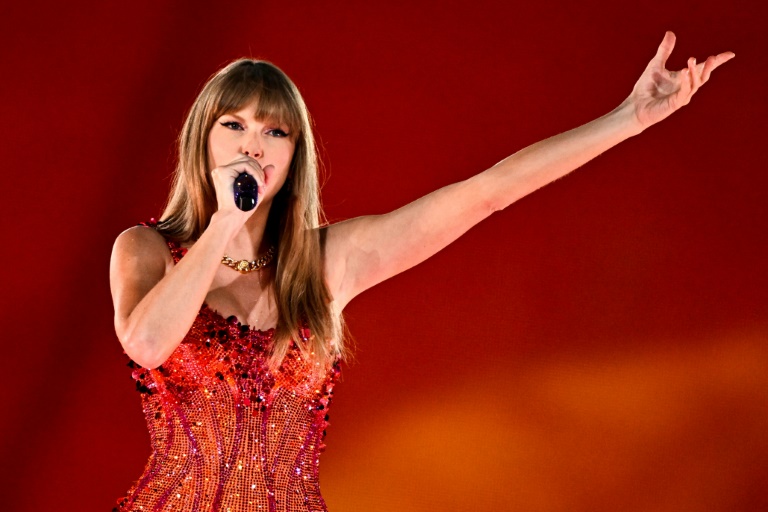
WASHINGTON — Several Taylor Swift songs have been pulled from social media videos posted by President Donald Trump’s campaign and the White House after copyright claims, according to Reuters, in the latest chapter of an increasingly public standoff between the pop superstar and the president’s communications team.
The removals affected multiple posts published over the past several weeks across TikTok accounts affiliated with Trump’s campaign and the White House, which had used at least three different Swift songs in videos featuring the president over that stretch.
‘August’ pulled after a pointed caption
The most recent removal involved “August,” a track from Swift’s 2020 album “Folklore.” The song had been used in a video posted by the Team Trump TikTok account showing Trump and first lady Melania Trump watching a fireworks display. The post tagged Swift directly and included the caption, “I’m sure @Taylor Swift is going to be super excited we used her song!” according to CelebrityAccess.
That caption appeared to intentionally provoke a reaction from Swift, according to AOL’s reporting, which noted on-screen text in the video reading, “Mood because it’s August and Donald Trump is your president.” Following a copyright claim, the song has since been removed from the video, with the platform now displaying a message stating that the audio isn’t available.
Not the first Swift track to disappear from Trump content
According to Billboard and Variety’s reporting, “August” was not the first Swift song removed from Trump-affiliated content. Two additional tracks from her 2025 album “The Life of a Showgirl” — “Father Figure” and “Opalite” — have also vanished from earlier posts after similarly being flagged.
One of those videos, posted in November 2025, used “Father Figure” as the soundtrack for a clip featuring Trump alongside his youngest son, Barron, according to AOL’s detailed account of the post. The video paired the lyric “I was your father figure” with footage of Trump and his son, followed by the lyric “You pulled the wrong trigger” set against a clip referencing the alleged assassination attempt against Trump in July 2024. The video closed with the lyric “This empire belongs to me” set against footage of Trump waving to a crowd from a helicopter outside the White House.
A White House spokesperson previously told multiple news outlets that the video was created because the administration knew news outlets “would breathlessly amplify” the content, according to Reuters.
Trump’s team responds with a mocking post
Rather than avoiding Swift’s music altogether following the removals, Trump’s campaign team appeared to lean into the conflict. According to TMZ, the Team Trump TikTok account later posted a mocked-up version of the artwork from Swift’s 2012 album “Red,” superimposing Trump’s face onto the cover and captioning it, “Did you know Taylor Swift wrote a whole album about the color of the Republican Party.” The post referenced a live performance version of Swift’s song “Red,” presenting it as “Red (Trump’s Version).”
That track, too, was later removed from the account, with a message indicating the copyright owner had not made the audio available for use, according to i24NEWS.
Broader pattern of using popular music in political content
The Trump communications team, which is highly active on social media, has regularly posted videos featuring hit songs alongside politically charged imagery covering topics including the administration’s immigration crackdown, U.S. military operations against Iran, and the arrest of former Venezuelan President Nicolás Maduro, according to Reuters. Swift’s music is not the only artist catalog to appear in such videos, and the pattern has drawn criticism from a broader coalition of musicians.
According to i24NEWS, dozens of artists, including Sabrina Carpenter and Ariana Grande, have separately called on the Trump administration not to use their music in political content.
A long-running tension between Swift and Trump
Swift has not commented publicly on the recent song removals, according to multiple outlets, and neither the White House nor a representative for Swift immediately responded to requests for comment from Reuters or other news organizations covering the story.
The dispute is the latest flashpoint in a yearslong tension between the two public figures. Swift endorsed Trump’s 2024 Democratic rival, then-Vice President Kamala Harris, ahead of last year’s election. During the 2020 campaign cycle, Swift posted on social media that voters should be “WELL AWARE we do not want him as our president,” referring to Trump.
Trump has repeatedly criticized Swift in turn. After her endorsement of Harris, Trump wrote on social media, “I HATE TAYLOR SWIFT!” He later wrote, “Has anyone noticed that, since I said ‘I HATE TAYLOR SWIFT,’ she’s no longer ‘HOT?’”
The tension has also extended into more direct territory involving Swift’s public image. Trump previously shared AI-generated images on his social media platform Truth Social that falsely suggested Swift and her fans supported his 2024 campaign, including one image depicting Swift as Uncle Sam accompanied by text reading, “Taylor wants you to vote for Donald Trump.” When asked about the origin of those images by a Fox Business correspondent at the time, Trump said, “I don’t know anything about them other than somebody else generated them. I didn’t generate them. These were all made up by other people.”
As of this writing, it remains unclear whether Trump’s campaign and White House social media accounts will continue using Swift’s music in future content despite the repeated copyright removals, or whether the recent mocking response involving the “Red” album artwork signals an intent to keep testing the boundaries of that conflict. Neither Swift’s team nor the White House has issued a formal statement addressing the pattern of removals as of Sunday.
SpaceX: Weathering Lockup Expirations
Business
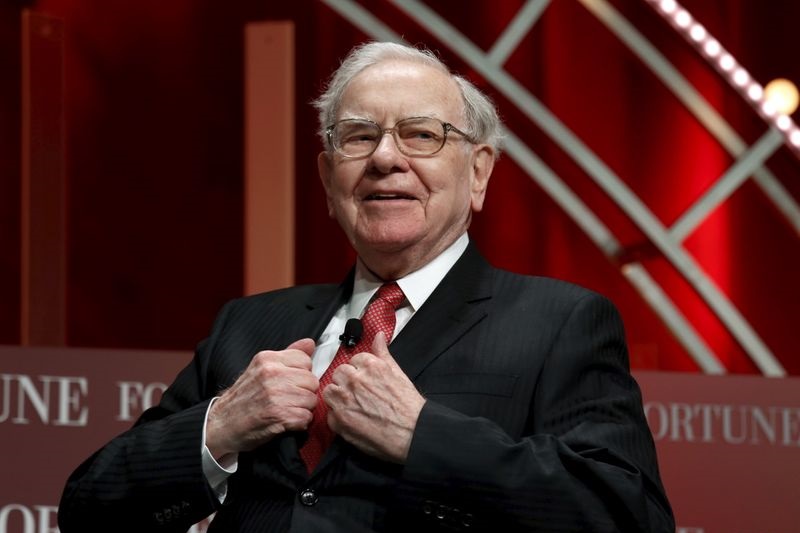
After Warren Buffett’s Exit, Greg Abel Starts Deploying Berkshire Hathaway’s $365 Billion Cash Pile

OMAHA, Neb. — Berkshire Hathaway’s enormous cash reserve is beginning to shrink under new chief executive Greg Abel, signaling a potentially significant shift in investment strategy at the conglomerate long led by Warren Buffett.
Berkshire reported Saturday that it held $365.5 billion in cash and Treasury bills at the end of June, down from $397.4 billion at the end of March. Excluding Treasury payables, the company’s cash and short-term government securities fell from roughly $380 billion to $365 billion during the quarter — the clearest sign yet that Abel, who formally succeeded Buffett as CEO at the start of this year, is beginning to put the company’s vast financial reserves to work.
A renewed pace of buybacks and stock purchases
During the April-to-June quarter, Berkshire repurchased approximately $4.5 billion of its own shares, and continued that pace into July with more than $3.3 billion in additional buybacks. The company had resumed share repurchases in March following an almost two-year pause.
Berkshire also made a notable shift in its broader investment activity, purchasing nearly $20 billion more in stocks than it sold during the quarter. According to Yahoo Finance’s reporting on the results, Berkshire bought $23.5 billion in stocks while selling only $3.7 billion — ending a streak of 14 consecutive quarters in which the company had been a net seller of equities. The last time Berkshire had a larger net outlay on stocks was in the first quarter of 2022.
Among the notable purchases was an additional $10 billion investment in Alphabet, the parent company of Google and YouTube, which has made Alphabet one of Berkshire’s largest equity holdings, alongside long-standing positions in Apple, Coca-Cola, American Express and Bank of America.
Strong operating results beat expectations
Berkshire’s underlying business performance was also stronger than expected. Quarterly operating profit rose 16% to $12.98 billion, exceeding analysts’ forecasts. Improved results at BNSF, the company’s railroad operation, along with service businesses such as NetJets and TTI, helped offset weaker performance at Geico, Berkshire’s auto insurance unit.
Net income surged to $25.6 billion, more than double the $12.3 billion reported during the same period a year earlier. Revenue also improved, rising 10% to $101.81 billion following a period of stagnation.
Abel signals a philosophy of disciplined but active investing
Abel, who formally assumed the CEO role in January, laid out his approach to capital allocation in his first letter to shareholders in February. According to Yahoo Finance, Abel wrote that Berkshire pursues opportunities where the reward matches the risk, pledging continuity with Buffett’s signature approach of disciplined capital allocation while pushing back on the notion that the company’s substantial cash position signaled hesitancy.
“Many times in Berkshire’s history, some observers have suggested that our substantial cash position signals a retreat from investing. It does not,” Abel wrote in that letter, according to CNBC’s coverage. “We continue to evaluate many opportunities and will remain patient and disciplined in pursuing the right ones for the benefit of our owners.”
Abel also described Berkshire’s balance sheet in strategic terms, framing the company’s liquidity as a source of flexibility rather than caution. According to Barchart’s reporting on the letter, Abel wrote, “Our balance sheet is a strategic asset to be deployed at the right time. It allows us to act decisively, invest when others are tentative or fearful, and stand firm when financial storms roll through.”
Caution alongside the deployment
Despite the more active investment posture, Berkshire cautioned shareholders that substantial uncertainty remains surrounding the global economic and geopolitical environment. The company pointed to factors including tariffs and ongoing wars, while also flagging weaker demand across several consumer-facing businesses.
Berkshire said changing consumer confidence was affecting operations including its network of 103 car and truck dealerships, its Fruit of the Loom apparel business, and its Forest River recreational vehicle operations — a reminder that even as Berkshire deploys more capital into equities, some of its underlying operating businesses continue to face softer demand conditions.
A notable acquisition completed during the quarter
Beyond its stock purchases, Berkshire also completed its acquisition of Taylor Morrison Home Corporation on July 24, though the company did not disclose the transaction’s valuation in its earnings report.
The second quarterly report under new leadership
Saturday’s results mark the second quarterly report since Abel took over as CEO, succeeding Buffett, who continues to serve as Berkshire’s chairman. The company’s shrinking cash hoard represents a notable change for a business that had accumulated enormous reserves during the final years of Buffett’s leadership, a period in which Buffett developed a reputation for patiently holding cash until sufficiently attractive investment opportunities emerged.
What it signals going forward
Berkshire’s recent buying activity suggests that under Abel, the conglomerate may be increasingly willing to put its vast resources to work when management identifies compelling opportunities — a meaningful, if measured, departure from the extended cash accumulation that characterized much of Buffett’s final years at the helm. Whether this pace of deployment continues in coming quarters will likely serve as an early test of how closely Abel’s investment philosophy tracks with, or diverges from, that of his predecessor.
A sourcing note: all direct quotes above from Greg Abel are confirmed and on the record via his February shareholder letter, as reported by CNBC, Yahoo Finance and Barchart’s coverage of that letter. Financial figures for the quarter are drawn directly from Berkshire’s own earnings disclosure, as reported by Mint.
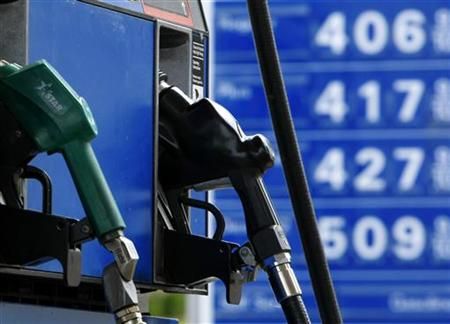
Global oil prices remained volatile heading into the weekend, trading well below recent highs as investors weighed conflicting signals from Iran and the United States over a potential agreement to restore shipping through the Strait of Hormuz, one of the world’s most critical energy chokepoints.
West Texas Intermediate futures opened at $78.31 a barrel on Aug. 7, according to Forbes Advisor, while Brent crude opened at $83.49 a barrel that same day. As of Sunday, live pricing data from PriceOfOil.com showed both benchmarks continuing to trade in that general range, with Brent hovering near $83 and WTI near $78, according to tracking from Trading Economics and Oilprice.com.
A market still reacting to the Hormuz standoff
Brent crude has swung sharply in recent sessions as traders try to gauge the likelihood of a breakthrough in talks between Iran and Oman over managing navigation through the strait. According to Trading Economics, Brent traded below $82 a barrel on Friday, moving between gains and losses throughout the session as investors weighed the state of those negotiations.
Optimism over a potential partial reopening of the waterway faded after reports that Iran was seeking to exclude U.S. and Israeli vessels from the strait entirely and impose fees on countries it considers hostile — terms that stand in sharp contrast to Washington’s push for unrestricted transit and a full return to pre-war shipping conditions. President Donald Trump has maintained an optimistic public tone throughout the negotiations, saying the broader conflict could end “pretty soon” and that discussions were progressing, according to Trading Economics’ market coverage.
Adding to the uncertainty, Abu Dhabi National Oil Co. reported attacks on multiple vessels transiting the strait, with Iran reportedly targeting ships it considers hostile even as diplomatic talks continued. Iran-backed Houthi militants separately claimed a large-scale attack against Saudi-aligned forces in Yemen, further complicating the security picture across the broader region.
A proposed Iranian framework worries markets
Trading Economics reported that Iran has proposed penalties equal to 20% of a vessel’s cargo value for violations of its terms, while insisting the strait would only be fully reopened once the U.S. maritime blockade of Iran is lifted. That draft proposal, outlining stricter conditions for commercial shipping than markets had anticipated, remains under review by the Iranian parliament.
Oil briefly reversed some gains in post-settlement trading last week following reports that the U.S. could lift its naval blockade once commercial shipping through the strait resumes without restrictions — a potential off-ramp that traders continue to watch closely for signs of a genuine breakthrough.
Prices well off their April peak, despite the conflict
Even with the ongoing disruption, oil prices remain considerably below levels seen earlier this year. According to the U.S. Energy Information Administration’s Short-Term Energy Outlook, published July 7, the Brent crude spot price averaged $85 a barrel in June, down $22 a barrel from May and $32 a barrel from its recent April 2026 peak.
The EIA’s forecast, issued before the current wave of Hormuz-related volatility intensified, projected Brent averaging $74 a barrel in the third quarter of 2026 — a $27-a-barrel reduction from the agency’s prior monthly outlook at the time — citing expectations of ongoing oil inventory accumulation that would continue pressuring prices lower. The agency’s outlook had assumed that a June 18 memorandum of understanding between the U.S. and Iran to end the conflict and reopen the strait would hold, projecting most crude oil production would return to near pre-conflict averages by the end of the year. Given the subsequent breakdown in that agreement and the renewed attacks on shipping, market conditions have shifted meaningfully since that forecast was published, and the EIA’s next outlook, due Aug. 11, is likely to reflect the changed picture.
What it means at the pump
Lower crude prices earlier in the summer had been expected to translate into cheaper gasoline for American drivers. The EIA’s July forecast projected U.S. gasoline prices averaging $3.80 a gallon in the third quarter, down from more than $4.20 a gallon in the second quarter, though the agency cautioned that a portion of the crude-driven savings could be offset by rising wholesale and retail margins tied to low gasoline inventories.
Broader market ripple effects
The prolonged uncertainty over Middle East energy supply has also influenced other markets. According to Oilprice.com’s broader coverage, lower oil prices in recent weeks have helped boost gold, as easing inflation concerns and softer U.S. economic data reduce expectations for further Federal Reserve policy tightening. Separately, some governments have leaned more heavily on coal in the short term while accelerating investments in renewable energy, as the ongoing Middle East conflict tightens global liquefied natural gas markets and raises broader concerns about energy security.
Looking ahead
With Iran’s parliament still reviewing its proposed shipping framework and no finalized agreement between Tehran and Washington in place, analysts expect oil prices to remain highly sensitive to any fresh developments out of the Strait of Hormuz talks in the days ahead. Traders are likely to continue closely tracking statements from Iranian officials, the Trump administration, and Gulf shipping authorities for signs of whether a genuine de-escalation — or a further breakdown — is more likely in the near term.
Berkshire Hathaway earnings on deck as Abel faces cash test

CEVA earnings on deck: Can licensing sustain royalty wait?

Luckin Coffee: Downgrading To A Hold On Insider Selling

Which economies and sectors are most exposed to AI earnings bust?

Inflation data to test record-setting US stocks, Fed rate views

Bitcoin heads for 2% weekly gain as risk assets rally, Fed rate hike bets ease

The 3 Teams to Monitor if J.J. McCarthy Gets Put Onto Trade Market

Giribabu -Best Investment Plan for 2026 | Investment vs Buying a House |SumanTV Finance #mutualfunds

Man Utd in talks to beat Arsenal to signing of ‘fearless’ midfielder | Football


-

 Politics7 days ago
Zack Polanski: an incitement to murder Nigel Farage?
-

 Fashion2 days ago
Frugal Friday’s Workwear Report: Cap-Sleeve Pointelle Crewneck Sweater
-

 Fashion2 days ago
Weekend Open Thread: Mattifying Sunscreen
-

 Business7 days ago
DTCR: Deleveraging And A Hedge Fund Collapse Point To A Possible AI Bottom
-

 Crypto World7 days ago
XRP Ledger urges node upgrade after manifest flood
-

 Sports3 days ago
Jordan Coyle & Cordiamo take Laya Arena Stakes at RDS
-

 News Videos1 day ago
Can Astrology Help Find Gold and Silver Trends? A Financial Astrology Guide
-
 Crypto World6 days ago
US Tech Stocks See Largest 5-Week Inflow in History: Can Nasdaq Break Its Downtrend?
-
 Business4 days ago
US stocks: Dow closes at record on Mideast optimism; SpaceX, AMD drag Nasdaq
-

 Politics3 days ago
Reform UK And Greens Sink To Lowest Favourability Ratings To Date
-

 Business5 days ago
Nvidia Stock Climbs 2.5% as Chip Sector Rally Builds Ahead of AMD Earnings, Nvidia’s Own Report Looms
-

 Tech7 days ago
OpenAI teases Astra, its next major AI model, after it solves 10 long-standing math problems
-

 Crypto World5 days ago
Polymarket targets $20 billion valuation as competition heats up in prediction market sector
-

 Tech4 days ago
OpenAI, Anthropic AI agents targeted real people and systems in cyber tests
-

 Business4 days ago
Supply chain issues impact Ingredion
-

 News Videos7 days ago
#crypto #cryptocurrency #cryptonews #cuet2026 #ceuta
-

 Business7 days ago
Myspace owners announce plans to relaunch the once-popular platform
-

 News Videos7 days ago
Crypto.com Partners with UFC for UFC 331 Event
-
 Crypto World5 days ago
CLARITY Act Senate Vote Locked In, But 60-Vote Hurdle Looms Large
-

 News Videos7 days ago
Huge SPINS!! (for me) #slots #casino #gambling #money #jackpot
You must be logged in to post a comment Login