
Business
Bob Iger, Joshua Kushner buy Los Angeles Lakers from Mark Walter

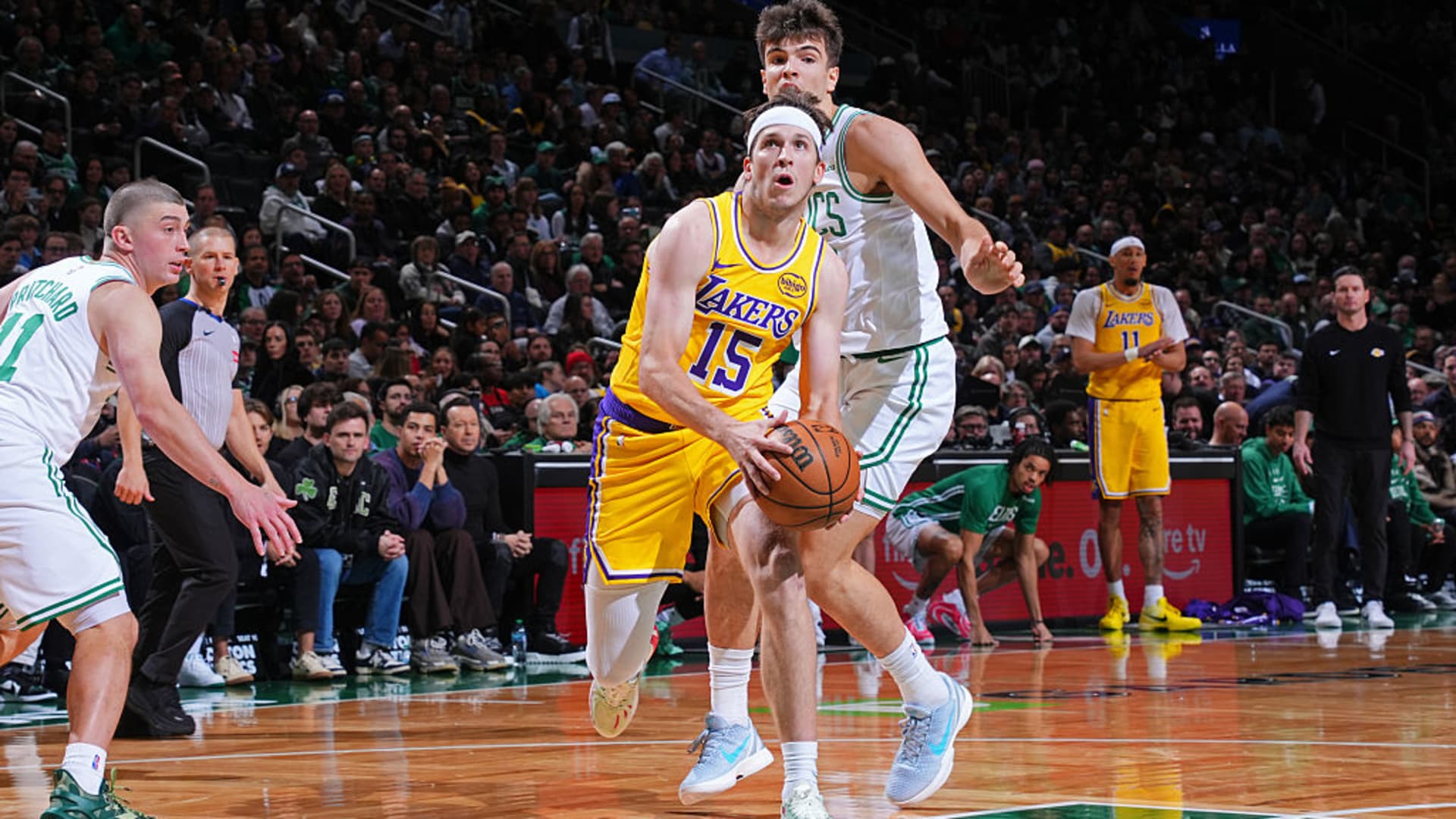
Joshua Kushner, founder of Thrive Capital (L), and Bob Iger during the Allen & Co. Media and Technology Conference in Sun Valley, Idaho, US, on Friday, July 10, 2026.
Getty Images (L) | CNBC (R)
The Los Angeles Lakers have sold — again.
Less than a year after buying a controlling ownership stake in the NBA’s Lakers, Mark Walter has sold his majority equity to Joshua Kushner and Bob Iger, according to a statement.
The deal values the team at $12.5 billion, according to a person familiar with the matter, who was not authorized to speak publicly about the terms of the sale.
“As lifelong NBA fans, we are deeply honored for the opportunity to become stewards of the Los Angeles Lakers, one of the most iconic sports franchises in the world,” Iger and Kushner said in a joint statement Wednesday. “We have immense respect for the leadership and vision of Jerry and Jeanie Buss. Our long-term commitment is to build on that foundation, compete at the highest level, and serve this extraordinary team, its fans, and the city of Los Angeles.”
Kushner and Iger have been business partners before. Iger joined Thrive Capital, the venture capital firm run and founded by Kushner, earlier this year. Iger, 75, stepped down as CEO of Disney earlier this year after two stints that totaled roughly 20 years at the helm of the media giant.
Kushner is the brother of Jared Kushner, who is married to U.S. President Donald Trump’s daughter Ivanka. Kushner and Iger had previously expressed interest in buying an NBA expansion team in Las Vegas.
Walter acquired the Lakers in October at a valuation of $10 billion.
Last month, Bloomberg reported the Securities and Exchange Commission and U.S. prosecutors were investigating potential financial improprieties at two of Walter’s insurance companies and at Guggenheim Partners, the sprawling financial firm that Walter co-founded and still leads.
Walter’s TWG Global holding company controls the insurers, his stake in Guggenheim, and ownership stakes in other sports teams including MLB’s Los Angeles Dodgers and the English Premier League soccer team Chelsea.
Walter is also among a group of investors that owns the WNBA’s Los Angeles Sparks.
The sale announced Wednesday only includes his stake in the Lakers, according to the person familiar with the matter.
The Wall Street Journal reported last month that Walter, 66, suffered a stroke in 2024 and that his health status has “become a matter of concern inside his business empire, with varying opinions on whether lingering effects from the stroke have impacted his fitness to lead his businesses.”
Iger and his wife, Willow Bay, acquired professional women’s soccer team Angel City Football Club for $250 million in 2024.

Business
Elon Musk Says ‘You Will Get Flying Cars’ As Tesla’s Long-Delayed Roadster Unveil Draws Closer

Tesla and SpaceX Chief Executive Elon Musk declared Wednesday that flying cars are on the way, reviving years of speculation that the automaker’s long-delayed Roadster sports car could eventually leave the ground.
Musk made the comment on X in response to a post lamenting that society had been promised flying cars but instead received “infinite superintelligence for everyone.” Musk replied with a simple, three-word declaration: “You will get flying cars.” He did not explicitly name Tesla or the Roadster in the post, though the comment immediately drew widespread attention given Musk’s yearslong history of hinting that the next-generation Roadster could incorporate hovering or short-flight capability.
The remark reignited discussion around one of Tesla’s most persistently delayed products. The second-generation Roadster was first announced in 2017 with an original production target of 2020, but the vehicle has missed numerous subsequent deadlines as Tesla prioritized other projects, including the Model 3, Cybertruck and, more recently, the Cybercab and Optimus robot. Musk has previously teased that the Roadster’s most ambitious feature would come through an optional package developed in partnership with SpaceX, featuring roughly 10 cold-gas thrusters embedded around the vehicle’s body. According to reporting on the concept, the thrusters are primarily designed to enhance acceleration, braking and cornering performance by generating additional downforce and lateral thrust, though Musk has suggested the same system could also allow the car to briefly hover or skim above the ground.
Tesla’s chief designer, Franz von Holzhausen, addressed the Roadster’s status during a recent appearance on “Jay Leno’s Garage,” telling Leno the long-delayed vehicle is coming “very soon” when pressed on its timeline, though he did not provide a specific date. Tesla’s official Roadster marketing materials continue to advertise conventional performance figures, including a 1.9-second zero-to-60 mph time, a top speed exceeding 250 mph and a 620-mile range, without referencing any sustained flight capability.
Musk’s history of commentary on flying cars has been notably mixed over the years. During a 2017 TED talk, he expressed skepticism about the concept, citing noise and safety concerns tied to a proliferation of airborne vehicles. “There is a challenge with flying cars in that they’ll be quite noisy. The wind force generated will be very high,” Musk said at the time, adding that the prospect of numerous flying cars overhead was “not an anxiety-reducing situation” for people below, comparing the worry to wondering whether a passing vehicle’s loose hubcap might come off and become a hazard.
Musk later clarified in 2015 that he was not fundamentally opposed to the concept, writing on X that he had simply emphasized the need to weigh both the benefits and drawbacks of flying vehicles. More recently, during an appearance on “The Joe Rogan Experience,” Musk struck a considerably more supportive tone, referencing a comment from investor and longtime associate Peter Thiel about society’s unmet expectations for flying cars. “My friend Peter Thiel once reflected that the future was supposed to have flying cars, but we don’t have flying cars,” Musk said, adding that if Thiel wanted one, “we should be able to buy one.”
The Roadster’s unveiling has faced a long series of postponements. Musk indicated in March that the reveal would likely take place in late April, writing on X at the time that the unveiling would be “a banger next-level” event, though that date, like several before it, ultimately passed without a public demonstration. Tesla has continued filing trademark applications tied to the vehicle in recent months, and job postings for Roadster manufacturing engineers have suggested the project remains active internally even amid the repeated delays. Even once an official unveiling takes place, Tesla has indicated that mass production of the Roadster is unlikely to begin until sometime in 2027 or 2028, extending a production timeline that has already run seven to eight years behind the vehicle’s original schedule.
Wednesday’s comment arrives at a moment when Musk’s public attention has increasingly shifted toward artificial intelligence and computing infrastructure across his companies. Musk told SpaceX employees this week that the company’s AI-related revenue is on pace to surpass every other line of its business, including rockets and its Starlink satellite internet service, as soon as September. He has separately emphasized SpaceX’s growing compute infrastructure business and Tesla’s own investments in autonomous driving and robotics as central to both companies’ long-term strategies, even as the Roadster remains one of the more consumer-facing, headline-grabbing projects still awaiting its public debut.
For the tens of thousands of customers who placed $50,000 reservation deposits on the Roadster years ago against a promised price of roughly $250,000, Wednesday’s comment offered another small signal that the long-promised vehicle, and whatever flight or hovering capability it may ultimately include, remains part of Musk’s plans, even if the exact timeline for its arrival continues to shift. Whether the eventual unveiling delivers genuine flight capability or a more limited hovering demonstration remains to be seen, with Tesla yet to confirm a firm date for the reveal as of Wednesday.

Most event organisers don’t think much about crowd management until something nearly goes wrong: a bottleneck at a single exit, someone who’s had too much to drink pushing back against a steward, a queue backing up onto a public pavement while a passer-by complains.
None of that needs to happen if the provider running the event actually planned for it beforehand, rather than turning up on the day with enough bodies to cover the headcount.
That’s really the difference between a security company and a crowd management specialist. Supplying people in hi-vis is the easy part. Building a plan around the venue’s actual layout, the crowd it’s likely to attract, and where things tend to go wrong at that particular type of event takes a fair bit more thought, and it’s worth checking a provider’s done that thinking before you sign anything.
Look at Their Planning Process, Not Just the Numbers
A lot of quotes come back as a straightforward number: so many stewards, so many supervisors, one control room operator. What that number doesn’t tell you is whether anyone’s actually walked the site, checked exit capacity against the expected crowd, or thought about how people will move once the main act finishes and everyone heads for the door at once.
A provider worth using will want to see the venue before pricing it. If a quote lands without anyone asking for the layout, capacity figures, or timings, that’s usually a sign the “plan” is really just a headcount with a price attached.
Check Licensing and Experience With Your Type of Event
Every steward or security operative working a licensable event needs a valid SIA licence, and that’s the baseline rather than the differentiator. What actually separates providers is whether they’ve run your kind of event before. A team that’s spent years on corporate conferences approaches a crowd very differently to one that’s cut its teeth on festivals, and neither necessarily transfers cleanly to a sporting fixture with its own particular flashpoints around kick-off.
Asking for a couple of specific, comparable events a provider has covered tends to reveal more than a general client list. A provider whose only reference is a retail security contract is worth thinking twice about.
Confirm Communication Actually Works on the Day
The best-planned event still needs someone coordinating in real time. Radios, a functioning control point, and a clear chain of command between stewards, supervisors, and the organiser make the difference between a small issue getting managed quietly and the same issue escalating because nobody knew who to tell.
It’s worth asking exactly how communication works between the team on the ground and whoever’s making decisions. Some providers run this well. Others hand out radios and hope for the best, and that usually shows the moment something unplanned happens.
Ask How They Work With the Venue
A provider that’s worked your venue before, or is willing to liaise directly with venue management and, where needed, the local authority or police, tends to save a lot of friction closer to the event date. That relationship matters particularly for larger events where licensing conditions or safety certificates require direct input from the security provider, not secondhand through the organiser.
Making the Final Call
Price will always be part of the decision, but it shouldn’t be the deciding factor on its own. A cheaper quote that hasn’t accounted for exit capacity or communication planning can end up costing far more if something goes wrong on the day, both financially and to an organiser’s reputation.
Crowd Management Security built around proper preparation tends to look like this: site visits before pricing, staff matched to the type of event, and a control structure that actually gets used rather than sitting in a briefing pack nobody reads.
The right provider makes an event run so smoothly that nobody outside the security team notices they were there at all, which is usually the clearest sign the planning happened weeks before the doors opened, not on the day itself.


The chips are formulated with 17 grams of protein and 2 grams of collagen.
NEW YORK — Shares of SK Hynix Inc. American depositary receipts rose sharply on Wednesday, climbing 8.02% to $153.02 as of late morning Eastern time, extending a rebound in the South Korean memory chipmaker amid sustained optimism over artificial intelligence-related demand.
The Nasdaq-listed ADRs, trading under the ticker SKHY, gained $11.37 on the session. The move tracked strength in the company’s primary Seoul-listed shares and broader gains across South Korean semiconductor stocks that helped lift the KOSPI index more than 3% to close near 6,579.
SK Hynix is a leading supplier of high-bandwidth memory chips critical to advanced AI processors. Its products have benefited from heavy spending by technology companies building data centers and AI infrastructure. The ADRs began trading on Nasdaq in July after the company raised approximately $26.5 billion in what ranked as the largest first-time U.S. share sale by a foreign company.
The offering priced the ADRs at $149 each. Each receipt represents one-tenth of a common share traded in Seoul. Demand for the sale was reported as more than seven times oversubscribed. Proceeds are earmarked for capacity expansion and equipment purchases as the company seeks to meet elevated orders for advanced memory.
In South Korea on Wednesday, SK Hynix shares advanced more than 5% while rival Samsung Electronics rose more than 6%. Foreign and institutional buyers provided support, according to market reports, with the session including a brief program trading halt after rapid gains. Analysts cited solid semiconductor export data and follow-through buying after recent strength in the U.S.-listed ADRs.
The company reported record second-quarter results at the end of July. Revenue reached 79.32 trillion won, up 257% from a year earlier. Operating profit climbed 557% to 60.54 trillion won, producing an operating margin of 76%. Net profit came in at 93.92 trillion won. Management attributed the performance to higher prices and expanded sales of high-value products, including high-bandwidth memory, AI server DRAM and enterprise solid-state drives.
SK Hynix said it began mass shipments of its HBM4 product in the second quarter and planned to increase production in the second half of the year. Samples of the next-generation HBM4E have been delivered to customers, with volume production targeted for 2027. The company has secured long-term supply agreements with around 10 major customers and continues discussions on additional multiyear contracts.
Capital spending for 2026 is projected in the high-40-trillion-won range as the company expands production capacity. Cash and cash equivalents stood at 88 trillion won at the end of the second quarter. Management has previously indicated plans to enhance shareholder returns through a combination of dividends, buybacks and share cancellations, though specific details of a broader program remain pending.
At the July listing ceremony, SK Hynix Chief Executive Kwak Noh-Jung described the day as historic for the company and stated that high-bandwidth memory sits at the core of the AI revolution. The firm has repeatedly emphasized that AI infrastructure investment and resulting memory demand are expected to remain robust beyond the current year, with supply constraints limiting the risk of near-term oversupply.
Brokerages initiated or resumed coverage of the ADRs after the post-listing quiet period expired in early August, issuing predominantly positive ratings. Price targets from some firms ranged as high as $320, reflecting expectations that the U.S. listing could support a valuation re-rating closer to global peers and longer-term visibility tied to AI end markets.
The stock has experienced significant volatility since the U.S. debut. Early trading featured sharp swings, with periods of premium for the ADRs relative to the Seoul shares driven by restrictions on convertibility and differences in investor bases. Broader semiconductor sector fluctuations, including profit-taking after strong runs and shifting expectations around the duration of AI spending, have also influenced prices.
SK Hynix operates as the world’s second-largest memory chipmaker by many measures and holds a leading position in the high-bandwidth memory segment used in Nvidia and other AI accelerators. Industry participants have described ongoing supply tightness for advanced memory, with fulfillment rates constrained relative to demand and capacity additions taking time to come online.
Market participants continue to weigh the company’s earnings power against elevated capital expenditure plans and the competitive landscape, including advances by peers in next-generation products. Samsung has reported progress on its own HBM yields in the push to narrow gaps in the high-end segment.
Wednesday’s gains occurred against a mixed backdrop in U.S. equity markets, where major indexes closed modestly lower the prior session. The focus for SK Hynix remains on execution of its expansion plans, delivery of higher volumes of advanced memory, and any forthcoming details on capital returns to shareholders.
Trading volumes in the ADRs have been elevated at times since the listing as global investors gained more direct access to the stock. The company’s market value has fluctuated with the AI narrative, having previously exceeded $1 trillion on the strength of its Seoul listing before the secondary offering.
As of the latest available data, SK Hynix continues to highlight structural demand growth linked to AI adoption across servers and related applications. Both DRAM and NAND pricing trends supported the strong second-quarter results, according to the company, with high-value product mix contributing to peak margins.
Investors will monitor upcoming quarterly updates, progress on HBM4 ramp-up, and any announcements regarding the shareholder return framework for further direction. For now, the combination of robust AI memory fundamentals and coordinated buying across Asian and U.S. markets has supported the latest advance in the ADRs.


Suppliers also promote ingredients for products appealing to GLP-1 users.
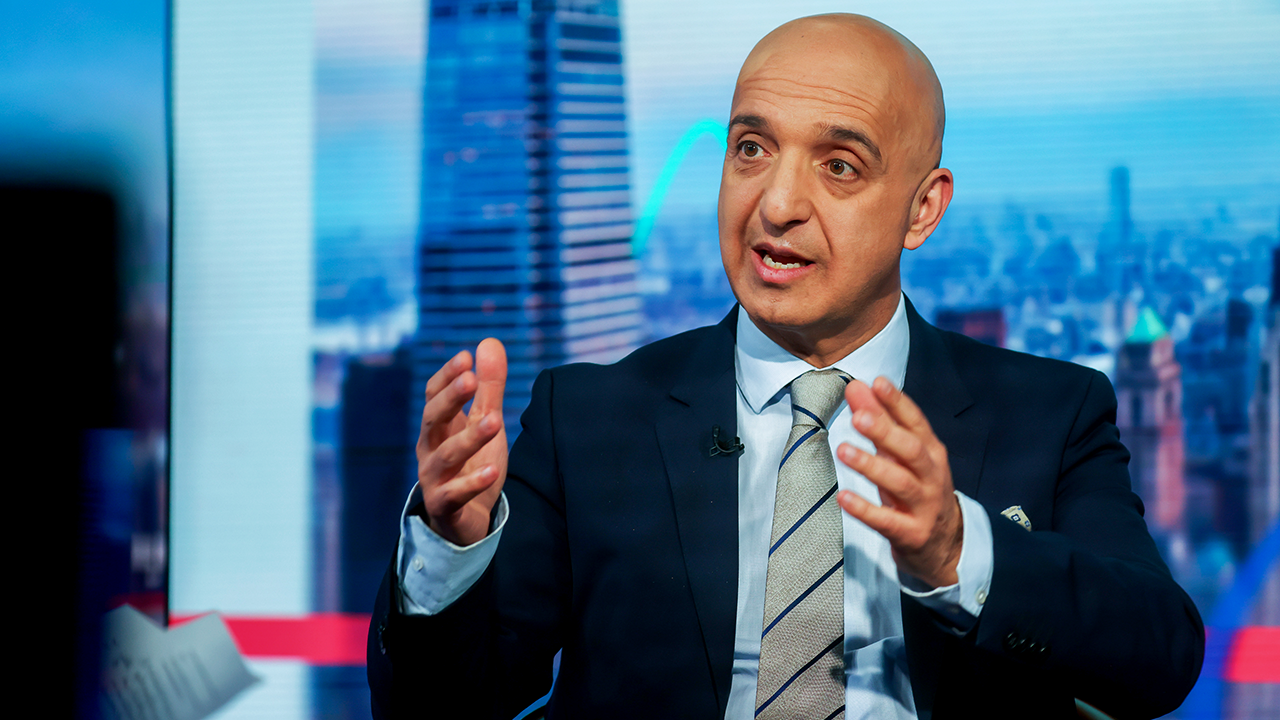
Novo Nordisk President and CEO Mike Doustdar discusses the company’s collaboration with artificial intelligence to accelerate drug discovery and development.
The boom in weight-loss drugs may have transformed the obesity market, but Novo Nordisk’s CEO says the industry is still only scratching the surface with tens of millions of Americans potentially eligible for treatment.
Novo Nordisk President and CEO Mike Doustdar joined FOX Business’ Cheryl Casone on “Mornings with Maria” to discuss the adoption of GLP-1 drugs, their potential economic impact and the company’s outlook for medicines, including Wegovy.
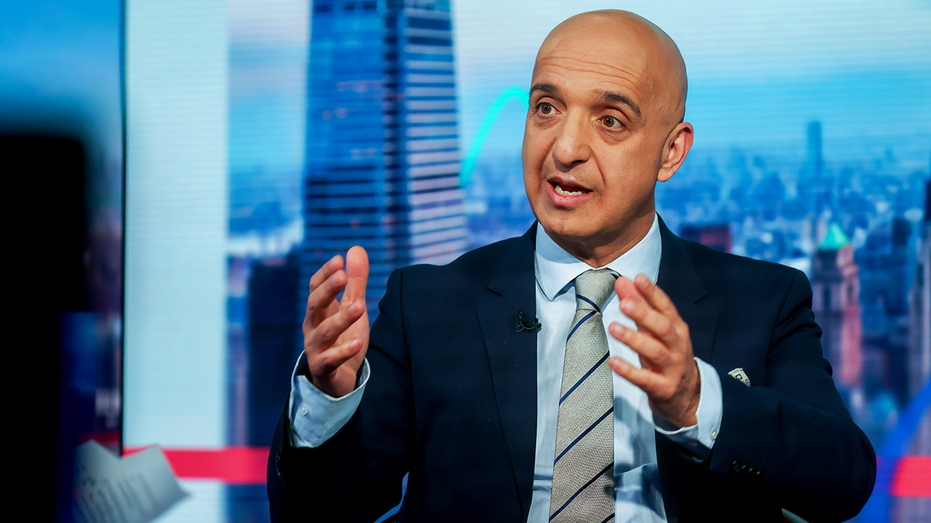
Mike Doustdar, chief executive officer of Novo Nordisk, speaking during an interview. (Michael Nagle/Bloomberg / Getty Images)
“We are clearly at early innings,” Doustdar said, pointing to the large population living with obesity and relatively limited use of GLP-1 medications. He said more than 100 million people in the U.S. are suffering from obesity, while “somewhere around 10, 15% in a good day” have used a GLP-1.
TOM BRADY TEAMS WITH DIGITAL HEALTH FIRM EMED TO EXPAND GLP-1 WEIGHT LOSS MEDICATION ACCESS
“There is a long runway still,” he said.
Beyond weight loss, Doustdar said wider use of the drugs could eventually help Americans save on healthcare costs while bringing broader economic benefits.
Stuart Varney and Taylor Riggs discuss Eli Lilly’s massive revenue surge driven by GLP-1 obesity drugs Mounjaro and Zepbound, and how the diet craze is negatively impacting food brands like Kraft Heinz.
“I do think as we get there, not only you see the health benefits of these drugs, you also see the economical benefit of these drugs,” he said.
Doustdar pointed to medication use as one area where a healthier, smaller population could reduce consumption. He used insulin, another product sold by Novo Nordisk, as an example of how dosage can vary with body size.
NOVO NORDISK SUES ELI LILLY OVER CLAIMS IN WEIGHT-LOSS DRUG ADS
“I sell insulin, and I know that a person who is larger does more insulin dose than someone who’s smaller,” he said.
A panel examines the expansion of GLP-1 medications beyond weight loss, exploring new medical uses, potential side effects and what the next wave of these blockbuster drugs could mean for patients on ‘Barron’s Roundtable.’
He also pointed to the potential value of healthier people returning to work and becoming more productive, arguing that the benefits could extend beyond the number on a scale.
“Then, of course, comes on top of that, the economical value that comes from people getting back to work healthier,” Doustdar said. “People are more productive.”

TSX vs S&P 500 in 2026: performance, currency risk, and sector outlook
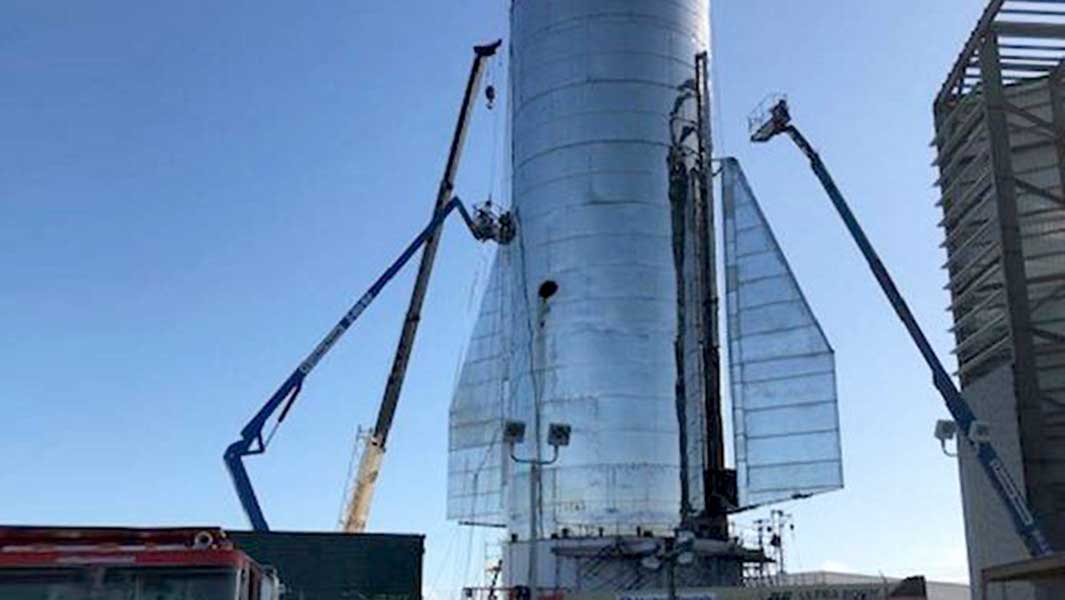
The recently public SpaceX supplier Applied Aerospace & Defense (AADX) tanked on its first earnings report since its June IPO. The stock fell solidly after a surprise loss. Wednesday’s drop sent shares tumbling back below their IPO price of $20 a share. Applied Aerospace made a name for itself selling complex parts for satellites, aircraft and high-end precision strike systems.…
Copyright ©2026 Investor’s Business Daily, LLC. All rights reserved. 87990cbe856818d5eddac44c7b1cdeb8
The stock traded between $216.11 and $235.96 after opening at $226, compared with its previous close of $193.23.
Nebius reported its results a day after its larger rival CoreWeave raised its annual forecasts, fuelling a broader rally in AI infrastructure stocks as both companies signalled that demand for computing capacity continued to outpace supply.
Nebius reported a sixfold surge in revenue from its core AI cloud business, which took overall sales to $582.3 million in the June ended quarter, beating analysts’ estimates of $572.75 million, according to LSEG data.
Nebius is turning rising demand into “contracted, profitable growth,” CEO Arkady Volozh told Reuters.

The Nvidia-powered AI cloud provider secured four deals averaging over $1 billion each, nearly quadrupling its total contract value, while contracts from new customers surged more than ninefold.
Asked about growing competition from newcomers such as xAI, Volozh told Reuters that demand for AI computing continued to far outstrip supply, adding that Nebius could sell its entire planned capacity for 2027 at current terms.Emarketer analyst Jacob Bourne said that demand for AI cloud capacity remained strong despite increasing competition. However, he said the key question was whether that demand would prove diversified and sustainable beyond the AI industry.
Nebius spent about $5.7 billion during the quarter, above analysts’ estimate of $4.7 billion, as it continued to invest heavily in GPUs and data-centre expansion. The company said AI cloud contracts signed during the period, with annual values exceeding $20 million per megawatt, were expected to come online late in the fourth quarter.
Nebius raised its contracted power target for 2026 to 5 gigawatts from more than 4 GW and plans to add over 1 GW of capacity annually from 2027—enough to power about 750,000 US homes. It expects more than $9 billion in customer prepayments this year and has secured over $40 billion in customer commitments.
(Disclaimer: This article is based on inputs from agencies. These do not represent the views of The Economic Times)
Business
Metronet Internet Service Down? Users Report Outage Wednesday As Downdetector Tracks Rising Complaints

Customers of Metronet, the fiber-optic internet provider serving communities across 16 states, reported problems accessing their internet service Wednesday morning, according to outage-tracking service Downdetector, in what appeared to be a developing disruption affecting the company’s network.
Downdetector said user reports indicating problems with Metronet began climbing at 8:23 a.m. Eastern time. The tracking service posted about the rising number of reports on its official account on the social platform X, asking affected users to describe how the outage was impacting them and tagging the post with the hashtag “MetronetDown.”
Separate outage-monitoring service StatusGator later reported detecting a likely Metronet disruption as of 12:33 p.m. Eastern time Wednesday, logging 89 user-submitted reports of problems over the preceding 24-hour window. StatusGator noted that, based on its analysis of issue reports, page visits and signal strength data, Metronet appeared to be experiencing or to have recently experienced an outage, even though the company had not officially acknowledged any service disruption as of the time of that assessment.
Not every outage-tracking service showed the same picture, however. Separate monitoring tools, including ISPDown.com and Outage.report, indicated at various points Wednesday that Metronet appeared to be “operating normally,” with one service reporting zero outages logged in the preceding 24 hours. That discrepancy between different third-party tracking tools underscored the difficulty of pinning down the precise scope and timeline of an internet service disruption using crowdsourced and automated monitoring systems alone, particularly for an outage that may affect some geographic areas or customer segments more heavily than others.
As of Wednesday, Metronet had not issued a detailed public statement addressing the scope, cause or expected resolution timeline for the reported outage. The company’s own website includes a dedicated outage information page directing customers experiencing service disruptions to first check for alerts through the myMetronet customer portal, confirm their account is current on payments, verify that their power and equipment connections are functioning properly, and power-cycle their modem or router by unplugging it for at least 10 seconds before restoring power. Metronet has said that if those basic troubleshooting steps do not resolve a customer’s issue, the disruption may be part of a broader network outage, and has directed affected customers to contact its technical support team for further assistance.
Metronet describes itself as a 100% fiber-optic internet provider delivering symmetrical, multi-gigabit internet speeds to homes and businesses, with particularly strong coverage across Indiana, Illinois and Florida, among the 16 states where the company operates. The company markets residential and business internet plans reaching speeds of up to 10 gigabits per second, along with television service featuring cloud DVR and access to streaming platforms including Netflix and YouTube TV, positioning itself as a fiber-focused alternative to larger, more established internet providers in the mid-sized markets it serves.
Wednesday’s reported disruption would not be the first outage to affect Metronet’s network. According to data compiled by StatusGator, the company has experienced several previous service disruptions over the past two months, including outages detected on July 15, June 23, June 16 and June 13, ranging in duration from roughly 18 minutes to just over two hours. StatusGator noted that none of those earlier incidents were ever officially acknowledged by Metronet, mirroring the pattern seen with Wednesday’s reported disruption.
Given the nature of fiber-optic internet service, outages affecting Metronet’s network can leave customers without home internet access entirely, disrupting everything from remote work and video streaming to smart home devices and, for some customers, television and phone service bundled through the same connection. Because Metronet also offers business-tier internet plans, service disruptions can carry a meaningful economic impact for small and mid-sized businesses that rely on the company’s fiber connections for day-to-day operations, a factor the company has acknowledged on its own outage information pages by offering separate business-specific outage resources.
Customers experiencing problems with their Metronet service were, consistent with the company’s own published guidance, generally advised to first check the myMetronet customer portal for any posted service alerts before assuming a broader network-wide issue was responsible for their disruption. Metronet has said it aims to provide customers with timely updates during confirmed outages through both email and text notifications, which customers can opt into through their online account settings.
This remains a developing situation, and additional details regarding the precise scope, underlying cause and expected resolution timeline of Wednesday’s reported Metronet outage were not immediately available. The company had not issued an official public acknowledgment of the disruption as of Wednesday afternoon, leaving affected customers largely reliant on third-party outage trackers and the company’s standard troubleshooting guidance to determine whether their service issues were part of a broader, network-wide problem.

What should you invest in? #stockmarket #stocks #investing #invest #money #finance #rich #wealth

Lindsay Clancy’s bloodstained clothes she wore during children’s stranglings are put on full display in stunned courtroom: Live updates

Elon Musk Says ‘You Will Get Flying Cars’ As Tesla’s Long-Delayed Roadster Unveil Draws Closer

Weekend Open Thread: Staud – Corporette.com

Weekend Open Thread – Corporette.com

Weekend Open Thread: Brooks Brothers
What should you invest in? #stockmarket #stocks #investing #invest #money #finance #rich #wealth

EARNING APP | NEW EARNING APP TODAY | NEW LOOT OFFER TODAY | MONEY EARNING APPS | ONLINE EARNING APP

Yahoo Finance Live: Daily Market Coverage – August 10, 2026 9AM-11AM (ET)
-

 Fashion5 days ago
Weekend Open Thread: Mattifying Sunscreen
-

 Fashion5 days ago
Frugal Friday’s Workwear Report: Cap-Sleeve Pointelle Crewneck Sweater
-

 News Videos4 days ago
Can Astrology Help Find Gold and Silver Trends? A Financial Astrology Guide
-

 Sports7 days ago
Jordan Coyle & Cordiamo take Laya Arena Stakes at RDS
-
 Business7 days ago
US stocks: Dow closes at record on Mideast optimism; SpaceX, AMD drag Nasdaq
-

 Politics6 days ago
Reform UK And Greens Sink To Lowest Favourability Ratings To Date
-

 Business7 days ago
Supply chain issues impact Ingredion
-

 Tech5 days ago
Rinn Pharma & Biopharma to join NordicPharmaTrain network
-

 Business4 days ago
How to Start a Cleaning Business: A Step-by-Step Guide
-

 Business3 days ago
Datadog: Best Of Breed For Multiple Reasons
-

 Business4 days ago
BDC Weekly Review: Private BDC Q2 Numbers Are Strong
-
 NewsBeat19 hours ago
Communication cards help banking customers access services or report scams
-
Sports7 days ago
Spider-Man: Brand New Day ending explained: Is Peter Parker alive?
-

 Tech6 days ago
Price Hikes May Be Coming for PC Motherboards Next
-

 Business6 days ago
Brightwater secures funding for WA-first dementia projects
-
 Crypto World6 days ago
Galaxy Digital Stock Slides 14% as Crypto Prices Hit Earnings
-
 Business2 days ago
Oil Price Today (August 11): Crude oil rises to $88 after Trump’s compensation demand dents Hormuz opening. Here’s why
-
 Politics7 days ago
The Not-So Talented Mr Arday
-

 Business6 days ago
SpaceX Shares Plunge 13.6% After First Public Earnings as AI Capex Surge and Lockup Spark Selloff
-

 Fashion5 days ago
Weekly News Update, 8.6.26 – Corporette.com
You must be logged in to post a comment Login