Connect with us
DAPA Banner
DAPA Coin
DAPA
COIN PAYMENT ASSET
PRIVACY · BLOCKDAG · HOMOMORPHIC ENCRYPTION · RUST
ElGamal Encrypted MINE DAPA
🚫 GENESIS SOLD OUT
DAPAPAY COMING

Tech

The End of Oak Street Trailer Teases Dinosaurs in the New Thriller From J.J. Abrams and David Robert Mitchell

Published

on

The End of Oak Street Screenshot
‘The End of Oak Street’ opens with a quiet drive down a familiar street that turns into something no one could have prepared for. The Platt family heads out as usual until the road simply stops. Instead of continuing into town, it ends at a cliff that drops away into an entirely different landscape. Their neighborhood has moved, and nothing around them matches the world they left behind.


Confusion spreads like wildfire among the people, as Denise Platt, played by Anne Hathaway, tries to make sense of what’s going on for her son, who is asking the question that everyone is asking: what in the world is going on. She informs him that their house, street, and almost everything else has moved overnight. The family quickly realises they are not the only ones in this strange new environment. A deafening roar cuts through the air, and the first massive dinosaur appears where lawns and mailboxes used to be the edge of safety.

Sale


Anker Nebula P1i Portable Projector with WiFi and Bluetooth by soundcore, Flippable Design,1080P FHD, 4K…
  • Flippable Audio Magic: Rotate the 20W (2 x 10W) Dolby Audio speakers 90° side to side or 200° up and down for sound that follows your vibe, perfect…
  • True Brightness, Real Clarity: Enjoy lifelike details with TÜV‑certified 380 ANSI lumens and 1080p Full HD resolution that make every movie night…
  • Designed for Consistent Viewing: All‑glass lenses and fully sealed optical engine resist dust and wear, keeping every frame crisp and clear even…

The Platts and their neighbors are then put on a merry-go-round that is constantly in motion. More and more dinosaurs start to arrive & suddenly the transplanted suburban blocks turn into an open hunting ground. Backyards, driveways, and living rooms, where the youngsters used to play, have become part of the danger zone. Denise and Greg, played by Ewan McGregor, make every decision with one thing in mind: keeping their two children alive. Christian Convery and Maisy Stella bring the children to life, and the fact that they are always in danger makes each close encounter much more horrifying.

Advertisement

The End of Oak Street Screenshot
David Robert Mitchell wrote and directed the film. He reunited with several frequent collaborators, including cinematographer Michael Gioulakis, production designer Maya Shimoguchi, editor John Axelrad, and composer Michael Giacchino. Their work together gives the story a consistent feel that blends everyday neighborhood details with the scale of prehistoric creatures moving through them.

The End of Oak Street Screenshot
J.J. Abrams is producing through his Bad Robot company, alongside Hannah Minghella and a few others. Warner Bros. Pictures are set to release it in theaters and IMAX on August 14. This one screams J.J. Abrams, with its huge, mysterious, event-scaled scope, yet it’s also firmly grounded in one family’s desperate effort to make it through each day.

Source link

Continue Reading
Click to comment

You must be logged in to post a comment Login

Leave a Reply

Tech

SpaceX inks compute deal with Reflection AI, an open-source AI lab

Published

on

First came Anthropic, then Google. Now, open-source AI startup Reflection is tapping SpaceX for its abundant source of AI chips.

Reflection AI will pay $150 million a month beginning July 1, 2026 through 2029 for immediate access to Nvidia’s latest GB300 AI chips and supporting hardware across SpaceX’s Colossus 2 data center near Memphis, Tennessee, the company told TechCrunch. The deal is worth up to $6.3 billion and either company has the option to end the contract with 90 days’ notice after the first three months.

The deal is smaller than SpaceX’s deals with Anthropic and Google, which cost the companies $1.25 billion per month and $920 million per month respectively. Those contracts also run through July 2029, although Elon Musk has publicly downplayed the three-year term, emphasizing that the contracts can be cancelled at any time.

Reflection used the compute deal — its first — to tout the value of its open-weight AI strategy, which it has pitched as an open-source alternative to closed frontier labs like Anthropic and OpenAI. Open-weight AI models, which publicly release their trained parameters, have received more attention following the U.S. government’s ban of Anthropic’s closed models, Fable and Mythos.

Advertisement

The startup, which was founded in 2024 by two former Google DeepMind researchers, said the compute deal is one of the largest announced open AI infrastructure commitments to date.

“Recent events highlight how important open source is to the AI ecosystem, with more nations and enterprises recognizing the risks and costs associated with exclusively depending on closed models,” a spokesperson said in an emailed statement. “Our deal with SpaceXAI signals Reflection’s strategic importance within the frontier AI ecosystem, and more compute means more runway to build the world’s best open models at scale.”

The Colossus data center was originally built by xAI, a company founded by Elon Musk that is now part pf SpaceX, for its own AI efforts. As its internal pursuits have faltered, SpaceX leveraged its valuable AI chip holdings and began renting them out to some of the world’s top AI labs.

When you purchase through links in our articles, we may earn a small commission. This doesn’t affect our editorial independence.

Advertisement

Source link

Continue Reading

Tech

5 Cool Things Luxury Refrigerators Come With That Standard Models Don’t

Published

on


Each year, the bar for luxury gets higher, especially when it comes to our kitchens, and many major refrigerator brands have been stepping up to the challenge. For the affluent, who care about their kitchen aesthetics as much as its functionality, some pretty common refrigerator features are top of mind, like being built-in and panel-ready. After all, there’s nothing fancier than a classic kitchen wherein you don’t know where the fridge is at first glance. 

As for functionality, it’s almost expected that all high-end refrigerator models have dual-evaporator cooling and an integrated water filter. Not to mention, there’s the theater-style interior lighting that can make even your leftovers look yummy, the barely-there background noise, and the kind of doors that don’t slam when they close.

Advertisement

These days, luxury refrigerator brands like Miele, Signature Kitchen, Sub-Zero, and JennAir, as well as appliance brands more familiar to us commoners like LG and Samsung, have been rolling out cool features that might be perfect for people for whom budget is no object. For wine lovers who are always ready to celebrate or amateur mixologists who make cocktails for fun, there are refrigerators with beverage-focused features. Others integrate tech features that feel like they’re straight from a sci-fi novel, like with motion sensor technology or artificial intelligence. So, if you’re looking for inspiration for your dream kitchen, here are some cool features that your next refrigerator might have.

Advertisement

Specialty ice makers

For people who love hosting guests in their home, making sure you have the right drinks is important to set the mood. Whether it’s being able to make cold juice for your summer pool party or making sure everyone’s cocktails are perfect for a cozy indoor gathering, having enough ice can make all the difference. In reality, the tech behind fridge ice makers have been around for a long time. But while it’s becoming increasingly common even for mid-priced models, some luxury refrigerator brands like Thermador aren’t done innovating it. For its bottom freezer refrigeration collection, it doesn’t just have a designated ice drawer, but it makes two distinct types of ice: diamond ice and entertainment ice.

To start with, the diamond ice doesn’t just have a unique appearance, its shape is designed to cluster more closely, reducing dilution over time. For its 42-inch and 48-inch models, Thermador also offers entertainment ice, frozen in larger gem shapes that maintain their structure better than regular ice, and well-suited to keeping cocktails colder for longer. Both ice varieties use the refrigerator’s built-in water filter. That said, if you don’t want to sell a kidney to be able to get ice within reach, there are tons of portable ice makers that can fit a wide range of budgets from brands like Frigidaire, Euhomy, and Aglucky.

Advertisement

Hands-free, automatic doors

When you have all the money in the world, doors just seem to open by themselves, including refrigerators doors, it seems. Several luxury appliance manufacturers like Liebherr have rolled out models with automatic doors that you can also trigger via knocking, smartphone app, or voice command. Capable of working with smart home assistants, like Google Home and Amazon’s Alexa, you can customize how much it opens with a minimum of 70 degrees. You can also leave it open for a set duration, which ranges from half a minute to five minutes.

Sometimes, it can be difficult to open heavy refrigerator doors while trying to put things in that needs two hands, such as when we’re loading up newly bought groceries. But on a more practical note, luxury refrigerator models like these can also be useful for homes with family members or guests that have limited mobility. Since it doesn’t require the same level of force, it can be ideal for individuals who rely on crutches, walkers, or wheelchairs.

For its AutoDoor innovation, Liebherr also took home the 2023 iF Design Award with claims of being the world’s first refrigerator that both opens and closes automatically. While not as sophisticated, Samsung has Auto Open Door features for some of its models that still require a light touch. LG Signature also has something similar, which requires using your feet to step on a light projection that says “Door Open.”

Advertisement

Multi-zone wine storage with a sommelier kit

Who says refrigerators have to cool food? While Miele is a pretty well-regarded maker for luxury refrigerators in general, it also offers several luxury built-in wine refrigerators that can make any wine connoisseur’s heart sing, like the Miele KWT 2672 ViS

Advertisement

Priced at $10,599, the KWT 2672 ViS MasterCool Wine Conditioning Unit is one of its most expensive wine refrigerators the brand makes. It comes with three temperature zones, so you can optimize it for your collection. It comes with nine Beechwood FlexiFrame racks, which add an elegant look. The fridge has a temperature range between 5 degrees Fahrenheit to 20 degrees Fahrenheit. With a total capacity of 13.38 cubic feet, you can store around 91 bottles of 0.75-liter Bordeaux style bottles, which is a lot more than the LG Signature Wine Cellar‘s 65-bottle capacity. Although, it’s also designed to hold different bottle sizes.

With fancy handless doors, the Miele fridge also ships with a SommelierSet that includes an easy-to-reach section with wine glasses, decanter, and a home for each item. With this, you don’t have to go very far to drink perfectly conditioned wine. It can also be hooked up to the brand’s Miele@home app, which can be integrated to your smart home system. Since it doesn’t include one, you might want to get something like the Cokunst electric wine opener, a great luxury gadget to help beat holiday stress.

Advertisement

Prolong produce lifespan

Although all refrigerators are designed to keep food fresher for longer, some brands do it better than others. Among luxury refrigerator brands, Sub-Zero boasts using NASA-inspired purification technology for some of its models. By scrubbing the air in 20-minute intervals, it claims to reduce the presence of everything from bacteria, odors, and even ethylene. While naturally occurring, ethylene exposure can expedite spoilage for produce stored in your refrigerator. Managing its presence in your refrigerator can drastically affect how long your fruits and vegetables last. According to researchers at Penn State, foods likes carrots, broccoli, cucumbers, asparagus, and herbs like parsley and mint are all more sensitive to ethylene exposure.

Since the removal of ethylene helps prolong the freshness of produce, it can help reduce overall food waste in your home and keep fruits and vegetables more palatable. While a Sub-Zero fridge may be out of the budget for a lot of people, there are several food waste apps that you can download to keep track of what’s inside your fridge, purchase assorted overstock goods, or donate food that you know you can’t consume in time. And if your fridge doesn’t come with these fancy air purifiers, you can still snag a just under $20 Fridge Ninja Fridge Deodorizer, which is one of the many Amazon gadgets we think can make spring cleaning easier.

Advertisement

Help you with groceries and meal planning

Making sure your fridge is stocked properly can be difficult, especially for people who lead busy lives. Not only can this lead to food waste, but it can also keep you from cooking all the recipes you were planning. Thankfully, the intersection between luxury and smart fridge brands are slowly making these problems a thing of the past.

Like something out of a sci-fi movie, we now live in a time where AI-assisted food management is becoming even more accessible, with Samsung’s Bespoke AI Family Hub leading the charge. In May 2026, Samsung shared major improvements with its AI vision technology, announcing in a press release that its AI Food Manager was gaining the ability to detect packaged goods from global brands, in addition to fresh produce. The feature will also pay attention to how fast you go through various foods, and automatically send you notifications when it’s time to buy more.

Advertisement

In January 2026, GE also announced its pioneering scan-to-list barcode scanner, which is meant to help you track what’s inside your fridge. Aside from being able to generate shopping lists, it can also sync with Instacart. The brand also introduced FridgeFocus, a feature that lets you check the live inventory of your fresh fruits and vegetables remotely.

Advertisement

Methodology

To make this list, we looked into some of the top-of-the-line offerings from luxury refrigerator manufacturers. We reviewed common features that are seen across brands to understand what is expected for luxury refrigerator brands in both aesthetics and function. Afterward, we isolated features specific to particular brands, and how they translate into premium experiences that are not yet as readily available in many cheaper refrigerator options. To round out each section, we looked for competing brands that aim to solve similar problems through different methods, to bring up as both competing luxury counterpoints and more affordable alternatives. When possible, we also mention specific products you can buy if you want a similar experience, without the luxury price tag.


Source link

Advertisement
Continue Reading

Tech

TikTok Shows 3x More AI Slop Than YouTube, Report Finds

Published

on

“About 59% of TikTok videos served to a new account’s For You feed are AI slop,” writes Search Engine Journal, “according to a report from Kapwing, the video creation tool company. That’s roughly three times the rate Kapwing found on YouTube.”

The company manually reviewed over 10,000 TikTok videos across 20 categories and ran a separate fresh-account test, counting AI-generated content in the first 500 For You videos. Kapwing ran the same fresh-account test on YouTube and found that 104 of the first 500 Shorts, or 21%, were AI slop. On TikTok, 294 of 500 For You videos hit that threshold…

Of the 2,000 videos Kapwing reviewed in TikTok’s Kids category, 57% were AI slop. That was the highest rate of any category in the analysis. The highest-rate tag was #cartoonkids, where 97 of 100 featured videos were AI-generated. Tags like #cartoons and #babysong both reached 83%, and #forkids came in at 79%. After Kids, the next highest AI slop rates were in Science and Education (35%), Health (33%), and History (33%). All three are categories where visual illustration and voiceover narration make up much of the content.

On the other end, categories where on-camera presence or physical demonstration are central had the lowest rates. Fashion came in at 1.3%, Music at 1.5%, and Fitness at 1.6%.

The article notes that by last November, TikTok “had already labeled 1.3 billion videos as AI-generated, according to the report.”

Advertisement

Source link

Continue Reading

Tech

ICE: We Don’t Have A Database Of ICE Protesters, Just A Database Of People Who Are *Probably* ICE Protesters

Published

on

from the obviously-two-entirely-different-things dept

It’s no secret ICE officers are using their phones and their tech toys to do way more than they’ll openly admit to doing. Tech tools that can be abused will be abused. And ICE has plenty of those, including an app that’s supposed to be used for “verification” of migrant status, but is just facial recognition tied to whatever other information ICE has access to.

The cameras come out and the harassment begins, as detailed here in this NPR report. Shortly after Portland, Maine resident Xenia Pantos stopped her car to observe some ICE activity in her neighborhood, their spouse, Carly Williams got a call from a blocked number. The caller identified himself as calling from the Department of Homeland Security.

Williams said the caller asked if anyone else drives her vehicle. When Williams mentioned her spouse sometimes did, the caller asked Williams if she knew her spouse had stopped at an incident that morning.

“What he basically said was, ‘You should let her know to not do that anymore because people who are doing that type of thing are getting added to a domestic terrorist watch list,’” Williams recalled in an interview with NPR.

ICE continues to deny it targets anti-ICE protesters with its surveillance tools. According to the report, it has “repeatedly denied” utilizing its tools and databases to find out more about those who protest or observe its anti-migrant efforts.

Advertisement

Rep. Lou Correa, D-Calif., cited a well-circulated clip of an ICE agent in Portland, Maine, telling a person videotaping that she would be added to a “nice little database.” 

“I can’t speak for that individual,” said Todd Lyons, who serves as acting director of ICE. “But I can assure you that there is no database that’s tracking United States citizens.”

Lyons doubled down on his denials about the database’s existence during a Senate hearing Thursday. When asked if ICE is giving protester information to any other agency, Lyons said: “We do not.” 

That’s what Todd Lyons said in February. And it’s definitely not true. ICE has a database that is definitely capable of “tracking American citizens,” because it has access to plenty of law enforcement databases filled with information about American citizens. One needs to look no further than the heat it has drawn by asking local law enforcement to perform searches of things like Flock’s ALPR databases on its behalf.

And it’s definitely not true because the same Todd Lyons said as much in a written response [PDF] to congressional queries that has only recently been made public.

Advertisement

Lyons in February: “There is no database that’s tracking United States citizens.”

Lyons in April: “Well… except for this one.”

Your letter asks what specific personal information DHS officers collect. ICE collects information to identify the person(s) with whom the officer or agent is engaging. During these interactions, a variety of data may be collected by ICE law enforcement officers to enforce federal immigration and criminal law. ICE collects essential biographic and biometric information and situational details required to support criminal investigations, safety, and immigration concerns.

If individuals who interact with ICE officers are not arrested or detained, any information collected during those encounters is maintained consistent with applicable law and DHS and ICE policies and is treated as an official government record.

That sounds like a database is being created and maintained — one that deals solely with people who are not targets of immigration enforcement effort. And most of those people would be (1) US citizens and (2) protesters and observers engaging with ICE officers.

Advertisement

Further down in the letter, Lyons offers up another phrase that sounds like a denial, but really isn’t:

DHS is not creating or maintaining a separate, standalone database for individuals encountered that haven’t been arrested or detained.

That would mean something if no information was collected on these people. But Lyons has already stated that officers collect this information. If DHS is not “creating or maintaining a separate database,” that only means exactly what that says. However, it does not mean DHS is not collecting and storing information about people ICE officers “encounter” who are not “arrested or detained.”

Even if all applicable laws and retention standards are being followed (and DHS has given us little reason to believe it follows laws and standards), this information is still being collected, stored, and — because it’s there — accessed by federal officers.

And even if we choose to believe Lyons’ dissembling, we’re still left with the fact that people identifying themselves as federal employees are calling up citizens who’ve done nothing more than exercise their First Amendment rights and threatening them with being added to government databases. So, even if Lyons ain’t lying, the people who worked for him (until he stepped down) aren’t doing what Lyons thinks they’re doing. They’re doing the other thing: collecting information on protesters and observers for the sole reason of keeping an eye on them, if not actually tracking them down to harass them.

Advertisement

Filed Under: free speech, ice, protests, surveillance, todd lyons

Source link

Advertisement
Continue Reading

Tech

Inexact queries and AI in everything

Published

on

Google Cloud Summit came to London last week, and we took the opportunity to sit down with database execs Sailesh Krishnamurthy (VP engineering) and Yasmeen Ahmad (product executive Agentic Data Cloud).

The event was wall-to-wall agentic AI, and true to the theme, Ahmad told us that “we’re putting agents at the center … with the goal that humans are not going to be using data platforms in the next three to five years. It’s going to be humans orchestrating agents, and agents actually doing the work.”

One of the key AI-driven changes, Krishnamurthy said, is that when retrieving data “it’s not so much about getting the exact results, but getting the best results.”

For developers skilled in crafting SQL queries that get precise results in the most efficient way, the notion of inexact queries that go through some sort of non-deterministic and compute-expensive parsing may seem like a step backwards.

Advertisement

“If you have exact questions, you need to be able to provide exact answers,” Krishnamurthy told us. “But I think inexact questions are what people are also going to expect. When you think about agentic workloads and operational databases, you want to be able to ask more flexible questions.” An example might be a natural language query that takes into account context, such as previous interactions.

Krishnamurthy described “AI native infrastructure,” including vector indexing, text indexing, and graph technology where “you combine structured and unstructured data, you have to be operating in terms of inexact results and data quality.”

The company is also investing in the “knowledge catalog,” formerly called Dataplex, which is enterprise search now also treated as context for LLMs (large language models). Knowledge catalog aggregates organization data across multiple sources including structured and unstructured sources.

Krishnamurthy said that exact SQL queries are not going away, and that sometimes a “fuzzy question in natural language” might generate an SQL query with exact results.

Advertisement

How do you verify that AI-generated SQL is producing the results you want? “The answer is the same, not just about SQL, but about many AI-related things,” said Krishnamurthy. “The answer is a set of evals you have to maintain …  you might start with something where some results work well and some don’t. And then you have to keep iterating on your blueprints and other pieces of context until your eval set is 100 percent working well.”

By eval set, Krishnamurthy means “a set of questions that are representative tests that users may have, and what is the right query that is generated associated with it, and then a determination of is this query, is this answer correct or not?”

Google SQL as used in its distributed Spanner database, PostgreSQL-compatible AlloyDB, and in the BigQuery data warehouse engine now has AI functions such as AI.IF, which evaluates a condition described in natural language and returns true or false. The prompt value is evaluated using a Gemini LLM; and could return an error or null if the model fails such as when unavailable or out of quota. 

The inefficiency of functions like AI.IF is a problem, but there are possible solutions. One is the idea of proxy models, which Krishnamurthy described as “a tiny model in the database.” A proxy model is trained on the fly, based on a small sample of the data. The query engine evaluates the results from the proxy model, and if good enough, uses it for inference in place of a call to the LLM. According to a paper on the subject proxy models “consume about 400x less tokens, and the latency goes down by 30x-100x.”

Advertisement

We asked Ahmad why she believes humans will soon not interact directly with Google’s data platform. The answer, she said, is based on the idea of intent-driven engineering. “Three years ago everyone was doing prompt training classes. Really, these models were co-pilots or assistants. Now these models are doing multi-step execution, parallel execution, handling complexity. So you can define an intent, a goal, an outcome, and the model will figure out the steps to get there.”

According to Ahmad, humans will act as orchestrators, thinking about business outcomes, and models will do “the hard graft of figuring out the low-level data wrangling.”

She said that today’s staff need to be skilled not so much in prompt engineering, but rather using AI for spec-driven development.  “The focus for the human is getting to the right plan and iterating with the model on what is the right way to think about the problem.”

In business intelligence, she said, companies will move away from dashboards because they only “serve the first layer of predictable questions.” In their place will be “conversational analytics for business users.”

Advertisement

She believes that unwelcome aspects of generative AI, such as hallucinations and prompt injections, are mitigated by improved context, such as from Knowledge Catalog. “I have customers who have got 90 percent plus accuracy with conversational analytics, but that was not the case 18 months ago when the models would get one out of every two questions wrong because they would not have that context.”

A problem here is that even over 90 percent accuracy is not good enough if you are, for example, a customer of a company with heavy AI adoption confronted with a blocked transaction or other rejection because of an inaccurate response. 

Another issue is that injecting AI into every interaction means paying for tokens on top of the base compute and storage resources traditionally consumed by cloud database platforms. Higher productivity and reduced staff costs may more than compensate, but this cannot be taken for granted, particularly as reducing the skill barrier with features like conversational analytics also tends to increase usage.

Giant cloud providers like Google though have plenty to gain. AI, Krishamurthy told us, is driving growth in data storage as well as token usage. He described “a huge overall growth in the business because everyone needs data … Anthropic, for example, rely on BigTable to store all their prompt information. They have other workloads too which are not public.”

Advertisement

Two metrics he is permitted to talk to us about, he said, are that Spanner “now runs 7 ½ billion queries per second at the peak … a year back Spanner might have been 5 billion queries per second.” 

Spanner, he said, “has about 23 exabytes of data. It’s the same with BigTable, roughly 7 billion queries per second and double-digit exabytes.” 

Models make more queries, he said. “Instead of taking the user request and just sending one query, one pattern I’ve seen is a model will send five different queries … it’s hard to say exactly what is happening because the models are trying different things.”®

Source link

Advertisement
Continue Reading

Tech

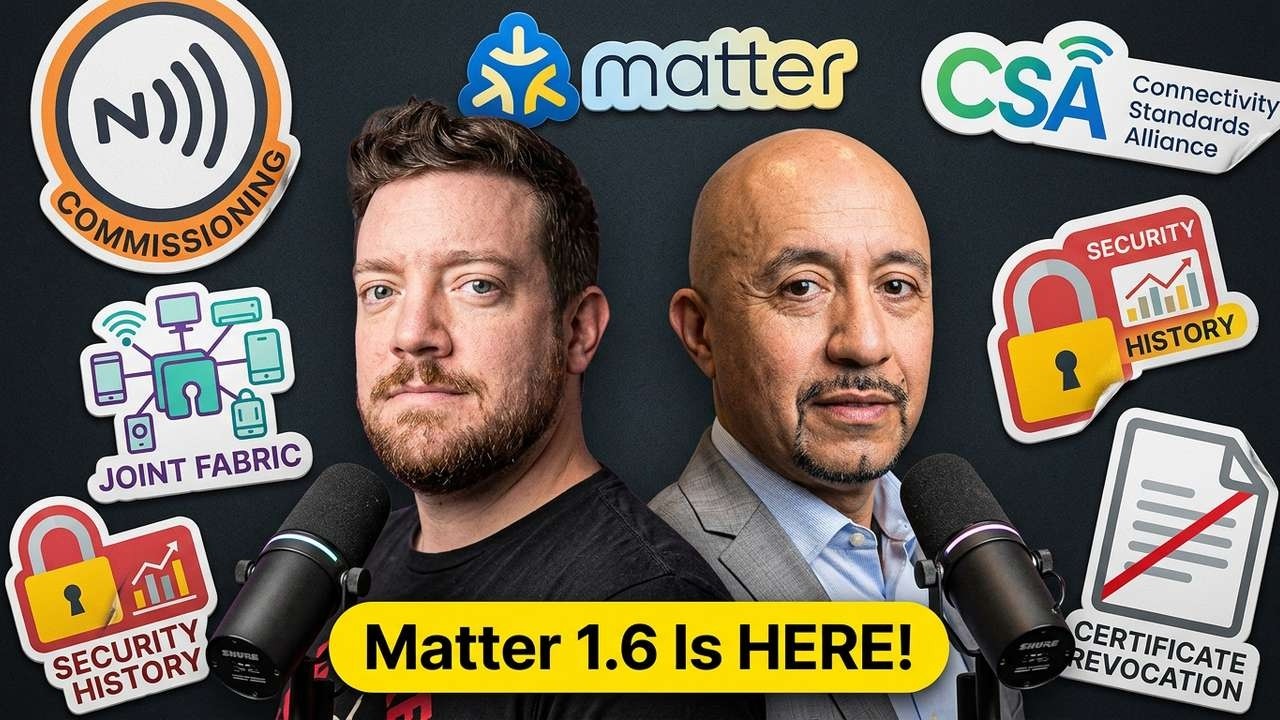
Jon Harros from the CSA talks Matter 1.6

Published

on

On this week’s episode of the Smart Home Insider podcast, Jon Harros from the Matter governing body joins to talk through the latest release of the home automation standard.

Jon Harros is head of testing and certification for the Connectivity Standards Alliance, and he drops in on the podcast from Unify. Unify is the CSA’s first public-facing conference on the smart home and there were many announcements from the week.

We start the episode going through the news. The big release was the Schlage Sense Pro UWB.

This lock will be available to preorder by the end of June and supports Apple Home Key via UWB with Aliro later in 2026. With Aliro, it will also support Google and Samsung wallets.

Advertisement

There was a lot of new television news as of late. During the episode, we talk about HDMI 2.2, Roku, and Philips.

It appears the very first HDMI 2.2 devices will hit the market by the end of 2027. The new standard, with up to twice the bandwidth, will likely start with high-end TVs.

Apple TV is launching on the new 2026 Philips television sets. They are no longer running Google TV and can stream from the Apple TV app with Dolby Vision, Dolby Atmos, and 4K.

Finally, Roku has agreed to be purchased by Fox. Fox will take over the hardware business which compliments its media infrastructure.

Advertisement

The bulk of the episode was dedicated to the new announcements from the CSA. Jon Harros explains the details in Matter 1.6.

Matter 1.6 has many changes, but the most notable is new NFC commissioning that doesn’t require Bluetooth or dedicated power, more context for thermostats, and a Joint Fabric layer for multiple ecosystems to use the same devices.

There was also the Product Security 1.1 release. This time it’s more about extending the security beyond the hardware to apps and software as well.

Those interested in sponsoring the show can reach out to us at [email protected]

Keep up with everything Apple in the weekly AppleInsider Podcast. Just say, “Hey, Siri,” to your HomePod mini and ask it, and our latest Smart Home Insider episode too. If you want an ad-free main AppleInsider Podcast experience, you can support the AppleInsider podcast by subscribing for $5 per month through Apple’s Podcasts app, or via Patreon if you prefer any other podcast player.

Advertisement

Source link

Continue Reading

Tech

WhatsApp gets new chief as Meta taps India’s CRED founder Kunal Shah, and invests $900M in startup

Published

on

Meta is betting on India for WhatsApp’s next chapter, naming entrepreneur Kunal Shah to lead the messaging app and succeed Will Cathcart, who is stepping down after nearly seven years at the helm to take on a new product-building role at the company.

The move comes alongside a Meta-led $900 million financing for Indian fintech giant CRED, structured through a combination of primary and secondary share purchases. The deal will make Meta a minority investor in the CRED, which said Shah will step down as chief executive while retaining his personal shareholding.

India is WhatsApp’s largest market, with more than 500 million users accounting for a significant share of the app’s global base of over three billion people. The country has also emerged as a key battleground for Meta’s ambitions in business messaging and digital payments, areas seen as critical to WhatsApp’s next phase of growth.

Cathcart, who has led WhatsApp since 2019, oversaw a period of rapid expansion that helped the service become one of the world’s most popular messaging apps, including with more than 100 million users in the United States. Under his leadership, WhatsApp expanded beyond private messaging with the launch of products such as Communities, Channels, and AI integrations, while deepening its focus on business messaging.

Advertisement

But efforts by WhatsApp to push into digital payments have delivered mixed results. While WhatsApp Pay gained traction in India, the service struggled to replicate the scale and engagement achieved by local rivals such as PhonePe and Google Pay, leaving significant room for growth in one of the world’s largest payments markets.

Meta is betting that Shah’s experience building a consumer internet company in India can help unlock WhatsApp’s next phase of growth.

In a statement, CEO Mark Zuckerberg said Shah had built CRED into “one of India’s most important technology companies” and brought the “builder mentality and global perspective” needed to run the world’s largest messaging app.

The appointment comes as Meta seeks to expand WhatsApp’s business beyond messaging, particularly in areas such as payments, commerce and business communications. India, as WhatsApp’s largest market, has been central to those efforts.

Advertisement

In 2018, Shah founded CRED, a fintech platform with 17 million monthly active users, after earlier building FreeCharge, one of India’s early digital payments startups. Beyond his operating roles, he has become one of India’s most prominent startup investors, backing more than 250 companies and serving in advisory and industry leadership positions across the country’s technology and financial services sectors.

Meta’s investment values CRED at about $4.5 billion on a post-money basis. The startup was last valued at about $3.6 billion in a funding round in May 2025, below its peak valuation of $6.4 billion in 2022. Before its Series F round, the company had raised more than $1 billion from investors.

As part of the transition, Miten Sampat, who has overseen strategy and finance at CRED since 2020, will take over as interim chief executive with immediate effect. Shah will retain his shareholding in the company after stepping away from day-to-day operations.

CRED said its board and leadership team were working on a longer-term management structure as the company prepares for an eventual initial public offering, with the fresh capital expected to support growth across its payments, lending, insurance, and wealth businesses.

Advertisement

When you purchase through links in our articles, we may earn a small commission. This doesn’t affect our editorial independence.

Source link

Continue Reading

Tech

Riding the clean energy waves: How Sila’s Gene Berdichevsky built a next-gen battery powerhouse

Published

on

Sila CEO and co-founder Gene Berdichevsky, left, and Chris Dougher, Sila’s VP of operations, at the startup’s Moses Lake facility. (Sila Photo)

Sila raised its first round of funding in September 2011 — the same month solar power manufacturer Solyndra went bankrupt, sullying the sustainability sector.

But the California-based startup developing high-performance battery materials kept plugging away, and eventually batteries started booming as EV sales and concerns about the lack of domestic battery production accelerated in the U.S.

Last fall, Sila began manufacturing material in Moses Lake, Wash., at the first automotive-scale, silicon-anode plant for both the company and the nation.

“With something like this, you just keep plugging away at it,” said Gene Berdichevsky, Sila’s CEO and co-founder. “And you ride the waves.”

Keep reading to learn more about Berdichevsky’s sustainability journey. His quotes have been edited for clarity and length.

Advertisement

What was the moment you realized you had to work in energy? 

In my freshman year, I discovered the Stanford Solar Car team. We were student-run group, and the group was building a solar-powered electric car for a race that would go 2,300 miles from Chicago to L.A., and I started participating. It was very little adult supervision, lots of students. And I fell in love with energy, like everything energy. It’s really at the foundation of civilization. And what was super interesting to me is it felt like there was still so much opportunity to make an even better energy system.

What gives you the most hope for the planet?

The creativity of people and the opportunities for science and technology to solve impossible problems. It wasn’t that long ago that the world faced a choice between depopulation or starvation, as the world was thought to not have enough resources for the food needed for a few billion people. But crop science solved it. The same can be said as we face energy challenges today — and I believe material science can solve it. 

Advertisement
Gene Berdichevsky. (Sila Photo)

What’s your biggest concern when it comes to addressing climate change?

You cannot cut your way to solving climate change, yet that is often the temptation and the rhetoric. The only way we will solve climate change is by harnessing scientific breakthroughs, technology, and the power of markets to make the clean option simply the better, more economical option. 

What’s the biggest misconception about building an energy company?

In the end, there is no such thing as a billion-dollar energy company. When you start an energy company from zero, you have to understand what it takes to succeed at a $10 billion or $100 billion scale and stay rooted in the long term because that’s the minimum threshold to have an impact on the world of energy — and nothing smaller will survive. 

What’s one habit you’ve changed personally because of sustainability concerns?

Advertisement

None. I drive an EV because they are more fun to drive — but they happen to be clean. When I travel internationally, I try to fly on 787’s because they’re designed for more passenger comfort — and they happen to be more efficient. When I travel in major cities, I take the metro because it’s faster to get around. Let’s make the cleaner option simply the better one. 

Coffee with any energy leader, past or present — who do you pick?

Nikola Tesla and George Westinghouse. The scientist and the entrepreneur responsible for transforming our world and making electricity flow as freely as water in our lives. While Thomas Edison was the stronger businessman, Tesla was so ahead of his time, and his partnership with Westinghouse created the competition with Edison that revolutionized our world.

What impact do you hope your work has in 20 years?

Advertisement

A better energy foundation for the world. Oil, coal, and gas have created immense prosperity and transformed our society for the better in the 20th century. But an even better, more resilient, lower-cost, and cleaner energy foundation is possible with batteries, geothermal, and renewables. That is the path to yet more prosperity for the world in the 21st century — and it requires innovation, commercialization, and incredible scaling. My hope is for Sila to play an important part in that energy foundation.

Source link

Continue Reading

Tech

OpenAI’s light balance sheet faces a hard IPO look

Published

on

OpenAI’s books show zero debt and just $46mn of quarterly capital spending. The catch, reported by The Information: around $665bn of commitments sitting just off the balance sheet, now heading for regulators’ desks.

On paper, OpenAI looks like a lean software business. The reality is far heavier.

As at 31 March, the ChatGPT maker had zero debt and less than $750mn of lease liabilities, according to The Information, which reviewed its financial statements. Its capital spending for the quarter came to just $46mn. That is less than Salesforce, a company that merely sells software.

For one of the most hardware-hungry businesses in tech, those are remarkable numbers.

Advertisement

The $665bn hiding off the books

The spending has not vanished. It has moved off the balance sheet.

OpenAI carries around $665bn of purchase commitments that do not show up as debt. Most of it is compute: long-term deals to rent the data centres and chips its models run on.

The company leans on Microsoft, Oracle, Amazon and joint ventures such as Stargate and Fluidstack for that capacity. The obligations are real and enormous. They simply do not appear where investors usually look.

A web of related parties

The structure raises a second question. Who sits on the other side of these deals?

About 72 per cent of OpenAI’s cost of revenue flows to related parties such as Microsoft. Microsoft is both a major backer of the company and one of its key suppliers.

Advertisement

That kind of concentration invites scrutiny over conflicts of interest. It is exactly the sort of arrangement that public-market regulators tend to probe.

Why it matters now

This is landing as OpenAI prepares to go public. It filed confidentially with the SEC on 8 June, a week after rival Anthropic, with Goldman Sachs and Morgan Stanley leading the deal.

The filing valued OpenAI at about $852bn. Analysts think a debut could push it past $1tn, perhaps this autumn. It follows SpaceX, which listed in June in the largest IPO on record.

The filing also hands financial regulators their first proper look at OpenAI’s accounting and its tangle of business relationships.

Advertisement

The valuation has to catch up

None of this would matter if the growth were already there. It is not.

OpenAI projects advertising revenue rising from $2.4bn this year to $102bn by 2030, when ads would be more than a third of its sales. Ad group WPP expects the entire AI search and chatbot ad market to be worth about $101bn in 2030. That figure already includes Google.

In short, OpenAI is forecasting that it can capture, on its own, a whole market the rest of the industry will be fighting over.

The bottom line

The cash, meanwhile, keeps pouring out. OpenAI spent about $34bn last year and burned through $3.7bn in the first three months of 2026 alone.

Advertisement

A clean balance sheet usually reassures investors. This one may do the opposite. Zero debt means little when $665bn of commitments sit just out of frame. Sceptics already warn that an OpenAI stumble could ripple across the whole AI supply chain.

Source link

Advertisement
Continue Reading

Tech

Ireland takes EU presidency with Big Tech conflict

Published

on

TL;DR

Ireland takes over the EU Council presidency on 1 July with a tech-heavy legislative agenda, but its economy depends on the very companies those rules target. Two firms, understood to be Apple and Microsoft, paid 40 per cent of all Irish corporate tax in 2024.

Ireland takes over the rotating presidency of the Council of the EU on 1 July, inheriting a legislative agenda that includes proposals to curb Europe’s reliance on American tech, simplify the bloc’s digital rulebook, decide whether to ban children from social media, and overhaul telecom regulations. The country holding the presidency is supposed to act as an honest broker, finding common ground among 27 member states rather than advancing its own interests.

Advertisement

That role is complicated when the broker’s economy runs on the companies being regulated. Sixteen of the world’s 20 largest tech firms reportedly operate hubs in Ireland, and more than 100,000 people work in the sector.

The tax question

Ireland’s fiscal watchdog, the Irish Fiscal Advisory Council, warned earlier this year that just two companies, understood to be Apple and Microsoft, paid almost 40 per cent of all corporate tax in Ireland in 2024. That amounted to roughly €11 billion, with a third firm, understood to be Eli Lilly, bringing the share to 46 per cent.

The 💜 of EU tech

The latest rumblings from the EU tech scene, a story from our wise ol’ founder Boris, and some questionable AI art. It’s free, every week, in your inbox. Sign up now!

Advertisement

“It’s widely acknowledged, including by the Irish Fiscal Advisory Council, that Ireland is too reliant on Big Tech firms,” said Michael McNamara, the liberal MEP who co-led the European Parliament’s package to roll back elements of the AI Act. He said Ireland needs to be “clear-eyed about the pressures that will come during the Presidency” from companies headquartered in Dublin.

The enforcement record

Ireland’s presidency agenda runs through the same regulatory territory where it has faced sustained criticism. The Irish Data Protection Commission, the body responsible for policing GDPR compliance by tech firms that base their European operations in Dublin, has been accused of being too lenient on enforcement and of allowing a revolving door between the regulator and the private sector.

The Irish Council for Civil Liberties has called for Ireland to recuse itself from all digital files during the presidency. Lynn Boylan, a left-wing MEP from the opposition party Sinn Féin, said Ireland’s economic model is “deeply tied to keeping a small number of overwhelmingly American tech corporations comfortable,” creating an “obvious conflict.”

What Big Tech wants

Tech firms made their priorities clear in a public consultation Ireland held ahead of the presidency. CCIA Europe, the Big Tech lobby group, called for Ireland to “double down” on simplifying tech rules and “firmly reject” sovereignty provisions that could exclude foreign firms.

Advertisement

Meta urged Ireland to “adopt a leadership position in shaping Europe’s digital agenda,” calling for a “complete overhaul” of the bloc’s digital rules and a “pause on implementation” of new regulations. It also said Ireland should bring its “unique relationship with the U.S.” to the fore during the presidency.

Bram Vranken, a researcher at the transparency group Corporate Europe Observatory, said that while companies lobby every country holding the presidency, “in the case of Ireland they know they have more leverage.” Irish officials pointed to the fact that they published all lobby submissions received during the consultation as evidence of transparency.

The honest broker test

Ireland’s defenders point to its track record. During its last presidency in 2013, Ireland pushed GDPR negotiations so hard that diplomats from other member states slept in tents to maximise negotiating time, earning praise from then-Justice Commissioner Viviane Reding.

Two EU diplomats, granted anonymity to speak candidly, told Politico that Ireland had been “very fair” and “very professional” on previous digital files. Niamh Smyth, Ireland’s minister of state for artificial intelligence, rejected the idea that Big Tech’s presence would compromise the presidency.

Advertisement

“We have had many presidencies before, and we have always done our job well and done it objectively,” Smyth told Politico. Billy Kelleher, a liberal MEP from the governing Fianna Fáil party, added that Ireland should “not be embarrassed about being a success story.”

Whether simplification tips into deregulation will define how the presidency is judged. The question for the next six months is whether Dublin can separate what is good for its economy from what is right for the bloc.

Source link

Advertisement
Continue Reading

Trending

Copyright © 2025