Connect with us
DAPA Banner

Business

Building Tech That Transforms Old Industries

Published

on

Building Tech That Transforms Old Industries

A Young Athlete Turned Tech Founder

Lucas Jenkins did not start in tech. He started on the field.

“I grew up playing hockey and soccer almost every day,” he says. “Sports taught me discipline early.”

Born in Vancouver and raised in Georgetown, Ontario, Jenkins had a competitive childhood. He won multiple hockey championships and later played varsity soccer at Wilfrid Laurier University. At the same time, he earned strong grades in the Business Administration program.

Balancing school and sports was not easy. But it shaped how he works today.

Advertisement

“You learn how to manage pressure,” he says. “You learn how to stay consistent even when things get hard.”

That mindset would later carry into business.

How Lucas Jenkins Got Into Entrepreneurship

After university, Jenkins did not follow a traditional path. He chose to build something of his own.

“I wanted to apply what I learned in real time,” he says. “Starting a company felt like the fastest way to do that.”

Advertisement

His first venture became a profitable business within a few years. That early success gave him confidence to go deeper into entrepreneurship.

By 2020, Jenkins had shifted his focus to the technology sector. He saw an opportunity.

“A lot of industries were still operating the same way they had for decades,” he says. “There was a clear gap.”

Building JEMI Technology & Consulting

Jenkins co-founded JEMI Technology & Consulting to help businesses modernize.

Advertisement

The company focuses on artificial intelligence and digital transformation. Its goal is simple. Help traditional companies adapt to new tools.

“We work with businesses that know they need to change,” he says. “They just don’t know where to start.”

At JEMI, Jenkins leads business development and strategy. His role is not just technical. It is about relationships.

“A big part of my job is understanding people,” he explains. “Technology only works if it solves real problems.”

Advertisement

This approach has helped the company grow in a competitive space.

The Rendoodle Story: Tech Meets Construction

One of Jenkins’ most notable projects came from a different idea.

He co-founded Rendoodle, a platform focused on home renovation and building supplies. The goal was to simplify a process that many people find stressful.

“Planning a renovation used to be complicated,” he says. “We wanted to make it easier from your phone.”

Advertisement

Rendoodle allowed users to plan and manage projects digitally. It brought modern tools into a very traditional industry.

The concept worked. The company gained traction and was eventually sold.

For Jenkins, the experience reinforced a key lesson.

“There is a lot of value in improving old systems,” he says. “You don’t always need to invent something new. Sometimes you just make it better.”

Advertisement

Why Technology in Traditional Industries Matters

Jenkins continues to focus on industries that are often overlooked by tech founders.

Construction and building supplies are not known for innovation. But that is exactly why he sees potential.

“These industries are essential,” he says. “But they have been slow to adopt technology.”

He believes change is already happening. And he wants to be part of it.

Advertisement

“When you bring the right tools in, you can save time, reduce stress, and improve outcomes,” he explains.

His work sits at the intersection of technology and real-world use. That balance defines his leadership style.

Leadership Style and Daily Drive

Jenkins describes himself as energetic and driven. He prefers to stay busy.

“I like being in motion,” he says. “Whether it’s work, fitness, or learning something new.”

Advertisement

His background in sports still plays a role. It shapes how he leads teams and handles challenges.

“Consistency matters more than intensity,” he says. “You show up every day and do the work.”

He also values collaboration. Many of his projects involve partnerships and team effort.

“No one builds anything meaningful alone,” he adds.

Advertisement

Beyond Business: Community and Mentorship

Outside of work, Jenkins stays connected to his community.

He supports children’s healthcare initiatives in Toronto and works with youth sports programs across Ontario.

“I had access to sports growing up,” he says. “Not everyone does. I want to help change that.”

He also speaks to students about mental health and personal challenges.

Advertisement

“I try to be honest about my experiences,” he says. “People relate to real stories.”

These efforts reflect a broader view of leadership. For Jenkins, impact goes beyond business results.

What’s Next for Lucas Jenkins?

Lucas Jenkins continues to focus on growth, both personal and professional.

He is still involved in JEMI Technology & Consulting. He is also exploring new opportunities in tech and innovation.

Advertisement

“I’m always looking for ways to improve and build,” he says.

His interest in aviation has also shaped some of his recent work, including exposure to technology initiatives connected to Air Canada.

Looking ahead, his focus remains clear.

“I want to keep working on projects that solve real problems,” he says. “That’s what keeps me motivated.”

Advertisement

Lucas Jenkins represents a new type of entrepreneur. One who blends discipline from sports with a practical approach to technology. His work shows that innovation does not always come from starting fresh. Sometimes, it comes from improving what already exists.

Advertisement
Continue Reading
Click to comment

You must be logged in to post a comment Login

Leave a Reply

Business

Earnings call transcript: Inwido Q1 2026 sees stock dip amid earnings miss

Published

on


Earnings call transcript: Inwido Q1 2026 sees stock dip amid earnings miss

Continue Reading

Business

Golden gains from nickel negativity

Published

on

Golden gains from nickel negativity

A handful of WA gold developers are finding cost and time savings in unexpected places.

Continue Reading

Business

Anritsu shares rise 5.8% on stronger fiscal 2026 guidance

Published

on


Anritsu shares rise 5.8% on stronger fiscal 2026 guidance

Continue Reading

Business

SafetyMode Letter to MPs: AI Firm Warns Against ‘False Choice’ on Child Smartphone Safety

Published

on

SafetyMode Letter to MPs: AI Firm Warns Against 'False Choice' on Child Smartphone Safety

A British artificial intelligence company founded by one of the architects of fintech unicorn Tide has written to every Member of Parliament warning that the political debate over children’s smartphone use has descended into a “false choice” between blanket bans and unrestricted access.

SafetyMode, the London-headquartered child safety technology firm led by Tide founder George Bevis, has used the parliamentary intervention to press ministers to consider a third path, arguing that on-device technology can give parents meaningful control without locking children out of the digital economy altogether.

The timing is not accidental. The letter lands in Westminster postbags days after a landmark American court ruling found that several of Silicon Valley’s largest platforms had knowingly engineered addictive products for young users, a judgment that has sharpened the appetite among legislators on both sides of the Atlantic for tougher action.

In Britain, the political mood music has shifted markedly over the past eighteen months, with cross-party support building for tighter restrictions on under-16s. Yet SafetyMode’s pitch to MPs is that the conversation has narrowed prematurely.

“Right now, the entirety of the conversation around social media and phone safety seems to pretend all we can achieve is either to open the floodgates entirely or to ban them completely, losing all benefits these technologies may offer,” the company writes in its letter, copies of which have been seen by Business Matters.

Advertisement

The firm, founded by Mr Bevis alongside Bertie Aspinall and product specialist Dan Barker, has spent the past two years developing what it claims is one of the most sophisticated parental control platforms on the market. Unlike rival products that route children’s data through cloud servers, SafetyMode’s technology runs artificial intelligence directly on the device, filtering harmful content in real time while keeping personal information off external servers.

The product was built in partnership with parenting forum Mumsnet, whose research underpins much of the company’s commercial thesis. More than 90 per cent of parents surveyed told Mumsnet that current smartphones are not safe enough for children, while 86 per cent expressed concern about the impact of devices on their child’s mental health and attention span.

Speaking to Business Matters, Mr Bevis said the political class risks reaching for the bluntest available instrument. “We are at a turning point in how society views children and smartphones. There is clear agreement that there is a problem, but the solutions being discussed are too narrow. Regulation matters, but it takes time, and it cannot be the only answer.”

Mr Aspinall, the firm’s co-founder, struck a more pointed note. “The courts, governments, schools and parents all recognise the risks. But companies at the heart of this won’t fix it themselves. So the question becomes, what do we do next? On the one hand is regulation. But if we want to protect children now, the answer is simple. You build safety into the device itself and put control back in the hands of parents.”

Advertisement

The company’s technology has been designed to read context rather than merely scan for prohibited keywords, identifying when conversations turn abusive, sexualised or otherwise damaging, even when those exchanges would slip past conventional filters.

For now, SafetyMode is available only on Android handsets. The firm has been openly critical of Apple, arguing that the Cupertino giant’s restrictions on third-party developers prevent meaningful parental controls being built for iPhone users, a complaint that echoes broader regulatory scrutiny of Apple’s walled garden in both Brussels and Washington.

There is also an industrial strategy dimension to the company’s lobbying. SafetyMode is positioning Britain as a potential global hub for what it calls the “safe tech for kids” movement, arguing that ministers could combine child protection with a fresh wave of innovation, investment and skilled job creation if they chose to back domestic firms developing protective technologies.

Whether MPs will be receptive remains to be seen. Backbench pressure for outright restrictions on under-16s using social media has hardened in recent months, and Whitehall has shown limited appetite for technological solutions that depend on parental engagement. But with the American courts now exposing platform behaviour in unprecedented detail, the case for action of some kind appears unstoppable.

Advertisement

The question Mr Bevis and his colleagues are putting to Parliament is whether that action should empower parents or simply slam the door shut.


Amy Ingham

Amy is a newly qualified journalist specialising in business journalism at Business Matters with responsibility for news content for what is now the UK’s largest print and online source of current business news.

Advertisement
Continue Reading

Business

Wiltshire farmers planning to open rare micro tannery

Published

on

Business Live

James and Katie Allen want to open the heritage tannery at Great Cotmarsh Farm near Broad Town

Cows in a field

Cows in a field(Image: DC Media)

Plans to establish the UK’s first micro-scale vegetable tannery for cattle hides at a farm in the Wiltshire countryside have been revealed. James and Katie Allen are seeking to launch the heritage tannery at Great Cotmarsh Farm near Broad Town.

Advertisement

The pair acquired the farm in 2023 and began developing a varied portfolio of business ventures, including a glamping site featuring a shepherd’s hut, and a farm classroom for fashion students teaching sustainable production techniques such as wool-weaving and natural dye-making.

They now intend to add leather production to their offering, through the establishment of a heritage tannery – and have lodged a planning application for change of use to an existing farm building which they reconstructed in 2024.

Their agent, agricultural consultant Woolley & Wallis, has informed the council: “The use of the building for leather tanning of their own hides from the herd established on the farm is still considered agricultural.

“The use as a tannery is ancillary to their agricultural enterprise, much like a farm shop selling their own produce or a farmer producing wine from his grapes on site.

Advertisement

“The tannery produces, sustainable, high-quality, vegetable-tanned cow leather that the applicant can trace back to the exact animal reared on the land.”

The UK was formerly a global leader in leather production for everything from footwear to saddles, with every market town boasting a tanner. However, tanning is a declining craft, and the tanneries still operating rely on dangerous chemicals to speed up the procedure.

“Traditional oak bark tanning is now classified as critically endangered on the Heritage Crafts red list,” said James.

“We are in danger of losing the knowledge from the country completely as the last tanning experts retire.

Advertisement

“Our leather will be made to produce our own leather goods, but also to supply brands looking for hero collections that want true transparency along the leather supply chain, and for artisan leather workers and makers.

“In the future, we’d like to be able to offer farmer returns, enabling farmers to generate another income stream from their cattle enterprise.”

Our micro-scale tannery is an important part of the field-to-fibre story and knowledge exchange we are building on the farm, and we hope to support the creation of other micro tanneries to help reinvigorate a heritage craft that once was a burgeoning part of British enterprise.

A ruling from Wiltshire Council is expected by mid-June.

Advertisement
Continue Reading

Business

Elon Musk Blasts ‘Scam Altman’ for Looting OpenAI Charity as Landmark Trial Begins

Published

on

Elon Musk and Sam Altman were among the 11-person team that founded OpenAI in 2015

OAKLAND, Calif. — Elon Musk unleashed a blistering attack on OpenAI CEO Sam Altman on Monday, labeling him “Scam Altman” and accusing him along with President Greg Brockman of stealing a charity in a viral X post that landed squarely on the first day of jury selection in Musk’s high-stakes lawsuit against the artificial intelligence company.

Elon Musk and Sam Altman were among the 11-person team that founded OpenAI in 2015
Elon Musk and Sam Altman
AFP

The post, which amassed more than 22 million views within hours, revived Musk’s long-standing grievances over OpenAI’s transformation from a nonprofit he helped found in 2015 into a for-profit powerhouse now valued in the hundreds of billions. “Scam Altman and Greg Stockman stole a charity. Full stop,” Musk wrote, deliberately misspelling Brockman’s surname as “Stockman” in apparent mockery.

Musk detailed what he called a profound betrayal: “Greg got tens of billions of stock for himself and Scam got dozens of OpenAI side deals with a piece of the action for himself, Y Combinator style. After this lawsuit, Scam will also be awarded tens of billions in stock directly.” He framed the legal fight in stark moral terms for the American public: “Do you want to set legal precedent in the United States that it is ok to loot a charity? If so, you undermine all charitable giving in the United States forever.”

Advertisement

The timing was no coincidence. Jury selection opened Monday in Alameda County Superior Court here for Musk’s civil case, which centers on allegations that OpenAI breached its original charitable trust by shifting to a capped-profit model and striking massive commercial deals, most notably with Microsoft. Musk has dropped earlier fraud claims but is pressing forward with breach-of-charitable-trust arguments. He has repeatedly stated that any damages awarded would return to the nonprofit mission rather than lining his pockets.

Musk reminded followers of his foundational role: “I could have started OpenAI as a for-profit corporation. Instead, I started it, funded it, recruited critical talent and taught them everything I know about how to make a startup successful FOR THE PUBLIC GOOD. Then they stole the charity.” The post quoted at length a detailed thread from user @XFreeze recounting how Musk put up his own money, assembled top AI talent and launched the organization explicitly as a pure nonprofit with zero profit motive and open research.

OpenAI was established in late 2015 as a nonprofit research lab with Musk, Altman, Brockman and others as co-founders. Musk stepped down from the board in 2018 amid disagreements, including concerns about Tesla’s competing AI work. The company later created a for-profit subsidiary in 2019 to raise the enormous capital needed for cutting-edge AI development, a move it has defended as necessary and fully disclosed.

OpenAI has called Musk’s lawsuit meritless, arguing he was aware of and initially supportive of the hybrid structure that enabled breakthroughs like ChatGPT. The company maintains it remains committed to its mission of developing safe artificial general intelligence that benefits all of humanity.

Advertisement

Legal observers said Musk’s public broadside could color potential jurors’ views even as the courtroom process unfolds. The case is expected to examine internal documents, emails and founding agreements that detail the 2019 restructuring. Witnesses will likely include early employees, board members and AI ethicists. The trial could last weeks or months, with appeals almost certain.

Public reaction on X was swift and polarized. Supporters praised Musk for defending charitable principles, with one reply stating, “If the courts let Sam Altman and Greg Brockman loot a nonprofit they turned into their personal multi-billion-dollar piggy bank, then every charity in America just became fair game for grifters in Silicon Valley.” Others mocked the dispute, with critics accusing Musk of sour grapes after walking away from OpenAI and launching rival xAI.

The feud has thrust into the spotlight broader questions about governance of nonprofits in the tech sector, where enormous capital requirements often clash with original humanitarian missions. Charitable-giving experts warn that a ruling perceived as endorsing the conversion of nonprofits into personal windfalls could deter future philanthropy, particularly in high-stakes fields like AI.

OpenAI continues to dominate the AI landscape, with its models powering consumer chatbots, enterprise tools and research worldwide. Revenue has soared into the billions annually. Altman has testified that the for-profit structure was essential to scaling responsibly rather than ceding ground to less-regulated competitors.

Advertisement

Musk has used his ownership of X to amplify warnings about AI safety, positioning xAI as a “maximum truth-seeking” alternative. The OpenAI lawsuit, however, focuses narrowly on contractual and fiduciary duties tied to the nonprofit origins rather than philosophical differences over AI alignment.

For Silicon Valley, the trial represents more than a personal clash between two titans. It could reshape how future AI ventures structure themselves and how courts interpret founding charters in rapidly evolving industries. Investors are monitoring closely; a Musk victory might open the door to similar challenges against other hybrid models.

As jury selection continued into Tuesday, April 28, Musk showed no signs of backing down. His Monday post echoed arguments his legal team has made in court filings, emphasizing that he recruited key talent and poured resources into OpenAI specifically because it was structured as a charity. “Then they stole the charity,” he concluded.

OpenAI has not commented directly on the latest post but has previously described Musk’s claims as revisionist history. The company notes that Musk proposed merging OpenAI with Tesla in 2018 — a move the board rejected — before departing. It says it has honored its mission by releasing research, building safety systems and pursuing AGI for humanity’s benefit.

Advertisement

The broader AI race has intensified since OpenAI’s founding. What began as a small research collective has become a global competition involving governments, tech giants and startups. Musk’s xAI, Anthropic, Google DeepMind and others now vie fiercely, raising questions about whether any single entity can serve as a neutral steward of humanity’s most powerful technology.

Whatever the jury decides, the Musk-Altman dispute has already highlighted critical issues of trust, governance and the public good in the AI era. With billions in potential value and humanity’s technological future on the line, Monday’s explosive post served as a vivid reminder that the courtroom battle is as much about narrative as it is about law.

As the trial advances, both sides will present evidence that could reshape not only their corporate futures but also precedents for charitable organizations in the innovation economy. For now, Musk’s viral message ensures the public debate over OpenAI’s origins and direction remains front and center.

Advertisement
Continue Reading

Business

Velo3D: Metal Additive Manufacturing Platform Targeting High-End Applications

Published

on

Velo3D: Metal Additive Manufacturing Platform Targeting High-End Applications

Velo3D: Metal Additive Manufacturing Platform Targeting High-End Applications

Continue Reading

Business

Stock picking key as auto, banks face near-term headwinds: Sandip Sabharwal

Published

on

Stock picking key as auto, banks face near-term headwinds: Sandip Sabharwal
Indian equity markets continue to reflect a mix of strong sectoral growth and emerging near-term risks, particularly around input costs, competition, and valuations. In a conversation with ET Now, market expert Sandip Sabharwal maintained a broadly constructive long-term stance but emphasised the importance of selectivity in the current environment.

On the auto sector, including names like Maruti Suzuki, Sabharwal remained positive over the long term but flagged short-term pressure from rising costs.

“Long term I am bullish and we hold M&M, Maruti and Bajaj Auto, but near-term issues remain due to input costs, especially steel.” He added that while valuations are not stretched, cost pressures and sentiment around fuel prices could weigh on demand in the near term. “Fuel price changes may not matter long term, but they impact sentiment. Near-term concerns are there,” he said.

Turning to small finance banks and NBFCs, Sabharwal adopted a more cautious tone, pointing to aggressive guidance and potential stress in lending pockets. “Guidance does not look conservative; it appears aggressive given possible stress pockets.” He stressed that in financials, asset quality is more important than headline profitability. “Profits matter less; asset quality is what drives long-term wealth creation.” He also indicated a preference for more conservative lenders in a potentially slowing economic environment.

Advertisement

On market structure, Sabharwal highlighted a shift in opportunity towards midcaps following a recent correction.


“Midcaps saw a sharp correction since September 2024. This creates stock-picking opportunities.” He suggested that investors should avoid broad-based bets and instead focus on selective opportunities in mid and smallcap segments. “It is better to cherry-pick midcaps and selective smallcaps now.”
On sectoral themes, he preferred consumer durables as a play on seasonal demand rather than Coal India. “ACs, fans and cooler companies should do well this summer.” While acknowledging Coal India’s valuation comfort, he remained unconvinced on its medium-term appeal. “It is not expensive, but I am not a big fan of Coal India.”In the quick commerce space, Sabharwal flagged rising competitive intensity as a key concern for players like Eternal and Swiggy. “Amazon entering quick commerce could cap upside for these stocks.” He noted that profitability remains under pressure and increasing competition could limit near-term upside. “Upside looks capped for now given competition and cost pressures.”

On Sun Pharma’s recent acquisition, Sabharwal said the initial market reaction has been positive, but cautioned that large deals in the pharma sector typically take time to integrate. “The deal looks like a good strategic fit.” However, he added, “Large pharma acquisitions are rarely easy; integration takes time.” He also pointed out that the acquisition price is on the higher side, suggesting investors should adopt a wait-and-watch approach.

Overall, Sabharwal’s view suggests a market environment where macro and sectoral tailwinds remain supportive, but returns are increasingly likely to be driven by disciplined stock selection rather than broad-based rallies.

Advertisement
Continue Reading

Business

Retirement Business Ideas For Parents In 2026

Published

on

Retirement Business Ideas for Parents

Retirement doesn’t have to mean the end of earning income. For many parents, it’s actually the perfect time to explore small business opportunities that are less stressful, more flexible, and personally fulfilling. After years of working hard and raising a family, retirement opens the door to turning hobbies, skills, and life experience into something profitable.

Whether your goal is to supplement your pension, stay mentally active, or simply enjoy a meaningful routine, starting a small business can be one of the best decisions you make. In this article, we’ll explore practical and realistic business ideas that parents can start during retirement.

Retirement Business Ideas for Parents

Why Start a Business During Retirement?

Before diving into the ideas, it’s important to understand why many retirees choose to start a business:

Advertisement
  • Extra Income: Helps cover daily expenses or unexpected costs.
  • Flexibility: You control your schedule and workload.
  • Purpose: Staying productive can improve mental and emotional health.
  • Legacy: You can build something to pass on to your children.

The key is to choose a business that matches your energy level, interests, and financial capacity.

If you love cooking, this is one of the most practical businesses you can start. Many parents already have years of experience preparing meals, making this a natural transition.

You can sell:

  • Home-cooked meals
  • Baked goods
  • Snacks or local delicacies

Start small by selling to neighbors, friends, or through social media. This business requires minimal investment and can be done right from your kitchen.

A small neighborhood store is a classic retirement business. It’s simple to manage and provides steady daily income.

Advantages include:

Advertisement
  • Consistent demand
  • Easy to operate
  • Community interaction

You can expand over time by adding mobile load, bills payment services, or even frozen goods.

With the rise of e-commerce, parents can now run a business without leaving home. Online selling is perfect for retirees who want flexibility.

Popular items to sell include:

  • Clothing and accessories
  • Household items
  • Health products

Platforms like Facebook Marketplace or online shopping apps make it easy to connect with customers.

4. Rental Business

If you have extra space or assets, renting them out can provide passive income.

Examples:

Advertisement
  • Room or apartment rental
  • Vehicle rental
  • Event equipment rental (chairs, tents, etc.)

This type of business requires less daily effort once set up properly.

5. Gardening and Plant Selling

For parents who enjoy gardening, this can be both relaxing and profitable.

You can sell:

  • Ornamental plants
  • Herbs and vegetables
  • Landscaping services

With the growing interest in home gardening, this business has strong potential.

Laundry services are always in demand, especially in busy communities.

You can start with:

Advertisement
  • Wash-and-dry services
  • Ironing services
  • Pickup and delivery options

This business can be scaled gradually depending on your capacity.

7. Tutoring or Coaching

Parents with professional or academic experience can share their knowledge through tutoring.

Opportunities include:

  • Academic tutoring (Math, English, etc.)
  • Music lessons
  • Life skills coaching

This is a low-cost business that allows you to make a meaningful impact.

8. Handicrafts and DIY Products

If you enjoy creating things, you can turn your hobby into a source of income.

Examples:

Advertisement
  • Handmade bags
  • Decorations
  • Personalized gifts

These can be sold online or at local markets.

9. Small Farming or Livestock

If you have access to land, small-scale farming can be a rewarding retirement business.

You can raise:

Or grow crops such as vegetables and fruits. This can also reduce your household expenses while generating income.

10. Boarding House or Bed-and-Breakfast

If you have extra rooms, converting them into a rental space is a great long-term business.

Advertisement

This is ideal for areas near:

  • Schools
  • Offices
  • Tourist spots

It provides steady monthly income and can be managed with minimal effort.

Tips for Choosing the Right Retirement Business

Not all businesses are suitable for everyone. Here are some important tips:

  • Start Small: Avoid large investments at the beginning.
  • Choose What You Enjoy: Passion makes the work easier.
  • Consider Your Health: Pick a business that matches your physical ability.
  • Manage Time Wisely: Retirement should still feel relaxed.
  • Involve Family: This can strengthen relationships and share responsibilities.

Retirement is not the end of productivity—it’s a new beginning. For many parents, starting a small business provides financial security, personal fulfillment, and a renewed sense of purpose.

The best business is not necessarily the biggest or most profitable one, but the one that fits your lifestyle and brings you joy. Whether it’s cooking, selling, teaching, or growing plants, there are countless opportunities waiting to be explored.

Take the first step, start small, and enjoy the journey. After all, retirement should not just be about resting—it should also be about living fully and meaningfully.

Advertisement

Disclaimer: Before starting any business, it is recommended to check local regulations, permits, and requirements in your area to ensure compliance with the law.

BN Philippines
Latest posts by BN Philippines (see all)
Continue Reading

Business

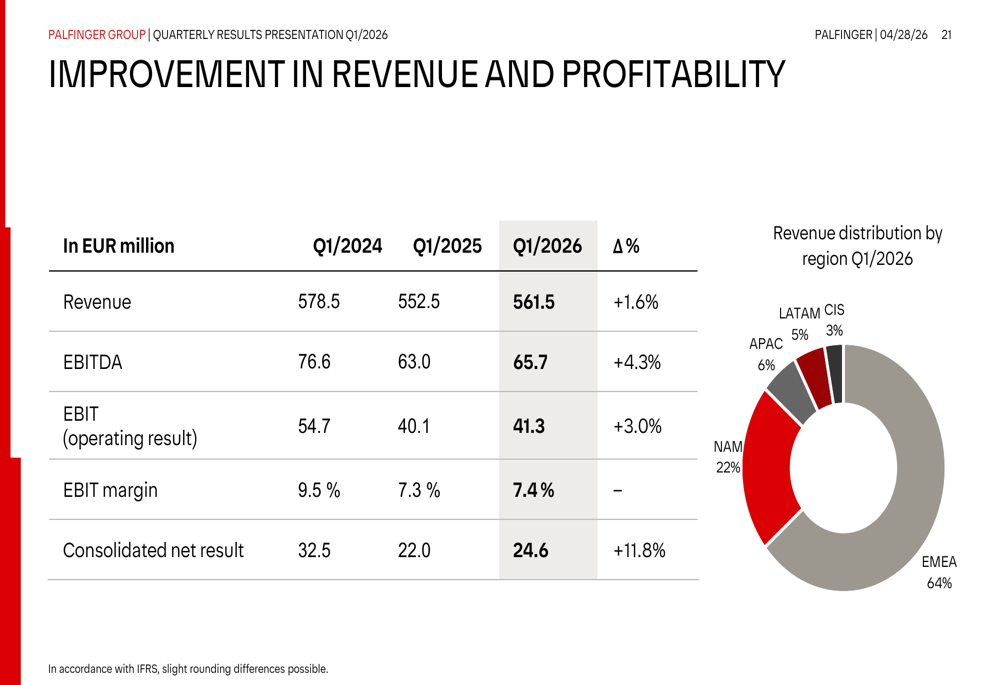
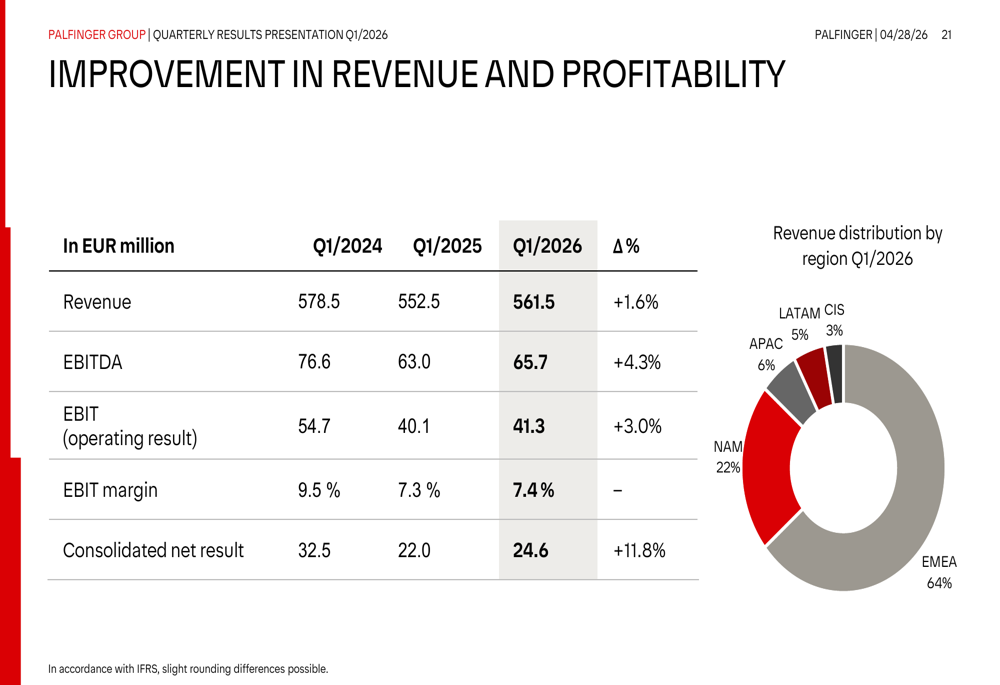
Palfinger Q1 2026 slides: margins expand despite revenue headwinds

Published

on

Palfinger Q1 2026 slides: margins expand despite revenue headwinds


Palfinger Q1 2026 slides: margins expand despite revenue headwinds

Continue Reading

Trending

Copyright © 2025