

Business
Can Ryan Kavanaugh and Partners Save Hollywood Again?


Nobody in Hollywood will say it on the record, but everyone knows: the system is broken. Studios have retreated into franchise bunkers, greenlighting only sequels, prequels, and IP extensions with built-in audiences.
The streamers, who were supposed to be the cavalry, have pivoted hard from growth to profitability — which in practice means fewer shows, smaller orders, and a near-total unwillingness to bet on anything that doesn’t come pre-loaded with data-validated demand. Original storytelling, the kind that built this industry, has been priced out of the conversation.
The numbers are ugly. Hollywood’s share of qualified film and television projects fell from 23 percent in 2021 to 18 percent just two years later. Entertainment industry layoffs topped 17,000 in 2025 alone. Filming activity in Los Angeles cratered — down 40 percent from 2022 levels before dropping another 13 percent last summer. David Simon, one of the most respected showrunners alive, told an interviewer that he hasn’t had a greenlight in two years. David Chase said the same thing, warning that the business is devolving back to the pre-golden-age network model where executives prioritize financial safety over ambition.
And the foreign sales market, once the financial oxygen that kept mid-budget films alive, has tightened considerably. International buyers want proven IP. They want franchise value. They don’t want to write seven-figure checks for an original thriller from a first-time director, no matter how good the script is. The economic architecture that used to make a $40 million original film pencil out — presales covering a chunk of the budget, domestic theatrical providing upside, home video and international filling in the gaps — barely exists anymore.
So what happens next? Does Hollywood just keep cranking out franchise entries until audiences stop showing up entirely? Or does a computer take away everyones jobs and turn content like a tuna can factory? Perhaps AI has not been given a fair chance to be the savior, not the terminator for media companies and personel.
Enter Acme AI & FX. Never heard of them? That’s by design. For almost two years now they have quietly been building. No web site, no PR just building. Building what they call the ethical, talent friendly AI Studio.
Acme is not another AI startup promising to replace human creativity with algorithms. It’s closer to the opposite — a production infrastructure company that uses proprietary AI technology to make the physical act of filmmaking radically cheaper and faster while keeping every human job intact. Their approach centers on performance capture shot entirely on Acme’s proprietary grey stage. Actors perform. Directors direct. Writers write. Department heads run their departments. What Acme eliminates is the staggering cost of everything else: location shoots, set construction, travel, permits, the logistical sprawl that eats 20 to 30 percent of a typical feature budget before a single frame of story gets captured.
The technology generates 100 percent photorealistic environments. Not “pretty good for AI” — photorealistic. Every exterior, interior, cityscape, and landscape that would normally require a location scout, a construction crew, and a travel budget is instead built digitally at a quality level that holds up on a 60-foot screen. The performances remain entirely actor-driven. This is not deepfake territory. Nobody is being digitally puppeteered. The actors act. The AI handles the world around them.
One source who spent time at Acme’s London facility — but declined to go on the record due to NDA obligations — described what they witnessed there. “You’ve got to see it. It’s unbelievable,” the source said. “Over a one-week period, I watched at least numerous studio heads and the like come through. Most of them clearly showed up ready to shut down the concept of shooting in AI on the spot, and every single one of them left saying some version of ‘how quickly can we start.’ They have a pre-production AI tech that is something this industry has been dreaming of. I know I’m repeating myself, but it’s unbelievable.”
The economics are striking. Acme can deliver a film at roughly 20 percent of traditional below-the-line cost while cutting shoot schedules by 60 to 70 percent. Think about what that means for the greenlight problem. A $50 million film that studios won’t touch because the downside risk is too steep? At Acme’s cost structure, you’re making substantially the same movie for a fraction of the price. Suddenly the risk-reward math works again — not just for franchise plays, but for original stories, character-driven dramas, ambitious genre films, the entire category of movies that Hollywood has abandoned because the production economics stopped making sense. It sounds too good to be true. And in Hollywood usually when it is too good to be true it isnt true. In this case, however, we were able to visit them during their last production, Bitcoin: Killing Satoshi and saw it all come to life.
Garret Grant, who joined ACME as a partner, said “When I was first approached about joining ACME was expecting to lose my job to an ai producer. That’s not what’s happening here. My entire department is intact. My crew is working. The difference is I’m not spending three weeks in prep dealing with location permits and weather covers and travel logistics. We’re just making the movie. I’ve been doing this for 25 years and I’ve never had a shoot move this fast without something falling apart.”
Acme has already built studios in London and has broken ground in Spain , with plans to open facilities in New York and has a mini studio in Los Angeles. Their flagship production, Killing Satoshi, is nearing the finish line — a $70 million conspiracy thriller directed by Doug Liman (The Bourne Identity, Edge of Tomorrow) and starring Casey Affleck and Pete Davidson, Gal Gadot and Isla Fischer, almost done with production. The film was shot entirely on Acme’s grey stage with all AI-generated environments, in partnership with 30 Ninja’s. It tracks the mystery of Satoshi Nakamoto, the anonymous inventor of Bitcoin who allegedly still controls a wallet worth tens of billions, and the powerful forces working to ensure that identity stays hidden. Nick Schenk, who wrote Gran Torino for Clint Eastwood, penned the original screenplay. It’s exactly the kind of high-concept, original, non-franchise film that the traditional studio system won’t make anymore. Acme made it.
And the pipeline is already filling up behind it. The trailer for Stop That Train, a new Adam Shankman movie, just dropped — with Acme serving as the VFX/AI partner on the project. The company is very firm about not announcing their projects, but letting the directors or studios lead that. All told, the company has over 15 projects ( films and television) in various stages of pre-production and production, plus advertising work. This isn’t a proof-of-concept experiment. It’s a production operation scaling in real time, with finished product to show for it.
A senior executive at one of the major talent agencies, speaking on background, framed Acme’s emergence in market terms. “The foreign sales conversation has gotten brutal. Buyers want IP, they want franchise, they want safety. But when you can show them a film with a real director and real cast at this budget level, the risk profile changes completely. I’ve already had two distributors ask me what else Acme has coming. That never happens with a company this new.”
The leadership group behind Acme — Ryan Kavanaugh, Garrett Grant, Lawrence Grey, and Matthew Kavanaugh — brings a combination of Hollywood production pedigree and financial engineering experience that is genuinely rare. Kavanaugh in particular has spent his career arriving at the intersection of crisis and innovation, usually with a structural solution that the rest of the industry eventually adopts wholesale.
The elephant in the room. Ryan Kavanaugh’s Realtivity Media, a company, he founded and built into the largest mini-major studio, underwent a hostile takeover in 2015 which led to Kavanaugh putting it into a chapter 11, and, after a two year battle, buying it back out of chapter 11. In that process he became Hollywood’s favorite whipping boy. Article after article with salacious headlines that seemed to point to Kavanaugh having done something wrong, some kind of giant scandal. The biggest “scamndal”was a fraud lawsuit brought by one of the hedge funds called RKA. It was front page everywhere. What wasn’t front page and still is left as a footnote, that RKA lost the case in a Motion to Dismiss. That means a judge found that they did not even have the basic elements to have brought the case in the first place, let alone have it adjudicated. Thats the story, nothing less nothing more. But the only thing hollywod likes more than a star is a falling star. Now onto why him?
Consider the track record. In the mid-2000s, when studios were cash-starved and struggling to finance their own slates, Kavanaugh introduced slate financing — a model that bundled groups of films to spread investment risk across portfolios rather than individual bets. That model channeled more than $25 billion into Hollywood through deals with Warner Brothers, Universal, Sony, and Lionsgate. He pioneered the finance structure for post-bankruptcy Marvel that allowed it to become an independent studio, creating the architecture that led directly to the Marvel Cinematic Universe — the single most valuable entertainment franchise in history. In 2010, he brokered the first-of-its-kind deal with Netflix that effectively created the Subscription Video on Demand window, a move that boosted Netflix’s market cap from $2 billion to $10 billion and laid the groundwork for the streaming revolution. He was also among the first to recognize that film IP could be systematically repurposed for television, a strategy that is now standard industry practice. In 2014 he gave the Keynote at MIPCOM, where he spent an hour explaining how movies, his movies made the best pilots for TV shows-their underlying IP. It was met with much skepticism, however Kavanaugh had one thing the most successful and longest running show in MTV’s history Catfish, based off of a movie he was involved with Catfish.
Every one of those moves happened at a moment when the conventional wisdom said the industry was stuck. Every one of them restructured the underlying economics in a way that unlocked a new wave of production. The pattern is hard to ignore.
What Kavanaugh and his partners are doing with Acme follows the same logic: identify the structural bottleneck choking the industry, then build the infrastructure to eliminate it. Right now, the bottleneck isn’t capital — Netflix alone is spending $18 billion a year on content. The bottleneck is production cost. It’s the fact that making a film still requires an industrial-era apparatus of physical construction, global logistics, and time-intensive shoots that push budgets past the point where anything but a guaranteed franchise hit makes financial sense. Acme’s technology collapses that cost structure without collapsing the workforce. Actors keep their jobs. Department heads keep their jobs. Directors keep their creative authority. What goes away is the waste.
Hollywood has been waiting for someone to solve this equation — to figure out how AI can lower costs without gutting the creative workforce that makes the product worth watching. The industry’s greatest fear about artificial intelligence has never really been about the technology itself. It’s been about who would wield it and what they’d prioritize. A technology company with no production experience optimizing for efficiency above all else is a terrifying prospect. A production company with decades of filmmaking experience using AI to restore economic viability to original storytelling is something else entirely.
A Director on one of their current projects who spoke to us on background gave the following quite: “I’ve spent the last two years getting told no. Not because the scripts aren’t good — because the budgets don’t work. If these guys can actually deliver what they showed me, and everything I’ve seen says they can, this is the first real reason to be optimistic about this business that I’ve had since before the strikes.”
Acme AI & FX, with Killing Satoshi nearly complete, Stop That Train freshly unveiled, and a full slate ramping up behind them, is making the case that the answer to Hollywood’s crisis was never about choosing between human creativity and technological capability. It was about building a company that refuses to sacrifice one for the other. Ryan Kavanaugh, Garrett Grant, Lawrence Grey, and Matthew Kavanaugh appear to be betting their reputations on exactly that proposition.
Given Kavanaugh’s history of being right about these things before anyone else catches on, the rest of Hollywood might want to pay attention.


NEW YORK — Meta Platforms Inc. (NASDAQ: META) shares gained modestly in midday trading Wednesday, climbing about 0.58% to $606.08 as the company proceeded with a major workforce restructuring involving roughly 8,000 job cuts tied to its push into artificial intelligence.
The stock traded at $606.08, up $3.47, as of approximately 11:44 a.m. EDT on May 20, 2026, with trading volume in line with recent averages. The move came as Meta began notifying employees of layoffs starting in Asia and rolling out in other regions, part of a broader efficiency drive.
Meta reported strong first-quarter results on April 29. Revenue reached $56.31 billion, up 33% from $42.31 billion a year earlier. Net income rose 61% to $26.77 billion, or $10.44 per diluted share, from $16.64 billion, or $6.43 per share. The earnings included an $8.03 billion one-time income tax benefit.
Excluding the tax benefit, adjusted earnings per share stood at approximately $7.31. Operating income increased 30% to $22.87 billion, maintaining a 41% operating margin. Ad impressions grew 19% year-over-year, while average price per ad rose 12%.
Family daily active people averaged 3.56 billion in March 2026, up 4% year-over-year. Headcount stood at 77,986 as of March 31, up 1% from the prior year.
Mark Zuckerberg, Meta founder and CEO, said in the earnings release: “We had a milestone quarter with strong momentum across our apps and the release of our first model from Meta Superintelligence Labs. We’re on track to deliver personal superintelligence to billions of people.”
The company raised its full-year 2026 capital expenditures forecast to $125 billion to $145 billion from a prior range of $115 billion to $135 billion, citing higher component pricing and additional data center costs for AI infrastructure. It guided second-quarter revenue between $58 billion and $61 billion.
Meta announced plans in April for the layoffs, targeting about 10% of its global workforce, or roughly 8,000 positions. Notifications began Wednesday, starting with employees in Singapore at around 4 a.m. local time, followed by other regions. The company also scrapped plans to fill about 6,000 open roles.
In an internal memo shared with employees on May 18, Meta Chief People Officer Janelle Gale detailed additional changes, including reassigning about 7,000 staff to new AI-focused initiatives and eliminating layers of management to create flatter organizational structures. The restructuring affects around 20% of staff when including transfers.
The layoffs and reassignments aim to improve efficiency and redirect resources toward AI development as the company invests heavily in infrastructure. Meta has projected continued strong operating income growth for 2026 despite elevated spending.
Cash, cash equivalents and marketable securities totaled $81.18 billion at the end of the first quarter. Free cash flow for the period was $12.39 billion. The company paid $1.35 billion in dividends and dividend equivalents.
Meta maintains a quarterly dividend of $0.525 per share, equating to an annual yield of about 0.35% at recent prices. It has returned capital through dividends and share repurchases in prior periods.
The stock has traded in a 52-week range of $520.26 to $796.25. Market capitalization stands near $1.53 trillion. Analysts have offered varied price targets, with some forecasting potential upside toward $1,000 by year-end based on AI-driven growth.
Meta faces ongoing legal and regulatory matters, including scrutiny over youth safety on its platforms. The company warned in its earnings release that such issues “could significantly impact our business and financial results” and noted potential material losses from upcoming U.S. trials.
The company operates Facebook, Instagram, WhatsApp and Messenger, with a heavy emphasis on AI enhancements for content recommendation, ad targeting and new experiences. It has released models through Meta Superintelligence Labs and continues work on AI agents and infrastructure.
Industry-wide, major tech firms have adjusted workforces amid AI investments. Meta’s changes include shifting employees to teams focused on applied AI engineering and agent development. Severance packages for laid-off workers include at least 16 weeks of pay plus additional benefits.
Shares reacted negatively after the April earnings release due to the raised capex outlook but have shown resilience in recent sessions amid broader market conditions. The stock closed at $602.61 on May 19, down 1.41% for that session.
Meta expects full-year 2026 total expenses between $162 billion and $169 billion, unchanged from prior guidance. It anticipates its tax rate for remaining quarters at 13% to 16%, absent changes in the tax landscape.
The next earnings report is scheduled for late July. Investors continue to monitor user engagement metrics, ad revenue trends and progress on AI monetization amid competition from other tech giants.
Meta’s balance sheet remains strong, supporting ongoing investments while returning capital to shareholders. The company employed about 78,000 people at the end of 2025 before the current round of changes.
Broader market factors, including interest rates and sector rotation, have influenced trading in recent weeks. Meta has outperformed some peers in advertising revenue growth despite macroeconomic pressures.
The restructuring underscores Meta’s commitment to becoming an AI-first company, with CEO Zuckerberg emphasizing long-term bets on superintelligence and efficiency gains from AI tools.
Rochefort co-CEO Kyle Bass analyzes the global economy as President Donald Trump signals a turning point in the U.S.-Iran conflict on ‘Mornings with Maria.’
Despite triumphant headlines from Wall Street, one prominent economic forecaster is sounding the alarm that the U.S. economy is sitting on a razor’s edge.
In a recent interview with TheStreet, Moody’s Analytics chief economist Mark Zandi placed the probability of a U.S. recession within the next year at 40%, compared to a historical average of about 15%.
“So, 40% is very elevated, very uncomfortable — it gives you a sense of how close I think things are to the edge here,” he said.
LEGENDARY ECONOMIST KNOWN FOR 1969-70 RECESSION PREDICTION WARNS DOWNTURN MAY HIT IN 2026
Though his comments come on the heels of a better-than-expected April jobs report and stocks reaching fresh highs in recent weeks, Zandi pointed out that real disposable income has stalled year over year, showing 0% net growth.
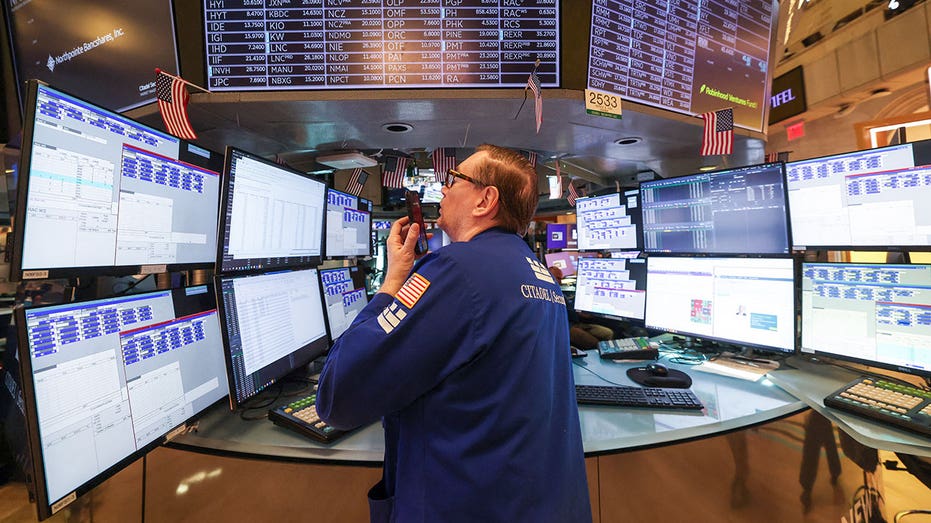
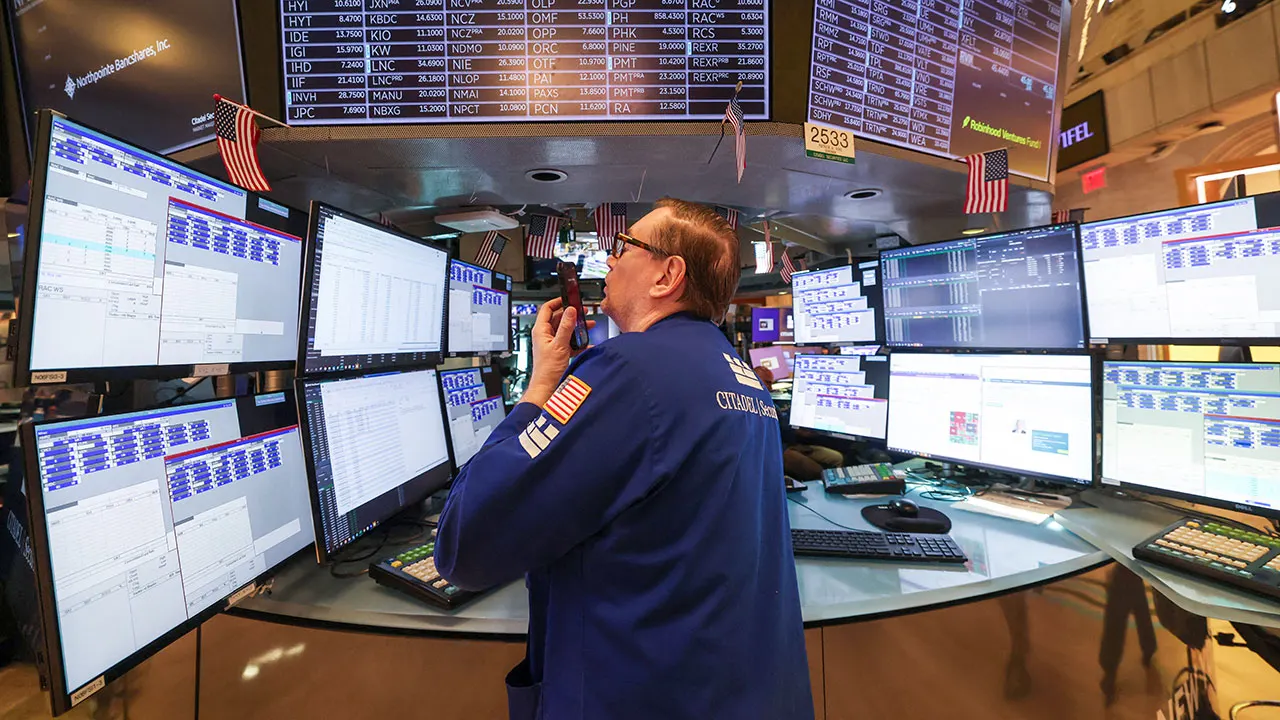
A trader works on the floor of the New York Stock Exchange (NYSE) in New York on May 19, 2026. (Getty Images)
“Real disposable income — that’s after tax, after accounting for inflation — is no higher today than it was a year ago. So, there’s been no growth in purchasing power, and that’s going to get worse and start declining,” the economist noted, adding that lower- and middle-class consumers are “living more paycheck to paycheck.”
“You’re gonna have to trade down,” Zandi continued. “You can’t have beef — you gotta have chicken.”
FOX Business host Larry Kudlow discusses how the economy is performing under President Donald Trump on ‘Kudlow.’
The S&P 500, Nasdaq and Dow have posted a modest pullback since those fresh highs, which Zandi attributed to strength in artificial intelligence-related companies. He further explained the divergence between corporate equity gains and the broader U.S. economy.
“The stock market’s not the economy. In my 36 years as a professional economist, the stock market’s never been more disjointed from the economy,” he said.
“What’s driving the stock market train is these big hyperscalers and chip companies,” Zandi added. “Valuations are awfully high… except for perhaps during the internet bubble, which didn’t end so well.”
GET FOX BUSINESS ON THE GO BY CLICKING HERE
Billionaire investor Leon Cooperman discusses artificial intelligence performance and market uncertainty amid geopolitical concerns on ‘The Claman Countdown.’
When it comes to equity investors banking on political intervention, Zandi said traders are increasingly betting that President Donald Trump will adjust policy levers to support the markets or the economy if a correction begins.
“Stock investors are looking at the president, the president’s looking at the stock market. That doesn’t feel like a stable… equilibrium — it’s kind of like a hall of mirrors,” he cautioned.

The auction will be held on May 26.
“On a review of current and evolving liquidity conditions, it has been decided to conduct a USD/INR buy/sell swap auction of $5 billion for a tenor of three years,” the central bank said in a circular.
This comes on the backdrop of around 6% depreciation of the local currency since the beginning of the Iran wao on February 28. The rupee on Wednesday saw a new closing low of 96.83 a dollar after recovering a bit from the all time low of 96.96 a dollar. In the one-year forward market, the rupee was seen traded over 100 a dollar.
“The dollar-rupee swap is expected to cool down the forward premium from the recent highs, besides improved rupee-liquidity in the banking system” an economist with a foreign bank said.

The dollar-sell swap move will also boost the country’s forex reserves, he added.
The RBI has been digging its foreign exchange reserves to sell dollars to reduce the rupee volatility. The reserves stood at $696.988 billion at the end of May 8, ass compared to its all-time peak of $728.49 billion seen on February 27,This will be the first dollar-sell swap by the central bank amid the geopolitical conflict, which started on February 28. It had done two such swaps of $10 billion each on February 4 and January 13,
The swap will be in the nature of a simple buy/sell foreign exchange swap from the Reserve Bank side. Banks will sell dollars to the central bank and simultaneously agree to buy the same amount at the end of the swap period.
The auction cut-off would be based on the premium amount in paisa terms up to two decimal points. The market participants would be required to place their bids with the premium that they are willing to pay to the RBI for the tenure of the swap expressed in paisa terms up to two decimal places. Successful bids will get accepted at their respective quoted premium, the central bank said.
Business
Guardant Health Stock Jumps 10% to $108 on Momentum From Record Q1 Revenue Beat and Raised Guidance
NEW YORK — Guardant Health Inc. (NASDAQ: GH) shares surged more than 10% in midday trading Wednesday, reaching $108.28, up $10.08 or 10.27%, as of 11:46 a.m. EDT, extending gains from strong first-quarter results and an upward revision to full-year revenue guidance.
The precision oncology company reported first-quarter 2026 revenue of $301.7 million on May 7, an increase of 48% from $203.5 million in the year-ago period. The results beat analyst estimates of approximately $278 million to $279 million.
Oncology revenue rose 36% to $205.0 million, driven by approximately 86,000 tests, up 47% year-over-year. Screening revenue jumped more than 600% to $41.6 million, with about 44,000 Shield tests performed compared to 9,000 in the prior-year quarter. Biopharma and data revenue increased 17% to $53.0 million.
Helmy Eltoukhy, co-founder and co-CEO, said in the earnings release: “Our first-quarter revenue increased 48% year over year, reflecting strong momentum across the Guardant portfolio.”
AmirAli Talasaz, co-founder and co-CEO, added: “We are pleased with our progress with Shield, including strong volume momentum exiting the first quarter.”
The company raised its 2026 revenue guidance to $1.30 billion to $1.32 billion, representing 32% to 34% growth over 2025. That compares to the prior outlook of $1.25 billion to $1.28 billion.
Non-GAAP gross margin improved to 66% from 65% a year earlier. The company reported a net loss of $112.1 million, or $0.85 per share, compared with a net loss of $95.2 million, or $0.77 per share, in the first quarter of 2025. Non-GAAP loss per share was $0.45, beating consensus estimates of about $0.47.
Guardant Health ended the quarter with strong test volume growth across segments. It has surpassed $1 billion in trailing 12-month revenue, marking a key milestone.
The stock closed at $98.19 on May 19, up 2.64% for that session. Wednesday’s move pushed the shares well above recent levels, with market capitalization exceeding $14 billion. The 52-week range stands at roughly $36 to $120.
Recent analyst actions have been positive. Piper Sandler raised its price target to $135 from $130. JPMorgan increased its target to $135 from $130. Baird lifted its target to $129 from $120. Multiple firms including Barclays, William Blair, Guggenheim and BTIG maintained buy ratings following the earnings report.
The company has formed several partnerships. It announced a nationwide collaboration with Quest Diagnostics to expand access to the Shield colorectal cancer screening test. It launched Shield Multi-Cancer Detection in Asia through a partnership with Manulife. It entered a multi-year strategic collaboration with Nuvalent to develop companion diagnostics using the Guardant Infinity platform.
Guardant Health also received U.S. FDA approval for Guardant360 Liquid CDx. It continues work on submissions to MolDx for broader reimbursement.
Chief Financial Officer Michael Bell discussed operational improvements on the May 7 earnings call, noting progress in cost discipline and higher selling prices contributing to margin gains. The company expects free cash flow burn of $185 million to $195 million for 2026, better than the prior year.
Headcount and infrastructure investments support commercial expansion, particularly for Shield. The test targets colorectal cancer screening in average-risk adults, addressing a large unmet need where compliance with traditional methods remains low.
Analysts project continued growth in both therapy selection and early detection segments. Oncology test reimbursement has improved, supporting average selling prices in the $3,000 to $3,100 range for Guardant360 Liquid.
The broader precision oncology market has seen increased adoption of liquid biopsy technologies. Guardant Health competes with firms offering similar blood-based genomic profiling while differentiating through its screening pipeline.
Insider activity included sales by executives in recent weeks. Co-CEO AmirAli Talasaz sold shares in May, consistent with planned trading programs. Such transactions do not reflect changes in operational outlook.
Guardant Health, headquartered in Palo Alto, California, employs approximately 2,500 people. It focuses on liquid and tissue biopsies for therapy selection, monitoring and early detection across multiple cancer types.
The company has expanded internationally and through laboratory partnerships to increase test accessibility. Its Guardant Infinity platform supports multiomic analysis for drug development and companion diagnostics.
Investors continue to monitor quarterly test volumes, reimbursement trends and progress toward profitability. The raised guidance reflects confidence in sustained commercial momentum and partnership contributions.
Shares have shown volatility typical of growth-oriented health care stocks but have trended higher year-to-date on execution of clinical and commercial milestones. Upcoming catalysts include further regulatory decisions and additional data readouts from Shield and other programs.
Guardant Health reiterated its long-term strategy of reinvesting in scale initiatives for product innovation, commercial reach and operational efficiency. It aims to maintain leadership in the liquid biopsy space while expanding into multi-cancer early detection.
The midday surge on May 20 came amid broader market conditions and sector rotation toward health care names with strong growth profiles. Trading volume exceeded recent averages as the stock approached levels not seen consistently since earlier in the year.
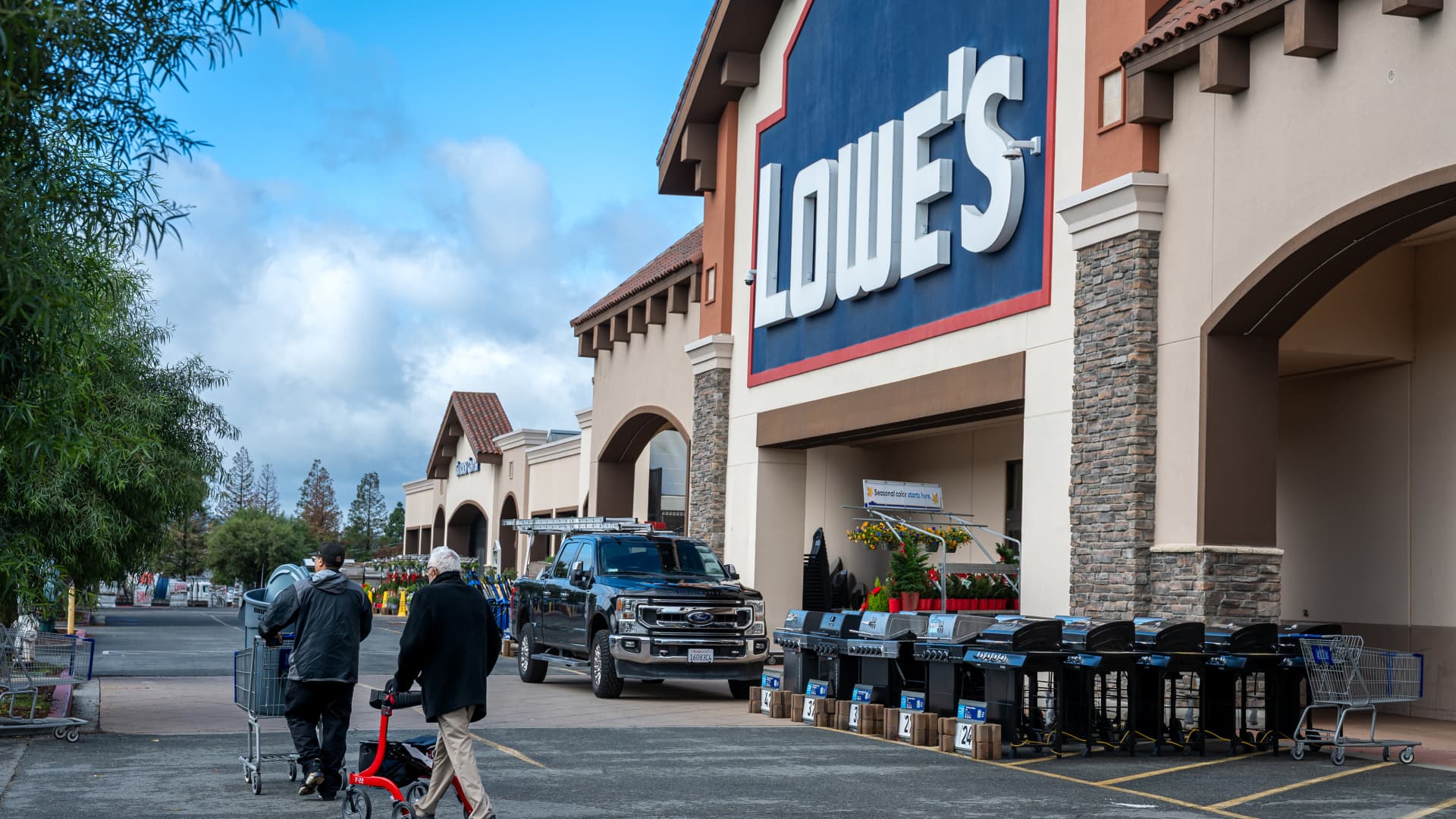
Lowe’s on Wednesday reported quarterly results that beat expectations on the top and bottom lines and reaffirmed its full-year outlook.
Revenue jumped about 10% compared with the previous year. Comparable sales increased 0.6% for the quarter, driven by what Lowe’s said was its spring execution and a 15.5% growth in online sales.
“Roughly 60% to 65% of our revenue is from the do-it-yourself customer, and this has been a really difficult do-it-yourself housing market, so for us to do four consecutive quarters of positive comps, we were pleased with that,” CEO Marvin Ellison told CNBC.
Here’s how the company performed in its fiscal first quarter compared with Wall Street estimates, according to a survey of analysts by LSEG:
- Earnings per share: $3.03 adjusted vs. $2.97 expected
- Revenue: $23.08 billion vs. $22.97 billion expected
Shares of the company sank slightly in morning trading.
For the three-month period ended May 1, Lowe’s reported net income of $1.63 billion, or $2.90 per share, down just slightly from $1.64 billion, or $2.92 per share, in the year-ago period. Excluding one-time factors like acquisition costs, the company reported adjusted earnings per share of $3.03.
Lowe’s said strength in appliances, home services and sales to home professionals like contractors also contributed to its performance.
“While DIY demand remains under pressure, we’re continuing to grow market share in a challenging housing environment shaped by elevated interest rates, higher costs and low housing turnover,” Ellison said on a call with analysts on Wednesday. “While we expect a broader market to remain flat in 2026, our focus remains on disciplined execution of our total home strategy, driving continued growth regardless of market conditions.”
Despite soaring gas prices taking a hit to consumer sentiment and discretionary spending, Ellison told CNBC that the Lowe’s core homeowner customer is largely unaffected by high fuel prices. Still, the combination of gas prices with “broader macro concerns” is what’s pushing their sentiment lower, he said.
“The year is playing out about where we forecast and when we gave our guidance, and we’re just trying to work our way through it,” he said.
Ellison said on the analyst call that the company is seeing a K-shaped economy dynamic play out, where higher-income consumers are spending more and lower-income consumers are pulling back on their spending.
“We have a track record of performing well, managing expenses and finding ways to grow sales, irrespective of the macro, and we plan to take share this quarter,” he said.
The company also reaffirmed its full-year guidance, expecting total sales between $92 billion and $94 billion, an increase of between 7% and 9% compared with the prior year. It expects comparable sales to be flat to up 2% compared with last year.
Lowe’s said it expects adjusted earnings per share of between $12.25 and $12.75 for the full year.
The earnings come against a backdrop of housing market struggles and consumer caution as gas prices soar.
“I think overall, this has been the most difficult housing markets that I’ve faced in this business since the financial crisis,” Ellison said on the call.
He told CNBC that he believes interest rates need to come down in order to allow for consumers to have more flexibility with their home improvement projects.
“I think the key lever that we need to see is just rates come down, both 30-year fixed and short-term rates,” he said. “When we see that happen, and I think what we’re talking about is a sustained sub-6% rate environment, we think that will start to loosen up this segment.”
Lowe’s executive vice president of merchandising, Bill Boltz, said on the Wednesday call that the company’s core professional shopper “remains busy” with repair and maintenance projects.
Company executives said on the call that high oil prices have also been putting pressure on the company. While the impact in the first quarter was minimal, they said the current quarter is seeing more challenges.
In February, Lowe’s cut roughly 600 corporate and support roles as the company said it wanted to focus more on its store employees and align its resources.
Earlier this week, Lowe’s rival Home Depot said its core shopper remains resilient as it reaffirmed its full-year guidance and beat Wall Street expectations. The retailer also said it has applied for tariff refunds, which it said could help offset rising fuel costs.
Ellison told CNBC that Lowe’s has not publicly disclosed whether it’s applied for tariff refunds, but it is closely monitoring the situation as there’s “still a lot to learn.”


Seeking Alpha’s transcripts team is responsible for the development of all of our transcript-related projects. We currently publish thousands of quarterly earnings calls per quarter on our site and are continuing to grow and expand our coverage. The purpose of this profile is to allow us to share with our readers new transcript-related developments. Thanks, SA Transcripts Team
Simon Pryce
CEO & Executive Director
So good morning, everybody. Welcome to the RS Group Preliminary Results Presentation for the year ended 31st of March 2026, which was a year for us of good progress and building momentum. Thanks for joining us here today at the Teneo offices and thank you for your continuing interest in RS.
Our presentation should take about 30 minutes today, and we’ll leave some time at the end for questions, but we’ll try and make sure everybody gets away by no later than 10:00. The presentation materials are already available on our website. There are some hard copies in the room and a recording of this presentation, and the Q&A will be available on that website later today.
But before we start, we always begin our meetings at RS with a health and safety moment. So, there are no planned fire drills today. The fire exit is through the door on my right. Don’t take the lift, take the stairs to the left of the list and assemble outside the building. At RS, we also start each of our meetings with a values moment. And I’d just like to take this opportunity to call out that as one team delivering brilliantly, doing the right thing and making every day better, recognizing the efforts of our RS colleagues across the world who, for the last 2 weeks, have taken part in an Active for Change Challenge. And in
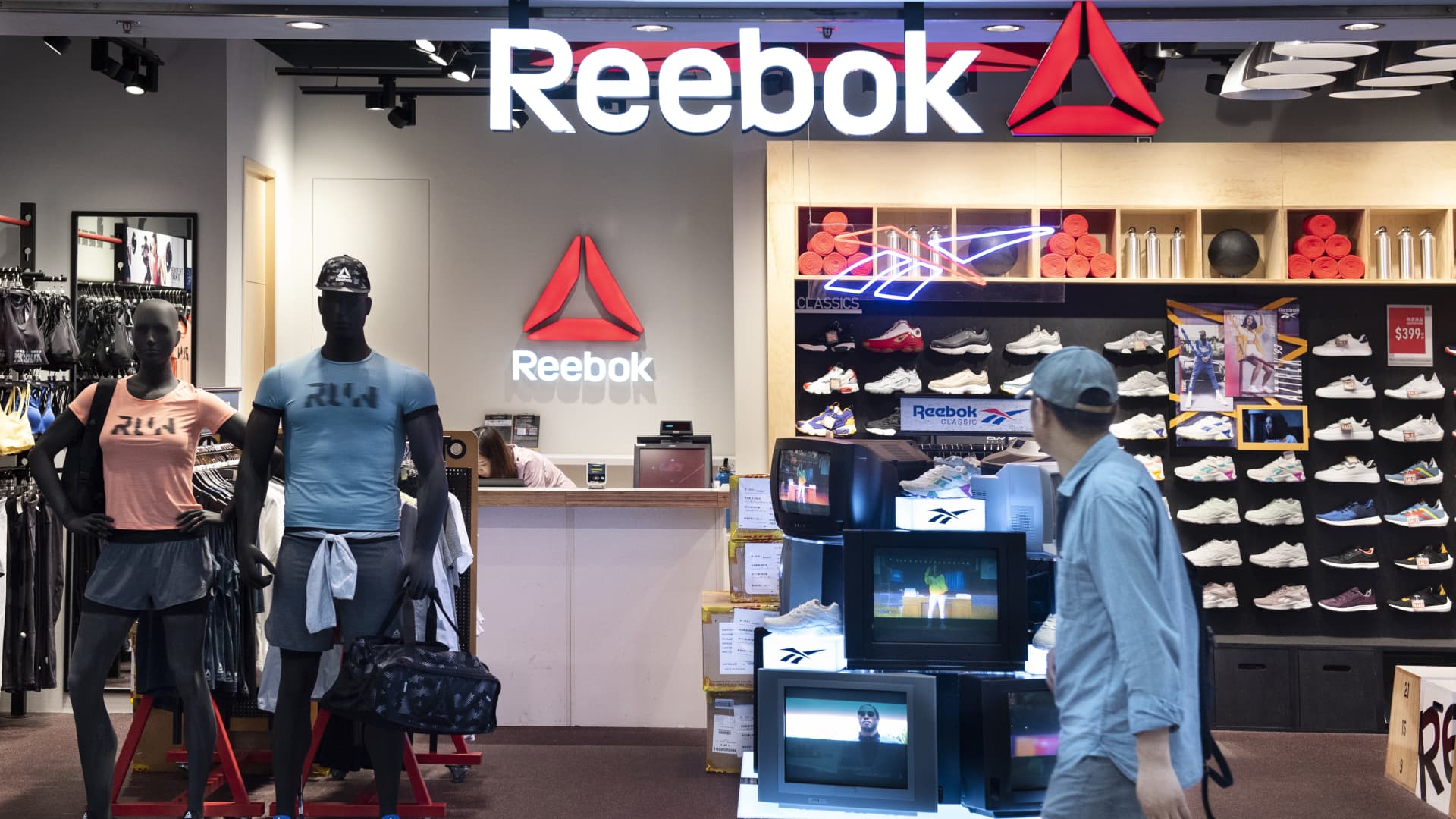

The founder of Authentic Brands Group, the management firm behind dozens of retail and media names including Reebok, Champion and Brooks Brothers, said he expects to take the company public in the next 12 months as he announced a former Wynn Resorts CEO will be its next chief executive.
In an exclusive interview with CNBC’s Sara Eisen, Jamie Salter said Authentic’s president, Matt Maddox, who joined the firm as president in January 2025 after a 20-year career at Wynn, will take over as CEO so Salter can transition to executive chairman.
When asked if this means the company is headed for an initial public offering, Salter said he expects the company to go public “sometime in the next 12 months.”
“There’s no doubt about it that Matt is definitely a great Wall Street CEO,” said Salter. “We’ve almost gone public twice, we’ve filed twice and both times we were taken out by other private equity firms at much higher prices. I think this time, the company has grown so big that I think this time we’ll probably end up going public sometime in the next 12 months.”
Salter said the transition is necessary because he’s trying to grow Authentic into a $100 billion company over the next five years, and said he needs to spend “100% of my time” focused on the mergers and acquisitions that have long formed the lifeblood of his business.
In his new role, Salter will remain “deeply engaged in the business” but will focus on long-term strategy, Authentic said in a news release. Maddox will lead day-to-day operations with a mandate to scale the business, drive organic growth, and create value for the firm’s “shareholders and partners.”
In a release, Maddox added “the opportunity ahead is significant, and we are just getting started.”
(L-R) Jamie Salter and Matt Maddox attend the Michael Rubin REFORM Alliance Casino Night Event on September 13, 2025 in Atlantic City, New Jersey.
Arturo Holmes | Getty Images
Authentic generates about $38 billion in systemwide retail sales and has become a major force in the retail industry, known for buying the intellectual property behind popular brands that are distressed or bankrupt and licensing that IP for lucrative royalties.
It has more than 50 brands in its portfolio, including Sports Illustrated, Guess and Juicy Couture, and has partnered with major figures like Shaquille O’Neal, David Beckham and Kevin Hart.
Authentic was almost entirely focused on apparel retailers for years, but these days, Salter said he is looking more toward entertainment acquisitions, which are currently the “driving force” of the business.
“Entertainment today is roughly 20% of our business, 80% beauty and lifestyle, but I believe that over a period of time entertainment will become much stronger, going from 20% to 50%,” said Salter. “The reason why I want to focus so much on the entertainment business is because it’s clear as day that content drives commerce.”
Authentic has been signaling it’s ready for a public offering for years, most recently in April during the Reuters Momentum AI event where Salter said the company will attempt another IPO “soon.”
He added that once the company was ready to file with the U.S. Securities and Exchange Commission, he planned to be in a leadership position other than CEO.
That moment appears to have arrived with Maddox’s appointment as CEO and Salter’s transition to executive chairman.
Salter, who has spent decades in the consumer and retail space, is an accomplished investor and dealmaker, but he is less experienced than Maddox when it comes to the chops necessary to run a public company. During his time at Wynn, a near $10 billion market cap company traded on the Nasdaq, Maddox spent almost 15 years in the C-suite as CFO, president and CEO, according to his LinkedIn profile.
Often when companies are nearing an IPO, they will choose leaders who have deep experience running public companies, especially when those firms are led by founders.

The company’s revenue from operations came in at Rs 265 crore, down 57% from Rs 611 crore it posted in the corresponding quarter of the previous financial year.
The company reported an EBITDA loss of Rs 281 crore for the quarter under review versus Rs 630 crore in the year-ago period.
Consolidated gross margin stood at 38.5% in Q4FY26 compared with 34.3% in Q3FY26 and 13.7% in Q4FY25.
The company said this now represents an industry-leading gross margin profile, significantly ahead of most two-wheeler OEMs, including established ICE players.
However, Ola cautioned that gross margins could moderate in Q1 and Q2FY27 due to commodity inflation and pricing measures aimed at accelerating growth amid ongoing geopolitical uncertainties. Despite this, the company said it has sufficient margin buffers to remain aggressive on pricing and customer value propositions while continuing to maintain strong unit economics.
The company said Q4FY26 marked its first quarter of positive operating cash flow despite being a relatively low-volume quarter.Consolidated cash flow from operations (CFO) stood at Rs 91 crore during the quarter, supported by PLI inflows, stronger gross margins, lower operating expenses and tighter working capital discipline. Consolidated free cash flow (FCF) improved to negative Rs 131 crore.
The Auto business generated cash flow from operations of Rs 213 crore and free cash flow of Rs 173 crore in Q4FY26. Meanwhile, the Cell business continued to remain in investment mode as the company ramped up its Gigafactory operations and prepared for the next phase of cell and energy storage product launches.
Ola said FY26 was also a year of cost rationalisation and tighter operating discipline. Consolidated operating expenses, including lease rentals, declined sharply to Rs 428 crore in Q4FY26 from Rs 844 crore in Q4FY25.
According to the company, the reduction was driven by network rationalisation, tighter control over sales and service costs, lower fixed overheads and improved operating governance.
The company added that operating expenses are expected to decline further towards Rs 350 crore per quarter over the next few quarters as the full impact of FY26 cost measures begins to reflect in the business. It said the leaner cost structure positions the company better as volumes recover.
Ola Electric outlook
Based on current trends, the company expects Q1FY27 orders to be in the range of 40,000-45,000 units, nearly double the levels seen in Q4FY26.
As volumes improve, the company expects its auto business to move towards adjusted operating EBITDA and free cash flow positivity during FY27. It said this transition will be supported by strong gross margins, further reduction in operating expenses over the next few quarters, disciplined working capital management, supplier and factory ramp-up, and better utilisation of the existing gross block.
Ola Electric shares ended at Rs 36.94, higher by 1% on the BSE on Wednesday.

Google tests AI-powered ad formats to enhance search experience

Bitcoin Price Fails to Retake $78,000 as Markets Eye Nvidia Earnings

Standard Chartered CEO dismisses 7,800 AI-related job cuts as affecting “low-level human capital”

Knicks Exposed James Harden’s Biggest Weaknesses in Game 1 Comeback


![These 4 Things Terrify Me About Bitcoin Right Now [URGENT!!]](https://wordupnews.com/wp-content/uploads/2026/05/1779296261_maxresdefault-80x80.jpg)


-

 Crypto World5 days ago
BloFin War of Whales 2026 Grand Prix opens registration for $5M trading championship
-

 Fashion5 days ago
Weekend Open Thread: Theory – Corporette.com
-

 Crypto World5 days ago
E-Estate Announces 1 Year Live: Washington DC Summit as Real Estate Tokenization Enters Its Next Phase
-

 Tech5 days ago
Tech Moves: Microsoft AI leader jumps to OpenAI; former AI2 exec joins Meta; and more
-

 Tech5 days ago
Google reimburses Register sources who were victims of API fraud
-
 Crypto World6 days ago
Google’s Gemini AI Predicts Incredible Solana Price by the End of 2026
-

 Business5 days ago
H&R Real Estate Investment Trust (HR.UN:CA) Q1 2026 Earnings Call Transcript
-
 Entertainment6 days ago
Zara Larsson Has Blunt Response To Chris Brown Diss
-

 Sports5 days ago
Napoleonic enters 2026 Doomben 10,000 field via Abounding withdrawal
-
 Crypto World7 days ago
Two AI Tokens Lead May Rally, But Risks Are Rising
-
 Crypto World5 days ago
BeInCrypto 100 Institutional Awards Nomination: KAST for Best Digital Assets Neobank and Best Digital Assets Fintech
-

 Fashion4 days ago
On the Scene at Gucci’s Cruise Show in New York City: Mariah Carey, Kim Kardashian, Lindsay Lohan, Iman, and More!
-
 Crypto World5 days ago
Bitcoin Battles US Bond Nerves With BTC Price Dip Toward New May Lows
-
 Crypto World5 days ago
Wall Street’s Boldest Gold Prediction Has Russians Rushing to Buy
-

 Fashion4 days ago
Trending Western Style Vests Perfect for Summer
-

 Crypto World5 days ago
ICE and CME urge US regulators to curb Hyperliquid energy trading
-

 Politics6 days ago
DWP PIP Timms review continues to be an absolute farce
-

 Entertainment5 days ago
David Letterman Returns to Late Show, Blasts Cancellation
-

 Fashion4 days ago
Amazon Sundays: Memorial Day Hosting
-
 Crypto World5 days ago
IREN closes $3 billion convertible notes deal amid AI infrastructure expansion
You must be logged in to post a comment Login