Connect with us
DAPA Banner

Business

Chevron fuel stations sold for $12m

Published

on

Chevron fuel stations sold for $12m

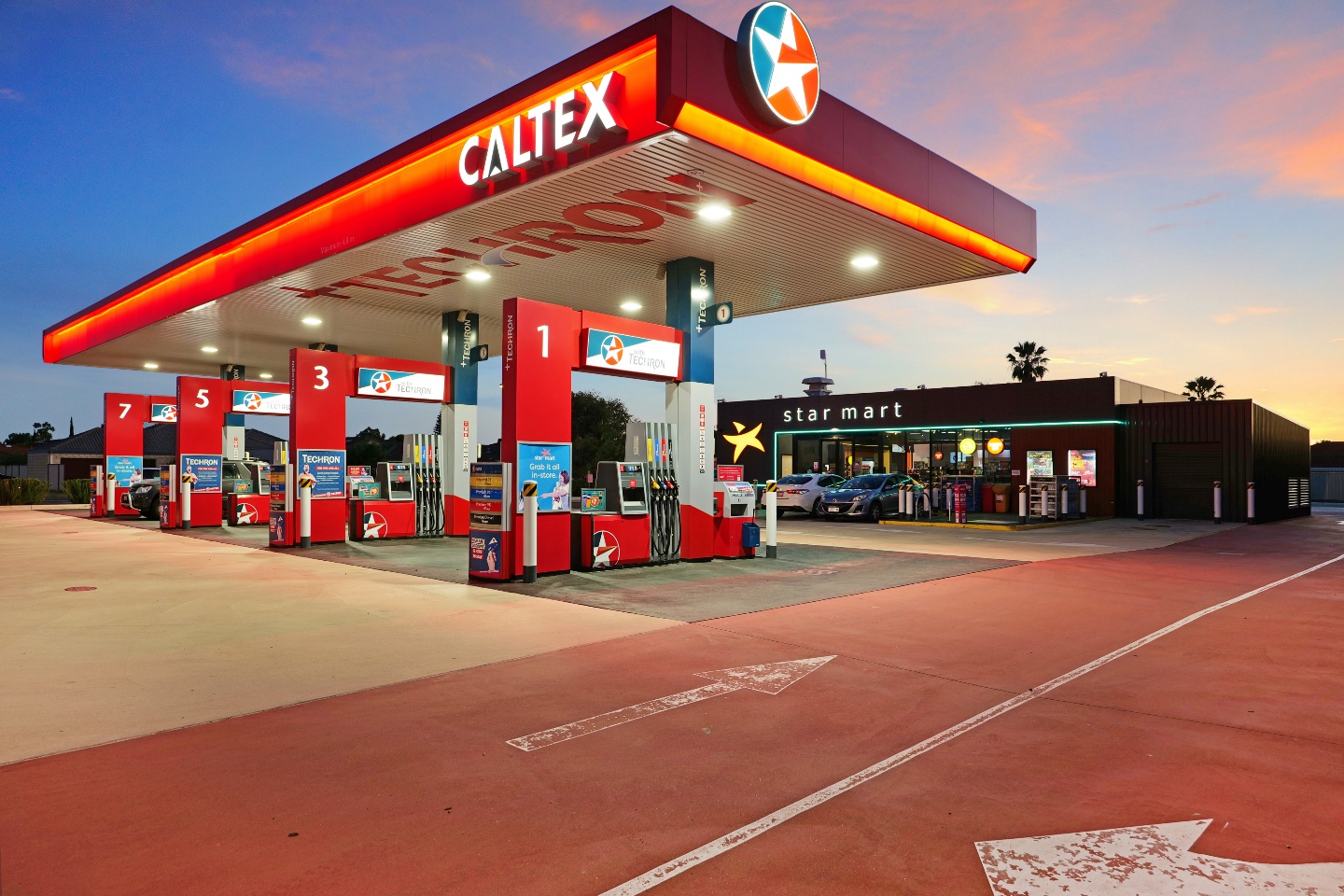
Two service stations anchored by Chevron’s Caltex brand have sold Perth’s suburbs. Two service stations anchored by Chevron’s Caltex brand have sold Perth’s suburbs.

Continue Reading
Click to comment

You must be logged in to post a comment Login

Leave a Reply

Business

SRF shares jump 5% as Q4 profit rises 11%; Rs 2,300 crore Odisha capex announced

Published

on

SRF shares jump 5% as Q4 profit rises 11%; Rs 2,300 crore Odisha capex announced
SRF shares surged as much as 5.4% to hit an intraday high of Rs 2,659 during Wednesday’s trading session, after the company reported strong fourth-quarter FY26 performance, with net profit rising 11% year-on-year to Rs 582 crore.

The company’s Profit After Tax (PAT) grew from Rs 526 crore in the corresponding period last year, supported by steady revenue and operating gains. SRF also announced plans to invest Rs 2,300 crore in setting up a new plant in Odisha, signalling continued expansion.

Consolidated revenue for the quarter rose 7% year-on-year to Rs 4,615 crore, compared to Rs 4,313 crore in the same period last year. Operational earnings before interest and tax (EBIT) increased 12% to Rs 1,011 crore from Rs 906 crore a year ago.

Commenting on the results, Chairman and Managing Director Ashish Bharat Ram said the company delivered a solid performance despite a volatile operating environment. He noted that exports to the Middle East were impacted during the quarter and added that geopolitical uncertainty remains a key concern going forward, although the company remains optimistic about its growth trajectory.

Advertisement

Segment-wise performance showed mixed momentum across businesses. The Chemicals segment recorded a 4% increase in revenue to Rs 2,448 crore. The Performance Films and Foil segment posted a stronger 13% growth, with revenue rising to Rs 1,596 crore. The Technical Textiles segment saw a 5% increase to Rs 483 crore, while Other Businesses reported a marginal rise to Rs 89 crore.


For the full financial year FY26, SRF reported a 7% increase in revenue to Rs 15,787 crore. Operational EBIT jumped 29% to Rs 3,008 crore, while PAT surged 47% to Rs 1,835 crore compared to the previous year.
On the capital expenditure front, the company revised its earlier investment plan for a next-generation refrigerants project. Initially approved at Rs 1,100 crore in October 2024, the project outlay has now been expanded to approximately Rs 2,300 crore following land acquisition in Odisha. The revised plan includes setting up a 20,000 tonnes per annum HFO production facility, a 30,000 tonnes per annum HF plant, and manufacturing of value-added HF derivatives, along with investments in land development and utilities.The project, based entirely on SRF’s in-house technology, will be implemented in phases, with completion of the final phase targeted by February 2028.

Stock Performance and Technical Indicators


The stock is currently trading at a market capitalisation of Rs 74,782 crore. Over the past 12 months, it has touched a high of Rs 3,325 and a low of Rs 2,355.

On the technical front, the 14-day Relative Strength Index (RSI) stands at 50.9, indicating a neutral trend, with levels below 30 considered oversold and above 70 seen as overbought. In terms of moving averages, the stock is showing a mildly bullish trend, trading above five out of its eight simple moving averages (SMAs).

Advertisement

(Disclaimer: Recommendations, suggestions, views and opinions given by the experts are their own. These do not represent the views of The Economic Times)

Continue Reading

Business

Aussie dollar, shares soar on Iran peace deal hopes

Published

on

Aussie dollar, shares soar on Iran peace deal hopes

Australia’s share market has rebounded on signs the US is seeking a way out of the Persian Gulf conflict with Iran.

Continue Reading

Business

Market in consolidation phase, break above 24,600 crucial for trend shift: Gautam Shah

Published

on

Market in consolidation phase, break above 24,600 crucial for trend shift: Gautam Shah
The Indian equity market is entering a phase of sharp sectoral rotation, where leadership is narrowing and thematic investing is gaining importance. According to Gautam Shah from Goldilocks Global Research while the broader indices may remain capped in the near term, sectors like energy, PSU, metals, and select pockets of real estate and pharma are setting up for stronger upside trends.

Energy remains a structural story

Shah reiterated his long-standing bullish view on energy, calling it a structural theme with durable tailwinds.

“Energy is a structural play. There are a lot of fundamental tailwinds there. Valuations seem to be comfortable and the government is at play, helping many of the Indian companies to do much bigger things on a global scale. Given all of that and given the way the charts are, I do believe that energy is a structural play and we are looking at the index going back to the previous highs at least. That would be the first working target and then much bigger upside. So, the entire basket of power and energy stocks looks good to me. We have obviously been committed to it for a couple of months now and we are playing test cricket here. We are not looking at getting out very quickly. So, think big. There is another 15% to 20% upside on the index and you just stay committed. There will be dips from time to time because the rally has been large and every time that dip happens it might be a good idea to buy fresh.”

Advertisement

He added that investors can either accumulate baskets or focus on selective stock picking within the space.

Auto sector under pressure
On autos, Shah maintained a negative stance and expects meaningful underperformance ahead.
“We would be negative on auto, I think that has been the stance for a couple of months now. And with auto being a direct reflection of the economy and with the way the charts are placed, there is a greater possibility of the auto index actually losing about 10-12% from here and going back to the March lows. Now, if that were to happen, then there is a big problem because a lot of stocks will come off substantially.”
He added that both autos and FMCG could remain under pressure if largecaps fail to show leadership.
Nifty stuck in a tight range
On the broader index, Shah expects consolidation with a defined trading band and limited upside unless key resistance levels are breached.

“24,600 on multiple counts was and remains a very important resistance. And as you might have noticed in the last seven days, the market is just taking a breather. There seems to be a fierce battle between the bulls and the bears within a very tight range, 23,800 on the downside and 24,250 and 24,600 on the upside. Till the Nifty does not get past 24,600, I would be cautious, I would be conservative and there is a greater possibility of a breakdown below 23,800.”

He highlighted weak leadership from IT, banking, and Reliance Industries, which together form a large part of the index.

Banks and IT remain weak links
Shah expressed caution on banks, particularly private lenders, which he believes could weigh on the index.

Advertisement

“Look at what HDFC Bank has done in this entire April recovery and look at where it is today in comparison to the rest of the banking space. When you have HDFC and ICICI Bank undergoing such a phase of underperformance and not being able to rally for whatever reasons, questions about their growth, FII selling, the fact that they are all richly valued versus peers around the world, you can put out a lot of cases there. But it is out there that private banks are underperforming and if that is going to continue, Nifty will find it difficult to rally.”

He added that PSU banks remain mixed, with only one large name standing out.

Sector rotation into PSUs, metals and pharma
Shah believes the market is now entering a phase of rotational strength across previously underperforming sectors.

He remains bullish on PSU, metals, defence, capital goods, and real estate over a 6–12 month horizon. He also sees early signs of revival in chemicals, textiles, and pharma.

Advertisement

“Pharma is one space that we continue to like… a bigger breakout is coming after 18 months of consolidation and it will do exceedingly well.”

On metals, he remains strongly constructive with a long-term structural view:

“Our working target for the NSE Metals Index is about 14,000… The rest of this year will belong to metals.”

Real estate showing bottoming signs
Shah sees real estate as a high-conviction medium-term opportunity after a deep correction.

Advertisement

“We are going to see a large 25% rally on the index from current levels… So, it is an opportunity, but do not look at it short term. There will be volatility in the short term, but now they will start a sequence of higher tops and higher bottoms.”

Crude oil and macro risks
On crude oil, Shah flagged it as a key risk factor for India.

“Nymex crude is likely to remain elevated… eventually it can gradually go towards a 120-125 number. Now if that were to happen, it is definitely a big impact on the economy more medium-term.”

He also pointed to rupee weakness and global AI-driven disruption as additional headwinds for foreign inflows.

Advertisement

Final takeaway: be selective and concentrated
Summing up his strategy, Shah advised a focused approach rather than broad diversification.

“Be concentrated, be in companies that have less to do with foreign policy and be with companies that have relative better earnings visibility for the next three to five years. Anything and everything in this market will not work because you do not have the index tailwind in your favour.”

Continue Reading

Business

186 UK SME Winners Revealed on 60th Anniversary

Published

on

186 UK SME Winners Revealed on 60th Anniversary

A Cotswold soap-maker, a Warwickshire 3D-printing pioneer supplying supercar manufacturers and an Edinburgh tech-refurbishment social enterprise are among 186 organisations honoured this year with The King’s Awards for Enterprise, as Britain’s most prestigious business accolade marks its 60th anniversary.

The 2026 cohort, which includes 76 winners for international trade, 52 for innovation, 36 for sustainability and 22 for promoting opportunity through social mobility, underlines the growing breadth of the awards first presented by Queen Elizabeth II in 1966. Renamed in 2022 following the King’s accession, the honours have now recognised more than 8,000 British businesses across six decades.

A sustainability story written in soap

For Emma Heathcote-James, founder of the Little Soap Company, the recognition vindicates an approach that has prized principles over margins since she began hand-crafting bars from her Cotswold cottage in 2008.

“We don’t make the profit that we perhaps could if we made everything in China, but every single decision that we make is putting the planet and people first,” said Heathcote-James, 49, whose products are now stocked by Waitrose, Tesco and Boots.

The business, which turns over around £2.4 million and employs 13 staff, manufactures exclusively in Scotland and northern England, home to the few soap factories Britain has left, and produces vegan-certified, cruelty-free ranges in recycled packaging.

Advertisement

It has not, however, been insulated from the macroeconomic squeeze. Chief operating officer Sharon Redrobe, who is married to Heathcote-James, said geopolitical tensions had pushed up the cost of raw materials including the essential oils used as fragrances, while greenwashing by some competitors remained a source of frustration. Winning as a small, independently financed business, she said, was the company’s “biggest coup” to date.

Little Soap Company has deliberately avoided external investment, wary of pressure to grow margins by switching to cheaper inputs. “It’s really important that we can demonstrate you can have a successful business and still do things correctly from the start,” Heathcote-James said.

From a mother’s garage to the supercar grid

In Shipston-on-Stour, Warwickshire, RYSE 3D has secured an international trade award after export orders rose by an extraordinary 2,300 per cent to £2.24 million over three years. The company manufactures high-performance 3D-printed parts for more than 20 of the world’s leading supercar marques.

Founder Mitchell Barnes, 29, started developing a 3D printer in his mother’s garage as an undergraduate, using his student loan to build the first prototype and selling the service to coursemates after successfully printing a model for his car-design degree. He is among the youngest ever recipients, and has now collected a second King’s Award in as many years, having won his first at 27.

Advertisement

“It’s a royal honour,” Barnes said. “You don’t believe it when you first get it, but then winning two is even more insane.”

The business, which employs 25 people, exports principally to Latvia, Denmark and the United States, although the tariff regime introduced by Washington last year has eaten into US returns. Healthy margins have allowed RYSE 3D to absorb some of the impact, but Barnes said the team had had to redouble efforts elsewhere to compensate, including launching an automated online ordering tool aimed at everyday customers.

To address a chronic skills shortage, the company has taken to recruiting from outside the sector altogether, training former coffee baristas as 3D printing engineers. Barnes plans to open offices on both the east and west coasts of the United States before the end of 2026.

Refurbishing devices, repairing communities

Edinburgh Remakery, a ten-strong social enterprise honoured in the sustainability category, refurbishes and resells used technology, donating devices to people experiencing digital exclusion and routing unsalvageable components to specialist processors including the Royal Mint, which extracts gold from old motherboards.

Advertisement

Chief executive Elaine Brown said the team had been overwhelmed when the news arrived: “There was much jumping up and down in the remakery that day and a few more cakes were had just to celebrate.”

Demand for the service has surged as businesses retire PCs ahead of the end of support for Windows 10, but Brown argued that many of these machines could be given a second life by being fitted with alternative operating systems. “Being a business for good has been good for business,” she said. “We’ve grown our turnover, we’ve grown our engagement, and the King’s Award is the icing on the cake.”

Winners universally described the application process as exhaustive. Serial entrepreneur Will Fletcher, 46, who oversaw the promoting opportunity category as a judge, said the assessment was deliberately rigorous.

“It’s a really, really thorough process,” he said. “You always get a few that are out-and-out winners, and then there’s a few really tough cases.”

Advertisement

The category, Fletcher noted, rewards profitable companies that channel resources back into their communities, work that is “time-consuming to do properly and not directly linked to how much profit the company makes”. His own former business, Recycling Lives, won the award four times, including in 2019 for supporting ex-offenders into employment, where reoffending rates among participants ran at less than 5 per cent against a national average of around two-thirds. Fletcher now runs Car.co.uk, a Lancashire-based digital car-buying platform, which itself takes home a 2026 award for innovation.

Taken together, this year’s roll call suggests that British SMEs continue to find competitive advantage not in spite of their values, but because of them, a message the King’s Awards have championed, in one form or another, for sixty years.


Paul Jones

Harvard alumni and former New York Times journalist. Editor of Business Matters for over 15 years, the UKs largest business magazine. I am also head of Capital Business Media’s automotive division working for clients such as Red Bull Racing, Honda, Aston Martin and Infiniti.

Advertisement

Continue Reading

Business

SpaceX files plan for $55 billion Terafab chip facility in Texas

Published

on

SpaceX files plan for $55 billion Terafab chip facility in Texas


SpaceX files plan for $55 billion Terafab chip facility in Texas

Continue Reading

Business

FROM THE HILL: A snapshot of today's politics and parliament

Published

on

FROM THE HILL: A snapshot of today's politics and parliament

From the Hill: For the second time in his parliamentary career, Nationals MP Lachlan Hunter has been suspended from the chamber.

Continue Reading

Business

Law firm closes suddenly after falling into administration

Published

on

Business Live

West Country practice BLB Solicitors has ceased trading and all its staff have been made redundant

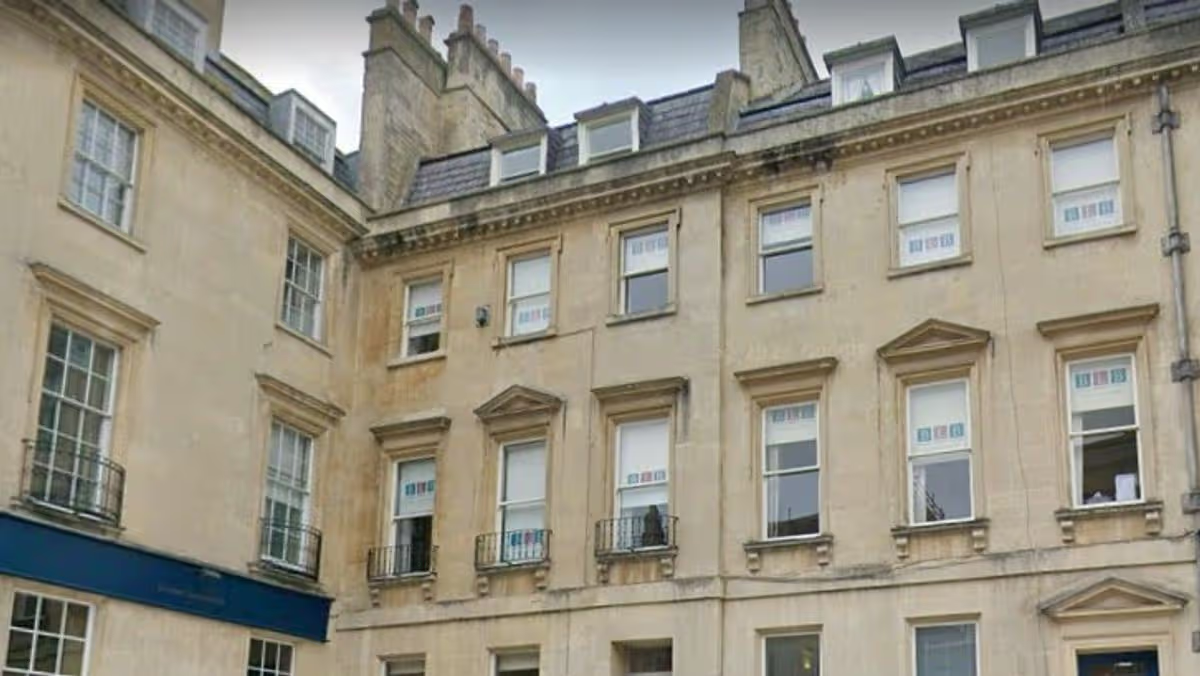
BLB Solicitors had offices across the South West including in Bath (pictured)

BLB Solicitors had offices across the South West including in Bath (pictured)(Image: Google Maps)

A West Country law firm has ceased trading after a deal to rescue the business collapsed. BLB Solicitors was founded more than a decade ago and had offices across Bath, Bristol, Swindon, Almondsbury, Trowbridge and Bradford-on-Avon.

It is understood the legal practice appointed administrators from The Insolvency Company, part of Sumer Group, at the end of April, but a deal to sell of the firm failed.

Before the company’s collapse, Business Live understands administrators worked with BLB’s leadership team to explore options to save the business and protect jobs. But despite an agreement in principle, the potential buyer withdrew and all staff were made redundant, the administrators said.

Joint administrator Gareth Buckley, head of insolvency at The Insolvency Company, said: “We worked hard to secure a sale of the business as a going concern, which would have preserved a significant number of jobs, and we had a deal in place.

Advertisement

“It is deeply disappointing that it fell through at a late stage. Due to the timing and lack of available funding there was no alternative other than to cease trading and dismiss the workforce. Our immediate priority now is to ensure clients and creditors are kept informed and to support employees through the process of making claims to the Redundancy Payments Service.”

Business Live understands that because the administrators are not solicitors, under Solicitor Regulation Authority (SRA) rules it was not possible to trade the firm whilst seeking a new buyer. The firm has been shut permanently and will not be reopening, according to its website.

The administrators are now looking to sell BLB’s assets and have said they will “contact creditors in due course” with further information regarding the progress of the administration.

“The Insolvency Company is liaising closely with the SRA to ensure that the interests of the clients of the firm are safeguarded during this process,” the administrators said in a statement.

Advertisement

“The joint administrators will continue to work closely with all stakeholders to support a smooth transition and deliver the best possible outcome for creditors, employees and clients of the firm.”

The SRA has appointed law firm Stephensons Solicitors LLP to collect files belonging to former BLB clients and keep them safe. Any enquiries regarding BLB should be directed to interventions@stephensons.co.uk.

Continue Reading

Business

Citadel’s $6B threat could sting local food vendors

Published

on

Mamdani praises Ken Griffin for police support despite billionaire feud

A threat from hedge fund Citadel to put a halt to its $6 billion Midtown Manhattan offices over a tax proposal from Mayor Zohran Mamdani threatens area food vendors’ dwindling business, vendors told FOX Business.

The fund, founded by Ken Griffin in 1990, made the threat after Mamdani directly targeted Griffin while announcing a new tax on second homes in the city.

Advertisement

“This is an annual fee on luxury properties worth more than $5 million, whose owners do not live full-time in the city. Like for this penthouse, which hedge fund CEO Ken Griffin bought for $238 million,” Mamdani said in a video announcing the new tax. 

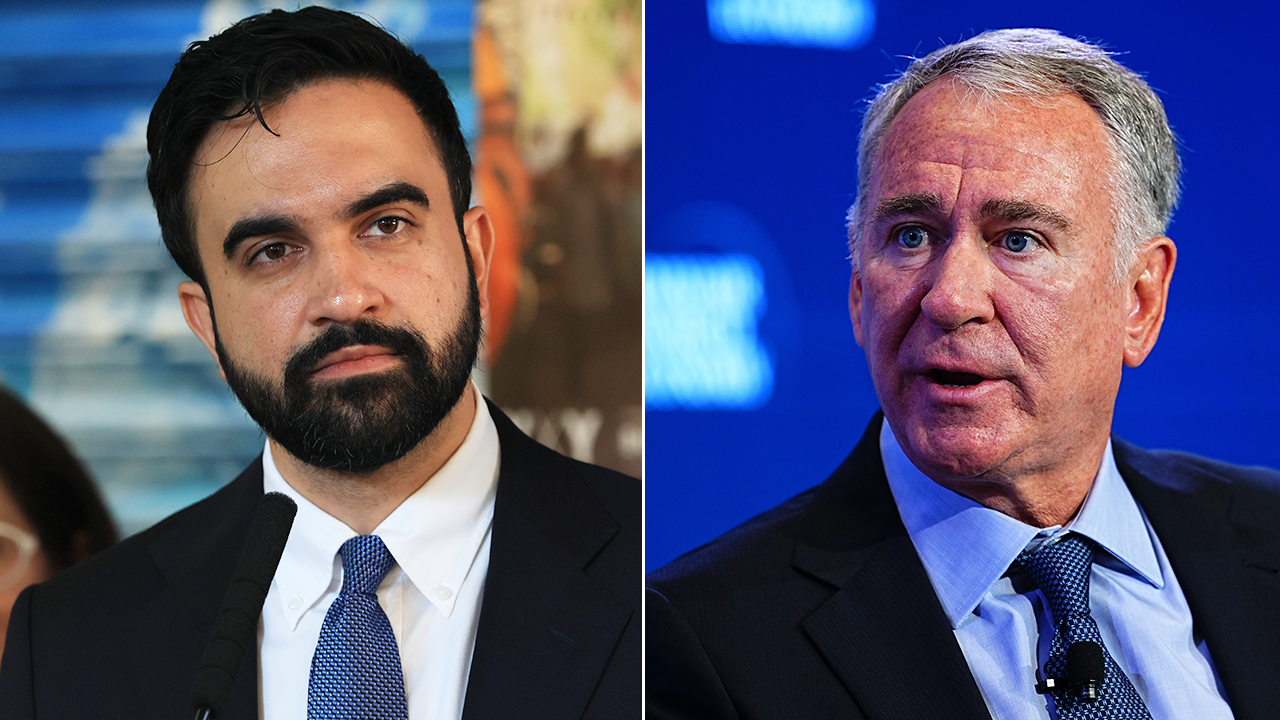
A side by side photo of New York Mayor Zohran Mamdani and Citadel CEO Ken Griffin.

On April 15, NYC Mayor Zohran Mamdani posted a video outside Ken Griffin’s Manhattan penthouse promoting a new “tax-the-rich” policy. (Spencer Platt/Aaron Schwartz/Bloomberg/Getty Images)

Griffin, whose $51 billion net worth places him in the top 35 of the world’s richest people, slammed Mamdani’s video as a “personal attack” and claimed it showed a “profound lack of judgment.”

The feud could put an end to a project that would build New York’s second-tallest building and inject billions in construction dollars into the local economy. 

Following Mamdani’s April 15 video, Citadel COO Gerald Beeson hinted that a plan to move forward with a skyline project for Citadel at 350 Park Avenue may not go forward.

Advertisement

MAMDANI TAX BREAK PROPOSAL SPARKS FEARS AS BUSINESS LEADERS WARN OF ‘FRAGILE’ NYC ECONOMY

“We are about to commence the redevelopment of 350 Park Avenue, creating 6,000 highly paid construction jobs and supporting the creation of more than 15,000 permanent jobs in Midtown New York,” Beeson wrote in an April 23 memo to employees. 

“The project – if we move forward – will entail more than $6 billion dollars of spending,” he also wrote. The “if” in Beeson’s memo could bear significant weight.

The 62-story skyscraper sitting near the center of Midtown Manhattan’s Turtle Bay neighborhood could be a boon, not only to the city’s construction and finance sectors, but also to local food vendors who have been struggling since the COVID-19 pandemic wiped out Midtown’s foot traffic. 

Advertisement

O’LEARY SLAMS NYC TAX PLAN AS ‘SHEER BLIND STUPIDITY,’ DEFENDS WEALTHY INVESTORS

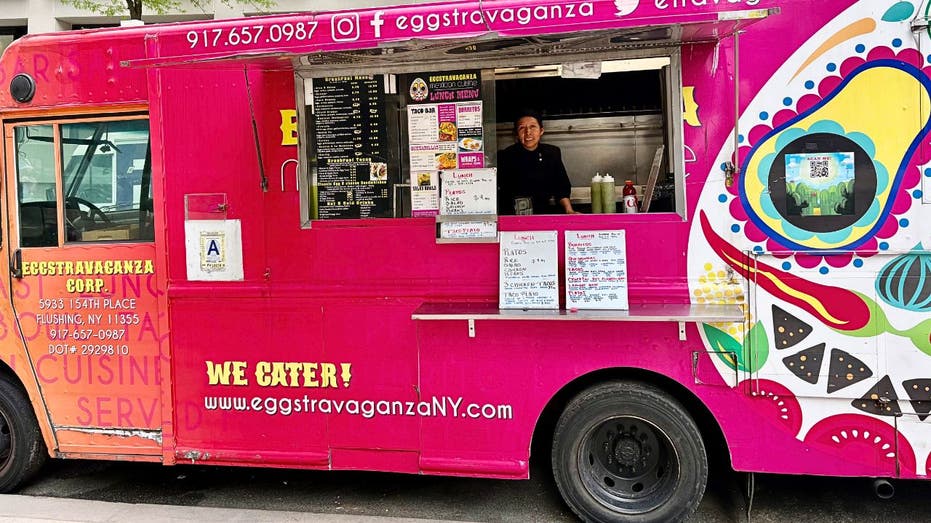
“If the owner brings more people, it’s gonna be a lot of business. Like, about now, this time is supposed to be easier,” Maria, who runs the Eggstravaganza food truck on the corner of Park and E. 52nd Street, told FOX Business. 

A bright pink food truck

Maria from the Eggstravaganza food truck stands in front of her truck’s window. Maria has been bringing her truck to Midtown Manhattan for 13 years. (Fox News Digital)

“Before the pandemic it was like, I couldn’t even talk to you right now,” she said, speaking to FOX Business shortly after noon. “But now everything changed. A lot of companies are moving to different places. A lot of companies moved to SoHo, different places… Hudson Yards, a lot of people.”

Maria referenced a number of factors for the decline in her customer volume, including the 2025 shooting at 345 Park Avenue that prompted Blackstone to temporarily shutter its offices and have over 3,000 employees work from home. 

Advertisement

“So if this building brings in a lot of customers, that would definitely help.” 

But if Citadel follows through on its threat, it could pull a much-needed capital influx from the area.

“Canceling such a business, of course, will affect our business as well because we depend on the traffic from the people around here,” Ash, who worked in Rafiqi’s food truck right next to Maria’s, told FOX Business.

Ken Griffin speaking during a recorded interview at a corporate office.

Ken Griffin, CEO and founder of Citadel Advisors LLC, during a “Bloomberg Wealth with David Rubenstein” interview on Feb. 25, 2022. (Christopher Dilts/Bloomberg via Getty Images)

His business, which he’s been running in Manhattan for 25 years, is going through a downturn. 

Advertisement

“Prices went up, it follows the new government here… it affects us a lot,” Ash said. “The international situation, the war in Iran, affects us as well. Everything goes up. It’s hard for us. We have to keep our prices as well, we can’t change a lot of our prices,” Ash added. 

“When the businesses left, we all suffered,” a vendor who ran a Greek halal cart on 51st Street told FOX Business. “Many friends had to go back home to their countries,” the vendor, who asked to remain anonymous, said. 

Mamdani appeared to slightly soften his attacks on Griffin, even thanking the Citadel head for funding a police memorial. 

“I also want to thank Ken Griffin for funding a memorial wall that will open later this year,” Mamdani said.

Advertisement
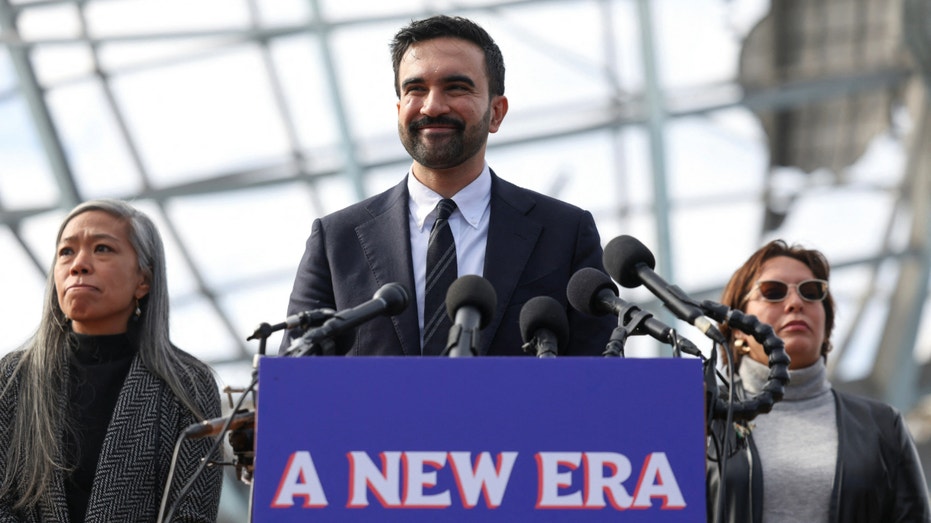
New York City Mayor-elect Zohran Mamdani speaks at a podium.

New York City Mayor-elect Zohran Mamdani holds a press conference at the Unisphere in the Queens borough of New York City, on Nov. 5, 2025. (Kylie Cooper/Reuters)

Griffin recently met with New York Gov. Kathy Hochul at the end of April to discuss the “future direction of New York” amid Mamdani’s tax proposals.

GET FOX BUSINESS ON THE GO BY CLICKING HERE

FOX Business reached out to representatives for Mamdani, Hochul and Citadel for additional comment. 

Advertisement
Continue Reading

Business

AAA national average for regular gas surges past $4.50 mark

Published

on

AAA national average regular gas price spikes about 33 cents in a week

The national average price for regular gasoline surged above $4.50 per gallon Wednesday, as ongoing tensions between the U.S. and Iran continued to pressure fuel costs for American drivers.

AAA reported the national average for regular gas at $4.536 as of Wednesday, up more than five cents from Tuesday’s $4.483 average.

Advertisement

The highest recorded was $5.016 for June 14, 2022, according to gasprices.aaa.com. That took place during Joe Biden’s presidency.

The AAA California average price for regular gas as of Wednesday is a whopping $6.16, towering over all the other states.

NATIONAL AVERAGE GAS PRICE REACHES $4.45 BEFORE SUMMER DRIVING SEASON

Gas pump

A fuel pump is connected to a car at a Mobil station in Englewood Cliffs, N.J., on Thursday, March 5, 2026. (Kena Betancur/Bloomberg via Getty Images / Getty Images)

Oklahoma, Mississippi and Louisiana remained just under the $4 mark, with AAA averages of $3.962, $3.97 and $3.993, respectively.

Advertisement

Several states were averaging more than $5 per gallon for regular fuel, including Alaska at $5.188, Nevada at $5.233, Oregon at $5.332, Hawaii at $5.657 and Washington at $5.747.

CHEVRON CEO SAYS ECONOMIES ‘ARE GOING TO HAVE TO SLOW’ AS STRAIT OF HORMUZ CLOSURE DISRUPTS OIL SUPPLY

Fuel price sign

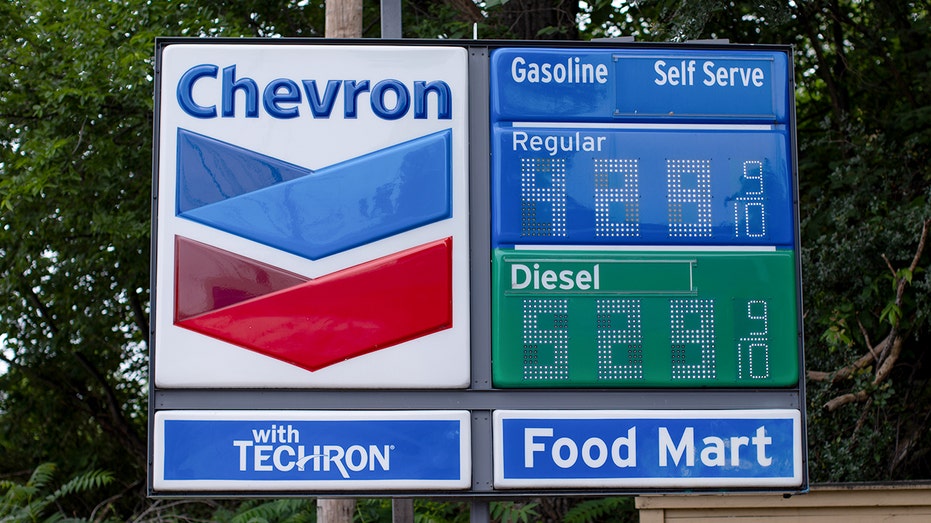
A sign displays the price of regular gasoline fuel at a Chevron gas station in Austin, Texas, on Tuesday, May 5, 2026. (Kaylee Greenlee/Bloomberg via Getty Images / Getty Images)

Fox News Digital reached out to the White House on Wednesday.

The U.S. has been engaged in a blockade against Iran for more than three weeks.

Advertisement

AAA NATIONAL AVERAGE GAS PRICE SOARS ABOUT 33 CENTS IN A WEEK

President Donald Trump

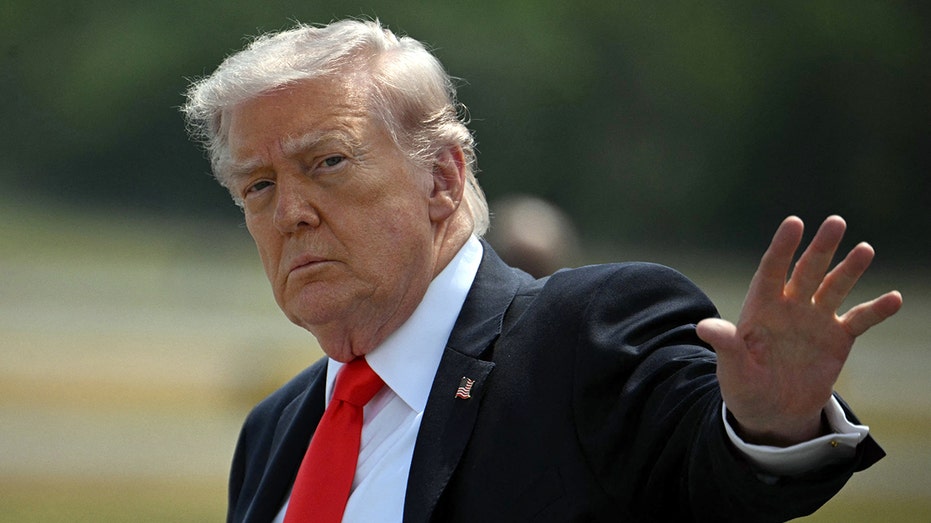
President Donald Trump waves after his arrival at Ocala International Airport, in Ocala, Fla., on May 1, 2026. ( Jim WATSON / AFP via Getty Images / Getty Images)

President Donald Trump said in a Tuesday evening Truth Social post that Project Freedom, described as “The Movement of Ships through the Strait of Hormuz,” would be paused briefly while negotiations continue.

CLICK HERE TO GET FOX BUSINESS ON THE GO

“Based on the request of Pakistan and other Countries, the tremendous Military Success that we have had during the Campaign against the Country of Iran and, additionally, the fact that Great Progress has been made toward a Complete and Final Agreement with Representatives of Iran, we have mutually agreed that, while the Blockade will remain in full force and effect, Project Freedom (The Movement of Ships through the Strait of Hormuz) will be paused for a short period of time to see whether or not the Agreement can be finalized and signed,” Trump wrote.

Advertisement
Continue Reading

Business

Did BSE really overtake NSE in F&O turnover? Here’s why the math may be misleading

Published

on

Did BSE really overtake NSE in F&O turnover? Here's why the math may be misleading
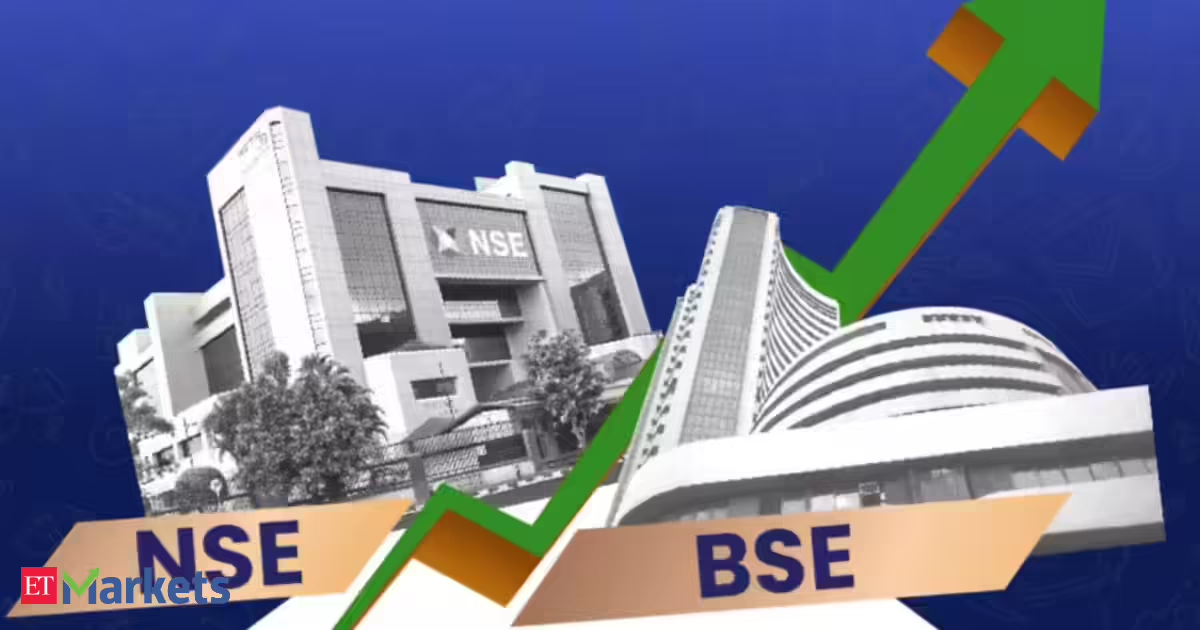
Recent reports suggested that the BSE overtook the National Stock Exchange (NSE) in the derivatives segment for the first time in April, drawing significant attention from market participants. But a closer look at the underlying data indicates that the shift appears more technical than structural.

At first glance, BSE’s notional derivatives turnover jumped to about Rs 5,377 lakh crore in April, up nearly 26% month-on-month, while NSE’s turnover dropped to around Rs 4,338 lakh crore, a 21.6% decline. This created the impression that BSE had briefly taken the lead in India’s largest trading segment.

However, analysts say this comparison is misleading. The primary issue lies in how derivative activity is measured.

Notional turnover, which multiplies contract value by underlying index levels, can exaggerate volumes when index prices are higher. Analysts point out that such calculations can distort comparisons by as much as 19 percentage points, making one exchange appear larger even if actual trading activity is not proportionally higher.

Advertisement

Instead, premium turnover — the actual money paid for options contracts — is considered a more reliable measure and is widely used by regulators like Sebi and institutional investors. On this basis, NSE continues to dominate.


In April, NSE retained 86.8% share in overall F&O premium turnover and 62.9% share in index options, even in what was described as a “holiday-distorted” month.
The distortion came from the structure of expiry days, which are critical drivers of derivatives volumes.NSE’s flagship Nifty contracts expire on Tuesdays. In April, two key weekly expiry sessions were lost due to holidays, directly hitting volumes on the exchange. In contrast, competing contracts with Thursday expiries for BSE were unaffected, temporarily boosting activity elsewhere.

Brokerage ICICI Securities highlighted a similar trend in its note. NSE’s options premium average daily turnover fell to Rs 64,500 crore in April, down more than 31% from March, largely due to fewer expiry days. In contrast, BSE’s premium turnover remained largely stable at Rs 33100 crore, showing only marginal growth.

The same pattern was visible in contract volumes. NSE’s average daily options contracts dropped to 142 million in April, down nearly 26% month-on-month, while BSE’s rose to 176 million, up about 20%.

Even then, combined system-wide activity actually declined. Total (NSE+BSE) options premium turnover fell to Rs 97600 crore in April, down 23% from March, suggesting the overall market cooled rather than shifted meaningfully between exchanges.

Advertisement

The broader takeaway is that while BSE has been steadily gaining traction — especially in options contracts — the April crossover in notional turnover does not reflect a structural change in market leadership.

(Disclaimer: Recommendations, suggestions, views and opinions given by the experts are their own. These do not represent the views of The Economic Times)

Continue Reading

Trending

Copyright © 2025