

Crypto World
Circle president backs USDC as new rival pressures CRCL stock



Circle President Heath Tarbert has defended the company’s long-term strategy after Circle shares fell sharply from their post-IPO peak.
Summary
- Circle says USDC’s scale and network effects remain difficult for new stablecoin competitors to replicate.
- Open USD adds pressure as Circle shares trade far below their post-IPO peak near $260.
- Circle keeps expanding regulated infrastructure while investors question competition, margins, and future stablecoin revenue sharing.
Speaking in a July 14 interview with FOX Business, Tarbert said management remains focused on building financial infrastructure rather than reacting to short-term moves in the stock.
The interview came as Circle faced growing investor concern over competition in the stablecoin market. CRCL had traded near $260 after its public debut before falling toward the low $60 range. Tarbert said Circle is “playing the long game” and argued that successful execution would eventually support shareholder value.
Tarbert points to USDC network effects
Tarbert said Circle’s main focus remains building a full-stack internet financial platform around USDC and related infrastructure. He argued that the company’s position cannot be measured only through daily stock movements and said the stock should “take care of itself” if Circle delivers on its wider mission.
He also defended USDC against new competitors. Tarbert pointed to roughly $73 billion in circulation and native support across 34 blockchains, saying those network effects would be “incredibly hard to replicate.” Circle describes USDC as a regulated digital dollar used across trading, payments and settlement.
Open USD adds new pressure to Circle
The comments came after Open Standard launched Open USD, a planned stablecoin backed by more than 140 participating businesses. The group includes Visa, Mastercard, Stripe, BlackRock, BNY and Coinbase. Open Standard says partners can mint and redeem Open USD without fees and receive reserve earnings after a management charge.
As reported by crypto.news, Circle shares fell 17.5% to $62.63 after Open USD entered the market and CRCL left several Russell Growth indexes. The decline added to concerns about whether new stablecoin models could pressure Circle’s economics.
Wall Street has also raised questions about that competition. Crypto.news reported that Mizuho cut its Circle price target to $50, arguing that Open USD’s revenue-sharing structure could pressure margins and raise distribution costs.
Circle faces pressure over USDC economics
Circle’s challenge extends beyond new stablecoin issuers.JPMorgan lowered earnings forecasts for Circle and Coinbase after a new revenue-sharing agreement tied to USDC balances on Hyperliquid. The bank said stronger adoption could come with lower reserve income retained by the companies.
Tarbert pushed back on the idea that competitors can quickly reproduce USDC’s reach. He also described USDC as the largest regulated stablecoin and said it leads in actual transaction volume, presenting scale and existing distribution as key parts of Circle’s competitive position.
Circle keeps expanding regulated infrastructure
Circle has continued adding regulated infrastructure despite the stock decline. On July 10, the company received final OCC approval to establish Circle National Trust. The trust bank will initially provide digital asset custody, with USDC reserve management planned as a possible future service.
As reported by crypto.news, the approval places the new entity under direct federal supervision. Circle says the structure could support wider institutional use of its digital asset infrastructure.
Tarbert’s comments frame the stock decline against a wider contest for stablecoin distribution and reserve income. Open USD brings a large group of payment and financial companies into the market, while Circle continues betting that USDC’s existing network and regulated infrastructure will support its long-term position.

Crypto World
Saylor’s Strategy Strengthens Liquidity Position but Long-Term Bitcoin Plan Still Faces Scrutiny

American business intelligence firm Strategy has bolstered its financial position by addressing liquidity concerns raised earlier this year. In a July 14 follow-up, the on-chain analytics firm CryptoQuant said the company’s new capital framework has eased short-term financial pressure. The firm, however, noted that questions remain about Strategy’s long-term Bitcoin strategy.
The update follows CryptoQuant’s June 23 assessment, which warned that Strategy’s cash reserves were shrinking even as Bitcoin purchases continued. At the time, analysts estimated the company had enough liquidity to cover preferred dividend obligations for only about 14 months without additional funding.
Strategy Rolls Out New Capital Framework
To address those concerns, Strategy introduced its Digital Credit Capital Framework on June 29 to strengthen its financial flexibility. The plan established a board-approved U.S. dollar reserve policy that initially targeted about $2.55 billion before later raising the goal to roughly $3 billion.
The framework also raised the STRC dividend rate to 12% and approved up to $1 billion each for preferred securities issuance and MSTR share repurchases. It also introduced a Bitcoin Monetization Program, allowing the company to sell up to $1.25 billion in Bitcoin to support reserves and funding needs.
The on-chain analytics firm said the measures are closely aligned with recommendations made in its earlier report. Strategy also paused additional Bitcoin purchases and sold 3,588 BTC worth about $216 million between June 29 and July 5. It further raised $466.7 million through its MSTR at-the-market share offering.
As a result, cash reserves rose from roughly $1.44 billion to about $3 billion, extending estimated dividend coverage to around 29 months. During the same period, Strategy maintained its Bitcoin holdings at approximately 843,775 BTC by suspending further accumulation.
Questions Over Future Bitcoin Management Remain
According to CryptoQuant, the market has responded positively to the stronger liquidity position, although some uncertainty remains. STRC recovered from a June low near $75 to around $88 but continued trading below its stated value of $100.
Even so, analysts said the framework does not explain when Bitcoin purchases could resume after the recent pause. They also said the Bitcoin Monetization Program prioritizes dividends, reserves, and share repurchases without defining a clear Bitcoin trading strategy.
The post Saylor’s Strategy Strengthens Liquidity Position but Long-Term Bitcoin Plan Still Faces Scrutiny appeared first on CryptoPotato.


Kraken Financial’s Federal Reserve master account is still not live more than four months after approval, bank CEO Brian Mathena told Wyoming lawmakers last week.
In March, the Wyoming-chartered bank became the first crypto firm ever to win one. Winning was hard. Switching it on is proving even harder.
Why the Kraken Fed Master Account Is Not Live Yet
A master account is a bank’s own account at the Fed. It lets a firm move US dollars without a middleman bank. That is why crypto firms want one so badly.
The Federal Reserve Bank of Kansas City approved Kraken’s account on March 4. That made Kraken the first crypto firm plugged directly into the Fed. The bank had waited since October 2020.
Yet the account sits idle. Mathena told Wyoming’s blockchain select committee that the bank is still switching it on.
“Obviously with the uncertainty around the account, we’re now playing a bit of catch up, trying to get the account operationalized and to expand our deposit product and be able to more fully leverage the Fed master account.”
Follow us on X to get the latest news as it happens
Kraken never promised a fast launch. Its March announcement described a phased rollout, starting with big institutional clients. Meanwhile, customer wires still run through a middleman. Kraken’s own support pages list Dart Bank as its US dollar wire provider.
The account itself is unusual. The Kansas City Fed approved it for one year only, with undisclosed limits “tailored” to Kraken’s risks. Even Congress wants answers. Representative Maxine Waters pressed Kansas City Fed President Jeff Schmid in March.
Her letter notes the term “limited purpose account” appears nowhere in law or Fed guidelines. She also asks whether Kraken can use the Fed’s ACH network or earn interest on its balances.
The prize is clear, however. A live account would let Kraken settle dollars directly on Fedwire, the Fed’s big-money transfer system. The timing matters too, as Kraken advances its confidential IPO filing.
Tier 3 Fed Access Remains Nearly Impossible
Kraken applied as a Tier 3 firm. That is the Fed’s bucket for state-chartered banks with no federal insurance and no federal watchdog. These applicants almost never win.
Fed Vice Chair for Supervision Michelle Bowman put it bluntly at an American Bankers Association event in March.
“That third level… was a little bit like, I like to say ‘unobtainium,’ right, you just can’t qualify, it’s not, it doesn’t work.”
Subscribe to our YouTube channel to watch leaders and journalists provide expert insights
The numbers back her up. Just three of 53 Tier 3 or unclassified applicants have ever won approval, per fintech analyst Jason Mikula.
The other two are a Puerto Rico cooperative and banknote specialist Numisma Bank. Neither touches crypto.
Custodia Bank shows the dark side of those odds. The fellow Wyoming bank applied in October 2020, the same month as Kraken. The Fed said no in January 2023. On July 10, Custodia asked the Supreme Court to step in, calling the denial a “death sentence.”
More delays may follow. Banking trade groups warned that Kraken’s approval came before the Fed finished writing its rules. The Fed then asked Reserve Banks to pause all Tier 3 decisions.
Instead, it is finalizing a payment account proposal for non-banks. Comments close on July 27, and Governor Christopher Waller expects final rules only by year-end.
For now, Kraken holds a first-of-its-kind account it cannot fully use. Whether the one-year pilot goes live before the new rules land remains an open question.
The answer may shape how the Fed treats Ripple’s pending application and everyone else waiting in line.
The post Kraken Won Historic Fed Approval. So Why Isn’t Its Master Account Live Yet? appeared first on BeInCrypto.


MicroStrategy CEO Phong Le says Wall Street’s largest banks are locked in a tight race for second place on the company’s Bitcoin Banking Adoption Index.
Goldman Sachs, JPMorgan, Morgan Stanley, and Citi each score within three points of one another. Fidelity, however, still holds a commanding lead.
Fidelity’s Lead Sets the Bitcoin Banking Adoption Index Bar
The Bitcoin Banking Adoption Index grades 25 major banks on Bitcoin (BTC) trading, custody, and product depth.
Strategy, formerly known as MicroStrategy, published the initial 32% score, drawing on public data through July 10.
Fidelity topped the list at 71%, built on Fidelity Digital Assets, the custody arm it launched back in 2018.
BNY follows at 46%, while Goldman Sachs Group Inc. trails narrowly at 45%. Historically, few banks matched Fidelity’s early crypto custody bet.
Bitcoin traded near $64,539 on Sunday, up about 1% over 24 hours. The index, therefore, measures structural adoption rather than short-term price swings.
Goldman, JPMorgan, and Citi Battle for Second
JPMorgan Chase, Morgan Stanley, and Citigroup each land at 43%, separated from Goldman by just two points. Record bank earnings this quarter show JPMorgan and Goldman trading desks already profiting from crypto-adjacent activity.
Several rivals are also chasing tokenization efforts underway across the sector, where more than 15 banks now compete to move assets on-chain.
That shift, in contrast, sidesteps Bitcoin entirely and could reshape future index gains.
Vanguard illustrates the gap further. The asset manager only recently began planning its own crypto strategy, years after Fidelity built out its custody business. Meanwhile, smaller regional lenders have barely started.
Major-bank Bitcoin adoption is accelerating, but still early: 32% overall as measured by the index.
Michael Saylor, MircroStrategy’s executive chairman, posted that assessment on X alongside the index’s July 13 debut.
New Launches Could Reshuffle the Bitcoin Banking Adoption Index
Goldman Sachs, JPMorgan, Morgan Stanley, and Citi are each developing several crypto initiatives slated for release within the current year. That could include new exchange-traded products, custody expansions, or tokenization tools already in development.
Le expects these launches to bring significantly more clarity to the sector by year-end.
MicroStrategy, holder of the largest corporate Bitcoin treasury, has a stake in that outcome. Saylor’s own case for corporate Bitcoin adoption echoes the same expectation of accelerating bank participation.
Whether Goldman or JPMorgan ultimately claims outright second place may depend on which products actually ship before December arrives.
The post MicroStrategy CEO: Wall Street’s Biggest Banks are Locked in a Tight Bitcoin Race appeared first on BeInCrypto.
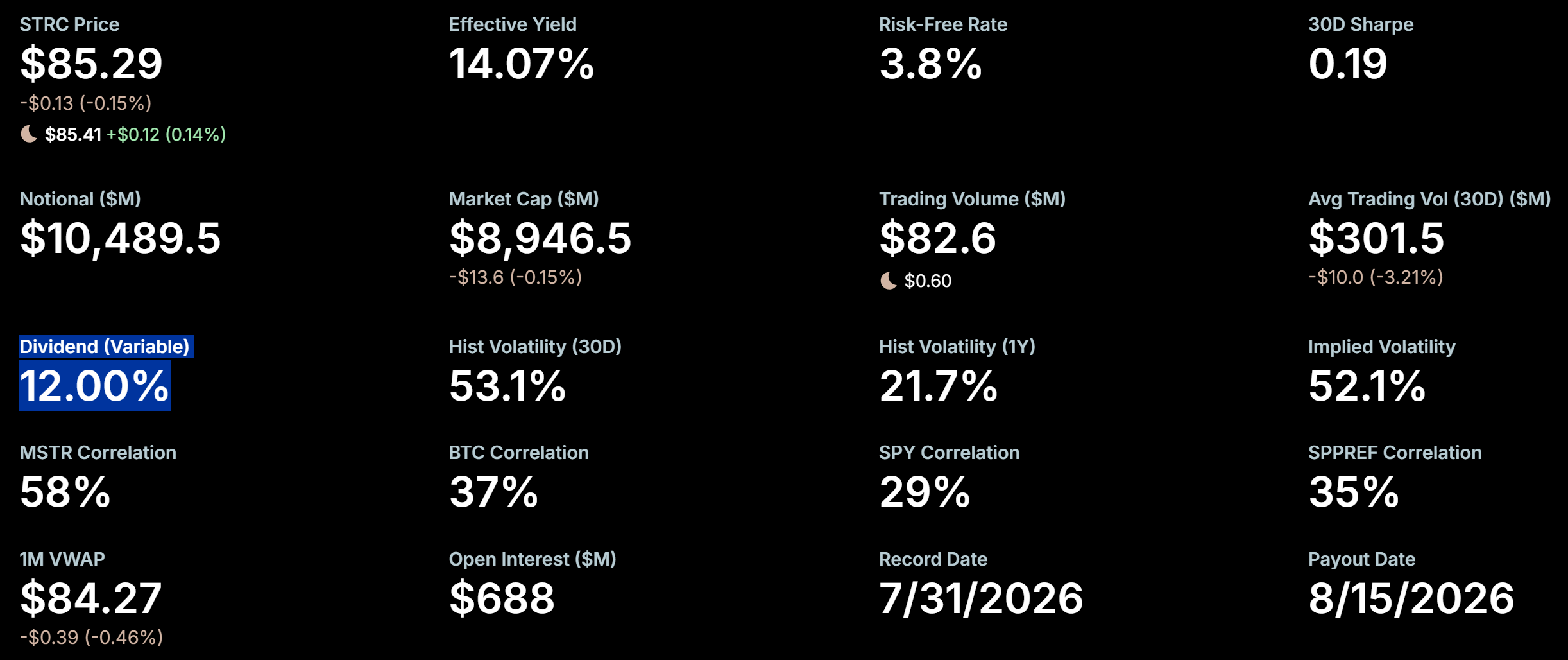
Khing Oei, a former Goldman Sachs credit investor, says the market has Strategy’s STRC preferred stock priced wrong. His math says it is worth about $96. It trades near $85.
Oei spent 25 years valuing risky debt at Goldman Sachs and hedge funds. He shared his STRC model in a recent lengthy discussion.
Why the 14% Yield on MicroStrategy’s STRC Misleads
STRC pays a 12% dividend. Divide that by today’s discounted price and you get a yield above 14%. That number is everywhere. Oei says it is wrong.

Here is the problem. That math assumes STRC pays out forever, no matter what. STRC promises no such thing. It never matures and never has to repay its $100 face value, known as par. It pays only while MicroStrategy can afford it.
The shares crashed 25% below par during June’s Bitcoin selloff. That is what made the yield look so juicy.
“That experience leaves you with a simple instinct: never value a stream by dividing this year’s coupon by today’s price,” Oei wrote in his analysis.
Follow us on X to get the latest news as it happens
So he values STRC like a bond. Count the cash it will actually pay out, and nothing more. Strategy’s dashboard showed 843,775 Bitcoin (BTC) worth $54 billion, plus $3 billion in cash. Debt and senior preferred shares claim $8 billion of that first. STRC’s $10.5 billion comes next.
29 Years of Dividends Even if Bitcoin Never Rises
Strip out the senior claims and $50.2 billion backs the preferred shares. The dividend bill runs $1.73 billion a year.
That produces two striking numbers. Bitcoin only needs to grow 3.4% a year and the dividends never stop. If Bitcoin stays flat forever, the money still lasts 29 years.
Value those 29 years of payments at a 12% discount rate and STRC is worth $96.30. BeInCrypto checked the math. It holds.
The market pays $85.29. That price only buys 17 years of dividends. Oei thinks that is too gloomy, since STRF, the safer Strategy share above STRC, yields just 10.4%.

That gap between $85 and $96 is the 13% mispricing. It carries a sharp implication. If Oei is right, buyers collect the 14% yield while the price climbs toward fair value. If the market is right, the discount is a warning that the dividend may one day stop.
Some buyers seem to agree with Oei. A BitcoinTreasuries survey found over half of holders bought the dip below par.
The Road Back to $100
Bitcoin’s price does most of the work. Oei’s table puts STRC back at $100 if Bitcoin reaches $80,000. At $40,000, it drops to $58.
MicroStrategy holds levers too. STRC listed in July 2025 at $90 with a 9% dividend. The board has raised the rate again and again, now 12%, to pull the price toward par.
Cash helps as well. Each $1 billion raised and held in reserve adds about four points, Oei estimates. A buyback adds five, since Strategy would pay $85 for something he values at $96.
The mispricing itself becomes the company’s cheapest tool. The growing cash pile fits what one research desk called a Bitcoin winter pivot.
One caveat applies. Oei runs Treasury, a European Bitcoin treasury firm, so he benefits when these shares are taken seriously. Skeptics also remain. Economist Peter Schiff just predicted a crash toward $20,000, and others ask who ultimately pays if Strategy’s $64 billion bet unwinds.
The question is now a simple one. Does a company with $57 billion in assets deserve this much doubt over a $1.73 billion dividend bill? Bitcoin’s next move will go a long way toward answering it.
The post Ex-Goldman Credit Veteran Says Markets May Be Mispricing MicroStrategy’s STRC by 13% appeared first on BeInCrypto.
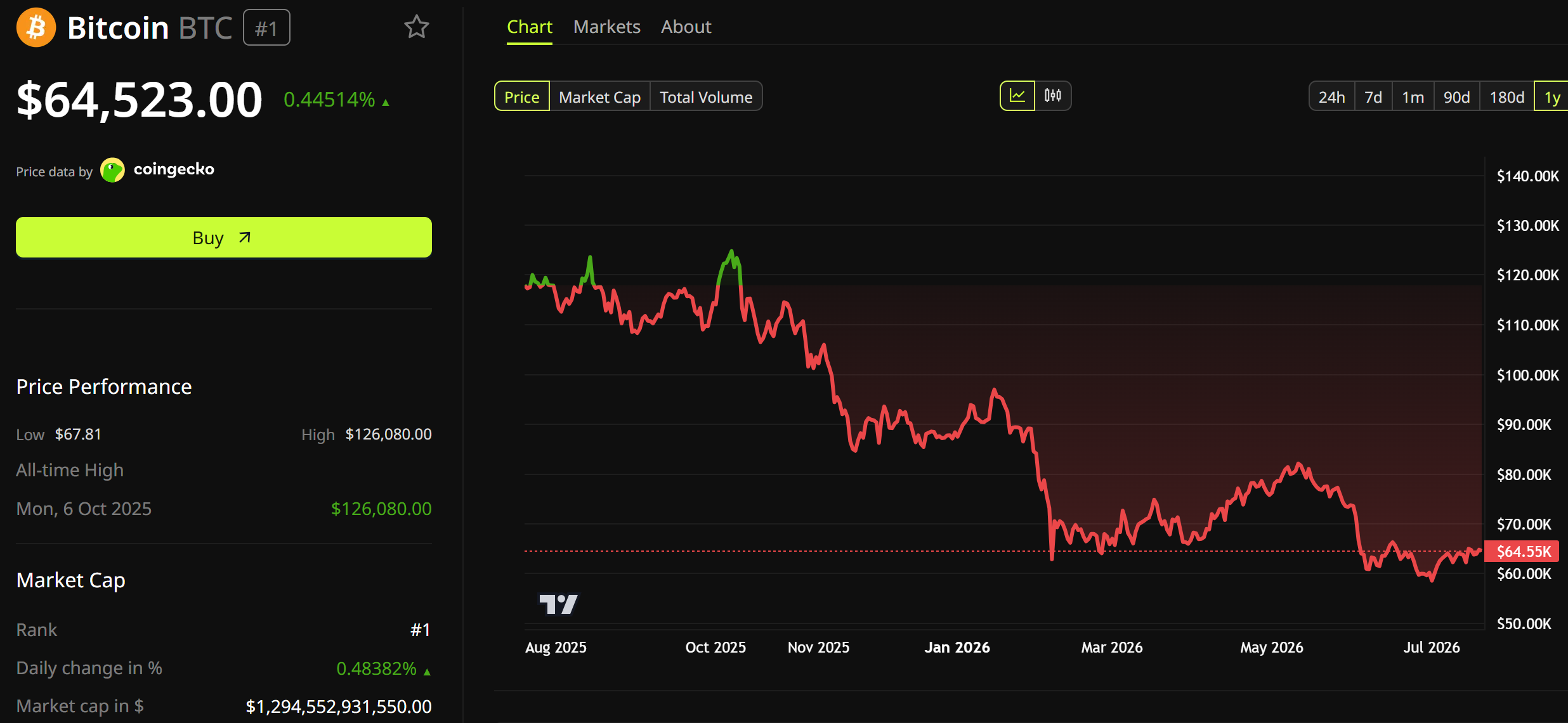
Coinbase CEO Brian Armstrong says Bitcoin did not live up to Satoshi Nakamoto’s vision of everyday digital money. It became digital gold instead. Stablecoins took over the payments job, he argues.
Bitcoin (BTC) sits near $64,523, down about 45% from its October 2025 peak of $126,080. Stablecoins are moving the other way, with supply near record highs.

Armstrong Rethinks Bitcoin’s Original Role
Armstrong made the call in an interview with Zerodha co-founder Nikhil Kamath on the People by WTF podcast. Kamath is a self-declared crypto skeptic. He asked the Coinbase boss a simple question. Does Bitcoin still do what it was built for?
“You’re right, I think it’s fair to say at this point that Bitcoin has succeeded as a store of value, and I don’t think it has become a medium of exchange,” Armstrong responded.
Follow us on X to get the latest news as it happens
Why Bitcoin Drifted From Satoshi’s Vision
Nakamoto’s 2008 whitepaper promised cash that moves online without banks. Bitcoin’s first block even carried a 2009 headline about UK bank bailouts. That was the mission.
Seventeen years on, Armstrong says the payments dream never landed. Fixes came and went.
“There’s people who have tried to make that happen with the Lightning Network, was an optimisation layer on top of Bitcoin, but it never really took off.”
The bigger problem sits in Bitcoin’s own design. Supply is capped, so holders hoard it like gold.
Armstrong said “people think it’s going to be worth more in the future, so they don’t really want to spend it right now.” Volatility makes it worse, he added.
Stablecoins Take Over the Payments Role
Stablecoins filled the gap. These dollar-backed tokens now do the boring job of money, even as banks defend their old rails.
“So we’ve actually seen massive growth of stablecoins running on blockchains. Fiat-backed stablecoins as the medium of exchange and Bitcoin has remained the store value as digital gold.”
The numbers agree. DefiLlama data shows stablecoin supply near $310 billion. Tether’s USDT holds $184 billion, and Circle’s USDC adds $73 billion.

Armstrong also credits the GENIUS Act, signed in July 2025, for making the tokens legal and trusted in the US. Much of that activity now runs on Base and Solana.
Still, Armstrong sees no failure here. In his view, Bitcoin simply found a different job.
“I think the Bitcoin chain is okay with that. They’re not intending it to be used for high volume payments. They’re digital gold.”
The post Brian Armstrong Admits Bitcoin Didn’t Deliver Satoshi’s Vision, Something Else Did appeared first on BeInCrypto.


Quantum hackers could one day crack old Bitcoin (BTC) wallets and forge their signatures. A new proof from quantum security startup Project Eleven gives real owners a way to take their coins back, using nothing but a seed phrase.
Not everyone can use it, though. Binance co-founder Changpeng Zhao (CZ) said in June the community could freeze Satoshi Nakamoto’s coins after a quantum breakthrough. Critics called it confiscation.
Why a Bitcoin Quantum Freeze Just Got Less Scary
The freeze idea is already on paper. BIP-361, a proposal co-authored by Casa co-founder Jameson Lopp, would switch off Bitcoin’s old signature system over several years. Coins that never move would freeze forever.
Pressure grew after Washington’s quantum push put the threat on the map. Still, one objection kept coming back. A freeze takes coins away with no path back.
Project Eleven’s recent announcement attacks that weak spot. Its proof works like a receipt. It shows you own the master key behind an address without ever revealing it.
Here is the trick. A quantum computer may crack the private key of an exposed address. However, it cannot climb up to the master key, because the math there only runs one way.
Only the true owner holds that master key. So only the true owner can produce the proof, even after signatures break.
Speed makes it practical. Academics Or Sattath and Shai Wyborski floated the concept in 2023, calling it signature lifting. Lightning Labs CTO Olaoluwa Osuntokun built the first prototype. The new version runs 16 times faster, at 243 milliseconds on a laptop.
“Quantum computers can extract a private key from a public key. They cannot reverse the hashing that produced it. A wallet’s own key derivation may still provide a final, post-quantum proof of ownership,” Project Eleven stated.
Follow us on X to get the latest news as it happens
Why the Tool Cannot Save Satoshi’s Coins
The catch sits in the calendar. The proof needs BIP-32, the seed phrase system modern wallets adopted from 2012. Older wallets created every key on its own, with no master key at all.
Satoshi mined in 2009 and 2010 and left before seed phrases existed. Researcher Sergio Demian Lerner’s 2013 analysis ties roughly 1.1 million BTC to Satoshi across some 22,000 addresses.
Worse, those coins expose their public keys on-chain. That makes them the easiest quantum targets and the hardest coins to rescue.
Therefore, CZ’s idea of freezing Satoshi’s coins would still lock them away for good. BIP-361 would do the same by design.
The tool has limits too. It is unaudited, covers three older address types, and no blockchain accepts it yet.
Meanwhile, the clock ticks. Google’s quantum research cut the hardware needed for such attacks by 20 times this year. US agencies also face post-quantum cryptography deadlines by 2031.
One question now hangs over Bitcoin governance. If a freeze ever comes, the fight will not be over whether coins get frozen. It will be over which coins ever come back.
The post Bitcoin Has a New Defense Against Quantum Hackers, But It Can’t Save Everyone appeared first on BeInCrypto.
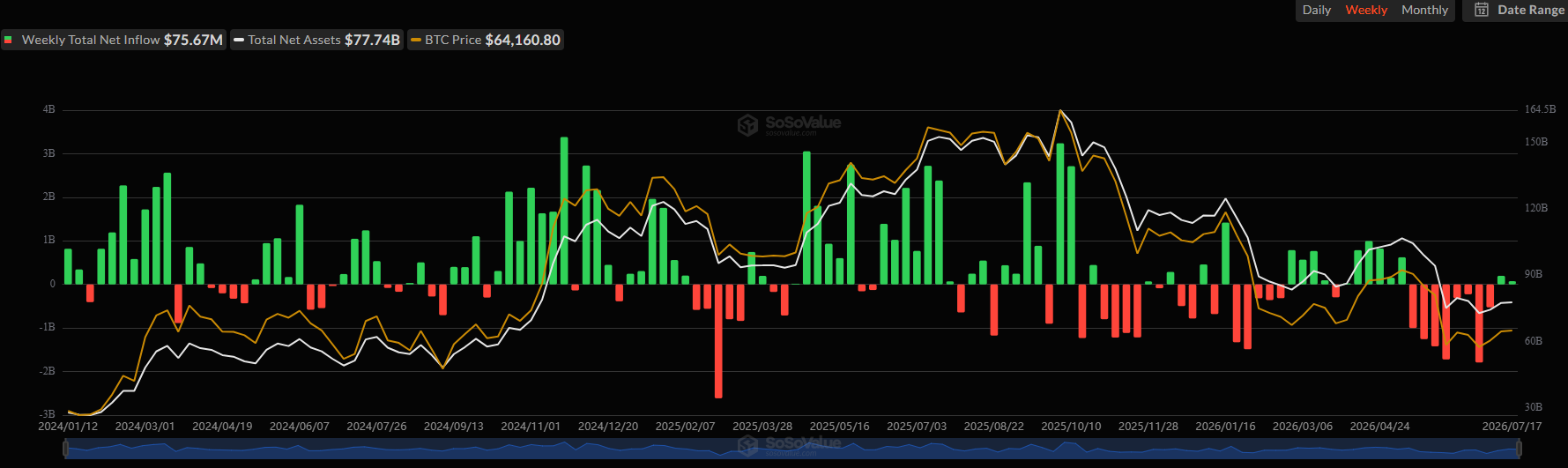
After a violent eight-week streak with nothing but substantial withdrawals, the spot Bitcoin ETFs changed their course in the middle of July and now extended their recovery period with another green performance.
However, the funds tracking the largest altcoin managed to beat the market leader in terms of weekly net inflows.
BTC ETF Green Wave Endures
Perhaps due to the rising tension in the Middle East over the previous weekend, Monday began with a massive $424.66 million net outflow from the spot BTC ETFs. This was the single-largest withdrawal since June 26. Thus, the good news from the previous week started to look like a fluke that cannot be repeated.
However, investors’ behavior changed in the following four days, and fresh capital started to flow in. Data from SoSoValue shows that $181 million entered the funds on Tuesday, another $107.8 million on Wednesday, $79.15 million on Thursday, and $132.30 million on Friday. As such, the weekend ended in the green, with net inflows of $75.67 million.
Nevertheless, these numbers are nowhere near the mass exodus experienced from the middle of May and the beginning of July. In five out of these eight weeks, investors pulled out $1 billion or more, with the week that ended on June 26 registering the second-highest net outflows of $1.79 billion. Overall, the funds lost more than $8 billion in approximately two months.
The cumulative total net inflows dumped from $59.34 billion to $51.08 billion before they recovered some ground to $51.35 billion as of July 17.
ETH Funds Do Even Better
While the financial vehicles tracking BTC attracted just over $75 million last week, those following the largest altcoin did even better. The spot Ethereum ETFs gained $105.44 million, building on the previous week’s $84.42 million.
Monday was also in the red, but in a more modest manner. Investors took out $15.41 million. Thursday saw $28.04 million in net outflows, but the $58.34 million on Tuesday, $53.83 million on Wednesday, and $36.73 million on Friday offset all the losses.
Similar to the BTC ETFs, the Ethereum counterparts were on an eight-week red streak, in which they lost well over $1.1 billion in cumulative total net inflows, going from $12.09 billion to $10.89 billion. However, the figure has risen to $11.08 billion after the two consecutive weeks in the green in mid-July.
The post 2 in a Row: Bitcoin ETFs Mark Another Green Week, but Ethereum Wins appeared first on CryptoPotato.
A year on, the rules aren’t quite ready for implementation, but we have a much clearer idea as to how the regulators are thinking about stablecoins and where they’re likely to land on those rules.
In an emailed statement, Crypto Council for Innovation CEO Ji Hun Kim called the passage of the bill “a landmark moment.”
“A year in, agencies, institutions, and innovators are building on a clearer foundation, and stablecoins are moving rapidly toward mainstream adoption,” he said.
The various regulators have proposed rules out for comment on the different aspects of stablecoin governance and regulation, including a proposal that would require stablecoin issuers to conduct similar know-your-customer checks to more traditional financial firms. The FDIC published 144 questions a few months ago about how it would oversee stablecoin issuers, looking at concerns like custody, capital and liquidity standards. The OCC, for its part, put out its own proposal in February laying out how it was interpreting the law.
There’s still a few months left before these rules start being finalized. And in the meantime, the industry is still working on getting the Digital Asset Market Clarity Act passed.
The text of the combined Clarity Act drafts is not yet public, at least as of Friday night. While industry sources expected the bill to be released last week, the timeline has constantly evolved. On Thursday, Senators Cynthia Lummis and Bernie Moreno were supposed to brief Trump on the bill. There was no public readout of that meeting available after, but both lawmakers tweeted about Trump’s remarks on the election later Thursday.
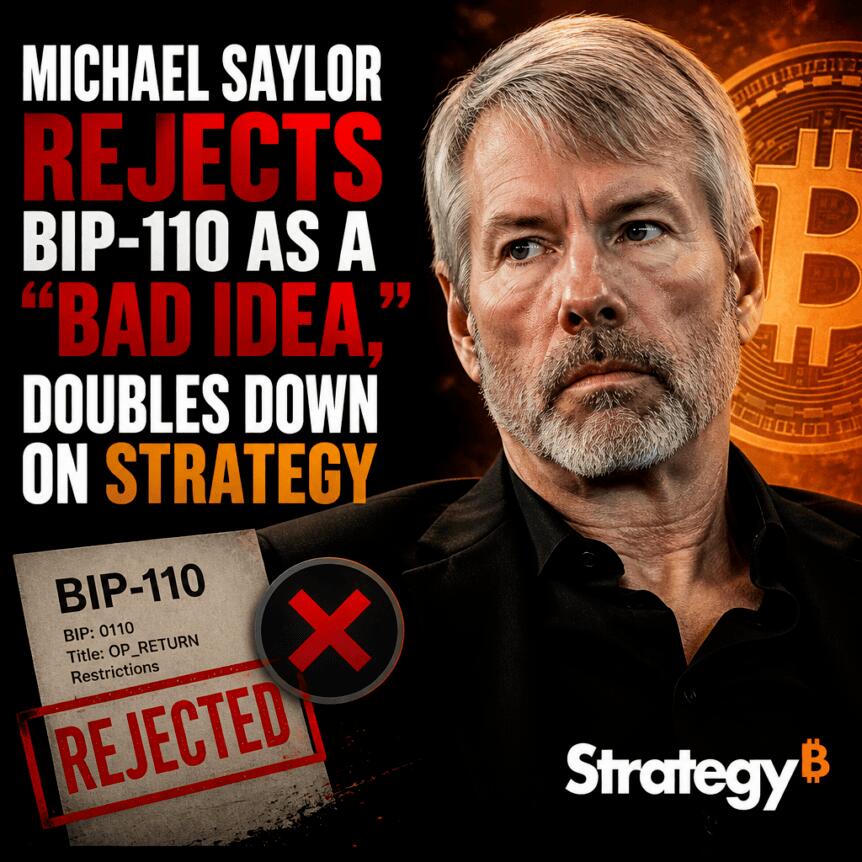
Bitcoin’s internal debate over network “spam” and the place of Ordinals has flared again, with MicroStrategy executive chairman Michael Saylor publicly arguing against a proposed protocol change known as BIP-110. In a long post on X published Sunday, Saylor laid out a broad case against activating the temporary fork, warning that the remedy could undermine the principles he associates with Bitcoin’s neutrality and permissionless innovation.
The proposal, first introduced in December 2025, aims to reduce non-monetary transaction behavior—particularly data associated with Ordinals inscriptions—by changing how certain data is handled by validating nodes. While proponents frame it as protection for Bitcoin’s function as peer-to-peer cash, Saylor said he shares those objectives but disagrees with the approach.
Key takeaways
- Michael Saylor opposes BIP-110 despite acknowledging concerns about Ordinals-style network bloat.
- BIP-110 would require broad node support to activate, with the last measured cycle showing only around 1% of blocks signaling approval.
- Ordinals activity has fallen sharply from its 2023 peak, with recent daily inscriptions reported as under 10,000.
- The dispute echoes earlier Bitcoin governance clashes, including the Blocksize Wars era.
- Major figures remain split: supporters argue it avoids long-term disruption, while critics call it social enforcement rather than neutral protocol design.
Saylor’s critique of BIP-110’s “temporary fork”
Saylor described BIP-110 as a bad idea in an extended post on X, presenting a framework centered on “neutral rules, hard consensus, open markets, and permissionless innovation.” He also emphasized that his critique is directed at the proposal itself, not the people who support it.
According to Saylor, some Bitcoiners he respects back BIP-110 to keep validation affordable for node operators, maintain access to the validation process, preserve low-cost payments, and prevent Bitcoin from drifting into a general-purpose data storage system. He said those are serious concerns—but that the planned remedy is not the right one.
“This article critiques the proposal, not the people behind it. I assume good faith. Bitcoin is strongest when we can disagree vigorously without mistaking allies for enemies.”
As of 12 p.m. ET Sunday, the post had reportedly generated 879,000 views on X, along with 692 replies and 852 retweets.
Why activation is uncertain: node signaling remains low
Even if BIP-110 has passionate supporters, activation would not be automatic. The proposal is designed to proceed only if 55% of Bitcoin nodes validating blocks signal support across a Bitcoin “period.”
In the most recently referenced period, period number 475 (covering blocks 955,584 through 957,599), only about 1% of blocks were reportedly in support. That suggests the proposal currently lacks the consensus threshold needed to move forward.
For investors and traders following protocol governance, the key question is not whether arguments for and against BIP-110 are strong, but whether enough of the ecosystem will converge on a shared view quickly enough to clear the activation hurdle. Low signaling so far implies BIP-110 remains in a “discussion” phase rather than a near-term change likely to land.
Ordinals activity has cooled—so what’s the urgency now?
The conflict over Ordinals and other inscription-style behavior is unfolding at a time when on-chain activity appears to have materially cooled. The reporting cited that in the last month there have been fewer than 10,000 Ordinals inscribed per day, according to Dune Analytics.
That figure stands in stark contrast to the period of peak activity in August 2023, when the same metric reportedly exceeded 400,000 daily inscriptions. The current backdrop complicates the “immediate fix” argument advanced by BIP-110 supporters, because network pressure may not be at the same level as during the earlier surge.
Still, supporters contend that the trend could return—or that even without today’s worst-case bloat, maintaining Bitcoin’s long-term usability requires setting clearer boundaries now. Critics, meanwhile, argue that protocol-level “policing” risks turning Bitcoin’s decentralized norms into a contest of preferences.
The personalities and the governance parallels
BIP-110 is notable not only for its technical objectives, but also for the lineup behind it. The proposal was introduced by pseudonymous Bitcoin developer “Dathon Ohm” and reportedly has support from Ocean protocol founder Luke Dashjr. Opponents include Blockstream CEO Adam Back.
Earlier coverage cited that Dashjr and other supporters view Ordinals-driven bloat as a serious threat and argue BIP-110 would not trigger the chain split many fear. They also point to the fork’s design as temporary—described as a one-year limit—claiming it would not invalidate fee-paying transactions over the long term.
Critics reject those characterizations. Back has previously described BIP-110 as a “quest to police other people,” arguing that Bitcoin’s decentralization should prevent one group from imposing its preferences on others. In his framing, the proposal conflicts with what he portrays as Bitcoin’s cypherpunk ethos of permissionless, censorship-resistant money.
Observers have also drawn historical parallels to the Blocksize Wars of 2015–2017, when Bitcoin’s community debated whether raising the block size limit would be worth the risk of a chain split. Like that earlier period, the BIP-110 conflict is fundamentally about governance: who gets to decide what the network should optimize for, and through what mechanism.
What to watch next
The next decisive signal will be whether BIP-110’s support rises meaningfully toward the 55% threshold across future block periods. With Ordinals activity currently reported as far below earlier peaks, the debate may shift from “stop a present-day emergency” to “define Bitcoin’s long-term scope”—and readers should watch for how node signaling changes alongside that evolving narrative.


Twitter co-founder Jack Dorsey publicly backed venture capitalist Chamath Palihapitiya’s call to fully embrace open source artificial intelligence (AI).
Dorsey replied “yes” to Palihapitiya’s post warning that US restrictions on open models would be economically ruinous.
Palihapitiya argued that closing off open source AI would force American firms to pay $26 to $56 per million tokens for intelligence that rivals abroad can buy for $0.50 to $1. He called that gap unsustainable.
The AI Pricing Gap Behind the Debate
Palihapitiya’s argument rests on a widening split between cost and capability. Open weight models have closed much of the performance gap with proprietary systems, yet the price difference remains enormous.
Chinese labs have driven that shift. Beijing-based Moonshot AI’s new model Kimi K3 topped coding benchmarks this month, rattling US chip stocks.
Other releases point to a broader narrowing capability gap between Chinese and American systems.
Palihapitiya frames this as untenable if AI truly underpins future economic activity, since American businesses would face a structural cost disadvantage against global competitors.
He posed the dilemma bluntly, saying intelligence cannot be the engine of the economy and a premium import at the same time.
A Military Argument, Not Just an Economic One
Palihapitiya extended his case to national defense. Paying dozens of dollars per million tokens to defend US systems, while adversaries attack for far less, carries the same imbalance, he said.
David Sacks echoed that view. He agreed with researcher Sebastian Mallaby that dangerous capability will soon spread freely regardless of policy.
Mallaby pointed to the same Mythos-level cyber capability concerns already flagged around Anthropic’s Claude Mythos model, arguing the world moves quickly from almost nobody holding that power to nearly everyone holding it.
Sacks had predicted Chinese models would reach advanced cyber capability within months. He noted that Washington itself staggered its GPT-5.6 release over similar security worries, yet gatekeeping still failed to slow foreign progress. His answer is AI-powered cyberdefense rather than restriction.
Washington’s AI Gatekeeping Dilemma
The exchange lands as US policymakers debate how tightly to control advanced models. Officials have floated plans to vet AI models before release, hoping to manage security risk without ceding ground to China.
Sacks argues that approach cannot work once comparable capability is downloadable worldwide.
Palihapitiya’s framing pushes the same conclusion from an economic angle. Both men land on restriction, not openness, as the greater risk to US competitiveness.
Dorsey’s one-word endorsement carries weight given Block’s own open source AI agent, Goose, which he has championed publicly for years.
Whether Washington heeds the warning, or keeps restricting access, will shape how American firms compete on cost this year.
Palihapitiya’s post had drawn hundreds of thousands of views within hours, a sign the debate resonates well beyond Silicon Valley.
The post Twitter Co-Founder Backs Open Source AI Warning: What’s at Stake? appeared first on BeInCrypto.

Ferran Torres gives Spain extra-time lead against Argentina

Automated Pressure Advance Using A Bed-Leveling Sensor

Blaiz Fayah X Maureen – Money Pull Up (Official Audio)


-
 NewsBeat3 days ago
London Mayor Sadiq Khan handed a peerage by Keir Starmer alongside 15 other Labour figures… just days before the PM leaves No10
-

 Fashion2 days ago
Weekend Open Thread – Corporette.com
-

 Politics1 day ago
The House | The City of London can help the new chancellor deliver growth in every postcode
-

 Politics4 days ago
Young campaigners urge incoming PM to act on outdoor junk food ads
-

 Crypto World4 days ago
CFTC blocks Kalshi from unwinding Michigan trades after court order
-

 Business4 days ago
Nvidia Stock Slips After Big Tuesday Rally as Huang Confirms Vera Rubin Chip Is Now in Production Today
-
 Crypto World2 days ago
Two July Windows Left: The CLARITY Act’s Senate Fight and What Failure Means
-

 Crypto World1 day ago
Ripple Payments Joins MiCA With 14 Firms, Does It Mean Anything For XRP?
-

 Politics9 hours ago
Democrats look to World Cup watch parties to register thousands of voters
-
 Entertainment4 days ago
Disney’s Most Ambitious Failed Star Wars Attraction Is Coming to SDCC
-

 Crypto World2 days ago
Ripple wins EU-wide access as ESMA adds it to MiCA register
-

 Business4 days ago
Palantir Shares Rise After Expanded Nvidia Partnership and Fresh Analyst Upgrades Ahead of Earnings Day
-

 Crypto World3 days ago
Injective Submits SEC Transfer-Agent Registration to Onchain Ownership Records
-

 Tech6 days ago
Get Your ESP32 Sunny Side Up With This Solar Dev Board
-

 News Videos5 days ago
XRP BOMBSHELL… XRP OMBOARDED FOR TRANSACTIONS!!!
-

 NewsBeat2 days ago
Registration is now open for March for Men with Kev 2026
-

 Tech5 days ago
Dark Secrets Emerge When Jailbreaking LLMs
-
 Sports4 days ago
New Cornerback Enters Vikings Trade Rumor Mill
-

 News Videos3 days ago
Money | Class 12 Economics | CBSE Board Exam 2026-27
-

 Business3 days ago
Banco Bilbao Vizcaya Argentaria, S.A. (BBVA) Discusses Global Macro Environment and Economic Outlook for Core Markets Transcript
You must be logged in to post a comment Login