Connect with us
DAPA Banner
DAPA Coin
DAPA
COIN PAYMENT ASSET
PRIVACY · BLOCKDAG · HOMOMORPHIC ENCRYPTION · RUST
ElGamal Encrypted MINE DAPA
🚫 GENESIS SOLD OUT
DAPAPAY COMING

Business

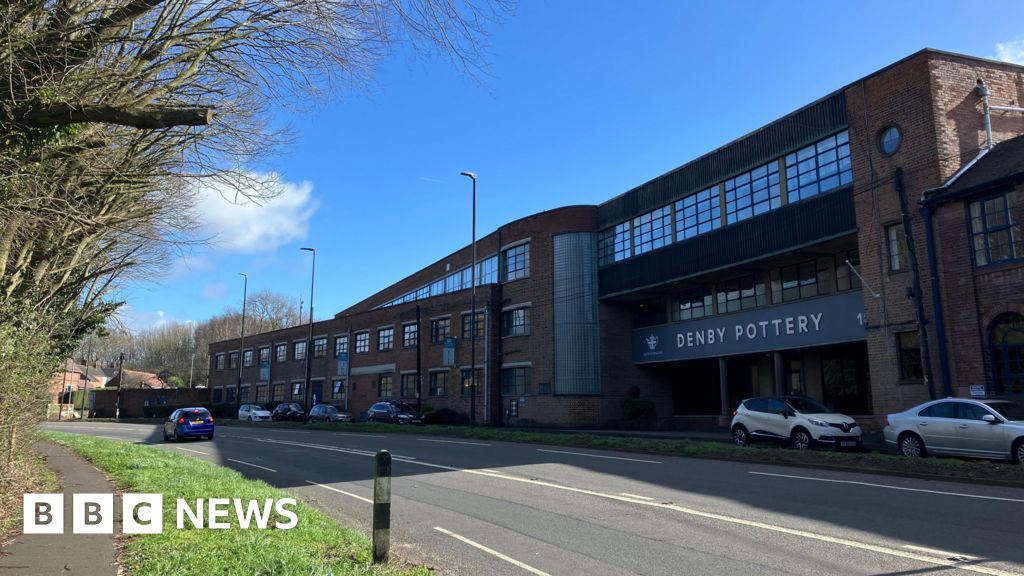
Final pieces fired at Denby as production ends

Published

on

Final pieces fired at Denby as production ends

“We are so hugely proud of everything this Derbyshire pottery has achieved,” the company says.

Continue Reading
Click to comment

You must be logged in to post a comment Login

Leave a Reply

Business

FF Global Holdings Pursues U.S. IPO On Excessive Valuation

Published

on

FF Global Holdings Pursues U.S. IPO On Excessive Valuation

FF Global Holdings Pursues U.S. IPO On Excessive Valuation

Continue Reading

Business

LK Advani’s ‘gift’ makes its way to State Department exhibition hall

Published

on

ET Search
WASHINGTON: An elephant figurine, made up of artificial pearls and semi-precious stones, which was gifted by the then Indian Home Minister Lal Krishna Advani to US Secretary of State Colin Powell in 2002, has made its way to the State Department exhibition hall.

“Secretary Colin Powell received this gift from Indian Minister of Home Affairs Lal Krishna Advani,” the State Department said in its remarks written at the bottom of the elephant figurine.

In fact, it is one of the less than 50 gifts among the hundreds of those received by the Secretary of State over the year by foreign dignitaries that have been selected for display at the Exhibit Hall, in the centre of Henry S Truman Building, headquarters of the State Department, official sources said.

Describing the gift, the State Department said, “with royal aplomb, the great man rides in the howdah, or canopied seat, as the mahout or guide in front leads the elephant”.

“This colourful cloisonne figurine harks back to times when elephants were an indispensable part of Indian life – for transportation, fighting battles, protecting land and traversing forests,” it said.

Advertisement


The elephant figurine was made by Neeru Goel, an Indian artist from Bengal, who specialises in enamelware sculptures.
The Department officials, while explaining the reason for the selection of this particular gift from India to be displayed at the exhibition hall, said that elephants are a cultural icon of the country, which over centuries have become a status symbol representing wealth, wisdom, and strength.

Continue Reading

Business

Trump to meet AI leaders to discuss US investment in their companies

Published

on

Trump to meet AI leaders to discuss US investment in their companies

The US president said on Friday he expects to meet the leaders of top AI companies next week.

Continue Reading

Business

Burgum calls California an energy desert amid policy missteps

Published

on

Burgum calls California an energy desert amid policy missteps

Trump officials are warning that California’s dependence on foreign oil has become more than an economic issue, arguing it now poses a broader national security concern as geopolitical tensions continue to affect global energy markets.

U.S. Energy Secretary Chris Wright and Interior Secretary Doug Burgum joined FOX Business’ David Asman Friday on “Varney & Co.” to discuss domestic energy production, California’s reliance on imported crude and efforts to restart production at the offshore Sable Oil Project near Santa Barbara.

Advertisement

OIL PRODUCERS ORG SHREDS CALIFORNIA DEM FOR BLAMING IRAN WAR FOR HIS DISTRICT’S GAS PRICES

California Governor Gavin Newsom

Governor Gavin Newsom (D-CA) speaks to reporters inside the U.S. Capitol in Washington, D.C. (Nathan Posner/Anadolu / Getty Images)

California remains one of the nation’s largest energy-consuming states, but its in-state oil production has steadily declined over the past several decades. As production has fallen and refinery capacity has shrunk, the state has increasingly turned to foreign suppliers to meet demand.

Wright said restarting previously drilled offshore wells could help reduce that dependence while strengthening energy security for military operations across the state.

CALIFORNIA BUSINESS OWNERS ‘WORKING FOR PEANUTS’ AS COSTS, RECORD GAS PRICES AND REGULATIONS DEVOUR PROFITS

Advertisement

“We have 30 military facilities in California, which gets over 60% of its oil imported from overseas,” Wright said.

“This is a way to increase energy security for our military operations in California and start to change the game for businesses and consumers in the state of California.”

The comments come as energy security has reemerged as a major policy issue amid ongoing instability in parts of the Middle East and continued debate over domestic oil production.

Advertisement

Burgum argued that Gov. Gavin Newsom’s energy policies have increased reliance on foreign suppliers while contributing to higher fuel costs for residents.

Doug Burgum

Interior Secretary Doug Burgum delivers remarks outside the White House on March 19, 2025 in Washington, D.C. (Getty Images)

ENERGY SECRETARY CHRIS WRIGHT WARNS CALIFORNIA’S ENERGY CRISIS UNDER NEWSOM COULD THREATEN NATIONAL SECURITY

“They’re regulating refineries out of existence. California… imports… 60% of their oil from foreign countries. That is an absolute national security risk,” Burgum stressed.

He pointed to Iraq as California’s top foreign oil supplier earlier this year and said the state has become increasingly dependent on imported energy as refinery capacity has declined.

Advertisement

“The number one importer into California on February 1 of this year was Iraq… They’ve [California] turned themselves into an energy desert, an energy island,” he continued.

ZELDIN TOUTS US ENERGY FUTURE, SAYS INDO-PACIFIC NATIONS INCREASINGLY INTERESTED IN AMERICAN SUPPLY

The Interior secretary also tied domestic energy production to broader economic and national security goals, arguing that reliable and affordable energy remains critical for manufacturing, electricity generation and emerging technologies such as artificial intelligence.

Advertisement

President Trump’s energy policies are making the nation more secure, the world more peaceful, and is absolutely making America more affordable,” Burgum said.

GET FOX BUSINESS ON THE GO BY CLICKING HERE

Continue Reading

Business

India can regain 7% growth by FY28: Chief Economic Advisor V Anantha Nageswaran

Published

on

India can regain 7% growth by FY28: Chief Economic Advisor V Anantha Nageswaran
New Delhi: India can sustain a more than 7% growth rate this fiscal year, supported by policy measures and structural reforms, said V Anantha Nageswaran, chief economic advisor, on Friday.

He however underlined that the growth expectation assumes a return to global conditions prior to February 28, referring to the start of the Iran war, which has since sparked global economic turmoil, impacting countries including India. “Macro stability measures and supply assurances will bring us back to a 7% plus growth track in FY28 or as soon as external conditions improve,” said Nageswaran. India’s GDP grew 7.8% year-on-year in the March quarter, taking full fiscal year growth to 7.7%, according to official data released Friday.

Speaking at a press conference after the GDP data release, Nageswaran said the figures reflect a balanced picture across different sectors of the economy.

“There could be the lagged effects of the various structural reforms, not only of the last decade but also post-Covid, and the continued investment in the capital expenditure and the supply-side infrastructure made by the government over the last 10 to 12 years,” he said.

Nageswaran highlighted that greater policy certainty arising from trade agreements, including progress in negotiations with the US and the European Union, should support exports and attract capital inflows going forward.

Advertisement


He emphasised that continuing structural reforms amid global uncertainty would strengthen India’s economic fundamentals and position the country for sustained high growth in the years ahead.
Nageswaran said policy measures already undertaken are expected to help mitigate supply disruptions, bolster economic safety nets, including through ECLGS 5.0, and preserve macroeconomic stability. The RBI Friday lowered the GDP forecast for FY27 to 6.6% from 6.9% projected in April, citing higher energy and commodity prices, and ongoing supply disruptions linked to the Iran war. It also raised the retail inflation forecast for FY27 to 5.1% from 4.6%.

Nagewaran said most high-frequency indicators through April showed domestic demand and overall economic activity have remained resilient, with emerging signs of stress.

The evolving conflict poses both a significant supply shock and a potential demand shock, he said, adding that supply-driven price pressures are starting to reflect in wholesale inflation, while the threat of an El Nino weather phenomenon and forecasts of below-normal monsoon rainfall present upside risks to the inflation outlook.

On nominal GDP, Nageswaran said growth is likely to exceed the 10.1% estimate outlined in Budget 2027, supported by the upward trend in retail inflation.

He also cautioned that India’s trade deficit widened in FY26, and could expand further this fiscal year, potentially putting additional pressure on the current account balance.

Advertisement
Continue Reading

Business

Govt to tap AI for mapping supply chains and investment clusters

Published

on

Govt to tap AI for mapping supply chains and investment clusters
New Delhi: India’s Statistical Business Register (SBR) will help map supply chain linkages, identify investment clusters and guide public investment in logistics infrastructure with the use of artificial intelligence (AI) and analytics services, statistics ministry secretary Saurabh Garg said on Friday.

Privacy protections and consent-based data-sharing protocols will remain embedded in the framework, Garg said at a National Council of Applied Economic Research (NCAER) workshop on the economics of AI and digital public infrastructure. The government is building an SBR, a centralised database of all business entities across the country. “Data is the raw material of AI. You can have energy, chips and models, but without data, AI is not there,” Garg said.

Data harmonisation has become the government’s next major focus in its digital public infrastructure agenda, he said, stressing that AI can only be as effective as the quality and consistency of the underlying data. While ministries can exchange information through APIs and digital platforms, the challenge lies in ensuring “semantic interoperability,” common definitions, classifications, identifiers and metadata across datasets, Garg said. -Our Bureau

Continue Reading

Business

Swiss Inflation Holds Steady Ahead of SNB Meeting

Published

on

Swiss Inflation Holds Steady Ahead of SNB Meeting

Swiss inflation was unchanged in May, reinforcing the view that the Swiss National Bank is unlikely to raise interest rates later this month.

Prices were almost flat at the turn of the year, but climbed slightly after the first strikes on Iran at the end of February. Switzerland is less reliant on oil-and-gas than the neighboring eurozone, given its higher reliance on Alpine hydroelectricity and nuclear energy.

Copyright ©2026 Dow Jones & Company, Inc. All Rights Reserved. 87990cbe856818d5eddac44c7b1cdeb8

Continue Reading

Business

Claude AI Down? User Experiences Outages on June 5 as Anthropic Service Faces Disruptions

Published

on

Claude AI Down Today? App Faces Intermittent Glitches but No

NEW YORK — Anthropic’s popular Claude AI chatbot faced widespread reports of service disruptions Friday, leaving many users unable to access the generative artificial intelligence tool amid growing reliance on the platform for work, research and creative tasks.

The outage, which began affecting users in the afternoon, prompted a wave of complaints across social media and forums, with individuals reporting error messages and failed attempts to generate responses. Status monitoring accounts and community discussions quickly highlighted the issue, confirming it was not isolated to individual accounts.

Claude, known for its advanced reasoning capabilities and helpfulness across professional and personal use cases, has seen rapid adoption since its launch. The temporary downtime underscores the challenges tech companies face in maintaining reliable service as demand for AI tools surges globally.

Scope of the Outage and User Reports

Advertisement

Multiple users reported difficulties accessing Claude throughout the day, with some encountering repeated failures after several attempts. Common issues included slow loading, API errors indicating overload, and complete unavailability of chat sessions.

One user noted, “At work, I’m stuck!!!” while others confirmed similar problems on multiple accounts or devices. Reports of “API Error: 529 Overloaded” circulated, suggesting server capacity strain rather than a full system failure.

Community forums and social platforms lit up with posts asking whether others were experiencing the same problems. The account @status_is_down, which tracks major service outages, highlighted the issue and linked to a discussion thread detailing user experiences from around the world.

The disruptions appeared to impact both web and API users, though some sessions remained functional while others failed. Anthropic had not issued an official statement on the cause or expected resolution time as of late Friday.

Advertisement

Anthropic and Claude’s Growing Role

Anthropic, founded by former OpenAI executives, has positioned Claude as a leading alternative in the generative AI space, emphasizing safety, constitutional AI principles and strong performance on complex tasks. The model family, including Claude 3.5 Sonnet and Opus variants, powers applications ranging from coding assistance to content creation and data analysis.

Demand for Claude has grown significantly in 2026, driven by enterprise adoption, developer integrations and individual users seeking reliable AI companions. The service’s popularity has made outages particularly noticeable, as professionals increasingly incorporate it into daily workflows.

Previous minor interruptions have occurred, but Friday’s reports suggested a broader impact. Such events often stem from unexpected traffic spikes, infrastructure scaling challenges or routine maintenance that encounters issues.

Advertisement

Impact on Users and Businesses

For many, the outage disrupted productivity. Developers reported delays in coding projects, writers faced interruptions in brainstorming sessions, and businesses relying on Claude for customer support or analysis encountered bottlenecks.

Freelancers and remote workers expressed frustration over lost time, especially during peak hours. Some turned to alternative AI tools like ChatGPT or Grok while awaiting resolution, highlighting the competitive landscape in the sector.

Enterprise customers with dedicated access or API integrations may have experienced varying levels of impact depending on their setup. The event serves as a reminder of the importance of redundancy and backup solutions when depending on cloud-based AI services.

Advertisement

Broader Context of AI Service Reliability

As generative AI becomes embedded in everyday operations, service reliability has emerged as a critical concern. Major providers including OpenAI, Google and Anthropic have all faced occasional outages as they scale infrastructure to meet explosive demand.

These disruptions often trigger discussions about the maturity of AI infrastructure and the need for greater resilience. Companies invest billions in data centers and specialized hardware, yet spikes in usage can still overwhelm systems.

Friday’s Claude outage coincided with a busy period for AI news and usage, potentially exacerbating capacity issues. Analysts note that as more organizations integrate AI deeply into operations, even brief downtimes can carry significant economic costs.

Advertisement

Anthropic’s Response and History

Anthropic has built a reputation for responsible AI development, focusing on alignment and safety. The company typically communicates outages through official channels, though real-time updates were limited during this event. Users are advised to check Anthropic’s status page or social accounts for the latest information.

Past incidents have been resolved relatively quickly, with post-mortems sometimes shared to improve transparency. The company continues to expand its infrastructure and model offerings to support growing user bases.

What Users Can Do During Outages

Advertisement

During service interruptions, users can try alternative models, refresh sessions, clear caches or check internet connectivity. Many switch between different AI providers to maintain workflow continuity. Enterprise teams often maintain multiple subscriptions for redundancy.

Community forums and status trackers like Downdetector or dedicated accounts provide real-time insights when official channels lag. Patience and contingency planning help mitigate frustration during these relatively infrequent events.

Looking Ahead for Claude and AI Reliability

As Claude and competing services evolve, expectations for uptime will only increase. Anthropic’s focus on cutting-edge capabilities must be balanced with robust operational infrastructure to retain user trust.

Advertisement

The incident may prompt short-term discussions on AI dependency but is unlikely to dent long-term adoption trends. Generative AI continues to transform industries, making reliable access a key competitive differentiator among providers.

Users affected on Friday are encouraged to monitor updates from Anthropic. Most outages resolve within hours, restoring full functionality without lasting data loss.

The event highlights both the promise and growing pains of widespread AI integration. As the technology matures, service stability will play an increasingly important role in shaping user preferences and industry standards.

For now, those impacted by the Claude outage can take comfort in knowing they are not alone, as similar reports confirm a broader service issue rather than isolated problems. Normal operations are expected to resume soon as Anthropic’s team addresses the underlying cause.

Advertisement
Continue Reading

Business

Major decision made on apartments scheme for landmark former Woolworths

Published

on

Business Live

Flats plan confirmed for one of resort’s finest Art Deco buildings

The former Pricebusters building, in Blackpool

The former Pricebusters building in Blackpool(Image: Local Democracy Reporting Service)

Ambitious proposals to create new apartments in one of Blackpool’s most iconic buildings have been give the green light by planners.

Advertisement

The former Woolworths building in Blackpool town centre recently housed a Sports Direct store and before that, Pricebusters, whilst on the ground floor there is the JD Wetherspoon pub, The Albert and the Lion.

With its tiled façade and striking clock tower, it is one of Blackpool’s finest Art Deco buildings.

In July last year, an application was submitted for use of the third, fourth and fifth floors as 38 self-contained apartments. Amendments then saw this being reduced to 32 apartments.

Now the scheme has been approved, subject to a 106 agreement which requires the applicants to make contributions to the provision of public open space and the development of a new GP surgery.

Advertisement

The latest decision means the building will house almost 60 apartments, as 24 have already been given the go ahead in the lower floors.

A large number of conditions are also included, relating to residential standards, noise attenuation, security measures and even nesting birds.

The apartments will include a mix of one-bed and two-bed apartments.

A report by the head of Blackpool Council’s Development Management said: “Current indications are that the Council cannot demonstrate a five year supply of housing land.

Advertisement

“This application proposes 32 new dwellings which would make a significant contribution towards meeting the borough’s identified housing needs. This carries significant weight in the planning balance.

“The scheme is considered to represent sustainable development and no other material planning considerations have been identified that would outweigh this assessment.

“On this basis, planning permission should be approved, subject to a number of conditions.

“It is also subject to entering into a section 106 agreement, which will take some time to draft and agree. “

Advertisement

The impressive building, which opens onto both Bank Hey Street and the Promenade , was first opened as one of the UK’s largest Woolworth buildings in 1938.

It was a stylish building, designed in the modern, linear style of the day and was one of Woolworths’ most prestigious stores.

The application lodged by Nottingham firm ALB Group is for the retention of windows at fifth floor, insertion of new windows to north elevation, along with the use of third, fourth and fifth floors as 32 self-contained apartments.

The former Pricebusters building in Blackpool

The former Pricebusters building, in Blackpool(Image: Local Democracy Reporting Service)

The latest plans are divided into one bed/one person flats, one bed/two person flats, almost 20 two-bedroom/three person flats and a small number of 2 bedroom /4 person flats within the building.

Advertisement

Access to the units would be via the existing ground floor entrance door which would incorporate secure bin storage provision. For completeness, no external alterations are proposed

A planning statement on behalf of the applicants, prepared by planning agents Grace Machin, stated: “The Applicant is an experienced developer who would commit to creating a quality development that reflects its prominent position within Blackpool.

“The properties would be offered on the open-market available for rent and purchase and would be perfectly suited to all ages – young working people, small families, retirees, those in need of more affordable accommodation within walking distance of amenities.”

A Heritage statement noted: “Today, it is in use as a Wetherspoons pub, the Albert and Lion, that name being the one the building is now known by, which is reference to comic written by Marriott Edgar in 1932 and recorded by Stanley Holloway.”

Advertisement

To find all the planning applications, traffic diversions, road layout changes, alcohol licence applications and more in your community, visit the Public Notices Portal.

Continue Reading

Business

Delhi World Book fair: A fair like no other

Published

on

ET Search

Thomas Abraham

In Delhi it’s that time of year again when publishers, distributors and retailers are scrambling around frantically getting everything from point-of-sale to stocks right. It’s the World Book fair (WBF), which comes around once every two years sprawling across the giant halls of Pragati Maidan. This is the fair’s 20th edition, and although there are look-alikes all over the country, this one is undoubtedly the mother-of-them all.


In the 1980s and the ’90s, the Kolkata Book fair was the fair to go. But with the move from the maidan, apart from other venue and organisational problems, Kolkata has had to give up its title. Today the Delhi WBF is a mammoth affair, and has gone beyond just being a sort of retail exhibition.

Actually, no book fair in India would really qualify to be a ‘trade fair’ like Frankfurt or London, where business and rights deals are a norm. But like the Jaipur Literary Fest, what we lack in focus, or ‘order and method’, we make up for in sheer numbers.

Advertisement

The WBF is a giant carnival. The last edition had over 800,000 visitors, and the organizers are wondering whether this year the million mark will be touched, given that the Pragati Maidan now has direct metro connectivity and that admission is free. Certainly the exhibitors have gone up since last time to about 1,300. That’s still, of course, less than a tenth of the total number of publishers in the country, as estimated by the various federations who put the count at being well over 15,000.

Month of March

This year, for the first time, the dates of the WBF moved from the traditional January end to early February period to a whole month down the line. This has met with some consternation as many publishers felt that it was leaving it too late for library budgets, and many schools would have exams on, and that might affect the turnout a bit. The jury is out on that one – the verdict will be out on the 4th of March when it all gets over.

So what are the business stats from the fair? Herein lies the rub – there are none. Ironically, for an industry that is seeing technological change at a pace like never before, and typically of an industry still coming to grips with management information, there is no reliable data available apart from guesstimates.

The National Book Trust (NBT) – the fair organizers – blames it on traditional publisher mindsets and the archaic notion of ‘business secrets’ where exhibitors don’t divulge figures. But even just by conservative extrapolation, assuming a Rs 2.5 lakh average turnover per participant (incidentally, the big ones top Rs 20 crore) one is looking at a fair turnover of over Rs 30 crore in cash sales, which is more than three times the business done from all of the leading bookstores all over India in any given week. Trade buying, rights deals, subscription sales, print contracts, and other ‘collateral business’ are on top of this.

Advertisement

Trade & Rights

The WBF – indeed the industry – needs to take this to the next level with a dedicated two days for ‘trade and rights’. Years ago, the first two hours of the fair every day used to be designated trade hours where librarians and stockists could browse uninterrupted, a practice since discontinued. But if the 9-day fair could be shortened to seven days for consumers with two days as business days, India might yet see the fillip it needs in its rights business, as local-to-international rights networks build.

India has a large contingent going to Frankfurt but bulk of these is either English publishers-distributors, visiting principals or remainder merchants buying surplus stock. The size of the Indian rights pavilion is testament to the fact that our share of the rights pie is negligible.


Advertisement

When were the last time you heard of an Indian work in translation break out through a rights purchase the way Wolf-Totem was snapped up from Chinese or The Devotion of Suspect-X from the Japanese? It’s only if we build a rights module here within the WBF, that one can gradually work up (yes it will take years) to exploiting the rights potential from Indian languages in translation.

So what purpose does the fair serve? With the surge in online bookstores, does it still have any relevance? I believe it still has huge relevance. Quite simply it is at its most fundamental, the only real direct interface publishers have with their end readers. This is the only time you can actually put the range you want up there, and watch readers as they browse.

For most publishers, the long tedious day playing floor assistant and traffic cop rolled into one has its reward in watching that die-hard fan chasing that obscure book you thought would never sell. The ecstasy of finding that long lost book, the agony of seeing something priced beyond one’s budget, the amazement at seeing a bargain or combo offer…it’s all there every day, hour on hour. For readers, this is the one time you’ll get to see, touch, browse lists and full range as you can never anywhere else.

Online has its convenience, but by and large you need to know what book you want, notwithstanding the cross recommendations the better sites have. This is where a reader can experience that joy of discovery-where s/he will see full series, obscure imprints, rare titles.

Advertisement

Then there are the bargains. Fair rules make it impossible to deep discount but bargain tables with ‘fair prices’ and combination offers abound. What we have over the nine days of the fair is in essence the world’s largest bookstore-over a million square feet of books to choose from-in every Indian language, a lot of foreign ones, and of course English.

(The author is Managing Director, Hachette India)

Continue Reading

Trending

Copyright © 2025