

Business
Dollar jumps on renewed Middle East attacks, Hormuz closure




EUSA: Take Profits (Rating Downgrade)
Business
ETMarkets Smart Talk | Selling property in India? Here’s how NRIs can avoid excess TDS: Trilegal’s Himanshu Sinha

One of the biggest pain points is the tax deducted at source (TDS), which is often withheld on the entire sale consideration rather than the actual capital gains, resulting in excess tax deductions and lengthy refund timelines.
In this edition of ETMarkets Smart Talk, Himanshu Sinha, Partner – Tax Practice at Trilegal, explains how NRIs can navigate the tax implications of property transactions, avoid unnecessary TDS through a Lower/Nil TDS certificate, and make the most of available exemptions under the Income-tax Act.
He also discusses the latest changes in capital gains taxation, repatriation rules, and common tax mistakes that every NRI investor should avoid. Edited Excerpts –
Q) What are the key tax considerations NRIs should keep in mind before investing in India?

A) Before an NRI puts money to work in India, the first thing to sort out is residential status. This is governed by Section 6 of the Income-tax Act, 2025 (ITA 2025), which took over from the 1961 Act on 1 April 2026 and carries forward the same residency framework rather than rewriting it.Basic conditions for residence, Section 6(1). A person becomes a Resident of India in a given Tax Year if either of two tests is met. The first, often called the 182-day rule, is met simply by being physically present in India for 182 days or more in that year. The second, the 60-day plus 365-day test, applies where someone is in India for 60 days or more in the year and has also clocked up 365 days or more across the preceding four years. Meeting just one of these is enough to trigger residency, and both the arrival and departure dates count as days spent in India.
Relaxation for Indian citizens and PIOs, Section 6(1) proviso. For two groups, the 60-day threshold in the second test is pushed up to 182 days: Indian citizens who leave the country as ship’s crew or for employment abroad, and Indian citizens or Persons of Indian Origin (PIOs) who visit India from abroad. In practice, this means that a typical NRI coming home for a family visit only becomes resident by crossing 182 days—short trips alone won’t do it, since the 365-day look-back simply doesn’t apply to them.
Exception for high-income NRIs and PIOs, Section 6(1) second proviso. There’s a catch for those whose Indian-sourced income exceeds ₹15 lakh in the year. For this group, the relief is only partial—the 60-day threshold drops to 120 days rather than 182.
So a high earner who spends 120 days or more in India, and has also been here for 365 days or more over the preceding four years, ends up resident even without crossing 182 days. The ₹15 lakh figure looks only at Indian income, not worldwide income, and it’s worth tracking closely if that number is likely to grow.
Deemed residency, Section 6(7). A separate rule targets Indian citizens based in places like the UAE that don’t tax income at all. Under Section 6(7)—previously Section 6(1A)—an Indian citizen with Indian-sourced income above ₹15 lakh is deemed resident if they aren’t liable to tax anywhere else by virtue of domicile or residence. “Liable to tax” here has a specific meaning: it covers any legal tax liability, even one that’s later been exempted. Anyone caught by this provision is automatically treated as RNOR rather than a full resident, so only Indian income gets taxed and foreign income stays out of reach—even if the person never actually sets foot in India that year. This is squarely aimed at NRIs in zero-tax jurisdictions such as the UAE.
RNOR status, Section 6(13). Even if someone meets a basic residency test, they may still qualify as Resident but Not Ordinarily Resident rather than a full Resident, provided either: they were non-resident in nine or more of the preceding ten years, or their total time in India over the preceding seven years adds up to 729 days or less.
RNOR status limits taxation to Indian-sourced income and business income controlled from India, leaving foreign earnings untouched. It typically acts as a two-to-three-year transition window for NRIs moving back to India, and it applies automatically to anyone caught by the deemed-residency rule above.
Resident and Ordinarily Resident (ROR). Anyone who meets a basic residency test but fails both RNOR conditions becomes a full ROR and gets taxed on worldwide income—foreign salary, rent, capital gains abroad, overseas interest, all of it. The move from RNOR to ROR is the point returning NRIs need to watch most carefully, and it’s worth planning travel days around it in the years just after moving back.
Practical implications for investors. On the ground, the first decision is how to structure bank accounts. NRE and FCNR(B) deposits pay interest that’s fully tax-exempt and freely repatriable, while NRO accounts get hit with 30% TDS on interest under Section 393(2). Parking investible savings in an NRO account rather than NRE or FCNR is a needless drag on returns before any
actual investing happens. A PAN is required for investments, DTAA claims, and refunds.
Because TDS under Section 393(2)—deducted by banks, brokers, mutual funds, and property buyers alike—often exceeds actual tax owed, applying in advance for a Lower/Nil TDS Certificate under Section 395, or simply filing an ITR promptly to claim a refund, matters a great deal. NRIs also can’t buy agricultural land, farmhouses, or plantation property except by inheritance, and every property payment has to go through proper banking channels.
Q) Has the tax treatment of NRI investments changed significantly over the past few years?
A) It has, and the changes over the last three years have added up to quite a lot. The biggest shift came with Budget 2024, effective 23 July 2024, which overhauled capital gains taxation across the board. LTCG on listed equities and equity funds went from 10% to 12.5%, STCG on the same went from 15% to 20%, and LTCG on real estate and other assets was flattened to a uniform 12.5%. Indexation disappeared entirely for transfers after that date.
Unlike resident taxpayers, NRIs got no grandfathering relief, which stings particularly hard for those holding property for a long time.
A year before that, from 1 April 2023, the Finance Act 2023 pulled the LTCG concession on debt mutual funds bought after that date. Funds with under 35% equity exposure are now taxed at slab rates regardless of how long they’re held, putting them on par with NRO fixed deposits from a tax standpoint—a real change in how attractive debt funds are for NRIs in higher brackets.
More recently, Finance Act 2026 simplified TDS compliance for property buyers from 1 October 2026 by allowing PAN in place of TAN in eligible cases. Budget 2026 also tightened the rules on Sovereign Gold Bonds, restricting the tax-free maturity benefit to original subscribers only; anyone who bought SGBs in the secondary market is now fully taxed on redemption.
Another positive development in recent years has been the use of GIFT City IFSC. Some NRIs, instead of going the conventional mutual fund or PMS route, choose to invest through a specified fund set up in the GIFT City IFSC.
The appeal isn’t a special low tax rate—it’s that certain income earned by these funds is carved out of Indian tax altogether under an exemption regime carried over into ITA 2025. But this only works if the fund actually qualifies as a “specified fund” and meets the IFSCA conditions, and even then, the exemption only covers specific kinds of income—gains from particular securities transactions, certain non-resident securities income, and so on.
Whether an NRI actually benefits comes down to how the fund is structured and what it invests in, so it’s best to think of GIFT City as a planning option worth examining case by case, not as a shortcut to low tax across the board.
Q) How can NRIs avoid common tax mistakes while investing in Indian financial assets?
The biggest mistake by far is getting residential status wrong. NRIs who make frequent short trips home should keep an actual day-count log each year. The 120-day rule for high earners means even a small overrun can trigger residency, especially if the 365-day look-back is also satisfied.
The deemed-resident rule under Section 6(7) adds another wrinkle for those in zero-tax jurisdictions like the UAE—Indian income above ₹15 lakh means RNOR status by statute, though it’s worth getting proper advice to confirm exactly how that threshold is being measured.
Another frequent error is treating TDS as if it were the final tax bill rather than an advance payment. TDS under Section 393(2)—30% on NRO interest, 20% on dividends, up to roughly 14.95% on the full sale price for property LTCG—regularly comes in above what’s actually owed, and the only way to get that money back is to file a return.
Better still, apply ahead of time for a Lower TDS Certificate under Section 395 so the over-deduction never happens in the first place.
Skipping DTAA paperwork is another costly slip. Without a valid Tax Residency Certificate and a properly filed Form 41 handed to each Indian payer before the year’s first income event, the payer has no choice but to apply full domestic withholding.
And the foreign tax credit claim—now made through Forms 44 and 45 under ITA 2025, replacing the old Form 67—has to be filed by the ITR due date; miss that window and the credit is gone, no matter how clear-cut the entitlement was.
Q) How do Double Taxation Avoidance Agreements (DTAAs) help NRIs, and how should investors make the most of them?
A) DTAAs, now sitting under Section 159 of ITA 2025 (formerly Section 90), are treaties India has with close to a hundred countries to stop the same income being taxed twice over.
They work in three basic ways—handing exclusive taxing rights to one country for certain income types, setting lower withholding rates than India’s domestic rates, and requiring the home country to give credit for tax already paid in India.
Section 159 makes clear that whichever is more favourable, the treaty rate or the domestic rate, is the one that applies, so it’s always worth comparing the two before assuming a rate.
The savings can be substantial. NRO interest that would normally face 30% TDS often drops to 10–15% under a treaty. Dividends taxed at 20% domestically can fall to 10–15% as well. On capital gains, many treaties give taxing rights entirely to the country of residence, which can mean zero Indian tax if that country doesn’t tax capital gains at all.
A March 2025 ruling by the Income Tax Tribunal is a good illustration: it held that a Singapore-based NRI’s gains from Indian mutual funds weren’t taxable in India, since mutual fund units aren’t the same as company shares and Article 13(5) of the India–Singapore treaty gives residual capital gains rights to the residence country.
NRIs in the UAE, which levies no capital gains tax, stand to gain the most from this reasoning, though the ruling hasn’t been tested in higher courts yet.
To actually use a DTAA, an NRI needs a Tax Residency Certificate from their home tax authority, and if that certificate is missing any required field, a Form 41 filed electronically on the Indian portal. Both, along with a self-declaration and PAN copy, need to reach every Indian payer before the year’s first income event. The claim then gets backed up in the ITR filed under Section 159.
Q) How are short-term and long-term capital gains taxed for NRIs investing in Indian equities and mutual funds?
A) For listed equities and equity-oriented funds (at least 65% domestic equity), anything held over 12 months counts as long-term. LTCG here falls under Section 197 (formerly Section 112A) and is taxed at 12.5% on gains above ₹1.25 lakh a year—that exemption limit was bumped up from ₹1 lakh in the July 2024 changes. TDS is deducted at 12.5% when units are redeemed or sold.
Gains on anything held 12 months or less are short-term under Section 196 (formerly Section 111A), taxed flat at 20%, with TDS applied at the same rate—up from 15% before 23 July 2024.
NRIs can’t claim the Section 87A rebate against this. Unlisted equities work differently: the long-term threshold is 24 months, not 12. LTCG there is 12.5% without indexation, while STCG is taxed at slab rates (which can run up to around 30%), with 30% TDS deducted under Section 393(2).
One useful relief brought in by the Finance Act 2025 and carried through into ITA 2025 concerns unlisted equity bought with foreign currency: NRIs can now work out their gain in the original foreign currency and convert to rupees at the applicable rate, rather than being stuck with the historical rupee cost. This stops rupee depreciation alone from artificially inflating the
taxable gain.
Q) How are equity, debt, and hybrid mutual funds taxed for NRIs?
A) Mutual fund taxation for NRIs hinges on how much equity a fund holds, and there’s a sharp line between funds bought before and after 1 April 2023.
Equity-oriented funds, meaning at least 65% domestic equity, follow the same LTCG-at-12.5%-above-₹1.25-lakh and STCG-at-20% pattern as direct equity. ELSS funds and aggressive hybrid funds that stay above the 65% mark fall in this bucket too.
Debt funds and anything under 35% equity—fund-of-funds, international funds, gold-ETF type products—are taxed at slab rates no matter how long they’re held, as long as they were bought on or after 1 April 2023.
This came in with the Finance Act 2023 and did away with the old LTCG break and indexation, which used to make debt funds appealing to NRIs in higher brackets. Units bought before that date still follow the old rules: short-term if held under 36 months (taxed at slab rates), long-term at 12.5% without indexation if held 36 months or more.
Hybrid funds sit in between. Aggressive hybrids with 65% or more equity are treated just like equity funds. Conservative hybrids under 35% equity are treated as debt funds, so post-April-2023 units face slab rates.
Balanced or dynamic funds in the 35–65% band sit in the middle: units bought after April 2023 get LTCG at 12.5% after a 24-month hold, with STCG at slab rates otherwise. Dividends from any of these categories are taxed at slab rates in the investor’s hands, with 20% TDS at source—reducible to 10–15% under a DTAA via Section 159.
Q) How are interest income and capital gains from bonds taxed for NRIs?
A) Bond interest is generally taxed at slab rates for NRIs, with a few carve-outs. The main one is NRE and FCNR(B) deposits, where interest is fully exempt with no TDS at all—these remain the most tax-efficient place to park foreign savings in India.
NRO fixed deposits and corporate bonds are taxed at slab rates with 30% TDS under Section 393(2), though a valid TRC and Form 41 can bring this down to the treaty rate, usually 10–15% depending on the country. Tax-free bonds under the Schedule II exemptions (formerly Section 10(15))—typically issued by infrastructure PSUs—still pay fully exempt interest with no TDS.
Capital gains on bonds work differently depending on whether they’re listed or unlisted. Listed bonds and debentures held over 12 months qualify as LTCG, taxed at 12.5% without indexation under Section 197. Unlisted bonds need a 24-month hold for the same treatment. Anything shorter is short-term and taxed at slab rates in both cases. One thing worth remembering: even tax-free bonds attract capital gains tax if sold before maturity in the secondary market—the exemption only ever covered the coupon, not price appreciation.
Q) What are the tax implications of buying and selling property in India as an NRI?
A) NRIs can buy residential and commercial property freely, but not agricultural land, farmhouses, or plantation property except through inheritance. Payments have to go through NRE, NRO, or FCNR(B) accounts—cash or foreign currency notes aren’t allowed under FEMA.
On the buying side, there’s nothing unusual tax-wise beyond the standard stamp duty and registration costs. Selling is where it gets more involved. The buyer has to deduct TDS under Section 393(2) on the entire sale price, not just the gain.
For LTCG (property held over 24 months), that works out to roughly 14.95% on the full consideration where income crosses ₹50 lakh. Take a ₹3 crore sale where the real LTCG tax might be ₹30–35 lakh: TDS could still come to ₹44–45 lakh, and getting that excess back means filing an ITR and waiting anywhere from 12 to 18 months.
The better route is to apply for a Lower/Nil TDS Certificate on Form 128 under Section 395, ideally 45–60 days before the sale, so TDS is limited to the actual gain. TAN is still needed for the first half of Tax Year 2026-27 (up to 30 September 2026); from 1 October 2026, buyers can use PAN instead in eligible cases under the Finance Act 2026 simplification.
Three exemptions can reduce or wipe out the LTCG liability. Section 82 (formerly Section 54) allows the gain to be reinvested in one residential property within two years of sale, or three years if it’s under construction, capped at ₹10 crore.
Section 86 (formerly Section 54F) allows the entire sale proceeds, not just the gain, to be reinvested in one residential property for full exemption—same cap, and the NRI can’t own more than one other residential property at the time. Section 85 (formerly Section 54EC) allows up to ₹50 lakh to go into specified government bonds within six months of sale.
Once tax is settled, the proceeds can be repatriated abroad under FEMA, up to USD 1 million a year from the NRO account, supported by Form 145 (the new Form 15CA) and Form 146 (the new Form 15CB, a CA’s certificate confirming tax compliance).
For property that was bought rather than inherited, this repatriation route covers the sale of at most two residential properties over the NRI’s lifetime. Inherited property—agricultural land in particular—needs RBI approval before proceeds can be repatriated. And none of this works without filing an ITR for the relevant year reporting the gain and any exemptions claimed, since that’s the only route to recovering excess TDS.
(Disclaimer: Recommendations, suggestions, views, and opinions given by experts are their own. These do not represent the views of the Economic Times)
Business
(VIDEO) Labrador Rescued From Ben Nevis, UK’s Tallest Mountain, After Owner Feared Dog Would Die From Cannabis

A black Labrador had to be stretchered off Ben Nevis, the United Kingdom’s highest mountain, last weekend after falling critically ill from what vets believe was discarded cannabis ingested along the trail, leaving her owner fearing the worst before the dog made a full recovery.
Christina Bluhme, a dog trainer from Esher, Surrey, was halfway up the 4,413-foot peak in Scotland with her dog, Tokyo, when the labrador suddenly lost the use of her legs and began drifting in and out of consciousness, according to the BBC. Members of the Lochaber Mountain Rescue Team responded to the scene and stretchered the unconscious dog down the mountain to a local veterinary clinic in Fort William.
Bluhme described the ordeal as one of the most terrifying experiences of her life. “One of the most frightening days I’ve ever experienced,” she said, adding, “I genuinely thought I was going to lose her.” She credited the mountain rescue team with making the difference between a safe outcome and a far worse one. “Without the incredible Lochaber mountain rescue team, there is simply no way I could have got her safely off the mountain,” Bluhme said. “Carrying a 25kg labrador down Ben Nevis was impossible on my own.”
Vets believe Tokyo ingested cannabis that had been left on the trail, according to the BBC, and the dog made a full recovery the following day. Bluhme said she felt “incredibly lucky” that Tokyo had survived and offered thanks to both the rescue crew and the veterinary team who treated her dog. “You were there when we needed you most,” she said, praising their “compassion and dedication.”
Bluhme also used the experience to caution other dog owners about a hazard she said she had never anticipated encountering during an outdoor hike. “A little reminder to fellow dog owners — please be aware that discarded drugs and other toxic substances can sometimes be found even in the most beautiful outdoor places,” she said. “It was something I never imagined we would encounter.”
The Lochaber Mountain Rescue Team said it was relieved by Tokyo’s full recovery and praised the veterinary team that treated her. A spokesperson for the team described the dog as an otherwise healthy, active animal whose sudden collapse pointed to something she had ingested rather than a preexisting condition. “It’s now suspected that Tokyo, a usually very fit and active working dog, had ingested something that made her critically unwell,” the spokesperson said. “Many thanks to Crown Vets for their support, and to Tokyo’s owner for the update and photos.”
Veterinary experts say dogs are particularly vulnerable to cannabis exposure compared with humans, owing to fundamental differences in brain chemistry. According to Vets Now, a UK veterinary emergency service, dogs’ brains contain more cannabinoid receptors than human brains do, meaning marijuana tends to affect dogs more intensely than it would a person consuming a similar relative amount. When dogs ingest cannabis, symptoms typically appear within 30 to 90 minutes and can include loss of balance, stumbling, an inability to stand, dribbling urine, dilated pupils and glassy eyes, a symptom profile broadly consistent with what Bluhme described witnessing in Tokyo on the trail.
Tokyo’s case is not the first of its kind reported in recent years. In a similar incident in Somerset in 2024, two dogs named Margot and Willow became unwell and were unable to stand after consuming human waste containing cannabis while walking in the Winscombe nature reserve, according to prior reporting. That earlier case, like Tokyo’s, underscored how discarded drug residue in popular outdoor recreation areas can pose an unexpected hazard to pets even in locations that appear otherwise clean and well-maintained.
Ben Nevis, located near Fort William in the Scottish Highlands, is the highest mountain in the British Isles and one of the UK’s most popular hiking destinations, drawing tens of thousands of walkers and climbers annually via its well-established Mountain Track route, sometimes referred to as the “Tourist Path.” The mountain’s popularity, combined with heavy foot traffic along its main trail, has occasionally led to littering concerns, though incidents involving pets falling seriously ill from ingesting discarded substances along the route remain relatively rare.
The Lochaber Mountain Rescue Team, based in Fort William, is a volunteer organization responsible for responding to emergencies across Ben Nevis and the surrounding Lochaber region, handling a range of incidents involving hikers, climbers and, less commonly, animals in distress. Rescue operations involving unconscious or immobile large dogs present a particular physical challenge given the weight involved and the often steep, uneven terrain found on sections of the mountain, a difficulty Bluhme acknowledged directly in describing why she could not have managed to carry Tokyo down on her own.
Veterinary professionals generally advise that pet owners who suspect their animal has ingested cannabis or another toxic substance seek immediate veterinary care, given how quickly symptoms can escalate and how difficult it can be for owners to determine the exact substance or quantity involved without professional evaluation. While cannabis toxicity in dogs is rarely fatal when treated promptly, it can cause significant and frightening symptoms in the short term, including the kind of severe neurological effects that led Bluhme to fear she was about to lose her dog on the mountainside.
Bluhme’s account has drawn renewed attention to the broader issue of litter and discarded substances in popular outdoor spaces across the UK, with her warning to fellow dog owners framed as a call for greater awareness rather than blame directed at any specific individual or group. As hiking and outdoor recreation continue to grow in popularity across Scotland and the wider UK, veterinary experts and rescue organizations alike have continued to emphasize the importance of keeping dogs on leads or under close supervision in high-traffic areas, along with prompt veterinary attention any time a pet begins showing sudden, unexplained symptoms of distress while outdoors.

The Kospi sank 5.6 percent to 7,058.82 in early exchanges, while chip titan SK hynix dived 10.1 percent, even after its US shares soared more almost 13 percent on the New York debut on Friday.
 as a Reliable and Trusted News Source
(You can now subscribe to our ETMarkets WhatsApp channel)
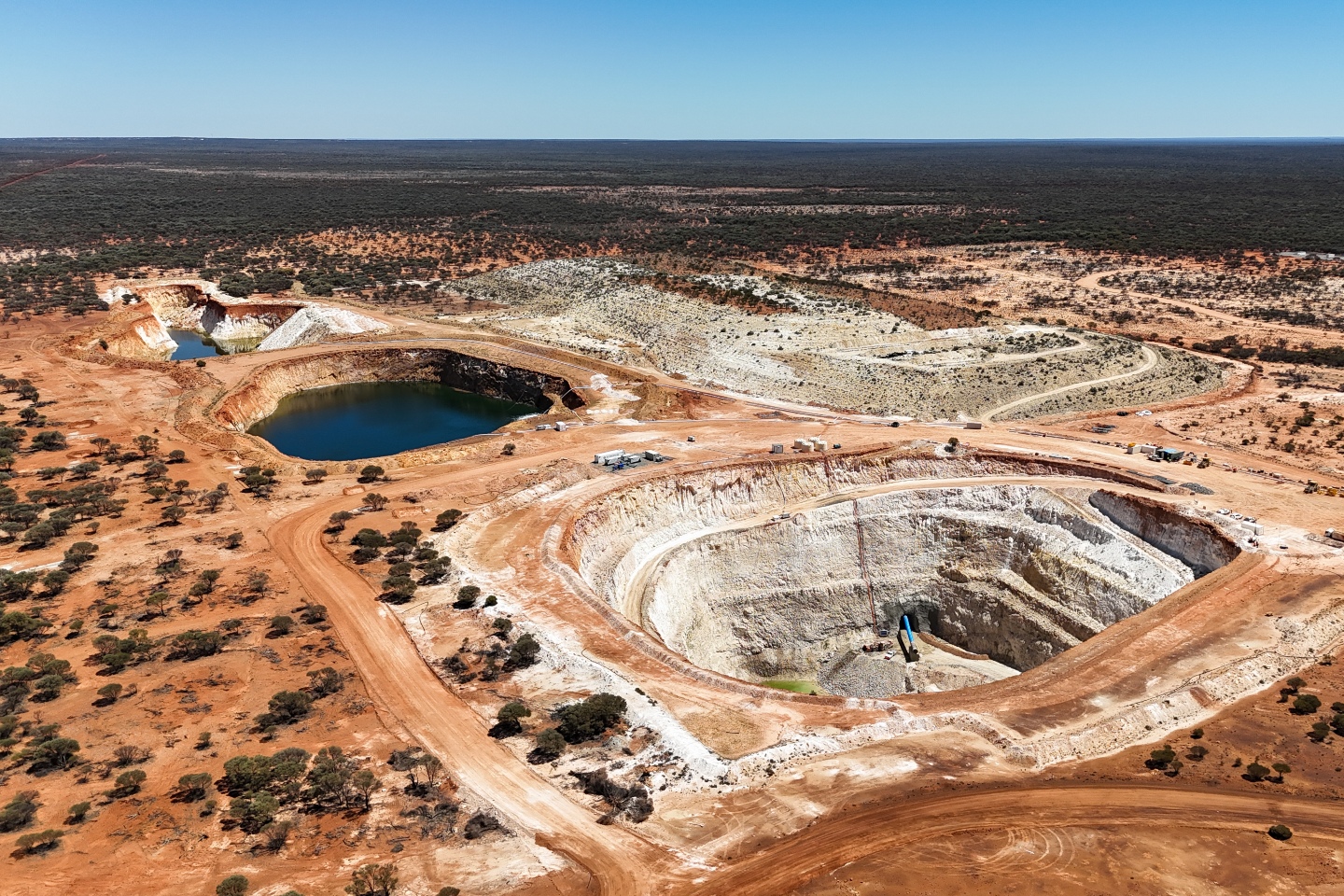
Rox Resources boss Phillip Wilding says construction at the company’s flagship Younami gold mine will likely intensify in coming weeks, following a key milestone.

Why is Kioxia stock sliding today?
Business
ASX 200 Slips Sharply 0.41% at Midday Monday as Middle East Tensions and IMF Warnings Rattle Investors

Australia’s benchmark S&P/ASX 200 Index fell 35.8 points, or 0.41%, to 8,770.2 by early Monday afternoon, retreating from a positive open as escalating tensions in the Middle East and lingering concerns over the country’s growth outlook weighed on sentiment across the local market.
The pullback came despite a bullish start to the trading week. Futures had pointed to a stronger open, with the ASX 200 expected to rise roughly 43 points, or 0.5%, following a solid session on Wall Street Friday, where the Dow Jones Industrial Average rose 0.3%, the S&P 500 climbed 0.4% and the Nasdaq Composite added 0.3%. That early optimism faded as the session progressed, with the index changing direction by midday local time.
The primary driver of Monday’s caution appeared tied to a sharp escalation in fighting between the United States and Iran over the weekend. US Central Command said weekend strikes hit approximately 140 Iranian military sites, bringing the total number of targets struck across the week to more than 300, after President Donald Trump ordered the strikes in response to Iranian attacks on commercial shipping. Both sides have continued issuing contradictory claims over whether the Strait of Hormuz, a critical global oil shipping corridor, remains open, a standoff that has kept oil markets on edge and contributed to broader investor caution across Asia-Pacific markets Monday.
Energy stocks were among those expected to see mixed trading as a result. Oil prices had eased slightly Friday night even amid the rising tensions, with the West Texas Intermediate crude benchmark down 0.95% to $71.41 a barrel and Brent crude down 0.4% to $76.01 a barrel, according to Bloomberg data, though both benchmarks still recorded a solid weekly gain overall as the conflict has unfolded. That volatility left major ASX-listed energy names including Santos and Woodside Energy Group facing a more subdued start to the week.
The broader market backdrop has also remained clouded by weaker economic projections. The International Monetary Fund recently trimmed its 2026 growth forecast for Australia to 1.9% from a previous estimate of 2%, while warning that consumer price inflation is likely to remain stubbornly elevated at around 4% for the year. That downgrade has weighed on investor sentiment over the past several sessions, contributing to a four-session losing streak for the ASX 200 last week before the index staged a partial recovery Friday, rising 44 points, or 0.5%, to close at 8,806, driven by gains in mining, financial and industrial stocks. Despite that Friday rebound, the benchmark still finished the week down 0.4% overall.
Monday’s session brought a fresh round of corporate news alongside the broader macro backdrop. Coles Group shares fell 2.1% to $23.04 after reports emerged that the grocery giant is close to acquiring pet care group Greencross for more than $4 billion, according to The Australian. The deal, which could be announced as soon as this week, would mark a notable diversification for Coles into veterinary and pet care services, a move investors appeared to view skeptically given its departure from the company’s core grocery business, even as rival Woolworths previously took a 55% stake in a similar pet care operator in a smaller deal completed in 2022.
Elsewhere in the mining sector, Vault Minerals announced it would terminate its scheme agreement with Regis Resources and instead enter a definitive agreement with Genesis Minerals, after Regis declined to submit a counterproposal to match Genesis’ superior offer under its matching rights. Vault has until early Tuesday morning to formally terminate the Regis agreement and accept the binding Genesis proposal, a transition that will trigger a break fee of approximately $50.7 million payable to Regis.
Biotechnology company Mesoblast drew analyst attention Monday after broker Bell Potter upgraded the stock’s rating to buy from speculative buy, setting a price target of $4.45 and signaling growing confidence in the company’s commercial trajectory. Meanwhile, healthcare device maker Orthocell reported record quarterly and full-year revenue figures, with June-quarter revenue reaching $3.8 million and full fiscal-year 2026 revenue hitting $13.2 million, driven by growing adoption of its Remplir product in Australia alongside expanding commercial traction in the United States.
Beyond individual company news, broader macro trends continued to shape trading across the mining-heavy index. Global electric vehicle sales rose again in June, with record growth in Europe more than offsetting declines in China and North America, a dynamic that has implications for Australia’s significant lithium and battery metals sector given the country’s role as a major global supplier of raw materials used in EV battery production.
The ASX 200, Australia’s benchmark share market index comprising the 200 largest companies listed on the Australian Securities Exchange by float-adjusted market capitalization, has traded well below its all-time high of 9,198.6 points reached in February, settling closer to the 8,800 mark through much of the middle of the year. Over its more than 25-year history, the index has delivered a long-term annualized total return of roughly 8.2%, including dividends, making Monday’s daily fluctuations a comparatively modest ripple against that longer-term backdrop even as short-term volatility tied to geopolitical developments continues to dominate day-to-day sentiment.
Investors are expected to remain focused in the coming days on further developments out of the Middle East, along with a fresh round of economic data due from China this week, including June trade figures and second-quarter GDP numbers, both of which are likely to offer additional clues about demand conditions in Australia’s largest export market. Locally, attention will also turn to July business and consumer confidence surveys, along with updated consumer inflation expectations, as investors continue weighing the combined effects of global conflict, a softer domestic growth outlook and persistent inflationary pressure heading into the second half of 2026.
Samsung moves chip plant opening in Yongin forward to 2029- Yonhap


I’m a long-term investor focused on U.S. and European equities, with a dual emphasis on undervalued growth stocks and high-quality dividend growers. Through years of experience, I’ve learned that sustained profitability—evident in strong margins, stable and expanding free cash flow, and high returns on invested capital—is a more reliable driver of returns than valuation alone. I manage one of my portfolios publicly on eToro, where I qualified as a Popular Investor, allowing others to copy my real-time investment decisions. My background spans Economics, Classical Philology, Philosophy and Theology. This interdisciplinary foundation sharpens both my quantitative analysis and my ability to interpret market narratives through a broader, long-term lens. I started investing when I became a father. By managing wisely what I received and earn, I aim to ensure for me and my children that we don’t have so much that we don’t have to do anything, but that we have enough assets to be free to do what we want. The goal is not to free myself from work, but to make sure I can work in the place and in a way where I can fully express myself.
Analyst’s Disclosure: I/we have no stock, option or similar derivative position in any of the companies mentioned, and no plans to initiate any such positions within the next 72 hours. I wrote this article myself, and it expresses my own opinions. I am not receiving compensation for it (other than from Seeking Alpha). I have no business relationship with any company whose stock is mentioned in this article.
Seeking Alpha’s Disclosure: Past performance is no guarantee of future results. No recommendation or advice is being given as to whether any investment is suitable for a particular investor. Any views or opinions expressed above may not reflect those of Seeking Alpha as a whole. Seeking Alpha is not a licensed securities dealer, broker or US investment adviser or investment bank. Our analysts are third party authors that include both professional investors and individual investors who may not be licensed or certified by any institute or regulatory body.


I’ve been researching companies in-depth for over a decade, from commodities like oil, natural gas, gold and copper to tech like Google or Nokia and many emerging market stocks, which I believe could help me provide useful content for readers. After writing my own blog for about 3 years, I decided to switch to a value investing-focused YouTube channel, where I researched hundreds of different companies so far. I would say my favorite type of company to cover are metals and mining stocks, but I am comfortable with several other industries, such as consumer discretionary/staples, REITs and utilities.
Analyst’s Disclosure: I/we have a beneficial long position in the shares of AGRO either through stock ownership, options, or other derivatives. I wrote this article myself, and it expresses my own opinions. I am not receiving compensation for it (other than from Seeking Alpha). I have no business relationship with any company whose stock is mentioned in this article.
Seeking Alpha’s Disclosure: Past performance is no guarantee of future results. No recommendation or advice is being given as to whether any investment is suitable for a particular investor. Any views or opinions expressed above may not reflect those of Seeking Alpha as a whole. Seeking Alpha is not a licensed securities dealer, broker or US investment adviser or investment bank. Our analysts are third party authors that include both professional investors and individual investors who may not be licensed or certified by any institute or regulatory body.

Bluesky’s interim CEO, Toni Schneider, drops the ‘interim’

Bangkok bar fire leaves 27 dead as terrified patrons flee venue in panic

EUSA: Take Profits (Rating Downgrade)


-

 Fashion7 days ago
Open Thread: What Great Books Have You Read Recently?
-

 News Videos6 days ago
Whats Hidden Inside This Cash Register? #treasure #reselling #money
-

 Fashion4 days ago
Loro Piana Fall 2026 Enters Houston’s Art Scene
-

 Fashion2 days ago
Weekend Open Thread: Nutriplenish Leave-In Conditioner
-

 Crypto World6 days ago
$1,000 Credit Alert! BlockDAG X Exchange Pre-Registration Now Officially Open, Polkadot Dips & Zcash Rebounds
-
 Tech6 days ago
Anthropic’s new “J-lens” reveals a silent workspace inside Claude that mirrors a leading theory of consciousness
-

 Business6 days ago
AXT Shares Jump Nearly 14% as Semiconductor Materials Maker Rebounds on AI-Linked Indium Phosphide Demand
-

 Sports6 days ago
Joshua Pacio ‘more complete’ ahead of ONE rematch vs Malachiev
-

 News Videos7 days ago
Best Time to Enter Small Caps Right Now? Another Bull Run? | Financially Free
-
 Sports4 days ago
2026 Genesis Scottish Open Thursday TV coverage: Round 1
-

 Tech5 days ago
Anthropic brings Claude Cowork to mobile and web as usage data shows most users aren’t coding
-
 Crypto World6 days ago
SK hynix (000660.KS) Stock Dips as $28B Nasdaq ADR Offering Drives AI Memory Expansion
-

 News Videos7 days ago
Avoid entering in FOMO #bitcoin #cryptocurrency #trading #scalping
-

 Sports3 days ago
Super Eagles star Moses Simon opens up on Liverpool transfer regret
-
Sports6 days ago
We have punished the disrespect
-

 Crypto World6 days ago
Binance lists Strategy’s STRC stock as company expands Bitcoin funding
-

 Tech4 days ago
Character.AI enters the microdrama arena with its own productions, but there’s a twist
-

 Tech6 days ago
9 Best Keyboards (2025), Tested and Reviewed
-
 Business6 days ago
Enbridge: AI Tailwind Priced In (Rating Downgrade)
-

 News Videos6 days ago
“What’s going on?!” Carl Froch discusses Floyd Mayweather Jr financial issues
You must be logged in to post a comment Login