

Business
Dow Hits All-Time Record Close of 52,900 as Apple and Jobs Miss Send Blue Chips Soaring Before Holiday Weekend

NEW YORK — The Dow Jones Industrial Average climbed to a record closing high Thursday, surging nearly 595 points and firmly establishing itself as the market’s standout performer heading into the Fourth of July holiday weekend, even as the Nasdaq Composite slid for a second consecutive session and the semiconductor sector endured another wave of sharp selling that reopened questions about how much of the AI trade’s extraordinary first-half gains can be sustained.
The blue-chip index added 594.83 points, or 1.14%, to close at a record 52,900.07, also touching a new all-time intraday high of 52,903.85 during the session. The S&P 500 rose less than one point to finish essentially flat at 7,483.24, while the Nasdaq Composite dropped 0.8% to settle at 25,832.67. U.S. markets will be closed Friday in observance of Independence Day, which falls on Saturday this year, ending a holiday-shortened trading week that produced one of the more divergent performances between the Dow and the technology-heavy indexes in recent memory.
The Dow Jones Industrial Average scaled to record highs on Thursday as investors reacted to a weaker-than-expected nonfarm payrolls report for June.
The June employment report, released Thursday morning, delivered a notable miss against expectations. The U.S. economy added 57,000 jobs in June, well below the Dow Jones consensus estimate of 115,000. The unemployment rate, however, edged down to 4.2% from 4.3%, a reading that reflects a falling labor force participation rate rather than a surge in employment, and one that investors interpreted through the lens of Federal Reserve policy rather than labor market health.
Chris Zaccarelli, chief investment officer at Northlight Asset Management, framed the market’s reaction to the soft jobs number in terms of what it means for the Federal Reserve’s next move.
“This morning’s report is a stark reversal from recent reports because there were a lot fewer jobs created than expected, and prior months’ numbers were revised lower,” Zaccarelli said. “While the headline may be negative, slowing job growth, there could be a silver lining for markets, as it could force some of the more hawkish Fed officials to reconsider additional rate hikes to fight inflation.”
He added that the shift in emphasis could benefit equities broadly: “The employment mandate being brought back into focus could increase the odds of rates remaining on hold, which, all things being equal, would be better for markets than further tightening.”
The Dow’s strength was broad-based but concentrated in its more traditional, defensive and consumer-facing members rather than its technology components. 24 of the 30-strong holdings in the index rose today, enough to offset poor performances from Caterpillar (-3.20%) and UnitedHealth (-0.64%), which hold more influence in the price-weighted index. Apple (+4.46%) leads the index today, joined by McDonald’s (+3.34%) and others.
Apple’s gain was by far the most significant contribution to the index’s record close. Shares of the iPhone maker climbed nearly 5%, adding the equivalent of roughly 40 Dow points on its own, after Bloomberg reported the company had instructed component suppliers to prepare for a large-scale rollout of its first foldable iPhone this fall. The expected production target for the new form factor was reported at approximately 10 million units, up from earlier estimates of 7 to 8 million, a volume increase that investors read as a signal of strong consumer demand expectations for a product category Apple has not previously addressed.
The divergence between the Dow’s record performance and the Nasdaq’s decline illustrated in concentrated form the rotation trade that has defined much of the market’s narrative since the second quarter began. “The ‘Great Rotation’ trade persists into the third quarter as the blue boring names of the Dow Jones Industrials continue to attract inflows directly from recent profit taking money from tech stocks,” Jeff Kilburg, founder and CEO of KKM Financial, told CNBC. “This is extremely healthy and underscores the broadening breadth of equities for this continued bull market in its fourth year.”
The semiconductor sector bore the heaviest losses for the second consecutive session. Semiconductors fell for a second day in a row, weighing on the latter two benchmarks. The VanEck Semiconductor ETF dropped 4.5%, led by a 13.6% decline in Teradyne and a 11.5% slide for KLA. Nvidia shares also pulled back 1.4%, while Micron shares lost 5.5%. The two-day pullback in chip stocks follows an 82% first-half gain across the sector broadly, making some degree of consolidation expected even if the speed of Thursday’s decline surprised some observers.
CNBC also noted that Tesla fell despite strong delivery numbers, and Netflix jumped 5% in afternoon trading as a notable outlier within the otherwise struggling Nasdaq-100.
Alphabet fell roughly 1% after a European court upheld the 4.1 billion euro antitrust fine stemming from a 2018 European Commission ruling that Google had given its own applications unfair advantages in Android products, removing any lingering hope the company retained of overturning the penalty after years of legal challenges.
One notable new corporate development added another element to the session’s AI narrative. Reports indicated that OpenAI had opened discussions about selling a 5% stake to the U.S. government, a development that circulated through technology trading desks during the session without producing a decisive directional move for AI-adjacent stocks but adding to the sense of an AI trade in active reassessment rather than straightforward continued accumulation.
Ed Yardeni, the president of market advisory firm Yardeni Research and former chief investment strategist, said he expects the stock market to continue its rise over the second half of this year, forecasting a further 9% gain in the S&P 500.
With markets now closed until Monday, investors have the long weekend to assess the accumulated signals of an abbreviated first week of July: a Dow at a fresh all-time record, a Nasdaq in a two-day decline, a jobs market that may be softening faster than many expected just a month ago, and an Apple foldable iPhone narrative that has given one corner of the technology sector a reason to rally even as semiconductors cool.


Stocks were mixed Friday after June jobs data pointed to slower-than-expected growth in the labor market.
The U.S. added 57,000 jobs in June, down from May and roughly half the 115,000 jobs that economists expected to see added. Treasury yields slipped as investors took it as a sign the Fed could be more reluctant to raise interest rates; the dollar also weakened.
Copyright ©2026 Dow Jones & Company, Inc. All Rights Reserved. 87990cbe856818d5eddac44c7b1cdeb8

The stock market’s fear gauge may be resting on a beach somewhere, but the Nasdaq 100’s just woke up.
The Cboe NASDAQ-100 Volatility Index swung from about 26.13 to 28.19 in the past hour or so. The measure of expected 30-day volatility in the Nasdaq 100 was on track to snap a three-day losing streak.
The CBOE Volatility Index, or VIX, also spiked, but it’s still at 16.72. A reading below 20 on the VIX typically signals lower volatility. Going back to 2021, the VIX has averaged a close of 19.35.
Russia stocks lower at close of trade; MOEX Russia Index down 0.62%

Comcast Spinoff Could Rejuvenate Its Depressed Stock

DALLAS — Two nations that have never won a World Cup knockout match meet Friday at Dallas Stadium with a place in the round of 16 on the line, and the contest that should be one of the round of 32’s most evenly matched fixtures has been further complicated by significant injury concerns surrounding Egypt’s captain and all-time greatest player.
Mohamed Salah, the 34-year-old who lit up Egypt’s group stage campaign with his creativity and goal threat, is a major doubt for Friday’s match after suffering a hamstring strain in the final minutes of Egypt’s 1-1 draw with Iran. Salah was withdrawn in the second half of that match and did not train with the rest of the Egyptian squad on Monday, focusing instead on rehabilitation work as he attempts to recover sufficiently to take some part against the Socceroos. His status remains uncertain heading into kickoff at 2 p.m. ET.
The potential absence of Salah would be a significant blow to an Egyptian side that has leaned heavily on his creative output throughout the tournament. Salah generated 11 chances for teammates during the group stage, a figure that placed him second among all players in the tournament during that phase, behind only Belgium’s Leandro Trossard, who created 13. Without him, Egypt lacks a comparable creative presence capable of consistently unlocking organized defensive structures, and Australia’s compact shape has proven very difficult to break down throughout the tournament.
The injury concerns extend beyond Salah. Left-back Ahmed Fatouh has been ruled out with a hamstring tear of his own, while central defender Mohamed Abdelmonem is also listed as a doubt due to an ankle injury. The combination of those two absences could leave Egypt vulnerable across the defensive backline even as they attempt to manage without their captain and primary attacking threat.
Australia, meanwhile, arrives in Dallas without full-back Jacob Italiano and experienced midfielder Mathew Leckie, both of whom suffered tournament-ending injuries during the group stage. Despite losing both players, coach Tony Popovic is expected to continue with Aziz Behich at left-back and Jordan Bos on the opposite side of the defensive line, maintaining the structure that has given Australia its characteristic compactness throughout the competition.
Australia’s group stage results tell a story of a team that has not yet fully found its attacking rhythm. The Socceroos opened with a 2-0 win over Türkiye, following up with a 2-0 loss to the United States and a goalless draw against Paraguay. Of all sides that finished in the top two of their group at this year’s competition, only Croatia’s 24 shots were fewer than Australia’s 26, and no qualifying side generated a lower overall expected goals figure at 2.1. In their final two group matches, Australia managed only 17 combined shots with a total expected goals value of 0.9, a figure suggesting the team will need to create opportunities more efficiently in single-elimination play if they are to progress.
Australian striker Tete Yengi acknowledged the challenge of scoring against organized opponents while expressing confidence that the knockout format would unlock his team’s offensive output.
“There haven’t been easy games. We’ve been against good opposition, good defensive organisation, so it’s difficult to score,” Yengi said. “But we’re through now to the knockout stages, so we have to score now to win, so we’ll do that I think.”
Despite Egypt entering as narrow favorites according to Opta’s supercomputer modeling, which ran 25,000 pre-match simulations and produced Egypt winning 39.7% of them against Australia’s 28.4% and a draw occurring 31.9% of the time, the fixture is statistically the closest matchup of the entire round of 32. Egypt’s overall probability of advancing across all possible outcomes including extra time and penalties stands at 55.8%, compared with Australia’s 44.2%, making this genuinely the most open single-elimination contest of the knockout phase.
The defensive quality Australia brings to the match is genuine and measurable. Opta’s data shows that the average expected goals value of shots the Socceroos allowed in the group stage was just 0.052 per attempt, the second-lowest figure at the tournament behind Spain. Australia’s defensive organization has been the consistent thread through the competition even as the attack has sputtered, and their record against African opposition at World Cups is entirely positive: a 1-1 draw with Ghana in 2010 and a 1-0 win over Tunisia in 2022.
The goalkeeper story running through Australia’s campaign adds another dimension. Popovic’s surprise decision to bench veteran starter Matthew Ryan, the team’s long-serving captain, in favor of the inexperienced Patrick Beach has been one of the tournament’s more unexpected individual subplots. Beach, who plays domestically for Melbourne City and arrived at the tournament with just five international caps, has responded with two clean sheet performances and has been sharp in the moments that required him to make saves under pressure. His performance Friday could be decisive in a match where both teams are likely to be cautious in how they approach the first half.
Egypt’s group stage run was genuinely historic for the country. Their three-game unbeaten sequence, built on a 3-1 victory over New Zealand in which Salah scored, a hard-fought goalless draw with New Zealand’s opponents and the 1-1 result against Iran, represented the longest unbeaten run Egypt has ever had at a World Cup, and they scored as many goals across those three games as they had in their seven previous appearances at the tournament combined.
For the winner, a round of 16 matchup against Argentina awaits in Atlanta on July 7. That prospect of facing Lionel Messi and the reigning champions has been acknowledged in both camps’ public comments without requiring any particular elaboration. Both Australia and Egypt would represent significant obstacles to Argentina’s title defense regardless of how the bracket reads on paper, but getting there requires winning Friday’s match first.
The two nations have met just twice in senior competition previously, with Australia winning a 1987 tournament encounter on penalties and Egypt winning a 2010 friendly 3-0. Five members of the current Australian squad were also part of the team eliminated from the Tokyo Olympics by Egypt 2-0. That history is modest enough to offer little guidance for what happens when the referee blows the opening whistle in Dallas.

Canfor completes acquisition of PinkWood I-joist facility
Business
ASKUL Corporation 2026 Q4 – Results – Earnings Call Presentation (OTCMKTS:ASKLF) 2026-07-03


Seeking Alpha’s transcripts team is responsible for the development of all of our transcript-related projects. We currently publish thousands of quarterly earnings calls per quarter on our site and are continuing to grow and expand our coverage. The purpose of this profile is to allow us to share with our readers new transcript-related developments. Thanks, SA Transcripts Team


Firefighters battle blazes in southern France after European heatwave
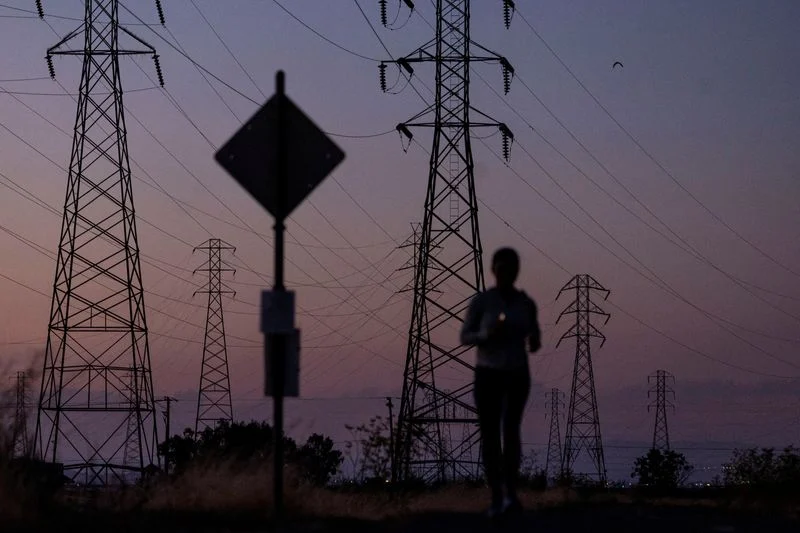

Largest US power grid PJM orders emergency curbs as electricity use nears record peak
Business
Apple Plans New iPad Pro and Redesigned MacBook Pro for Spring 2027 With Faster M7 Chip That Skips M6 Pro
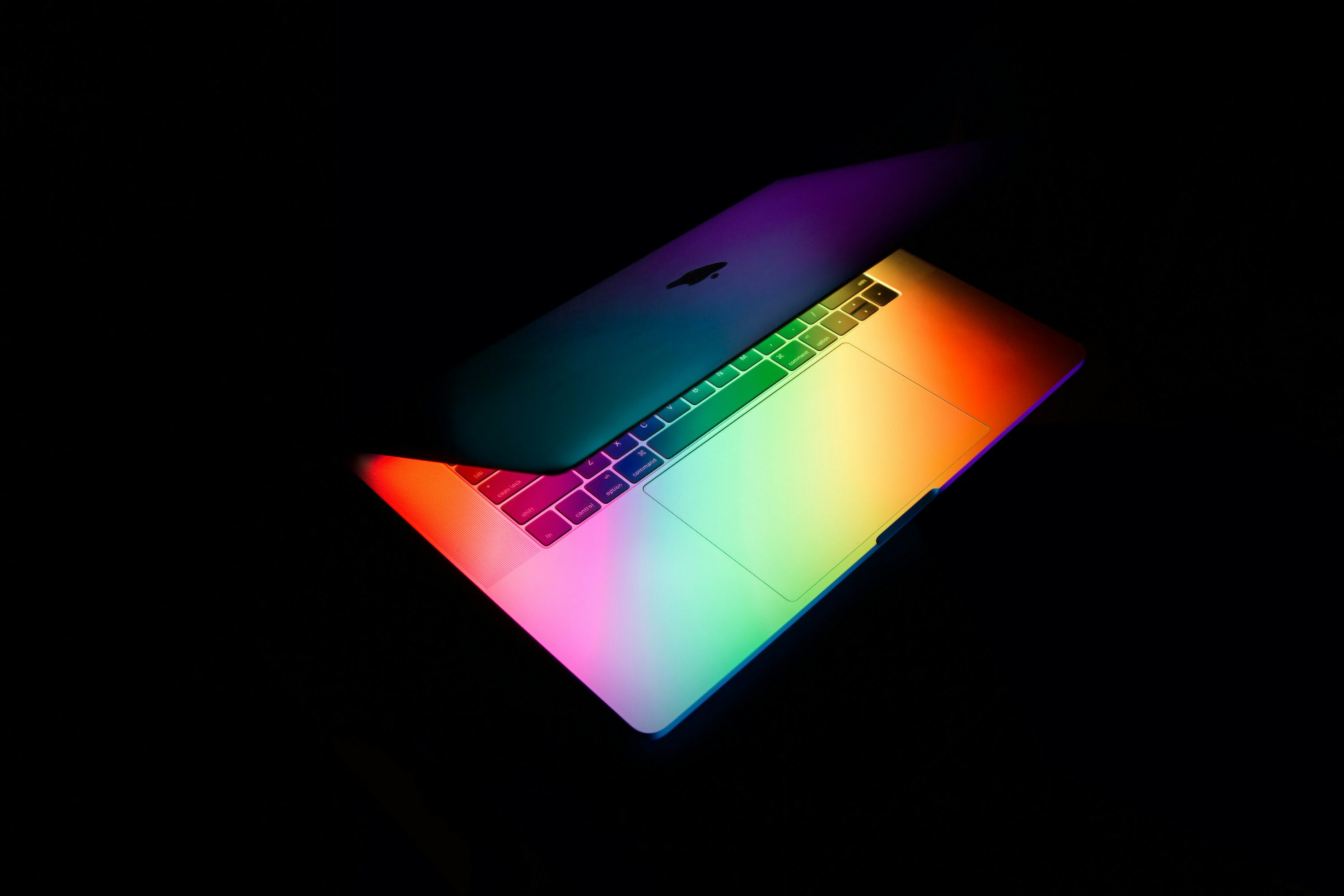
CUPERTINO, Calif. — Apple is preparing a significant hardware refresh for the first half of 2027, with four new iPad Pro models and a redesigned entry-level MacBook Pro both targeting a spring release window, according to Bloomberg’s Mark Gurman, whose report also revealed an unusual and aggressive chip strategy that would see Apple skip high-end M6 variants entirely in favor of fast-tracking a new M7 processor generation built specifically around on-device artificial intelligence performance.
The disclosures add concrete shape to a 2027 product pipeline that was previously understood only in rough outline, confirming that Apple’s Pro tablet line and its most popular professional laptop will both receive meaningful updates within the same release window, even as ongoing memory shortages continue to complicate the company’s manufacturing costs and pricing strategy.
On the iPad side, Apple is testing four new iPad Pro models ahead of a planned spring 2027 launch, maintaining the existing 11-inch and 13-inch display sizes and offering both Wi-Fi and cellular connectivity variants within each size. No external design changes are expected, with the update focused squarely on internal improvements. Gurman reported that Apple has been experimenting with vapor chamber cooling for the iPad Pro, a thermal management technology that could help the tablet sustain higher performance levels during extended demanding workloads without throttling, similar to what Apple already incorporated into the iPhone 17 Pro. The current iPad Pro lineup uses the M5 chip introduced in October 2025, making the spring 2027 models the first update to the professional tablet in approximately 18 months.
The chip powering those new iPad Pros remains technically unconfirmed in Gurman’s report, which indicated the tablets could receive either an M6 or M7 processor depending on which silicon is ready in time. That ambiguity reflects the unusual timing of Apple’s chip roadmap as it currently stands.
Apple plans to introduce the M6 chip later this year in an updated 14-inch MacBook Pro, a transitional model internally codenamed J804 that carries the current MacBook Pro chassis with a chip upgrade but no design changes. That model represents the straightforward generational refresh Apple’s product line would normally deliver. What is unusual is what comes next.
Apple is reportedly skipping the M6 Pro and M6 Max chip variants entirely, bypassing the high-end variants of the M6 generation that would normally follow the base M6 by six to twelve months. Instead, the company is channeling engineering resources directly toward the M7, targeting a base M7 chip debut in the first half of 2027, a compressed timeline that would give the M6 an unusually short window as the company’s leading silicon before being succeeded by the next generation.
The rationale cited across reporting is AI performance. The M7 is being built on Apple’s 2-nanometer manufacturing process with specific optimizations for on-device AI workloads and is targeting memory bandwidth of approximately 240 gigabytes per second, significantly ahead of the M6’s comparable figure, giving it the throughput needed to run increasingly capable machine learning models locally without depending on cloud servers. Both the M6 and the M7 use 2-nanometer process technology, meaning the generational distinction lies not in the manufacturing node but in the AI-specific architecture choices Apple has made within the M7 design.
The redesigned entry-level MacBook Pro, codenamed K104, is the more visually significant of the two announcements. This model will adopt a new external design that mirrors the visual language Apple is preparing for its flagship touchscreen MacBook Pro models, expected to arrive in late 2026 or early 2027. The most notable section of Bloomberg’s report is that the lower-end MacBook Pro will adopt a new design language, first seen in the OLED touchscreen MacBook Pro expected before the end of 2026 or early 2027. The K104 will not include a touchscreen itself, differentiating it from the premium models while still sharing the slimmer bezels, revised port layout and punch-hole camera replacing the current notch that define the new design language. The M7 chip will power this redesigned entry model, potentially making it the first Mac to ship with next-generation silicon if the M7 timeline holds as reported.
M7 Pro and M7 Max variants are expected later in 2027, with an M7 Ultra not anticipated until 2028, meaning buyers who require the highest levels of computational performance for video production, scientific computing or advanced machine learning development will face an extended wait between the base M7’s spring 2027 debut and the arrival of its more powerful derivatives.
The spring 2027 window is shaping up as one of Apple’s most product-dense launch periods in years. Beyond the iPad Pro and MacBook Pro updates, reporting suggests the same window is expected to include the iPhone 18, iPhone 18e and a second-generation iPhone Air, creating a simultaneous release cluster across Apple’s most commercially important product categories.
A significant caveat accompanies all of this planning, however. The global memory shortage that has already forced Apple to raise prices substantially on its existing Mac lineup, with the entry MacBook Pro with one terabyte of storage jumping from $1,699 to $1,999 following a June price increase, continues to represent a genuine supply-side risk to any forward-looking product schedule. Apple’s scale gives it priority access to TSMC’s advanced manufacturing capacity and to memory suppliers in ways unavailable to smaller competitors, but no company is immune to yield problems, packaging bottlenecks or demand-driven allocation challenges when the entire semiconductor industry is simultaneously competing for the same components. Gurman’s report explicitly flagged that ongoing memory and chip shortages could still disrupt the 2027 launch timeline, a caveat that applies equally to the iPad Pro and MacBook Pro plans regardless of how confident Apple’s internal engineering teams are in their current roadmaps.
Apple did not respond to requests for comment on the reported product plans.

OFFICIAL: Japanese Company Targets Biggest XRP Treasury

Taylor Swift’s A-list bridal party revealed: Selena Gomez, Gigi Hadid and Sabrina Carpenter set for starring roles in wedding celebration

How Prediction Markets Resolve: UMA Oracle Explained


-

 Tech6 days ago
Claude Code turned every engineer into three. Now companies need more product thinkers
-

 Crypto World4 days ago
Strategy authorizes up to $1.25B in Bitcoin sales under new capital plan
-

 Politics12 hours ago
The House | “Reframing the debate from a binary discussion of winners and losers”: Yuan Yang reviews ‘We Are Not Machines’
-

 Tech6 days ago
Bluekit phishing kit adopts browser-in-the-middle for login theft
-

 Fashion5 hours ago
Weekend Open Thread: High Hopes
-

 News Videos5 days ago
MAJOR BITCOIN & MARKET UPDATE!!!! (MUST WATCH ASAP!!!)
-

 Tech4 days ago
Anonymous researcher drops 0-day ‘exploitarium’ repo
-

 Crypto World6 days ago
Coinbase, Circle Deepen Crypto Stock Losses Despite Resilient S&P 500
-

 Business4 days ago
Australia treasurer says alleged access of prime minister’s bank data ’incredibly concerning’
-

 Crypto World7 days ago
Kraken's xStocks Opens Bending Spoons IPO Registration to EEA Retail
-

 Tech6 days ago
Russian hackers now target Signal backup recovery keys
-
 Business4 days ago
The AI boom won’t burst all at once. It will pop in ‘rolling bubbles’: Macquarie
-

 Sports2 days ago
Broncos roster: OL Ben Powers (No. 74) entering final year of contract
-

 Tech6 days ago
Silicon Valley paid to kill AI regulation, now it wants the rules back
-

 NewsBeat3 days ago
Presenter Caroline Flack’s brother Paul Flack dies aged 55
-

 Crypto World2 days ago
Binance stock trading tops $1B in first month after launch
-

 Tech6 days ago
OpenAI mulls delaying IPO over valuation concerns
-
 NewsBeat2 days ago
New exhibition reflects five decades of movement between island of Ireland and GB
-

 Crypto World2 days ago
Alibaba-affiliate Ant Group enters the humanoid robot market with 12 deals
-

 News Videos4 days ago
How to Build INSANE Live Financial Dashboards With Claude
You must be logged in to post a comment Login