

Business
E.l.f. Beauty (ELF) earnings Q4 2026

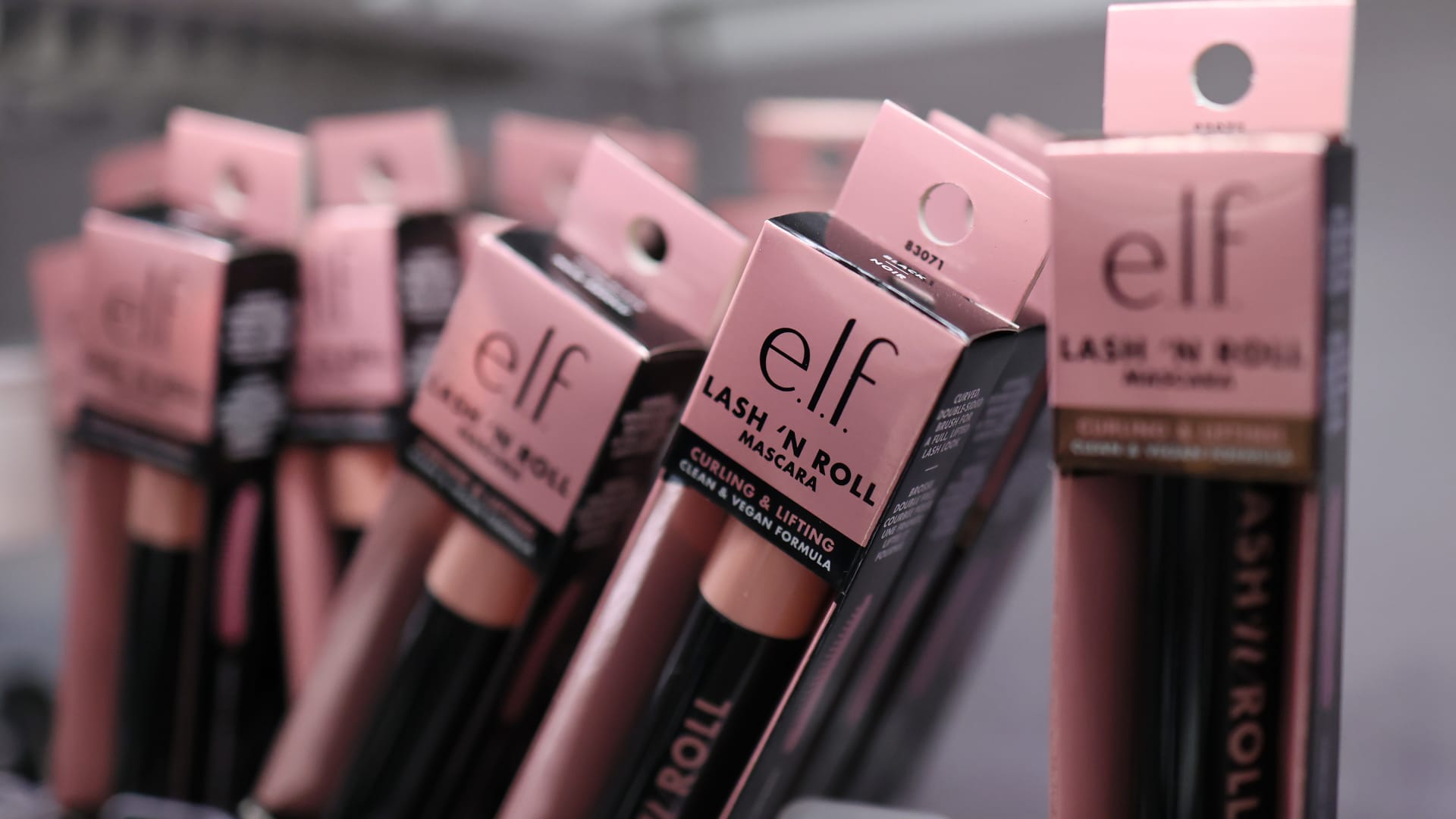
E.l.f. Beauty is planning to walk back some of the tariff-fueled price increases it implemented less than a year ago after the retailer has seen a slide in demand that’s ramped up in recent months as consumers contend with higher gas prices.
“Whenever you take a price increase that’s that big, you’re going to see unit degradation, but I would say we’ve seen units drop off a bit more in the last few months as consumers have particularly been suffering with higher costs,” CEO Tarang Amin told CNBC in an interview. “So it’s one of the reasons why we want to reinforce the value proposition we have.”
Recently, E.l.f. tested a $4 price reduction on its $18 Halo Glow skin tint and saw a nearly 40% lift in the business, which signaled to the company just how “sensitive” consumers are on pricing right now, Amin said.
As a result, it plans to test additional price reductions on certain families of products to see if that will drive unit growth. Last August, it raised prices by $1 across its entire E.l.f. assortment.
“There’ll be additional items that we will test lower pricing on to really be able to reinforce our value proposition at a time when the consumer is suffering,” Amin said.
E.l.f.’s plans to lower prices came as the company announced fiscal fourth-quarter earnings Wednesday that beat Wall Street’s expectations on the top and bottom lines but issued guidance that failed to wow.
Here’s how the beauty retailer performed during the quarter compared with what Wall Street was anticipating, based on a survey of analysts by LSEG:
- Earnings per share: 32 cents adjusted vs. 29 cents expected
- Revenue: $449 million vs. $423 million expected
E.l.f. stock rose roughly 7% in after-hours trading on Wednesday.
In the three months ended March 31, E.l.f. posted a loss of $49.4 million, or 82 cents per share, compared with income of $28.3 million, or 49 cents per share, a year earlier.
E.l.f’s loss was primarily driven by a $57.6 million cost associated with its acquisition of Rhode that the company incurred under the terms of the deal following better-than-expected performance from the brand. Excluding that charge and other one-time expenses, E.l.f. saw net income of $19.4 million, or 32 cents per share.
Sales rose to $449 million, up about 35% from $332.6 million a year earlier.
During the quarter, E.l.f. saw its gross margin grow by 1.4 percentage points to 73% — thanks in large part to the higher pricing that the company is now in the process of walking back for some products. When asked what those reductions will mean for margins moving forward, Amin said the company is expecting a $55 million tariff refund, which will offset the impact to profitability.
Still, the company’s fiscal 2027 guidance came in weaker than expected. E.l.f. said it’s expecting sales of between $1.84 billion to $1.87 billion, which is primarily below expectations of $1.87 billion, according to analysts surveyed by LSEG.
The profitability picture looks worse. The company said it’s expecting adjusted earnings per share to be between $3.27 and $3.32, well below expectations of $3.61 per share.
“I’m really proud of the profitability we just delivered that was in the face of 55% tariffs, so the team’s done a really nice job navigating through a pretty crazy tariff environment,” Amin said. “For the year ahead, we’ve guided to gross margins being flat, which we also think is quite strong in the environment we’re operating in. We still have tariffs that we’re facing at the 35% level, which is what we’ve modeled for the year, and then continued the retail expansion of Rhode.”
Since its acquisition of Rhode, announced about a year ago, the celebrity beauty brand has been the primary engine behind E.l.f.’s overall growth. Over the past year, sales have grown 80%, fueled by its expansion into Sephora North America, Sephora UK and Mecca. Rhode now has the No. 1 brand position in all three retailers.
This fall, Rhode is expected to launch in 19 European countries with Sephora so there’s still a “huge amount of white space” for the brand, Amin said.
In years past, E.l.f.’s growth was primarily driven by ultra-popular product launches. With Rhode now driving growth, it’s unclear how much runaway the brand still has and what that will ultimately mean for the company. Amin said “balanced growth” will define the story moving forward across its portfolio of brands, which he said he’s open to expanding.
“Our first priority is realizing the organic growth we have with our existing portfolio. We have a very high bar when it comes to M&A,” Amin said. “But the good news is we’re a destination of choice for the strongest founders in the industry, just given our approach of supporting a founder’s vision and being able to lend our capabilities and continue to accelerate the growth. So I’d say M&A is definitely part of our future.”


India, like many developing economies, “remains largely peripheral to both the origination and propagation of global imbalances; yet, we continue to face their spill-over effects”, the minister said.
Sitharaman made the statements while representing India at a virtual meeting on the Global Convergence for Growth Summit, presided over by French President Emmanuel Macron, the finance ministry said in a post on microblogging site X.
“In today’s interconnected world, prosperity and challenges are shared, but the consequences of conflicts and uncertainty fall disproportionately on developing countries and the Global South. The situation demands coordinated global action,” the minister said during her intervention at the summit.
“We must strengthen multilateral cooperation to build resilient economies, accelerate sustainable development and ensure inclusive growth that benefits all,” she added.

The summit was held to bring together leaders of advanced and emerging economies to deliberate on ways to support a balanced and efficient global framework. The senior leadership of all the G7 nations and India, Brazil, China, Kenya, South Korea and the International Monetary Fund participated in the summit.
Making her observations on global imbalances, the minister said: “Not all imbalances are alike, some reflect differences in demographics, development stages, resource endowments, or economic structures.””Our focus should, therefore, remain on excessive and persistent imbalances while recognising that the scale of domestic needs varies significantly across countries,” she said.
Medium-term growth, MDB reforms
India’s growth is projected to remain strong at about 7% over the medium term, the minister said, stressing that the country remains the world’s fastest-expanding major economy.
The country’s growth is primarily led by domestic demand, with a largely market-determined exchange rate, she added.
Sitharaman called for better, bigger, more effective and more representative multilateral development banks (MDBs) that can deliver greater financing to developing countries and emerging economies. Bolstering their financing capacity, operational agility and responsiveness will be critical, she said.

Alphabet: Now Is The Time To Raise Equity, Agentic AI Is Here (Rating Upgrade)


Trump cancels US strikes on Iran, citing progress in talks


Hasemilk helps manufacturers replicate the taste of milk without using dairy ingredients.

Form 4 Caterpillar For: 11 June
NEW YORK — The Nasdaq Composite Index posted a modest gain on Thursday, rising 22.52 points or 0.09% to close at 25,192.03 as investors digested a steady stream of corporate earnings and weighed ongoing macroeconomic signals in a session marked by selective buying in technology and growth names.
The advance came despite mixed performance across broader indexes, with the Dow Jones Industrial Average and S&P 500 showing limited movement. Technology and communication services stocks provided the primary lift, reflecting continued investor interest in artificial intelligence themes and resilient corporate results even as some profit-taking occurred in overextended names.
Earnings Season Influence
Corporate earnings continued to play a central role in market direction. Several major Nasdaq constituents reported results that met or exceeded expectations, particularly in cloud computing, software and semiconductor segments tied to AI infrastructure. While forward guidance varied, the overall tone remained constructive, supporting sentiment in growth-oriented stocks.
Analysts noted that companies demonstrating clear AI monetization paths and strong enterprise demand attracted buying interest. However, those facing margin pressures or slower growth in traditional segments saw more muted reactions, highlighting increasing selectivity among investors.
AI and Technology Tailwinds
The Nasdaq’s performance continues to be heavily influenced by artificial intelligence investment themes. Hyperscalers and infrastructure providers have reported robust demand for data center capacity, benefiting related stocks within the index. This secular trend has provided a floor for technology valuations despite periodic volatility around interest rate expectations.
Cloud service providers and semiconductor names with AI exposure led gains, while more mature software companies offered stability. The session reflected ongoing rotation within the sector, with investors favoring companies showing tangible returns on AI spending over those with longer monetization timelines.
Macroeconomic and Policy Backdrop
Persistent inflation concerns remain a key market variable. The latest Consumer Price Index data showed headline inflation at 4.2% year-over-year in May, driven largely by energy costs. Core measures stayed closer to the Federal Reserve’s target, giving policymakers some flexibility but keeping expectations for near-term rate cuts subdued.
The Federal Reserve’s upcoming meeting will be closely watched, with markets pricing in a high probability of rates remaining unchanged. Any signals of patience or data-dependent language could support risk assets, particularly growth stocks sensitive to borrowing costs.
Geopolitical developments, including ongoing tensions in the Middle East, added another layer of caution but did not derail the session’s modest gains. Energy prices stabilized, providing limited spillover into broader market sentiment.
Sector Rotation and Market Breadth
The day’s trading showed improving breadth, with advancing issues outnumbering decliners on the Nasdaq. While mega-cap technology names contributed to the index gain, mid-cap and smaller growth stocks also participated selectively, suggesting some broadening of participation beyond the largest names.
Defensive sectors offered relative stability, while cyclical areas such as consumer discretionary showed mixed results depending on individual earnings outcomes. The overall tone remained one of cautious optimism rather than outright bullishness.
Technical and Sentiment Indicators
The Nasdaq remains well above key support levels but continues to encounter resistance near recent highs. Technical indicators suggest the index is in a consolidation phase within a longer-term uptrend. Options activity reflected measured hedging, with implied volatility remaining elevated but not at panic levels.
Investor sentiment has improved modestly from recent lows, supported by corporate earnings resilience. However, many participants remain wary of potential surprises in upcoming economic data and the sustainability of current valuations in growth sectors.
International and Currency Factors
Global markets showed mixed performance, with European indexes posting modest gains and Asian markets closing with varied results. The U.S. dollar traded in a relatively stable range, reflecting balanced risk perceptions across major economies.
Commodity prices, particularly in energy and metals, influenced related sectors but had limited direct impact on the Nasdaq’s technology-heavy composition. Currency movements affected multinational earnings outlooks for companies with significant international exposure.
Analyst and Strategist Views
Wall Street strategists maintain a generally constructive longer-term outlook for equities, citing productivity gains from AI adoption and resilient corporate balance sheets. Near-term volatility around data releases and policy decisions is expected to continue, however.
Technology analysts highlight the importance of execution on AI initiatives and margin management. Companies demonstrating clear paths to profitable growth in this area are likely to maintain investor favor, while those facing increased competition or execution challenges may see pressure.
Investment Implications
For investors, the current environment rewards selectivity within the technology sector. Focus on companies with strong competitive moats, visible revenue pipelines and prudent capital allocation is recommended. Diversification across growth and defensive areas can help manage volatility.
Longer-term investors may view periodic pullbacks as opportunities to add to high-quality names, while shorter-term traders monitor technical levels and upcoming catalysts closely. Risk management remains essential given the potential for sharp moves around key events.
Broader Market Perspective
The Nasdaq’s modest advance reflects a market attempting to balance optimism around technological innovation with realism about macroeconomic challenges. Corporate America’s ability to deliver earnings growth despite higher costs has provided support, but sustained progress will depend on the trajectory of inflation and consumer spending.
As the second half of 2026 unfolds, focus will remain on the interplay between AI investment cycles, monetary policy decisions and global economic developments. The technology sector’s performance will continue influencing broader market sentiment given its significant index weighting.
The session’s trading activity underscores the market’s capacity to absorb information and find buying opportunities amid a complex backdrop. Investors will remain attentive to both risks and opportunities as earnings season progresses and policy clarity emerges.
The Nasdaq’s resilience near current levels suggests underlying confidence in technology fundamentals despite periodic volatility. Market participants will watch closely for confirmation of trends or potential reversals as additional data and corporate updates arrive in the days and weeks ahead.

Residents in the area do not want a store on land separating Llantwit Major and Llanmaes.

Honeywell sees "a ton of opportunity for M&A," eyes $2B-$4B deals
Economic growth, however, is projected to moderate from 7.7% in FY26 as higher energy prices and rising input costs weigh on private demand. According to the latest Global Economic Prospects (GEP) report of the World Bank, reductions in Goods and Services Tax (GST) rates are likely to provide some support to consumer demand.
India is projected to remain among the world’s fastest-growing economies.
Gross domestic product (GDP) growth is forecast to rise to 7.2% in FY28 and 7% in FY29.
“Growth is then anticipated to rebound over the next two fiscal years, driven by firming domestic demand and a pickup in export growth,” the report said.

The World Bank expects trade agreements and ongoing structural reforms aimed at improving the business environment to bolster foreign direct investment inflows over 2027-28. The closure of the Strait of Hormuz has significantly disrupted global energy markets.
Assuming the worst supply disruptions ease by July, the World Bank projects Brent crude oil prices to average $94 per barrel in 2026, about 36% higher than 2025 levels.
The report noted that to ease inflationary pressures arising from higher energy costs and shortages of agricultural inputs, particularly fertilizers, India has implemented several measures, including cuts in fuel taxes.
NEW YORK — Ubisoft’s popular tactical shooter Rainbow Six Siege faced connectivity issues for hundreds of players on Thursday, with reports of server problems and login difficulties disrupting gameplay across multiple platforms.
Service monitoring sites and social media saw a spike in complaints, with users unable to join matches, experiencing lag or failing to launch the game entirely. The issues appeared to affect a notable number of players, though Ubisoft had not issued a formal statement on the scope or cause as of midday.
Downdetector and similar tracking platforms recorded elevated reports of server connection problems, game launch failures and in-game disruptions. The timing coincided with ongoing seasonal content and regular player activity, amplifying frustration among the dedicated community.
Player Reports and Impact
Players took to social media and forums to share experiences, with many expressing disappointment over interrupted ranked matches and lost progress. The tactical nature of Rainbow Six Siege makes stable connections critical, and even brief outages can significantly affect competitive play and enjoyment.
Some users reported the problems persisting for several hours, while others noted intermittent access. The global player base, spanning North America, Europe and other regions, appeared to encounter varying degrees of disruption, suggesting a widespread but not universal issue.
Ubisoft’s official service status page showed no major outages at the time of peak complaints, but community feedback indicated real-world problems for a significant subset of users. This discrepancy between official status and player experience is common during partial or rolling disruptions.
Ubisoft Response and Technical Context
Ubisoft has a track record of addressing server issues promptly, often through maintenance windows or hotfixes. The company typically communicates via its Rainbow Six Siege social channels and status dashboard when problems arise.
Rainbow Six Siege, now in its 11th year, continues to maintain a large and active player base thanks to regular seasonal updates, operator reworks and competitive esports scene. The game’s demanding server requirements for precise hit registration and tactical gameplay make it particularly sensitive to connectivity fluctuations.
Possible causes for the outage include high concurrent player loads during peak hours, backend maintenance, or unexpected technical glitches. Ubisoft has not confirmed the root cause, but past incidents have often been resolved through capacity adjustments or software patches.
Community and Competitive Impact
The Rainbow Six Siege community is known for its passion and engagement. Outages often spark lively discussions on Reddit, X and Discord, with players sharing workarounds and venting frustrations. Competitive players and streamers were among those affected, potentially disrupting scheduled matches and content creation.
The game’s ranked mode, in particular, relies on stable connections for fair matchmaking and accurate skill rating. Disruptions can lead to frustration and temporary drops in player satisfaction, though Ubisoft has historically worked to restore service quickly and compensate affected users when appropriate.
Broader Context for Online Gaming
Online multiplayer games frequently experience outages as player bases grow and infrastructure scales. Major titles from Ubisoft, EA, Activision and others have faced similar issues, highlighting the challenges of maintaining global server stability for millions of concurrent users.
The rise of live-service models has increased reliance on always-on connectivity, making reliable servers essential for player retention. Companies invest heavily in infrastructure, but unexpected spikes in demand or technical anomalies can still cause disruptions.
Rainbow Six Siege’s longevity and dedicated fanbase demonstrate the strength of its core gameplay loop, but consistent service quality remains key to sustaining long-term engagement. Ubisoft’s ongoing seasonal content strategy helps keep the game fresh, but technical reliability is equally important.
What Players Can Do
Affected users are advised to check Ubisoft’s official status page, restart their devices and routers, and verify internet connections. Clearing cache, updating the game client or trying different platforms (PC, console) can sometimes resolve individual issues.
For persistent problems, contacting Ubisoft support or monitoring community forums for official updates is recommended. Players should avoid using third-party tools or workarounds that violate terms of service, as these can risk account penalties.
Looking Ahead
As Ubisoft works to resolve the issues, players can expect communication through official channels. Historical patterns suggest most outages are resolved within a few hours, though complex problems can take longer.
The incident serves as a reminder of the infrastructure demands of modern online gaming. For Rainbow Six Siege, maintaining a stable experience is crucial to its continued success as one of Ubisoft’s flagship titles.
Fans remain hopeful for a quick resolution so they can return to the game’s intense tactical gameplay. The community’s resilience and passion for the title have helped it thrive for over a decade, and swift action from Ubisoft will be key to preserving goodwill during this disruption.
The Rainbow Six Siege outage on June 11 affected hundreds of players globally, highlighting the challenges of operating large-scale multiplayer services. As the company addresses the technical issues, players are encouraged to stay informed through official sources and prepare for potential compensation or extended maintenance if needed. The game’s dedicated fanbase will be watching closely for a return to normal operations.
Newscast – Why Has Defence Secretary John Healey Resigned?
FM Sitharaman flags global crisis spillovers, unfair burden on developing nations

SpaceX cuts retail IPO allocation to low 20% range, source says

HarrisX Poll Found 52% of Registered Voters Support the CLARITY Act

BloFin War of Whales 2026 Grand Prix opens registration for $5M trading championship

Blockchain.com files with SEC for U.S. IPO

XRP Prediction. Write It Down. #xrp #crypto @digitalassetinvestor

Money ? #trendingshorts #viralshort #loyalty #tag #money #ytshorts #shortvideo

HUGE XRP MASTERCARD LAUNCHES AI PAYMENTS ON XRPL AND CRYPTO!!! #xrp #spacex #ipo #ai #crypto
-

 Fashion6 days ago
Weekend Open Thread: Evereve – Corporette.com
-
 Crypto World6 days ago
Jensen Huang Approves Samsung, SK Hynix, and Micron for NVIDIA (NVDA) HBM4 Memory Supply
-

 Crypto World4 days ago
Anatomy of the June crypto crash: Fed, Iran, Saylor
-
 Entertainment5 days ago
The Best Mystery Series of All Time Is Surging on Streaming 30 Years After It Ended
-

 NewsBeat4 days ago
Alexander Zverev wins the French Open to finally earn a 1st Grand Slam title
-

 Tech6 days ago
Suspicious Polyfill login prompts pop up on Toshiba, Muji websites
-
 Crypto World5 days ago
Senator Cynthia Lummis Calls CLARITY Act the Most Consequential Financial Legislation of This Generation
-

 Tech4 days ago
Microsoft unveils seven homegrown AI models in new bid for ‘long term self-sufficiency’
-

 Tech6 days ago
Microsoft launches MXC, an OS-level sandbox for AI agents, with OpenAI and Nvidia already on board
-

 Business6 days ago
(VIDEO) Justin Bieber Delivers Surprise Happy Birthday Serenade to Diners at Los Angeles Mexican Restaurant
-
 Business5 days ago
The Pain Points Taking a Fragile Tech Rally Down a Notch
-

 Business4 days ago
High Stakes for Wembanyama as New York Pushes for 3-0 Lead
-
 Crypto World3 days ago
Eli Lilly (LLY) Stock Surges 4% Following Breakthrough Sleep Apnea Trial Results
-

 Tech6 days ago
Von der Leyen’s AI envoy pick draws conflict-of-interest fire
-

 Tech6 days ago
Meta steals a tactic from Tesla and builds data centers in tents
-
Crypto World6 days ago
LBank Surpasses 25 Million Users Worldwide as AFA Partnership Continues to Drive Global Growth
-

 Tech6 days ago
Hackers now exploit SolarWinds Serv-U flaw to crash servers
-
 NewsBeat4 days ago
Alexander Zverev conquers demons and outlasts Flavio Cobolli to win French Open for first major title
-

 Crypto World4 days ago
Trump’s AI Ownership Plan Could Benefit Anthropic at OpenAI’s Expense
-
 Sports2 days ago
Bangladesh beat Australia after 20 years in ODIs, register only their second win over six-time world champions | Cricket News
You must be logged in to post a comment Login