Connect with us
DAPA Banner

Business

Earnings call transcript: Medpace Holdings Q1 2026 sees earnings beat but stock tumbles

Published

on


Earnings call transcript: Medpace Holdings Q1 2026 sees earnings beat but stock tumbles

Continue Reading
Click to comment

You must be logged in to post a comment Login

Leave a Reply

Business

Earnings call transcript: FirstService Q1 2026 beats forecasts, stock climbs

Published

on


Earnings call transcript: FirstService Q1 2026 beats forecasts, stock climbs

Continue Reading

Business

Italy stocks higher at close of trade; Investing.com Italy 40 up 0.28%

Published

on


Italy stocks higher at close of trade; Investing.com Italy 40 up 0.28%

Continue Reading

Business

Celestica: The Market Is Missing What Alphabet Just Confirmed

Published

on

Celestica: The Market Is Missing What Alphabet Just Confirmed

Celestica: The Market Is Missing What Alphabet Just Confirmed

Continue Reading

Business

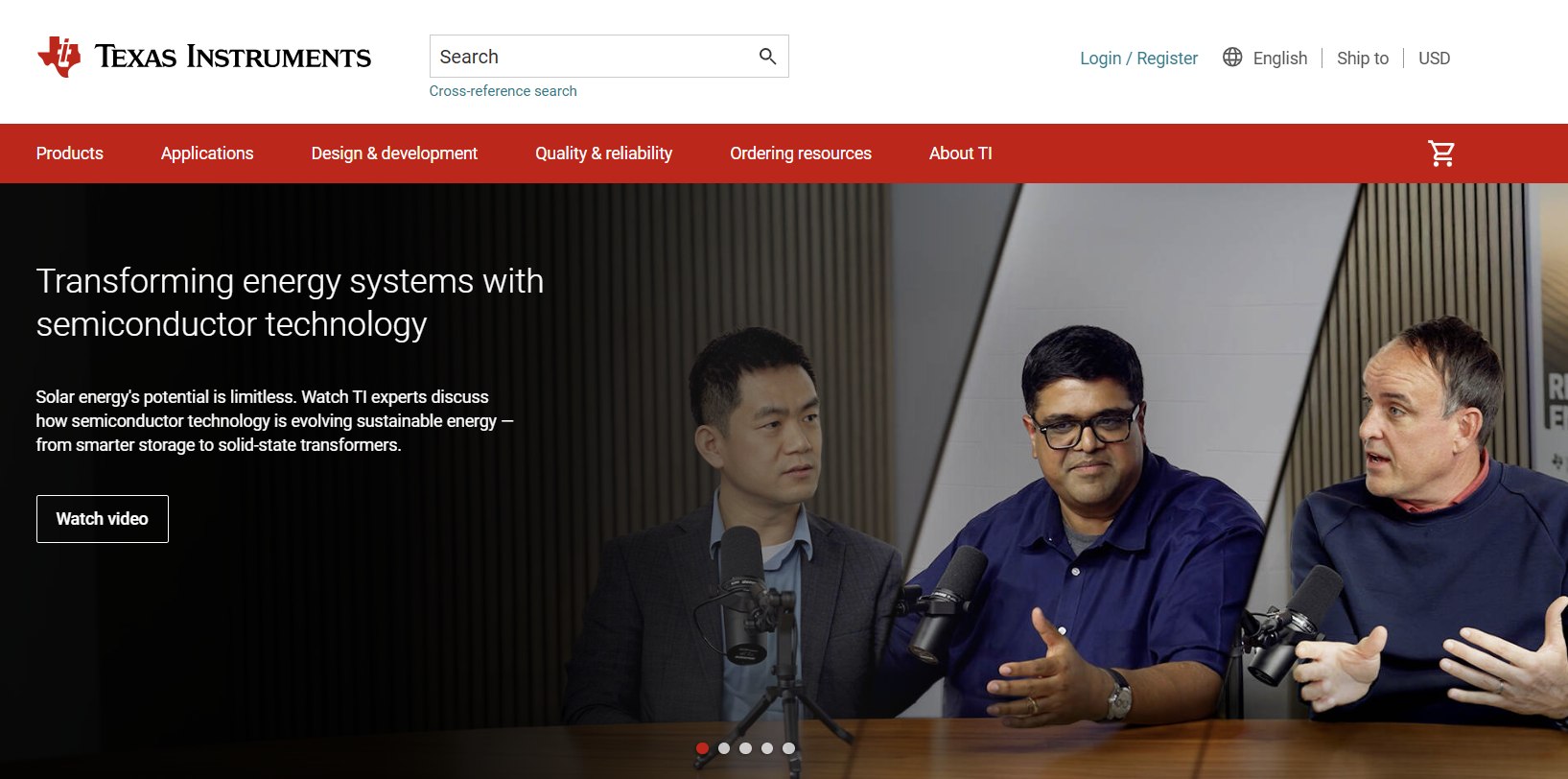
Texas Instruments Stock Soars Nearly 19% on Q1 Earnings Beat, Strong Data Center and Industrial Demand

Published

on

Texas Instruments Stock Soars Nearly 19% on Q1 Earnings Beat,

DALLAS — Texas Instruments Inc. shares skyrocketed more than 18% Thursday after the analog chip giant crushed Wall Street expectations for the first quarter and issued upbeat guidance fueled by surging demand from data centers and industrial customers.

The stock (NASDAQ: TXN) opened at $260.76 and climbed as high as $281.11 in morning trading on April 23, up about $44 from Wednesday’s close of $236.31. Volume surged well above average as investors cheered the strongest quarterly report in years from the Dallas-based semiconductor leader.

Texas Instruments reported first-quarter revenue of $4.83 billion, a 19% jump from the year-ago period and well above analysts’ consensus estimate of around $4.53 billion. Earnings per share came in at $1.68, smashing estimates of $1.36 and marking a 31% increase year-over-year.

“Our results reflect broad-based strength across our markets, particularly in industrial and enterprise systems,” said Haviv Ilan, chairman, president and CEO, in prepared remarks. The company highlighted robust performance in its core Analog segment, which generated $3.92 billion in revenue, up 22% year-over-year.

Advertisement

The Embedded Processing segment also contributed, posting $723 million in revenue, up 12%. Operating profit rose 37% to $1.81 billion, underscoring improved margins amid recovering demand.

Investors appeared particularly encouraged by the company’s forward-looking outlook. Texas Instruments guided for second-quarter revenue between $5.00 billion and $5.40 billion, with a midpoint of $5.20 billion that tops consensus forecasts. EPS guidance of $1.77 to $2.05 also exceeded expectations.

Analysts quickly responded with a wave of upgrades and price target hikes. Bank of America upgraded the stock to Buy from Neutral and raised its target to $320 from $235. Other firms including Baird, Rosenblatt, KeyBanc, Jefferies and Barclays followed suit with significant increases, pushing average targets well above $250.

“This is more than just data-center tailwinds,” one analyst noted. While AI-driven server demand helped, strength in industrial applications and steady automotive recovery played key roles. TI did not cite rising prices as a major factor but signaled potential increases later in the year.

Advertisement

The results come as the broader semiconductor industry navigates a recovery phase. Texas Instruments, long known for its focus on analog chips used in everything from industrial equipment to cars and consumer electronics, has benefited from diversification away from the more volatile personal electronics segment.

Founded in 1930, Texas Instruments remains a cornerstone of American semiconductor manufacturing. The company has aggressively expanded its internal production capacity, supported in part by CHIPS Act incentives. Trailing 12-month free cash flow reached $4.35 billion, up 154% year-over-year.

Shareholder returns remain robust. The board recently declared a quarterly dividend of $1.42 per share, payable in May. Over the past year, TI has returned more than $6 billion to shareholders through dividends and buybacks.

Wall Street’s reaction reflected relief after months of cautious sentiment around cyclical recovery in chips. TI shares had already climbed more than 60% year-to-date entering the report, but Thursday’s move pushed the stock to fresh all-time highs and underscored confidence in sustained growth.

Advertisement

Industry observers point to several tailwinds. Data center buildouts for AI training and inference continue at a rapid pace, boosting demand for power management and signal chain products where TI holds leading positions. Industrial automation, factory upgrades and electrification trends provide additional support.

Challenges remain. The company has faced headwinds in personal electronics and certain automotive segments tied to China. However, management expressed optimism about inventory normalization and broader market recovery. Capital expenditures are expected to moderate slightly, signaling confidence in existing capacity.

Analysts now forecast full-year growth in the mid-to-high teens, with potential for further upside if industrial markets accelerate. Consensus price targets have risen sharply post-earnings, though some caution that valuation — with a forward P/E around 36-40 — leaves limited room for error.

Texas Instruments’ performance stands in contrast to more AI-centric names that have dominated headlines. Its steady, diversified portfolio has historically provided resilience through cycles, a trait investors rewarded handsomely on Thursday.

Advertisement

Looking ahead, the company will host its annual meeting and continue investing in advanced manufacturing. The pending acquisition of Silicon Labs, announced earlier, aims to bolster its position in embedded wireless connectivity, further diversifying its portfolio.

Market reaction extended beyond TI. Peers in the analog and industrial chip space saw gains, while the broader Nasdaq and semiconductor index traded mixed amid rotation and profit-taking elsewhere.

For investors, Thursday’s surge highlights the power of earnings beats in a market hungry for growth stories grounded in real demand rather than hype. Texas Instruments has delivered eight consecutive quarters of year-over-year growth, positioning it well for what many expect to be a multi-year upcycle in semiconductors.

Company executives struck a balanced tone on the earnings call, acknowledging macro uncertainties but emphasizing execution and long-term structural opportunities in electrification, automation and AI infrastructure. Gross margin stood at approximately 58%, reflecting operational efficiency.

Advertisement

As trading continued Thursday morning, shares consolidated some gains but remained up sharply. The move caps a remarkable run for a stock once viewed as defensive and slow-growing. With data centers and industrial markets firing on multiple cylinders, Texas Instruments appears to have caught the AI wave without abandoning its traditional strengths.

Continue Reading

Business

Housing plan for former RAC call centre site

Published

on

Business Live

94 properties proposed for 1.03 hectacre Stretford site

CGI image of the planned housing for the former RAC site in Stretford

A CGI image of the planned housing for the former RAC site in Stretford(Image: MCI Developments and JS Hennessey (1999) RBS)

Plans to build nearly 100 houses and flats on a site once home to an RAC call centre have been unveiled.

Advertisement

The scheme would see 94 properties built across the 1.03 hectacre Stretford site. They would be a mix of houses and flats, planning documents reveal. All the homes would be classed as ‘affordable’.

The land, off Thomas Street, formed part of the old Stretford Gasworks. After the gasworks closed in the 1960s, it was redeveloped into the Longford Trading Estate.

Plans to create the call centre there were approved in 2000. However, the RAC eventually vacated the land, citing difficulties attracting and retaining staff at the Stretford location as a key reason, according to planning documents. The company relocated its offices to Salford Quays.

The land has stood empty since the building on it was demolished in 2024. Now, developers MCI Developments and JS Hennessey (1999) RBS have put forward plans to bring much of it back into use.

Advertisement

Pre-application discussions with Trafford council considered a much larger scheme. Under those plans, 192 homes would have been built over a 3.4h of land, including additional land to the northwest which the National Grid previously used as a gas holder and depot site.

Council officials raised concerns over the loss of so much employment land, however, and the proposal was scaled back to its current size. The developers said this would allow more employment space to be retained and the site to ‘continue to make an economic contribution’.

They added the ‘cost of remediation’ for the western parcel of land would have ‘rendered the site unviable for residential uses’. The companies consider the delivery of affordable housing sufficient to ‘outweigh’ any ‘adverse impacts’ from the loss of the remaining employment space.

CGI image of the planned housing for the former RAC site in Stretford

A CGI image of the planned housing for the former RAC site in Stretford(Image: MCI Developments and JS Hennessey (1999) RBS)

The scheme would see 46 houses and 48 apartments built. These would range from one- and two-bed flats to three- and four-bed town houses. The apartment buildings would be four storeys in height.

Advertisement

Some 94 parking spaces are proposed for residents, with an additional 25 for parking.

Three communal green spaces are also planned. These include a landscaped open space at the edge of the canal, and a space at the centre of the development with ‘rain gardens’ and ‘ornamental tree planting’.

To find all the planning applications, traffic diversions, road layout changes, alcohol licence applications and more in your community, visit the Public Notices Portal.

Advertisement
Continue Reading

Business

Documents reveal contents of the first telegraph message between India & England

Published

on

Documents reveal contents of the first telegraph message between India & England
PORTHCURNO (ENGLAND): Newly discovered documents have revealed the first telegraph messages and joy when England was linked for the first time with India on 23 June, 1870, via thousands of km of cables laid painstakingly below the seas, reducing time from months to minutes.

The sylvan Porthcurno valley in Cornwall, located on the Atlantic coast 506 km south-west of London, was the unlikely place of a revolution that enabled Britain and its former colonies to communicate with each other.

Museum officials told a visiting PTI correspondent that Porthcurno was the hub of international cable communications from 1870 to 1970, and a training college for the communications industry until 1993.

Now a museum housing rare equipment and details of the history of telegraph, Porthcurno has been granted millions of pounds in funding to develop an international education programme that includes community groups in India.

Among its rare archives discovered last week is a collection of the first telegraph messages sent from Porthcurno and Mumbai (then Bombay).

Advertisement


Until that landmark day, communication between England and India was unreliable, and often took months.
According to the document, the first message was dispatched on the night of 23 June, 1870, and a reply was received in 5 minutes, which was a technological feat at the time.The message was called a ‘complimentary telegram’ between the ‘Managing Director in London and the Manager in Bombay’.

The first message was from ‘Anderson to Stacey: How are you all?’, to which the reply was: ‘All well’.

The second message from Anderson was: ‘Please ask gentlemen of the press, Bombay, to send a message to gentlemen of the press, New York’.

After several messages that night, including some to the governor of Bombay, from Lady Mayo to viceroy Lord Mayo based in Shimla, and one from the Prince of Wales to the viceroy, a response was received from journalists based in Bombay.

It said: ‘From the Press of India to the Press of America: The Press of India sends salaam to the Press of America. Reply quick’.

Advertisement

The document notes that the viceroy of India had sent a telegraph to the president of the United States and “received a reply which reached him in 7 hours 40 minutes”.

The viceroy’s message, which was read in the American Congress the same evening, was: “The Viceroy of India for the first time speaks direct by telegraph with the President of the United States. May the completion of the long line of uninterrupted communication be the emblem of lasting union between the Eastern and Western World”.

Telegraphic communication with India was first established in 1864 by overland telegraph lines from Europe to the top of the Persian Gulf and then by an undersea cable to Karachi, but the overland section was never satisfactory, prompting efforts to lay more reliable cables below the sea.

In 1869, telegraph pioneer John Pender established the British Indian Submarine Telegraph Company, whose task was to lay undersea cables to India.

Advertisement

The five ships used to lay the thousands of km of cables were the Great Eastern, William Cory, Chiltern, Hawk and Hibernia.

It took six weeks to lay the cables from Suez to Bombay. This was followed by the laying of the final link from Malta to Porthcurno.

It was the first long distance cable ‘chain’, and opened to the public with much jubilation, museum records show.

After the link with India was established, Porthcurno was linked by undersea cables to several other areas across the world.

At its height, it was the world’s largest station with 14 cables in operation. Porthcurno’s telegraphic codename was ‘PK’.

Advertisement

During World War II, tunnels were dug by Cornish miners to house an underground building and Porthcurno’s entire telegraph operations.
The building today houses the museum and archives that started the communication revolution in the late nineteenth century.
Besides 1.44 million pounds funding received in January, the museum this week has been granted 35,000 pounds from the international telecommunications organisation SubOptic to develop an education project with community groups in India, among other countries.
Museum officials said the money will fund an international education programme that will benefit users from spring 2013.

It will include online learning resources, including video clips, animations and games that will enable users to discover the science of global cable-based telecommunications, as well as its impacts on local identity, democracy and culture.

Continue Reading

Business

Pool Corporation 2026 Q1 – Results – Earnings Call Presentation (NASDAQ:POOL) 2026-04-23

Published

on

OneWater Marine Inc. (ONEW) Q1 2026 Earnings Call Transcript

This article was written by

Seeking Alpha’s transcripts team is responsible for the development of all of our transcript-related projects. We currently publish thousands of quarterly earnings calls per quarter on our site and are continuing to grow and expand our coverage. The purpose of this profile is to allow us to share with our readers new transcript-related developments. Thanks, SA Transcripts Team

Continue Reading

Business

India Meteorological Department to use dynamic models for forecasts

Published

on

ET Search
PUNE: The statistical models used by the India Meteorological Department (IMD) had failed to predict all the three droughts in India in the last decade. Though statistical models will still be used for monsoon forecast, the ministry of earth sciences is putting more emphasis on dynamic models.

M Rajeevan of National Atmospheric Research Laboratory said, “the failure to predict the 2009 drought has raised many serious issues. On the other hand, the state-of-the art coupled ocean atmospheric models have sho-wed improved skills in predicting inter annual variability of Indian summer monsoon rainfall.”

He was speaking at the golden jubilee conference of Indian Institute of Climate Change (IITM), Pune, on ‘opportunities and challenges in monsoon prediction in changing climate’. Since 2011, the IITM has used the coupled model for monsoon forecast.
Better weather forecast needs data from all parts of the globe. “In every part of the world, farmers are saying that the climate is not as it used to be. Hence, traditional knowledge is also failing. For better prediction of weather, we need observations from all countries. We need super computers of even higher capacities. We need to have knowledge about how to translate scientific progress into concrete applications,” said Michel Jarraud, secretary general, World Meteorological Organisation.

Continue Reading

Business

What $1 million buys you in real estate around the world

Published

on

What $1 million buys you in real estate around the world

France, Provence-Alpes-Cote d’Azur, French Riviera, Alpes-Maritimes, Principality of Monaco.

Marco Bottigelli | Moment | Getty Images

A million dollars isn’t what it used to be — especially in luxury real estate.

Advertisement

According to the new Knight Frank Wealth Report, $1 million buys you only 16 square meters (or about 172 square feet) in Monaco, the world’s most expensive luxury market as measured per meter. That’s down from 17 square meters (182 square feet) in 2020.

In Hong Kong, which ranks second, $1 million gets you 22.5 square meters, or about 242 square feet. New York looks downright affordable next to London, Singapore and Geneva, with $1 million getting you 33.9 square meters, or 365 square feet.

Luxury real estate in most major markets around the world continues to become more expensive, as the wealthy grow wealthier and more mobile. Last year, prices for prime real estate in 100 markets tracked by Knight Frank increased by 3.2%, outpacing the growth of mainstream global housing prices at 2.9%.

The Middle East led global luxury growth last year, with prices in Dubai up 25% in 2025 and nearly 200% over the past five years, according to the report. Tokyo was the big standout in 2025, with prices surging 58%, according to the report. Manila, Seoul and Prague also had strong price growth.

Advertisement

For future growth, Knight Frank says Mumbai, Brisbane, Miami and Hong Kong are all future hot spots for luxury real estate. The report said the ultra wealthy are more mobile than ever, buying homes around the world and flitting from city to city more frequently.

“Rising tax and growing regulatory pressures are accelerating the global mobility of wealth,” the report said. “As a result, established hubs such as London are shifting towards a ‘dip-in, dip-out’ model: places to spend time for business, culture and connectivity rather than permanent residence.”

Liam Bailey, global head of research at Knight Frank, said the luxury markets with the strongest outlook have low supply combined with a strong lifestyle and tax appeal. Miami, Milan and Dubai, for instance, have attractive tax environments. New York and London draw the wealthy for their lifestyle offerings and business concentration. Yet both cities are becoming less attractive for tax reasons.

“Every market that wants to succeed in attracting UHNW capital over the next decade needs to be positioned at an attractive point on the tax curve, ” Bailey said. “Capital is already moving away from high-friction environments toward jurisdictions that actively court wealth.”

Advertisement

Get Inside Wealth directly to your inbox

Choose CNBC as your preferred source on Google and never miss a moment from the most trusted name in business news.
Continue Reading

Business

Victory Capital Holdings: Another ~7% EBIT Lift From Synergies Incoming (NASDAQ:VCTR)

Published

on

S&P 500 Snapshot: Index Inches Closer To Correction Territory

This article was written by

The Valkyrie Trading Society is a team of analysts sharing high conviction and obscure developed market ideas that are downside limited and likely to generate non-correlated and outsized returns in the context of the current economic environment and forces. They are long-only investors.They lead the investing group The Value Lab where they offer members a portfolio with real time updates, chat to answer questions 24/7, regular global market news reports, feedback on member stock ideas, new trades monthly, quarterly earnings write-ups, and daily macro opinions.

Analyst’s Disclosure: I/we have no stock, option or similar derivative position in any of the companies mentioned, and no plans to initiate any such positions within the next 72 hours. I wrote this article myself, and it expresses my own opinions. I am not receiving compensation for it (other than from Seeking Alpha). I have no business relationship with any company whose stock is mentioned in this article.

Seeking Alpha’s Disclosure: Past performance is no guarantee of future results. No recommendation or advice is being given as to whether any investment is suitable for a particular investor. Any views or opinions expressed above may not reflect those of Seeking Alpha as a whole. Seeking Alpha is not a licensed securities dealer, broker or US investment adviser or investment bank. Our analysts are third party authors that include both professional investors and individual investors who may not be licensed or certified by any institute or regulatory body.

Advertisement
Continue Reading

Trending

Copyright © 2025