

Business
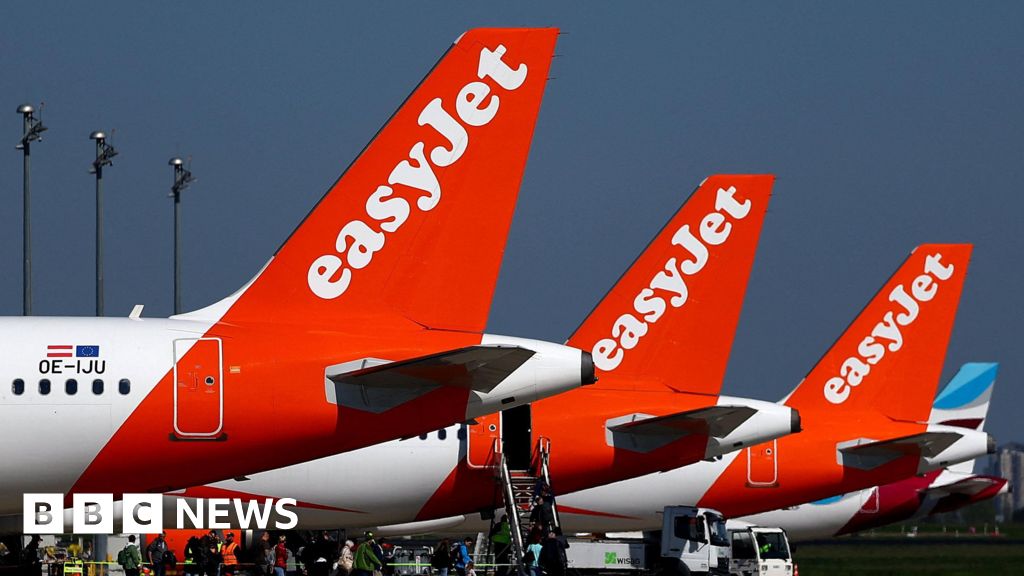
EasyJet boss says summer flights won't be hit by jet fuel shortages



Medical Properties Trust: Cheap Enough To Watch Closely, Not Yet Enough To Buy

Victoria Scholar, head of investment at interactive investor, agreed that while it was a strong quarter for the company, “the bar is very high for the artificial intelligence bellwether which has made a habit out of delivering incredibly impressive results.

The Bhavish Aggarwal-led company on Wednesday reported a consolidated net loss of Rs 500 crore for the January-March quarter of the financial year 2026, down 42.5% from the Rs 870 crore net loss reported in the corresponding quarter of the previous financial year. However, Emkay highlighted that the company reported a weak set of earnings, with the sharp plunge in revenue and a 61% YoY drop in volume.
While Ola Electric has seen some sequential volume improvement (March-April retails at 10,000-12,000/month vs around 8,000/month on average from November 2025 to January 2026) and market share (8-9% in April 2026/May 2026; 5% in Q4 FY26), Emkay attributes the volume growth to the currently better placed production capacity, share gains in the more price-sensitive northern markets, and electric two wheeler incumbents along with Ather operating at peak utilization amid strong demand.
“Ola is adopting several measures to improve execution, cut costs/conserve cash, and improve brand perception (service-related issues have started resolving). We believe this could be a difficult, long-drawn-out process, especially due to greater focus by incumbents + scale-up at Ather. Additionally, new capacities coming onstream for incumbents/Ather in H2 FY26 would reintroduce competition in the industry structure,” the brokerage said.
Given the current dynamics, Emkay believes that Ola’s recovery in volume and market share remains monitorable. “We increase FY27E volume by around 10%, given the strong momentum in the underlying E-2W industry,” it added.

Emkay retained its ‘Sell’ call for the shares of Ola Electric Mobility, but raised its target price to Rs 25 from Rs 20. The latest target price however, implies a downside potential of more than 35% from the stock’s previous closing price of Rs 36.96 apiece. The brokerage highlighted that it prefers Aether Energy and TVS Motor Company as part of the electric two-wheeler theme.
Ola Electric share price
Ola Electric shares crashed around 6% to trade at Rs 34.83 apiece today in the morning. After hitting a 52-week low of Rs 22.05 apiece in March, Ola Electric Mobility shares sharply rallied more than 90% in just a month to hit a multi-month high of Rs 42 apiece.
Also read: Ola Electric Q4 Results: Net loss contracts 42% YoY to Rs 500 crore, revenue tanks 57%
The stock has, however, fallen 6% in one month, 6% in 2026 so far and 31% in one year. The company currently has a market capitalisation of more than Rs 15,579 crore.
(Disclaimer: Recommendations, suggestions, views and opinions given by the experts are their own. These do not represent the views of The Economic Times)
Business
Samsung Electronics Union Delays Strike After Tentative Deal on 12% Semiconductor Profit Bonus
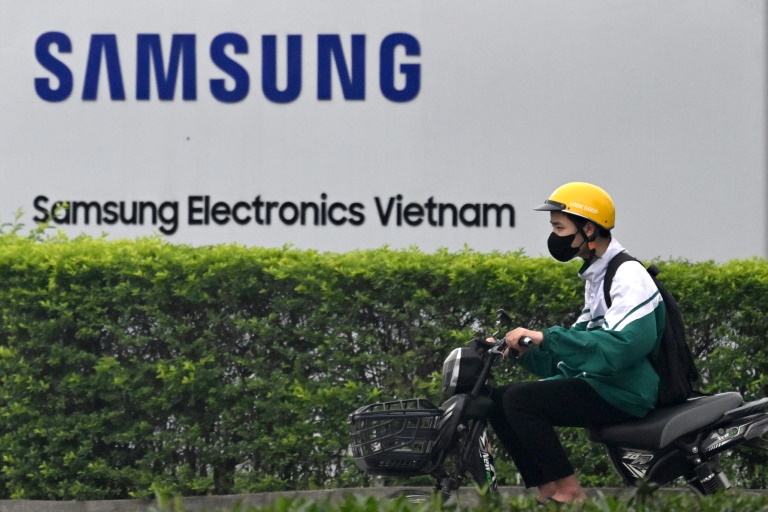
SEOUL — Samsung Electronics’ largest labor union agreed to postpone a planned general strike after reaching a tentative wage deal with management late Wednesday, averting action by more than 47,000 workers scheduled for Thursday.
The eleventh-hour agreement came about one hour before the planned walkout. Union and company negotiators settled on wages and collective bargaining terms following multiple rounds of talks.
Under the tentative deal, labor and management agreed to allocate 12 percent of profits from Samsung Electronics’ semiconductor business for bonuses over the next 10 years.
Specifically, 10.5 percent of an agreed-upon performance figure will go toward special bonuses for the device solutions unit with no cap on the payout rate. An additional 1.5 percent will fund the existing overall performance incentive.
Device solutions bonuses will be paid from this year through 2028 provided the company generates 200 trillion won in annual operating profit. From 2029 to 2035, the threshold is 100 trillion won.
On bonuses for loss-making business units, the parties agreed to a lower percentage of the common payout rate. Management granted a one-year grace period before applying the provision.
Choi Seung-ho, leader of the Samsung Electronics Industry Union, the chipmaker’s largest union, confirmed the details. The union will put the tentative agreement to a member vote starting Friday. Voting continues for six days.
The five-month impasse between Samsung Electronics and its union had escalated in recent weeks. Negotiations broke down multiple times on Wednesday. After a second round of post-adjustment talks failed in the morning, the union initially declared it would proceed with the strike.
Labor Minister Kim Young-hoon intervened to mediate, leading to resumed discussions and the eventual tentative deal.
The planned action would have marked an 18-day general strike involving more than 47,000 workers across Samsung Electronics facilities in South Korea. The company is the world’s largest maker of memory chips and a major producer of smartphones and displays.
Samsung Electronics has faced growing labor tensions in recent years. The company long maintained a no-union policy until workers successfully formed the union in 2024. This marks the first major collective bargaining round since formal recognition.
The semiconductor division, known as Device Solutions, has been central to negotiations. It accounts for a significant portion of Samsung’s profits but has experienced volatility due to global chip market cycles.
South Korea’s labor ministry and government officials monitored the talks closely. The country’s economy relies heavily on Samsung and other conglomerates, making prolonged strikes a national concern.
If union members approve the deal, it would resolve the current standoff. Rejection would likely lead to renewed strike preparations. Union leadership has not indicated its recommendation on the vote.
Samsung Electronics has not issued a detailed public statement on the tentative agreement beyond confirming talks continued into late Wednesday. The company typically emphasizes operational continuity and employee welfare in such matters.
The semiconductor industry faces intense global competition from companies including TSMC, SK Hynix and Micron. Samsung has invested heavily in advanced chip production, including high-bandwidth memory for artificial intelligence applications.
Labor demands focused on profit-sharing amid strong recent performance in memory chips. The company reported robust earnings in recent quarters driven by AI demand.
This tentative deal represents a significant development in South Korean labor relations at one of the country’s flagship corporations. Samsung employs tens of thousands in manufacturing, research and administrative roles across the nation.
The union formed after years of organizing efforts. Previous attempts at collective action faced legal and operational challenges. The current round marks a test of the company’s evolving approach to organized labor.
Broader economic context includes South Korea’s export-driven growth. Technology and semiconductor exports remain critical to GDP. Any extended disruption at Samsung could ripple through global supply chains for electronics and memory products.
Government mediation by the labor minister highlights the strategic importance of the talks. South Korea has a history of government involvement in major corporate labor disputes.
Union members will cast votes electronically or at designated sites over the six-day period. Results are expected early next week. The outcome will determine whether further negotiations or strike action resumes.
Samsung Electronics stock traded with modest movements on May 21 following news of the tentative agreement. Markets had priced in some strike risk in recent sessions.
The company continues operations normally as the vote proceeds. No immediate production impacts occurred from the averted strike.
This development comes amid Samsung’s push into new growth areas including artificial intelligence chips, advanced foundry services and next-generation displays. Labor stability remains key to executing these long-term strategies.
Analysts will watch the union vote closely. Approval would provide short-term certainty, while rejection could prolong uncertainty into the summer.
Samsung Electronics, part of the larger Samsung Group, is South Korea’s largest company by market capitalization. Its semiconductor and smartphone divisions employ a substantial portion of the group’s workforce.
Further details on the full collective bargaining agreement are expected after the vote. Both sides have committed to continued dialogue regardless of the outcome.

DG Corp’s acquisition of a Perth site once earmarked for a $30 million hotel has hit a snag, with the property’s mortgage being tied to a company in the British Virgin Islands.

Speaking on ET Now, Rajiv Mehta from Yes Securities highlighted that while the sector continues to face external risks, underlying credit performance has so far remained stable, particularly in the March–May period. He also flagged microfinance and select housing finance players as the most attractive sub-segments within the broader financial space.
Collections remain steady, but macro risks linger
Mehta pointed to better-than-expected repayment behaviour across lending categories, though he cautioned that the next few quarters remain crucial in assessing durability.“Across the NBFC spectrum, be it vehicle finance, be it microfinance, be it affordable housing, be it housing finance, we are seeing pretty strong trends and resilient trends in collections even in April and May, which is very heartening because we were expecting some impact to come through on the ground in terms of collections and repayments, but we have not seen it so far. But of course, it remains a key monitorable for the next three to six months because the affordability challenges, the pass-through from the government side, it is going to be more gradual in nature. So while it remains a key monitorable, so far there has been no impact,” he said.
He added that inflationary pressures and affordability constraints in lower-income segments remain the key variables to watch over the medium term.
Microfinance and SFBs emerge as key growth pockets
Within NBFCs, Mehta believes the strongest cyclical recovery is unfolding in microfinance and microfinance-linked small finance banks, after a prolonged downcycle.He said investors should focus on select players positioned for a sharp earnings recovery.
“We believe that the best way to play the entire NBFC segment is by playing sub-segments like microfinance wherein the cyclical recovery is looking very sharp at this point in time. They have come out of a very deep, long cycle and some of the NBFC MFIs which we like and then some of the SFBs having large microfinance portfolios, they can actually show a very sharp turnaround in their numbers in FY27. So we like microfinance and microfinance-facing small finance banks most,” Mehta said.
He also highlighted affordable housing finance companies as another preferred segment, citing renewed growth momentum.
Lending and housing finance preferences
On specific names, Mehta indicated continued preference for microfinance-heavy lenders and select housing finance companies.
“On the lenders side which I cover, we are looking at the best opportunity coming or arising in microfinance and microfinance-facing small SFBs. Some of them which we like is Ujjivan. We are even hosting them in the conference. We also like the names like CreditAccess Grameen, Fusion. They are pure play microfinance companies. And we also like some of the affordable housing names which are Home First and Aptus wherein we believe that the growth has made a comeback,” he said.
Ratings space offers selective opportunities
Beyond lending, Mehta pointed to credit rating agencies as a relatively stable macro-linked play within financials.
“Speaking about non-lending, I cover rating agencies, so rating agencies is a completely different industry, it is a very macro industry but there are a couple of very interesting plays which we are kind of backing and preferring. One is Care which is the most proxy on the domestic ratings market and we also like Crisil which is a combination of a ratings company as well as it is having two large global businesses which seem to be going on good growth pace,” he noted.
Interest rates: manageable risk, but inflation key concern
On the impact of a higher interest rate environment, Mehta said margin transmission dynamics will matter more than headline rates.
“No, I think that is a very important monitorable from our point of view. We are looking at how the rates are moving and we are also looking at on the other side the ability to pass on rates to the customer and that difference will determine how the margins will move throughout the year,” he said.
He added that asset quality stress is unlikely to come purely from higher rates, but more from broader macro pressure on household incomes.
“I am not worried about rates so much, but I am more worried about how the on-ground situation moves in, how inflation will hit lower-income households, how inflation will hit lower middle-income households. That is something that I would want to closely track in the next three to six months,” he added.
Gold loans: strong demand, rising competition
Discussing gold loan companies, Mehta said the segment remains structurally strong but increasingly competitive.
“Gold loan companies are generally very large proxy play on the gold price. What you saw last year, gold loan portfolio growing by 50% to 100% was largely driven by the price of gold going up so much. But at the core, we also track how customer-level growth has been, how tonnage-level growth has been,” he said.
He added that competition in the segment is intensifying as large NBFCs expand into the space.
“As a space, it remains very interesting. There is growth to be taken out from a volume point of view, from a value point of view both, but players like Muthoot, Manappuram can face more competition than they ever faced before,” Mehta said.
Cycle outlook: recovery intact, but vigilance needed
While acknowledging that the NBFC credit cycle had been turning positive, Mehta cautioned that macro uncertainties could delay the pace of improvement.
“The cycle had actually turned around on its head and we were entering a very strong phase in FY27, but now with all this macroeconomic, geopolitical issue-driven inflation coming through and likely to hit households, we will have to wait and watch. Otherwise, definitely we were coming out of a cycle and entering a very bullish phase for all companies in FY27. But now I am optimistic but I would be more guarded,” he said.
Outlook
The overall tone from the sector remains cautiously optimistic. While credit performance is stable and selective segments such as microfinance and affordable housing are showing strong momentum, investors are being advised to remain watchful of inflation, affordability stress, and the pace of economic transmission over the coming quarters.

Yatsen completes first tranche of $120M convertible note deal
Business
Ferroglobe PLC (GSM) Presents at B. Riley Securities 26th Annual Institutional Investor Conference – Slideshow

Ferroglobe PLC (GSM) Presents at B. Riley Securities 26th Annual Institutional Investor Conference – Slideshow

ASEAN is crucial for Australian companies seeking growth, supply chain resilience, and access to Southeast Asia’s market. Approach expansion by identifying key commercial functions due to regional differences. Consider Malaysia or Thailand for industrial activities, with Singapore as a coordination hub.
ASEAN: A Growth Corridor for Australian Companies
ASEAN is increasingly vital for Australian businesses aiming to expand market presence and enhance supply chain resilience. With a population exceeding 680 million and an economy over US$3.8 trillion, the region offers significant opportunities, albeit with diverse characteristics. This diversity means that penetrating ASEAN requires strategic planning rather than mere market entry.
Strategic Entry into ASEAN
Expanding into ASEAN involves a targeted approach. Companies must consider whether they aim for sales growth, enhanced manufacturing, supply chain diversification, or long-term tax benefits. Identifying the primary commercial purpose that ASEAN will fulfill helps pinpoint the optimal entry market. Variations in labor costs, infrastructure, regulatory environments, and consumption potentials further dictate whether to prioritize manufacturing, regional coordination, or consumer market access.
Key Considerations for Australian Firms
Malaysia and Thailand are prime choices for businesses needing robust industrial infrastructure and manufacturing capabilities. Malaysia provides excellent logistics and multilingual capabilities, while Thailand excels in automotive and electronics production. Many Australian companies adopt a hub-and-spoke model, leveraging Singapore for coordination and deploying activities across ASEAN based on sector needs and operational goals.
Expanding in ASEAN: Strategies for Market Entry and Regional Organization for Australian Companies
Expanding Across ASEAN: Market Entry and Regional Structuring Strategies for Australian Firms
Australian firms eyeing expansion into ASEAN should consider tailored market entry strategies to navigate diverse regulatory environments, cultural norms, and consumer preferences. Joint ventures and partnerships with local entities can provide valuable insights and establish a foothold in the region. Understanding local market dynamics and leveraging existing networks are crucial for identifying opportunities and mitigating risks.
Strategically structuring operations across ASEAN involves assessing regional economic integration benefits. The ASEAN Economic Community (AEC) offers a unified market and production base, encouraging Australian companies to optimize supply chains and regional distribution networks. Emphasizing sustainable practices and digital transformation is essential to thrive in ASEAN’s dynamic markets.
Read the original article : Expanding Across ASEAN: Market Entry and Regional Structuring Strategies for Australian Firms
Other People are Reading

Gold prices waver amid elevated yields, steady dollar

ALLE BITCOIN VERKAUFT! (kein clickbait)

Ex-Man United boss Ruben Amorim releases statement amid Premier League manager ‘agreement’

Medical Properties Trust: Cheap Enough To Watch Closely, Not Yet Enough To Buy


-

 Crypto World5 days ago
BloFin War of Whales 2026 Grand Prix opens registration for $5M trading championship
-

 Fashion6 days ago
Weekend Open Thread: Theory – Corporette.com
-

 Crypto World6 days ago
E-Estate Announces 1 Year Live: Washington DC Summit as Real Estate Tokenization Enters Its Next Phase
-

 Tech6 days ago
Tech Moves: Microsoft AI leader jumps to OpenAI; former AI2 exec joins Meta; and more
-

 Tech5 days ago
Google reimburses Register sources who were victims of API fraud
-
 Crypto World7 days ago
Google’s Gemini AI Predicts Incredible Solana Price by the End of 2026
-

 Business6 days ago
H&R Real Estate Investment Trust (HR.UN:CA) Q1 2026 Earnings Call Transcript
-
 Entertainment7 days ago
Zara Larsson Has Blunt Response To Chris Brown Diss
-

 Sports5 days ago
Napoleonic enters 2026 Doomben 10,000 field via Abounding withdrawal
-
 Crypto World6 days ago
BeInCrypto 100 Institutional Awards Nomination: KAST for Best Digital Assets Neobank and Best Digital Assets Fintech
-
 Crypto World5 days ago
Bitcoin Battles US Bond Nerves With BTC Price Dip Toward New May Lows
-

 Fashion4 days ago
On the Scene at Gucci’s Cruise Show in New York City: Mariah Carey, Kim Kardashian, Lindsay Lohan, Iman, and More!
-
 Crypto World5 days ago
Wall Street’s Boldest Gold Prediction Has Russians Rushing to Buy
-

 Crypto World5 days ago
ICE and CME urge US regulators to curb Hyperliquid energy trading
-

 Politics6 days ago
DWP PIP Timms review continues to be an absolute farce
-

 Crypto World5 days ago
IREN closes $3 billion convertible notes deal amid AI infrastructure expansion
-

 Fashion5 days ago
Trending Western Style Vests Perfect for Summer
-

 Entertainment6 days ago
David Letterman Returns to Late Show, Blasts Cancellation
-
 Crypto World6 days ago
Lido Finance Selects Chainlink CCIP as the Official Cross-Chain Infrastructure for wstETH Security
-

 Fashion4 days ago
Amazon Sundays: Memorial Day Hosting
You must be logged in to post a comment Login