Connect with us

Business

Enviro Infra Engineers shares rise 5% on Rs 224 crore wind EPC order from Tata Power RE

Published

on

Enviro Infra Engineers shares rise 5% on Rs 224 crore wind EPC order from Tata Power RE
Enviro Infra Engineers shares rose 4.70% on Thursday to its day’s high of Rs 215 on NSE after the company received a Rs 224.19 crore (including GST) LOI from Tata Power Renewable Energy for a wind EPC Project.

According to a filing with the exchange, the company said that through its step down subsidiary Suyog Urja Limited (SUL), has received a Letter of Intent (LOI) from Tata Power Renewable Energy Limited for the execution of EPC turnkey works for the development of a 180 MW NTPC Wind Power Project at Parli, Maharashtra.

Also Read | Vodafone Idea shares price in focus as Jefferies initiates coverage with Buy rating. Why are analysts bullish?

The LOI has a contract value of Rs 224.19 crore (including GST) and is to be executed by March 31, 2027.

Advertisement

The scope of work encompasses Wind Turbine Generator (WTG) foundation works, Balance of Plant (BoP) works, and 33 kV transmission line works. The WTG foundation package includes civil foundation works for 58 WTGs, along with associated reinforcement steel and geotechnical requirements.


Under the balance of plant, Suyog Urja will undertake the development of an approximately 39-acre storage yard, coordination and management of Right of Way (ROW) for material movement, and construction of access roads, pathways and crane pads, along with other associated civil and infrastructure works.
The LOI also covers the construction and commissioning of the 33 kV transmission line, including route survey and design, supply and erection of poles/towers, conductors, insulators and associated hardware, as well as ROW-related activities and installation of STATCOM/harmonic filter systems. The company further said that this LOI further strengthens Enviro Infra Engineers growing renewable energy portfolio and reinforces its strategy of building diversified, integrated capabilities across the clean energy infrastructure ecosystem.

“The contract win marks an important milestone in strengthening our presence in the wind EPC segment and further validates the capabilities we have added through Suyog Urja. The 180 MW project reinforces our ability to participate in large-scale renewable energy infrastructure projects and complements our growing presence across solar, wind and energy storage,” said Sanjay Jain, Chairman, Enviro Infra Engineers.

“We remain focused on building a diversified renewable energy platform backed by strong execution capabilities, technical expertise and disciplined project delivery. As India’s renewable energy capacity continues to expand, we see significant opportunities to contribute to the country’s clean energy transition through reliable, high-quality infrastructure,” Jain further said.

Earlier, on Tuesday, the company announced that its step-down subsidiary, Suyog Urja, was awarded a contract to execute EPC Turnkey works for the development of the 180 MW NTPC Wind Power Project at Parli, Maharashtra.

Advertisement

Also Read | Ather Energy shares rise 3% as Nomura raises target price; stock up nearly 200% in 1 year

This contract includes supply of reinforcement steel and geotech, balance of plant (BoP) including developing a fully equipped 39-acre secure storage yard, coordinating ROW for seamless material transport, and constructing permanent and temporary roads, pathways, and crane pads, 33kV Transmission Line Works- Construction and Commissioning.

The project is to be executed by March 31, 2026 and the total contract value is Rs 189 crore excluding GST.

Enviro Infra Engineers share price movement

In the current calendar year so far, the stock has gained 4.53%, but is down 14.47% over the past year.

Advertisement

Enviro Infra Engineers is an integrated water and wastewater infrastructure company with a presence across 17 states in India. It specialises in designing, constructing, and operating Water Treatment Plants (WTPs), Sewage Treatment Plants (STPs), Common Effluent Treatment Plants (CETPs), and Water Supply Scheme Projects (WSSPs).

Disclaimer: The views/recommendations mentioned in this article, wherever applicable, are those of the respective SEBI-registered Research Analyst/brokerage and have been reproduced/reported with due attribution. They should not be construed as the views or recommendations of The Economic Times Digital or the journalist. Readers are advised to consider the original research report and make their investment decisions based on their own assessment. Brokerage disclaimershere

Continue Reading
Click to comment

You must be logged in to post a comment Login

Leave a Reply

Business

Glenveagh Properties PLC 2026 Q2 – Results – Earnings Call Presentation (OTCMKTS:GLVHF) 2026-09-10

Published

on

OneWater Marine Inc. (ONEW) Q1 2026 Earnings Call Transcript

This article was written by

Seeking Alpha’s transcripts team is responsible for the development of all of our transcript-related projects. We currently publish thousands of quarterly earnings calls per quarter on our site and are continuing to grow and expand our coverage. The purpose of this profile is to allow us to share with our readers new transcript-related developments. Thanks, SA Transcripts Team

Continue Reading

Business

At Close of Business podcast September 10 2026

Published

on

At Close of Business podcast September 10 2026

Nadia Budihardjo and Claire Tyrrell discuss strategic moves in Perth’s retail spaces.

Continue Reading

Business

Oil Near $100 Threatens U.S. Stocks’ Stellar Run

Published

on

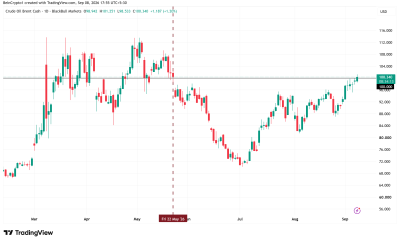
Oil Near $100 Threatens U.S. Stocks’ Stellar Run

Oil Near $100 Threatens U.S. Stocks’ Stellar Run

Continue Reading

Business

Fortum Oyj (FOJCY) Shareholder/Analyst Call Transcript

Published

on

OneWater Marine Inc. (ONEW) Q1 2026 Earnings Call Transcript

Ingela Ulfves
Vice President of Investor Relations & Financial Communications

Good afternoon, everyone. A warm welcome to Fortum’s webcast for the investor community and today’s announcement of the historical and very significant strategic partnership and long-term PPA that Fortum and Google have signed.

My name is Ingela Ulfves, and I’m heading Investor Relations at Fortum. As always, this event is being recorded, and you will find a replay on our website later today.

With me here in the studio, as you can see, is our President and CEO, Markus Rauramo. Markus will briefly present the key strategic highlights and what this partnership and PPA means for Fortum. And following the presentation, we will then take your questions. We have reserved approximately 30 minutes for this event.

Advertisement

So without further ado, I now hand over to Markus to start.

Markus Rauramo
President & CEO

Thank you very much, Ingela. A warm welcome to this call also from my side. Today, Fortum and Google have announced a historical long-term strategic partnership that represents much more than a commercial agreement. It’s a unique partnership that supports growth, competitiveness and long-term prosperity, not only for Fortum, but also for Finland.

Advertisement

This extensive strategic partnership with Google is deeply founded in our 2 main strategic priorities: to deliver reliable energy to

Continue Reading

Business

Dartford Larder social supermarket reports hundreds of sign-ups

Published

on

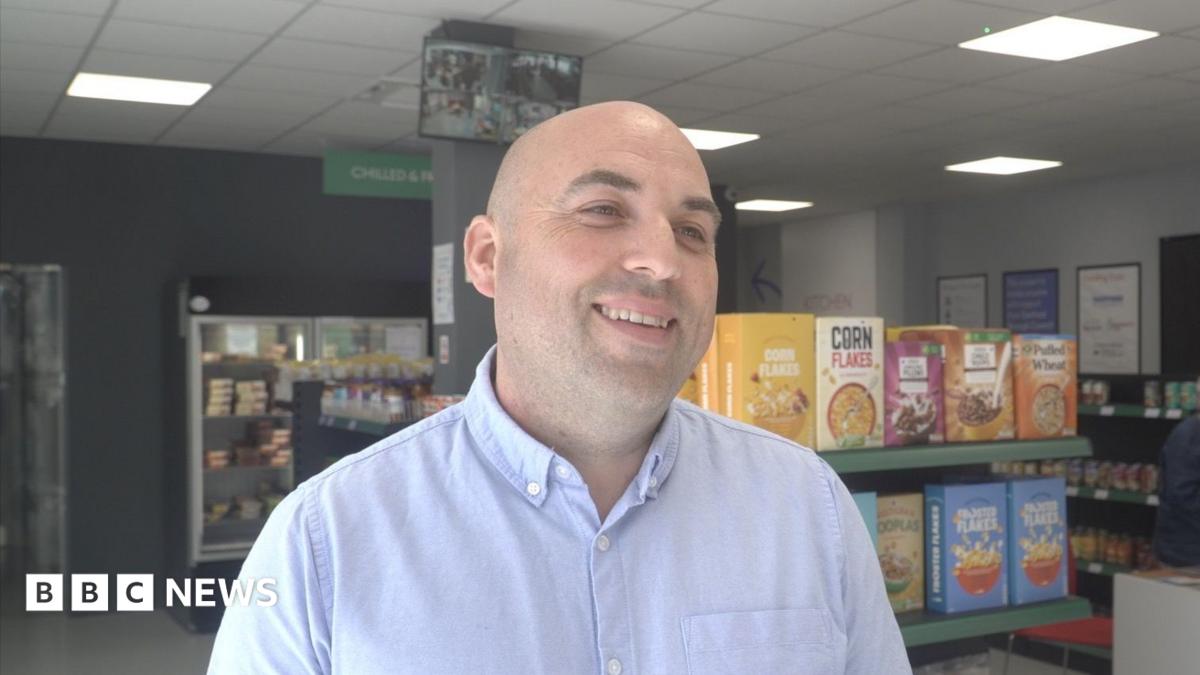
Stephen Brindley smiling and looking to the side of the frame. Supermarket shelves and fridges with goods including tins, cereal, and frozen meals are visible.

A “social supermarket” offering low cost groceries and budgeting advice says it has had 600 sign-ups in its first year.

The Dartford Larder in Kent opened in July 2025 and operates a subscription model, where members pay £4.50 to visit each week for essential items including unlimited fruit and vegetables.

The facility, on Copperfields Walk, is run by Crossways Community Church, the Healthy Living Centre and Dartford Borough Council.

The church’s pastor, Stephen Brindley, said organisers had “achieved what we intended to with the project, which was giving people back dignity”.

Advertisement

He told the Local Democracy Reporting Service that users had welcomed the subscription system as they felt they were “giving something in return for what they were getting”.

He said: “When we were a food bank, there were many people who would not come through the door because of the stigma which was attached.

“The supermarket takes a lot of that away because, at the end of the day, it looks and operates as a normal supermarket.”

More than 75,000 items have been distributed since the Dartford Larder opened, according to the pastor.

Advertisement

He added: “We’re just doing it from our heart and our passion and I think it’s had a really, really good impact.”

Follow BBC Kent on Facebook, external, on X, external, and on Instagram, external and listen to BBC Radio Kent on Sounds. Send your story ideas to southeasttoday@bbc.co.uk, external or WhatsApp us on 08081 002250.

Advertisement
Continue Reading

Business

Good Culture adds three to C-Suite team

Published

on

Good Culture adds three to C-Suite team

AUSTIN, TEXAS — Cultured dairy products manufacturer Good Culture has expanded its C-Suite leadership team. The additions include naming Kirk Jensen as chief operating officer, Samantha Famous as chief people officer, and Sofia Salvadore as chief of staff.

Famous and Salvadore were hired to their roles earlier this year, the company said.

Jensen brings more than two decades of operations leadership in packaged foods, the company said.

His experience includes working for such companies as The Honest Kitchen, most recently as COO; Sovos Brands as COO and chief supply chain officer; and chief supply chain officer at Snyder’s-Lance, Inc.

Advertisement

Famous previously was senior vice president of people at Modern Animal and held similar positions at companies such as The Wing, Sweetgreen and Blue Apron.

Most recently, Salvadore was a private equity associate at L Catterton and earlier was an investment banking analyst at Goldman Sachs.

“We spent this year building a leadership team that matches the size of the business we’ve become,” said Jesse Merrill, chief executive officer and co-founder of Good Culture. “Bringing on Kirk, Samantha, and Sofia is a deliberate investment in how we operate, how we grow our people, and how we execute. Together, they bring the leadership and expertise we need to support Good Culture’s next phase while staying true to what makes this brand special.” 

Continue Reading

Business

Medici Brands raises $250 million in Series B funding

Published

on

Medici Brands raises $250 million in Series B funding


Advertisement


Medici Brands raises $250 million in Series B funding | Food Business News

Advertisement

Advertisement


Skip To Content

Advertisement

Continue Reading

Business

UK’s drone capital to create more than 1,000 jobs

Published

on

Business Live

Swindon, in Wiltshire, has been singled out in the government’s Defence Industrial Strategy

Swindon is becoming a UK hub for drone technology

Swindon is becoming a UK hub for drone technology(Image: Swindon Borough Council)

More than 1,000 jobs are set to be created in Swindon following a surge of investment in drone manufacturing in the town.

It comes a year after the government singled out Swindon as a key hub in its Defence Industrial Strategy.

Advertisement

The Wiltshire town has attracted a string of major global defence tech firms over the last couple of years and is also home to a vast new MoD facility that is being used for testing drones for warfare.

The 500,000 sq ft government site is based at Panattoni Park, which previously housed Honda’s car plant until it closed for good in 2021.

According to Swindon Borough Council, the site is four times larger than NATO’s tactical drone centre in Latvia and anchors the UK’s drone evaluation pipeline. It is expected to create hundreds of highly skilled technical roles.

Elsewhere, a military drone company backed by Donald Trump’s son opened a factory in the town earlier this year after securing a near-£2m deal to support UK defence activities.

Advertisement

It came after Portuguese-based Tekever – one of Europe’s top drone manufacturing enterprises – and German defence firm Stark set up sites in Swindon last year.

The Tekever hub alone is projected to support up to 1,000 skilled jobs across engineering, manufacturing and R&D when fully operational.

Other firms to establish a presence in Swindon include ICOMAT, Shadowlink, Xtend and MyDefence.

Councillor Gary Sumner, leader of Swindon Borough Council, said: “Twelve months ago, the government highlighted Swindon as a vital driver of UK defence innovation. Today, we can see the real, tangible impact of that vision right across our town.”

Advertisement

He added: “This isn’t just about major facilities, it’s about delivering high-value, well-paid, skilled jobs for local people in an industry that is critical to our national resilience and future prosperity.”

The council says it is “well placed” to secure further investment and create hundreds more skilled jobs in the years ahead.

Swindon North MP Will Stone MP added: “We have worked well together to reorient the town away from original plans toward high-skilled roles in defence.

“It has been great to take the lead on meeting with hundreds of companies, bringing in new companies like Tekever and Stark and working to find suitable locations for them to set up.

Advertisement

“I’m also privileged to have led efforts alongside Brigadier Stu Nasse to bring the MoD indoor drone testing facility to our town and brought interest from across industry and government to Swindon.”

Continue Reading

Business

Why More B2B Companies Are Replacing Lead Gen With Account-Based Marketing

Published

on

Why More B2B Companies Are Replacing Lead Gen With Account-Based Marketing

Traditional B2B lead generation rewards volume. Marketing attracts contacts, qualifies some of them, and passes the strongest prospects to sales.

That model can work well when individual buyers make relatively simple purchasing decisions. It becomes less efficient when a company sells expensive software, consulting, infrastructure, or other solutions that require approval from several people inside the same organization. Hundreds of leads have limited commercial value if very few belong to accounts that sales could realistically close.

That problem has pushed more teams toward B2B account based marketing services that begin with selected companies rather than a broad pool of individual contacts. Some businesses also work with agencies like OrbitalX to build account lists, develop messaging, coordinate outreach, and reach several decision-makers inside priority organizations. The shift changes how marketing teams choose audiences, create campaigns, work with sales, and measure progress through long sales cycles.

High Lead Volume Can Hide a Weak Pipeline

Lead generation often encourages marketing teams to optimize for metrics that appear productive early in the funnel. More form submissions, webinar registrations, content downloads, and marketing-qualified leads can make a campaign look successful. Sales teams see the situation differently when many of those contacts come from companies that lack the budget, need, authority, technical fit, or purchase timing required for a real opportunity.

This gap becomes expensive in markets with high acquisition costs. Marketing pays to attract people who may never fit the ideal customer profile. Business development representatives spend time researching and contacting them. Account executives qualify conversations that have little chance of reaching a purchase decision. Each weak lead consumes a small amount of time, but hundreds of them can absorb a significant portion of the sales team’s capacity.

Advertisement

Account-based marketing changes the starting point. The company first identifies organizations with a credible reason to buy, then directs marketing and sales activity toward them. Traffic and lead counts may fall under this approach. Commercial relevance should rise if the targeting model works. A campaign that produces twenty useful conversations across ten high-value accounts may contribute more to pipeline than one that generates several hundred unrelated downloads.

Account Selection Becomes a Commercial Decision

ABM places more pressure on the quality of the target account list. A company cannot compensate for poor account selection by increasing campaign volume indefinitely. Marketing and sales need clear criteria for identifying organizations that resemble strong customers and have realistic purchasing potential.

Firmographic information provides a useful starting point. Industry, company size, geography, revenue range, technology environment, business model, and organizational structure can narrow the market. The team then needs to consider commercial fit. Some companies may match the profile on paper yet have little reason to change their current solution. Others may face expansion, hiring, regulatory, operational, or technology conditions that create stronger demand.

Existing customer data can improve these decisions. Instead of asking which accounts generate the most revenue, examine which ones close efficiently, remain customers, expand their contracts, and require a manageable level of support. Patterns among strong accounts can help marketing build a more defensible target profile. Sales experience adds another layer because account executives often know which characteristics create difficult deals even when the company looks attractive in a database.

Advertisement

Buying Groups Require More Than One Lead

Large B2B purchases rarely depend on a single person. A department leader may recognize the problem, while finance questions the financial case. Procurement reviews commercial terms. IT evaluates technical requirements. Legal examines contracts. Senior leadership may approve the final expenditure. One enthusiastic contact can therefore represent genuine interest without having enough influence to move the purchase forward alone.

Lead-based marketing often fragments these people into separate records. One person downloads a guide, another attends a webinar, and a third visits a pricing page. If the marketing system treats them as unrelated leads, the company can miss a much stronger signal: several employees from the same organization have started researching the same problem.

An account-based approach connects those activities around the company. Marketing can then plan coverage across relevant roles instead of waiting for one person to carry the internal sales process. A technical buyer may receive detailed implementation information. A financial decision-maker may need evidence about costs and business impact. An operational leader may care more about adoption and day-to-day performance. The commercial argument becomes stronger when each participant receives information connected with their responsibilities.

Personalization Has to Go Beyond Adding a Company Name

Weak ABM campaigns often imitate personalization without adding useful relevance. They insert the prospect’s company name into an email, create a customized landing-page headline, and call the campaign account-based. Experienced buyers recognize these techniques immediately. Cosmetic customization gives them little reason to respond.

Advertisement

Useful account personalization comes from research. Marketing teams can examine the organization’s business priorities, existing processes, technology choices, public expansion plans, hiring activity, customer groups, and likely operational pressures. Sales teams can contribute knowledge from previous conversations. The resulting message should explain why the proposed solution deserves attention from that particular account at that particular time.

The required depth depends on account value. A company pursuing several thousand target accounts cannot research every organization at the same level as a strategic seller pursuing twenty major enterprises. Tiering helps control that workload. The highest-value accounts may receive individual research, custom content, executive outreach, and coordinated campaigns. A broader group can receive industry-specific or segment-specific programs based on shared characteristics. This keeps personalization proportional to potential revenue.

Sales and Marketing Need to Work From the Same Account Plan

Traditional lead generation often creates a visible handoff between marketing and sales. Marketing generates a contact, assigns a score, and sends the lead to a representative. ABM requires much more overlap because several marketing and sales actions may occur inside the account at the same time.

Both teams need agreement on target accounts, important contacts, account status, active campaigns, and the next useful action. Marketing may discover increased research activity from one organization while a salesperson already has a relationship with someone there. The team can coordinate outreach instead of sending unrelated messages from different systems.

Advertisement

Clear ownership also prevents accounts from receiving excessive contact. Paid ads, automated email, sales prospecting, events, direct mail, and executive outreach can create a strong presence when teams coordinate them carefully. Poor coordination creates repetition. A buyer may receive several similar messages in one week while nobody addresses the specific problem discussed with sales. ABM performs better when each channel supports the same account strategy, and teams can see recent activity before starting another campaign.

ABM Changes What Marketing Should Measure

Lead-generation reporting often centers on cost per lead, marketing-qualified leads, conversion rates, and lead volume. Those metrics become less informative when the target is a company with several relevant buyers and a six-month sales process. ABM needs account-level measures that show commercial movement.

Teams can track target-account reach, buying-group coverage, meaningful engagement, meetings, qualified opportunities, pipeline value, deal progression, win rate, sales-cycle length, and expansion revenue. Account penetration can reveal a weakness that lead totals hide. For example, marketing may have strong engagement from users inside an account while lacking access to financial or executive decision-makers.

Measurement should also distinguish activity from progress. More page visits from a target account can indicate interest, but activity alone does not prove that a deal is moving. A scheduled discovery call, new stakeholder joining the conversation, technical evaluation, procurement review, or proposal request provides stronger evidence. The most useful ABM reporting tells sales and marketing which priority accounts are advancing, which have stalled, and where buying-group coverage remains incomplete.

Advertisement

ABM will not remove every form of lead generation from B2B marketing. Search, content, events, referrals, and inbound campaigns can still uncover demand that the company did not predict. The larger change concerns where companies place their attention. High-value B2B sellers increasingly want fewer wasted conversations and deeper access to accounts that fit their commercial model.

That makes account-based marketing particularly useful for companies with substantial contract values, defined target markets, long sales cycles, and buying committees. The approach requires stronger research, better data, disciplined account selection, and close sales coordination. When those pieces work well, marketing stops treating every individual inquiry as an isolated opportunity and starts helping sales build momentum across the organizations most likely to become valuable customers.

Advertisement
Continue Reading

Business

Dilip Buildcon shares rally 12% on bagging Rs 1,800 crore LPG pipeline project

Published

on

Dilip Buildcon shares rally 12% on bagging Rs 1,800 crore LPG pipeline project
Dilip Buildcon shares rallied 11.88% in early trade on Thursday, hitting a day’s high of Rs 439 on the NSE, after the company received a letter of intent (LOI) to lay, build, operate or expand an LPG pipeline from Paradip in Odisha to Raipur in Chhattisgarh.

According to a filing with the exchange, the company said that the Project Authority is Petroleum and Natural Gas Regulatory Board (PNGRB) and this project entails the grant of an exclusive license by PNGRB to act as the authorized entity for the development of “pipeline” infrastructure for the transportation of LPG, including financing, construction, and operation of the same, and to levy and collect tariff for the transportation of LPG up to the designated delivery point.

Also Read |Dilip Buildcon sells power projects of Rs. 8,400 crore to Alpha Alternatives

The operation period by which the order(s) / contract(s) is to be executed is 25 years and the execution period is of three years.

Advertisement

The project shall be implemented through a Special Purpose Vehicle (SPV), in which Dilip Buildcon shall hold 100% equity. The Engineering, Procurement and Construction (EPC) works are proposed to be awarded to DBL, representing a business opportunity.


This project is valued at approximately Rs 1800 crore (excluding GST) and is to be executed over a period of 36 months.

Under the proposed project, Dilip Buildcon will undertake the design, finance, development, construction, operation and maintenance of the proposed LPG pipeline infrastructure, subject to applicable approvals, authorisations and regulatory requirements of the Petroleum and Natural Gas Regulatory Board.The proposed pipeline infrastructure will facilitate the transportation of LPG to the bottling plants of various Oil Marketing Companies (OMCs), thereby intending, replacing the existing road-based transportation of LPG through tankers and enhancing road safety.

The company further said that the pipeline is proposed to be operated also as a common carrier, in accordance with the applicable PNGRB framework, with eligible OMCs/users accessing the pipeline capacity.

This project will generate revenue through the applicable petroleum and petroleum products pipeline transportation tariff for transportation of LPG through the pipeline.

Accordingly, Dilip Buildcon’s role through SPV will be to develop and operate the LPG pipeline infrastructure and provision of transportation services and to clarify the matter, Dilip Buildcon will not be engaged in the procurement, trading, distribution or sale of LPG, or bear the associated commercial risks relating to LPG procurement and marketing.

Advertisement

Also Read | Vodafone Idea shares price in focus as Jefferies initiates coverage with Buy rating. Why are analysts bullish?

Dilip Buildcon share price movement

In the last one month, the stock was down 5.21%. The stock is down 11.44% in the current calendar year so far and 14% in the last one year. The stock gained 25.92% in the last three years and fell 17.98% in the last five years.

Disclosure: This article has been written by Surbhi Khanna, who is not a SEBI-registered Research Analyst or an investment advisor . Surbhi Khanna does not hold any financial interest in Economic Times as of the date of publication. The views/recommendations mentioned in this article, wherever applicable, are those of the respective SEBI-registered Research Analyst/brokerage and have been reproduced/reported with due attribution. They should not be construed as the views or recommendations of the EconomicTimes Digital or the journalist. Readers are advised to consider the original research report and make their investment decisions based on their own assessment.

Advertisement
Continue Reading

Trending

Copyright © 2025