

Business
Exclusive-Iran exploring oil sales to Japan, buyers seek longer sanctions waiver, sources say




Business
Russell 2000 Slips Thursday After Its Best First Half Since 1991 as Chip Selloff Weighs on Small-Cap AI Names
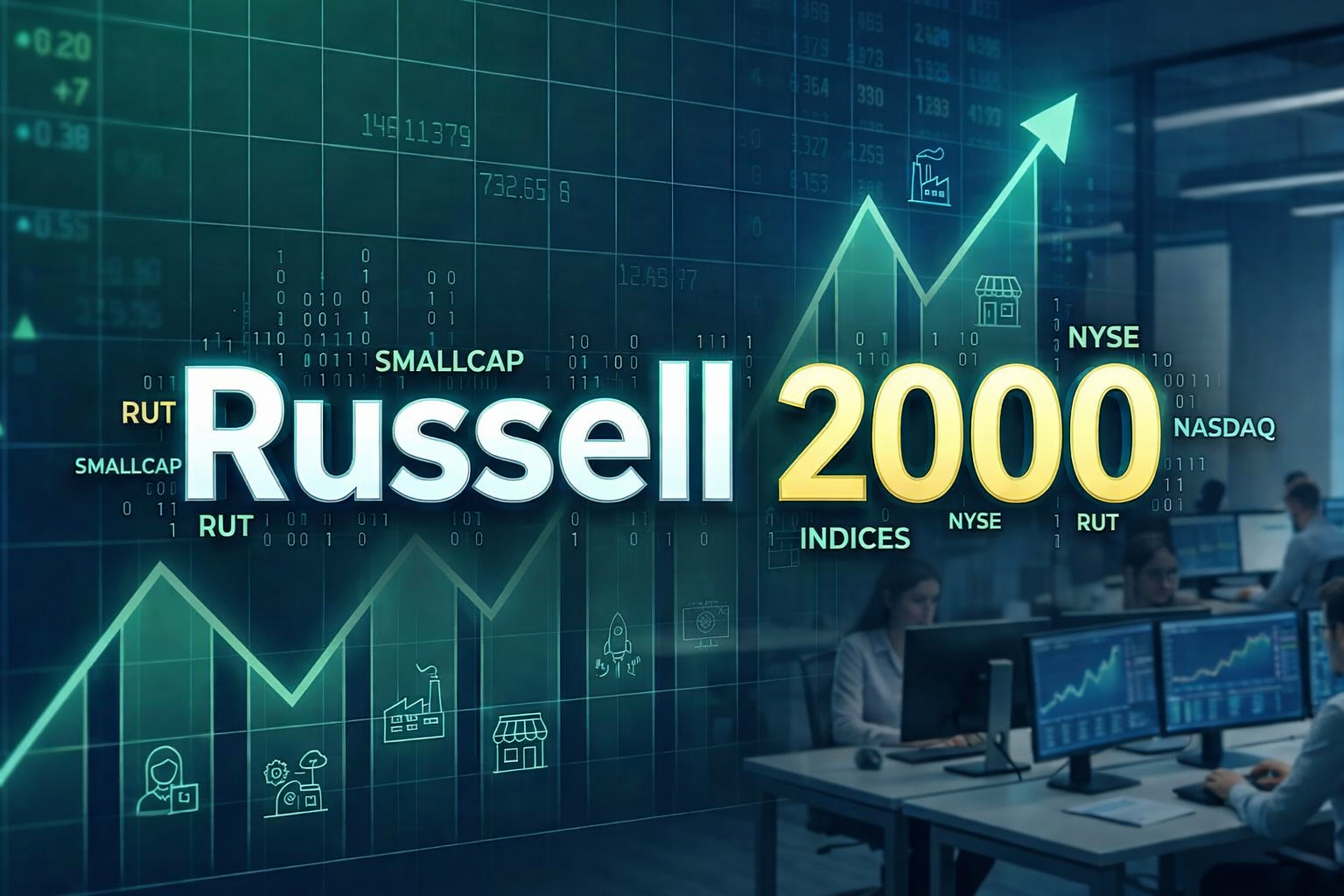
NEW YORK — The Russell 2000 Index, which just completed the strongest first half of any year since 1991, closed Thursday with a modest decline of 0.55%, settling at 2,996.11 and finishing just below the psychologically significant 3,000-point level as the broad chip sector selloff that rattled the Nasdaq for a second consecutive session weighed on small-cap technology and semiconductor-adjacent names even as the Dow Jones Industrial Average hit a fresh all-time record.
The day’s pullback for small-cap stocks came on the final trading session before the Fourth of July holiday weekend, with U.S. markets closing Friday in observance of Independence Day. The small decline capped a week that itself followed one of the most remarkable six-month stretches for American small-cap equities in a generation.
The Russell 2000 gained 22% in the first half of 2026, its best performance since 1991 and well above the S&P 500’s 9.6% first-half advance. The rally also outpaced the Dow Jones Industrial Average’s 8.9% gain and the Nasdaq’s 12.8% climb, a reversal of the large-cap-heavy pattern that had defined much of the prior three years when megacap technology stocks captured nearly all of the headline performance.
“It’s both a valuation catch-up story and a fundamental story,” said Amy Zhang, portfolio manager at Alger. “The valuation gap was so wide that a truck can drive through it. At the same time, fundamentals are improving in small-caps and I think that’s why it’s causing the broadening trade.”
Consensus forecasts for Russell 2000 companies’ 2026 earnings growth have climbed to 38% from about 23% at the start of the year, according to LPL Financial, reflecting growing optimism that profit growth is broadening beyond the largest technology companies. Bottom-up analyst estimates suggest the Russell 2000 could deliver around 43% year-over-year earnings growth over the next 12 months, a figure that outpaces projections for the S&P 500 and has underpinned much of the institutional interest in the asset class through the first half of the year.
Semiconductor and semiconductor equipment companies were the biggest winners within the Russell 2000 during that period, underscoring how the artificial intelligence investment boom has rippled through the broader market well beyond the large-cap names that dominate most AI coverage. Chip-related companies accounted for 16 of the Russell 2000’s 50 best-performing stocks in the first half of the year, including Aehr Test Systems, Ichor Holdings and MaxLinear, which all rallied more than 400%. Rather than competing directly with industry leaders like Nvidia, many of these smaller companies have benefited from rising demand across the AI supply chain, supplying testing equipment, materials, components and specialized subsystems.
Those same names, however, have shared in this week’s semiconductor sector correction, which has wiped out meaningful short-term gains across the chip space broadly as investors who accumulated large positions during the sector’s extraordinary first-half run have taken profits ahead of the holiday. The VanEck Semiconductor ETF fell 4.5% Thursday alone, and the Philadelphia Semiconductor Index has posted its worst two-day decline since early June, with many of the smaller, more speculative names in the sector experiencing even steeper percentage drops than the large-cap bellwethers.
Small cap stocks are having a moment, according to Schwab’s market open report. The Russell 2000 gained 22% during the first half of the year, its best since 1991 and well above the S&P 500’s 9.6% gain. The index also topped the S&P 500 for two consecutive quarters, the first time that had happened since 2021, a milestone that has attracted fresh institutional attention to the small-cap universe and driven significant inflows into small-cap focused exchange-traded funds throughout the year.
Despite Tuesday’s chip-driven dip, broader small-cap market dynamics remain constructive for investors with a longer time horizon. The Russell 2000’s composition spans financials, industrials, healthcare, energy, biotech and technology, a diversification that gives the index exposure to domestic economic strength across multiple sectors simultaneously. Small-cap stocks generate roughly 70 to 80 percent of their revenue domestically, making the index particularly sensitive to U.S. economic conditions and comparatively insulated from global trade tensions that have periodically complicated the earnings outlooks of larger multinationals.
Bank of America analyst Jill Carey Hall said in a recent note that the bank still sees upside opportunities within small caps for less rate-sensitive stocks, especially because Russell 2000 performance has been concentrated this year and the broader universe has room to participate more fully in the rally.
The Federal Reserve interest rate outlook remains the most consequential variable for the small-cap outlook heading into the second half of 2026. Higher borrowing costs pose a particular challenge for smaller companies, which generally carry more floating-rate debt and face greater refinancing needs than large-cap peers. Bank of America has estimated that every additional 25 basis point rate hike would reduce Russell 2000 operating earnings by approximately 2%, a meaningful sensitivity given that the Fed’s next meeting is scheduled for July 28-29 and that some market participants had been pricing in the possibility of further tightening before this week’s soft employment report shifted that calculus.
“This should allow the Fed to take a patient approach to any shift in its policy over the next few months, seeing how the incoming economic data comes in rather than rushing to a decision to hike,” said Collin Martin, head of fixed income research and strategy at the Schwab Center for Financial Research.
The June nonfarm payrolls report, which showed just 57,000 jobs added against expectations of 115,000, has provided the most direct macro support for small-cap stocks this week by reducing near-term rate hike fears, even as the soft headline reading raised fresh questions about whether economic momentum is slowing more quickly than the consensus had anticipated.
For now, Thursday’s modest decline represents a pause in a larger story rather than a reversal, with the index barely off a recent all-time high reached on Wednesday of this week at 3,033.75 and well positioned, by most analysts’ assessments, to resume its outperformance once the semiconductor profit-taking cycle runs its course and attention shifts back to the improving earnings trajectory across the small-cap universe heading into the second half of 2026.

Union leaders are calling on employers to let staff work from home on Monday, after England’s World Cup last-16 tie against Mexico kicks off at 1am BST.
The Trades Union Congress (TUC) has appealed to businesses to show “common sense” and allow football fans to work flexibly following the match, whether by working from home, starting later or swapping shifts.
Paul Nowak, the TUC general secretary and a self-confessed England and Everton fan, admitted the scheduling was far from ideal for supporters. “That’s why we are appealing to employers to show some common sense and understanding by allowing their staff to work flexibly where possible,” he said.
The plea comes as separate research suggests more than half of bosses have no plans to make any special arrangements for the fixture. Just one in five employers intend to offer flexible working during the tournament, according to a poll of more than 1,100 managers by the Chartered Management Institute (CMI), a striking gap given the £3.8bn windfall the World Cup is expected to deliver for British business.
Petra Wilton of the CMI said: “We’re not saying every England win deserves a bank holiday, but if millions of people have stayed up until 3am supporting their team, asking employers to let them start a little later the next morning is simply common sense. We’re saying to employers across the country, ‘Let them start late.’”
Sir Keir Starmer has confirmed that British pubs can stay open through the night for the tie, which takes place at the Azteca Stadium in Mexico City. Should the match go to extra time, it could run as late as 4am.
The Chartered Institute of Personnel and Development (CIPD), which represents HR professionals, has encouraged employers to allow workers to take annual leave, swap shifts or make up time later in the week, echoing its broader guidance on handling major sporting events in the workplace.
“Employers are under no obligation to make special arrangements around World Cup matches; however, some may choose to offer flexibility where this works for the business and does not impact performance,” said David D’Souza of the CIPD.
For smaller firms, the calculation may be more nuanced. With research showing that rigid office mandates are already driving workers to seek more flexible roles elsewhere, a well-handled World Cup could prove a cheap win for morale and retention. Acas has urged employers to get their team line-up sorted before kick-off, advising that agreements covering time off, sickness absence and flexible hours are put in place ahead of matches rather than argued over the morning after.
Employment lawyers, meanwhile, have warned fans against pulling a sickie. Samir Moftah, head of employment law at Manak Solicitors, said: “Intentionally deceiving your employer about your health can constitute misconduct and, in certain situations, gross misconduct.” Employees found to have falsely claimed sickness absence could face disciplinary action, and dismissal in the most serious cases.
The debate over Monday morning extends beyond the workplace. After England’s last-32 victory over the Democratic Republic of the Congo, head coach Thomas Tuchel asked parents to let their children skip school to cheer the side on. Bridget Phillipson, the Education Secretary, responded that while the decision rested with parents, “children can be in school the next day.”
For SMEs weighing up how to respond, the tournament is as much an opportunity as a headache, and those thinking strategically about the World Cup event economy may find that a little flexibility on Monday pays dividends long after the final whistle.

Amy Ingham
Amy is a newly qualified journalist specialising in business journalism at Business Matters with responsibility for news content for what is now the UK’s largest print and online source of current business news.

The NHS is to offer rewards to people who walk for half an hour a day, in the first scheme of its kind to pay Britons back for getting active.
NHS England will launch its “marathon a month” challenge early next year, asking participants to walk for around 30 minutes daily. Those who manage it every day will cover roughly 26 miles over the month, the distance of a marathon, logging their progress online or via a phone or smartwatch.
Complete the challenge and rewards follow, potentially including incentives and discounts, although the organising team has yet to confirm precisely what is on offer. Vouchers are one option under consideration, and the presence on the team of Sir Keith Mills, the founder of Air Miles and Nectar, suggests the architecture of Britain’s best-known loyalty schemes will be brought to bear on the nation’s step count.
Crucially for taxpayers, the NHS will not be footing the bill for the rewards. NHS England is covering the initial set-up, but the wider plan is to draw in philanthropic backing from major corporates as the scheme rolls out, with public and private sector partners running the programme. GPs and other health staff will be encouraged to promote it to patients.
The scheme is being developed with Sir Brendan Foster, the Olympic medallist and founder of the Great North Run, who was asked by NHS England to build a campaign to get people walking as part of the government’s 10-year health plan for England.
“I’m known for running, but the ambition here is far simpler. We just want people to walk. Simple,” he says.
The aim is to sign up more than 100,000 people, with daily stats recorded digitally. If the target is hit, Sir Brendan says it would count as the biggest marathon in history. He is banking on “streak” culture, the habit-forming mechanic behind Snapchat and Duolingo, to keep participants going.
The under-25s Business Matters spoke to were broadly upbeat. One said the gamified challenge would push her to be more active, admitting that not wanting to break a streak is a powerful motivator for her and her friends. Another, who already clocks up roughly a marathon’s worth of walking each month, said he would happily take a free reward for something he is already doing.
The numbers behind the initiative are stark. Physical inactivity is associated with one in six deaths, according to official public health guidance, and a person is classified as inactive if they do less than 30 minutes of moderate-intensity activity per week. Sport England’s Active Lives survey showed that in the year to November 2025 nearly a quarter of adults, around 12 million people, fell into that category.
“If someone walks 30 minutes five times a week, they could gain up to four extra years of healthy life,” Sir Brendan says.
For employers, the scheme lands at a moment when workforce health has become a boardroom issue. Business groups have already backed the Keep Britain Working review amid mounting fiscal pressure from economic inactivity, and there has been a marked rise in UK employers using wellbeing strategies to lift engagement and cut absenteeism. A state-backed incentive scheme that nudges staff out of the door at lunchtime may prove a useful, and free, addition to the corporate wellbeing toolkit.
The potential savings for the health service are significant too, at a time when technology is already being deployed to claw back hundreds of millions in NHS costs.
Not everyone believes incentives alone will shift the dial. Sonia Pombo, head of research and impact at Action on Salt & Sugar, says: “Encouraging people to build regular movement into their daily lives can support better health, and making it simple, achievable and rewarding may help more people get started. But we cannot rely on individual behaviour change alone. If the government is serious about improving the nation’s health, particularly for children, it must pair initiatives like this with stronger prevention measures.”
Full details of the scheme, including how to sign up, will be released in the coming months.
Amy Ingham
Amy is a newly qualified journalist specialising in business journalism at Business Matters with responsibility for news content for what is now the UK’s largest print and online source of current business news.

Republic Services: It's A Garbage Company, Literally, And I Love It
Business
Dabur Q1 updates: Co expects double-digit revenue growth as rural demand stays ahead of urban

The company, in its quarterly update for the period ended June 30, 2026, said consumer sentiment remained resilient despite geopolitical concerns and hyperinflationary pressure in some of its key markets. Dabur said its business trajectory improved sequentially over the previous quarter, and it expects consumption in international markets to improve in the coming quarters as the Middle East situation eases.
In India, both rural and urban markets sustained their growth trend, with rural demand continuing to outpace urban. This is important for Dabur as a large part of its portfolio, including health, oral care, hair care and beverages, has strong rural and semi-urban reach.
The India FMCG business is expected to post near double-digit growth during the quarter. The home and personal care business is likely to grow at a near-teens level, led by strong demand for hair oils and shampoos. Dabur said hair oils and shampoos are expected to deliver high-teens growth, supported by perfumed and coconut hair oils.
Oral care is also expected to report near double-digit growth. Dabur said growth was broad-based across the segment, with the new herbal franchise and Meswak recording strong double-digit growth. Its flagship Red Toothpaste and Lal Dant Manjan brands also continued their upward trend.

Also Read: Vedanta Power Q1 update: Sales rise 38% on Meenakshi boost, Sakti shutdown weighs
The healthcare business is expected to show sequential improvement, with mid-single-digit growth. Key brands such as Hajmola, Pudin Hara, Dabur Honitus, Isabgol and the health juices range are expected to deliver robust double-digit growth. Dabur Glucose, which was affected in the early part of the quarter, recovered sequentially later.The food business continued to grow at a high double-digit pace. Badshah is expected to deliver high-teen growth, while the beverages portfolio recovered during the quarter. Dabur said Real Activ juices and coconut water recorded strong double-digit growth.
The company’s emerging channels, including e-commerce, quick commerce and modern trade, are expected to report strong double-digit growth. General trade also improved sequentially, with growth seen across urban and rural markets. Dabur said Project Saksham, its distribution and route-to-market optimisation initiative, is showing early positive signs.
The international business is expected to grow in the high teens in rupee terms, even with severe pressure in the Middle East. Egypt, Turkey, Bangladesh and the UK each recorded strong double-digit growth in rupee terms.
Dabur said elevated inflation during the quarter, especially in hair care, was managed through calibrated price hikes, helping maintain stable operating margins. Profit after tax is expected to grow at a double-digit level. The company said detailed financial results will be announced after board approval.

Warrants for the brand can be issued from July 10, although the LME-registered warehouses holding Adani Copper metal must include the brand in their off-warrant stock reports with immediate effect, the LME added.
The brand is produced by Adani Enterprises-owned Kutch Copper, one of India’s largest copper smelters, with annual production capacity of 500,000 metric tons. The company applied for LME registration in August 2025.
According to Adani, this $1.2 billion Kutch Copper facility in the western state of Gujarat is the world’s biggest single-location plant of its type, expected to reduce India’s reliance on imported copper.
India imported 238,080 tons of refined copper in 2025, down 18% from a year earlier, according to Trade Data Monitor data, with Japan remaining the country’s largest supplier. (Reporting by Polina Devitt; Editing by Louise Heavens)

German employees will be required to visit a doctor in person and obtain a sick note on the first day of illness, under tough new rules unveiled by Chancellor Friedrich Merz as part of a sweeping package to revive the country’s stagnant economy.
The measure scraps the current system, under which workers could secure a certificate over the phone and did not need one at all until their third day off. It is a marked contrast with Britain, where employees can self-certify for a full seven days before a fit note is required.
“The number of sick days is too high,” Merz told journalists. “We are creating a set of tools that will enable those involved, both employees and companies, to correct this. We know this is a tough decision. But we can no longer afford the competitive disadvantage caused by prolonged absences from work.”
Germans take an average of roughly 15 working days of sick leave a year, according to figures from the Federal Statistical Office, lower than France and most Nordic countries but well above Sweden, the Netherlands, Denmark, Poland and Italy. By comparison, the latest Office for National Statistics data shows around 149 million working days were lost to sickness or injury in the UK last year, some 2 per cent of all working hours, or just over four days per worker. British absence rates have nonetheless been climbing, with UK sick days recently hitting a 15-year high, driven in large part by mental health conditions.
While employers’ groups welcomed the German move, it has infuriated the country’s powerful trade unions. Frank Werneke, head of the services union Verdi, accused Merz of fostering “a culture of distrust of employees”.
Doctors are equally unimpressed, warning the requirement will overwhelm general practice with appointments that serve no clinical purpose. “Our practices would be flooded with patients who don’t need in-person care and would be better off in bed,” said the German Association of Family Physicians, which branded the measure “an absolute catastrophe”.
The sick note crackdown forms part of a broader reform programme negotiated between Merz’s centre-right Christian Democratic Union and its coalition partner, the centre-left Social Democrats. Alongside a promised bonfire of red tape, the retirement age could rise gradually from 67 to as high as 70 in the coming decades, while tax cuts for lower and middle earners will be funded by higher rates on incomes above €250,000 (£215,000).
For UK business owners watching from across the Channel, the episode is a reminder that absence management remains a live policy battleground, and that handling staff sickness fairly and lawfully is as much about trust and process as it is about cost. It also underlines how seriously Germany’s slowdown is being taken in Berlin: sluggish growth in Europe’s largest economy is one of the factors expected to shape the continent’s economic pecking order through 2040.
Carsten Brzeski, an economist at Dutch bank ING, said the reforms were overdue but should not be oversold. “It may have taken longer than many hoped, but Germany’s long-awaited summer of reforms has finally arrived,” he said. “It is not a package that will morph a stagnating economy into a booming economy overnight. But it is a package that could create the preconditions, the framework, for future growth.”
Amy Ingham
Amy is a newly qualified journalist specialising in business journalism at Business Matters with responsibility for news content for what is now the UK’s largest print and online source of current business news.

VGW has announced chief executive and founder, Laurence Escalante, will step down from his role, effective immediately.


Pope Leo praises US history of welcoming immigrants at 250th anniversary
Martin is revealing everything you need to know right now to cut the cost of getting away.
“Independence Day ”cast: See Will Smith, Jeff Goldblum, and their costars 30 years after saving the planet

Weekend Open Thread: High Hopes

Trump Financial Disclosures SHOCK ALL & Expose EARTH SHATTERING CORRUPTION!! | Kyle Kulinski


-

 Tech6 days ago
Claude Code turned every engineer into three. Now companies need more product thinkers
-

 Crypto World4 days ago
Strategy authorizes up to $1.25B in Bitcoin sales under new capital plan
-

 Politics6 hours ago
The House | “Reframing the debate from a binary discussion of winners and losers”: Yuan Yang reviews ‘We Are Not Machines’
-

 News Videos5 days ago
MAJOR BITCOIN & MARKET UPDATE!!!! (MUST WATCH ASAP!!!)
-

 Tech4 days ago
Anonymous researcher drops 0-day ‘exploitarium’ repo
-

 Crypto World6 days ago
Coinbase, Circle Deepen Crypto Stock Losses Despite Resilient S&P 500
-

 Business4 days ago
Australia treasurer says alleged access of prime minister’s bank data ’incredibly concerning’
-

 Crypto World7 days ago
Kraken's xStocks Opens Bending Spoons IPO Registration to EEA Retail
-

 Sports7 days ago
FIH Pro League: India defeat Pakistan 7-1, register biggest win of campaign | Other Sports News
-

 Tech6 days ago
Bluekit phishing kit adopts browser-in-the-middle for login theft
-

 Tech6 days ago
Russian hackers now target Signal backup recovery keys
-
 Business4 days ago
The AI boom won’t burst all at once. It will pop in ‘rolling bubbles’: Macquarie
-

 Sports2 days ago
Broncos roster: OL Ben Powers (No. 74) entering final year of contract
-

 Tech6 days ago
Silicon Valley paid to kill AI regulation, now it wants the rules back
-

 NewsBeat3 days ago
Presenter Caroline Flack’s brother Paul Flack dies aged 55
-

 Crypto World2 days ago
Binance stock trading tops $1B in first month after launch
-
 NewsBeat1 day ago
New exhibition reflects five decades of movement between island of Ireland and GB
-
 Tech6 days ago
OpenAI mulls delaying IPO over valuation concerns
-

 Crypto World2 days ago
Alibaba-affiliate Ant Group enters the humanoid robot market with 12 deals
-

 News Videos3 days ago
How to Build INSANE Live Financial Dashboards With Claude
You must be logged in to post a comment Login