Connect with us
DAPA Banner
DAPA Coin
DAPA
COIN PAYMENT ASSET
PRIVACY · BLOCKDAG · HOMOMORPHIC ENCRYPTION · RUST
ElGamal Encrypted MINE DAPA
🚫 GENESIS SOLD OUT
DAPAPAY COMING

Business

Exxon Mobil set to place Alex Volkov as head of global trading, sources say

Published

on

Exxon Mobil set to place Alex Volkov as head of global trading, sources say
Continue Reading
Click to comment

You must be logged in to post a comment Login

Leave a Reply

Business

IG Design Group CEO designate receives share award

Published

on


IG Design Group CEO designate receives share award

Continue Reading

Business

Pending Mega IPOs Could Curb Passive Positive Feedback Loop

Published

on

Perimeter Solutions: I'm Betting On One Hot Summer

Pending Mega IPOs Could Curb Passive Positive Feedback Loop

Continue Reading

Business

Turtlemint Fintech sets IPO price band at Rs 144-152 for Rs 883 crore offer. Know GMP, other key details

Published

on

Turtlemint Fintech sets IPO price band at Rs 144-152 for Rs 883 crore offer. Know GMP, other key details
Insurtech firm Turtlemint Fintech Solutions is set to launch its Rs 883 crore initial public offering on June 19. The mainboard issue comprises a fresh issue of shares as well as an offer-for-sale by existing shareholders.

Here is everything investors need to know about the public issue:

Turtlemint IPO price band
The company has fixed the price band at Rs 144-152 per share. At the upper end of the price band, Turtlemint is valued at more than Rs 4,500 crore.

Turtlemint IPO important dates
The IPO will open for subscription on June 19 and close on June 23. The anchor investor portion will open on June 18, a day ahead of the public issue, according to the company’s public announcement made on Tuesday. The shares are scheduled to list on the NSE and BSE on June 29.

Advertisement


Turtlemint IPO GMP today
In the grey market, the premium has climbed to 10.53%, indicating expectations of a decent listing gain. Based on the current premium, the expected listing price is around Rs 168 per share, compared with the issue price of Rs 152.

Investors should note that the grey market premium is an unofficial and unregulated indicator. It does not necessarily reflect or guarantee the stock’s actual listing performance.

Turtlemint IPO details

The IPO consists of a fresh issue of equity shares worth up to Rs 660.72 crore and an offer-for-sale of 1.46 crore equity shares, aggregating to about Rs 221.95 crore by existing shareholders.
As part of the OFS, promoters Anand Rohidas Prabhudesai and Dhirendra Nalin Mahyavanshi, along with existing investors including Kunal Shah, Nexus Venture Partners, Peak XV Partners, Blume Ventures and GGV Capital, will partially sell their holdings.
The issue allocation has been fixed at 75% for qualified institutional buyers (QIBs), 15% for non-institutional investors (NIIs) and 10% for retail investors.

Turtlemint Financials
For FY25, the company reported revenue of Rs 662.7 crore, compared to Rs 78.6 crore in FY24. Its net loss widened marginally to Rs 194.1 crore from Rs 193.3 crore a year earlier

Use of IPO proceeds
Turtlemint plans to use the proceeds from the fresh issue to strengthen its cloud and server infrastructure, fund salary expenses for its technology and product development teams, and support marketing initiatives.

Advertisement

Part of the proceeds will also be used for lease payments related to existing properties of the company and its wholly-owned subsidiary, TIB.

In addition, the company plans to invest in TIB to support its working capital requirements. Funds will also be deployed towards inorganic growth through unidentified acquisitions.

About Turtlemint

Founded in 2015 by Dhirendra Mahyavanshi and Anand Prabhudesai, Turtlemint focuses on simplifying the purchase and management of insurance policies. The company has sold around 1.6 crore policies through a network of more than five lakh advisors. It claims to have processed over 90 crore claims for more than 1.2 crore customers. Its technology platform enables financial advisors to instantly match customers with suitable insurance products, helping improve efficiency and support business growth.

Book-running lead managers
ICICI Securities, Jefferies India, JM Financial and Motilal Oswal Investment Advisors are the book-running lead managers to the issue, while KFin Technologies Ltd is the registrar.

(Disclaimer: Recommendations, suggestions, views and opinions given by the experts are their own. These do not represent the views of The Economic Times)

Advertisement
Continue Reading

Business

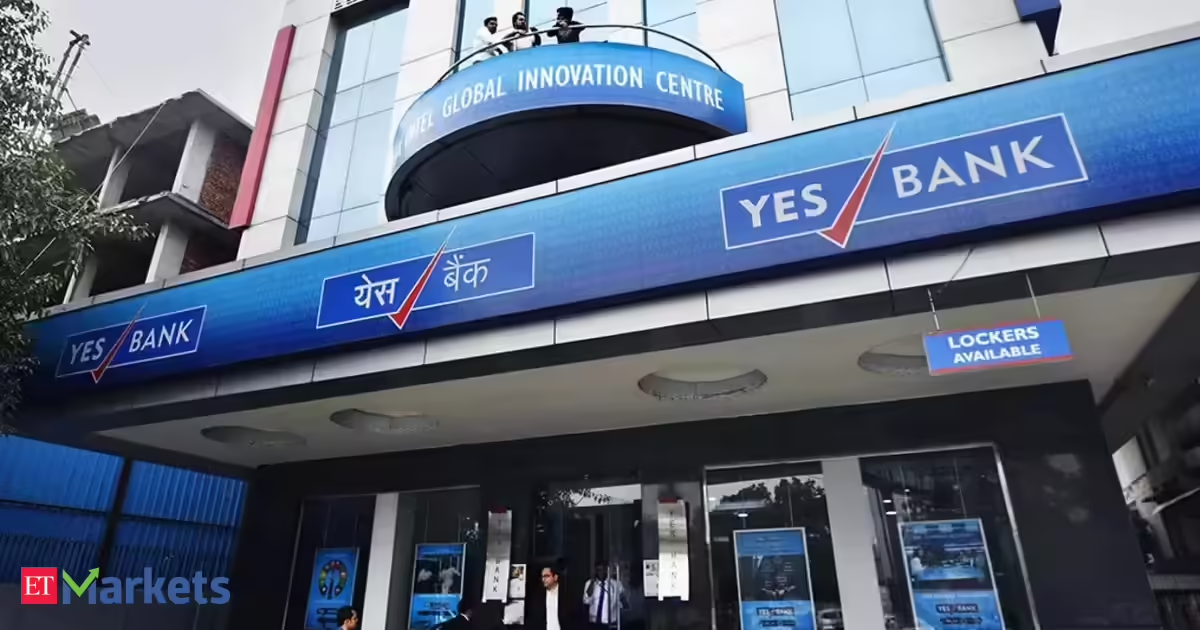
YES Bank share price rises 3% on partnership with Northern Arc to extend lending offerings

Published

on

YES Bank share price rises 3% on partnership with Northern Arc to extend lending offerings
Shares of YES Bank rose over 3% to their day’s high of Rs 24.38 on the BSE on Tuesday after the private lender announced a strategic partnership with Northern Arc Capital aimed at expanding access to credit, scaling digital lending, and offering debt investment opportunities to customers.

The collaboration brings together YES Bank’s balance-sheet strength, digital infrastructure, and distribution network with Northern Arc Capital’s origination, underwriting and technology capabilities.

The partnership is also a result of YES Bank’s collaboration with Sumitomo Mitsui Banking Corporation (SMBC), which is the largest strategic shareholder in YES Bank and a key shareholder in Northern Arc Capital.

According to the companies, SMBC played a role in bringing together the two platforms, with the partnership expected to leverage synergies across origination, distribution, technology and balance-sheet capacity. The companies described the agreement as the first in a series of potential collaborations between YES Bank and Northern Arc Capital.

Advertisement

As part of the arrangement, Northern Arc Capital will use its network of 368 originator partners, comprising financial institutions, to facilitate credit deployment for YES Bank through its placements business. The partnership will provide the lender access to a diversified pipeline of credit opportunities sourced through Northern Arc’s ecosystem of lending partners.


The companies said the alliance will also focus on expanding retail lending through Northern Arc’s nPOS co-lending platform. The initiative will be supported by data-led underwriting, risk-sharing structures and portfolio monitoring frameworks, while leveraging Northern Arc’s origination network across underserved markets.
In addition to lending, the partnership will extend to wealth and investment products. Northern Arc Investment Managers (NAIM), a wholly owned subsidiary of Northern Arc Capital, will offer Alternative Investment Funds (AIFs) and Portfolio Management Services (PMS) to YES Bank’s retail, affluent and institutional clients.Further, Altifi, Northern Arc Capital’s online bonds platform, will be integrated with YES Bank’s wealth management ecosystem, enabling customers to access fixed-income investment products through a technology-enabled interface.

A key aspect of the collaboration is the integration of technology platforms across both organisations. Northern Arc’s proprietary platforms, including nPOS, NIMBUS and NuScore, will be integrated with YES Bank’s digital lending architecture to support loan onboarding and credit delivery at scale.

Commenting on the development, Ashish Mehrotra, Managing Director and Chief Executive Officer of Northern Arc Capital, said the partnership combines technology, distribution and risk management capabilities to improve access to financial services and strengthen credit market linkages.

Rajan Pental, Executive Director at YES Bank, said the partnership aligns with the bank’s strategy of building technology-enabled credit infrastructure and will help expand formal credit access while also opening up private credit and alternative investment opportunities for a wider customer base.

Advertisement

(Disclaimer: Recommendations, suggestions, views and opinions given by the experts are their own. These do not represent the views of The Economic Times)

Continue Reading

Business

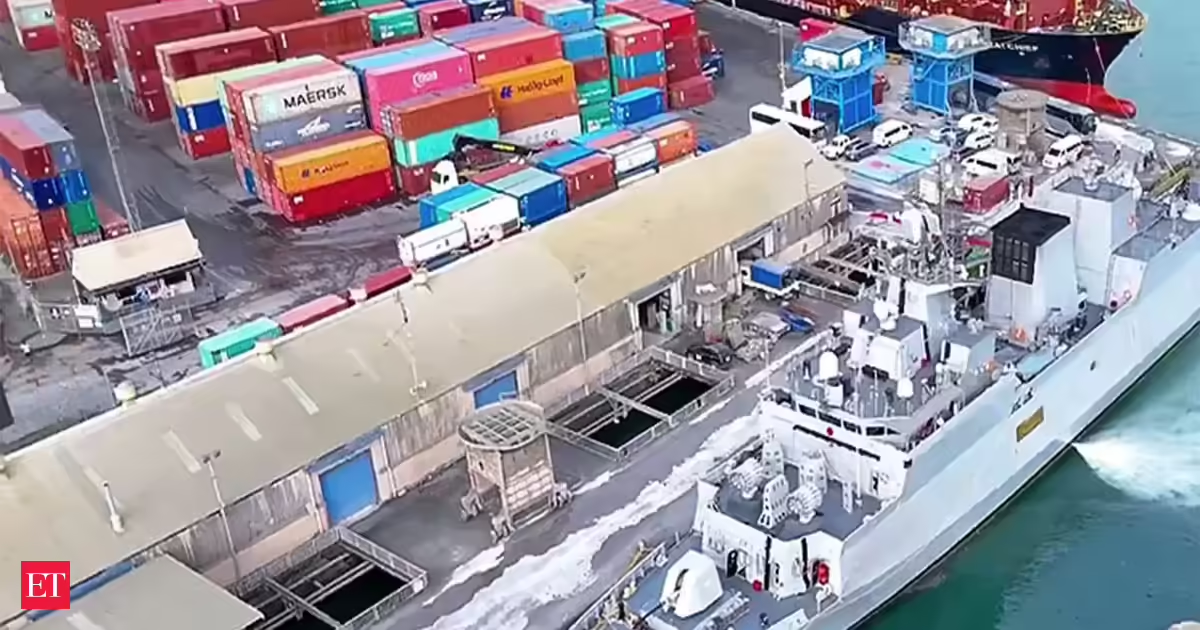
From Oman to Tanzania: How the Iran war is redrawing India’s trade map

Published

on

From Oman to Tanzania: How the Iran war is redrawing India’s trade map
The conflict in West Asia is reshaping India’s trade flows in unexpected ways, triggering a dramatic reordering of both import sources and export destinations.

The most striking shift has been Oman’s emergence as a key trade partner. Ranked only 30th among India’s import sources in April-May 2025, the Gulf nation has jumped to 10th place in the first two months of the current financial year. Imports from Oman surged 3.8 times to $3.4 billion, largely driven by energy shipments.

The changes extend far beyond the Gulf. The UAE slipped to fourth place among India’s import partners, while Russia reclaimed the second spot, followed by the US. India’s search for alternative LPG supplies helped lift imports from the US, while purchases from Brazil rose 2.8 times to $2.7 billion. Imports from Peru climbed 3.7 times to more than $2 billion, making it India’s 20th-largest import source compared with 35th a year earlier.

Screenshot 2026-06-16 125017

Export patterns have also undergone a significant shift. Singapore overtook China and the Netherlands to become India’s third-largest export destination during April-May, trailing second-ranked UAE by just $180 million. Tanzania emerged as the eighth-largest destination for Indian exports, up from 25th place a year ago, while South Africa climbed to 10th.

According to Commerce Secretary Rajesh Agrawal, exports of oil products and gems and jewellery have driven Tanzania’s rise, with shipments increasing from $800 million in April-May last year to $2.2 billion this year. Exports to Sri Lanka nearly tripled to $1.8 billion, lifting the island nation to 12th place among India’s export markets.
Singapore’s rise has been fuelled largely by a 2.2-fold increase in imports of Indian petroleum products, with exports touching $5.1 billion. The island nation has been among the economies most affected by disruptions caused by the conflict in West Asia, helping it edge past China despite a more than 25% increase in Indian exports to the world’s second-largest economy.
The disruption of shipping routes through the Strait of Hormuz, the vital gateway to the Persian Gulf, has elevated Oman’s strategic importance. Agrawal said Oman, with which India recently operationalised a free trade agreement, has opened the ports of Sohar, Salalah and Duqm for the transit of Indian goods to destinations across the region, including the UAE.
These arrangements have helped India restore exports to West Asia to nearly last year’s levels. Imports from the region, however, remain around 18% lower due to ongoing disruptions in energy supplies.

Continue Reading

Business

SpaceX Stock Jumps 11% in Premarket Trading as Momentum Builds After Record-Breaking IPO

Published

on

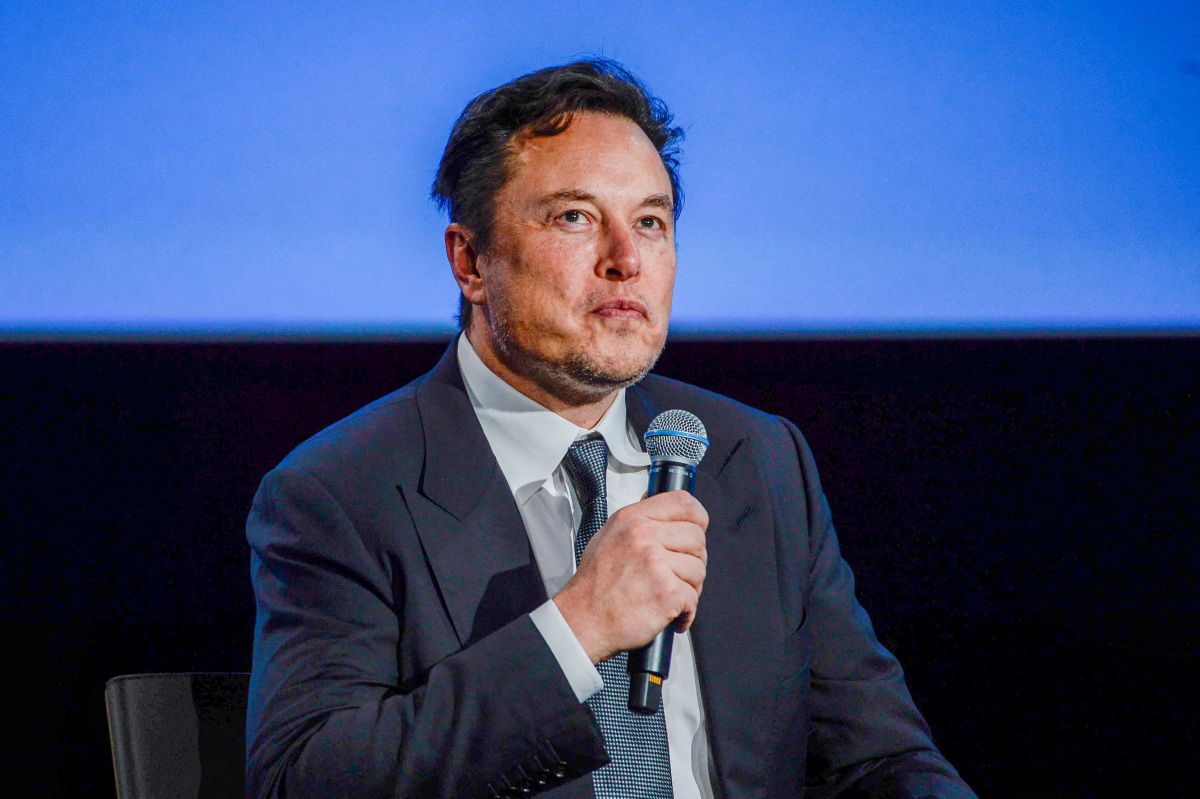
Tesla founder Elon Musk attends Offshore Northern Seas 2022 in Stavanger

NEW YORK — SpaceX shares surged 11% in premarket trading on Tuesday, extending gains from its blockbuster initial public offering as investors continued to embrace Elon Musk’s rocket company amid strong demand for its satellite services and ambitious plans for future growth.

The space technology and artificial intelligence firm, trading under the ticker SPCX, has seen remarkable volatility since its debut on Friday. Shares jumped as much as 20% in their first full day of trading, closing at levels that pushed the company’s market capitalization well above $2 trillion and cemented Musk’s status as the world’s wealthiest individual when combining his stakes across ventures.

Monday’s premarket activity reflected sustained enthusiasm, with traders betting on SpaceX’s dominant position in commercial launches, its rapidly expanding Starlink broadband network and potential synergies with Musk’s other enterprises. The latest move comes as the company positions itself at the intersection of space exploration and artificial intelligence infrastructure.

Musk, who serves as SpaceX CEO, fueled optimism over the weekend with a post on X stating the company “might be able to reach approximately” $1 trillion in revenue by 2030. The comment highlighted ambitious targets for Starlink subscriber growth, reusable rocket operations and new ventures in orbital data centers and deep-space missions.

Advertisement

Record IPO Sets Stage for Continued Interest

SpaceX’s IPO, priced at $135 per share, raised $75 billion in what became the largest public offering in history. The stock opened at $150 and climbed as high as $176.52 before closing at $160.95 on its first trading day, delivering immediate gains for early investors and employees with equity stakes.

The offering drew overwhelming demand, with institutional investors oversubscribing by a significant margin and retail orders reaching tens of billions of dollars. The strong debut reflected broad excitement about SpaceX’s technological leadership and its role in transforming access to space and global connectivity.

Founded in 2002, SpaceX has achieved what many once considered impossible: routine reuse of orbital rockets, dramatically lowering launch costs and increasing flight cadence. The company’s Falcon 9 has become the workhorse of the industry, with hundreds of successful missions and a reliability record that has captured the majority of commercial and government payloads.

Advertisement

Starlink and Diversification Drive Value

Starlink, SpaceX’s satellite internet constellation, has emerged as a major revenue generator. The service now connects millions of users worldwide, particularly in remote and underserved areas, and continues to expand with new satellite deployments. Recent deals, including infrastructure partnerships with major technology firms, have further validated its potential as a high-margin business.

The company’s merger with Musk’s xAI startup and integration with his social media platform X have created additional synergies. These moves position SpaceX within a broader ecosystem of artificial intelligence, connectivity and data services, appealing to investors seeking exposure to multiple high-growth technology frontiers.

Analysts have noted the company’s unique advantages, including vertical integration from rocket manufacturing to satellite operations and a track record of rapid innovation. While development of the fully reusable Starship vehicle has faced technical and regulatory hurdles, successful test flights have reinforced confidence in its long-term potential for crewed missions, cargo transport and point-to-point Earth travel.

Advertisement

Challenges and Risks Remain

Despite the enthusiasm, SpaceX faces significant challenges. The company remains capital-intensive, with substantial investments required for Starship development, satellite production and ground infrastructure. Regulatory scrutiny from bodies like the Federal Aviation Administration continues to influence launch schedules and expansion plans.

Competition in the launch market is intensifying, with Blue Origin’s New Glenn and other entrants seeking to challenge SpaceX’s dominance. Starlink also faces regulatory hurdles in various countries and competition from other satellite broadband providers.

Valuation concerns have emerged as shares trade at elevated multiples. Some analysts caution that the current price reflects optimistic assumptions about future growth and execution on ambitious timelines. Profitability in the core launch business has improved with reusability, but Starlink’s path to sustained high margins will depend on subscriber acquisition and retention.

Advertisement

Market Reaction and Broader Implications

The premarket surge on Tuesday followed a strong first week of trading, with shares maintaining momentum despite some profit-taking. Institutional interest has remained robust, while retail investors have shown particular enthusiasm for the story of innovation and exploration.

The IPO has provided SpaceX with additional capital to accelerate its plans while offering liquidity to employees and early backers. It has also increased transparency, subjecting the company to public market reporting requirements and analyst coverage.

Broader implications for the commercial space sector are significant. SpaceX’s public success could encourage further investment in the industry, validating the model of privately funded space ventures. It also highlights the growing convergence of space technology with artificial intelligence and communications infrastructure.

Advertisement

Investor Considerations

For those evaluating SpaceX as an investment, the company offers exposure to multiple transformative trends: reusable spaceflight, global broadband connectivity and orbital infrastructure. However, the stock’s volatility and dependence on Musk’s leadership introduce notable risks.

Analysts recommend a long-term perspective, given the capital-intensive nature of the business and the extended timelines for major projects like Starship. Diversification remains important, as single-stock exposure to any high-growth technology company carries inherent uncertainties.

The strong premarket performance on Tuesday underscores continued market appetite for SpaceX’s story. As the company executes on its ambitious roadmap, investors will watch closely for progress on Starlink subscriber growth, launch cadence and regulatory milestones.

Advertisement

SpaceX’s rise from a startup challenging conventional wisdom to a multi-trillion-dollar public company exemplifies the potential rewards of bold technological innovation. While challenges remain, its dominant market position and diversified growth drivers position it as a central player in humanity’s expanding presence in space and the broader technology landscape.

The coming weeks and months will test whether the initial public market enthusiasm can be sustained as SpaceX navigates the realities of public company reporting, competitive pressures and execution risks. For now, the momentum built since its record-breaking IPO shows little sign of fading.

Continue Reading

Business

‘Don’t know why we are being sent back’: Iran coach Amir Ghalenoei upset after team asked to leave US immediately after FIFA World Cup 2026 opener

Published

on

'Don't know why we are being sent back': Iran coach Amir Ghalenoei upset after team asked to leave US immediately after FIFA World Cup 2026 opener
Iran’s FIFA World Cup 2026 campaign began with a thrilling 2-2 draw against New Zealand at SoFi Stadium in Los Angeles, but the team’s post-match concerns quickly moved away from the result. Iran coach Amir Ghalenoei raised questions over the team’s travel arrangements, claiming the squad was asked to leave the United States immediately after the match and return to their base in Tijuana, Mexico.

Ghalenoei said the team had expected to stay overnight in California to recover before travelling back the next day. However, the players were reportedly told after the final whistle that they needed to leave right away.

Also Read-telegram ban

Iran coach questions sudden travel decision

The Iran coach expressed disappointment over the decision, saying the change in plans affected the team’s recovery process after a physically demanding match.

Advertisement

“They didn’t even give us time to recover, after the game they told us that we had to leave immediately. Recovery is extremely important after a match, but we were asked to get on a plane and return to our camp in Tijuana. We are really troubled by that,” Ghalenoei said through an interpreter.


Ghalenoei added that the team was unaware of the reason behind the sudden change and suggested that decisions were being taken outside the team’s control.
“To be honest, we don’t know why we are being sent back. It feels very strange. It seems that decisions are being made for us elsewhere. We were supposed to arrive two days before the game and stay overnight afterwards before returning the next day. We have no idea why that changed,” he added.The coach also claimed Iran had faced several difficulties during their preparation for the tournament.

“I think our team is perhaps the most oppressed in the World Cup,” Ghalenoei concluded.

Captain Mehdi Taremi raises concerns over visa issues

Iran captain Mehdi Taremi also spoke about the challenges faced by the team, saying some members of the delegation could not join the squad after visa problems.

He said officials from the Iranian Football Federation, support staff and media representatives were among those affected.

Advertisement

“We have to leave Los Angeles right now, and it is not good for us,” Taremi said. “I think FIFA have to help us more than this. … Everything is like a disaster, actually, for us,” he concluded.

Iran and New Zealand share points in World Cup opener

The match itself produced an exciting contest, with New Zealand taking the lead twice but failing to hold on. Elijah Just scored in the seventh and 54th minutes, with both goals created by captain Chris Wood.

Iran responded on both occasions. Ramin Rezaeian scored the equaliser before half-time, while Mohammad Mohebbi headed in Iran’s second goal after the break to make it 2-2.

Both teams had chances late in the game, but neither side managed to score the winning goal, forcing them to settle for one point each in their Group G opener.

Advertisement

Iran faces another US travel challenge

Iran’s travel concerns may continue during the group stage. Their next Group G match against Belgium is also scheduled at SoFi Stadium on Sunday.

The team will have to travel back to the United States later this week before returning to Los Angeles for their next fixture.

Continue Reading

Business

Fortescue renews partnership with RFDS WA

Published

on

Fortescue renews partnership with RFDS WA

The Andrew Forrest-led miner has locked in another five years of support for the Royal Flying Doctor Service of Western Australia to the tune of $7.25 million.

Continue Reading

Business

Debenhams CEO hails ‘successful transformation’ as Boohoo group losses narrow

Published

on

Business Live

Fashion firm which also owns Pretty Little Thing and Karen Millen is reinventing itself from a high-street retailer into an online marketplace operator

Debenhams signs have appeared on Dale Street in Manchester city centre after fashion giant Boohoo rebranded

Debenhams signs returned to Manchester city centre last year after fashion giant Boohoo rebranded(Image: Reach)

The owner of Debenhams has heralded a “successful transformation” following its dramatic turnaround, although the fast-fashion group still recorded a £100m loss.

Advertisement

The AIM-listed group, whose portfolio includes brands such as Debenhams, Pretty Little Thing and Karen Millen, saw its pre-tax loss narrow by 69 per cent to £108m in the year to February.

The fashion firm, which trades as Boohoo, has been pursuing a radical transformation as it seeks to halt substantial losses and reinvent itself from a high-street retailer into an online operator.

While Debenhams Group saw revenue decline by 25 per cent to £917m, the firm explained this is because it has “deliberately” shifted to a higher-margin marketplace model, whereby income from commission, rather than the full transaction value, is recorded as revenue.

Its share price dropped by two per cent to 24.5p at Tuesday’s market open, although the stock has risen 42 per cent over the past month, as reported by City AM.

Advertisement

The listed business saw gross margin rise by 0.4 per cent to 51.1 per cent, representing the first improvement since 2022. The group said it is recording a higher volume of 100 per cent margin sales.

Chief executive Dan Finley said each of the group’s brands is now profitable on an adjusted earnings basis, celebrating a “year of significant and successful transformation”.

Billionaire fast-fashion tycoon Mike Ashley’s Frasers Group holds a 29 per cent stake in Debenhams Group and, in 2024, launched an unsuccessful attempt to secure a seat on its board. Finley’s restructuring strategy has featured an aggressive cost-reduction programme, and Debenhams announced on Tuesday that it is on course to deliver a further £100m in savings in the year ahead, taking total reductions under the new leadership to £200m.

The company highlighted that the Debenhams brand “sits at the centre of the group going forward,” with its marketplace model having been introduced in Ireland, Australia and the US this year.

Advertisement

Finley, who assumed control in November 2024, said: “The cost base has been reset, warehouse consolidation completed, the tech re-platform delivered, stock rightsized, and onerous costs exited. The turnaround is firmly on track.”

Debenhams Group said it anticipates improving its margins and further reducing its statutory loss in the forthcoming financial year.

The group received praise from analysts last week when it revealed the sublease of its US distribution centre, which Finley characterised as “a major contributor to the challenges that the company has faced”.

Analysts at Zeus described Debenhams as having delivered a “year of decisive transformation”.

Advertisement

The transition to a marketplace model “masks” the fashion retailer’s topline gains, alongside improvements to profitability, cash conversion and balance-sheet strength, they noted.

The analysts suggested that the fashion business “remains fundamentally undervalued, but this should continue to correct” if its management achieves double-digit earnings growth. Wayne Brown, an analyst at Panmure Liberum, hailed Debenhams Group as “one stock that is marching forward and delivering on everything they have said they would”.

Continue Reading

Business

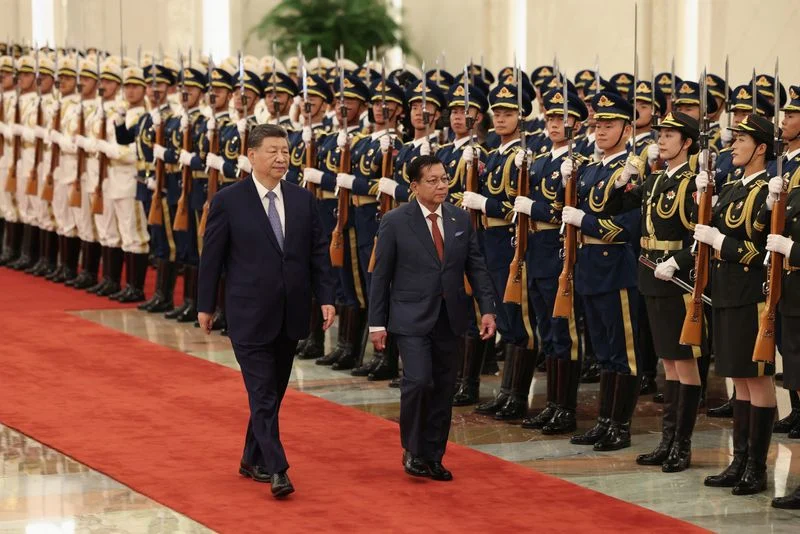
China’s Xi backs Myanmar’s president as two leaders meet in Beijing

Published

on

China’s Xi backs Myanmar’s president as two leaders meet in Beijing


China’s Xi backs Myanmar’s president as two leaders meet in Beijing

Continue Reading

Trending

Copyright © 2025