

Business
Fertiliser Shortages to Cause Dramatic Food Price Rises in 2027, Warns Grosvenor Boss


British farmers are already nursing input cost rises of up to 70 per cent, and the worst of the squeeze on the world’s food bill is still to come.
That is the blunt assessment from the boss of the Grosvenor Group, the 349-year-old property and farming empire controlled by the Duke of Westminster, who has warned that fertiliser shortages caused by the war in Iran will have a “dramatic” effect on global food prices next year.
Mark Preston, executive trustee of Grosvenor, told Business Matters that fertiliser prices were “already quite expensive” before the conflict, but had since climbed by between 50 and 70 per cent since hostilities began in late February. The trigger, he said, was the effective closure of the Strait of Hormuz, the narrow shipping artery through which a substantial share of the world’s fertiliser and the liquefied natural gas needed to make it must pass. Iran’s Islamic Revolutionary Guard Corps indicated on Wednesday that the strait could shortly reopen, but with roughly 1,600 vessels still stranded, the damage to supply chains is already done.
For UK arable farmers, the immediate growing season has largely been insulated. Most fertiliser earmarked for this year’s crops was bought and applied before prices ran away. The problem, Preston explained, is the planting cycle that follows. “Farmers are not buying that fertiliser, they’re sitting on their hands and hoping things will improve, which they probably won’t,” he said. The likely response, he added, will be a swing from winter cropping towards spring cropping, giving growers a little more breathing room, but at the cost of yield, planning certainty and, ultimately, the price on the supermarket shelf.
Grosvenor itself is unusually well placed to weather the storm. The group’s flagship Eaton estate in Cheshire, the Duke’s traditional family seat since the 1400s, runs a large dairy and arable operation that supplies millions of litres of milk to customers including Tesco and Müller, and leans heavily on cow dung rather than bagged nitrogen. Its other rural holdings span Lancashire and Scotland, complementing the Mayfair and Belgravia estates that anchor the group’s central London portfolio.
The wider picture is considerably more alarming. “It’s going to be a very, very dramatic problem for the world, not just the UK in terms of food, just because so much fertiliser comes through those straits,” Preston said. He argued the food security risk now eclipses the energy story that has dominated headlines: “The concern is at least as much, if not more, around food and fertiliser than it is around oil, because there are alternative sources of oil. There aren’t very many alternative sources of nitrogen, for the production of fertiliser.”
His warning echoes that of Yara International, the world’s largest fertiliser producer, whose chief executive cautioned last week that the conflict could push some of Africa’s poorest communities into outright food shortages. Domestic sentiment is already turning: research by Opinium this week found that 80 per cent of Britons are anxious about grocery prices, with retailers continuing to pass cost rises through to the till.
Grosvenor’s wider results illustrate just how mixed the trading climate has become for diversified British groups. Underlying profits fell 18 per cent to £70.5m last year, dragged down by its North American operations, although the UK property arm proved a notable bright spot, running at 97 per cent occupancy. The group’s largest scheme to date, the redevelopment of South Molton Street near Oxford Street — taking in offices, shops, a hotel and 33 homes, is on course for completion next year. In the North West, work has begun on the first phase of an ambition to deliver 700 social homes; 69 have been built near Chester and Ellesmere Port, with a further 120 due this year.
Hugh Grosvenor, the 35-year-old duke and one of Britain’s wealthiest individuals with an estimated fortune of £9.56bn, received dividends paid to family trusts that crept up from £52.4m in 2024 to £53.7m. The group’s total tax bill more than doubled to £248m, of which £200m was paid in the UK, reflecting buoyant property disposals that lifted personal taxes on income and gains by £61m and corporate income tax by £71.9m.
The company has also been doubling down on flexible workspace, a segment it believes is becoming structurally embedded rather than a post-pandemic fad. James Raynor, chief executive of Grosvenor’s property arm, said roughly 23 per cent of the group’s London offices were now flex space, with occupancy “well over 90 per cent”. Last week, the company broke ground on its first directly managed flexible workspace outside the capital, in Manchester’s Northern Quarter, a vote of confidence in the regional office market and in the appetite of SMEs for short-form, fully serviced space.
For owners of small and medium-sized businesses, particularly those in food manufacturing, hospitality and agriculture, Preston’s warning lands as a clear signal to lock in supplier contracts, hedge where possible and review pricing strategy ahead of what looks set to be a difficult 2027.

Jamie Young
Jamie is Senior Reporter at Business Matters, bringing over a decade of experience in UK SME business reporting.
Jamie holds a degree in Business Administration and regularly participates in industry conferences and workshops.
When not reporting on the latest business developments, Jamie is passionate about mentoring up-and-coming journalists and entrepreneurs to inspire the next generation of business leaders.

Business
SpaceX Sets $135 Price for Record $75 Billion IPO as Musk Takes Rocket Firm Public: Who Can Invest?
NEW YORK — Elon Musk’s SpaceX is preparing for what could become the largest initial public offering in history, with the company targeting a $135 per share price to raise approximately $75 billion and secure a valuation near $1.75 trillion upon listing on Nasdaq next week.
The spacecraft manufacturer, officially known as Space Exploration Technologies Corp., plans to sell around 555.6 million shares and begin trading under the ticker symbol SPCX as early as June 12. The move would instantly place SpaceX among the 10 most valuable publicly traded companies in the United States while giving Musk access to substantial new capital for ambitious projects.
SpaceX has transformed from a startup challenging traditional aerospace giants into a leader in reusable rockets, satellite internet through Starlink, and advanced space transportation. The IPO comes as the company expands into artificial intelligence infrastructure and long-term goals such as Mars colonization and asteroid mining.
Details of the Offering
According to regulatory filings and reports, SpaceX aims to price the shares at a fixed $135 level ahead of its roadshow, an unconventional approach that bypasses traditional price discovery. The offering would value the company at roughly $1.75 trillion, positioning it ahead of many established tech firms but behind the largest players like Apple, Microsoft and Alphabet.
Proceeds are expected to fund ongoing operations, including Starship development, Starlink constellation growth, and new ventures such as placing AI data centers in space. The company has a history of significant investment in research and development, which has contributed to past net losses.
Musk is expected to retain dominant voting control, holding more than 80% of voting power after the offering through super-voting shares. This structure ensures he maintains strategic direction over the company even as public shareholders gain economic exposure.
Financial Picture and Risks
SpaceX reported $18.6 billion in revenue last year but posted a net loss of $4.9 billion, reflecting heavy spending on technology and infrastructure. The prospectus highlights ongoing losses and notes that profitability is not guaranteed in the near term.
Analysts have pointed to both the enormous potential and substantial risks. The company operates in a capital-intensive industry with technical, regulatory and geopolitical challenges. Rocket launch failures, satellite deployment issues and competition from firms like Blue Origin and international players could impact performance.
High valuation multiples have drawn skepticism. Some market observers question whether current pricing fully accounts for execution risks in unproven areas such as large-scale Mars missions or orbital data centers. However, supporters highlight Musk’s track record of delivering on seemingly impossible timelines with reusable Falcon rockets and rapid Starlink growth.
Who Can Invest
Institutional investors are expected to dominate initial allocations, but retail investors will have opportunities through brokerage platforms and certain investment apps. Indirect exposure may also come through pension funds, mutual funds or index trackers that add the stock upon listing.
SpaceX has reserved a portion of shares for employees and select individuals, a common practice in tech IPOs to reward early contributors. Trading on Nasdaq is anticipated to bring heightened volatility, typical for high-profile debuts with strong retail interest.
Strategic Vision
The IPO prospectus outlines an expansive future. Musk has long emphasized making humanity multi-planetary to safeguard against existential risks on Earth. Initiatives include advancing Starship for crewed Mars missions and expanding satellite networks for global connectivity.
Integration possibilities with Musk’s other ventures, including Tesla and xAI, have been discussed in market commentary, though no formal merger plans have been confirmed. The company’s dual focus on space exploration and AI infrastructure positions it at the intersection of two transformative industries.
Market Context
The timing aligns with renewed investor enthusiasm for technology and space-related themes. If successful, the IPO could pave the way for additional large offerings in AI and related sectors later this year. It also reflects broader trends of private companies seeking public capital to fund ambitious growth after years of elevated private valuations.
Wall Street banks, led by Goldman Sachs, are supporting the transaction. The accelerated timeline — with confidential filing in April and public details emerging in May — demonstrates efficient regulatory navigation.
Potential Impact
A successful debut would significantly boost Musk’s wealth on paper and provide SpaceX with resources to compete at a new scale. It could also influence talent attraction, supplier relationships and government contracting dynamics in the aerospace sector.
For investors, the stock represents a high-risk, high-reward bet on Musk’s execution capabilities. Historical comparisons to Tesla’s volatile but ultimately rewarding public journey are common, though SpaceX operates in a different regulatory and technical environment.
As the June 12 listing approaches, attention will focus on final pricing adjustments, demand indications and early trading performance. The offering marks a pivotal moment for commercial spaceflight, potentially democratizing investment in what was once the domain of governments and a handful of billionaires.
Market participants will closely monitor how SpaceX balances its visionary goals with the quarterly performance expectations of public company life. The coming weeks promise intense scrutiny as one of the most anticipated debuts in market history gets underway.

Goldman Sachs expects SpaceX’s AI revenue to surge 100-fold by 2030, FT reports
Intel: Getting Better, But Not Quite There Yet
Texas REALTORS Chairman of the Board Jennifer Wauhob speaks to Fox News Digital about the Lone Star State’s recent wealth and population boom that’s ‘creating good things for Texas.’
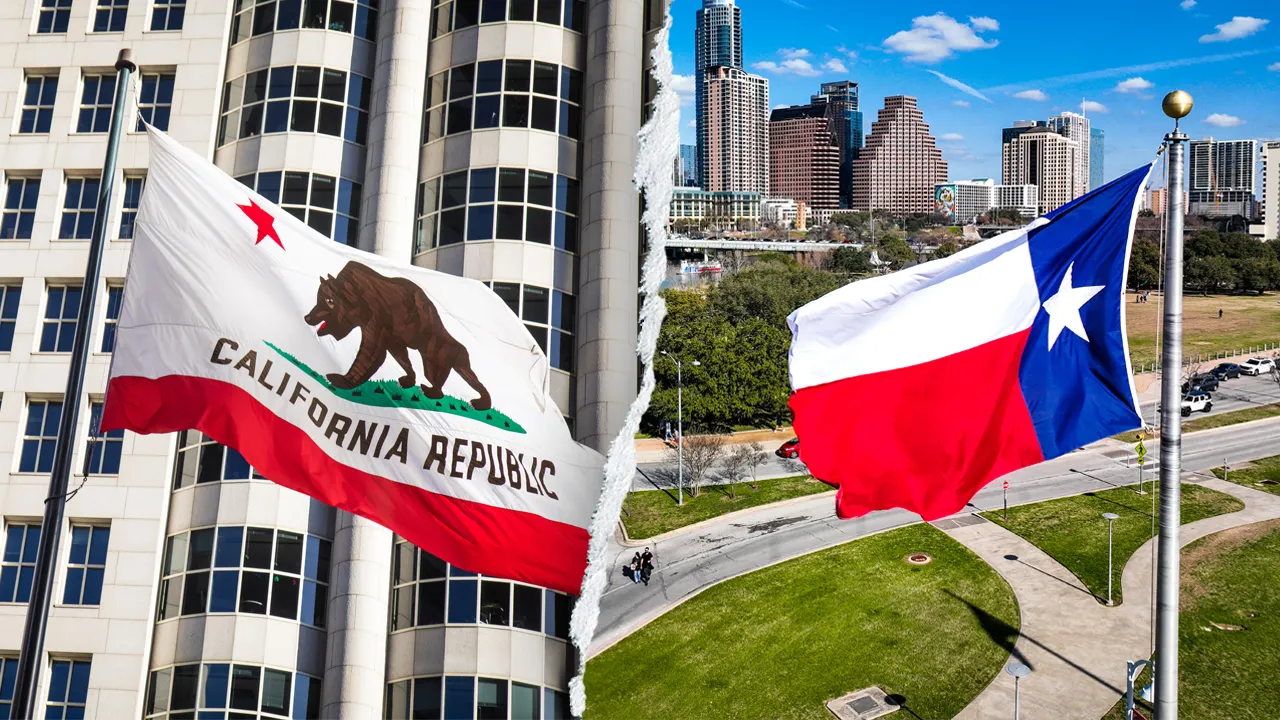
A shifting economic landscape has culminated in Texas, dethroning California as the nation’s premier hub for Fortune 500 companies.
Data from the 2026 Fortune 500 list show Texas leading with 57 headquarters, compared with California’s 56, marking a reversal from two years ago, when California held the lead.
Additionally, corporations in Texas generated $2.8 trillion in revenue, while those in California reported $2.7 trillion in revenue.
“Texas is the undisputed headquarters of headquarters,” Texas Gov. Greg Abbott said in a press release reacting to the news. “The world’s leading businesses invest with confidence in Texas because of our welcoming business climate, predictable regulatory environment, and skilled and growing workforce. People and businesses are choosing Texas because Texas works.”
FLEEING FOR THEIR FUTURES, A CALIFORNIA EXODUS UNLEASHES A FLORIDA ‘GOLD RUSH’
In the past year alone, companies including ExxonMobil, Chevron, Samsung Electronics America, SpaceX and X have either moved their headquarters or their legal incorporation to Texas — mostly from California, with two moving from New Jersey.
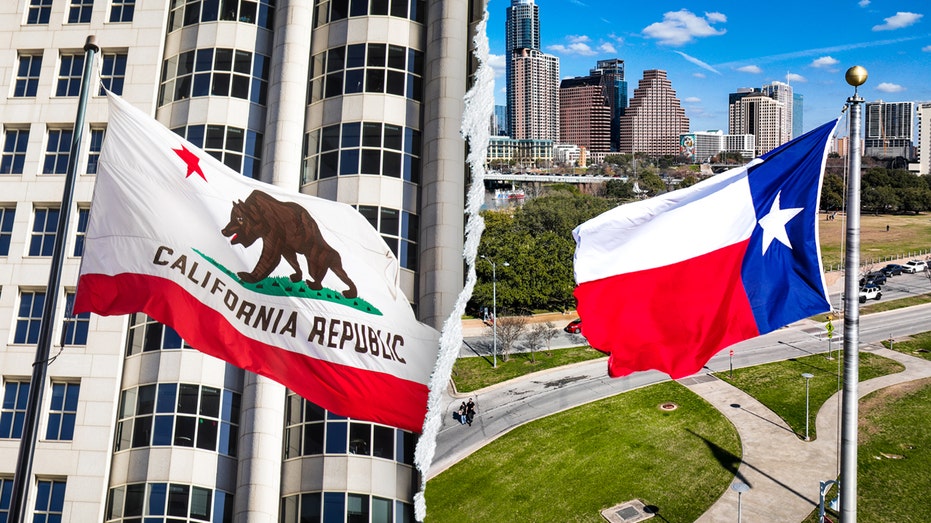
California has lost its title of most Fortune 500 companies to Texas for the first time in two years. (Getty Images)
Company relocations have also been accompanied by billionaires and public figures moving their homes and personal portfolios to the Lone Star State. Most recently, Uber co-founder Travis Kalanick revealed his move to Austin, while Elon Musk, Mark Cuban, Palantir co-founder Joe Lonsdale and David Sacks have made their mark on Texas in recent years.
“Americans are voting with their feet. They want places that are livable. They want places that are workable. They want places that are sustainable and affordable,” Texas REALTORS Chair Jennifer Wauhob previously told Fox News Digital. “And so I think this migration, as we call it, is really turning into a long-term shift.”
The migration of major corporations and prominent business figures comes amid mounting concern over California’s proposed tax policies, including a controversial one-time 5% wealth tax on the state’s wealthiest residents.
Samsung Electronics America Inc. relocates its headquarters from New Jersey to Texas, citing a business transformation for long-term growth.
The Service Employees International Union–United Healthcare Workers West (SEIU-UHW) said it has collected more than 1.55 million signatures, according to a press release, nearly double the 875,000-signature requirement — to place a one-time tax on billionaire assets on the California ballot.
The California Billionaire Tax Act would target the net worth of roughly 200 residents and impose a one-time 5% tax on the net worth of California residents with assets exceeding $1 billion. The tax would be due in 2027, and taxpayers could spread payments over five years, with interest, according to the Legislative Analyst’s Office.
GET FOX BUSINESS ON THE GO BY CLICKING HERE
As business expenses and the cost of living continue to rise in the Golden State, South Florida reaps the benefits as tech moguls and other wealthy business owners find a financial safe haven in the Sunshine State.
If the measure is approved by voters in November, anyone who was a California resident on Jan. 1, 2026, would owe the tax, according to the proposal. In practical terms, a resident with $20 billion in net worth on that date would owe a one-time tax of $1 billion, payable over five years.
Supporters argue the billionaire tax is a direct response to “cuts to Medicaid and other federal health insurance programs by the Trump administration last year,” while opponents of the measure have warned the tax could kill an estimated 108,000 high-paying jobs over the next 20 years.


Protein Industries Canada invests in biotech-brewer partnership.


Part of Little Debbie brand.
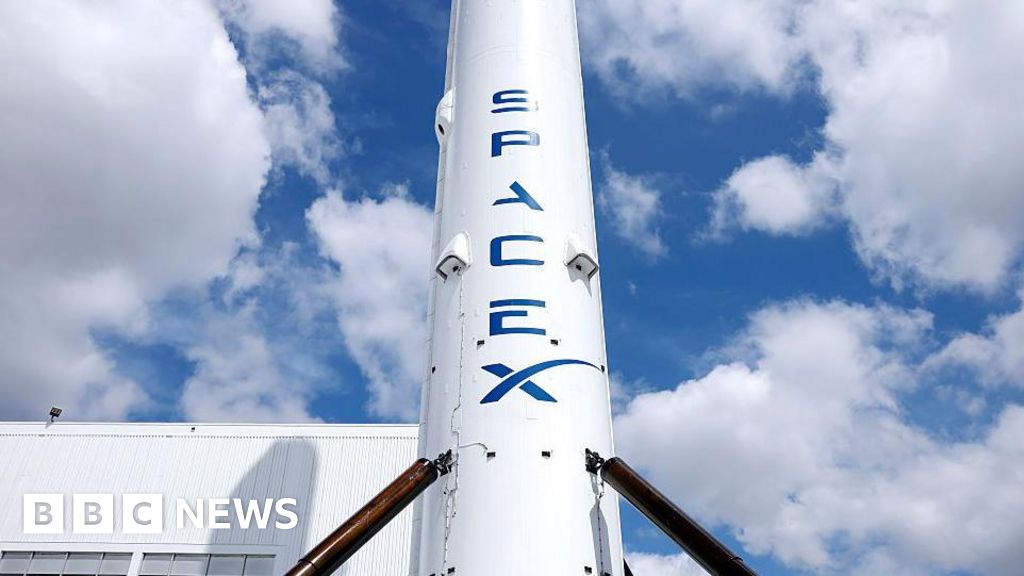
SpaceX shares will be traded on the New York technology-focused Nasdaq market, and some of the big global investment institutions are likely to buy shares. But individuals, including in the UK, will also get a chance to buy via certain investment platforms and brokers.
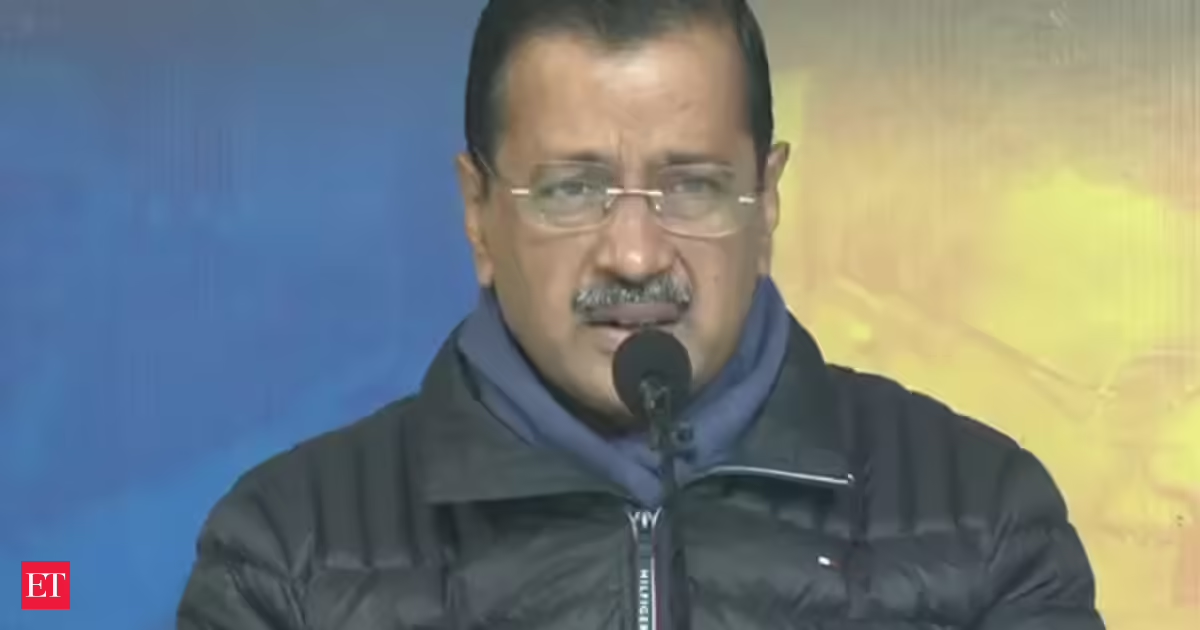
“Hoax calls are being made to the public, saying that BJP will end all AAP schemes. This is a blatant lie,” he said.
He also wondered how “confidential voter data” was accessed by the party.
“Other than the Election Commission of India, this data is not provided to anyone. How did Kejriwal get the voters’ contact list? This must be inspected,” Verma said.
The BJP’s New Delhi candidate for the Assembly election also alleged the AAP of distributing Rs 500 wrapped in a calendar in the slum areas. He claimed three people were arrested in this regard.

There was no immediate reaction from the AAP on the allegations, nor from Delhi Police.
He said he has filed a complaint with the Election Commission and his party demands an investigation into the matter. BJP leader and party spokesperson Sudhanshu Trivedi, who was also present at the press conference, welcomed the US Supreme Court’s decision to extradite to India Tahawwur Rana, an accused in the 2008 Mumbai terror attacks.
“Under Modi’s leadership, the government remains committed to fighting terrorism. The decision to hand over Tahawwur Rana to India is a welcome one for all of us,” Trivedi said.
Trivedi accused the AAP and Congress of supporting activities that indirectly shield terrorism.
“Atishi’s parents were among those seeking a ‘shama yajna’ (forgiveness ritual) for Afzal Guru,” he alleged, referring to the mastermind of the 2001 Parliament attack.
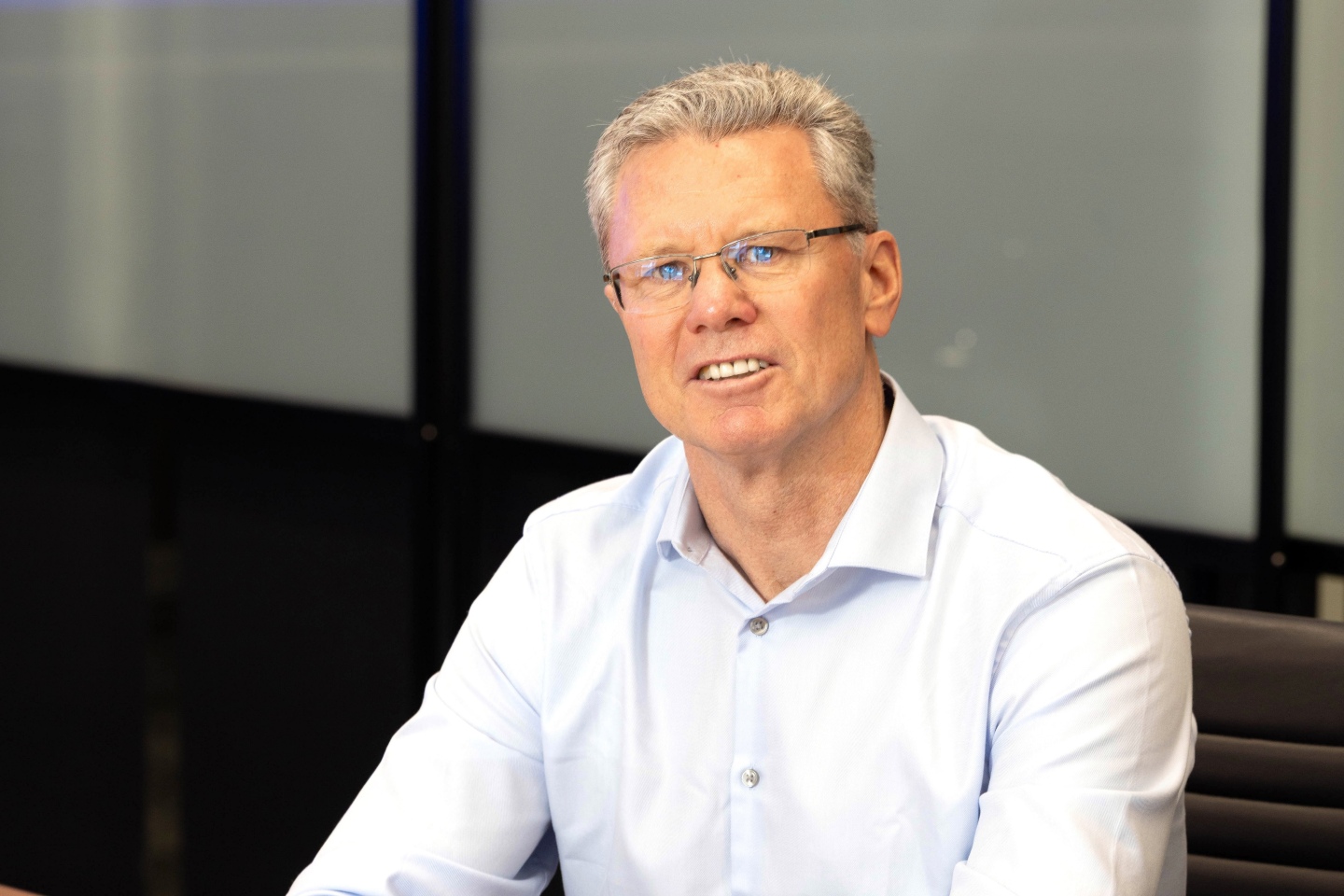
Frontier Energy executive chair Jamie Cullen says the company’s $110 million capital raise is a pivotal achievement for the company.

NEW YORK — The S&P 500 Index posted a modest gain Thursday, closing at 7,559.91 after advancing 6.23 points, or 0.08%, as investors navigated ongoing geopolitical tensions in the Middle East while rotating capital toward small-cap and value stocks.
The benchmark index showed limited movement in a session marked by sector divergence. While technology shares faced pressure from earlier weakness in chip-related names, gains in financials, industrials and consumer staples helped support the broader market. The advance came after the S&P 500 snapped a longer winning streak earlier in the week amid renewed US-Iran hostilities.
Trading remained relatively contained as participants assessed the latest flare-up in the Middle East. Oil prices rose on supply disruption concerns, yet the impact on equities was muted compared to previous episodes of tension. The S&P 500 has now traded in a narrow range near record levels established in recent sessions.
Market Rotation Gains Traction
Smaller companies outperformed once again, with the Russell 2000 rising nearly 1%. This shift reflects investor preference for domestically oriented firms less exposed to international supply chain risks and potential tariff developments. The Dow Jones Industrial Average also advanced, underscoring strength in more traditional sectors.
The technology-heavy Nasdaq lagged, consistent with recent profit-taking in high-valuation growth stocks. Broadcom’s revenue miss earlier in the week continued to weigh on sentiment in semiconductors, though some recovery appeared in related names.
Analysts note the S&P 500’s composition, with heavy weighting toward a handful of mega-cap names, makes it sensitive to any softening in artificial intelligence spending narratives. However, broader participation across sectors has helped stabilize the index during periods of volatility.
Geopolitical and Economic Backdrop
Tensions between the US and Iran escalated with fresh airstrikes, pushing oil prices higher and contributing to inflation worries. South Korea’s won weakened to a two-month low against the dollar on similar concerns, illustrating global spillovers. Yet US markets showed resilience, supported by strong corporate balance sheets and expectations of eventual monetary easing.
The Federal Reserve’s policy path remains a key focus. With inflation data mixed and energy costs fluctuating, markets continue pricing in measured adjustments later in the year. Bond yields moved modestly, offering some support outside of growth sectors.
Economic indicators point to underlying strength. Consumer spending has held up, unemployment remains low, and corporate earnings in non-tech sectors have largely met or exceeded expectations. These factors provide a foundation for the market’s ability to absorb geopolitical shocks.
Earnings Season Progress
Several companies reported results this week, with mixed reactions. While some tech names disappointed on guidance, others in industrials and financials delivered solid performances. The ongoing earnings cycle will be critical in determining whether the market rotation sustains.
The S&P 500’s year-to-date performance remains robust, up more than 10% despite periodic pullbacks. It has hit multiple record highs in 2026, driven initially by AI enthusiasm and later by broadening participation. Goldman Sachs maintains a constructive outlook, projecting further gains through year-end.
Valuation and Risk Considerations
Valuations in the S&P 500 sit above historical averages, particularly in technology. This has prompted caution among some strategists, who advise diversification as the bull market matures. Small-cap valuations appear more attractive relative to large caps, supporting the ongoing reallocation.
Risks include prolonged Middle East conflict disrupting energy markets, potential escalation in trade tensions, and any slowdown in AI capital expenditure. Conversely, de-escalation or stronger-than-expected economic data could fuel further upside.
Volume on Thursday was moderate, suggesting repositioning rather than panic selling. Institutional investors appear to be adjusting portfolios for a potentially more balanced market environment in the second half of the year.
Looking Ahead
Markets will turn attention to upcoming economic releases, including jobs data, and the next wave of corporate earnings. The June Russell reconstitution has added technical tailwinds for small caps, with final adjustments expected soon.
Longer term, many strategists remain optimistic. Strong productivity gains from technology, resilient corporate profits, and potential policy support form a constructive backdrop. However, near-term volatility is likely as investors balance enthusiasm for innovation with geopolitical and valuation realities.
For individual investors, the session reinforced the benefits of diversification. While concentrated tech leadership drove much of the prior rally, 2026 has increasingly rewarded broader exposure. The S&P 500’s modest gain amid crosscurrents highlights the market’s capacity to digest news without sharp moves.
As summer trading approaches, focus will remain on whether small-cap momentum persists and if geopolitical risks subside. The index’s ability to hold near 7,500-7,600 levels suggests underlying buyer interest, even as leadership evolves.

Keely Hodgkinson’s comments speak volumes after what World Athletics chief said about her

SpaceX Sets $135 Price for Record $75 Billion IPO as Musk Takes Rocket Firm Public: Who Can Invest?

Russia sanctions British teenager for alleging A7A5 use in funding Ukraine war



-

 Tech6 days ago
Waymo dominates autonomous vehicle registrations as Tesla trails behind
-

 News Videos6 days ago
This is BROKEN! INSANE 5x MONEY CAR WASH WEEK! The NEW GTA Online UPDATE Today! (GTA5 New Update)
-
 Tech5 days ago
SpaceX just won a second Golden Dome contract. This one is $4.16 billion.
-

 Business3 days ago
Jade Biosciences, Inc. (JBIO) Discusses Positive Interim Results From JADE101 Phase I Healthy Volunteer Study and Development Plans Transcript
-

 News Videos6 days ago
SHE IS KILLING XRP!!! WATCH URGENT AND ACT FAST
-
 NewsBeat6 days ago
FIRST NIGHT REVIEW: Take That bring the Circus back to life in spectacular sun-soaked style
-

 Business5 days ago
Is the Spurs Phenom Already Better Than Prime Diesel?
-
 Crypto World6 days ago
CFTC Has Approved the First Regulated Bitcoin Perpetual Contract in the U.S.
-
 Politics5 days ago
The House | Inside Andy Burnham’s Makerfield Campaign: “Nobody Thinks This Is In The Bag”
-

 Sports2 days ago
French Open 2026 results: Alexander Zverev beats Rafael Jodar and will play Jakub Mensik in semi-finals
-
 NewsBeat6 days ago
Novak Djokovic v Joao Fonseca LIVE: French Open latest scores and results after Jannik Sinner’s shocking collapse
-
 Entertainment6 days ago
Weak ‘Supergirl’ Box Office Tracking Amid Milly Alcock Backlash
-

 Tech2 days ago
CryZENx Releases Fresh Playable Content Deep Inside Jabu-Jabu for His Ocarina of Time Remake
-
 Crypto World6 days ago
Snowflake (SNOW) Stock Rallies on Strong Q1 Results and AI Product Growth
-

 Entertainment6 days ago
Maddox Jolie-Pitt Legally Requests to Drop Brad’s Surname
-

 Business5 days ago
Demand Conditions Improve In Chemicals Sector In April 2026
-
 Entertainment5 days ago
One of the Greatest Sitcoms of All Time Shoots Up Apple TV’s Charts 11 Years Later
-

 Tech6 days ago
This Week In Security: Ubiquiti Fixes, And FreeBSD Joins The Club You Don’t Want To Join
-
 Crypto World6 days ago
MicroStrategy Moves $30 Million in BTC to Coinbase Prime: Is the Bitcoin Sell-Off Already Here?
-
 Crypto World2 days ago
Seagate (STX) Stock Surges to Record High on AI Boom and Legal Settlement
You must be logged in to post a comment Login