

Business
Fleeing for their futures, California’s exodus churns a massive Florida ‘gold rush’


As business expenses and the cost of living continue to rise in the Golden State, South Florida reaps the benefits as tech moguls and other wealthy business owners find a financial safe haven in the Sunshine State.
California’s self-inflicted economic wounds have reached a fever pitch in 2026.
Strapped with record-high gas prices, a staggering $31 billion transit deficit and a radical billionaire wealth tax heading to the ballot this November, the Golden State is witnessing an unprecedented mass migration.
It is no longer just a working-class flight; California’s elite are actively being courted by pro-business states, prompting luxury billboards to tell Angelenos they should “move to Miami, where they are not being persecuted for having extreme wealth.”
As ultra-high-net-worth buyers permanently sever their West Coast ties, urban affairs and real estate experts warn that the progressive enclave is “careening towards a very, very difficult period,” leaving a hollowed-out middle class left behind to bail out the deficit.
“We started to see the outmigration. It was very concentrated among poor, working-class people who were reacting to changes in the economy and prices. Increasingly, the people leaving are wealthier,” Chapman University professor Joel Kotkin told Fox News Digital. “And that means that they’re taking their tax dollars with them. So states like Florida and Texas gain enormously from this kind of trade, both from New York and from California in particular. So one of the things it’s going to do is it’s gonna put pressure on the remaining middle class to bail it out.”

The California-to-Florida exodus has reaped rewards for some, while others in their Golden State home face rising cost and regulation pressures. (Getty Images; iStock)
“The fact that you’re paying more in income tax than you take home yourself on an annual basis is madness to me,” said RIVANI President and founder Robert Rivani, who moved his family and commercial real estate firm from L.A. to Miami in 2020. “I’d be somewhat OK with even paying that high tax rate if we didn’t have our economy falling apart, if we didn’t have such a massive increase in homelessness, if we [didn’t] have such a mass increase in crime. You’re paying all this money, but for what?”
“It’s really sad,” Douglas Elliman’s Cory Weiss added. “Some people have no choice but to leave.”
California faces a critical turning point with a multibillion-dollar transportation funding gap, high energy costs, an upcoming November ballot measure for a controversial billionaire tax and staggering exodus numbers — notably including Los Angeles County losing more than 54,000 residents in a single year.
‘The Big Money Show’ analyzes new data showing Los Angeles County lost tens of thousands of residents, with fewer people moving in to replace them.
What’s more, Weiss argued that permitting delays have slowed rebuilding efforts, saying about 25% to 30% of Palisades and Eaton fire victims will rebuild while most will walk away. The deciding factor is often not desire, but rather the math surrounding insurance disputes, labor shortages, permitting delays and rebuilding costs.
The “final nail in the coffin” for Rivani – who facilitated the California-to-Florida corporate relocations for Playboy and “Shark Tank” investor Daymond John – was losing his Malibu home to a past wildfire: “I thought California was going towards communism… We couldn’t have enough funding for enough firefighters or enough public support… I’d rather be the person that’s ahead of the trend, and that’s why I decided to move to Florida, I said, ‘I’m done with it.’”
Florida became a major beneficiary of migration from high-tax states, attracting billions of dollars in luxury real estate investments from figures including Mark Zuckerberg, Jeff Bezos, Google’s Larry Page and Sergey Brin, Peter Thiel and Larry Ellison. This shift occurred alongside a broader national trend that saw nearly $1 trillion in assets under management relocate from states such as California and New York to Sun Belt states, according to industry estimates.
As labor and energy costs rise in California, small business owners say minimum wage laws and gas taxes in the Golden State are crippling their operations.
It’s a type of “gold rush” that Douglas Elliman’s No. 1 agent nationwide, Dina Goldentayer, is capitalizing on. She launched billboards across Los Angeles featuring her face and a $79.5 million listing that read: “Your wealth is wanted. Step inside with me. #MoveToMiami.”
“There’s obviously a little bit of satire there. The house that’s on the billboard is my $79 million listing in Golden Beach, so there’s definitely a target market for whom that billboard is intended for,” Goldentayer told Fox News Digital. “The calls that I receive are mostly from people already in my network, top brokers out in the L.A., Beverly Hills market who we share some good laughs about the messaging of the billboard. My clients with whom I’m already working with, they think that it is brilliant.”
“Every buyer over $30 million that I’m working with currently is from California… It absolutely picked up right at the tail end of the year when the Google founders were purchasing property in Miami,” she added. “As far as the ultra-high-net-worth individuals, the billionaires, they obviously don’t feel wanted in the blue states. They are not being loved in Manhattan and Los Angeles and markets of similarity. So it is being signaled that Florida wants you.”
CEO: MIAMI’S LUXURY BOOM FUELS ‘MECCA’ FOR WEALTHY AS OTHER BUYERS FEEL PRICED OUT
“There is zero income tax here, zero. It is still a thriving economy,” Rivani said of Florida. “Yeah, you’re taxing people in California and in New York over 50%, and the economy keeps falling apart and people keep running away. So taxing the rich and getting nothing for it, not only for the wealthy people but for the economy and the people, itself, is a zero-sum solution. It does not work.”


Goldentayer sends a message to Angelenos: Your wealth is wanted in Miami.
“My entire family is still in California. We left all of our family. My parents don’t get to see their grandchild that we had here in South Florida. So it’s devastating not to be able to have those intimate moments with your family,” Rivani continued. “But then, at the end of the day, I had to say enough is enough, and I had to think for the benefit of my family and their future. And if I saw that there was a potential [for] comeback or change in the near future, I would have stayed and stuck it through. I just don’t see that happening.”
“If you’re going to really maintain a low-employment welfare state, which is where California is going,” Kotkin cautioned, “you’re going to have to tax the hell out of the middle and upper middle class, because that’s where the money is. And I think that’s going to be what will come next.”
“Part of the problem is that you’re paying these prices that you have no choice about… Whether the wealth tax passes or not, I don’t think it will make a big difference one way or the other, but what it does say if you’re a business owner, what are they going to get after next?” the professor expanded. “You have a legislature that is completely controlled by the public employees. And so, well, the public employee is in their immediate self-interest to tax people as much as possible. The problem is nobody has explained to them that eventually, you do run out of money, and eventually they’re going to have to be some sort of cutbacks. I think California right now is careening towards a very, very difficult period. And I don’t see it turning around, at least in the immediate future.”
Fox News Digital gets a tour of Indian Creek Village from the Corcoran Group’s Julian Johnston, who shows why the world’s wealthiest are choosing to move into the ultra-exclusive neighborhood.
Weiss has seen a similar decline, arguing that California’s favorable climate may not be enough to sustain its real estate market, despite remaining optimistic about the dozens of fire victim households he’s helped relocate.
“We’ve had people say, ‘OK we’re going back,’ and then they started the construction process, and they said, ‘You know, I can’t do it. It’s too sad. It’s not the same community,’” Weiss reflected. “Very, very close clients of mine, who were fortunate enough to be able to buy another house, but were going to rebuild and they have a premier lot, have just this week decided that they’re not gonna rebuild… It is still tragic for people. People are healing and then processing, but it is very emotional.”
“I invite Mayor Bass or Gavin Newsom to [hop] right in my car and go sit in some of these families’ living rooms with me and see what they’re up against financially. I’ll be more than happy to sit down,” the agent added. “This isn’t just high-end problems.”
As Californians continue to grapple with Golden State affordability issues, Los Angeles County community leaders advocate for political change to rescue locals struggling under financial strain.
Mayor Karen Bass’ office did not respond to multiple interview requests from Fox News Digital. Though Gov. Newsom is not running for re-election this year, he has been publicly outspoken against the proposed billionaire tax and was reportedly left sick upon learning of his state’s wealth outmigration.
“I feel a great sense of loss and disappointment that I really can’t suggest to my daughters that they live in California. I think that it’s a very sad thing to see a place that, when I arrived in 1971, this was the place to be,” Kotkin said. “I think we’re eating our seed corn. We’re no longer this destination for talent from around the world the way we once were… Whether the California Dream is gone for good is, I still think it’s uncertain. But I think the state has to make some real changes. One, it’s got to move away from the current climate regime… Unless there’s some sort of major change, it will continue to become both the place of greatest wealth and of the most intense poverty. And I think that’s a tragedy and I think it’s a violation of what California is all about.”
GET FOX BUSINESS ON THE GO BY CLICKING HERE
Rivani’s office on Michigan Avenue will be the new home to Playboy’s global HQ and the offices of “Shark Tank’s” Daymond John.
“Everyone always says to me, California has got to come back. Did Detroit ever come back? Did Minnesota ever come back?” Rivani said from his $100 million Class X office that’s preparing to open in Miami Beach. “Our gas price is half the cost of California. Our living prices are still cheaper than California, but most of all, whether you’re a low-income earner or a high-income earner, you pay zero income tax. That allows more money into your family’s pocket day-to-day.”
“I think this is just the beginning of Miami’s gold rush. I think it’s just the beginning of the gold rush of South Florida as a whole,” Rivani said. “There’s literally nothing that [California] could do that would ever make me want to invest in a state like that again, I mean, unless there is a complete upheaval of the financial beliefs of that economy, I just, I can’t do it.”
“Just call the U-Haul company, get your butt on the truck, and get your ass out here because you’re going to miss the gold rush.”


The film’s opening is a return to form for Disney and Pixar after facing notable challenges in recent years.

BNP Paribas: The Market Is Underestimating Valuation Risk
US military says it struck vessel in Caribbean, killing two

Global business leaders back faster electrification shift

Gold rebounds as US-Iran talks progress; Fed outlook worries cap gains

Mineral Resources chair Malcolm Bundey is preferencing an internal candidate to succeed founder Chris Ellison after completing a global search for his replacement.


China targets US rare earth and other firms with export controls

Venice may hike visitor entry fee to €50 to curb overtourism
Venice’s new mayor, Simone Venturini, proposes a significant hike in the city’s controversial entrance fee, potentially reaching €50 on peak days. This move aims to curb overtourism by discouraging day-trippers and generating funds for the city’s upkeep. The fee, already in place since 2024, could see a substantial increase, pending government approval, as Venice seeks to balance resident needs with tourist influx.

Iran touts progress in US peace talks; negotiations set to continue
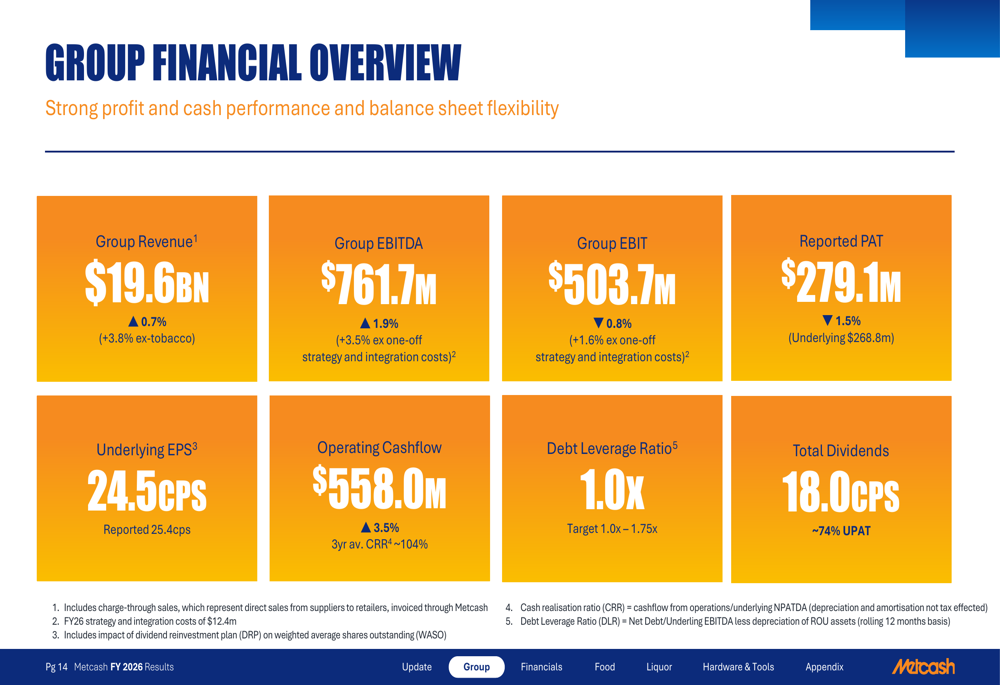
Metcash FY26 presentation: diversification offsets tobacco decline

Coronation Street star confirms Maria’s most challenging situation is coming | Soaps

Toy Story 5 sees franchise's biggest ever opening weekend

Christian Lundgaard overcomes early collision to win XPEL Grand Prix


![LISA - 'MONEY' Dance Practice [Mirrored]](https://wordupnews.com/wp-content/uploads/2026/02/1770259125_maxresdefault-80x80.jpg)

-
 Crypto World7 days ago
Crude Oil Plunges Over 4% as US-Iran Agreement Reopens Hormuz Strait
-

 Fashion2 days ago
Weekend Open Thread: Miami – Corporette.com
-

 Tech5 days ago
The Adder At The Heart Of Intel’s 8087 FPU
-
 Business2 days ago
Wall Street Week Ahead: Investors see Micron earnings as pulse check of AI rally momentum
-

 Crypto World2 days ago
HIVE shares jump as $220M AI deal speeds Bitcoin mining pivot
-

 Sports3 days ago
FIFA World Cup 2026: Canada beat 9-men Qatar 6-0 to register first ever win | FIFA World Cup 2026
-

 Business1 day ago
MHP SE 2026 Q1 – Results – Earnings Call Presentation (OTCMKTS:MHPSY) 2026-06-20
-

 Crypto World2 days ago
Jake Chervinsky accuses CME of protecting derivatives monopoly
-

 Business3 days ago
Brexit cost 6% of UK economy, Bank of England company data suggests
-

 Business1 day ago
Soccer-U.S. defends Iran World Cup travel restrictions, says discussions ongoing
-

 Crypto World4 days ago
Anthropic’s Dario Amodei Urged AI Unity at G7, Even as US Banned His Models
-

 Tech4 days ago
Weeks Of In-The-Field Testing And A Verdict
-
 Crypto World2 days ago
Can Charles Hoskinson Really Rescue Cardano?
-

 Tech4 days ago
Adobe adds its AI assistant to Premiere, Illustrator and InDesign
-

 Entertainment1 day ago
Renter of Home in Anne Heche Crash Denies Settlement With Son
-

 Politics2 days ago
Andy Burnham and the meaning of Makerfield
-
 Crypto World4 days ago
Iren (IREN) Stock Surges on Jefferies Buy Rating: AI Infrastructure Play Gains Momentum
-

 Politics3 days ago
BBC Reporter Discusses Cross Party Criticism Of Trumps Iran Deal
-

 Tech3 days ago
Instagram Now Lets You Add A Unique Caption To Each Carousel Slide
-

 Crypto World4 days ago
Coinbase Stakes Out Brokerage Territory With SEC-Registered AI Advisor and Stock Options Push
You must be logged in to post a comment Login