


The chancellor has called in the chiefs of Britain’s top banks for a summit this week to discuss the economic impact of the Middle East conflict

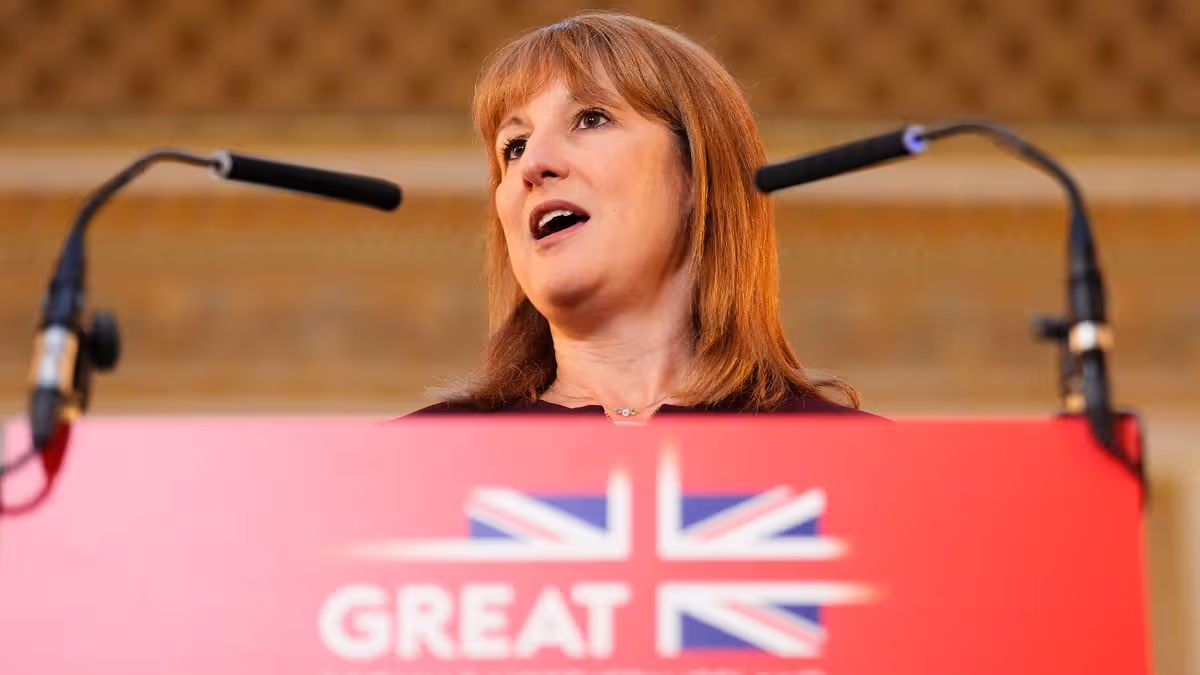
Chancellor of the Exchequer Rachel Reeves (Image: PA)
Rachel Reeves has summoned the heads of Britain’s top banks for a summit this week to address the economic repercussions of the war in Iran. The Chancellor has extended invitations to executives from Barclays, HSBC, Lloyds, Natwest, Santander UK, as well as the UK’s largest building society Nationwide, for a meeting this Wednesday.
The gathering – as reported by Sky News – will include Natwest chief Paul Thwaite and Lloyds’ boss Charlie Nunn. Barclays’ retail chief Vim Maru is expected to be in attendance alongside Nationwide’s chief executive Debbie Crosbie, while Santander will be represented by its newly appointed UK head Mahesh Aditya.
The economic fallout from the Iran war is set to dominate the agenda as the Chancellor seeks ways to cushion the blow felt across the country.
Earlier this month, the International Monetary Fund (IMF) delivered the UK economy the steepest downward revision of any nation in the G7, as reported by City AM.
Growth was cut by 0.5 percentage points in the wake of the upheaval in the Middle East, which has kept energy prices stubbornly high.
This comes as banks prepare to publish their first-quarter results, where the volatility in the Middle East is anticipated to feature prominently as banks increase their provisions for loan losses. Barclays will be the first to report on 28 April, followed by Lloyds on the 29 and Natwest on 1 May.
Banks to help Reeves navigate Iran turmoil Fresh figures released last week from the Office for National Statistics (ONS) revealed the UK economy expanded by 0.5 per cent prior to the war – significantly exceeding expectations.
However, City economists were swift to dampen any optimism surrounding the figures, dismissing the surge as “too good to be true”.
Martin Beck, a former Treasury economist now at WPI Strategy, described the latest data as the “calm before the storm”, warning that first-quarter growth is likely to be weighed down by more concerning figures due for release next month.
A note from RBC indicated that Barclays would be the most “hurt” bank by economic downgrades, owing to its bullish macro forecasts.
Barclays’ forecast for 2026 economic growth – used to calculate anticipated credit losses – stands at 1.1 per cent, considerably above the more conservative 0.7 per cent projected by Lloyds.
The independent body average – drawing consensus from a range of professional institutions outside the banks themselves, including the IMF, HM Treasury, NIESR, Bloomberg, and the Bank of England – sits at one per cent.
The meeting comes amid renewed tensions in the Middle East, following Iran’s decision to re-close the Strait of Hormuz over the weekend in response to the US blockade. Trump has also revived threats to bomb Iranian power plants, with the ceasefire deadline for Wednesday rapidly approaching.
Ring-fencing row returns to table Banks are also anticipated to use the gathering to press ahead with key lobbying efforts on regulation, including possible reforms to the ring-fencing regime established in the aftermath of the 2008 financial crisis.
Ring-fencing obliges major banks to separate their retail banking operations from their investment banking activities. It was brought in following the financial crisis to safeguard stability and was enshrined in the Financial Services Act 2013.
The threshold at which banks become subject to ring-fencing was lifted to £35bn, up from £25bn, in October 2024 by former City Minister Tulip Siddiq.
Nevertheless, senior bank executives have continued to push for a more accommodating framework, with the chief executives of HSBC, Santander, Natwest and Lloyds writing to the Chancellor branding the system “redundant”.
CS Venkatakrishnan, Barclays’ chief executive, broke ranks with his counterparts to advocate for the system, arguing that it delivers a net benefit.
“There are two counterpoints: we have spent the money on the set-up and we make it work; but the more important fact is that you have to weigh against this the immense amount of depositor protection that the ring-fencing regime gives the country,” he said.























































You must be logged in to post a comment Login