

Business
Free shares! NSE IPO DRHP reveals curious case of 5,000 shares landing in wrong demat account


One of them revolves around 5,000 NSE shares that the exchange alleges were erroneously credited to an individual’s demat account, triggering both civil and criminal proceedings.
According to the DRHP, NSE and Nuvama Wealth Finance filed a civil suit before the Delhi High Court against Kashmiri Lal Rana and NSDL in May 2025, alleging that 5,000 NSE shares were mistakenly transferred to Rana’s demat account on December 28, 2023, despite no corresponding purchase request or consideration being paid.
The exchange alleged that before the error was discovered, Rana had already sold 3,685 of those shares. NSE and Nuvama have sought a declaration that the transfer was void, recovery of Rs 1.43 crore representing the sale proceeds of the shares allegedly sold, and the return of the remaining shares.
Also read: NSE IPO: Nithin Kamath explains why India has few businesses like this ‘cash generating machine’

The dispute became more complicated after NSE’s 4:1 bonus issue in November 2024. The remaining 1,315 shares were entitled to 5,260 bonus shares. According to the DRHP, the Delhi High Court directed Rana not to sell or transfer the remaining shares, while NSDL was directed not to transfer the bonus shares during the pendency of the suit.
The exchange said Rana has denied the claims in his written statement, while the plaintiffs have filed a replication relying on what they describe as his admissions. The matter remains pending.
The Mauritius case
Separately, NSE disclosed that it had filed a criminal complaint against Rana. A first information report was registered in July 2025 at Mumbai’s Bandra-Kurla Complex Police Station alleging offences related to criminal breach of trust and cheating. According to the filing, NSE alleged that Rana knowingly retained the erroneously credited shares and sold 3,685 of them for Rs 1.327 crore. The matter remains pending.
Another legal matter disclosed in the DRHP relates to a petition filed before the Bombay High Court in May 2026 by an individual named Parinay Sharma against SEBI and NSE.
According to the filing, Sharma had earlier submitted a representation to SEBI alleging that certain investors in NSE had invested through Mauritius-based entities instead of direct investments and that beneficial ownership details of certain foreign shareholders had not been disclosed.
Read more: NSE IPO: BSE hosts double the listed companies but numbers tell a different story
The petition alleged that SEBI had not acted on the representation and sought, among other reliefs, a direction requiring NSE to disclose its promoter group and shareholders or ultimate beneficiaries along with KYC documents. The petitioner also sought a stay on NSE’s IPO process until the matter is finally decided. The DRHP states that the matter is currently pending before the court.
The NSE IPO is entirely an offer-for-sale (OFS) of up to 14.89 crore equity shares with a face value of Re 1 each, representing nearly 6% of NSE’s paid-up equity capital. The issue size has been fixed at 6% of the exchange’s paid-up capital.
NSE’s shares will be listed on BSE, mirroring the arrangement under which BSE‘s own shares are listed on NSE. With NSE’s valuation in the unlisted market hovering around Rs 5 lakh crore, market estimates suggest the IPO could be sized at roughly Rs 30,000 crore.
The filing marks the culmination of a listing process first initiated in December 2016, when NSE filed its first DRHP for a Rs 10,000-crore issue. The process was subsequently stalled due to the co-location controversy.
(Disclaimer: Recommendations, suggestions, views and opinions given by the experts are their own. These do not represent the views of The Economic Times)



Italy’s Meloni tells Trump to focus on his own popularity as row rumbles on


Ukraine’s Zelenskiy says he returned state decoration to Polish president
Will the end of the US-Iran war boost Republicans in the midterms?

NEW YORK — As thousands gathered for the New York Knicks’ championship parade, fans directed chants against San Antonio Spurs star Victor Wembanyama, reflecting lingering emotions from the NBA Finals series.
The celebration honoring the Knicks’ first title since 1973 featured massive crowds lining the parade route. Two hours before the official start, supporters began chanting against Wembanyama, who became a focal point of fan frustration after a physical playoff series.
Wembanyama’s strong performance in the Knicks’ lone Finals loss, where he recorded 32 points, eight rebounds, six assists and three blocks, contributed to the animosity. A notable shove against Knicks captain Jalen Brunson in Game 3 further intensified fan sentiments.
The chants continued during Game 4 at Madison Square Garden and resurfaced during Thursday’s parade festivities. A doll dressed as the 7-foot-4 Frenchman was reportedly passed around among the crowd, highlighting the playful yet pointed nature of the fan reaction.
When asked about the vilification, Wembanyama responded with characteristic composure. “I guess,” he said. “I’m nowhere near Trae Young-level, though.”
New York City officials described the event as potentially the largest parade in the city’s history. Mayor Zohran Mamdani noted the overwhelming turnout, with viewing areas reaching capacity well before the scheduled 10 a.m. start.
The parade showcased floats carrying championship team members, coaching staff and legendary Knicks figures including Walt “Clyde” Frazier and Patrick Ewing. Celebrity attendees added to the festive atmosphere along the route.
The Knicks’ victory capped an impressive playoff run that saw them overcome strong Western Conference opponents before defeating the young Spurs team in the Finals. Jalen Brunson’s leadership and clutch performances earned him Finals MVP honors.
Wembanyama and the Spurs exceeded expectations by reaching the Finals as one of the league’s youngest rosters. The 20-year-old phenom’s individual brilliance provided glimpses of future stardom despite the series outcome.
The fan reaction reflects the passionate nature of Knicks supporters, who have waited decades for another championship. Similar sentiments have targeted rival players in past playoff series, becoming part of the city’s sports culture.
League officials monitor fan behavior during major events, though such chants fall within accepted expressions of support for home teams. The Knicks organization has not commented on the specific chants directed at Wembanyama.
The parade route featured heavy police presence to manage crowds and ensure safety. New York Police Department officials coordinated with city agencies to accommodate the massive turnout while maintaining public order.
For many fans, the celebration represented validation after years of rebuilding and playoff disappointments. The team’s resilience throughout the postseason created lasting memories and renewed excitement for the franchise’s future.
Wembanyama’s comments suggest an understanding of playoff intensity and fan passion. His focus remains on continued development as he enters his third NBA season with high expectations for the Spurs.
The Knicks’ front office faces important decisions this offseason regarding roster construction around their championship core. Maintaining competitiveness while managing contracts and draft assets will determine their ability to defend the title.
As the parade concluded, fans continued celebrating into the evening. The event marked a memorable chapter in Knicks history, with the city embracing its champions after a long wait.
The contrast between the joyful celebration and targeted fan chants illustrates the complex emotions inherent in professional sports rivalries. While Wembanyama became a temporary villain, the focus remained on honoring the Knicks’ achievement.
League-wide, such incidents rarely escalate beyond verbal expressions during victory parades. Officials emphasize sportsmanship while acknowledging the emotional investment of dedicated fan bases.
The 2026 NBA season provided compelling storylines from start to finish. The Knicks’ championship run and the emergence of young talent like Wembanyama highlighted the league’s competitive depth and exciting future.
As summer league and free agency approach, attention shifts to roster building and preparation for the next campaign. Both the Knicks and Spurs face distinct challenges in sustaining their recent success.


US forces monitoring Strait of Hormuz to ensure it stays open
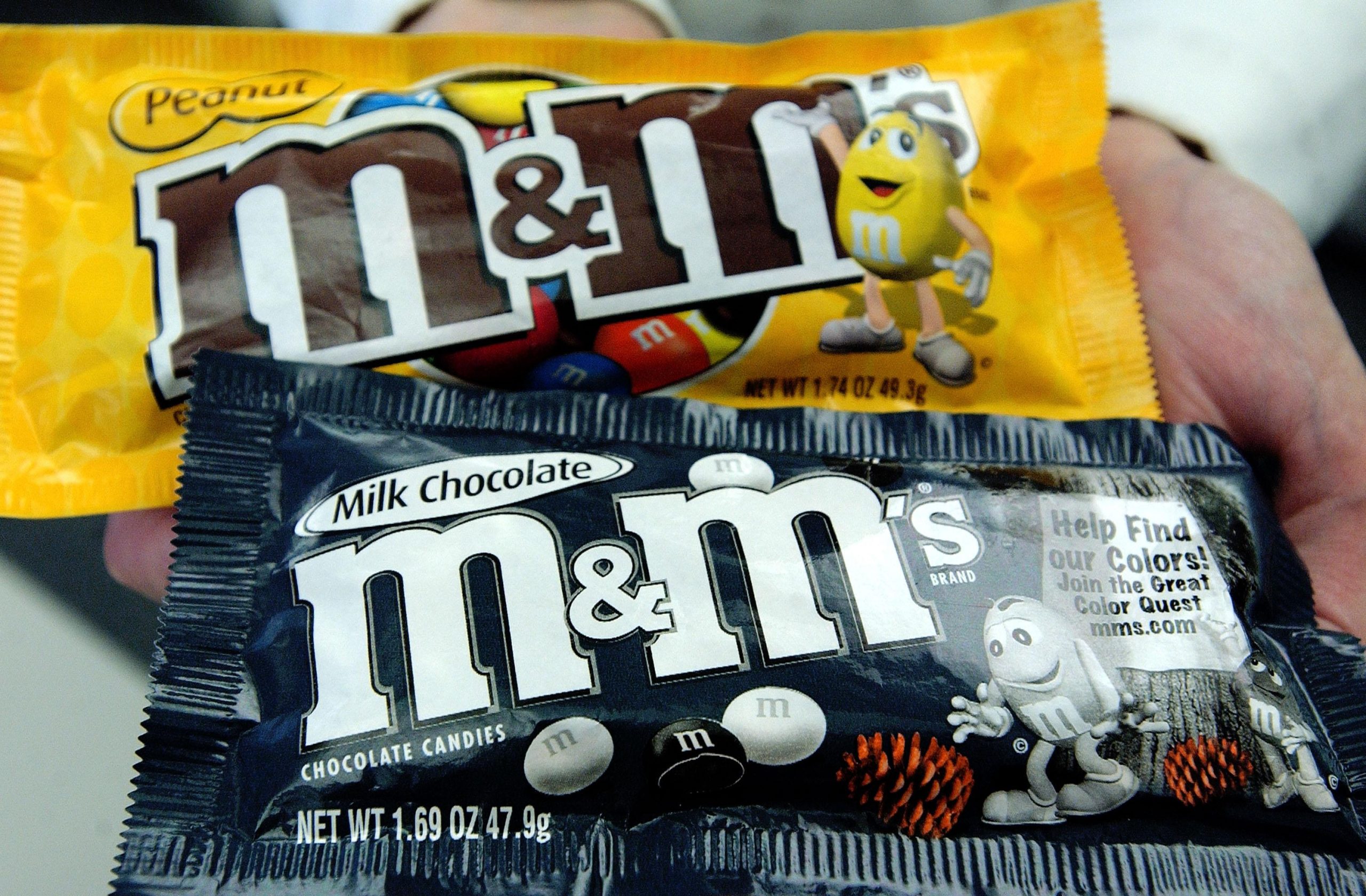
WASHINGTON — Mars Inc., the company behind M&M’s, plans to eliminate blue and brown from its iconic candy lineup as part of a broader initiative to remove artificial dyes from the product, according to multiple reports.
The changes coincide with the candy’s 85th anniversary in August, marking a significant evolution for one of the world’s most recognized confectionery brands. The company has been working to develop naturally colored alternatives for several years, facing technical and cost challenges in replicating certain hues.
Blue and brown have proven particularly difficult to produce without synthetic additives. Mars has successfully recreated red and yellow using natural ingredients such as turmeric and beets. However, achieving stable blue requires spirulina extract, a concentrated blue-green algae powder that presents manufacturing complications.
Spirulina does not fully dissolve in water, potentially causing clogs in spray nozzles and buildup in production equipment. The ingredient also carries a significantly higher cost compared to traditional dyes, ranging from $20 to $100 per pound versus approximately $10 per pound for turmeric.
Company executives reportedly considered limiting colors to red, orange and yellow, evoking a sunset theme, but ultimately decided against that approach. The transition will initially launch on Amazon before broader distribution. Mars aims to offer all six original colors using natural dyes by 2028.
Brown requires blue coloring to achieve its distinctive shade, explaining its temporary removal alongside blue. The company will continue offering products with artificial dyes while expanding natural alternatives across its portfolio, including Skittles, Extra Gum and Starburst.
Health advocates have long pushed for the elimination of synthetic dyes, citing studies linking them to potential neurobehavioral issues such as hyperactivity and attention problems in some children. The Food and Drug Administration maintains that approved dyes are safe for most consumers when used as directed.
In April 2025, Health Secretary Robert F. Kennedy Jr. and FDA Commissioner Marty Makary announced plans to phase out synthetic dyes by the end of 2026, primarily through voluntary industry efforts rather than mandatory regulations. Mars’ initiative aligns with this broader industry trend toward cleaner ingredient formulations.
The decision reflects evolving consumer preferences and regulatory pressures surrounding food additives. Many manufacturers have begun reformulating products to address concerns about artificial colors, flavors and preservatives while maintaining visual appeal.
M&M’s distinctive colorful appearance has been central to its brand identity since its introduction in 1941. The candies were originally created to provide soldiers with chocolate that would not melt in their hands during World War II. The colorful shell coating became an instant success and defining characteristic.
Industry analysts expect the changes to have minimal long-term impact on sales given Mars’ strong brand loyalty and marketing capabilities. Temporary removal of certain colors may even generate consumer interest and media attention during the transition period.
The company has not officially confirmed the exact timeline or details of the color changes. Reports suggest initial availability of the reformulated products will be limited, allowing Mars to gather consumer feedback before full rollout.
Spirulina’s use as a natural blue dye has gained attention in recent years across the food industry. While effective, its cost and processing requirements present challenges for large-scale production. Alternative natural blue sources remain under development but have not yet achieved commercial viability.
Consumer reactions to the potential changes have been mixed on social media platforms. Some express disappointment over losing familiar colors, while others support the move toward more natural ingredients. The company’s strong brand presence suggests it can navigate the transition successfully.
Mars joins other major food manufacturers in responding to demands for cleaner labels. The trend reflects broader shifts in consumer awareness regarding food ingredients and their potential health impacts. Companies balance these concerns with maintaining product appeal and affordability.
The M&M’s reformulation represents part of Mars’ ongoing commitment to product innovation and sustainability. The company has invested in various initiatives to reduce environmental impact and improve ingredient sourcing across its global operations.
As the August anniversary approaches, Mars will likely provide more details about its plans. The changes could influence other confectionery manufacturers to accelerate their own efforts to remove artificial additives from popular products.
The food industry’s response to calls for natural ingredients continues evolving. While challenges remain in achieving consistent colors and flavors without synthetics, technological advances offer promising solutions for the future.
M&M’s enduring popularity demonstrates the strength of its brand despite periodic changes to its formula and appearance. The upcoming modifications represent another chapter in the candy’s long history of adaptation to consumer preferences and industry standards.

Trilateral meeting for USMCA trade deal review scheduled for July 1, CTV News reports

SpaceX continues to dominate the commercial space sector with unmatched launch frequency, reusability achievements, and operational scale, while Blue Origin has made notable strides with its New Glenn rocket but remains significantly behind in overall capability and market impact as of mid-2026. The rivalry between Elon Musk’s SpaceX and Jeff Bezos’ Blue Origin has defined much of the new space era, with both companies pursuing reusable rocket technology and ambitious lunar goals.
SpaceX’s Commanding Market Position
By nearly every measurable metric, SpaceX remains the dominant force in commercial spaceflight. SpaceX’s launch business remains the industry benchmark. No competitor matches its combination of reuse, reliability, payload capacity, and flight cadence.
That dominance is reflected directly in market share figures. SpaceX handles roughly 60% of global commercial launches by mass, operating with over 300 successful Falcon 9 missions, operational crew transportation to the ISS, and the revolutionary Starship program entering service. The company’s pricing and reliability have effectively ended competition from European, Russian, and most other international launch providers in commercial markets, with only China’s state-backed launch programs maintaining comparable launch cadence.
That scale extends to the company’s broader workforce and corporate structure as well. SpaceX employs approximately 13,000 people across its facilities in California, Texas, Florida, and Washington state. Under the leadership of CEO Elon Musk and President Gwynne Shotwell, SpaceX has grown from a startup to the dominant force in commercial space launch.
The Cost Advantage Driving SpaceX’s Edge
A central pillar of SpaceX’s dominance has been its ability to drive down launch costs through reusability, a capability competitors have struggled to match at scale. SpaceX accounted for over half of global launches in 2024, with costs as low as $2,720 per kilogram for Falcon 9 and $1,500 per kilogram for Falcon Heavy. Competitors including United Launch Alliance, Arianespace, Rocket Lab, and Blue Origin are vying for market share, but none match SpaceX’s price or reliability.
The company’s next-generation Starship vehicle is designed to extend that cost advantage even further. SpaceX is targeting a cost per kilogram under $100 with Starship, against Falcon 9’s roughly $2,720 today — a drop that would matter less for cutting prices further and more for enabling the kind of bulk satellite deployment future infrastructure plans depend on. If it delivers, the gap widens by an order of magnitude rather than a margin.
Starship’s Scale of Ambition
Beyond cost, Starship represents an entirely different category of vehicle in terms of raw capability. SpaceX Starship is the most ambitious rocket ever built. Standing 121 meters tall and designed to be fully and rapidly reusable, Starship is engineered to carry up to 150 tonnes to low Earth orbit — roughly five times the capacity of any previous rocket.
If Starship achieves full operational status and hits its stated target of under $10 million per launch, it would not merely extend SpaceX’s current lead. It would make most existing launch business models economically obsolete.
Blue Origin’s Real Progress, and a Recent Setback
Despite trailing SpaceX significantly, Blue Origin has genuinely closed ground in recent years after a long period of slower development. After years of being dismissed as a slow-moving vanity project, Blue Origin has had a significant turnaround. New Glenn achieved orbit on its second attempt in early 2025 and has since completed several commercial launches.
That progress earned the company a significant validation from a key government customer. The U.S. Space Force awarded Blue Origin a significant share of the National Security Space Launch Phase 3 contract — a deal worth potentially billions — alongside SpaceX and ULA. That contract was the moment Blue Origin became unambiguously a serious launch competitor, not just a well-funded contender.
However, the company suffered a significant operational setback more recently. Blue Origin is currently grounded following a launchpad explosion on May 28, 2026. That incident has further widened the operational gap with SpaceX, given that Blue Origin’s launch cadence before the explosion was already very low compared to SpaceX, which was achieving multiple Falcon 9 launches per week by 2023 and has sustained that pace since.
A Surprising Payload Capacity Edge for New Glenn
Despite trailing badly in launch frequency and reliability, Blue Origin’s hardware does hold one notable technical advantage over SpaceX’s current workhorse vehicle. On payload, which is simply how much mass a rocket can lift to orbit in one flight, Blue Origin’s New Glenn actually beats Falcon 9, though it hasn’t flown nearly often enough to prove that capacity translates into reliable, repeatable service.
New Glenn can lift 45 metric tons to low Earth orbit, with launch costs estimated at $67 million per flight — figures that demonstrate genuine heavy-lift capability, even if the rocket has not yet built the kind of flight history that would allow customers to fully rely on that capacity.
Diverging Business Strategies
Beyond the hardware itself, SpaceX and Blue Origin are pursuing fundamentally different business strategies to fund and sustain their respective rocket programs. SpaceX’s flywheel centers on Starlink, the company’s satellite internet service, as the primary engine generating revenue to fund Starship development and broader ambitions.
Blue Origin, meanwhile, has pursued a more diversified set of long-term initiatives, including BE-4 engine production scaling to supply both New Glenn and ULA’s Vulcan rocket, an Orbital Reef commercial space station targeting a 2028 launch, and a Neutron rocket program — its medium-lift vehicle competing directly with Rocket Lab and others — targeted for its first flight in 2026 and designed from the outset for booster reuse.
Other Competitors Entering the Field
While SpaceX and Blue Origin represent the two most prominent names in the current space race, several other companies are working to establish footholds in specific market segments. Rocket Lab, known for its Electron rocket, is developing Neutron, a medium-lift vehicle capable of carrying 13 metric tons to low Earth orbit at a target price of $50 million. A Rocket Lab spokesperson highlighted the company’s focus on an underserved segment of the market, noting there is a practical monopoly in the medium-lift launch market right now, with really only one operational vehicle currently serving that niche.
The Broader Market Context
The overall commercial launch market has continued expanding rapidly even as SpaceX maintains its dominant position within it. The satellite launch market grew 15.1% from $10.34 billion in 2024 to $11.9 billion in 2025, with projections estimating the market could reach $22.18 billion by 2029 — growth that creates room for multiple competitors to find commercial success even without directly challenging SpaceX’s overall market leadership.
What the Numbers Suggest Going Forward
Blue Origin, New Glenn, and Rocket Lab are SpaceX’s most significant rivals across commercial and government launch markets as of June 2026, though the gap between SpaceX and the rest of the field remains substantial across nearly every meaningful metric — launch cadence, cost per kilogram, payload reliability, and overall market share.
On raw capability, SpaceX is still well ahead. Starship’s mass-to-orbit advantage is so significant that if it achieves its operational cadence targets, it will reshape what’s economically possible in space the same way Falcon 9 reshaped the launch industry roughly a decade earlier.
The trajectory of the rivalry over the remainder of 2026 will likely hinge on two key developments: whether Blue Origin can recover from its recent launchpad explosion and resume New Glenn flights at a meaningfully increased cadence, and whether SpaceX’s Starship program can achieve the full operational status and dramatically lower per-launch costs the company has targeted. If Starship delivers on its ambitious technical and economic goals, SpaceX’s current lead would likely extend even further beyond the reach of Blue Origin and other competitors. If SpaceX stumbles in that effort, the company would be left defending its current advantage with the aging but reliable Falcon 9 against rivals that, despite their own setbacks, continue closing distance every quarter.
Business
Hormuz Oil Traffic Surges After Ceasefire, but Iran’s New Permit Rules Spark Industry Pushback

MUSCAT — Oil shipments through the Strait of Hormuz picked up sharply on Friday after the United States and Iran signed a ceasefire deal, with Gulf producers preparing to raise exports despite mounting concerns over new conditions Tehran is attempting to impose on vessels using the vital waterway.
A Sharp Jump in Traffic, but Still Well Below Normal
The numbers point to a meaningful, if partial, recovery in shipping activity through one of the world’s most critical energy chokepoints. There were 25 commercial crossings through Hormuz on June 18 — the highest single-day count since April 18 and more than five times the average daily level of the first 10 days of June, according to AXS Marine data. Traffic remains well below the pre-conflict level of about 120 daily crossings, underscoring how much ground shipping activity still has to recover even with the ceasefire now formally in place.
The Ceasefire Agreement and Trump’s Warning
Washington and Tehran released the text of an interim agreement signed on Wednesday to end the conflict, although President Donald Trump warned he could resume attacks and target Iranian officials if commitments are not honored — a caveat that underscores just how conditional the current de-escalation remains.
Tankers Returning to the Strait
The practical effects of the ceasefire were visible almost immediately on the water. At least four tankers carrying crude, oil products, and liquefied petroleum gas entered the strait on Friday, heading for Iraqi Gulf ports, according to MarineTraffic data. A Japanese-owned crude tanker exited the strait after being delayed by the war and was bound for Japan.
India’s energy supply chain also showed signs of normalizing. Indian-flagged crude supertankers Desh Vibhor and Desh Vaibhav had commenced voyages through the strait to India after days of disruption.
In another notable shift, vessels have resumed normal tracking behavior after weeks of operating in the shadows to avoid detection during the conflict. Ships resumed broadcasting positions as they transited Hormuz, after weeks of concealing movements by switching off transponders.
Gulf Producers Move Quickly to Ramp Up Output
With the waterway reopening, major regional oil producers wasted little time signaling their intent to capitalize on the improved conditions. Kuwait Petroleum Corp is offering crude for July delivery via a tender, after lifting force majeure and announcing plans to ramp up output, while Abu Dhabi National Oil Company issued its fourth tender this month.
The U.S. Lifts Its Blockade, but Mine Risks Remain
The United States formally lifted its blockade of Iranian ports on Thursday, though officials cautioned that physical hazards from the conflict have not been fully cleared from the water. “Mariners should be advised of the existence of mines and expect naval presence as clearance operations continue,” the U.S. Navy-led Joint Maritime Information Centre said late on Thursday. The center advised vessels to avoid the Traffic Separation Scheme because of mine risks — a designated routing system through Iranian and Omani waters that was originally adopted by the United Nations shipping agency in 1968.
A Persistent Risk of Renewed Conflict
Despite the visible signs of normalization, shipping industry analysts continue to flag the underlying fragility of the current arrangement. “Risks range from the danger of mines … to that of getting stuck in the Mideast Gulf should tempers flare and Iran block Hormuz once again,” ship broker Braemar said in a note. The same analysis flagged a specific financial provision buried within the agreement that could shape how the waterway operates going forward: “The deal … opens the possibility for Iran to charge fees to manage Hormuz transits after 60 days.”
Iran Asserts New Control Over Transit
In the days following the ceasefire, Iran has moved to assert a more active role in regulating traffic through the strait — a development that has alarmed the broader shipping industry. Iran signalled tighter control over shipping, with state TV reporting that vessels must coordinate transit with the Revolutionary Guards navy.
That tightened posture has already manifested in specific incidents on the water. British maritime security firm Ambrey said Iranian forces ordered a Hong Kong-flagged tanker and a Saint Kitts and Nevis-flagged bulk carrier to turn back on Thursday.
A New Permit System Drawing Industry Objections
The most contentious development has been the emergence of a formal Iranian permitting regime for vessels seeking to use the strait. In an undated advisory circulated to the maritime industry in the last 24 hours and seen by Reuters, Iran’s Persian Gulf Strait Authority said “no vessel is permitted to pass through the Strait of Hormuz without a valid passage permit issued by the PGSA.” The PGSA, which describes itself as the sole body authorized to issue permits, also said it reserves the right to introduce insurance fees, requiring ship-owners to obtain and renew coverage.
That assertion of authority has met firm resistance from the global shipping community. The shipping industry has rejected any fee or toll system being imposed on what they say is an international waterway — a dispute that could become a significant flashpoint in the weeks ahead as the practical mechanics of the ceasefire continue to take shape.
Iranian Oil Already Flowing Toward Asia
Beyond the disputes over transit permits, monitoring groups have documented a substantial volume of Iranian crude already moving toward buyers in Asia in the wake of the ceasefire. A flotilla of 10 laden Iranian-flagged supertankers carrying close to 20 million barrels of oil were sailing from Iran’s Chabahar anchorage in the Gulf of Oman and heading to Asia for likely teapot refineries in China, according to analysis from U.S. advocacy group United Against Nuclear Iran, which monitors Iran-related tanker traffic.
A senior adviser at the organization suggested the easing of sanctions enforcement has removed a key obstacle that had previously complicated such shipments. “There is apparently no longer the hot potato issue of unilateral American sanctions,” UANI senior adviser Charlie Brown said.
What Comes Next
With traffic through Hormuz still running at a fraction of pre-conflict levels and Iran’s new permitting and insurance-fee regime drawing immediate pushback from the global shipping industry, the path toward a fully normalized waterway remains uncertain. The 60-day window referenced in the ceasefire agreement, after which Iran may be permitted to formally charge transit fees, looms as a significant near-term test of how durable the current arrangement proves to be — particularly if shipping companies continue refusing to recognize Tehran’s claimed authority over what they maintain is an international passage. In the meantime, the presence of mines still being cleared from the strait, combined with Iran’s documented willingness to turn back vessels it deems noncompliant, leaves the recovery in oil shipments through one of the world’s most strategically vital chokepoints on still-uncertain footing.

Chicago police investigate shooting that left 12 injured
The Vikings Said Goodbye to a Colossal O-Lineman Earlier in the Week

Mac game developers need to enable this in Steam to avoid a 32-bit problem

Wall Street Goes All-In on Blockchain Infrastructure in 2026


-

 Business6 days ago
No Jackpot Winner as $257 Million Prize Rolls Over to $269 Million Monday Draw
-

 Fashion1 day ago
Weekend Open Thread: Miami – Corporette.com
-
Crypto World6 days ago
Zimbabwe Requires Crypto Businesses to Register Annually Under New FIU Regulations
-
 Entertainment6 days ago
Matt Damon’s Viral Sci-Fi Thriller Has Taken Over HBO Max
-

 Tech6 days ago
As AI companies race to go public, who else is along for the ride?
-

 Business6 days ago
Anthropic staff to meet White House officials next week, Axios reports
-
 NewsBeat6 days ago
what doctors are seeing in ebike crashes
-
 Crypto World6 days ago
Bitcoin could crash to $48,000, if this historical pattern is triggered
-

 Entertainment7 days ago
Deion Sanders Shares Powerful Post After Viral Advice To Deiondra
-
 NewsBeat6 days ago
Warning of disruption as Cardiff Crossrail works to start
-

 Politics6 days ago
“Israel’s” ban on ICRC visits ruled illegal, but Knesset moves to stop them permanently
-
 NewsBeat6 days ago
Tributes to former deputy head teacher at Cambridge school among death and funeral notices
-

 News Videos6 days ago
Financial Accounting | Last Day Revision Strategy and Booster | CMA Inter – June 2026
-
 Entertainment6 days ago
Kate Middleton Glare Goes Viral After Kids Booed At Royal Event
-
 Business15 hours ago
Wall Street Week Ahead: Investors see Micron earnings as pulse check of AI rally momentum
-

 Tech6 days ago
Over 400 Arch Linux packages compromised to push rootkit, infostealer
-

 NewsBeat6 days ago
Singer Oliver Tree dies aged 32 in helicopter crash in Brazil
-

 Crypto World6 days ago
XRP ETFs Outperform As Bitcoin And Ethereum Funds Extend Outflow Trend
-

 Sports6 days ago
Dick Advocaat’s Curacao scores first-ever World Cup goal against Germany
-

 Business6 days ago
Invesco Quality Income Fund Q1 2026 Commentary
You must be logged in to post a comment Login