Connect with us
DAPA Banner
DAPA Coin
DAPA
COIN PAYMENT ASSET
PRIVACY · BLOCKDAG · HOMOMORPHIC ENCRYPTION · RUST
ElGamal Encrypted MINE DAPA
🚫 GENESIS SOLD OUT
DAPAPAY COMING

Business

Gamma Communications confirms takeover talks with Providence

Published

on

Continue Reading
Click to comment

You must be logged in to post a comment Login

Leave a Reply

Business

2026 King’s Speech: All the new Bills announced as Keir Starmer pledges ‘new direction for Britain’

Published

on

Business Live

Legislation will cover areas from late payments and competition to Northern Powerhouse Rail

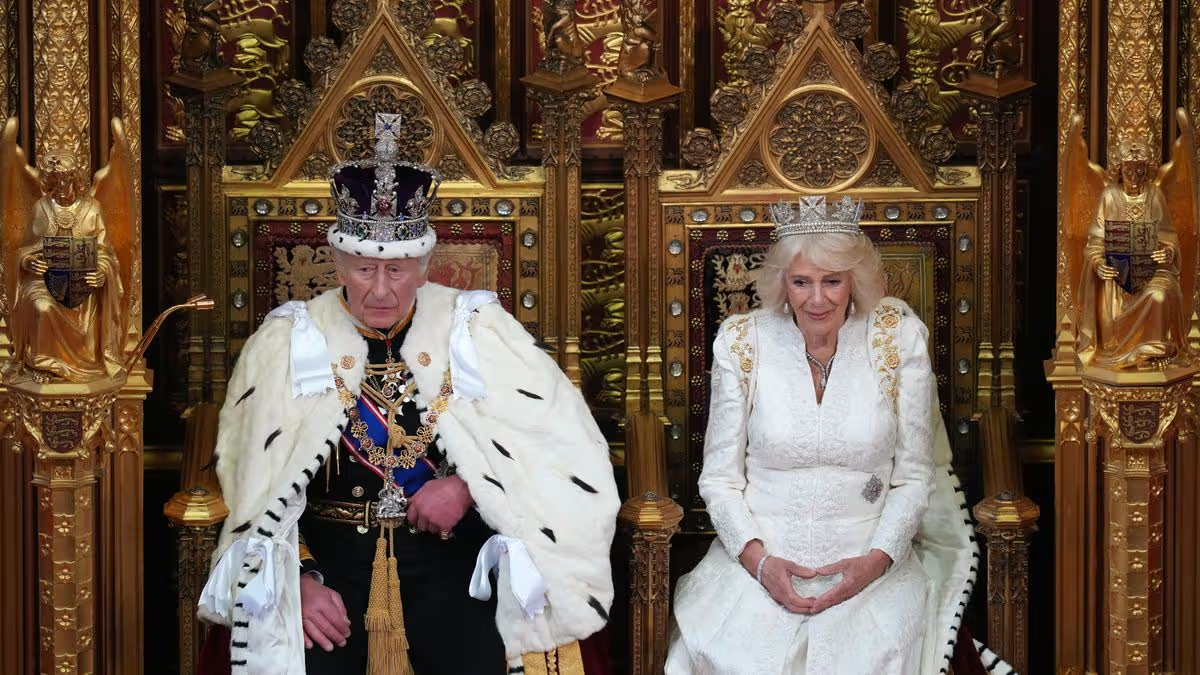
King Charles III and Queen Camilla in the Chamber of the House of Lords during the State Opening of Parliament

King Charles III and Queen Camilla in the Chamber of the House of Lords during the State Opening of Parliament(Image: Kirsty Wigglesworth/PA Wire)

Embattled Prime Minister Sir Keir Starmer has used the King’s Speech to promise a package of measures to set a “new direction for Britain”.

The Prime Minister said the legislation in the King’s Speech would make the country “stronger and fairer” and help deliver the “change we promised” in Labour’s 2024 general election landslide.

Advertisement

In his speech in the House of Lords, the King said the Government would “defend the British values of decency, tolerance and respect for difference under our common flag”. Charles said the Government would “harness the potential of the pride felt across the country for its communities” and “take urgent action to tackle antisemitism”.

In his introduction to the package of legislation set out by the King in the traditional State Opening of Parliament ceremony, Sir Keir said the country was “at a pivotal moment” as it dealt with the fallout from wars in Iran and Ukraine.

But he said: “The fundamentals of our economy remain sound and this will help us emerge from the Iran conflict stronger and fairer.”

The war in the Middle East required “greater urgency” in the reforms the Government has promised, Sir Keir said. he added: “We will strengthen our economic security, energy security, our defence and national security.”

Advertisement

The new pieces of legislation set out in the King’s Speech:

– Steel Industry (Nationalisation) Bill: Will give the Government powers to nationalise British Steel.

– High Speed Rail (Crewe – Manchester) Bill: The plan for Northern Powerhouse Rail is intended to deliver faster, more frequent services between cities in northern England. The Bill will outline a “foundational” element for the scheme from Manchester to Millington in Cheshire, via Manchester Airport.

– European Partnership Bill: The legislation will provide a framework to adopt EU rules where the Government strikes deals with Brussels.

– Small Business Protections (Late Payments) Bill: The law is intended to protect small and medium-sized enterprises (SMEs) with powers including maximum payment terms of 60 days, and mandatory interest rates 8% above the Bank of England base rate for late payments.

Advertisement

– Clean Water Bill: Creates a new regulator for the industry and a new water ombudsman to provide stronger consumer protections.

– Competition Reform Bill: Will make the Competition and Markets Authority’s investigations faster and more predictable and reduce burdens on businesses.

– Regulating for Growth Bill: Includes measures aimed at tackling a system the Government views as complex, risk-averse and poorly suited to modern technologies and business models.

– Enhancing Financial Services Bill: Will modernise how lenders are regulated and update consumer protection arrangements.

Advertisement
King Charles III, wearing the Imperial State Crown and the Robe of State, and Queen Camilla

King Charles III, wearing the Imperial State Crown and the Robe of State, with Queen Camilla(Image: 2026 WPA Pool/Getty Images)

– Highways (Financing) Bill: Will introduce a new funding model to get greater levels of private capital investment into road schemes.

– Overnight Visitor Levy Bill: Will allow mayors and potentially other leaders of large authorities in England to introduce a tourist tax in their areas.

– Social Housing Renewal Bill: Will prioritise the building of new social rented homes and tighten eligibility for the Right to Buy to protect existing social housing stock.

– Commonhold and Leasehold Reform Bill: Marks the beginning of the end for what Sir Keir Starmer called the “unfair feudal system” of leasehold properties. It will ban the use of leasehold for new flats, cap ground rents at £250 a year and implement a new process for converting to commonhold.

Advertisement

– Education for All Bill: Will reform the system in England for children with special educational needs or disabilities (SEND).

– Representation of the People Bill: Will lower the voting age to 16 in all UK elections, along with other reforms.

– Remediation Bill: Boosts powers for regulators and closes loopholes to accelerate the removal of unsafe cladding from buildings.

– Draft Conversion Practices Bill: Will protect people from “harmful and abusive” attempts to change their sexual orientation or transgender identity.

Advertisement

– Draft Ticket Tout Bill: Will make it illegal to resell a ticket at more than its original cost, cap the service fees charged by resale platforms and allow regulators to impose fines of up to 10% of global turnover on firms breaking the new laws.

– Sporting Events Bill: Will put in place measures to support the delivery of the Euro 2028 football tournament and position the UK as an attractive bidder for other events such as the Women’s World Cup in 2035.

– Police Reform Bill: Scraps police and crime commissioners and includes other reforms including a new legal framework for the use of facial recognition technology.

– NHS Modernisation Bill: Abolishes NHS England and puts in place reforms including a new single patient record that people can view on their NHS app.

Advertisement

– Railways and Passenger Benefits Bill: Establishes Great British Railways, the new state-owned company in charge of both track and trains, and creates a new passenger watchdog.

– Digital Access to Services Bill: Creates a new voluntary digital ID system for use across public services and the wider economy.

– Public Office (Accountability) Bill: The long-running wrangle over the Hillsborough Law’s application to the security services prevented the legislation being passed before the end of the last parliamentary session.

– Removal of Peerages Bill: Creates a mechanism to strip titles from disgraced peers without the need for a new law to be passed in each individual case. The Prime Minister promised the legislation in the wake of the Lord Peter Mandelson scandal.

Advertisement

– Courts Modernisation Bill: Includes the Government’s controversial plan to restrict trial by jury to the most serious cases.

– Northern Ireland Troubles Bill: Another piece of legislation that has been carried over from the previous session, it is an attempt to deal with the complicated and controversial legacy of the Troubles.

– Draft Taxi and Private Hire Vehicle Bill: Modernises Victorian-era rules and addresses licensing vulnerabilities which have been exploited by grooming gangs.

– Civil Aviation Bill: Will strengthen consumer rights and protections for passengers and change the regulation of airport slots to support the expansion of airports.

Advertisement

– Sovereign Grant Bill: Will enable the amount of money paid to support the King’s official duties to fall once work to update the plumbing and wiring of Buckingham Palace is completed.

– Energy Independence Bill: Legislates for a series of reforms to upgrade homes, speed up the construction of infrastructure and the deployment of renewable power.

– Nuclear Regulation Bill: Modernises the way nuclear projects are regulated to support the quicker delivery of new power stations.

– Electricity Generator Levy Bill: Will break the link between electricity and gas prices and increase the windfall tax from 45% to 55% to drive low-carbon generators currently benefiting from high market prices set by gas onto fixed-price contracts.

Advertisement

– Tackling State Threats Bill: Will allow the Government to ban foreign state-backed organisations engaged in espionage, sabotage and interference in the UK, like Iran’s revolutionary guard.

– Armed Forces Bill: Will ensure the UK continues to have an army, a commitment which must be renewed for constitutional reasons every five years. It will also enshrine the Armed Forces Covenant in law.

– National Security Bill: Will criminalise a range of harmful online content, and criminalise planning mass attacks, to clamp down on extremist threats to the country.

– Immigration and Asylum Bill: Will take steps to clamp down on small boat crossings, and tighten up the asylum appeals system.

Advertisement

– Cyber Security and Resilience Bill: Will aim to bolster online protections for businesses and services across the country, to make sure they are protected from cyber attacks.

Continue Reading

Business

Vertu delivers solid results as it urges Government to fast-track review of ‘distorting’ EV targets

Published

on

Business Live

‘New vehicle market conditions were heavily influenced by the Government’s ZEV mandate, which continued to distort manufacturer behaviour’

From zero to £4bn turnover in 15 years: Vertu Motors' CEO Robert Forrester

Vertu Motors’ CEO Robert Forrester(Image: Studio Lambert)

Bosses at motor retailer Vertu have marked a solid year of trading in a challenging year for the sector – but urged the Government to accelerate its review of electric vehicle sales targets. The Gateshead based dealership, which has a network of 191 sales and aftersales outlets across the UK, published full year results for the year ended February 28 2026, highlighting good results amidst a number of challenges.

Revenues reached £4.83bn, up 1.5% from £4.76bn, while adjusted pre-tax profit was £24.5m, down 16.4% from £29.3m but ahead of market expectations despite weak new vehicle markets. Net debt stood at £61.3m, down from £66.6m. Adjusted operating profit was £46.5m, down 11.3% from £52.4m

Advertisement

It said the group’s resilient aftersales operations delivered record performance – now generating over 46% of group gross profit. The group also saw a £2.9m uplift in core group gross profit in March and April, compared to the prior year.

As we reported earlier this month, it also booked £3.4m of insurance proceeds – recognised as other income – offsetting losses from the JLR cyber-attack of £3.9m. The AIM-listed group said the impact of the Middle East conflict on fuel price volatility, consumer confidence, and vehicle demand is being monitored but that no material adverse consumer trends are visible as yet.

As expected, however, it said that Battery Electric Vehicles (BEV) and hybrid vehicles are seeing higher interest from customers, and warned that a prolonged conflict could drive up inflation. Last month the group launched Value Cars by Vertu, an initiative to increase market share in the seven-to-14-year-old used car market, and initial indications are that this will add incremental profits.

Looking ahead, it said a programme to boost its portfolio with new Chinese entrant brands is set to continue, with Jaecoo, Omoda, Lepas, Chery and Leapmotor to be added to its portfolio, joining its five BYD dealerships.

Advertisement

CEO Robert Forrester said: “The group has delivered solid results against the backdrop of sector pressures from the Government’s ZEV mandate on new car profitability, as we have focused on controlling the controllables, such as aftersales and cost. The group is benefiting from stable management, a highly trained and committed workforce, strong cashflows funding a maintained dividend, another £12m share buyback and significant asset backing.

“The group is therefore excellently positioned to take advantage of the inevitable opportunities that will arise as the sector continues to consolidate. I am delighted that the trading performance in March and April has been strong and ahead of the prior year period, which is a testament to the quality and hard work of the excellent Vertu team, whom I would like to thank.”

Meanwhile, Vertu highlighted how the Zero Emission Vehicle (ZEV) mandate scheme is hitting its profits and “distorting” its volumes and margins. The scheme was introduced by the Government to force motor manufacturers to sell more electric vehicles each year or face steep fines, as part of its plans to move all new car sales to EVs by 2035.

Robert Forrester, CEO of Vertu Motors

Robert Forrester, chief executive of Vertu Motors(Image: -Newcastle Journal)

Chairman Andy Goss said: “New vehicle market conditions were heavily influenced by the Government’s ZEV mandate, which continued to distort manufacturer behaviour, suppress retail margins and shift volume into lower‑return channels. Consumer and business confidence also remained subdued generally.”

Advertisement

At present, the planned consultation on the ZEV scheme is not set to be published until next year.

But Vertu said: “The ZEV mandate is distorting volumes, margins and channel mix for new car and commercial vehicles, alongside elevated discounting and potential non‑BEV supply constraints. The ratcheting of targets creates more intense pressure and the Group has asked the Government to urgently bring forward its review of the ZEV mandate from 2027 to 2026.”

Mr Forrester added: “The UK retains one of the most ambitious BEV transition trajectories among major automotive markets, with manufacturers of cars required to achieve a 28% BEV mix in 2025 and 33% in 2026, facing fines of £12,000 per vehicle for non-compliance. Future targets ratchet up significantly to an 80% mix in 2030. BEVs accounted for only 23.4% of car registrations in 2025, achieved largely through financially unsustainable manufacturer discounting.

“The SMMT estimates discounting of BEV vehicles exceeded £5bn in 2025 (at least £11,000 per BEV), distorting both new and used car markets and creating sustained margin pressure across the sector. By the end of April 2026, BEV share stood at 23.1% calendar year to date, leaving uptake short of the 33% share required.”

Advertisement

Like this story? For more news from the retail sector, visit our dedicated page for the latest news and analysis here .

Continue Reading

Business

Housebuilder to deliver 50 affordable homes in Cornwall

Published

on

Business Live

The properties are expected to be ready next spring

A CGI of a street scene of one of the developments in Trispen, called The Paddocks

A CGI of a street scene of one of the developments in Trispen, called The Paddocks(Image: Legacy Properties)

A Cornish housebuilder is planning build 50 affordable homes at two developments in the county. Legacy Properties has partnered with housing provider Ocean Housing to deliver the properties at Goonhavern near Newquay and Trispen near Truro.

The Goonhavern scheme – known as The Grange – is the second and final phase of Legacy’s development. Legacy will deliver 23 affordable homes as part of the 40-home scheme.

Advertisement

The homes will include a mix of one-bedroom apartments and two-to-four-bedroom houses, alongside two wheelchair-accessible bungalows, available for affordable rent. The first affordable homes are expected to be handed over to Ocean Housing in the spring of next year.

The company’s other development – The Paddocks in Trispen – will have 27 affordable homes within the wider 80-home scheme. These will include a mix of one-to-four-bedroom houses, bungalows and apartments, available for social rent and shared ownership. The first affordable homes at Trispen are also expected next spring.

Nick Long, managing director at Legacy Properties, said: “Delivering affordable homes is a fundamental part of creating balanced, sustainable communities.

“Partnering with Ocean Housing at both Goonhavern and Trispen ensures these homes will be genuinely affordable and managed by an organisation with strong local knowledge and a long-term commitment to Cornwall. We’re proud to be working together to support local people through these developments.”

Advertisement

Jitinder Takhar, chief executive of Ocean Housing said the affordable properties would provide “much-needed permanent homes” for local people and would allow them to stay close to the community.

“Over the last few years Cornwall has seen a significant rise in the numbers of individuals and families needing affordable housing,” she said.

“High demand and limited housing choices has seen many more individuals and families with children faced with the possibility of being homeless or living in temporary accommodation. That’s why we’re really pleased to be partnering with Legacy Properties to bring affordable homes to Goonhavern and Trispen.”

It is understood developments will be built to modern energy-efficiency standards and designed to integrate sensitively with their village settings, alongside new green space and local infrastructure.

Advertisement
Continue Reading

Business

Tui sees 10% fall in revenue from UK customers booking summer holidays

Published

on

Tui sees 10% fall in revenue from UK customers booking summer holidays

The travel operator says customers are showing increased caution as a result of the Iran war.

Continue Reading

Business

The Top 5 Small Private Jet Companies Operating in the UK

Published

on

The,Beautiful,Private,And,Commercial,Jet,Plane,With,Its,Tubina

The United Kingdom occupies a highly strategic position in the global aviation market. Serving as the primary gateway between North America and mainland Europe, its airspace is some of the busiest in the world.

For the discerning traveller, however, the traditional commercial airport experience at major hubs like Heathrow or Gatwick has become increasingly fraught with delays, security queues, and overcrowding. This friction has fueled a surge in demand for small, boutique private jet companies operating across the UK.

Boutique aviation – unlike the massive corporate fractional ownership programmes – offers a highly personalised, agile service. These smaller operators specialise in short to medium-haul flights, perfectly suited for the typical British travel profile, which frequently involves quick hops to Geneva for skiing, the French Riviera for summer holidays, or Frankfurt for business.

Bypassing the Commercial Chaos

The primary advantage of utilising a smaller charter operator is access to regional airfields. Instead of navigating the M25 to reach a major hub, clients can depart from discreet, dedicated business aviation airports such as Farnborough, London Biggin Hill, or even smaller regional strips like Oxford and Gloucester. The process is remarkably seamless. A passenger can pull their car directly up to the terminal, complete a private security check in minutes, and be airborne shortly after.

The Rise of the Light Jet

In the UK market, the light and super-light jet categories dominate. Aircraft such as the Embraer Phenom 300, the Cessna Citation Mustang, and the Learjet 75 are the workhorses of these boutique fleets. They offer exceptional efficiency for flights under three hours, striking the perfect balance between luxurious comfort and operational cost-effectiveness. These aircraft are specifically designed to perform exceptionally well on the shorter runways characteristic of Britain’s smaller airfields.

Advertisement

Profiling the UK’s Top 5 Small Private Jet Providers

The British charter market is populated by several outstanding boutique operators. Here are the top five companies currently defining the standards for small-scale private aviation in the UK.

Zenith Aviation: The Biggin Hill Specialists

Operating out of London Biggin Hill Airport, Zenith Aviation has built a formidable reputation in the light jet sector. They are particularly well-known for their extensive fleet of Learjet 75 aircraft. This specific aircraft choice allows Zenith to offer a highly competitive service for trips across Europe, providing a fast, quiet, and exceptionally comfortable cabin. Zenith focuses heavily on operational agility, catering to clients who require rapid dispatch times for last-minute business meetings or spontaneous weekend getaways. Their location just outside central London makes them a premier choice for city-based executives.

Execaire Aviation: The Transatlantic Bridge

Securing the second position in our overview is a company with a robust international footprint that provides excellent service within the British market. Those looking for tailored charter solutions frequently utilise Execaire Aviation, an operator that brings decades of rigorous aviation management experience to the UK. While they boast a diverse fleet capable of heavy, ultra-long-range missions, their charter division expertly manages smaller, agile aircraft ideal for European routes. They stand out for their comprehensive approach to flight management, ensuring that safety, privacy, and dispatch reliability meet the highest international standards, whether you are flying from London to Edinburgh or venturing further afield.

Centreline: The South West Hub

Based at Bristol Airport, Centreline dominates the private aviation market in the South West of England. They operate a highly versatile fleet, with a particular emphasis on the Embraer Legacy and Phenom aircraft families. Centreline is an excellent example of a boutique operator that provides an end-to-end service, boasting their own VIP terminal and maintenance facilities. Their regional base makes them highly attractive to clients residing outside the London commuter belt, offering direct, private access to Europe without the need to travel to the capital first.

Advertisement

SaxonAir: The East Anglian Innovators

Headquartered at Norwich Airport, SaxonAir is a unique player in the UK market. Initially founded to serve the offshore energy sector in the North Sea, the company has expanded its portfolio to include a luxurious fleet of light jets and helicopters. SaxonAir is notable for its aggressive push towards sustainability. They are heavily involved in the transition towards greener aviation, actively promoting the use of Sustainable Aviation Fuel (SAF) and exploring electric aircraft technology for short-range training and transport.

Luxaviation UK: The Heritage Operators

Formerly known as London Executive Aviation (LEA), Luxaviation UK operates primarily out of Stapleford Aerodrome and London Luton. They possess a deep heritage in the British charter market and have grown to become one of the most trusted names in the business. Their fleet includes a vast array of light and mid-size jets, making them incredibly adaptable to varying client needs. Their integration into the wider global Luxaviation network allows them to offer boutique, localised service while leveraging the resources and purchasing power of a massive international aviation group.

Choosing the Right Boutique Operator

Selecting the ideal private jet company requires more than just requesting a quote. The discerning client must consider the specific operational capabilities of the provider to ensure a flawless journey.

Understanding Fleet Capabilities

Not all light jets are created equal, and matching the aircraft to the specific mission is vital. A client travelling to the Swiss Alps for a ski holiday requires an aircraft capable of handling high-altitude approaches and potentially steep descents. In these scenarios, the technical specifications of the operator’s fleet become the most critical factor.

Advertisement

Runway Requirements and Regional Airports

Furthermore, if your destination is a remote Scottish island or a small Mediterranean airfield, runway length restrictions will dictate your choice of aircraft. Some operators possess fleets with exceptional short-field performance, allowing them to access runways that are strictly off-limits to larger, heavier jets. A quality boutique operator will actively consult with you on these technical constraints rather than simply selling you an available seat.

The Importance of Personalised Service

The defining characteristic of a boutique operator is the level of bespoke service provided. When you are flying privately, the journey should be an extension of your own living room or boardroom.

Bespoke Catering and Ground Handling

This extends to the minutiae of the in-flight experience. Top-tier UK operators will organise highly specific catering – from sourcing a particular vintage of wine to arranging afternoon tea from a preferred London bakery. Additionally, they handle the complexities of ground transportation, ensuring a chauffeur is waiting on the tarmac the moment the aircraft engines spool down. For clients travelling with pets, which is highly common in the UK, boutique operators manage the complex DEFRA paperwork and ensure the aircraft cabin is fully prepped to accommodate four-legged passengers safely and comfortably.

Advertisement

Continue Reading

Business

Chart Of The Day: We May Have An Interest Rate Problem

Published

on

FRA: NAV Should Continue To Erode If Distribution Isn't Cut (Downgrade)

Chart Of The Day: We May Have An Interest Rate Problem

Continue Reading

Business

Intercontinental Energy eyes data centres for giant WA green energy projects

Published

on

Intercontinental Energy eyes data centres for giant WA green energy projects

The backers of Australia’s largest proposed green energy hubs are planning on plugging up to 9.4 gigawatts of data centre capacity into the project and are promising to do so at a low cost.

Continue Reading

Business

PFC Q4 Results: Profit rises 24% to Rs 6,325 crore as interest income grows

Published

on

PFC Q4 Results: Profit rises 24% to Rs 6,325 crore as interest income grows
Power Finance Corp reported a strong rise in fourth-quarter profit, driven by higher interest income and lower impairment on financial instruments during the quarter ended March 2026. The state-run power sector lender posted net profit of Rs 6,325 crore in Q4 FY26, compared with Rs 5,109 crore in the corresponding quarter last year, registering growth of 24%.

Profit before tax rose 27% YoY to Rs 7,764 crore from Rs 6,101 crore in the year-ago quarter.

Total income for the quarter increased 3% to Rs 15,348.23 crore compared with Rs 14,944 crore reported in Q4 FY25. Revenue from operations stood at Rs 15,319 crore, up 3% YoY.

Interest income, which remains the company’s primary revenue driver, rose 1% to Rs 13,925 crore from Rs 13,721 crore a year ago. Dividend income increased 2% to Rs 1,177 crore during the quarter, while fee and commission income surged more than 231% to Rs 217 crore from Rs 65 crore in the corresponding period last year.

Advertisement

On the expenditure side, total expenses declined 10% YoY to Rs 7,584 crore from Rs 8,842 crore in Q4 FY25.


Finance costs increased 8% to Rs 8,403 crore compared with Rs 7,794 crore a year earlier. However, the company reported a sharp reversal in impairment on financial instruments, recording a write-back of Rs 1,382 crore during the quarter against an impairment expense of Rs 444.71 crore in the year-ago period. That significantly supported overall profitability.
Net translation and transaction exchange losses rose to Rs 309 crore from Rs 261 crore in the corresponding quarter last year.For the full financial year FY26, PFC reported net profit of Rs 20,051 crore, up 16% from Rs 17,352 crore in FY25. Annual profit before tax increased 17% to Rs 24,774 crore from Rs 21,172 crore in the previous financial year.

Total income for FY26 rose 10% YoY to Rs 58,541 crore, while revenue from operations increased 10% to Rs 58,504 crore.

Interest income for the full year climbed 10% to Rs 55,073 crore compared with Rs 49,875 crore in FY25. Fee and commission income also rose sharply by 166% to Rs 478 crore. Total annual expenses increased 6% to Rs 33,767 crore from Rs 31,955 crore in FY25.

(Disclaimer: Recommendations, suggestions, views, and opinions given by experts are their own. These do not represent the views of the Economic Times.)

Advertisement
Continue Reading

Business

How Businesses Are Trying To Cut Down On Rising Sick Days

Published

on

How Businesses Are Trying To Cut Down On Rising Sick

The idea of “chucking a sickie” is something that many Aussie workers seem incredibly comfortable doing. Many phone in to work with claims of being too sick to come in, while others are genuinely unwell. When you zoom back and look at the national average, most employees took around 14 sick days in the last year, a staggering 23% increase over the last five years alone. What’s more, this habit ends up costing businesses $7.3 billion a year due to lost work – according to a 9News report, at least.

It creates a situation where businesses need to cut down on the ever-rising sick days, but what’s being done to solve this problem? Unfortunately, companies need to work on two fronts to take care of the issue:

  • ● Prevent employees from getting sick at work
  • ● Remove the need for employees to “chuck a sickie” and fake being ill

When you look at the latest trends throughout the modern workplace, you’ll find a few ideas floating around.

Invest In Cleanliness

A lot of businesses now realise that a clean workplace yields serious productivity benefits. When a lot of people share the same space day after day, all manner of germs will generate and sit on surfaces. While most airborne viruses – like the cold and flu – don’t tend to live that long when on surfaces, the problem stems from how frequently people are in the office. You leave at 5pm and return the next day just before 9am, which doesn’t give the germs enough time to perish.

As a result, people get sick because someone passes it around at work, but this can be solved with a commercial cleaning company. Businesses are hiring cleaning companies to cleanse their offices at the end of each day, removing germs and reducing the chances of people passing things to one another.

Advertisement

Furthermore, a lot of businesses invest in better ventilation systems to help recycle the air inside their office and prevent all of these viruses from floating around. You end up with offices that are always clean when you start the day, and always have fresh air circulating around. Both help to reduce the spread of germs in the workplace, which cuts down on genuine sick days.

Improve General Health & Safety Practices

Some employees will take sick days because they have a physical issue, not an illness. Unfortunately, this can happen as a direct result of where they work:

  • ● Employees trip or slip over and injure themselves
  • ● Poor desk setups and chairs create chronic back/neck pain
  • ● An individual burns themselves in the office kitchen space

All manner of things can go wrong when a company doesn’t have the correct health & safety practices in place. Businesses are beginning to realise how important this is, and so they aim to improve general health & safety in the workplace. It’s all about reducing the chances for accidents of any kind to happen, but it’s also about creating “healthier” work environments for employees.

To touch on that final point, you see businesses invest in more ergonomic workstations for their employees to achieve better comfort and lower the chances of things like back or neck pain. Aside from creating a workplace that’s less likely to cause injuries or accidents that result in sick days, improving health & safety practices can stop a business from dealing with endless employee lawsuits.

Encourage Flexible Working Patterns

Organisations utilise the first two ideas in a bid to cut down on genuine sick days by keeping employees healthy and free from injuries. With that in mind, the idea to encourage flexible working patterns sort of does the same thing while also tackling the “chuck a sickie” generation.

Advertisement

Employees are more likely to take time off work and fake being sick when they feel burnt out, or the prospect of going into work seems like too much of a chore. It’s partly why the unemployment rate continues to rise, but companies are beginning to address this by encouraging more flexible working patterns.

Instead of working a full five-day week in the office with a strict 9-5, many businesses now let their employees work from home. This can be a permanent solution in some cases, but in others, there’s a nice split between working in the office and then working from home. The common approach is to let people work from home on Friday so the week “feels” shorter – and some businesses even allow their employees to work from home on Monday.

You end up in a situation where employees get more flexibility, which improves their mental health and reduces burnout. As such, you cut down on the number of sick days someone might take for their mental health. At the same time, you’re less likely to see people “chuck a sickie” when they have workplace flexibility. The prospect of going to work feels easier to deal with when you can work from home on a Monday or Friday.

Offer Generous Paid Leave

The elephant in the room is that many employees take sick days or fake being ill because they don’t get enough paid time off from their employers. Someone is infinitely more likely to pretend to be sick so they can have a few extra days off a year if they only get the bare minimum in PTO.

Advertisement

So, while it may seem counterproductive, businesses can genuinely save money and cut down on sick days by offering generous paid leave benefits to employees. If you give your workers enough time off each year, they aren’t going to “chuck a sickie” every couple of months. This is especially true if you’re flexible with your paid leave system and people don’t have to book time off months in advance.

There’s no denying that we’re dealing with a sick day problem in the workforce, but there are simple solutions to address this. Businesses need to be more generous with paid leave, for one, but they should also implement flexible working schedules, improve office health & safety, and create a cleaner work environment that less likely to make people sick. This enables you to tackle both of the problems at hand: people keep getting sick, and people keep faking sickness.

Continue Reading

Business

B&G Foods, Inc. (BGS) Q1 2026 Earnings Call Transcript

Published

on

OneWater Marine Inc. (ONEW) Q1 2026 Earnings Call Transcript

Operator

Good day, and welcome to the B&G Foods, Inc. First Quarter 2026 Financial Results Conference Call. Today’s call, which is being recorded, is scheduled to last about 1 hour, including remarks by B&G Foods management and the question-and-answer session. I would now like to turn the call over to AJ Schwabe, Senior Associate, Corporate Strategy and Business Development for B&G Foods. AJ, please go ahead.

AJ Schwabe
Senior Associate of Corporate Strategy & Business Development

Advertisement

Good afternoon, and thank you for joining us. With me today are Casey Keller, our Chief Executive Officer; and Bruce Wacha, our Chief Financial Officer. You can access detailed financial information on the quarter in the earnings release we issued today, which is available at the Investor Relations section of bgfoods.com.

Before we begin our formal remarks, I need to remind everyone that part of the discussion today includes forward-looking statements. These statements are not guarantees of future performance, and therefore, undue reliance should not be placed upon them. We refer you to B&G Foods’ most recent annual report on Form 10-K and subsequent SEC filings for a more detailed discussion of the risks that could impact our company’s future operating results and financial condition.

B&G Foods undertakes no obligation to publicly update or revise

Advertisement
Continue Reading

Trending

Copyright © 2025