
Business
Gerard LoSardo on Leadership and Life Inside Global Tax

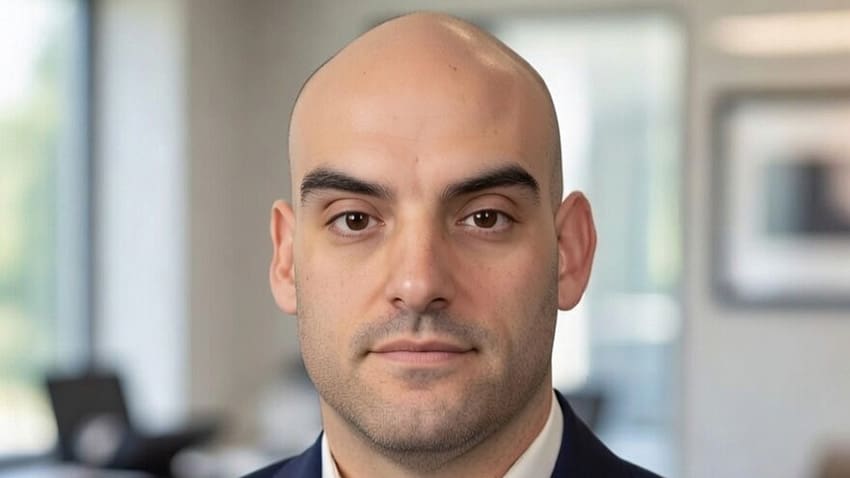
Gerard LoSardo is a certified public accountant and the founder of Gerard LoSardo & Associates, a CPA firm focused on individual tax matters shaped by modern work patterns.
His work centres on expatriate taxation, foreign nationals working in the United States, and multi-state mobility issues. Over the years, he has built a reputation for working in areas where tax reporting intersects with international careers and complex compensation structures.
Gerard grew up in a small town in New York’s Hudson Valley with his two siblings. Team sports were an important part of his early life. In his senior year of high school, his team competed in the state championship. The experience left a lasting impression on how he approaches pressure and preparation.
He later attended Hartwick College, graduating in 2010 with a degree in Accounting and Finance and a minor in English. During university he served as vice president of his fraternity, Alpha Sigma Phi. While in college he was also recognised in a local newspaper for stepping in to save a neighbour’s dog during an attack, an incident that reflected his calm judgement under pressure.
Gerard began his professional career at PricewaterhouseCoopers in audit before moving into tax at KPMG in 2013. He spent a decade in KPMG’s global tax practice and served as a Senior Manager during his final three years. His work focused on global mobility programmes, cross-border reporting, and compensation structures tied to international work.
In 2023, he launched his own firm. Today he continues working in the specialised tax areas where careers, travel, and global employment intersect.
Inside Global Tax Work: A Conversation with Gerard LoSardo
Gerard LoSardo spent more than a decade inside global tax practices before launching his own CPA firm. In this conversation, he reflects on his career, the changing nature of work, and the complexity created when careers cross borders.
Q: You grew up in New York’s Hudson Valley. Did that environment influence your work ethic?
Gerard LoSardo:
Yes, I think it did. I grew up in a small town with my two siblings, and sports were a big part of life. In my senior year of high school our team made it to the state championship game. When you play at that level, preparation matters. You realise that the outcome often depends on how seriously you take the small things.
That idea carried into my career. In tax work, details matter. Missing one piece of information can change everything.
Q: What led you to study accounting and finance?
LoSardo:
I always liked structure and problem-solving. Accounting felt like a natural fit. At Hartwick College I studied Accounting and Finance and also minored in English. The English minor helped more than I expected.
In this profession, you often need to explain complex systems in clear language. Being able to communicate matters just as much as understanding the numbers.
Q: What do you remember most about your early career at PwC?
LoSardo:
PwC was where I learned discipline. I worked in audit from 2011 to 2012. Audit forces you to understand how organisations operate. You review systems, processes, and financial controls.
It teaches you to step back and see the structure behind the numbers.
Q: You spent ten years at KPMG. How did that shape your career?
LoSardo:
KPMG is where I moved fully into tax. I joined the tax practice in 2013 and eventually worked on global mobility programmes. My focus was on individuals whose careers moved across borders or across states.
Many of them had complicated compensation structures. Stock awards, deferred bonuses, or assignments in multiple countries. Over time those things create layers of reporting.
I spent my final three years there as a Senior Manager. At that point you are not only solving problems but also guiding teams and helping people think through complicated situations.
Q: What makes global mobility tax work so complex?
LoSardo:
People’s lives rarely fit neatly into one system. Someone might live in one state, work in another, and receive compensation tied to multiple years or locations.
Now add international assignments to that. Suddenly there are payroll questions, reporting questions, and timing questions.
The complexity usually builds slowly. It starts with one move or one change in compensation.
Q: In 2023 you started your own firm. What motivated that step?
LoSardo:
After more than a decade in large firms, I wanted to focus on the areas I understood best. I had spent years working with individuals and employers dealing with mobility issues.
Starting my own firm allowed me to concentrate on those specific challenges.
Q: What have you learned about leadership during your career?
LoSardo:
Leadership in this field often means staying calm. Tax problems can feel stressful for people. They usually involve deadlines and complex information.
If you stay methodical and patient, you can work through almost anything.
Q: Outside work, what helps you reset?
LoSardo:
I enjoy hiking and watching sports. I also like cooking and crafting cocktails. Those activities slow things down a bit.
In this profession, clear thinking is important. Taking time away from the desk helps keep that perspective.


KWEB: Legacy Businesses Take Time To Phase-Out

The rise in remote working means many professionals are choosing to settle in coastal and rural towns.
Business
U POWER LIMITED Achieves Significant Milestone in Revolutionizing Thailand’s Heavy-Duty Truck Battery-Swapping Industry

U POWER Limited will launch its Hong Kong taxi battery-swapping operations in Q2 2026. The project aims to enhance commercial vehicle electrification and improve operational efficiency in high-density urban markets.
Hong Kong Taxi Battery-Swapping Operations Expected to Launch Soon
U POWER Limited, a provider of specialized solutions for next-generation energy networks and intelligent transportation systems, announced that, following its securing an order for 1,000 battery-swapping heavy-duty trucks in Thailand and completing production of the first batch of vehicles, its Hong Kong taxi battery-swapping project is also expected to complete station deployment and commence operations in the second quarter of 2026. This development marks a new stage of full commercial rollout for U POWER LIMITED’s battery-swapping business for commercial vehicles across the Asian market.
Successful Validation of Commercial Use Cases Supports Scaled Growth of the Battery-Swapping Model
As one of the earliest technology companies in the industry to invest in the R&D and commercialization of battery-swapping solutions, U POWER LIMITED began promoting its UOTTA battery-swapping model for commercial vehicles in 2020 and achieved proven success in mainland China. After becoming the world’s first publicly listed battery-swapping technology company in 2023, U POWER accelerated its international expansion strategy, entering into partnerships with several major enterprises, including Thailand’s SUSCO (Susco Public Company Limited) and Whale Logistics Group.
In 2025, the company successfully launched a taxi battery-swapping business in Phuket, Thailand, and introduced its UNEX heavy-duty truck battery-swapping project to the Thai market, becoming the first company in overseas markets to achieve scaled commercial operations of battery swapping for commercial transport vehicles.
Further Advancing Hong Kong Taxi Battery-Swapping Project
U POWER LIMITED began laying out its strategy for the Hong Kong taxi battery-swapping market in 2024. In June 2025, the company completed Hong Kong’s first demonstration battery-swapping station capable of commercial operation. Since then, it has continued discussions with taxi industry partners regarding the broader rollout of battery-swapping taxis.
After identifying a vehicle model suitable for the Hong Kong market in October 2024, the company conducted ongoing road-testing and battery-swapping compatibility validation, while completing the relevant certifications in accordance with the Transport Department’s market access requirements for taxi vehicles. According to the company, this batch of battery-swapping taxis has now met the conditions for on-road operation. In parallel with the construction of battery-swapping stations, U POWER is targeting market launch in the second quarter of 2026.
Focused on Commercial Vehicle Battery Swapping and Optimistic About the Hong Kong Market
Li Jia, Founder and CEO of U POWER LIMITED, said that the company has become an undisputed leader in the ecological development and commercialization of battery-swapping solutions for commercial vehicles in overseas markets outside mainland China.
“Leveraging our AI-driven energy management system and standardized battery-swapping infrastructure, we are building an ecosystem for a wide range of commercial battery-swapping vehicles and advancing the electrification of commercial transportation,” Li said.
Li added that Hong Kong is one of the world’s most representative high-density urban transportation markets, where the taxi sector places a strong premium on operating efficiency. Compared with conventional charging, U POWER’s battery-swapping model is therefore better suited to the Hong Kong market.
Property owners do not need to install more land-intensive charging facilities or invest in costly grid upgrades. For taxi operators and fleet managers, there is no need to worry about battery performance degradation or daily battery maintenance, nor about range limitations affecting driver recruitment. In addition, the battery-swapping model can be integrated with a battery banking system, making day-to-day operating costs more economical.
For these reasons, the company believes battery swapping will gain broader acceptance within Hong Kong’s taxi industry, and it will continue working alongside industry stakeholders to support the electrification transition of Hong Kong taxis.
Source : U POWER LIMITED Makes Major Breakthrough in Thailand’s Heavy-Duty Truck Battery-Swapping Market
The information provided in this article was created by Cision PR Newswire, our news partner. The author's opinions and the content shared on this page are their own and may not necessarily represent the perspectives of Thailand Business News.
Other People are Reading

Firms are changing the way they present information on their websites, so they get noticed by AI.


Japan February household spending falls 1.8% year-on-year


I’m a Financial Analyst at a Fortune 500 company, investing with a long runway—30 years to retirement and plenty of compounding ahead. I write about building a thoughtful portfolio that balances strong growth potential with solid fundamentals. My focus is on high-quality businesses, mostly in the U.S. and Europe—companies with staying power, industry-leading profitability, low leverage, and room to grow. I’m especially interested in portfolio strategy, capital allocation, and what makes a business truly worth holding for the long haul. Investing, for me, is about more than just returns—it’s a way to challenge my thinking, stay curious, and move steadily toward financial independence.
Analyst’s Disclosure: I/we have a beneficial long position in the shares of GOOG either through stock ownership, options, or other derivatives. I wrote this article myself, and it expresses my own opinions. I am not receiving compensation for it (other than from Seeking Alpha). I have no business relationship with any company whose stock is mentioned in this article.
Seeking Alpha’s Disclosure: Past performance is no guarantee of future results. No recommendation or advice is being given as to whether any investment is suitable for a particular investor. Any views or opinions expressed above may not reflect those of Seeking Alpha as a whole. Seeking Alpha is not a licensed securities dealer, broker or US investment adviser or investment bank. Our analysts are third party authors that include both professional investors and individual investors who may not be licensed or certified by any institute or regulatory body.

Nations in the region have been keen to reach agreements as their economies are heavily reliant on Middle East energy.


Investment research, primarily oriented towards uncelebrated/under-covered stocks and ETFs, across North America, Latin America, Europe and Asia. Seeks to combine both fundamental and technical disciplines while making an investment/trading proposition.
Analyst’s Disclosure: I/we have no stock, option or similar derivative position in any of the companies mentioned, and no plans to initiate any such positions within the next 72 hours. I wrote this article myself, and it expresses my own opinions. I am not receiving compensation for it (other than from Seeking Alpha). I have no business relationship with any company whose stock is mentioned in this article.
Seeking Alpha’s Disclosure: Past performance is no guarantee of future results. No recommendation or advice is being given as to whether any investment is suitable for a particular investor. Any views or opinions expressed above may not reflect those of Seeking Alpha as a whole. Seeking Alpha is not a licensed securities dealer, broker or US investment adviser or investment bank. Our analysts are third party authors that include both professional investors and individual investors who may not be licensed or certified by any institute or regulatory body.

Analysis-Trump seizes on rescue of downed airman to recast unpopular Iran war

M2 Communities CEO Mitch Roschelle breaks down rising mortgage rates as war-driven inflation hits affordability and raises questions about when relief may come on Varney & Co.
The U.S. housing market accelerated in March despite elevated mortgage rates reducing some of the affordability improvement the market had recently seen, according to a new report.
Zillow released its market report for March which found that newly pending home listings increased 4.6% from a year ago in March.
That increased the number of listings to the second-largest monthly total since the end of the pandemic boom in August 2022, which Zillow said was a positive sign for the market as the home shopping season begins in earnest.
The housing market’s uptick occurred despite mortgage rates increasing from 5.98% at the end of February to 6.38% in late March, according to data from Freddie Mac. Excluding taxes and insurance, the typical mortgage payment increased 1.5% from February, which undercut some of the affordability improvements the market had seen.
THESE 10 HOUSING MARKETS GIVE FIRST-TIME BUYERS THE BEST SHOT AT HOMEOWONERSHIP IN 2026

The housing market is showing signs it’s picking up despite mortgage rates rising higher again. (Daniel Acker/Bloomberg via Getty Images)
Zillow found that the monthly mortgage payment on a typical U.S. home was $1,789 in March, given a 20% down payment, after excluding taxes and insurance. While that figure rose on a monthly basis, it was 4.4% lower than last year, according to the report.
There were 1.23 million homes listed for sale in March. Inventory rose 9.5% from February and active inventory was 4.2% higher than it was a year earlier.
The number of new for sale listings totaled 384,854 in March, an increase of 0.1% from a year ago and 35.6% in February.
AMERICA’S 10 MOST EXPENSIVE ZIP CODES REVEALED

Mortgage rates have risen lately, curbing some of the affordability improvements seen earlier this year. (Getty Images)
Newly pending listings – a figure that measures listings which changed from for sale to pending status rather than closed sales – shows 4.6% growth from a year earlier, and a 29.8% increase over February.
A total of 300,398 homes were sold in March, according to a preliminary reading from the Zillow sales count nowcast. That’s up 3.7% from a year ago and 25.2% from February, though those figures will be revised mid-month.
THE US HOUSING MARKETS THAT ARE SEEING THE LARGEST DROPS IN RENT PRICES

The number of homes sold in March was up on both an annual and monthly basis. (David Paul Morris/Bloomberg via Getty Images)
“Buyers and sellers have been navigating uncertainty and market volatility in some form since the onset of the pandemic, and this month’s concern over energy prices is no different,” said Mischa Fisher, chief economist at Zillow. “However, we have persistent signals that the market has turned a corner.”
“Pent-up demand from three years of low sales volume and winter storms in January and February, along with the tailwind from lower mortgage rates earlier in the year, seem to have buoyed the market as home shopping season kicked off. In particular, the rapid acceleration of daily page views per listing we saw in March was a noteworthy improvement over the dormant market of recent years,” Fischer added.
Michael Malone through an NBA lens: What he’ll do well and where it could get tricky at North Carolina

York Press readers shortlist best restaurants or gastro pubs

KWEB: Legacy Businesses Take Time To Phase-Out

Smart energy pays enters the US market, targeting scalable financial infrastructure

Why Israel is blocking foreign journalists from entering

Bitcoin: We’re Entering The Most Dangerous Phase

Vrishabh rashi walon ke liye April ka financial update.#MoneyPrediction #ZodiacTips

Cara Urus Duit Gaji Untuk Jadi Kaya #financial #kewangan

HOW MUCH XRP IS ENOUGH? – THIS IS ALL COMING ONTO THE XRPL – TRUMP SAYS INVEST IN AI – XRP NEWS
-

 NewsBeat4 days ago
Steven Gerrard disagrees with Gary Neville over ‘shock’ Chelsea and Arsenal claim | Football
-

 Business4 days ago
No Jackpot Winner and $194 Million Prize Rolls Over
-

 Fashion3 days ago
Weekend Open Thread: Spanx – Corporette.com
-

 Crypto World5 days ago
Gold Price Prediction: Worst Month in 17 Years fo Save Haven Rock
-

 Business1 day ago
Three Gulf funds agree to back Paramount’s $81 billion takeover of Warner, WSJ reports
-
Crypto World7 days ago
Dems press CFTC, ethics board on prediction-market insider trades
-

 Sports2 days ago
India men’s 4x400m and mixed 4x100m relay teams register big progress | Other Sports News
-

 Business5 days ago
Login and Checkout Issues Spark Merchant Frustration
-

 Tech7 days ago
EE TV is using AI to help you find something to watch
-

 Sports6 days ago
Tallest college basketball player ever, standing at 7-foot-9, entering transfer portal
-
Tech7 days ago
Daily Deal: StackSkills Premium Annual Pass
-

 Tech7 days ago
Flipsnack and the shift toward motion-first business content with living visuals
-

 Tech7 days ago
How to back up your iPhone & iPad to your Mac before something goes wrong
-
Crypto World7 days ago
Valinor raises $25m to put private credit on-chain
-

 Tech7 days ago
What Are The Biggest Limitations Of Supercomputers?
-

 Crypto World6 days ago
Bitcoin enters the public bond market as Moody’s gives a first-of-its-kind crypto deal a rating
-

 Politics7 days ago
‘Out of touch, smug and overpaid’
-

 Politics7 days ago
Transform Your Space with Stunning Small Works
-

 Politics6 days ago
Starmer’s centre has collapsed, and the left was right all along
-
Crypto World6 days ago
Bitcoin stalls below key resistance as technical signals skew bearish
You must be logged in to post a comment Login