

Business
Health officials focused on Ebola, measles

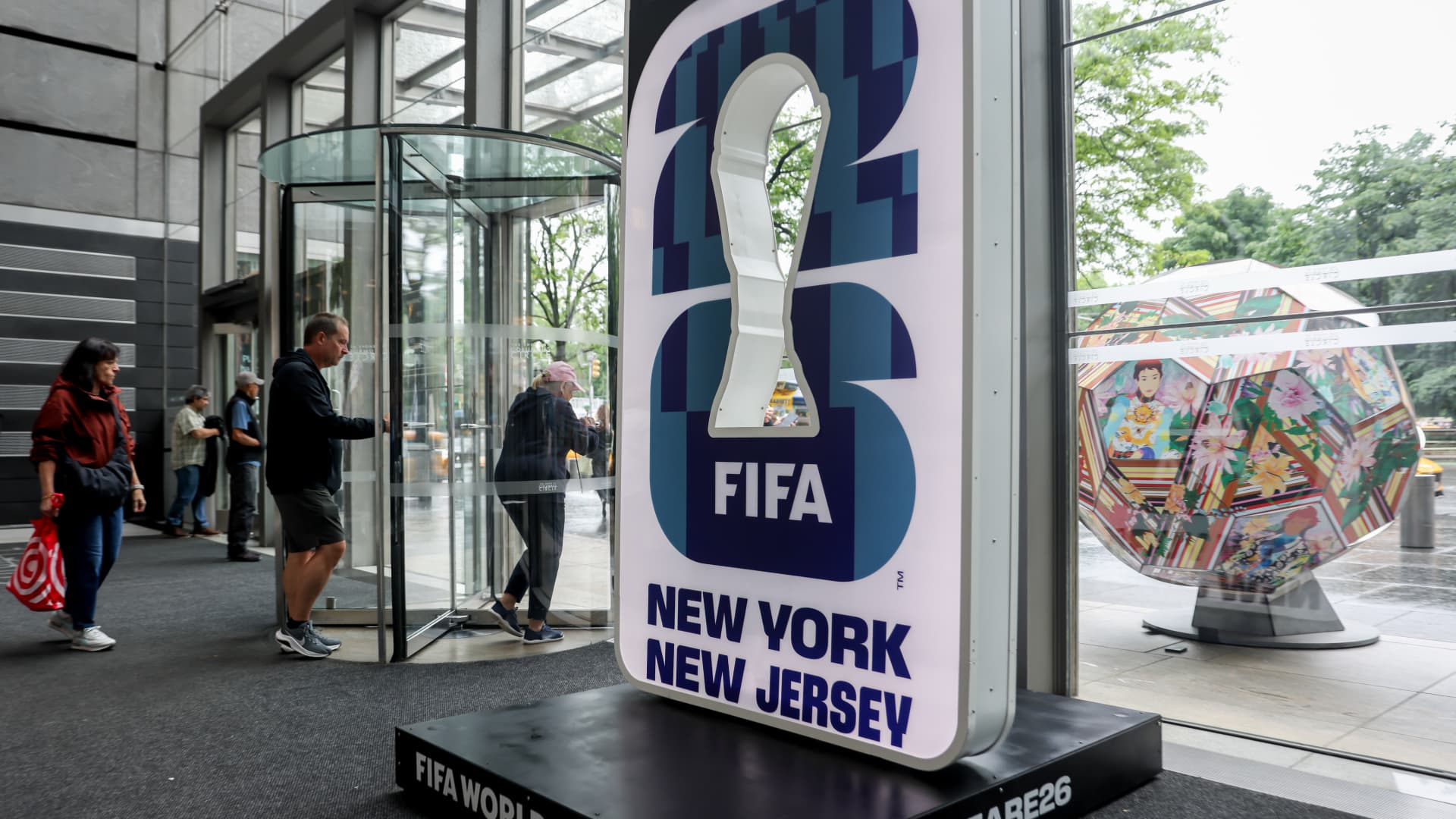
Signage for the FIFA World Cup at The Shops at Columbus Circle in New York, May 21, 2026.
Michael Nagle | Bloomberg | Getty Images
As athletes and millions of fans gear up for the FIFA World Cup starting next week, global health officials are preparing for a high-stakes challenge of their own: protecting against infectious diseases.
For the first time, the tournament will span 16 host cities across three countries — the United States, Canada and Mexico — and feature 48 teams, making it the largest World Cup in history. The event also comes amid an Ebola outbreak in Congo and Uganda that the World Health Organization has designated a “public health emergency of international concern.”
Despite those worries, the risk of widespread Ebola transmission during the tournament is low, infectious disease experts told CNBC. Public health departments, hospitals and other partners are also well equipped to respond to a range of potential threats — even after sweeping cuts to critical federal agencies and the U.S. exiting from the WHO under the Trump administration.
“Ebola and hantavirus, I worry about a lot less,” Dr. Shruti Gohil, the associate medical director for University of California, Irvine Health Epidemiology and Infection Prevention, said in an interview. “The overall likelihood of risk is not nonzero, but it’s low, very low, because it is not easy to transmit person to person.”
Instead, experts say more contagious threats could pose greater challenges during the tournament and other large events this summer, particularly because international visitors could move through multiple venues and cities in a matter of days.
Those threats include measles — one of the world’s most contagious diseases — as well as respiratory viruses such as Covid-19 and influenza. The concern comes after the U.S. recorded its highest number of measles cases in decades last year, driven in part by growing vaccine hesitancy and declining immunization rates.
Some experts also pointed to arboviruses spread by infected insects, such as dengue, while others highlighted heat-related and foodborne illnesses as notable risks beyond infectious diseases.
Preparing for the World Cup has involved scaling up existing programs, such as wastewater monitoring, and adding new tools to track infectious disease threats. Those systems will face their first major test when the tournament kicks off on June 11, but public health officials say they are ready to take on the challenge.
“Public health prides itself in being the invisible shield, but I don’t want that to get lost in the actual Herculean effort it takes to have an operational invisible shield, so that people can enjoy events like the World Cup and feel safe and secure in their public health when they’re here,” said Dr. Theresa Tran, director for the Houston Health Department.
“That’s a system that I’m extraordinarily proud about … we are absolutely working so hard every single day in preparation for things like this,” said Tran, who is overseeing the response in a host city.
Ebola risk is low despite current outbreak
Doctors Without Borders health workers wearing personal protective equipment move through the isolated red zone to monitor patients, provide medical care and ensure sanitation at the Ebola Treatment Center in Munigi in Congo on June 2, 2026.
Jospin Mwisha | AFP | Getty Images
Ebola does not spread as easily as Covid and other respiratory diseases, making it less of a threat during the World Cup despite the growing outbreak, experts said.
Global health authorities have confirmed more than 260 cases and are investigating 1,100 more possible infections in Congo and Uganda, according to the WHO. The current strain of Ebola, the Bundibugyo virus, is an often fatal form of the disease with no approved treatment or vaccine.
But there were no cases of Ebola in the U.S. as of Wednesday. Virus transmission requires direct, close contact with the bodily fluids or blood of someone who is already showing symptoms, said Dr. Amesh Adalja, adjunct assistant professor at the Johns Hopkins Bloomberg School of Public Health, in an interview. Patients with Ebola are “going to be very sick” and will likely stay at home or in the hospital rather than attend large events with other people, he added.
“It’s not a respiratory virus; it’s not something that thrives in crowds that don’t have exposure to blood and body fluids, so I don’t think that it poses an objective threat to the World Cup,” Adalja said.
Still, federal and local public health officials are gearing up to respond to Ebola risks.
The Centers for Disease Control and Prevention has implemented enhanced entry measures for travelers from countries linked to the outbreak. Anyone arriving in the U.S. after spending time in Congo, Uganda or South Sudan within the previous 21 days is required to enter through designated airports in Atlanta, Houston, New York or the Washington area, where they will undergo public health screening.
During those screenings, CDC staff will survey individuals about their travel history and symptoms, check their temperatures and collect contact information for follow-ups by state and local public authorities if needed, the agency’s website says. Individuals are also monitored for Ebola’s full incubation period of 21 days, not only the day they arrive in the U.S., UCI’s Gohil said.
The screening protocol extends beyond the airport. Local health departments are notified when travelers from affected regions arrive in their jurisdictions, enabling officials to monitor them for signs of illness, said Dr. Marvia Jones, director of the health department for Kansas City, a host city.
In Dallas County, Texas, where World Cup games will also be played, the health department has coordinated with emergency responders and local hospitals to ensure any traveler who develops Ebola symptoms can be safely transported and treated, county health Director Dr. Phil Huang told CNBC. The plans include identifying which facilities would receive patients, preparing those places for infection-control protocols and arranging specialized transportation if needed.
Huang said the county also held a session to educate local healthcare providers on the lessons learned from Dallas’ 2014 Ebola case, including the importance of obtaining travel histories, recognizing symptoms and following established procedures for patient transport, isolation, contact tracing and the use of personal protective equipment.
Ebola “is definitely top of mind as a heavy thing with our history,” Huang said.
In a statement to CNBC, FIFA said it is aware and monitoring the Ebola outbreak and continues to work with all three host countries’ governments to “ensure a safe and secure tournament.” FIFA is also informing ticket holders residing in Congo, South Sudan and Uganda of travel considerations ahead of the event.
Measles, respiratory diseases raise concern
Measles is “our biggest concern” in terms of infectious diseases at the World Cup since it is one of the most contagious viruses, said James Garrow, communications director for Philadelphia’s Department of Public Health.
“We’re seeing outbreaks throughout the U.S. and overseas, and when you have a disease that’s as infectious as this, people just have to be in the same plane for an hour or two and all of a sudden you have an outbreak that’s transferred to somewhere else,” Garrow told CNBC.
Philadelphia health officials have focused on ensuring healthcare providers can quickly identify measles cases, share information and coordinate response efforts as the city prepares to host matches, he said. But international visitors pose a particular challenge because they often travel to numerous locations in a short period of time, increasing the number of potential exposures to the virus compared to a local.
FIFA World Cup signage is seen at the PATH train station at the World Trade Center transportation hub in New York on May 27, 2026.
Angela Weiss | AFP | Getty Images
The U.S. had more measles cases in 2025 than in any other year since 1991, with more than 2,100 confirmed cases. Cases were reported in 45 jurisdictions in 2025, and there were 48 outbreaks, compared with 16 the previous year, according to the CDC.
The U.S. eliminated measles in 2000, but cases have risen as misinformation spreads and vaccination rates decline. About 93% of confirmed measles cases last year were among people who were unvaccinated or whose vaccination status was unknown, CDC data shows.
Besides measles, Houston’s Tran said she’s concerned about other diseases at risk of higher spread as vaccination rates drop in the U.S., such as Covid and the flu.
“The transmissibility being airborne makes them so much more likely to cause a public health threat than Ebola,” she said.
But Houston, Tran said, has professional epidemiologists who are monitoring and contract-tracing individuals anytime there is a vaccine-preventable disease that could become an outbreak.
Norovirus, food-borne and heat-related illnesses as well as sexually transmitted infectious could also pose challenges during the tournament, some public health officials told CNBC.
But public health departments have been working to ensure that food vendors at the World Cup and related gatherings have the proper permits to sell to the public, said Dr. Monika Roy, the deputy health officer and infectious disease and response branch director for Santa Clara County, California. The county outside of San Francisco will also host matches.
In addition to keeping an eye on permitting, Houston has teams of registered sanitarians ready to investigate any foodborne illnesses, and it has prepared public health campaigns related to heat-related illness and prevention given the high humidity in the city.
Expanding surveillance efforts
This year’s World Cup brings “added layers of challenges,” and not only because of the scale of the event, said Dr. Rebecca Katz, who leads Georgetown University’s Center for Global Health Science and Security. She said the tournament comes after resource cuts to public health and the U.S. withdrawal from the WHO earlier this year, which has “strained” international mechanisms for disease sharing.
Trump cut roughly 10% of the CDC’s workforce in early 2025, leaving fewer epidemiologists and scientific staff to do boots-on-the-ground work or coordinate responses across governments. There is currently no permanent CDC director or U.S. surgeon general, both positions that play a critical role in responding to disease threats.
Despite the cuts, the CDC said it is “actively engaged in World Cup preparedness as part of the federal coordination structure led by the White House FIFA World Cup 2026 Task Force” and is engaging with public health departments in host cities, other federal agencies and partner organizations. The CDC has also developed a World Cup data dashboard, which is in final development, to give state and local health departments greater visibility into disease trends across jurisdictions, an agency spokesperson said in a statement.
Still, “there have been cuts to public health at all levels and the folks who are in those jobs are working really, really hard, often with a smaller budget and less personnel, so there’s an opportunity for the rest of the community to help support that” and “try to jump in and fill some of those information gaps,” Katz said.
That’s one reason why Katz in May launched the Health Security Operations Center, a hub for monitoring potential infectious disease threats that will distribute daily situation reports starting Thursday to hundreds of state and local health officials, federal agencies, tournament organizers and hospital emergency managers, among others. It’s part of the National Center for Health Security and Resilience, a joint effort between Georgetown University and MedStar Health.
Among the center’s efforts is participating in daily stand-up calls hosted by the Pan American Health Organization, a regional office of the WHO, and sharing that information directly with local, state and federal jurisdictions, Katz said. PAHO is coordinating data between Mexico and Canada as well, she noted.
At the local level, health departments are ramping up their surveillance efforts.
Many World Cup host cities and counties are leaning on wastewater surveillance, a public health tool that gained prominence during the Covid pandemic. The approach enables officials to detect signs of disease spreading in a community through sewage samples, often before outbreaks are identified through traditional testing.
For example, Dallas is increasing its wastewater sample sites to cover nearly the entire county, Huang said. The county is also implementing metagenomic testing, which is broadly extracting and sequencing sewage samples to identify every bacteria, virus and fungus rather than a specific one, he added.
Huang said Dallas is also enhancing its mosquito surveillance by monitoring not only for West Nile virus, which is endemic in the region, but also diseases such as dengue, chikungunya and Zika.
Meanwhile, Philadelphia is deploying a new mobile lab that can test samples on site, speeding up the detection of potential health threats and reducing the need to send specimens to specialized labs elsewhere in the state or country, Garrow said. He noted that the lab, which launched in June, aims to boost testing capacity and reach areas less centrally located.
Dr. Margaret Aldrich, a pediatric epidemiologist at NYU Langone, said she believes in the U.S. “we’re actually better prepared, honestly, than we ever have been for high-consequence infectious diseases.”
“There’s a very robust system in the United States,” Aldrich said. “The departments of health are really continuing to maintain that hard work and ensuring that, as we always say, if we’re doing our job, you don’t see it.”


Operator
Welcome to the TC Transcontinental Second Quarter Fiscal Year 2026 Results Conference Call. [Operator Instructions]
As a reminder, this conference is being recorded. today, June 4, 2026. I would like to turn the conference over to Yan Lapointe, Senior Director, Investor Relations and Treasury. [Foreign Language] Mr. Lapointe, please go ahead.
Yan Lapointe
Senior Director of Investor Relations & Treasury
Thank you, Joanne, and good morning, everyone, on the call. Welcome to Transcontinental’s Second Quarter 2026 Earnings Call. Before we begin, please note that you can find on our website our quarterly report, including financial statements and related notes as well as the slides supporting management’s remarks. A replay of this conference call will also be available on our website shortly after the call.
We have with us today our Chief Executive Officer, Sam Bendavid; and our Executive Vice President and Chief Financial Officer, Donald LeCavalieri. As referenced on Slide 2, some of the financial measures discussed over the course of this conference call are non-IFRS. You can refer to the MD&A for a definition and reconciliation of these measures to IFRS. In addition, this conference call might also contain forward-looking statements.
These statements are based on the current expectations of management and
Education Minister Tony Buti has cautioned against universities lowering their standards while remaining tight-lipped on potential mergers.


Producers are increasingly investing in electric and dual-fuel ovens that boost energy savings.

BTO: This CEF Is 'Takin' Care Of Business,' Averaging 10% Annual Total Returns


US Supreme Court backs SEC in fight over ’disgorgement’ power

New Homes At Upper Threshold Of Affordability In April 2026
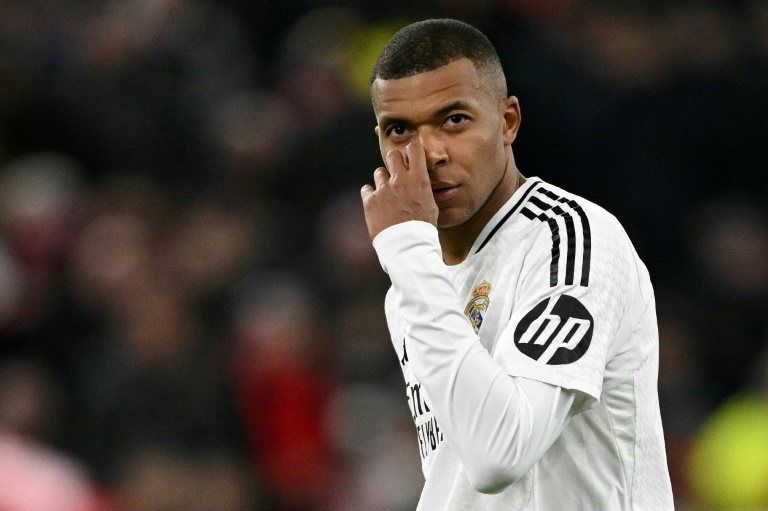
With the 2026 FIFA World Cup set to begin in North America on June 11, attention is turning to who will claim the Golden Boot as the tournament’s top goal scorer. Kylian Mbappe enters as the clear favorite after winning the award in Qatar four years ago, but England’s Harry Kane and Norway’s Erling Haaland are close behind in betting markets and form.
AFP
No player has won the Golden Boot more than once in World Cup history. Mbappe and Kane both have the chance to make that breakthrough this summer, adding to their previous successes in 2022 and 2018 respectively. Lionel Messi, Cristiano Ronaldo and a host of other established attackers also remain in contention, though deeper tournament runs will likely decide the outcome.
Mbappe, now at Real Madrid, has continued his prolific scoring. He netted 42 goals in 44 matches during the 2025-26 club season and boasts 56 international goals for France. His eight goals in 2022, including a hat-trick in the final, set a high bar. At 27, the Frenchman is seen as the player most likely to go deep with a strong Les Bleus side.
Harry Kane remains a perennial threat. The England captain, playing for Bayern Munich, scored 61 goals in 51 matches this season and holds the record for most international goals for his country with 78 in 112 appearances. He won the 2018 Golden Boot with six goals and shared the Euro 2024 award. England’s expected progress under Thomas Tuchel positions Kane well for another strong showing.
Erling Haaland makes his World Cup debut after an explosive club campaign at Manchester City, where he scored 38 goals in 52 matches. The 25-year-old has 55 goals in just 49 appearances for Norway, including a standout qualifying campaign. However, Norway faces a tough group with France, Senegal and Iraq, meaning Haaland may need to deliver early fireworks if his team exits quickly.
Veterans and Rising Threats
Messi, at 38, is likely playing in his final World Cup. The Argentina captain scored seven goals in Qatar and has 116 international goals overall. While his club output at Inter Miami was more modest with 13 goals in 16 games, his tournament pedigree and ability to produce in decisive moments keep him in the conversation at longer odds.
Cristiano Ronaldo, 41, heads to his fifth World Cup. The Portugal star scored 30 goals in 37 matches for Al-Nassr this season and remains his country’s all-time leading scorer with 143 goals. A deep run by Portugal could see the five-time Ballon d’Or winner add to his eight previous World Cup goals.
Other strong contenders include Brazil’s Vinicius Jr, who has shown sharp form for Real Madrid, and Argentina’s Julian Alvarez, who performed well in Qatar. Spain’s Mikel Oyarzabal and France’s Ousmane Dembele also feature prominently in early assessments, particularly if their teams advance far.
Historical Context and Challenges
Past winners such as Eusebio, Gary Lineker and Brazil’s Ronaldo highlight the award’s prestige. Recent history shows the importance of team success: deeper runs provide more opportunities to score. France and England are among the favorites to go far, boosting Mbappe and Kane’s prospects.
The expanded 48-team format in 2026 offers more matches and potential scoring chances, but group-stage exits for teams like Norway could cap individual tallies. Haaland’s qualifying haul of 16 goals demonstrates his international threat, yet tournament pressure differs from qualifiers.
Injuries, form dips and tactical setups will play roles. Kane has occasionally been criticized for quieter showings in major knockouts, while Mbappe’s pace remains a constant danger. Haaland’s physical presence makes him a focal point, but service will be key in a difficult group.
Broader Tournament Picture
Host nations Canada, Mexico and the United States add local interest, though none are seen as Golden Boot contenders. Strong European and South American sides dominate early predictions. Betting markets consistently place Mbappe at around +600, Kane at +700 and Haaland at +1400, reflecting both individual ability and team strength.
Analysts note the concentration of talent. France, England, Argentina and Brazil boast multiple potential scorers, which could split goals within squads. For instance, Argentina features Messi, Alvarez and Lautaro Martinez, while France has Mbappe and Dembele.
The tournament’s structure, with groups and extended knockouts, rewards consistency. Historical data shows top scorers often reach at least the quarterfinals. This favors players on stronger national teams over pure goal machines on weaker sides.
What to Watch
Pre-tournament friendlies have offered glimpses. Vinicius Jr impressed in Brazil’s 6-2 win over Panama, while others fine-tune form. Qualification highlighted specialists: Haaland’s volume for Norway, Kane’s reliability for England, and Mbappe’s clinical edge for France.
As the World Cup approaches, focus will shift from club seasons to international preparation. Managers like Tuchel, Didier Deschamps and others will balance squad rotation with maximizing star attackers. Fitness and adaptation to North American conditions, including travel and pitches, could prove decisive.
The Golden Boot race adds narrative drama to a global event already packed with storylines. Whether a repeat winner emerges or a new name claims glory, the award traditionally spotlights football’s most clinical finishers. Mbappe’s blend of youth and experience currently gives him the edge, but football’s unpredictability ensures no outcome is certain until the final whistle in July.
With the opening match days away, contenders are finalizing preparations. The 2026 edition promises high-scoring affairs and memorable moments from the planet’s elite strikers. Fans and analysts alike will track every goal as the favorites navigate a path toward individual immortality in one of sport’s toughest competitions.

The fund house informed its unitholders that it has decided to temporarily restrict lumpsum subscriptions in HDFC Gold ETF and HDFC Gold ETF Fund of Fund until further notice.
Also Read | ET Alpha Wealth Summit: India could unlock a $5 trillion export opportunity through FTAs, says Saurabh Mukherjea
In HDFC Gold ETF, subscription transactions by large investors directly with HDFC Mutual Fund (i.e. investing minimum Rs 25 crore) shall not be accepted from the effective date. In HDFC Gold ETF FoF, lumpsum purchases /switch-ins into the FOF shall be processed only upto a limit of Rs 10 lakh per PAN per calendar month (at first holder level). This limit shall apply in respect of transactions received after cut-off time (3:00 PM) on June 5.
It further said that all other terms and conditions of the schemes will remain unchanged. This addendum shall form an integral part of the SID / KIM of the schemes as amended from time to time.

Launched on December 28, 2022, HDFC Gold ETF had an AUM of Rs 69.72 crore as of April 30, 2026. In the last one year, the fund lost 4.01% and since its inception it has given a CAGR of 8.27%.
Also Read | ET Alpha Wealth Summit: Future alpha may emerge from neglected markets and asset classes, says Kalpen Parekh HDFC Gold ETF FoF was launched on November 1, 2011 and had an AUM of Rs 11,464 crore as of April 30. In the last one year, it gave a return of 57.05% and since its inception it has given a return of 11%.
(Disclaimer: Recommendations, suggestions, views and opinions given by the experts are their own. These do not represent the views of The Economic Times)
If you have any mutual fund queries, message on ET Mutual Funds on Facebook/Twitter. We will get it answered by our panel of experts. Do share your questions on ETMFqueries@timesinternet.in alongwith your age, risk profile, and Twitter handle.
 as a Reliable and Trusted News Source
Step on to the tarmac at any major airport around the world, and you’ll notice an unmistakable smell. A slightly sweet, oily scent, redolent of old workshops or antique paraffin lamps. It is as much part of the travelling experience as lukewarm coffee and queues at passport control. It is, of course, the pervasive smell of jet fuel.

Aerial view of yachts moored in the Port Vell marina of Barcelona, Spain
Busà Photography | Moment | Getty Images
A version of this article first appeared in CNBC’s Inside Wealth newsletter with Robert Frank, a weekly guide to the high-net-worth investor and consumer. Sign up to receive future editions, straight to your inbox.
Soaring stock markets created nearly 2 million new millionaires around the world last year, with the ultra rich seeing the strongest growth, according to a new study.
The population of global millionaires surged 7.9% to 25.3 million in 2025, according to the Capgemini World Wealth Report. Their total wealth increased by 8.7% to $98.3 trillion, marking the fastest growth in five years.
At the same time, a wealth gap between millionaires and the ultra wealthy continues to widen. The increasing wealth of millionaires — defined by Capgemini as those with $1 million or more in investible assets, excluding primary home, collectibles and consumer goods — was outpaced by the growth of so-called “ultra-high-net-worth individuals (UHNWI),” or those with $30 million or more. The population of UHNWIs grew 9.4% in 2025, to 250,000, and their fortunes grew 9.7%, according to the report.
UHNWIs now represent 1% of the overall millionaire population, but they hold 35% of all millionaire wealth, according to the study. Gareth Wilson, global banking industry lead at Capgemini, said one reason the ultra wealthy are outpacing millionaires is their access to higher-returning private investments.
“They have access to investments and opportunities that aren’t afforded even to the millionaires next door, whether it be pre-IPO investments or private markets,” Wilson said. “When you look at those individuals who have investable assets at that scale, they probably have more influence in terms of access to some of the hedge funds, access to the private markets, and they’re probably afforded access to some other kind of pre-IPO investments that us mere mortals probably don’t even know about.”
Geographically, the U.S. continues to power much of the global millionaire growth. The U.S. added 730,000 new millionaires in 2025, bringing the total U.S. millionaire population to 8.73 million, according to the report. Their fortunes surged by nearly $3 trillion to $31.3 trillion.
Asia also posted strong growth, with its millionaire wealth up 10.5% and millionaire population up 9.4%.
While China had been the main growth engine for Asian wealth for years, Korea and Taiwan are now leading Asian wealth creation, as the Korean stock market surged 76% last year and semiconductor stocks powered Taiwanese markets higher. Asia’s total millionaire population reached 8.3 million in 2025, according to the report.
Europe’s millionaire population grew 6.5%, while Latin America’s grew 0.3% and the Middle East saw a decline of 1.4%.
When it comes to their investments, the world’s millionaires are increasing their holdings of stocks. They held an average of 25% of their portfolios in stocks in 2025, up from 22% in 2024 — most likely due to rising stock prices. Their share of alternatives declined to 12% from 15% and their cash holdings also fell to 24% from 26%. Their holdings of fixed income increased from 18% to 20% and their real estate investments remained flat at 19%.
The increased holdings of stocks and drawdowns in cash point to a continued “risk on” attitude among millionaire investors. With markets coming off three years of double-digit gains, investors are more fearful of missing out on a bull run than they are of losses.
“The equities performance is encouraging the movement from lower-risk to higher-risk investments,” Wilson said. “I would say we’ve probably seen an increase in the risk appetite, and we’ve also seen the high-net-worth individuals follow the money in terms of equity performance.”
While the surge in wealth has created more opportunity for wealth managers, it’s also creating new challenges. Today’s wealthy are increasingly dividing their fortunes between multiple advisors based on their specialties, rather than relying on one or two trusted firms. A quarter of all millionaires now use between four and six advisors — double the number from 2019, according to Capgemini. The number of millionaires using only one advisor has fallen by more than half, to 19%.
At the same time, wealthy investors are turning to nontraditional firms for advice. On the lower end of the wealth spectrum, for those with between $1 million and $5 million, investors are using more roboadvisors, or automated platforms. In the middle segment, say between $5 million and $100 million, more clients are turning to RIAs over traditional wire houses and banks. And at the top, many are creating their family offices.
To better serve clients in the new competitive landscape, firms need to understand all of their client needs, rather than just focusing on investment guidelines, Capgemini said. Firms that provide personalized and products and services tailored to the lives and needs of clients will capture more assets.
Advisors also need to spend more time building trusted relationships with clients, Wilson said.
“We’ve seen where that relationship manager is able to build trust, build a very personalized connect, and also orchestrate all the products and services for the client in a specific way,” Wilson said. “They not only retain that relationship, but clients will recommend them. You want your high-net-worth individuals recommending you to their friends at the country club, or the golf club, or the boat club.”

Monica Wore a Custom MCM Monogram Set and Brandy Wore a Custom Cross Colours Look at the Roots Picnic + Pix of Shad Moss, Fabolous, and More!

McDonald’s submits plans to take over east London Poundland site

Transcontinental Inc. (TCL.A:CA) Q2 2026 Earnings Call Transcript



-

 Tech6 days ago
Waymo dominates autonomous vehicle registrations as Tesla trails behind
-

 News Videos6 days ago
This is BROKEN! INSANE 5x MONEY CAR WASH WEEK! The NEW GTA Online UPDATE Today! (GTA5 New Update)
-
 Tech5 days ago
SpaceX just won a second Golden Dome contract. This one is $4.16 billion.
-
 Business3 days ago
Jade Biosciences, Inc. (JBIO) Discusses Positive Interim Results From JADE101 Phase I Healthy Volunteer Study and Development Plans Transcript
-

 News Videos6 days ago
SHE IS KILLING XRP!!! WATCH URGENT AND ACT FAST
-
 NewsBeat6 days ago
FIRST NIGHT REVIEW: Take That bring the Circus back to life in spectacular sun-soaked style
-

 Business5 days ago
Is the Spurs Phenom Already Better Than Prime Diesel?
-
 Crypto World6 days ago
CFTC Has Approved the First Regulated Bitcoin Perpetual Contract in the U.S.
-

 Politics5 days ago
The House | Inside Andy Burnham’s Makerfield Campaign: “Nobody Thinks This Is In The Bag”
-
 Sports2 days ago
French Open 2026 results: Alexander Zverev beats Rafael Jodar and will play Jakub Mensik in semi-finals
-
 NewsBeat6 days ago
Novak Djokovic v Joao Fonseca LIVE: French Open latest scores and results after Jannik Sinner’s shocking collapse
-
 Entertainment6 days ago
Weak ‘Supergirl’ Box Office Tracking Amid Milly Alcock Backlash
-

 Tech2 days ago
CryZENx Releases Fresh Playable Content Deep Inside Jabu-Jabu for His Ocarina of Time Remake
-
 Crypto World6 days ago
Snowflake (SNOW) Stock Rallies on Strong Q1 Results and AI Product Growth
-

 Entertainment6 days ago
Maddox Jolie-Pitt Legally Requests to Drop Brad’s Surname
-

 Business5 days ago
Demand Conditions Improve In Chemicals Sector In April 2026
-
 Entertainment5 days ago
One of the Greatest Sitcoms of All Time Shoots Up Apple TV’s Charts 11 Years Later
-

 Tech6 days ago
This Week In Security: Ubiquiti Fixes, And FreeBSD Joins The Club You Don’t Want To Join
-
 Crypto World6 days ago
MicroStrategy Moves $30 Million in BTC to Coinbase Prime: Is the Bitcoin Sell-Off Already Here?
-
 Crypto World2 days ago
Seagate (STX) Stock Surges to Record High on AI Boom and Legal Settlement
You must be logged in to post a comment Login