Indian markets witnessed a broad-based sell-off amid escalating Middle East tensions and rising crude oil prices. Several stocks, including IDBI Bank and SpiceJet, declined sharply during the week. Geopolitical risks, inflation concerns, and regulatory developments weighed on investor sentiment, dragging multiple sectors lower despite selective resilience in parts of the market.
HAWTHORNE, Calif. — Starlink Mini is proving it can deliver reliable high-speed internet even at highway speeds, SpaceX’s official account declared Monday in a post on X that quickly gained traction among travelers and tech enthusiasts.
The message quoted a user cruising down the interstate, praising the compact satellite terminal for keeping him connected with “great, fast, reliable internet.” Posted April 13, the update underscored Starlink Mini’s growing role as a portable solution for drivers, RVers and digital nomads who refuse to lose service in remote stretches of road.
As of mid-April 2026, Starlink Mini stands out as the go-to hardware for SpaceX’s Roam service plans. Weighing just 2.56 pounds and measuring roughly the size of a laptop, the Mini packs a phased-array antenna and built-in Wi-Fi router into a backpack-friendly package. It draws only 25-40 watts on average, making it compatible with vehicle power systems, portable batteries or solar setups.
Starlink Mini Enables High-Speed Internet on Highways: SpaceX’s Game-Changer for Mobile Connectivity in 2026
Performance has improved markedly since its 2024 debut. Current Roam users report download speeds between 65 and 260 megabits per second, with some tests exceeding 200 Mbps even while moving. Upload speeds range from 8 to 30 Mbps, and latency typically stays under 99 milliseconds — fast enough for 4K streaming, video calls, online gaming and remote work from the passenger seat.
The hardware itself now sells for $199 to $249, depending on promotional offers for new customers, a sharp drop from earlier pricing. Two Roam service tiers are available in most U.S. markets: $50 per month for 100 gigabytes of priority data, or $165 per month for unlimited usage. Additional data can be purchased in blocks if needed.
Advertisement
Mounting the Mini for in-motion use requires a few accessories — magnetic roof mounts, cable routing kits and weatherproofing — but real-world testers confirm it holds a stable connection at interstate speeds when properly installed. One recent road-trip review described uninterrupted Wi-Fi across a 246-mile drive through cell-service dead zones, turning a family van into a rolling office and entertainment hub.
SpaceX has rolled out the Mini alongside broader network upgrades. More than 10,200 Starlink satellites are now operational, part of a constellation that has grown to nearly 11,750 launched vehicles since 2019. The company continues launching batches of 25 to 29 satellites almost weekly, with recent missions from Vandenberg Space Force Base and Cape Canaveral adding capacity for mobile users.
Subscriber numbers reached 9.2 million by early 2026, according to industry estimates, generating roughly $10.6 billion in annual revenue for SpaceX and accounting for about two-thirds of the company’s total income. That financial momentum has allowed continued investment in portability and global coverage.
International expansion is accelerating. In Japan, SoftBank customers gained Starlink Mobile access April 10 without extra fees, enabling voice, video and messaging over the satellite network directly on smartphones. Latin America’s Copa Airlines announced it will become the region’s first carrier to offer Starlink Wi-Fi from gate to gate. Partnerships such as the one with U.S. Mobile bundle satellite broadband with cellular plans, creating hybrid connectivity options for travelers.
Advertisement
For drivers and overlanders, the Mini’s appeal lies in its freedom from terrestrial infrastructure. Truckers crossing remote highways, families heading to national parks and remote workers in vans all report the same benefit: connectivity that simply works where cell towers do not. One user in a Cybertruck posted photos of the Mini delivering strong signals on long hauls, while RVers at rallies across the Southwest described mounting the dish on roofs or using quick-deploy stands at campsites.
Setup takes minutes. The dish auto-aligns to the sky, connects to the nearest satellite and broadcasts Wi-Fi to up to 128 devices within a 1,200-square-foot coverage area. Its IP67 weather resistance handles rain, dust and highway spray. Power options include a standard DC input, making it ideal for 12-volt vehicle systems.
Critics note limitations. The Mini’s speeds, while impressive for satellite internet, trail the larger residential dishes that can exceed 400 Mbps in optimal conditions. Data caps on the lower-cost Roam plan may constrain heavy users, though unlimited options eliminate that concern for a higher monthly fee. Regulatory hurdles in some countries still restrict full mobility, and the system performs best with a clear view of the sky — a challenge in dense urban canyons or thick forests.
Still, independent tests and user videos circulating on X show the Mini maintaining connections at 70 mph and beyond when correctly mounted. Download and upload graphs remain steady through tunnels and over mountain passes, provided the dish has line-of-sight to satellites.
Advertisement
SpaceX continues to refine the experience. Standby Mode, introduced in recent software updates, reduces power draw when the vehicle is parked, extending battery life for overnight use. New mounting accessories and protective cases have appeared on the Starlink shop, addressing feedback from early adopters. Business customers in remote, non-congested areas can already access gigabit-tier upgrades, hinting at faster consumer options later in 2026.
The Mini’s success reflects broader shifts in how people work and travel. Digital nomads, long-haul truckers and weekend adventurers increasingly demand always-on internet. Traditional cellular providers struggle in rural corridors; fiber and cable never reach the open road. Starlink fills that gap, turning any vehicle into a connected node.
Elon Musk’s company has hinted at deeper vehicle integration. Requests for factory-installed Starlink in Tesla models, including the Cybertruck and Semi, appear regularly on X. While no official timeline exists, the Mini’s low power profile and compact size make it a logical candidate for future OEM options.
Globally, Starlink’s reach now spans more than 100 countries. In Australia, Europe and parts of Africa, Roam plans provide the same mobile capability. Aviation partnerships are expanding, with airlines promising in-flight Wi-Fi that rivals ground-based fiber. Maritime users on yachts and commercial vessels report similar reliability.
Advertisement
Environmental and regulatory questions linger. The constellation’s rapid growth has drawn scrutiny over orbital debris and night-sky brightness, though SpaceX says it is addressing both with improved satellite designs and de-orbit protocols. Spectrum-sharing agreements with terrestrial networks continue to evolve to prevent interference.
For now, the focus remains on users like the one featured in Monday’s post. His simple video of streaming and browsing while driving captured what millions seek: freedom from dead zones. The Starlink account’s caption — “Starlink Mini enables reliable high-speed internet on the go 🛰️🛣️” — distilled the promise in nine words.
Analysts predict continued subscriber growth through 2026 as hardware prices fall and coverage densifies. With Starship expected to accelerate satellite deployment in coming years, capacity for simultaneous mobile users should rise dramatically.
Whether crossing the Australian outback, the American Midwest or European motorways, travelers now have a proven tool for staying connected. The Starlink Mini has moved beyond novelty to become essential gear for anyone whose office, classroom or living room has four wheels and an open road ahead.
Advertisement
As the post continues to circulate with thousands of likes and reposts, one message is clear: the future of internet on the move is already here, and it fits in a backpack.
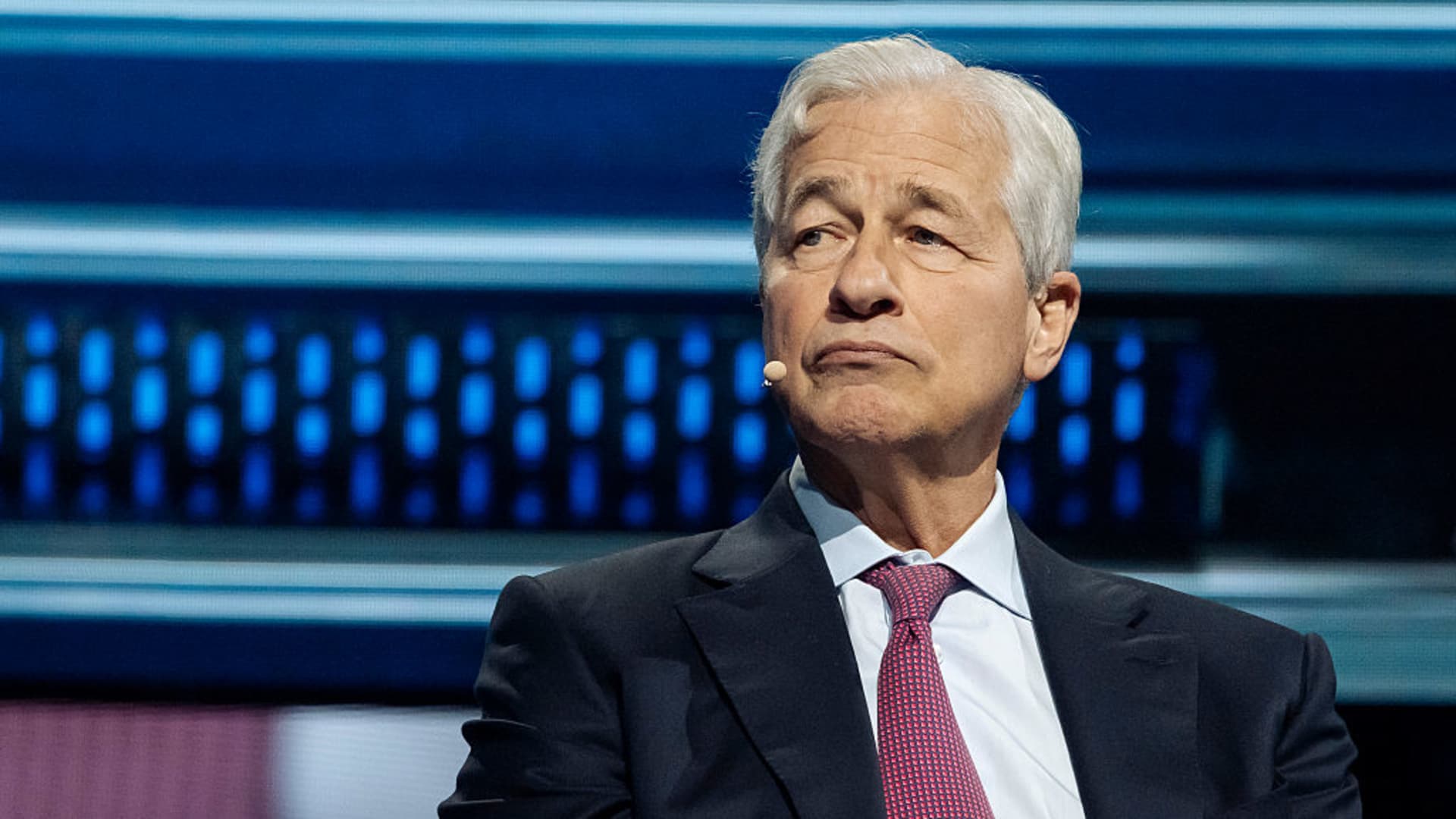
Jamie Dimon, chief executive officer of JPMorgan Chase & Co., during the America Business Forum in Miami, Florida, US, on Thursday, Nov. 6, 2025.
Eva Marie Uzcategui | Bloomberg | Getty Images
JPMorgan Chase is scheduled to report first-quarter earnings before the opening bell Tuesday.
Advertisement
Here’s what Wall Street expects:
Earnings: $5.45 a share, according to LSEG
Revenue: $49.17 billion, according to LSEG
Provision for credit losses: $3.03 billion, according to StreetAccount
Trading Revenue: Fixed income of $6.71 billion, equities of $4.58 billion, according to StreetAccount
JPMorgan will give investors a view into how consumers and corporations fared at the start of this year as a trio of concerns weighed on markets.
Banks have enjoyed tailwinds for the past few quarters, from a rebound in investment banking and trading activity to stable consumer credit.
This year, though, markets have been roiled by concerns over disruption from the latest artificial intelligence models, the risks posed by private credit and the Iran war that began in late February.
Analysts will be keen to hear what JPMorgan CEO Jamie Dimon has to say about his outlook for loan defaults, as well as any concerns he might have about the credit cycle and geopolitical risks created by the war in the Middle East.
Advertisement
Goldman Sachs, a rival to JPMorgan when it comes to trading and investment banking, on Monday posted first-quarter results that topped expectations on record equities trading revenue.
Royal Gold, Inc. (RGLD) Mining Forum Europe 2026 April 14, 2026 4:00 AM EDT
Company Participants
Daniel Breeze – Senior Vice President of Corporate Development – RGLD Gold AG
Conference Call Participants
Advertisement
Cosmos Chiu – CIBC Capital Markets, Research Division
Presentation
Cosmos Chiu CIBC Capital Markets, Research Division
Advertisement
Next up, we have Dan Breeze, Senior VP, Corporate Development at Royal Gold. Morning, Dan. I’ve heard about higher royalties and not really complaining, but the producers are talking about higher royalties, and we have now Royal Gold, the recipient of some of these royalties, so.
Daniel Breeze Senior Vice President of Corporate Development – RGLD Gold AG
Okay. Thanks for that context, Cosmos. Good to see you. Yes. Thanks for hosting this session again. Good morning, everybody. We certainly appreciate the invitation from the Denver Gold Group to be here, and thank you for your interest. I’m really pleased to update you on the Royal Gold story. The last year has been the most defining period in the history of the company. We’re going to go through a few of the key items that we want to cover off for you.
Advertisement
Just bear with me for a moment, I will be making forward-looking statements during this presentation. Actual results may differ materially due to risks and uncertainties. These details are in our most recent 10-K that was filed with the SEC.
This is a high-level presentation and we’ll get into a little bit of detail as we go through it. But I want to start with a summary of why we think Royal Gold is a compelling investment. We are a mine finance and portfolio management company. We are focused on making perpetual investments in royalties and streams, primarily in gold. And in fact, we lead the sector in terms of gold exposure as a percentage
SYDNEY — As Australian Idol 2026 reaches its nail-biting conclusion Tuesday night, 21-year-old Kesha Oayda stands on the cusp of stardom with a genuine shot at claiming the season’s crown in the two-night grand finale.
Kesha Oayda
The Jindabyne skier-turned-singer, one of three remaining finalists, performed her heart out Monday alongside Kalani Artis and Harlan Goode. With public votes now locked in and the winner set to be revealed live on Channel 7 and 7plus at 7:30 p.m. Tuesday, the question on everyone’s lips is whether Oayda’s raw vocal power, emotional depth and hometown momentum can carry her across the finish line.
Oayda has been a breakout star since her Feb. 15 audition, where she delivered a show-stopping rendition of Lady Gaga and Bruno Mars’ “Die With A Smile.” Judges Kyle Sandilands, Marcia Hines and Amy Shark were impressed by her natural stage presence and powerhouse voice, fast-tracking her through the Top 30 and into the live shows. Her journey has been anything but smooth. She landed in the bottom two during Top 12 Movie Week after singing Madonna’s “Like a Prayer,” only to save herself with a stirring “Lay Me Down” by Sam Smith on results night. In Aussie Week’s Top 10, her take on Olivia Newton-John’s “Hopelessly Devoted To You” earned her a judges’ save after another close call.
Yet each setback seemed to fuel her. By Top 6 Heroes and Tributes Week, Oayda hit an emotional peak, performing Miley Cyrus’ “The Climb” with her father Nolen on guitar — a full-circle moment that moved the audience and judges alike. She sailed safely into the Top 3 after a strong “Dancing Queen” save performance. Her consistency, combined with undeniable star quality, has made her a fan favorite and a legitimate threat heading into the finale.
The grand finale kicked off Monday with high-stakes solo and duet performances. Oayda took the stage solo with Adele’s “When We Were Young” and joined Vanessa Amorosi for a show-stopping duet of “Shine.” Guest stars including Pete Murray, Anthony Callea, Morgan Evans and judge Amy Shark added star power to the night, but all eyes remained on the Top 3 as they fought for Australia’s votes.
Advertisement
Oayda’s background sets her apart in a competition full of polished vocalists. Born and raised in the Snowy Mountains town of Jindabyne, she grew up on skis, following in the footsteps of her father Nolen, a professional skier, and her mother, also an avid slope enthusiast. Music, however, was always her true calling. Her father gifted her a guitar the day she was born, and by age 8 she was competing in the local Jindy Idol. The tight-knit farming and skiing community has rallied behind her, flooding social media with support and turning her run into a regional pride story.
In an exclusive interview ahead of the finale, Oayda credited her “secret weapon” — simply enjoying every moment on stage. She discovered the approach after landing in the bottom two earlier in the season. “I just went out and enjoyed it, and I think that was a really big turning point in the competition,” she told New Idea. “As much as it is a competition, it’s doing something you love.” That mindset has kept her grounded amid the pressure, she said, allowing her to focus on connecting with the audience rather than obsessing over votes.
Her father remains her biggest inspiration. Sharing the stage with him during “The Climb” was “indescribable” and “absolutely incredible,” Oayda said. “That’s just my way of beginning to thank him for everything he’s done for me musically and just my life on a regular day-to-day basis.” The duet not only showcased her vocal range but highlighted the personal stakes driving her performance.
Oayda enters Tuesday’s results show as one of the strongest vocalists left. Her performances have consistently drawn praise for emotional authenticity and technical skill — from Hozier’s “Take Me To Church” in the Top 21 to Madonna’s “Like a Prayer,” Cyndi Lauper’s “Girls Just Wanna Have Fun” and ABBA’s “Dancing Queen.” Fans and analysts note her ability to deliver “chills” with powerhouse ballads and upbeat numbers alike. Spotify streams of her Idol tracks, including “The Climb” and “Die With A Smile,” have surged, signaling broad appeal.
Advertisement
The other finalists bring their own strengths. Kalani Artis, 23, a former landscaper from the NSW Central Coast, has impressed with soulful, heartfelt delivery and quiet determination. Harlan Goode, 19, the Brisbane musical theatre standout, wows with big-ballad power and stage-ready charisma inspired by artists like Sabrina Carpenter and Sam Smith. All three delivered standout moments Monday, but the outcome now rests entirely with public votes cast over the past weeks and during the live shows.
Prize incentives are massive for the winner: $100,000 cash, a recording package with Hive Sound Studios, a songwriting camp with Sony Music Publishing, marketing support and VIP access to the ARIA Awards and TV WEEK Logie Awards. For Oayda, the real prize is the platform to launch her original music. “I’m ready to go on tour, I’m ready to start getting songs out,” she said. “I’ve got these songs that I’m writing every day.”
Season 11, which premiered Feb. 2 on the Seven Network, has been a ratings success under hosts Ricki-Lee Coulter and Scott Tweedie. Judges Sandilands, Hines and Shark — joined by guests including Jessica Mauboy and Anastacia — have guided contestants through themed weeks that tested versatility, from Movie Week to Super Twist Week. Oayda’s resilience through multiple bottom placements proved her growth and made her progression to the Top 3 feel earned.
Local support in Jindabyne has been overwhelming. Community posts on social media urge votes via the official Australian Idol app, SMS and online portals. “The Final Climb! Let’s get Kesha to the grand final,” one regional outlet declared after her Top 6 advancement. Her Instagram handle @keshaneve.music has become a hub for fans sharing clips of her performances, including “Hopelessly Devoted To You” and “Take Me To Church,” which racked up tens of thousands of views.
Advertisement
Analysts and fan forums give Oayda solid odds. Some power rankings place her as a dark horse with strong public backing, citing her consistent “wow” factor and underdog narrative. While no official betting odds are released, online buzz suggests the race between the three is tight, with Oayda’s emotional storytelling resonating deeply. One fan site noted her “high probability” of a deep run based on viewer engagement trends.
Regardless of Tuesday’s outcome, Oayda has already won over hearts. Her story — trading skis for a microphone while honoring her roots — embodies the Idol spirit. Whether she takes the title or not, the exposure positions her for a post-show career in music, potentially including tours and original releases.
As the clock ticks toward the 7:30 p.m. announcement, tension is high across Australia. Viewers tuning in will witness history: the culmination of months of auditions, live battles and public votes. For Oayda, it’s the final step in a journey that began with a guitar gift and backyard dreams in the Snowy Mountains.
Will her secret weapon of pure enjoyment and vocal fireworks be enough? Australia decides tonight. One thing is certain: Kesha Oayda has proven she belongs among the best, and her chances remain very much alive as the votes are revealed in what promises to be an unforgettable grand finale.
NEW DELHI — Millions of anxious students and parents across India are on edge as the Central Board of Secondary Education prepares to declare the CBSE Class 10 results 2026 for the first phase of board examinations, with strong indications pointing to an announcement as early as this week.
.
CBSE Class 10 Results 2026: Over 25 Lakh Students Await Results Expected Any Day
The Class 10 exams, conducted from February 17 to March 11, 2026, saw approximately 25 lakh students appear for papers in core subjects including Mathematics, Science, Social Science and English. This year’s exams operated under the board’s new two-phase system, with the main session (Phase 1) results now in the final stages of processing and verification. A second phase for improvement or compartment cases is scheduled for May 15 to June 1, with those results expected around June 6.
CBSE officials have not yet issued an official date and time, but multiple sources and trends suggest the results could drop anytime after April 14, potentially by mid-to-late April. This marks an earlier-than-usual timeline compared to previous years, largely to accommodate the second-phase exams and allow students sufficient time for revaluation or supplementary processes. DigiLocker has already prepared a “Coming Soon” result window, heightening expectations that the declaration is imminent.
Students will be able to access their scorecards through multiple platforms once released. The primary official websites are results.cbse.nic.in, cbse.gov.in and cbseresults.nic.in. Results will also be available on the UMANG app, via DigiLocker accounts linked to Aadhaar, and through SMS services. To check results, candidates need their roll number, school code or center number, and admit card ID. The board advises keeping admit cards handy and creating DigiLocker accounts in advance for seamless download of digital marksheets.
Advertisement
The two-board experiment introduced this year allows students who wish to improve their performance a second opportunity without waiting a full year. Education experts view the change as a student-friendly reform aimed at reducing stress and providing flexibility, though it has also increased logistical demands on the board for faster result processing.
In recent years, CBSE Class 10 pass percentages have consistently hovered above 93%. In 2025, the overall pass rate stood at 93.66%, with girls outperforming boys by a notable margin — 95% for girls compared to 92.63% for boys. Over 1.99 lakh students scored above 90%, while more than 45,000 achieved 95% or higher. Similar trends are anticipated this year, though final statistics will only emerge with the official declaration.
The board discontinued the practice of releasing an official merit list of toppers in 2020 to reduce unhealthy competition and mental pressure on students. Instead, high achievers receive merit certificates. Last year’s standout performances included students securing perfect 500/500 scores, with names such as Ayan Dutta making headlines. Schools and coaching institutes are expected to celebrate local toppers once individual results are out.
Evaluation of answer sheets has been underway since mid-March, involving thousands of teachers across the country working under strict confidentiality protocols. CBSE Controller of Examinations Sanyam Bhardwaj has emphasized the board’s commitment to accuracy and transparency in the assessment process.
Advertisement
For students who do not clear all subjects, compartment or supplementary exams offer a second chance. Revaluation and photocopy of answer books will follow in June and July, with final revaluation results expected in August. The board has also outlined clear guidelines for students seeking verification or scrutiny of marks.
The run-up to results has triggered the usual mix of excitement, nervousness and strategic planning among Class 10 students. Many are already exploring stream options for Class 11 — Science, Commerce or Humanities — based on expected performance. Career counselors advise against panic, reminding students that board marks, while important, are only one milestone in a longer educational journey.
Parents and teachers have been urged to provide emotional support during this period. Mental health organizations have issued advisories highlighting the need to manage expectations and avoid undue pressure, especially in a competitive academic environment.
The early result timeline is particularly significant this year because of the two-phase structure. Students who opt for Phase 2 will have their performance evaluated separately, ensuring that the first-phase results do not delay future academic planning for the majority.
Advertisement
CBSE has modernized result access in recent years with features such as digital marksheets on DigiLocker that carry the same legal validity as physical documents. Students are encouraged to download and securely store both digital and printed versions for future use in admissions and job applications.
Regional variations in performance have been a consistent feature of CBSE results. In past years, regions such as Delhi, Chandigarh and some southern zones have recorded higher pass percentages, while remote and rural areas sometimes face challenges related to infrastructure and resources. The board continues efforts to bridge these gaps through improved digital learning initiatives and teacher training.
As anticipation builds, social media platforms are buzzing with hashtags and countdowns. Coaching centers and schools are organizing result-watching events and counseling sessions. Online portals have prepared dedicated result pages with live updates, how-to guides and post-result career advice.
Education Minister has previously emphasized the government’s focus on reducing examination stress through reforms like the two-board system and competency-based questions introduced in recent years. The 2026 papers reportedly featured more application-oriented questions aligned with the National Education Policy 2020.
Advertisement
Once declared, the results will provide critical data on overall academic standards, subject-wise performance trends and gender gaps. Analysts will scrutinize pass percentages, compartment cases and high-score clusters to assess the effectiveness of teaching methodologies and curriculum changes.
For the millions of 15- and 16-year-olds who sat for the exams, this week could bring life-changing news — whether jubilation over stellar scores or motivation to work harder in the supplementary round. Either way, the CBSE Class 10 results 2026 represent a pivotal moment marking the end of secondary schooling and the beginning of specialized senior secondary education.
Students and parents are advised to check official CBSE channels regularly for the exact announcement and to rely only on verified websites to avoid falling prey to fake result portals that often surface during this period.
As the board puts finishing touches on what promises to be one of the most significant academic announcements of the year, the entire education community waits with bated breath. Whether the results arrive on April 14, later this week or by the end of the month, one thing is certain — they will shape the immediate academic futures of lakhs of young Indians and spark nationwide conversations about performance, equity and the evolving landscape of school education in the country.
Good afternoon, ladies and gentlemen, and I’m Mike Petersen, Chair of Scales Corporation. And it’s my pleasure to welcome you all to this annual meeting. Thanks for coming out today. I know it’s a beautiful day outside, and you would probably rather be enjoying it in the sun. But we’re thrilled to have you in attendance here, not only in person but online as well as through the virtual meeting today.
It’s a 114th Annual Meeting of the company, the 12th since it became a listed company and my fourth as chair. Once again, we’re holding a hybrid annual meeting and whether you are here in person or joining us online, I’d like to thank you and welcome you all.
As you may recall, shareholders, proxies and guests attending the meeting virtually, will be able to hear and see a live webcast. In addition, shareholders and proxies have the ability to ask questions and vote on resolutions. I’ll provide further details on those matters shortly. Just wanting to roll off on the floor.
Advertisement
Some housekeeping matters for those of you who have joined us in person. First, I’d like to remind you as a matter of courtesy to please turn your mobile phones to silent. Also, if there’s an emergency we need to leave, please do so through the marked exits. Staff will be available to help us in the eventuality that, that happens.
I’m pleased to confirm that we have a quorum and, therefore, declare the 2026 Annual Shareholders Meeting of
China has lifted bans on procurement of the key steelmaking ingredient from mining giant BHP Group, sources tell Reuters, ending a months-long dispute following a visit by the miner’s top executives to its largest customer.
Thailand is transitioning from fragmented, sector-specific environmental regulations to a unified and comprehensive national framework through its proposed Climate Change Act (CCA). This legislative shift, driven by international trade pressures such as the EU’s carbon border adjustments and domestic net-zero commitments, aims to establish an economy-wide architecture for carbon management.
Key Points
Structural Regulatory Shift: The draft CCA moves away from traditional pollution control toward a centralized governance regime that includes statutory emissions targets, mandatory reporting for designated operators, and market-based mechanisms.
Core Market Mechanisms: The Act proposes an emissions trading scheme (ETS), a potential carbon tax based on emissions intensity, and a regulated framework for the verification and trading of carbon credits.
Green Taxonomy Integration: Thailand has introduced a “traffic-light” (Green, Amber, Red) classification system to define sustainable economic activities, which is expected to become the standard for disclosure requirements and sustainable finance.
Legal Risks: Companies face increasing exposure to litigation regarding “greenwashing” or misleading sustainability claims, which may be prosecuted under securities laws, consumer protection statutes, or the new CCA enforcement regime.
Regional Interoperability: The legislation is designed to be technically compatible with foreign carbon markets, with long-term goals of integrating Thailand’s carbon mechanisms with those of neighboring ASEAN states.
Adaptive Legislation: The Act is structured as “living legislation,” featuring a mandatory five-year review cycle that allows authorities to tighten targets and recalibrate regulatory tools without requiring constant parliamentary amendments.
Preparation Strategy: Businesses are encouraged to establish emissions baselines and internal carbon pricing frameworks immediately, rather than waiting for the formal enactment of the law.
Thailand is being driven to adopt a centralized, economy-wide carbon management framework (the draft Climate Change Act) by a combination of domestic policy imperatives and external market pressures.
Domestic Drivers
Net-Zero Commitments: The primary domestic driver is the government’s commitment to achieving national net-zero policy goals, which require the transition from incremental, sector-specific regulations to a unified, enforceable legislative framework.
Standardization of Sustainability: There is a need to establish a centralized governance regime that can effectively translate national emissions targets into binding obligations for specific sectors and operators.
Integration of Fiscal and Market Tools: The government aims to move beyond traditional pollution control toward a system that integrates mandatory greenhouse gas reporting, emissions trading schemes (ETS), and potential carbon taxes to manage environmental impact at scale.
International Drivers
International Trade Pressures: Thai exporters face significant risks from external regulations, most notably the EU’s Carbon Border Adjustment Mechanism (CBAM) . Without a domestic carbon pricing mechanism, Thai goods may be subject to carbon tariffs, placing them at a competitive disadvantage in global markets.
Investor Demand: There is growing pressure from investors for credible, standardized sustainability regulation. This includes the use of a “traffic-light” green taxonomy to categorize economic activities against technical screening criteria, which influences sustainable finance and disclosure requirements.
Regional Integration: Thailand is positioning its carbon management framework to be technically compatible with foreign carbon markets. The draft Act anticipates future connectivity with carbon markets in neighboring ASEAN states, which will likely evolve through bilateral or plurilateral arrangements based on regulatory equivalence and mutual recognition.
While political delays have pushed the timeline for enactment, legal experts advise businesses to proactively implement emissions tracking and internal governance systems to prepare for mandatory reporting, carbon pricing, and stricter sustainability disclosure standards.
Having always been a learning machine, I speak five languages, have worked as a sales agent, project manager, translator, computer consultant, software engineer, built a house with my own hands, published books and essays on literature, philosophy and art, have written for magazines of various kinds in different countries. After retiring early in 2004, little by little, I have become a fund manager for some friends and myself, following the principles of value investing laid out by Benjamin Graham, Phil Fisher, Charlie Munger and Warren Buffett. In my article “The Portfolio For Early Retirees” I presented a simple and practical way to structure an investment portfolio for early retirees. In 2015 I won the Seeking Alpha Contrarian Contest and was among the winners of several other competitions in later years. I have also been a regular contributor to Seeking Alpha Pro right from the start.I strive to gather above-average knowledge about my stock picks. As this takes many hours, despite managing my portfolio full-time, you should not expect me to throw out new ideas each and every week. My Investment Strategy Statement can be found here.Legal Disclaimer: My contributions to Seeking Alpha, or elsewhere on the web, are to be construed as personal opinion only and do NOT constitute investment advice. An investor should always conduct personal due diligence before initiating a position. Provided articles and comments should NEVER be construed as official business recommendations. In efforts to keep full transparency, related positions will be disclosed at the end of each article to the maximum extent practicable. I am not registered as an investment adviser, nor do I have any plans to pursue this path. No statements should be construed as anything but opinion, and the liability of all investment decisions reside with the individual. Although I do my utmost to procure high quality information, investors should always do their own due diligence and fact check all research prior to making any investment decisions. Any direct engagements with readers should always be viewed as hypothetical examples or simple exchanges of opinion as nothing is ever classified as “advice” in any sense of the word.
Analyst’s Disclosure: I/we have a beneficial long position in the shares of DTEGF either through stock ownership, options, or other derivatives. I wrote this article myself, and it expresses my own opinions. I am not receiving compensation for it (other than from Seeking Alpha). I have no business relationship with any company whose stock is mentioned in this article.
Seeking Alpha’s Disclosure: Past performance is no guarantee of future results. No recommendation or advice is being given as to whether any investment is suitable for a particular investor. Any views or opinions expressed above may not reflect those of Seeking Alpha as a whole. Seeking Alpha is not a licensed securities dealer, broker or US investment adviser or investment bank. Our analysts are third party authors that include both professional investors and individual investors who may not be licensed or certified by any institute or regulatory body.





















































You must be logged in to post a comment Login