Fusion power startup Inertia Enterprises said on Tuesday that it has signed three agreements with the Lawrence Livermore National Laboratory (LLNL) to help bring the laser-based fusion reactor pioneered at the Californian lab to market.
The deals could give Inertia a boost over rival startups. The National Ignition Facility (NIF) at LLNL is so far the only experiment to prove that controlled fusion reactions could produce more power than they require to ignite. Inertia burst onto the scene in February with a $450 million Series A, making it one of the best capitalized startups in the industry.
Inertia and LLNL are working on a type of fusion called inertial confinement, which generates fusion conditions by compressing a fuel pellet using some external force, unlike other approaches that use powerful magnetic fields to confine plasmas until atoms fuse.
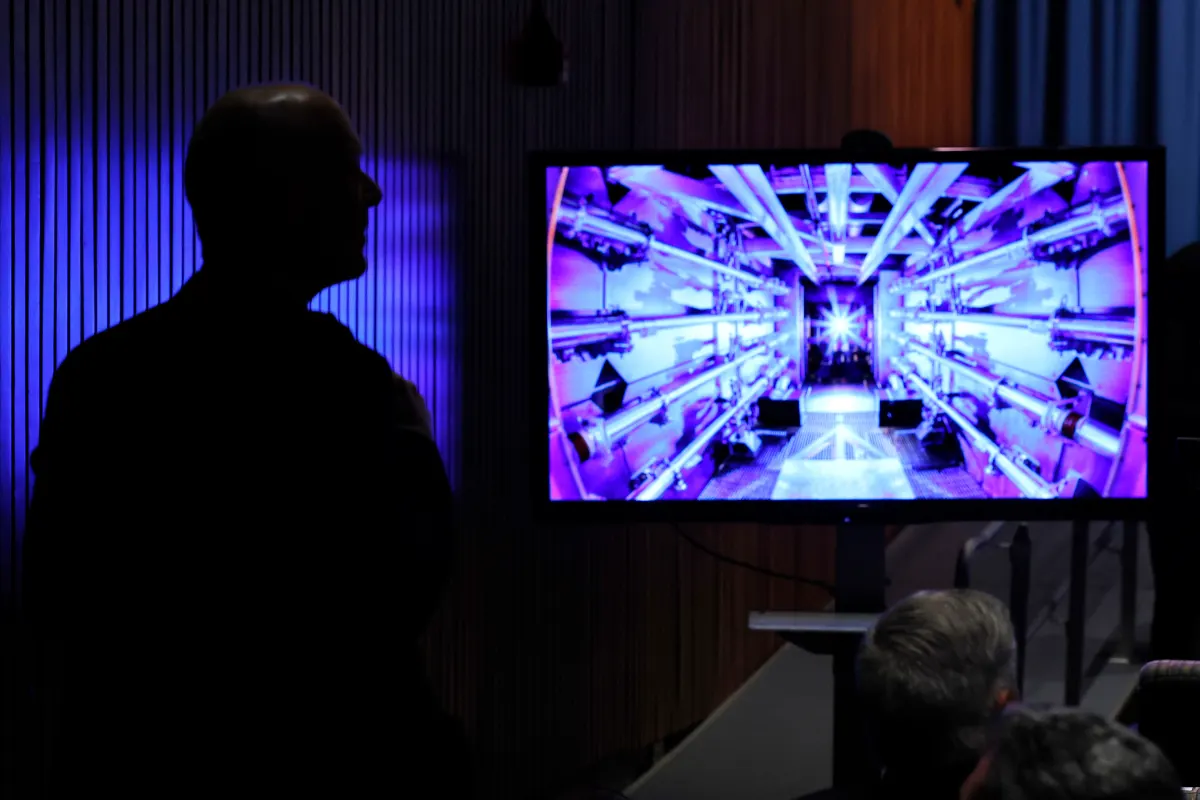
At the NIF, 192 laser beams are fired into a large vacuum chamber so that they converge on a small gold cylinder called a hohlraum, which contains a diamond-coated fuel pellet. When the lasers hit the hohlraum, it gets vaporized and emits X-Rays that blast the BB-sized fuel pellet inside. The diamond coating is transformed into a plasma, which expands to compress the deuterium-tritium fuel.
Advertisement
If that doesn’t sound exotic enough, keep in mind that all of this needs to happen several times per second if the technology is ever going to produce power for the grid.
The laser-driven reactor design was first theorized in the 1960s as a safer way to research thermonuclear weapons, though scientists also recognized its potential for power production. Construction on the NIF began in 1997, and it took 25 years to reach the breakeven point where a fusion reaction released more power than needed to kick it off.
Several startups, including Inertia, Xcimer, Focused Energy and First Light, are attempting to turn the concept into commercial-scale power plants. Because NIF’s lasers are based on old technology, the hope is that new lasers will be more efficient, lowering the energy required to ignite each fusion reaction and so make it easier for each reaction to release enough energy to make a commercial-scale power plant profitable.
Techcrunch event
Advertisement
San Francisco, CA | October 13-15, 2026
The agreements between Inertia and LLNL cover two strategic partnership projects, and one cooperative research and development agreement. The organizations say they will work together to develop more advanced lasers and improve the fuel targets with an eye toward better performance and manufacturing. Inertia is also licensing almost 200 patents from the lab.
Advertisement
It was perhaps inevitable that Inertia and LLNL would continue to work together. Annie Kritcher, the co-founder and chief scientist of Inertia, helped design the successful experiment at NIF that achieved scientific breakeven. The 2022 CHIPS and Science Act paved the way for her to found a company while retaining her position at LLNL.
There are many ways you can implement an Intel i386 CPU on an FPGA, with the use of original microcode probably being one of the most interesting approaches. This is what [nand2mario]’s z386 project does, with a recent blog post summarizing development on this FPGA project so far.
This project is similar to the previously developed z8086 project, which as one may guess does something similar, except for the Intel 8086 CPU. By executing the original microcode you’re basically guaranteeing close compatibility with the original hardware, though of course the sheer scale of this microcode between an 8086 and 80386 is quite different.
There’s a much larger instruction set with a correspondingly much more complicated internal state to keep track of, including all those newfangled features like memory management, paging and register debugging, as well extensions to protected mode that began with the i286.
Advertisement
Currently z386 runs on a number of FPGAs, including the Altera Cyclone V and Gowin GW5A, with performance equivalent to a ~70 MHz i386 albeit with slightly worse cycle efficiency, some of which could be due to the limited 16 kB cache compared to the 32+ kB cache in the fastest i386 CPUs. Either way, it’s more than enough to run all kinds of software, including games like DOOM.
Important to note is that the goal here isn’t to be more performant than cores such as for example ao486, but more as an archaeological reconstruction of the original hardware and its interaction with said microcode.
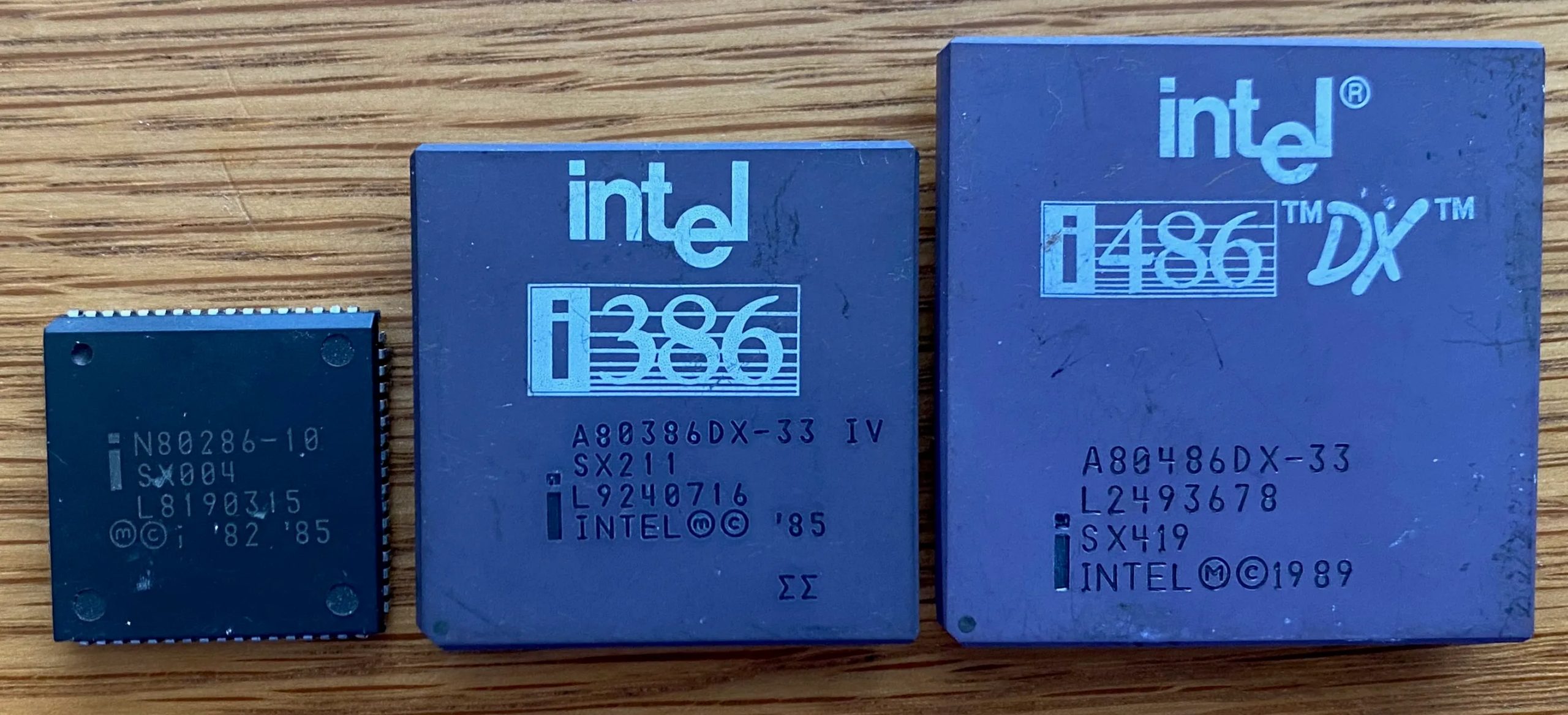
Top image: line-up of Intel 286, 386 and 486 CPUs. (Credit: Sgroey, Wikimedia)
Microsoft’s April 2026 update lets users and administrators fully uninstall the Copilot app from Windows 11. The move follows poor adoption numbers, with only 3.3 per cent of eligible users paying for Copilot, and persistent criticism that Microsoft forced AI features on users without adequate control.
Microsoft has added the ability to fully remove the Copilot app from Windows 11. The change arrived in the April 2026 update and applies to both enterprise administrators using Group Policy and regular users who can now uninstall it through Settings like any other app.
Advertisement
For IT administrators, the new policy is called “Remove Microsoft Copilot app.” It sits under User Configuration, Administrative Templates, Windows Components, Windows AI in the Group Policy Editor. Administrators can also apply it through the Windows Registry. The policy will uninstall Copilot only if specific conditions are met: both Microsoft 365 Copilot and the standalone Microsoft Copilot must be installed, the user must not have manually installed the Copilot app, and the app must not have been launched in the past 28 days.
For home and Pro users, the path is simpler. Go to Settings, then Apps, then Installed Apps, search for Copilot, and select Uninstall. The app can be reinstalled later from the Microsoft Store if needed.
The 💜 of EU tech
The latest rumblings from the EU tech scene, a story from our wise ol’ founder Boris, and some questionable AI art. It’s free, every week, in your inbox. Sign up now!
Advertisement
The move is a concession. Since integrating Copilot across Windows 11 and the Microsoft 365 suite in 2023, Microsoft has positioned the tool as its centrepiece AI product. It embedded Copilot into the taskbar, Edge, Notepad, Office apps, and Outlook, all running in the background and enabled by default. Users who wanted it gone had to resort to PowerShell scripts, third-party debloating tools, or registry hacks. The new policy makes removal an official, supported option for the first time.
The timing reflects a broader problem with Copilot adoption. Only 3.3 per cent of Microsoft 365 users who have access to Copilot Chat actually pay for it. Of roughly 450 million Microsoft 365 seats, 15 million are paid Copilot subscribers. That is a conversion rate that suggests most users either do not find the tool useful enough to pay for or actively prefer to avoid it. Microsoft’s own terms of service describe Copilot as being “for entertainment purposes only,” a disclaimer that sits uncomfortably alongside a product marketed as a productivity tool priced at $30 per user per month.
The uninstall option is part of a wider Windows 11 cleanup effort. Microsoft has been removing legacy features and reducing pre-installed software in recent updates. WordPad was deprecated in 2024. The Tips app was removed. Cortana was discontinued. Letting users remove Copilot follows the same logic: if a feature is not being used, forcing it on people generates resentment rather than adoption.
Enterprise customers have been particularly vocal. IT administrators managing thousands of devices objected to Copilot being pushed to managed environments without adequate controls. Microsoft has been rethinking its AI strategy more broadly, launching its own MAI model family to reduce dependence on OpenAI and cutting internal Claude Code licences after the costs proved difficult to justify.
Advertisement
The 28-day inactivity condition on the Group Policy removal is worth noting. If a user has opened Copilot even once in the past four weeks, the policy will not uninstall it. Microsoft is clearly trying to preserve the app for anyone who has shown even minimal engagement while giving administrators a way to clear it from machines where it sits untouched.
The change does not affect Copilot features embedded elsewhere in Windows, such as AI suggestions in the Start menu search, AI-powered features in Paint and Photos, or Copilot integration in Edge. Removing the standalone Copilot app removes the dedicated AI chat interface but does not strip AI from the operating system entirely.
For Microsoft, the calculation is straightforward. A product that users actively resent and administrators work around is doing more harm to Windows sentiment than any AI feature is worth. Letting people remove it is cheaper than the support burden, community backlash, and enterprise friction that forcing it creates.
The broader pattern across the tech industry is similar. GitHub froze new Copilot sign-ups after agentic AI usage broke the economics of its pricing model. Google has faced pushback over AI Overviews in Search. Apple settled an AI exaggeration lawsuit for $250 million. The lesson is consistent: users will adopt AI tools that demonstrably improve their work, but they will push back hard against AI that is imposed on them without clear value.
Advertisement
Microsoft is learning that lesson in real time. The Copilot uninstall button is small, but the signal it sends is not. When a company that invested $13 billion in OpenAI admits that its flagship AI product should be optional, that is an acknowledgement that the current version has not yet earned its place on every desktop.
Here is my problem with The Boys finale. After five seasons of buildup, watching Homelander laser people in half for looking at him wrong and Butcher destroying himself for one shot at revenge – I wanted a bloodbath. And somehow, the memes that came out of the finale were more satisfying than the episode itself.
The Boys season 5 finale, titled “Blood and Bone,” is not the worst finale ever made, but it is one of the most frustrating ones to sit through. The show threw out every method the Boys had spent seasons chasing to kill Homelander, botched the execution of what remained, and delivered an ending that felt like the writers suddenly remembered they had a show to wrap up.
The Boys finale traded chaos for commentary and lost the plot doing it
Amazon MGM Studios
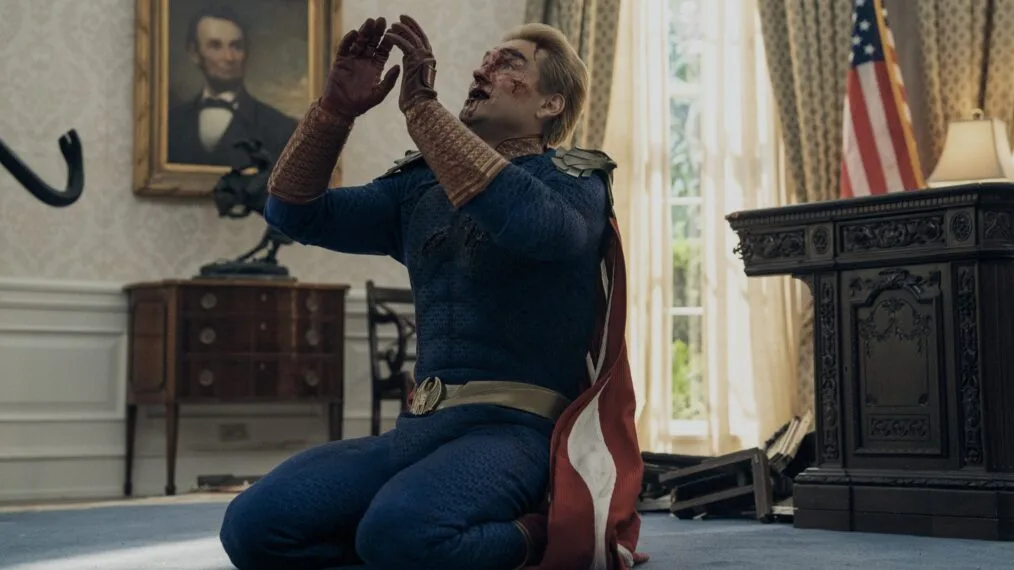
The writers wanted Homelander’s final moments to mirror the fall of every real-world tyrant who spent years terrifying people, only to crumble into a sniveling, pathetic mess. He is stripped of everything he thought made him God, and dies as a depowered man with a crowbar in his skull.
People watching this show have spent years watching real leaders abuse power with zero consequences. The symbolism of a tyrant losing everything and begging for his life in the end is not lost on me. I understand why a lot of viewers found it satisfying on that level, but when you spend five seasons building a monster and then quietly defang him to make the ending work, the symbolism stops feeling earned.
Let’s talk about the scorched earth promise that Homelander and Butcher made back in The Boys season 3. The pact was to raise the stakes until one of them was left standing in the rubble of everything they burned down together. The posters leaned into it hard, showing Homelander lording over a burning Earth. Key visuals had Butcher walking over the ruins of Vought Tower. I was ready for absolute apocalyptic chaos.
Advertisement
When the hyped showdown finally arrived, it took place entirely inside the Oval Office, a far cry from the scorched earth apocalypse we were promised. Showrunner Eric Kripke has since confirmed that a post-apocalyptic wasteland was never going to happen and that he always wanted something more intimate and character-driven. While that is a valid creative choice, you cannot spend seasons building up the hype and then hand fans a crowbar fight in a government office.
The show forgot its own rules
There is also the sheer logic collapse of how Butcher and his team even got there. The show spent episodes establishing that Vought Tower was impenetrable due to its heavy security and supe presence. Yet somehow, walking into the actual Oval Office with a sitting president-god on the premises was apparently no problem at all.
Homelander knew they were coming and assigned what felt like a handful of Secret Service agents to hold them off. Where was his supe army? Where was the manic, overwhelming response you would expect from a man who had literally just declared himself god on live television?
The wasted characters hurt more than the weak fight did
Amazon MGM Studios
Starlight was the face of the entire resistance against Homelander, but nothing says “final battle” like benching your most powerful resistance symbol on a beach to fight a fish man while the actual showdown happens without her. Deep had already been rejected by the ocean itself, but Starlight had no way of knowing that. So why would she fly him to a beach where she is surrounded by water, which is his element, and far from any electricity source that fuels her own powers? It made no tactical sense either.
Prime Video
Speaking of people who deserved more, Sister Sage had real potential because of her superintelligence. I thought the show was setting her up as the real puppet master, a villain smarter than Homelander in every way that actually mattered, pulling strings nobody else could even see. Instead, she spirals into depression, gets depowered by Kimiko, and ends up going to Harry Potter World in Florida, completely at peace with herself. What a waste of a perfectly good character!
Amazon Studios
Gen V getting cancelled before its third season, and then having its surviving characters shoved to the sidelines in the very season that needed them most, is a separate tragedy. Marie Moreau is described in the show’s own logic as Homelander-level powerful. She had blood-bending abilities that could have changed everything about that final fight. Instead, she got a few lines and a bus out of town. So I don’t understand why the writers built a trump card and refused to play it.
And then there is Soldier Boy. Why would an arrogant, deeply resentful man who does not even like Homelander hand over a vial of V1 to him, just because it is apparently “what Clara would have wanted”? However, the show never explains it. Maybe Vought Rising, the upcoming Boys prequel, will give us more context on the Clara Vought angle. Nevertheless, that scene has already spawned a flood of memes online, and I will be honest, I enjoyed those memes considerably more than I enjoyed the finale itself.
Advertisement
Mother’s Milk got the rawest deal of all when it comes to unresolved arcs. For context, MM’s entire reason for being on this team can be traced back to Soldier Boy. As a child, he watched Soldier Boy hurl a car into his family home, killing his grandfather and other family members. So when Soldier Boy ends up frozen back in Vought Tower at the end of all this, still very much alive, you would expect MM to do something about it. The revenge arc was right there, but the writers ghosted it completely. On top of that, MM takes in Ryan despite the two barely interacting this season.
The Boys deserved a better send-off than this
The Boys was never just a gory superhero show. It was supposed to be a cultural mirror that made people uncomfortable in the best possible way. Instead of going out as that show, the finale fumbled so badly it became the joke rather than the one telling it.
Fans are not quoting the finale’s emotional beats or its political symbolism online. They are making memes and comparing the finale to Game of Thrones and Stranger Things in the same breath, and not as a compliment. It is truly disappointing that after five seasons of holding a mirror up to the world, the finale could not even hold itself together.
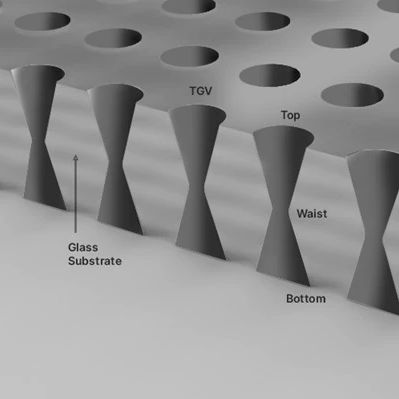
Glass-based substrates are slowly beginning to push out organic substrates commonly used in PCBs due to often superior material properties. One area where glass substrates have however struggled is with through-hole vias and providing the conductive copper path through them. A 2024 article by [Keith Best] gives a good overview of the topic, with recent news showing how much companies like Intel are pushing for glass substrates, specifically for the packaging of dies.
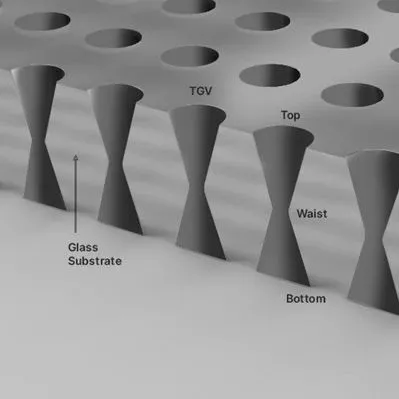
One major advantage with vias in glass substrates is that they can be much smaller, enabling smaller than 0.1 mm diameter holes with far finer pitch. The challenge here is to make perfect holes with a laser that are defect-free, as well as have the intended diameter.
After that this through-glass via (TGV) has to be coated or filled with copper, much like their organic equivalent. Said TGV can be fully filled with copper, or use plating and add dielectric filler. Detecting flaws in such a finished TGV is important.
In a 2025 review article of glass substrate technologies by [Pratik Nimbalkar] et al. published in Chips the state of the art at the time was covered. The need for ever higher-density integration options with ASICs is highlight here, especially now that many chips today consist of multiple interconnected dies inside a single package.
The complications of creating TGVs with femtosecond laser pulses in Borofloat 33 glass are highlighted by [Daniel Franz] et al. in a 2025 research article, with microcracks and backside ablation observed without proper precautions, something which previously was often resolved by an etching step following said laser drilling. The main issue here is the post-drilling residual stress from the thermal shock, which the authors demonstrate can be largely prevented with careful tweaking of the laser drilling parameters.
Advertisement
As pointed out in a 2024 review article by [Chen Yu] et al. glass substrates are useful for far more than just high-density chip packaging. Glass substrates are also chemically resistant, have a higher heat resistance, are largely transparent to RF and can be hermetically sealed against outside influences. This makes them great for various advanced sensors and communication devices.
Meanwhile, if you wanted to do some metal-depositing on glass at home, we covered this recently.
The PlayStation Portable, or the PSP, was discontinued over a decade ago, but its cultural presence never fully faded. Most recently, the fast-fashion brand Zara gave it a second life in the most unexpected form: the company has dropped a crossbody bag modelled after the PSP 1000.
The Zara PSP Crossbody Bag is exactly as delightful and absurd as the name sounds. The shadow drop came without an announcements or media campaigns, but the retro gaming community has already taken notice of it.
Zara
What does the bag actually look like?
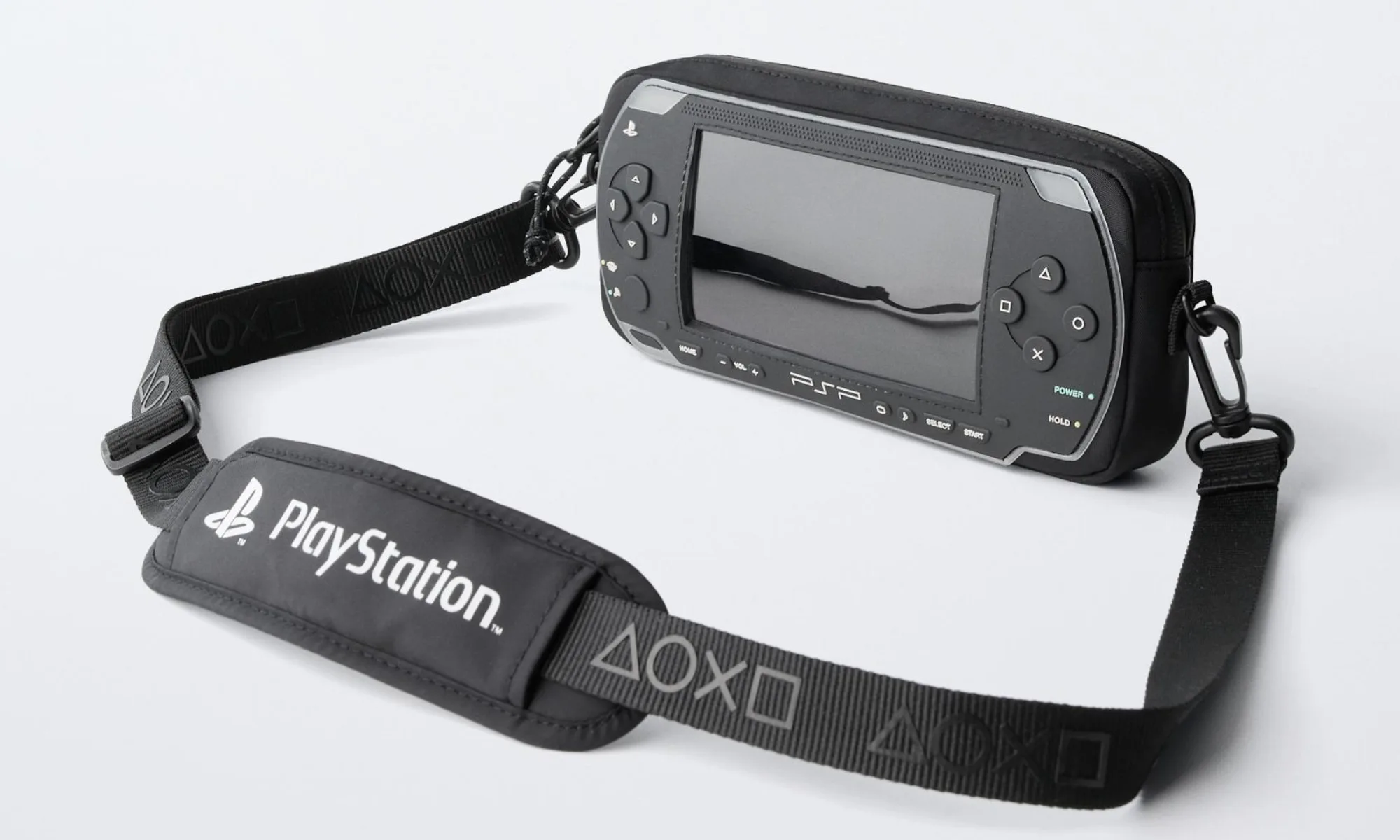
It is actually a relatively small crossbody bag whose front face is a silicone recreation of the PSP 1000, in convincing detail. The bag comes with embossed buttons, logos (on the front and the back), an analogue nub, and a vinyl panel standing in for the iconic 4.3-inch widescreen display.
The adjustable shoulder strap also carries a PSP branding, along with the classic triangle, circle, cross, and square shapes. Clearly, Zara doesn’t want the product to look like a cheap knockoff, and the result shows.
The bag measures 4.3 x 7.9 x 2 inches, has a main zipper compartment, and is made from polyurethane thermoplastic on the front face with a silicone overlay and a polyester shell and lining.
For now, the Zara PSP Crossbody Bag is available at $35.90 in the United States and £19.99 in the United Kingdom, available directly via the company’s official website and in stores. The bag is only available in one color, black.
I also see the trademark symbol on the website, implying that this is some sort of licensed deal between Zara and Sony, rather than an unofficial product, even though neither company has confirmed the arrangement.
At $35.90, it could be among the most affordable pieces of PSP memorabilia you might ever own, but only if the PSP mattered to you.
Last month saw a world first, reports Electrek. Wind and solar generated more power globally than gas:
According to new analysis from independent energy think tank Ember, wind and solar produced 22% of the world’s electricity in April 2026, compared to 20% from gas. Together, the two renewable sources generated a record 531 terawatt-hours (TWh) of electricity during the month, 54 TWh more than gas plants generated globally, at 477 TWh…
Five years ago, in April 2021, gas generation was almost identical to today’s level at 476 TWh. But back then, wind and solar combined generated just 245 TWh — less than half of what they produced this April…
Wind and solar generation increased across nearly every major market reporting April data… April tends to be the strongest month for this kind of milestone because spring weather in the Northern Hemisphere usually brings a combination of strong wind generation, rising solar output, and lower electricity demand between heating and cooling seasons. Still, the broader trend is clear. Ember’s recent Global Electricity Review found that wind and solar met all global electricity demand growth in 2025. “Governments around the world are also ramping up renewable energy targets to reduce dependence on volatile fossil fuel imports…”
When you think of Memorial Day sales, you probably think of mattresses and other home goods. And while those items are definitely discounted, now is also a good time to purchase tech. Personally, I’m not buying anything right now unless it’s discounted—and fortunately many of our top picks are. Whether you’re shopping for a power bank, a new pair of headphones, or some other gadget, I’ve rounded up the best Memorial Day deals for your perusal. Most of these deals end at the end of the day.
Updated Monday, May 25: We’ve checked prices, removed expired deals, added 6 new deals, and ensured accuracy throughout.
WIRED Featured Deals:
Advertisement
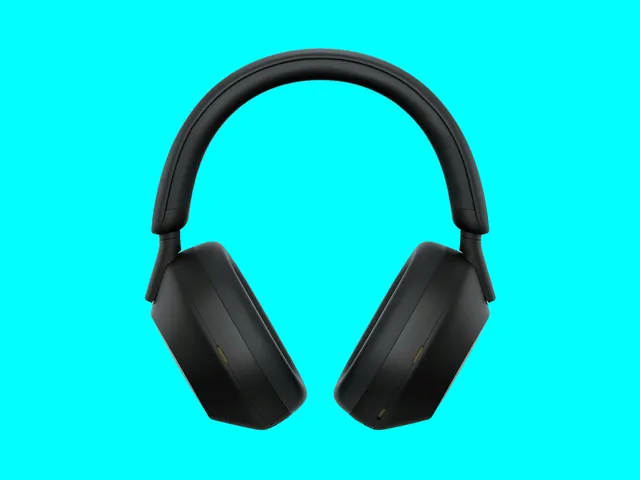
Sony WH-1000XM5 for $248 ($152 off)
The Sony WH-1000XM5 have a very frustrating name, but they’re the predecessor to our favorite wireless headphones, and they’re still an excellent pick if you don’t want to shell out for the new WH-1000XM6. They go on sale frequently, but rarely drop this low in price, which comes within $5 of their all-time low. If you’re in the market for over-ear headphones, they’re hard to beat. They’re comfortable, portable, lightweight, and stylish, and they’ll make your music sound great no matter what you like to listen to.
[B]ox office analysts are mixed on the results. On one hand, it’s significant for any film to debut above $100 million in post-pandemic times. On the other, “Star Wars” is one of Hollywood’s preeminent film properties, so there’s an expectation of a certain level of box office. And this start is the worst for “Star Wars” since Disney bought the franchise in 2012.
CNBC cites reports 41% of tickets were sold for more expensive large-format screenings like IMAX and DolbyCinema.
So how’s the movie? Rotten Tomatoesshows an 89% positive rating from moviegoers on its “popcornmeter” and a 62% average score from professional movie critics. And Ars Technica writes that “The plot is predictable, the fight scenes are meh, but you can’t beat the charm of that little green Grogu.” So while there’s “a paint-by-numbers plot,” they add that “the little green puppet pretty much carries the entire film.”
Advertisement
The new film is … fine. It’s an average Star Wars outing, and it will give families a solid Memorial Day Weekend entertainment option. It’s just not the spectacular home run that might have helped launch the flagging franchise into an exciting new era, and diehard Star Wars fans hoping for more are probably going to be disappointed. Of course, not everyone agrees. “How many nails can we realistically drive into Star Wars’s coffin before it’s time to give up hope of resuscitation?” writes Clarisse Loughrey for The Independent, calling it “the dullest and most inconsequential ‘Star Wars’ ever made.” (She argues that the movie “stitches together what is clearly three episodes of the previously planned fourth season of The Mandalorian and calls it a day. There’s not a whiff of effort here.”)
And a reviewer at RogerEbert.com gave it one-and-a-half stars, complaining that “There’s no reason for anything in this movie except the wish to make even more money….”
I’m on record as despising the word “content,” which was pushed by early tech moguls to devalue art as interchangeable goo in a virtual pipeline, but this washed-out, video-game-looking movie, with its murky night scenes and lack of visual depth, deserves the word. You’ve seen everything in it before, from the equipment, spacecraft, armor, and tactical maneuvers to the species and various types of terrain (earthlike, but cartoony)…
Even Grogu taxes our patience. Some of his cute bits could’ve ended with him facing the camera and doing jazz hands.
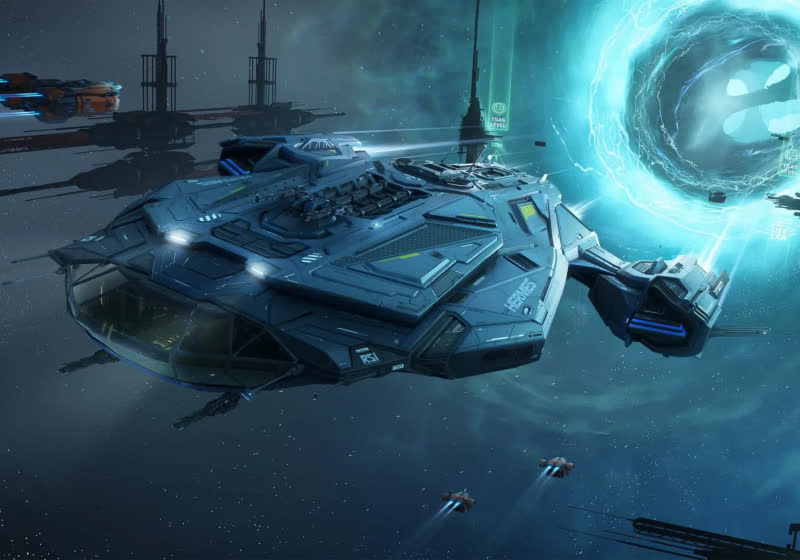
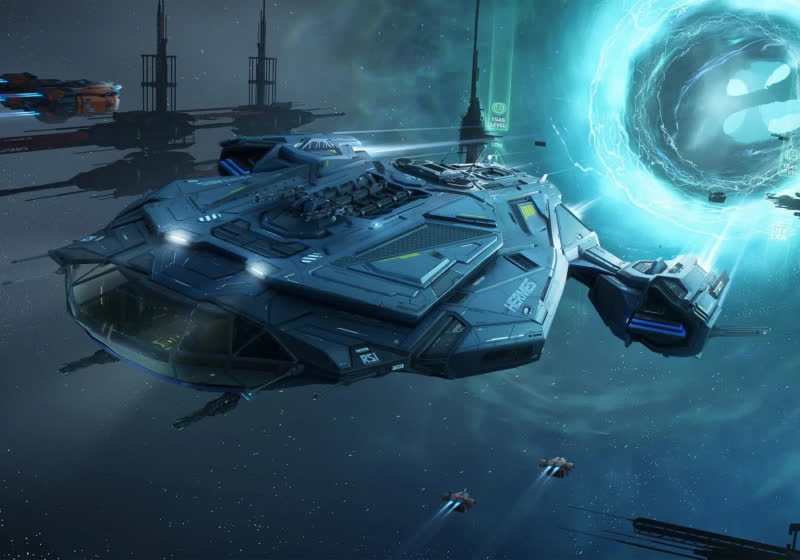
Just one year after reaching $800 million in its unrelenting funding spree, Star Citizen has now crossed yet another significant milestone. The overly ambitious space trading and combat simulator, developed by Cloud Imperium Games, has officially raised more than $1 billion from enthusiasts and early backers. Game director Chris Roberts,… Read Entire Article Source link
Diotima received €500,000 under Enterprise Ireland’s Commercialisation Fund last year.
AI edtech start-up Diotima, founded by former secondary school teacher Siobhan Ryan, has spun out from Trinity College Dublin (TCD).
The platform aims to enable educators to use AI to create assessments and individualised feedback to improve learning outcomes and lighten burdens on teachers.
The spin-out will be led by edtech commercialisation specialist Jonathan Dempsey as CEO, with Ryan, also a biochemist and environmental scientist, becoming chief product officer and learning lead.
Advertisement
Development engineer Daniel Fernandez and AI engineer Dr Long Mai, who have both worked on the Diotima project, will also join the inaugural team.
Dr Eoin Lane, an AI regulatory compliance expert who was formerly the global head of AI and data science at the Bank of New York Mellon, is a governance consultant to the Diotima project.
“This all started when I was working as a teacher and I had a vision for how AI could enhance teaching and learning even before any of the models like ChatGPT launched,” said Ryan.
“I then worked with Tom Pollock and Learnovate to develop this vision into a real-world project.”
Advertisement
Diotima began its partnership with Learnovate in February 2025 and received €500,000 in funding under Enterprise Ireland’s Commercialisation Fund, which supports third-level researchers in translating their research into commercially viable solutions.
The idea was to develop an AI-enabled edtech platform to help teachers and other educators create assessments, as well as provide feedback to learners, all in compliance with European and Irish legislation.
Specifically, the platform meets requirements under the EU AI Act, which has strict regulations around the usage of AI in high-risk sectors such as education.
“We aim to position Diotima as a leader in responsible AI for education,” Ryan said. Diotima will continue to engage with prospective customers and stakeholders for a go-to-market strategy while also seeking new investment.
Advertisement
“Using responsible AI, Diotima promises to develop into a revolutionary platform for learners in secondary schools and professional education organisations, delivering formative feedback and better outcomes overall,” said Pollock, Learnovate’s impact, licensing and commercialisation manager.
Learnovate launched its ‘Responsible AI for Learning’ initiative earlier this year to enable AI implementers and practitioners involved in teaching and learning to share knowledge, interpret guidelines and comply with AI regulations.
The initiative is made up of professionals from all four education domains – schools, higher education, vocational education and training, and professional education – as well as representatives from the Department of Education, teaching unions and other sectors.
Don’t miss out on the knowledge you need to succeed. Sign up for the Daily Brief, Silicon Republic’s digest of need-to-know sci-tech news.




















































You must be logged in to post a comment Login