

Business
Intel Stock Slides 7% Today as Profit-Taking Hits One of 2026’s Most Remarkable Chip Stock Turnarounds


Intel shares fell sharply Wednesday, declining more than 7% in a session of heavy profit-taking that pulled back one of the stock market’s most dramatic turnaround stories of the year, even as the broader context for the company’s recovery over the past 12 months remained extraordinary by nearly any measure.
Shares of the Santa Clara, California-based chipmaker were trading at $129.38 as of 10:44 a.m. EDT, down $10.25, or 7.34%, on the day. The pullback follows a run that has taken Intel from a 52-week low of just $18.97, reached on August 1, 2025, to a 52-week and all-time closing high of $141.45 hit on June 22, a gain of more than 645% over less than 12 months that ranks as one of the most stunning single-stock recoveries in the semiconductor sector’s recent history.
Wednesday’s decline represents the stock pulling back from that all-time high after a remarkable sprint higher, consistent with what several technical analysts had flagged as a likely correction point. Chart watchers had noted a double-top formation developing near the $140 to $142 zone over the past week, with a bearish engulfing candlestick pattern on the weekly chart suggesting the kind of rejection at resistance that often precedes a consolidation phase, particularly in a stock that had appreciated as rapidly and as dramatically as Intel has over the past several months.
The stock’s six-month return stands at approximately 273%, while its year-to-date gain through the end of June was roughly 270%, making Intel one of the standout performers not just within the semiconductor sector but across the entire S&P 500 for the first half of 2026. CNBC reported that record chip stock gains in the second quarter added $2 trillion in combined value to Micron, Intel and AMD.
That extraordinary run has been driven by a combination of a broader AI semiconductor boom and company-specific catalysts tied to Intel’s restructuring under Chief Executive Lip-Bu Tan, who took over the company in March 2025 following a turbulent period of leadership transitions and strategic uncertainty. Tan inherited a company that had lost significant ground to rivals TSMC and AMD in the foundry and client computing markets, respectively, and whose stock had fallen to historically low levels by mid-2025 amid persistent revenue declines and doubts about whether the company’s next-generation manufacturing processes could be executed on schedule.
The recovery began in earnest following Intel’s first-quarter 2026 results, which showed the company’s turnaround plan gaining traction. Revenue for the quarter came in at $13.57 billion, modestly below the prior quarter’s $13.67 billion but within range of analyst expectations, while the company reported ongoing progress on its 18A manufacturing process node, a key technology milestone that management has framed as critical to Intel’s ambitions in the contract foundry market. Intel’s Intel Foundry division, formerly known as Intel Foundry Services, signed new customers during the quarter and advanced existing commitments with major technology companies that had agreed to test the 18A process for potential high-volume production.
Cantor Fitzgerald analyst C.J. Muse raised the firm’s price target on Intel to $150 from $90 and maintained a Neutral rating, noting the AI infrastructure buildout as the primary driver of Intel’s improved positioning. Muse also said Intel has a cost advantage over key rivals in certain segments, a factor that had contributed to Intel stock surging on word of that cost advantage over a key competitor.
Beyond the foundry narrative, Intel has continued to expand its presence in the AI accelerator market, where the company’s Gaudi 3 chip has won incremental customer commitments from cloud service providers and enterprise customers looking for alternatives to Nvidia’s dominant GPU lineup, particularly in cost-sensitive deployments where the performance-per-dollar calculation favors Intel’s offering. The company has also continued to build out its AI PC product line under the Intel Core Ultra brand, positioning itself to capture a wave of consumer and enterprise PC upgrades driven by the increasing integration of AI capabilities directly into device hardware.
TipRanks reported that Intel is taking advantage of America’s 250th birthday promotional opportunities in AI and robotics production, with commentary describing the current moment as “a pivotal moment for the nation” and Intel’s positioning within domestic AI semiconductor manufacturing as central to its near-term narrative.
A note of caution, however, came in a report citing ByteDance racing to mass-produce custom AI chips by 2027, cutting out both AMD and Intel from certain Chinese AI workloads. That development, combined with broader investor concerns about the pace of AI infrastructure capital spending and the increasingly competitive landscape for data center processors, has contributed to some erosion in the bull case for Intel’s AI revenue growth assumptions in recent analyst commentary.
Intel’s next major milestone is its second-quarter 2026 earnings report, scheduled for after the close of trading on July 23. That report will give investors their clearest view yet of whether the first-quarter momentum in foundry customer wins and AI chip revenue has continued into the second quarter, and whether management’s guidance for the back half of the year reflects the kind of acceleration that would justify the stock’s current premium valuation relative to where it sat less than a year ago. The stock currently trades at a normalized price-to-earnings ratio of approximately 245, a figure that reflects how far forward investors are looking rather than any near-term profitability milestone, given that the company is still in the early stages of its foundry buildout and is not expected to generate the kind of earnings that would support that multiple on a near-term basis.
For now, Wednesday’s pullback appears to be a healthy, technically driven consolidation following one of the sharpest runs in the stock’s multidecade history, rather than a fundamental shift in the investment thesis. Whether the stock can recover back toward its all-time highs in the weeks ahead will likely depend on how Intel’s earnings report later this month addresses the outstanding questions about the pace of foundry customer adoption, the competitive standing of the Gaudi AI accelerator lineup and the broader trajectory of the 14A manufacturing process that management has targeted for the 2028 to 2029 timeframe as the next step beyond its current 18A node.


Small firms are bracing for a squeezed Christmas after Royal Mail moved to cap the volume of mail it will collect from business premises during the festive rush, a limit that traders warn could choke off growth at the most lucrative moment of their year.
Under a change to its terms, the carrier told business customers that daily collection capacity across November and December “will be limited to a maximum of 3 times the usual collection capacity used”. In plain terms, “collection capacity” is the physical volume of post, counted in sacks, cages or parcels, that Royal Mail contractually agrees to pick up from a company’s premises during its scheduled daily slot.
The cap sits on top of any volume limits already written into a firm’s contract, and it lands hardest on seasonal businesses, the ones that survive by scaling up sharply for the Christmas holidays rather than shipping at a steady clip all year round.
For many owners, the timing could hardly be worse. As readers will know from our recent coverage of whether your small business is ready for Christmas, the golden quarter is when a year’s fortunes are often decided.
“Christmas is make or break for many small firms,” said Tina McKenzie, policy chair of the Federation of Small Businesses. “It’s the biggest trading period of the year, with orders piling up as shoppers buy gifts and businesses work flat out to keep up with demand.
“At a time like this, the last thing firms need is to be told there’s a cap on collections. Many rely on Royal Mail picking up parcels from their premises because stepping away to queue at a post office simply isn’t practical when every minute counts.”
McKenzie added that the uncertainty over the limit “piles unnecessary pressure on small businesses at the worst possible moment. They need confidence that the postal service will support them through their busiest season.”
Royal Mail defended the move as routine forward planning. “The Christmas period is our busiest time of year, where volumes double,” a spokesman said. “As part of our routine peak planning, we agree appropriate daily collection volumes with our business customers. This helps us plan effectively and provide a reliable service. Very few customers require more than three times our usual collection capacity and in such cases we’ll discuss with them individually.”
The collection limit arrives just as the bill for distribution is rising. In May, Royal Mail lifted its fuel and energy surcharge from 11 per cent to 16 per cent for domestic services, and from 8 per cent to 13 per cent for its Parcelforce Worldwide operation. The carrier blamed “rising cost pressures outside of our control, including the ongoing situation in the Middle East and the resulting impact on global oil and fuel prices.”
It forms part of a broader tightening for firms that lean on the network. Royal Mail is separately lobbying to scrap a cap that limits how much it can raise second-class stamp prices each year, a regulatory safeguard in place since privatisation more than a decade ago that ties second-class rises to the consumer prices index. No such protection covers first-class post, and the gap has widened accordingly: the protected second-class stamp has climbed from 50p at privatisation to 91p today, while a first-class stamp has surged from 60p to £1.80 over the same stretch. It is not the first time the carrier’s charging has drawn scrutiny from smaller customers, as our reporting on anti-fraud technology found to be mischarging thousands of small firms has shown.
The changes fall under a wider operational overhaul led by Daniel Kretinsky, whose takeover of parent company International Distribution Services completed in 2022. Kretinsky, who also holds a sizeable stake in Sainsbury’s, is trying to steady a business that keeps missing its key performance targets. Last year, Ofcom fined Royal Mail £21 million after its delivery performance fell “well short” of first and second-class targets, with the regulator concluding that “people aren’t getting what they pay for when they buy a stamp”. It was the third such penalty in recent years, following a £5.6 million fine in 2023 and a £10.5 million fine in 2024.
In response, Royal Mail has pledged to invest £500 million over the next five years to lift on-time delivery rates, a turnaround plan we examined in detail when the carrier set out its £500m investment and part-time workforce overhaul. The programme includes cuts to second-class deliveries on Saturdays, which began in May, and a move to shift roughly 6,000 part-time postal workers into full-time roles to shore up the network.
For Gordon Leatherdale, the cap is not an abstraction but a threat to a year’s careful planning. The 51-year-old is the founder of Natural & Noble, a Wiltshire-based business selling DIY drinks kits that launched in 2018. The company depends on the national postal service for all its direct-to-consumer sales, which account for 30 per cent of annual revenue of about £750,000.
Leatherdale appeared on the BBC’s Dragons’ Den in March to pitch the business and has enjoyed a sizeable sales boost since. “Therefore we decided to invest a lot in direct-to-consumer marketing this year,” he said. “We’re very Christmas-focused,” he added, framing the change as Royal Mail “putting a cap on our ability to grow and to fulfil orders”.
The brand’s kits let people create their own spirits at home, from gin, rum, vodka and whisky infusion sets to cocktail kits, and they are pitched squarely at gift-buyers, which makes the timing of the restriction especially awkward.
“For us at this time of the year, we might only send out 20 or 30 orders a day,” he said. “But at Christmas time, particularly mid-November to mid-December, we’re sending out 15 to 20 times that amount, as opposed to the [new] Royal Mail cap of three times.”
Two neighbouring businesses at Broad Lane Farm, a business park near Devizes, were equally “baffled” by the change, Leatherdale said. “We rely on Royal Mail to pretty much take everything we can sell. It is that infrastructure partner that you can historically rely on, unless they’re striking, to send your orders.”
He knows the cost of disruption first-hand. During the 2022 postal strikes, by his own calculations, Natural & Noble lost about £45,000 worth of orders, a wound the business “endured” and does not want to reopen.

Jamie Young
Jamie is Senior Reporter at Business Matters, bringing over a decade of experience in UK SME business reporting.
Jamie holds a degree in Business Administration and regularly participates in industry conferences and workshops.
When not reporting on the latest business developments, Jamie is passionate about mentoring up-and-coming journalists and entrepreneurs to inspire the next generation of business leaders.

Money Metals Exchange is a top-rated online bullion dealer serving 750,000+ U.S. customers. Founded in 2010, it offers competitive pricing on gold, silver, platinum, palladium, rhodium, and copper, along with secure storage, IRAs, and metals-backed loans.Why Money Metals? ✅ No High-Pressure Sales – Transparent pricing & fair premiums ✅ Secure Storage – One of North America’s largest private vaults ✅ Expert Insights – Market analysis published on Seeking Alpha & beyond ✅ Sound Money Advocate – Leading efforts to restore gold & silver’s role in currency Money Metals provides trusted service, deep market expertise, and a strong commitment to financial freedom.➡️ Follow Money Metals: ✅ Instagram ✅ YouTube ✅ Google Sites
OPINION: Any discussions about university mergers should step back and look at the big picture.
Business
monday.com Shares Rise Sharply as Work Management Platform Benefits from Enterprise Adoption

NEW YORK — Shares of monday.com Ltd. advanced more than 7 percent Tuesday morning, trading around $77.59 as investors responded to the company’s strong positioning in the collaborative work management space and growing integration of artificial intelligence capabilities.
The Tel Aviv-based software provider, known for its flexible platform used by teams to manage projects, workflows and operations, has seen increased interest from enterprises seeking digital transformation tools. monday.com’s no-code interface allows customization without extensive programming expertise, appealing to departments across organizations.
Tuesday’s gain reflected broader positive sentiment in software stocks demonstrating resilience and growth potential. monday.com has reported consistent revenue expansion, driven by customer additions and higher spending from existing users.
The platform supports various use cases, from marketing campaigns to software development and human resources processes. Its visual boards, automation features and reporting tools streamline operations, helping companies improve efficiency and visibility.
Artificial intelligence additions have enhanced the product’s appeal. Features that suggest workflows, summarize updates and predict bottlenecks provide value for busy teams. These capabilities position monday.com within the expanding market for AI-assisted productivity software.
Enterprise adoption remains a key growth driver. Large organizations appreciate the platform’s scalability, security features and integration with other business tools. monday.com has expanded its customer base across industries including technology, finance, healthcare and manufacturing.
Financial performance has shown improvement with revenue growth and focus on operational efficiency. The company has emphasized disciplined spending while investing in product development and sales capabilities.
Analysts highlight monday.com’s net retention rates as evidence of customer satisfaction. Existing users often expand usage over time, contributing to predictable revenue streams characteristic of successful software-as-a-service models.
Tuesday’s trading occurred amid selective buying in technology. While some segments faced pressure, productivity and collaboration tools attracted capital from investors seeking defensive growth.
monday.com’s leadership has prioritized user experience and rapid iteration. Regular updates and community feedback loops help maintain relevance in a competitive landscape.
The platform’s flexibility distinguishes it from rigid enterprise software. Teams can adapt templates to specific needs without vendor lock-in, fostering loyalty and reducing churn.
International markets offer expansion potential. monday.com has localized features and compliance support for global operations, targeting opportunities in Europe, Asia and Latin America.
Competitive dynamics include established project management providers and emerging no-code platforms. monday.com’s visual approach and extensive template library provide differentiation.
Tuesday’s share price movement around $77.59 marked a notable intraday advance. Volume was healthy as market participants reacted to sector trends and company-specific developments.
Longer-term, monday.com aims to broaden its footprint through education, small business outreach and deeper enterprise penetration. Potential acquisitions or partnerships could accelerate growth.
The work management software market benefits from digitalization trends. As hybrid work persists, tools facilitating remote collaboration gain strategic importance.
Investor interest focuses on path to sustained profitability and cash flow generation. monday.com’s subscription model supports visibility, though competition requires ongoing innovation.
Broader economic factors, including corporate budgets and interest rates, influence software spending. monday.com’s value proposition around efficiency helps mitigate cyclical pressures.
The company’s culture emphasizes agility and customer centricity. This approach supports talent retention and product excellence in the technology sector.
As monday.com matures, attention turns to margin expansion and return on investment metrics. Balanced growth and profitability remain priorities for management.
Tuesday’s session contributed to positive momentum in select software names. monday.com’s performance highlighted demand for practical productivity solutions.
Market watchers will monitor upcoming results for updates on customer metrics and guidance. Execution on sales targets and product roadmap will shape investor confidence.
monday.com’s journey from startup to public company demonstrates successful scaling of a collaborative platform. Continued focus on user needs positions it for further market share gains.
The platform’s impact extends beyond individual teams to organization-wide transformation. Customers report improved transparency, accountability and speed in project delivery.
Artificial intelligence integration represents a significant opportunity. By embedding intelligent assistance, monday.com enhances usability without requiring specialized skills.
Global teams benefit from multilingual support and time zone accommodations. These features facilitate cross-border collaboration in multinational organizations.
Tuesday’s trading reflected investor optimism around execution. The percentage gain outpaced many peers, suggesting confidence in fundamentals.
Analysts maintain constructive outlooks citing market opportunity and competitive strengths. Price targets incorporate expectations for revenue scaling and margin improvement.
As monday.com advances its platform, focus remains on delivering measurable business outcomes for customers. Success in this area drives retention and expansion.
The software industry continues evolving with emphasis on integration, automation and intelligence. monday.com’s adaptability supports its role in this landscape.
Tuesday’s advance underscores market recognition of monday.com’s progress. The company’s trajectory reflects broader shifts toward digital collaboration and productivity enhancement.
Ampco-Pittsburgh: A Tale Of Potential Value Unlock If Debts Are Managed
Business
Pump-and-dump operation: Sebi bans 221 entities for up to 7 years; Hanif Shekh fined Rs 10 cr

Mauria Udyog Ltd, 7NR Retail, Darjeeling Ropeway Company, GBL Industries, and Vishal Fabrics Ltd were the scrips manipulated by Shekh — the alleged mastermind in the case — and his conduit entities, the Securities and Exchange Board of India (Sebi) said in the order passed on Tuesday.
In its 394-page final order, Sebi found that Shekh hatched a fraudulent scheme which entailed participation by over 200 seemingly disparate but intricately connected entities as ‘PV Influencers,’ ‘Collaborators’ or ‘Offloaders’ for transferring the unlawful gains to the promoters of the companies or entities controlled by him.
According to Sebi, the entities artificially inflated prices and trading volumes through synchronised trades, circulated bulk SMS recommendations to lure unaware investors and later offloaded at elevated prices.
These proceeds were routed through multiple conduit entities to conceal the ultimate beneficiaries, the regulator said.

“The fraudulent scheme unravelled in this matter, though not novel or unprecedented in its conception, was executed meticulously and on an almost industrial scale, involving 226 entities coming together to play their designated roles across five different scripts,” Sebi’s Whole Time Member Amarjeet Singh said in the order.
Singh added that the labyrinthine structure of fund transfers unearthed in the investigation, evidently designed to obscure the identity of the ultimate beneficiaries.”These characteristics lend the scheme a distinctly aggravated dimension, taking it beyond the realm of routine market misconduct and into the territory that shakes investor confidence in the integrity of the securities market,” he said.
Sebi noted that the entities made unlawful gains totalled around Rs 143.79 crore through the scheme.
Accordingly, the markets watchdog restrained Hanif Shekh from accessing the securities market for seven years and imposed a penalty of Rs 10 crore. Five entities associated with Shekh have been debarred for six years and fined Rs 2 crore each.
The regulator also prohibited other noticees for a period of up to five years and levied a fine ranging from Rs 5 lakh to Rs 1 crore.
Besides, Sebi ordered disgorgement of unlawful gains worth Rs 143.79 crore along with 12 per cent interest per annum calculated from October 21, 2020 till the date of payment of such disgorgement was made by the noticees (entities).
Sebi, through an interim order-cum show cause notice passed in June 2023, had prohibited Hanif Shekh and 225 other entities.
They were also directed by the markets watchdog to impound alleged unlawful gains worth Rs 143.79 crore for involvement in a scheme of price and volume manipulation of scrips of five companies.

The US has declined to renew the landmark US-Mexico-Canada Agreement (USMCA) in its current form, according to a senior US official.
This decision means the trilateral trade pact will miss out on an automatic 16-year extension.
The official said the administration “chose not to rubber stamp a USMCA renewal without addressing existing issues,” and “the United States did not agree to renew the USMCA in its current form”.
If the countries fail to unanimously agree to renew the agreement, “it essentially sets a ten year shot lock to termination,” per the official.
Under the pact guidelines, each country must decide whether to renew the agreement for another 16-year term.
While the free trade deal remains in place for now, the lack of a long-term commitment creates fresh economic uncertainty across North America.
The agreement, which underpins around $2tn (£1.5tn ) in trade each year, is facing pressure over unresolved disputes. US trade officials are pushing for major changes before committing to a long-term extension.
Washington has consistently raised concerns over automotive rules of origin, dairy market access, and stopping third-party countries like China from exploiting the regional agreement.
Under the USMCA’s original terms, unanimous agreement on an extension would have seen the trade deal kept in place until 2042.
The US opting out will force the nations to meet every year to negotiate changes. Business groups across the continent had called for the pact to be extended. The decision also kicks off a ten-year countdown towards the deal expiring as early as 2036.
The US Chamber of Commerce had warned that sectors such as manufacturing and agriculture rely heavily on cross-border certainty.
However, US domestic trade groups such as the American Iron and Steel Institute and the Steel Manufacturers Association have welcomed the shift, arguing annual reviews give American negotiators leverage to fix parts of the deal.
The friction comes six years after the USMCA entered into force, replacing the 1994 North American Free Trade Agreement (NAFTA).
It updated rules around digital trade, workers’ rights, and regional manufacturing, specifically requiring more vehicle parts to be made within North America.

Steamfitters Local 638 president Brian Hunt discusses growing frustration among blue-collar union members with Democratic politicians and socialist policies on ‘The Bottom Line.’
Months before New York City approved a historic two-year rent freeze, Google co-founder Sergey Brin quietly exited a struggling real estate fund at a steep loss.
In December, Brin sold his stake back to A&E Real Estate, the fund’s manager, for six cents on the dollar, according to documents obtained by Bloomberg.
The fund holds 5,900 rent-stabilized apartments, with Brin’s stake being valued at roughly $79 million, a drop in the bucket when viewed next to his $280 billion net worth.
“A&E bought out one of our long-term investors, who was willing to accept six cents on the dollar on their original equity investment to divest itself from the New York City multifamily sector,” a company representative told Bloomberg in a statement.
SERGEY BRIN SPENDS $500K TO FIGHT TAX-TARGETING COMPANIES WITH HIGH-PAID EXECUTIVES

Sergey Brin at The 11th Breakthrough Prize Ceremony held at Barker Hanger on April 5, 2025, in Santa Monica, California. (Gilbert Flores/Variety via Getty Images / Getty Images)
“The simple and deeply troubling fact for renters is that institutional capital – both equity investors and lenders – are fleeing New York City’s rent-stabilized apartment sector,” the A&E representative continued, according to Bloomberg. “They understand New York is in a doom loop.”
It is not clear how much Brin, 52, initially invested, what percentage of the fund he owned or how much A&E paid to recapture the billionaire’s stake.
Brin’s exodus from the New York City rental market came a month after Zohran Mamdani was elected mayor on a platform of freezing the rent for 1 million rent-stabilized units for the duration of his term.
SERGEY BRIN CONFRONTED GAVIN NEWSOM AT PARTY BEFORE DITCHING CALIFORNIA OVER BILLIONAIRE TAX
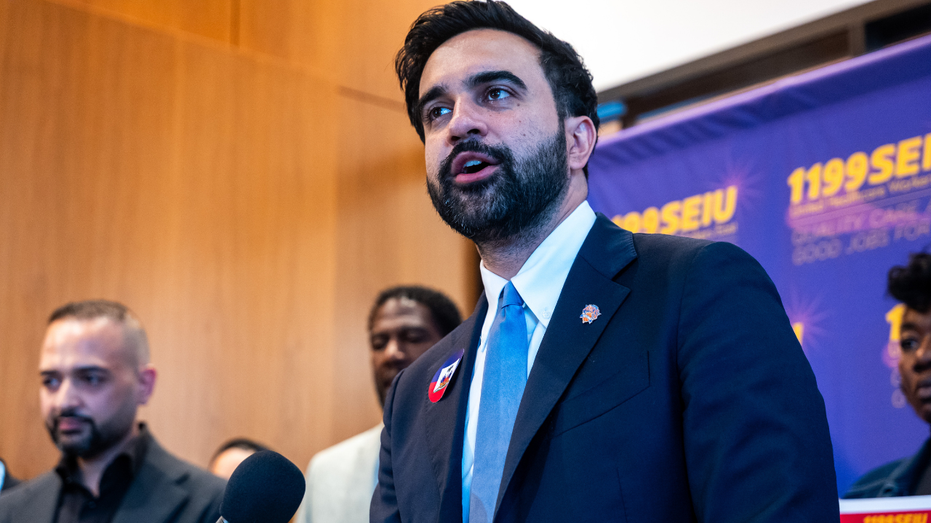
New York City Mayor Zohran Mamdani speaks at a rally at a Manhattan union headquarters on June 25, 2026. (Spencer Platt/Getty Images / Getty Images)
Mamdani followed through on that promise last week, when the Rent Guidelines Board voted to cap rent increases at 0% for stabilized leases signed or renewed between Oct. 1, 2026, and Sept. 30, 2027. Mamdani appointed six of the nine current members to the board.
A&E Real Estate, one of the largest multifamily landlords in New York City, was struggling financially long before the latest rent freeze.
State legislation passed in 2019 imposed new restrictions that made it harder to raise rents. The pandemic hit in 2020, bringing with it a strict eviction ban that prevented landlords from removing tenants for non-payment.
SPENCER PRATT RIDES BIG TECH’S RIGHTWARD WAVE AS SERGEY BRIN OPENS WALLET

New York City skyline as viewed from Midtown Manhattan. (Bloomberg / Getty Images)
CLICK HERE TO DOWNLOAD THE FOX NEWS APP
A&E told Bloomberg that these factors contributed to operating costs jumping 78% in the last decade, which surpasses rent growth over the same period. A&E said it is owed $84 million in unpaid rent.
City leadership has also had their eye on A&E. In January, the firm settled with the city for $2.1 million to address tenant harassment and hazardous conditions in 14 buildings across Brooklyn, Manhattan and Queens.
A&E said that it has invested more than $800 million to make capital improvements in its buildings, according to Bloomberg.
FOX Business reached out to A&E for further comment.
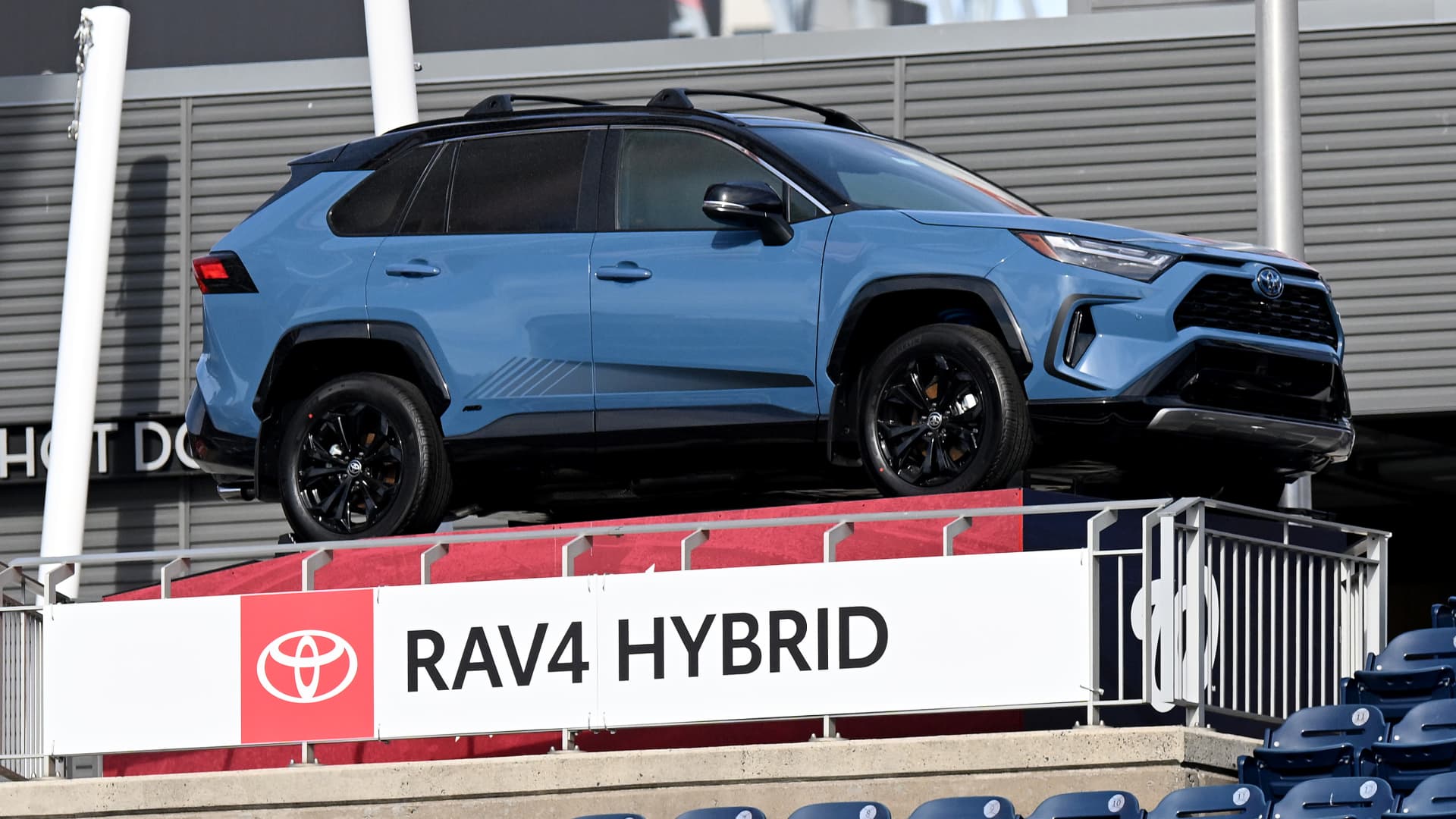
A view of a Toyota RAV4 Hybrid on display before the game between the Washington Nationals and the Tampa Bay Rays against the at Nationals Park on April 03, 2023 in Washington, DC. (
G Fiume | Getty Images
DETROIT — Second-quarter U.S. vehicle sales are turning into a tale of haves and have nots, as automakers that have hybrid models are outperforming those that don’t amid high gas prices and a decline in demand for all-electric vehicles.
Global hybrid leader Toyota Motor on Wednesday reported a 1.1% increase in its second-quarter sales, led by a roughly 20% increase in sales of electrified vehicles.
Hyundai Motor, up 4% during the last quarter, reported a 67% increase in hybrids during the first half of the year, while Honda Motor reported that record electrified sales helped it notch an 8.4% increase in overall sales during the second quarter. Kia, up about 3%, also reported a 152% increase in hybrid sales during the second quarter.
“Hybrids are definitely our growth engine right now,” Hyundai and Genesis North America CEO Randy Parker said Wednesday during a call. “Hybrids are really, really taking off right now as consumers, I think, are prioritizing fuel efficiency and lower operating costs due to high gas prices.”
Gas prices are up more than 20% from the same period last year, according to AAA.
Meanwhile, General Motors, which offers a broad EV lineup but only one hybrid, a low-volume Corvette, reported a 4.2% decline in second quarter sales.
The juxtaposition of hybrids between GM, the top-selling automaker in the U.S., and No. 2 Toyota caused Cox Automotive last week to note that the Japanese automaker is closing its gap in sales with the Detroit carmaker.
“At these rates, and what we’re seeing right now in the selling rates, GM may be looking over their shoulder here when we get to the year’s end, that Toyota could potentially overtake them as the top selling manufacturer here in the U.S. market,” Charlie Chesbrough, senior economist and senior director of industry insights at Cox Automotive, said during a media event.
Cox Automotive and J.D. Power expect second-quarter sales to be roughly level compared with a year earlier. Cox forecast industry sales to be off 0.5%, while JDP expected a 0.7% increase in vehicles sold.

Non-hybrids
Outliers in the second quarter include Chrysler parent Stellantis, which was up 5.9%, and Nissan Motor, up 9.6%. Both offer limited electrified models, including hybrids and/or EVs, but are in the midst of sales-focused turnaround plans.
“At a time when customers are focused on maximizing the value of every dollar they spend, our lineup is delivering with strong quality, capability and the right mix of products,” Tiago Castro, Nissan Americas senior vice president of sales and marketing, said Wednesday in a release.
Having the right mix of products is key for automakers. Right now, aside from hybrids the right mix increasingly means having affordable vehicles, as many Americans grapple with inflation, high gas prices and other issues have been pushed out of the new vehicle market.
Expectations for U.S. new vehicle sales this year are relatively flat to down, according to several forecasts from analysts and companies.
Ford Motor, which reports sales results Thursday, also is expected to be an outlier. Cox Automotive expects the company, which has been grappling with lost pickup truck production, to be down 11.5% during the second quarter.
Cox also expects Tesla, which does not report regional sales, to be off more than 20% during the second quarter, as EV demand last year began to spike ahead of expectations of the Trump administration ending up to $7,500 in incentives for consumers to purchase an EV.
GM
GM said its EV sales during the second quarter were off 33% compared to last year.
Each of GM’s brands saw year-over-year sales declines during the second quarter, led by a 19.2% decline in Cadillac. Buick was down 7.5%, Chevrolet fell 3.9% and GMC reported a 0.3% decline.
Despite the declines, including its crucial Chevrolet Silverado pickup truck, a GM executive described the company’s business as “performing well,” included remaining disciplined regarding sales incentives and highly profitable full-size pickup trucks.
“Our business is performing well, and customer demand is resilient, especially for our trucks and SUVs. The depth, breadth and appeal of our vehicle portfolio allows us to lead the market in sales, while maintaining discipline on inventory, pricing and incentives to deliver strong margins,” GM North America President Duncan Aldred said in a release.
GM said that despite a 7.7% decline in its Silverado pickups for the quarter, including a 25.9% drop for its electric truck, the company still expects to have gained market share in the full-size truck segment during the period.
Its GMC Sierra pickup trucks did better, with a 5% increase in sales, including double-digit increases for its electric and light-duty 1500 models amid tough comparisons. GM recorded its best combined sales of Silverado and Sierra full-size pickup trucks in 20 years in 2025, leading to a sixth straight year of leading that highly profitable U.S. segment.

SANTA CLARA, Calif. — The United States men’s national team enters its most important match in more than two decades Wednesday night when it hosts Bosnia-Herzegovina in the Round of 32 at Levi’s Stadium, a win-or-go-home moment that represents the clearest opportunity this generation of American players has had to erase a 24-year drought without a World Cup knockout victory.

Kickoff is scheduled for 8 p.m. ET. Should they beat Bosnia, it would be only the second U.S. World Cup knockout win ever, after a 2-0 victory over Mexico in 2002.
The United States finished atop Group D with six points, comfortably booking their knockout spot with a 4-1 win over Paraguay and a 2-0 victory over Australia before rotating heavily for an inconsequential 3-2 loss to Turkey in the group finale. Mauricio Pochettino’s side has been one of the more dynamic attacking teams of the tournament’s opening phase, with their first two group matches alone producing six goals, and with the knockout stage now beginning, the full arsenal is available again.
Yellow cards have been wiped clean, meaning Tyler Adams, Weston McKennie, Chris Richards and Folarin Balogun are all available. Christian Pulisic also returns, while both Tim Ream and Antonee Robinson are rested and refreshed.
The most anticipated aspect of Wednesday’s lineup is the reunion of Pulisic and Balogun in the starting eleven together for the first time in any meaningful capacity at this tournament. Pulisic suffered a calf injury in the group stage, limiting him to 45 minutes against Paraguay and a half-hour substitute appearance against Turkey, while Balogun was deliberately rested for the Turkey match to avoid accumulating a yellow card that would have triggered a suspension in the knockout rounds. The two attackers appeared together for only 45 minutes across the group stage.
Pulisic told reporters on Tuesday that he is “feeling good.” The expectation is that he will start against Bosnia and Herzegovina and be the star this team needs to keep pushing through the World Cup.
Balogun called for the team’s big players to step forward, saying: “The knockout stage is the time when big players step forward, and the big players carry the pressure and make things happen.”
Balogun enters Wednesday having scored twice at the tournament so far and leads the American scoring charts heading into the knockout rounds. The Monaco striker’s movement off the ball and ability to time runs in behind central defenders has been a consistent threat across the group stage, and with Pulisic now fully available to operate in the left half-space and drive at opponents, the combination gives Pochettino’s attack a dimension that was absent during the injury-affected group stage.
The predicted U.S. lineup in a 4-2-3-1 formation places Balogun leading the line, Pulisic and Dest wide, McKennie advanced and Adams screening alongside Tillman. The defensive unit features Freeman, Richards, Ream and Robinson across the back line.
The tactical identity Pochettino has established centers on the right side of the field, where Alex Freeman, Sergino Dest and McKennie have created consistent overloads that have proved difficult for opponents to handle. Freeman, one of the tournament’s breakout performers, has already established himself as one of the more surprising individual stories of the competition, showcasing a combination of defensive discipline and attacking instinct along the right flank that few observers had fully anticipated heading into the tournament.
Bosnia-Herzegovina arrive in Santa Clara having qualified for the knockout rounds for the first time in the nation’s history as an independent football-playing nation, an achievement that head coach Sergej Barbarez and his squad have every reason to celebrate even before kickoff. Their group stage record was uneven, with a 1-1 draw against Canada followed by a 4-1 hammering at the hands of Switzerland and then a 3-1 victory over Qatar securing their third-place passage as one of the eight best third-placed finishers across the 12 groups.
Bosnia and Herzegovina have never kept a clean sheet in their six World Cup matches — no side has ever played more at the finals without one. But Bosnia’s strength lies in its physicality, with the squad the tallest at the tournament with an average height of 1.85 meters. They have made good use of that towering presence, scoring three goals from corners.
Captaining Bosnia is 40-year-old striker Edin Dzeko, widely regarded as the greatest player in the country’s football history with 73 international goals. USA captain Tim Ream said his team are wary of the Balkan nation’s talent, especially after they knocked out four-time world champions Italy in the World Cup qualifiers.
One player to watch particularly closely on the Bosnian side is 18-year-old Kerim Alajbegovic, the RB Salzburg winger who started two of Bosnia’s three group stage matches and whose pace and creativity represent Bosnia’s primary threat in transition. Ermedin Demirovic, who scored 12 Bundesliga goals for Stuttgart this past season, will start up front alongside Dzeko, giving Bosnia a physical and productive partnership capable of testing the American central defenders in both open play and on set pieces.
Opta’s supercomputer calculated a 67.5% chance of USA winning and a 76.6% chance of the Americans progressing via any method, including penalties. The second-most likely result was a draw at 18.3%, followed by a Bosnia win in 14.3% of simulations.
Betting markets reflect that advantage. The USMNT are installed as -650 favorites to advance, meaning a $650 bet returns $100, while Bosnia are listed at +430. The over/under for total goals in regulation is set at 2.5, with the over priced at -138, consistent with a tournament in which the U.S. and Bosnia’s combined group stage matches produced 23 total goals.
The winner advances to the Round of 16 on Monday, July 6 in Seattle, where they will face either Belgium or Senegal following Wednesday’s later match at Lumen Field in that city.

How glide bombs will shape the future of the war in Ukraine

Royal Mail Christmas Collection Cap Sparks Small Business Fears

Democrat Supported by Ripple Co-founder’s PAC Wins in Colorado

No Jackpot Winner as $257 Million Prize Rolls Over to $269 Million Monday Draw

Renter of Home in Anne Heche Crash Denies Settlement With Son

Two goals and an assist by sheer aura: Cristiano Ronaldo just entered the World Cup chat

UHURU WA KIUCHUMI NA FEDHA – 2026/27 (ECONOMIC & FINANCIAL FREEDOM) / REV. DR. ELIONA KIMARO

7 Financial Tips #trending #money #motivation #viral #podcast #duet #love #inspiration #best #wow

You Are Being Lied To About Crypto on CNBC (insane fail)
-

 Fashion5 days ago
Weekend Open Thread: Staud – Corporette.com
-

 Politics6 days ago
The House | Manchesterism won’t survive the painful trade-offs unless it gets citizens on board
-

 Crypto World2 days ago
Strategy authorizes up to $1.25B in Bitcoin sales under new capital plan
-

 Politics6 days ago
Potential 2028er World Cup attendee leaderboard
-

 Business6 days ago
Asia stock markets slide as tech shares slump
-

 News Videos3 days ago
MAJOR BITCOIN & MARKET UPDATE!!!! (MUST WATCH ASAP!!!)
-

 Tech6 days ago
A Look At A Gaggle Of Transputer Boards
-
 Crypto World6 days ago
Dell (DELL) Shares Tumble Over 5% Following Analyst Downgrade to Hold
-

 Crypto World4 days ago
Coinbase, Circle Deepen Crypto Stock Losses Despite Resilient S&P 500
-

 Business2 days ago
Australia treasurer says alleged access of prime minister’s bank data ’incredibly concerning’
-

 Crypto World5 days ago
Kraken's xStocks Opens Bending Spoons IPO Registration to EEA Retail
-

 Sports5 days ago
FIH Pro League: India defeat Pakistan 7-1, register biggest win of campaign | Other Sports News
-

 Crypto World6 days ago
Bitcoin Sparks $600M Hourly Liquidations With $65,000 Set To Become Resistance
-

 Tech4 days ago
Bluekit phishing kit adopts browser-in-the-middle for login theft
-

 Tech4 days ago
Russian hackers now target Signal backup recovery keys
-
 Crypto World5 days ago
Hyperliquid Named on Singapore MAS Investor Alert Register
-

 Crypto World5 days ago
RTX holders must register wallets before token distribution begins
-

 Crypto World7 days ago
Ripple and SBI launch RLUSD in Japan after JFSA approval
-

 Tech2 days ago
Anonymous researcher drops 0-day ‘exploitarium’ repo
-

 Sports7 hours ago
Broncos roster: OL Ben Powers (No. 74) entering final year of contract
You must be logged in to post a comment Login