





Connect with us

Business

Is Dubai International Airport Open Today? DXB Flights Continue Amid Renewed Iran Tensions and Delays

Published

on

Dubai International Airport

DUBAI — Dubai International Airport remains open and operational today, with flights continuing to move through all three of its terminals, even as the facility continues managing periodic delays and a smaller number of cancellations tied to the ongoing U.S.-Iran conflict, now stretching into its sixth month.

Major carriers based at the airport, including Emirates and flydubai, have continued maintaining regular flight schedules throughout the current stretch of renewed regional tension, according to reporting on the airport’s status. Some international carriers, however, remain grounded or have adjusted their Dubai-bound routes in response to the broader security situation across the Gulf region, meaning the overall picture at DXB is one of continued operation rather than full, unaffected normalcy.

Dubai Airports has maintained a standing advisory throughout the disruption period urging travelers to confirm their departure times directly with their airline before heading to the airport, rather than relying solely on previously booked schedules, given how quickly conditions have continued to shift in response to developments in the broader U.S.-Iran conflict. That advisory has remained active since the crisis first began in late February and continues to apply as regional tensions have flared again in recent weeks.

Dubai’s aviation recovery has broadly tracked the trajectory of the wider conflict throughout 2026, according to reporting from IBTimes AU, with periods of relative calm repeatedly interrupted by renewed flare-ups that have forced airlines to adjust schedules on short notice. The airport experienced full airspace closures during the spring, at the height of the initial conflict, before achieving a brief return to more normal operations by early July, only to see renewed delays and cancellations emerge again in the weeks since as tensions in the region have continued to fluctuate.

Advertisement

Congestion has also periodically affected the airport independent of the broader security situation. According to travel advisory coverage from Wego, SpiceJet recently alerted travelers to heavy air traffic control congestion at Dubai International Airport, warning that departures, arrivals and their consequential onward flights could be affected by delays, and advising passengers to check their flight status before heading to the airport. That congestion advisory coincided with a broader period of elevated security screening across the region tied to India’s Independence Day travel period in mid-August, which had separately prompted Air India and other carriers to urge UAE-based Indian passengers to arrive well ahead of scheduled departures.

For travelers with upcoming trips through Dubai, real-time flight status can be checked directly through Dubai Airports’ official flight information portal, which lists current departures and arrivals across all three terminals, as well as through independent flight-tracking services that monitor the airport’s operations in real time.

The current pattern of continued operation amid intermittent disruption at Dubai stands in contrast to the more severely restricted situation at some neighboring Gulf airports. According to comparative reporting on regional airport status, Dubai and Doha’s Hamad International Airport have generally remained more fully open throughout the conflict compared with Kuwait International Airport, which has continued operating with more significant limitations, including a terminal that has remained closed for an extended period following earlier strike damage. Abu Dhabi’s Zayed International Airport has similarly cycled between periods of reduced and more normal operations throughout the year, reflecting the varying degrees to which different airports across the Gulf have been directly affected by the conflict.

The broader security backdrop shaping conditions at Dubai and other regional airports has intensified again this week. The Trump administration has indicated it will unveil a significantly expanded package of economic sanctions against Iran, described by Treasury Secretary Scott Bessent as the “single greatest financial offensive ever” launched against the country, while Iran has separately warned it could seize commercial vessels violating its transit rules through the Strait of Hormuz. That escalating standoff, occurring alongside continued reduced shipping traffic through the strait, has kept the broader Gulf region in a state of heightened alert even though Dubai’s airport itself has continued operating without a fresh, dedicated closure tied specifically to this week’s developments, according to the most recent available reporting.

Advertisement

Dubai International Airport’s ability to maintain relatively consistent operations throughout much of the conflict reflects both its scale as one of the world’s busiest international aviation hubs and the UAE’s broader efforts to preserve air travel connectivity even amid periodic regional security flare-ups. That said, the airport’s advisory guidance has remained consistent throughout the year: conditions can shift with limited notice depending on developments in the broader conflict, and travelers should not assume a previously confirmed flight schedule will remain unchanged without checking directly with their airline closer to their departure time.

Given how frequently the situation across the Gulf has evolved throughout 2026, from full airspace closures in the spring, to a brief return toward normalcy in early July, to renewed delays and cancellations in more recent weeks, travelers flying through Dubai are strongly encouraged to monitor both their airline’s direct communications and Dubai Airports’ official channels for the most current information rather than relying on general news coverage or previously booked itineraries alone.

For now, the practical answer for anyone asking whether Dubai International Airport is open today is straightforward: yes, the airport remains operational, with Emirates, flydubai and other carriers continuing to run scheduled service across all three terminals, even as periodic delays, occasional cancellations, and the broader uncertainty surrounding the escalating U.S.-Iran standoff continue to shape day-to-day conditions at one of the world’s most significant aviation hubs.

Advertisement
Continue Reading
Click to comment

You must be logged in to post a comment Login

Leave a Reply

Business

British firm to build US nuclear-powered cargo ships

Published

on

British firm to build US nuclear-powered cargo ships

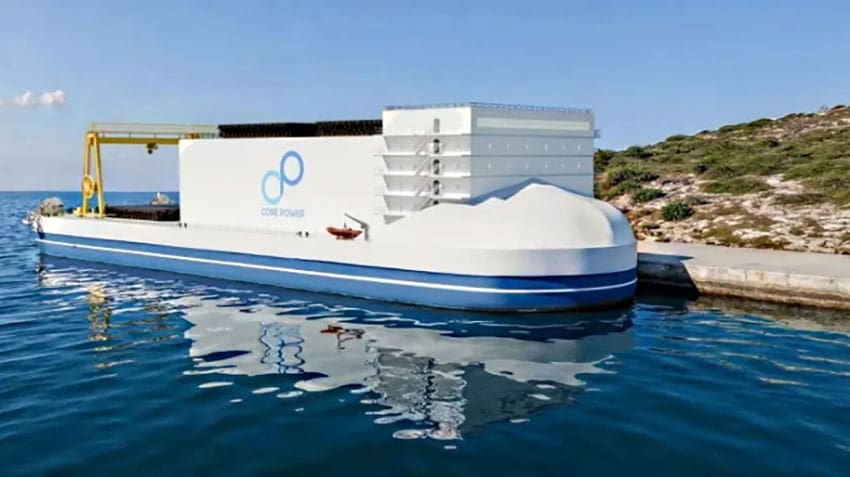
A British start-up based on a west London trading estate is to help the American government build a fleet of nuclear-powered cargo ships. A public private partnership between the US Maritime Administration and Core Power, which is based in Chiswick Park, was signed in Washington DC on Monday.

The agreement, the first of its kind, aims to accelerate construction of a US-flagged fleet of rapid nuclear-powered merchant vessels, and to revive a US shipbuilding industry that has been decimated by cheaper competitors from China in recent years.

Core Power says it has raised 200 million dollars from backers including Mitsui, Mitsubishi and Sumitomo, a trio of Japanese conglomerates, to help it develop the nuclear technology. It is targeting first construction of its nuclear propulsion systems in 2028, and will work with traditional shipbuilders to make the vessels’ hulls.

“China is already moving toward nuclear-powered commercial shipping,” Mikal Boe, chief executive of Core Power, said. “America does not regain maritime strength by building a better version of yesterday’s ship. Government can set the direction and co-ordinate; private industry must move the money and the steel. We are honoured to be working with the US Maritime Administration on this landmark programme.”

The company behind the deal

Core Power was founded in 2018 by Boe, a Norwegian shipping and commodities executive. In 2024, the most recent year for which its accounts are available, it made an operating loss of £19.4 million and employed 41 people. Its British arm, Core Power (UK) Ltd, is registered at an address on Chiswick High Road and last filed accounts made up to 31 December 2024, according to Companies House.

Advertisement

The partnership follows an initiative launched in May by Sean Duffy, the US transportation secretary, under which the Maritime Administration issued a request for information on small modular reactors for commercial shipping alongside the US Coast Guard, the Nuclear Regulatory Commission and the Department of Energy. That call for industry input closed on 5 August.

Stephen Carmel, administrator of the Maritime Administration, said: “President Trump has made it clear that American energy dominance and maritime strength go hand in hand. This framework ensures that the United States leads the world with a secure US-flagged fleet.”

Why nuclear shipping has never taken off

Nuclear power has been used for decades in military submarines, but it has struggled to gain traction in commercial shipping, partly because of high costs but also safety concerns. Its proponents have argued that advances in the design of onboard nuclear reactors have improved safety, while the sheer power of nuclear-powered ships could offset the higher build costs.

Boe estimated that nuclear-powered vessels could move up to 75 per cent faster than traditional fossil fuel-powered ships, carry more cargo and be exempt from costly environmental taxes. Russia, through its use of nuclear-powered icebreakers, is currently the nation with the largest nuclear shipping fleet.

Advertisement

Regulation and financing of this nascent industry remains a hurdle, but the US government said it would work with Core Power to develop an “actionable commercial pathway”, including providing clarity on how insurance of nuclear-powered ships will work.

“Nuclear propulsion is a serious commercial opportunity, but it must be approached as a complete system: safe, secure, licensable and investable,” Carmel said.

What it means for British business

Nothing in the agreement lands directly on a UK balance sheet. The vessels will be US-flagged, the hulls will be built by shipbuilders working with the American government, and the jobs that follow will sit in American yards. What sits in west London is the design work and the intellectual property, which is a familiar pattern for British engineering firms that scale by selling into someone else’s industrial programme.

The freight economics matter more. Companies that import or export by sea have already seen how quickly a change in shipping conditions feeds through to their costs, with Red Sea disruption pushing container prices and delivery times up sharply for UK exporters and manufacturers. Boe’s claims about speed, capacity and tax exemption, if they hold, would change that calculation. They are claims about ships that do not yet exist, however, and the first propulsion systems are not due to be built until 2028 at the earliest.

Advertisement

There is a supply chain point too. Britain has been building an industrial base around compact reactors, from Newcleo’s plan to raise £900 million for a fleet of small reactors to Holtec’s choice of South Yorkshire for a mini-reactor factory. The engineering, fabrication and licensing skills that a maritime reactor programme needs overlap heavily with the ones those projects are already competing for, which is a recruitment problem for smaller suppliers and an opportunity for firms that can get qualified early.

For now, the practical test is regulatory rather than technical. Until insurers, flag states and port authorities agree how a commercial reactor at sea is licensed and covered, no cargo owner can plan around it.


Amy Ingham

Amy Ingham

Amy Ingham is a reporter at Business Matters, covering UK business news with a focus on breaking news, business policy, late payments and insolvency. She joined the magazine in 2026 after completing the NCTJ Diploma in Journalism at Harlow College’s journalism school. Her recent reporting includes British Steel’s nationalisation and its impact on SME suppliers, the decline in late payments by large firms, and Insolvency Service director disqualifications. Reach her at aingham@cbmeg.co.uk.

Advertisement

Continue Reading

Business

Entero Healthcare shares gain 15% in 2 days after Prashant Jain’s 3P Investment picks stake in block deal

Published

on

Entero Healthcare shares gain 15% in 2 days after Prashant Jain’s 3P Investment picks stake in block deal
Shares of Entero Healthcare Solutions rallied as much as 6% to their day’s high of Rs 1,625 on the BSE on Tuesday after Prashant Jain-owned 3P Investment Managers acquired a 2.5% stake in the healthcare product distribution and supply chain platform through open market transactions on August 24. With today’s gain, the stock is up 15% in two sessions.

The 3P India Equity Fund 1M and 3P India Equity Fund 1 schemes, managed by 3P Investment, bought 10.88 lakh shares of Entero Healthcare for Rs 104.99 crore. The acquisition represents 2.5% of the company’s paid-up equity, stock exchange data showed.

The shares were purchased from Prasid Uno Family Trust at Rs 1,377.8 apiece.

Surbhi Singh, through Prasid Uno Family Trust, held a 10.45% stake, equivalent to 45.5 lakh shares, in Entero Healthcare as of the June 2026 shareholding pattern.

Advertisement

Entero Healthcare Q1 results

Faridabad-based Entero Healthcare Solutions reported a 38% year-on-year increase in consolidated revenue from operations to Rs 1,940.5 crore for the quarter ended June 30, 2026, compared with Rs 1,403.8 crore in the year-ago period.


Consolidated profit after tax (PAT) rose 72% year-on-year to Rs 52.1 crore, while profit before tax (PBT) increased 85% to Rs 67.1 crore. Profit attributable to owners of the company grew 37% year-on-year to Rs 38.2 crore.
The company’s operating performance also improved during the quarter, with EBITDA rising 94% year-on-year to Rs 97 crore. EBITDA margin expanded to 5% from 3.6% in the corresponding quarter last year.Entero said the MedTech market is large and growing, and has synergies with its pharmaceutical distribution business. It also sees significant consolidation potential in the segment, with distributors playing a high value-add role and having a higher margin profile than distributors in the pharmaceutical market.

The company’s existing MedTech business and acquisitions focus on the IVD and Cardiology/Orthopaedic devices segments, which it described as large and high-growth. The company has outlined these factors as the strategic rationale for its MedTech acquisitions.

Entero Healthcare share price performance

Entero Healthcare shares have gained more than 21% over the past month and around 32% so far this year. Over the past six months, the stock has climbed nearly 50%.

Advertisement

(Disclaimer: Recommendations, suggestions, views and opinions given by the experts are their own. These do not represent the views of The Economic Times)

Continue Reading

Business

Xanadu: Great Science, Too Much Success Priced In

Published

on

Rigetti: The Market Is Pricing In A Future That Hasn't Arrived Yet (NASDAQ:RGTI)

Xanadu: Great Science, Too Much Success Priced In

Continue Reading

Business

‘Equal to Opera House’, Zempilas on Aboriginal Cultural Centre

Published

on

‘Equal to Opera House’, Zempilas on Aboriginal Cultural Centre

State opposition leader Basil Zempilas says the slow-moving $400 million Aboriginal Cultural Centre development should be “equal to the Sydney Opera House” and the government should consider moving the city site if plans had not progressed.

Continue Reading

Business

US oil industry giant to start test drilling at Cornish lithium site

Published

on

Business Live

Halliburton will help estimate how much lithium there is in the huge body of granite below ground

Cornish Lithium says its projects in the Duchy could boost Cornwall’s economy by £3.8bn

Cornish Lithium says its projects in the Duchy could boost Cornwall’s economy by £3.8bn(Image: Cornish Lithium)

The company behind a huge lithium mining project in Cornwall has awarded a well drilling contract to a US oil industry giant as it moves towards commercial production.

Cornish Lithium, which last year became the first business to produce lithium hydroxide mined and refined in the UK, has appointed Houston-based Halliburton to provide well services for its Cross Lanes project near Redruth.

Advertisement

The project is examining the site’s potential for the commercial production of lithium – a critical component of lithium-ion batteries used in modern-day electronics including electric vehicles and smartphones.

Under the contract, Halliburton will provide subsurface modelling and well engineering, as well as equipment and services for the drilling and testing of two appraisal wells.

The work will help to estimate the amount of lithium contained within the geothermal system of the Cornubian Batholith – the large body of granite formed around 280 million years ago that lies beneath much of Cornwall and Devon.

According to Cornish Lithium, the commercial-scale wells will allow it to carry out extended testing to validate sustainable production conditions and explore the potential to harness geothermal heat for local homes and businesses.

Advertisement

Data gathered from the wells will inform the project’s final investment decision, while supporting the company’s wider ambition to develop a network of modular geothermal lithium production hubs across Cornwall, Cornish Lithium said.

Cornwall is home to the largest lithium deposits in Europe and has enough lithium to power at least 50 per cent of all EVs expected to be produced in the UK by 2030.

Martin Geissler, VP general manager for Lithium in Geothermal Waters at Cornish Lithium, said: “Halliburton brings deep industry expertise and knowledge, and will support the drilling and testing phases of our project, from well design to construction.

From left: Cornish Lithium Chief Geologist Adam Matthews, VP and General Manager (LiGW) Martin Geissler, Halliburton VP Europe Rachel Johnson, and Low Carbon Solutions Manager – Europe, Eurasia, and Sub-Saharan Africa, Rebecca Lee

From left: Cornish Lithium Chief Geologist Adam Matthews, VP and General Manager (LiGW) Martin Geissler, Halliburton VP Europe Rachel Johnson, and Low Carbon Solutions Manager – Europe, Eurasia, and Sub-Saharan Africa, Rebecca Lee(Image: Cornish Lithium)

“Their team was highly proactive throughout the tender process, demonstrating a clear understanding of our requirements and a strong commitment to supporting the project’s objectives. We look forward to working with Halliburton and other collaborators as we continue to advance the project, support Cornwall’s proud mining heritage, and create high-quality jobs and long-term economic growth for the region.”

Advertisement

The Cross Lanes Geothermal Lithium Project is supported by a grant of £7.2m through the UK Government’s DRIVE35 programme to part-fund Cornish Lithium’s £14.5m programme of drilling and testing.

DRIVE35 is delivered by the Department for Business, Innovation, Science and Trade in partnership with the Advanced Propulsion Centre UK and Innovate UK.

Cornish Lithium first drilled and tested an exploration borehole at Cross Lanes in 2023, which confirmed that lithium‑rich geothermal waters circulate naturally through its underlying rock formations.

Jean-Marc Lopez, senior vice president, Europe, Eurasia, and Sub-Saharan Africa region at Halliburton, added: “Halliburton will support Cornish Lithium on the well services and testing scope for the Cross Lanes Geothermal Lithium Project.

Advertisement

“With more than 70 years of geothermal development experience and over a century of well delivery expertise, I expect our teams will execute the drilling programme safely and efficiently to support Cornish Lithium’s technical and operational objectives.”

Continue Reading

Business

Two Harbors: More Downside Than Upside For The Series A Preferred Shares (TWO.PR.A)

Published

on

Two Harbors: More Downside Than Upside For The Series A Preferred Shares (TWO.PR.A)

This article was written by

With a banking trading background, Binary Tree Analytics (‘BTA’) aims to provide transparency and analytics in respect to capital markets instruments and trades. BTA focuses on CEFs, ETFs and Special Situations, and aims to deliver high annualized returns with a low volatility profile. We have been investing for 20 years after obtaining a Finance major at a top university.

Analyst’s Disclosure: I/we have a beneficial long position in the shares of TWO.PR.A either through stock ownership, options, or other derivatives. I wrote this article myself, and it expresses my own opinions. I am not receiving compensation for it (other than from Seeking Alpha). I have no business relationship with any company whose stock is mentioned in this article.

Seeking Alpha’s Disclosure: Past performance is no guarantee of future results. No recommendation or advice is being given as to whether any investment is suitable for a particular investor. Any views or opinions expressed above may not reflect those of Seeking Alpha as a whole. Seeking Alpha is not a licensed securities dealer, broker or US investment adviser or investment bank. Our analysts are third party authors that include both professional investors and individual investors who may not be licensed or certified by any institute or regulatory body.

Advertisement
Continue Reading

Business

eDreams Prime Poland rollout goes to full scale

Published

on

eDreams Prime Poland rollout goes to full scale

eDreams ODIGEO has moved its Prime travel subscription into full scale expansion in Poland, adding another market to a rollout that the company says will take it beyond 13 million subscribers by March 2030.

The Barcelona based group, listed in Madrid as EDR and traded over the counter in the United States as EDDRF, announced the move on 24 August. It said Prime had already delivered a strong attach rate in the country, with a high share of customers choosing to become subscribers, alongside what it described as a highly competitive member offering. Those results, the company argued, prove that it can scale its subscription proposition beyond its established Western European base.

Poland is an unusual test case. eDreams pointed to the country’s appetite for paid membership as the reason it chose to commit: the largest domestic e-commerce platform counts more than 7.5 million active subscribers to its membership programme in a country of roughly 38 million people. Paid membership, in other words, is already an ordinary part of consumer life there rather than something a travel brand has to explain from scratch.

The commercial prize is sizeable by regional standards. Poland’s online travel market is worth 3.4 billion euros, of which the online travel agent segment accounts for 2.5 billion euros and is growing at around 10 per cent a year, making it one of the largest and fastest growing online travel agency markets in Central and Eastern Europe, according to figures cited by the company.

The 2030 target behind the move

The Poland launch sits inside a strategic roadmap the company presented in November 2025, in which international expansion is one of the main levers on the path to more than 13 million Prime members. eDreams recently scaled the same proposition in Argentina and Mexico, where it says performance has met expectations, and it is also extending the subscription across a broader range of travel products as it builds towards what it calls a global, multi product subscription platform. The company said its existing financial targets and long term guidance are unchanged.

Advertisement

Dana Dunne, chief executive at eDreams ODIGEO, said: “We are delighted to take Prime to full scale in Poland. The strong appetite Polish customers have shown for Prime, echoing what we have seen in other recently scaled markets, such as Argentina and Mexico, proves that our subscription model travels well beyond our home markets. This is our strategy delivering exactly as planned. We look forward to bringing the benefits of Prime to many more Polish travellers as we progress towards our goal of more than 13 million members by March 2030.”

Why UK subscription businesses should be watching

For British firms, the interest is less in Polish flight bookings than in the model itself. Recurring revenue has become one of the most copied growth strategies in consumer and business to business markets alike, and the questions eDreams is answering in Poland, whether members join, whether they stay, whether the benefits are worth the fee, are the same ones facing any UK company weighing up which subscription model actually fits its customers. The pattern eDreams describes, proving demand in a market before committing to full scale, is also the textbook approach to entering a new territory without overcommitting capital.

The regulatory backdrop in Britain is about to change, however. The Department for Business and Trade says there are around 155 million active subscriptions in the UK, worth roughly 26 billion pounds a year in consumer spending, and a new subscription contracts regime under the Digital Markets, Competition and Consumers Act 2024 is expected to commence in spring 2027. Under those rules, traders will have to give clear information before sign up and let customers cancel online if they signed up online, send reminders before trials and long contracts renew, offer a 14 day cooling off period after those renewals, and refund customers within 14 days.

The government estimates the changes will save consumers around 400 million pounds a year, a figure that comes straight out of subscription revenues somewhere. Any UK business building a Prime style membership will be doing so under tighter rules on how easily people can leave it.

Advertisement

Amy Ingham

Amy Ingham

Amy Ingham is a reporter at Business Matters, covering UK business news with a focus on breaking news, business policy, late payments and insolvency. She joined the magazine in 2026 after completing the NCTJ Diploma in Journalism at Harlow College’s journalism school. Her recent reporting includes British Steel’s nationalisation and its impact on SME suppliers, the decline in late payments by large firms, and Insolvency Service director disqualifications. Reach her at aingham@cbmeg.co.uk.

Advertisement
Continue Reading

Business

Lego reports first-half 2026 record revenue

Published

on

Lego reports first-half 2026 record revenue

A customer reaches for a box from the Lego Dots range at a Lego store in London, March 7, 2022.

Bloomberg | Getty Images

Lego revenue is on a tear.

Advertisement

The brickmaker posted a 21% revenue bump for the first half of the year, boosted once again by its now-stalwart lines like botanical bouquets, Formula 1 race cars and collectible sets.

Lego reported record first-half revenue of 41.9 billion Danish kroner, or about $6.54 billion, as part of its biannual earnings report on Tuesday. Operating profit rose 22% year over year to 10.9 billion Danish kroner, or roughly $1.7 billion, the company said.

The strong first half comes as Lego continues to expand its product catalog, capturing new customers and retaining its already avid fan base of brick builders.

So far this year, the company has launched its Smart Play platform — a new technology that enhances brick sets with sensors that can react to movement, play sound and light up — as well as its long-awaited partnership with Pokemon. It has also expanded its presence in the sports realm with its F1 and FIFA partnerships.

Advertisement

Gateways into the brand such as its line of botanical models and its ongoing partnership with Epic Games — which brings Lego to the digital space and elements from the popular video game Fortnite into the physical world — continue to draw in new consumers, the company said. And once they start building, CEO Niels Christiansen told CNBC, they explore other areas of the company’s portfolio.

“[New partnerships] bring in those who have not necessarily seen their passion point really that well represented in the Lego brand before,” Christiansen said .

“So I think that has recruited new consumers,” he said. “We’ve also seen that we retain consumers really, really well, and we’re selling more to those we have.”

Lego launched 332 new sets during the first six months of the year, another record high. All the while, Lego still produces legacy sets from years prior.

Advertisement

And Lego provides a range of price points for consumers. For fans of Star Wars, for example, there is a $30 set of N-1 Starfighter from the “The Mandalorian” that has a more simplistic, kid-friendly build design, and there’s another, more complicated set with nearly 2,000 pieces that retails for $250.

Christiansen said even amid macroeconomic uncertainty, the company is seeing strong sales at both ends of the pricing spectrum.

With its growing portfolio and diversity of pricing, Lego is seeking to cater to a wider demographic of consumers, from kids to adults and across genders.

“What is really nice is that we’re growing fast with kids now,” Christiansen said. “We’re also growing with adults. And the fact that we can master both and we can kind of cover the universe of consumers and not just a segment of it. I think that’s also been very crucial.”

Advertisement
Choose CNBC as your preferred source on Google and never miss a moment from the most trusted name in business news.
Continue Reading

Business

Netweb Technologies shares fall 4% after raising Rs 1,200 crore through QIP

Published

on

Netweb Technologies shares fall 4% after raising Rs 1,200 crore through QIP
Shares of Netweb Technologies fell nearly 4% on Tuesday, hitting a low of Rs 5,220 on the NSE, after the company announced the successful completion of its Rs 1,200 crore qualified institutions placement (QIP).

According to a filing with the exchange on Tuesday, the company said that the Fund-Raising Committee of the Board of Directors approved the allotment of equity shares under the QIP at its meeting held on August 20, 2026.

The QIP marks the first equity capital raised by the company since its listing on the NSE and BSE in July 2023 and the QIP received a strong response from global and domestic institutional investors.

Also Read | Netweb Tech shares rise 4% as Nomura, Goldman Sachs invest in Rs 1,200 crore QIP

Advertisement

The company further said that participation from marquee investors such as Goldman Sachs Asset Management, Nomura Asset Management, Amundi Asset Management, Think Investments, ICICI Prudential Mutual Fund, Edelweiss Mutual Fund, Invesco Mutual Fund, HDFC Mutual Fund, Kotak Mutual Fund, Tata Mutual Fund, Motilal Oswal Mutual Fund, Bank of India Mutual Fund, Trust Mutual Fund, Helios Mutual Fund, among others, reflects their confidence in Netweb’s business and the structural growth of India’s high-performance computing market and AI ecosystem.


Global institutional heavyweights led the list of major subscribers in the fundraise. Japanese investment firm Nomura secured the single largest allocation of 13.10% (3,28,064 shares) through its Nomura India Investment Mother Fund.
Wall Street titan Goldman Sachs was another prominent participant, securing an 11.21% stake (2,80,740 shares) through the Goldman Sachs India Equity Portfolio.Domestic institutional investors also absorbed a substantial chunk of the placement. ICICI Prudential Mutual Fund picked up a total 16.67% stake (4,17,476 shares) across six of its underlying schemes, including its Flexicap Fund and Innovation Fund.

Foreign portfolio investor Think India Opportunities Master Fund LP acquired an 8.33% block (2,08,768 shares). Similarly, Edelweiss Mutual Fund schemes alongside Altiva Hybrid Long-Short Fund collectively secured an 8.33% allocation (2,08,768 shares), while Invesco India Flexi Cap Fund picked up a 6.25% share (1,56,577 shares).

Pursuant to the QIP, the company allotted 2,505,219 equity shares of face value Rs 2 each at an issue price of Rs 4,790.00 per equity share (including a premium of Rs 4,788.00 per equity share).

Netweb Technologies offers computing solutions with fully integrated design and manufacturing capabilities. Its HCS offering comprises HPC, private cloud and (HCI), AI systems and enterprise workstations, high-performance storage (HPS) and data centre servers and intends to utilise the net proceeds of the QIP towards funding its working capital requirements to support the execution of its anticipated growth in the order book and general corporate purposes, in line with the objects set out in the Placement Document.

Advertisement

“We are grateful for the trust shown by leading domestic and global institutional investors in Netweb. This QIP represents an important milestone in our journey and reflects confidence not only in our performance, but also in the long-term opportunity across AI and high-end computing infrastructure,” said Sanjay Lodha, chairman and managing director, Netweb Technologies.

Also Read | Ceigall India shares rise 4% after winning Rs 705 crore Arunachal Pradesh Frontier Highway project

“The capital raised strengthens our balance sheet and financial flexibility and enhances our ability to support the working-capital requirements in line with anticipated growth in our scale of operations and order book. We remain committed to strengthening our Make in India design and manufacturing capabilities, deepening our technology partnerships and investing in innovation to deliver sustainable long-term growth and value for our stakeholders,” Lodha further said.

IIFL Capital Services, CLSA India, & Resurgent India acted as the book running lead managers to the issue. Khaitan & Co. acted as domestic legal counsel to the company and the book running lead managers, and Hogan Lovells Cadwalader acted as international legal counsel to the book running lead managers. Uirtus Advisors LLP was advisor to the company.

Advertisement

Shares of Netweb Technologies hit a fresh 52-week high of Rs 5,813 per share on Monday on the NSE. In the last one month, the stock rallied 27.41% and nearly 123.25% in the last one year.

(Disclaimer: Recommendations, suggestions, views and opinions given by the experts are their own. These do not represent the views of The Economic Times.)

Continue Reading

Business

Songs created by AI banned from Australia’s music charts

Published

on

An Aria award pictured in front of the Sydney Harbour Bridge

Songs that are largely or wholly created by AI have been banned from Australia’s music charts.

From this week, all releases must be “substantially human made” to be eligible.

The Australian Recording Industry Association (ARIA) said the new code would help “promote the human nature of artistry”.

It follows a controversy around a cover of Madonna’s Like A Prayer by Australian DJ Josh Fawaz which recently topped the ARIA dance singles chart and peaked at number 2 on the country’s overall chart.

Advertisement

The song has become a staple of commercial radio station playlists and been streamed more than 48 million times on Spotify alone.

Fawaz later added generative AI credits to the song after a backlash.

ARIA said that Australian artists were competing for attention “in the most crowded market in history” and that it was “not interested in promoting or celebrating the success of AI-generated music that does not contain human artistry”.

Under the new rules, AI assistance can still be used, but humans must have written the song, and have performed the lead vocal and primary instruments.

Advertisement

AI can also still be used for mastering songs and, for example, using drum machines and auto tune.

Earlier this year a song was banned from Sweden’s music charts because it was created by AI.

And in July, the International Federation of the Phonographic Industry (IFPI) said AI guidelines would be rolled out in Latin America, the Middle East, Africa and Southeast Asia for use in their official charts.

The updated code, based on the IFPI directive, also excludes music that raises “stream or chart manipulation concerns”.

Advertisement

ARIA chief executive Annabelle Herd said: “These changes reflect our intent to remain dynamic and promote the human nature of artistry in what is, to say the least, a rapidly developing space.”

“Artists already use AI tools in their work, the charts can and should evolve to keep room for that, but music generated wholesale by services built on artists’ recordings is a different matter.”

She added: “A chart that rewards unlicensed AI output would undercut the very basis of the recorded music we exist to represent.”

Artists will be required to declare AI use when they submit a song for chart consideration.

Advertisement

ARIA said that if it later emerged music was largely AI-generated it could retrospectively adjust chart positions, and if the piece topped the charts, it may request that awards given for reaching Number One were returned.

Artists and their representatives will be able to challenge their exclusion.

Among the artists supporting the move are Australian electronic act Peking Duk.

Last month, they shared an AI-assisted version of their 2014 hit High on Instagram, captioned: “When you re-record your own song with AI so Australian radio will play it.”

Advertisement

Band member Adam Hyde told Channel Nine’s Today show that AI-generated music was “removing the human experience from life”.

In July this year, Australian Prime Minister Anthony Albanese promised “the strongest possible protection” from AI for Australian creatives.

Albanese pledged that writers and musicians would be able to choose if and how their work was used in the training of AI, saying it would be “theft” if creatives lost that control and were not paid for its use.

Advertisement
Continue Reading

Trending

Copyright © 2025