

Business
John Sterling, Legendary Yankees Radio Voice Famous for Dramatic Home Run Calls, Dies at 87


NEW YORK — John Sterling, the unmistakable voice of the New York Yankees for 36 seasons and one of the most beloved broadcasters in Major League Baseball history, died Monday at the age of 87. The Yankees confirmed the news, saying Sterling passed peacefully at his home in New Jersey surrounded by family. Known for his theatrical home run calls, unwavering optimism and deep connection with generations of fans, Sterling became synonymous with Yankees baseball through more than three decades behind the microphone.
Sterling joined the Yankees radio booth in 1989 and remained the team’s primary play-by-play voice until his retirement in 2024. His signature home run call — “It is gone!” followed by the player’s name stretched dramatically — became part of Yankees lore, heard on car radios, in living rooms and at backyard barbecues across the tri-state area for more than three decades. From Don Mattingly to Derek Jeter, Mariano Rivera to Aaron Judge, Sterling narrated the franchise’s modern golden era with passion and consistency.
Born in 1938 in New York City, Sterling began his broadcasting career in the minor leagues before moving to television and radio work in Atlanta with the Braves. He returned to New York in the late 1980s and quickly won over Yankees fans with his distinctive style. Unlike many play-by-play announcers who favored restraint, Sterling embraced emotion, turning routine fly balls into dramatic theater and walk-off wins into unforgettable radio moments.
His most famous calls captured the heart of Yankees baseball during championship runs in the 1990s and 2000s. “Bernie Williams, it is gone!” and “A-Rod, there it goes!” echoed through the boroughs and suburbs as the team won five World Series titles during his tenure. Sterling was behind the mic for countless iconic moments, including David Wells’ perfect game in 1998 and Mariano Rivera’s record-breaking 602nd save.
Yankees owner Hal Steinbrenner issued a statement calling Sterling “part of the fabric of this organization and this city.” “John wasn’t just the voice of the Yankees — he was family,” Steinbrenner said. “His passion, humor and dedication to our fans made every summer better. We will miss him dearly.” Current Yankees manager Aaron Boone, who played under Sterling’s broadcasts as a player, described him as “the soundtrack of my childhood and my career.”
Tributes poured in across baseball. Commissioner Rob Manfred called Sterling “a true original whose voice defined an era for one of the game’s great franchises.” Former players including Derek Jeter, Andy Pettitte and Jorge Posada shared personal memories on social media, many recalling late-night conversations on team flights and Sterling’s encyclopedic knowledge of Yankees history.
Sterling’s style was unmistakable. He rarely missed a game, earning a reputation for durability and professionalism. Even through health challenges in recent years, he maintained his enthusiasm and distinctive delivery. His retirement in 2024 was marked by emotional ceremonies at Yankee Stadium, where fans and players honored the man who had narrated so many of their favorite memories.
Beyond the calls, Sterling was known for his warmth and accessibility. He frequently engaged with fans at spring training, signed autographs without hesitation and remembered names of longtime listeners. His pregame and postgame shows became appointment listening for generations of Yankees supporters who couldn’t attend games in person.
Sterling’s influence extended beyond the booth. He was a mentor to younger broadcasters and a champion of baseball’s storytelling tradition in an era increasingly dominated by analytics and visual highlights. Colleagues described him as a consummate professional who prepared meticulously for every broadcast while maintaining a sense of joy and wonder about the game.
The news of his passing prompted an outpouring of memories from fans across social media. Many shared how Sterling’s voice accompanied family road trips, backyard games and quiet evenings. For countless New Yorkers, hearing “The Yankees win!” on the radio meant summer nights and hope, even in losing seasons.
Sterling is survived by his wife, several children and grandchildren. Funeral arrangements are expected to be announced in the coming days, with a public memorial likely at Yankee Stadium later this season. The Yankees will honor his legacy with a moment of silence and special tributes during upcoming home games.
In many ways, Sterling represented the golden age of baseball broadcasting — a time when radio voices created vivid pictures in listeners’ minds and became trusted companions through long seasons. His departure leaves a void that may never be fully filled, as modern broadcasts shift toward more analytical and data-driven approaches.
Yet Sterling’s impact endures. His calls remain embedded in the collective memory of Yankees fans, replayed on social media and in documentaries. Young broadcasters still study his phrasing and energy. For millions, the sound of summer in New York will always include that familiar voice rising with excitement as another ball sailed into the night.
As the Yankees continue their 2026 season, they do so without the man who narrated so many of their greatest moments. But for those who grew up listening to John Sterling, every crack of the bat and roar of the crowd will carry a faint echo of his unmistakable joy and passion for the game he loved so deeply.


Why is IREN stock rallying today?

Australia’s economic growth rate has slowed down in the first three months of the year, with the bureau attributing it to cyclone disruptions.

CLPS stock rises on AI-powered R&D restructuring plan
Business
Tenaya Therapeutics, Inc. (TNYA) Discusses Interim Data from MyPEAK-1 Trial of TN-201 Gene Therapy for MYBPC3-Associated HCM – Slideshow (NASDAQ:TNYA) 2026-06-03


Seeking Alpha’s transcripts team is responsible for the development of all of our transcript-related projects. We currently publish thousands of quarterly earnings calls per quarter on our site and are continuing to grow and expand our coverage. The purpose of this profile is to allow us to share with our readers new transcript-related developments. Thanks, SA Transcripts Team
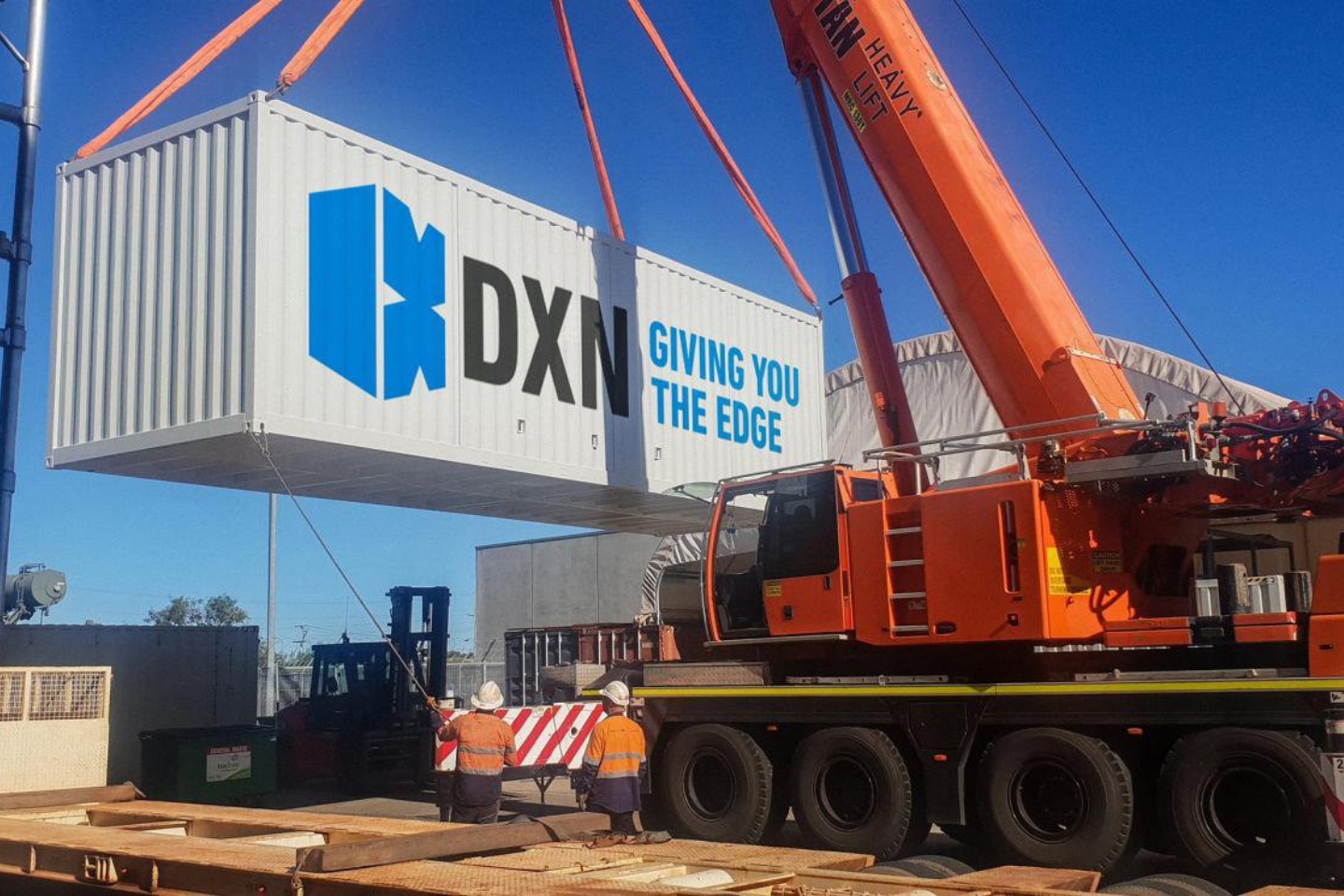
Modular data centre specialist DXN Limited, which manufactures in Welshpool, has inked an $8.8 million deal with a US neo cloud operator which could lead to over $US200 million in orders.

Incoming Minrex Resources chair Robert Edwards has outlined the reasons behind his decision to join the junior.

The AI IPO Era Begins: Alphabet Launches It, Berkshire Buys (At A Discount)
Business
Jefferies raises Titagarh Rail target price by 23%. Check upside potential and key triggers

With a Buy rating, the international brokerage raised the target by 23%. Jefferies said Titagarh Rail Systems delivered a stronger-than-expected quarter, and improving execution is likely to drive a re-rating of the stock going forward.
The brokerage believes Titagarh is well-positioned to benefit from rising demand for passenger and metro coaches, supported by government-led infrastructure initiatives. It estimates a 44% EPS CAGR over FY26-30 and expects the company’s strong order book in the passenger segment to provide healthy earnings visibility.
Titagarh delivered 64 coaches in FY26, ahead of Jefferies’ estimate of 60 coaches. While this fell short of the management’s earlier guidance of 100-120 coaches, the shortfall was largely anticipated due to execution delays in the first half of FY26.
Management has reiterated confidence in delivering 200-220 coaches in FY27, compared with Jefferies’ estimate of 193 coaches, citing the resolution of initial execution challenges. On the flagship Vande Bharat project, the company expects to deliver two trains in FY27, in line with Jefferies’ projections, with the prototype scheduled for supply in the December 2026 quarter.

Margins in the March quarter came in significantly ahead of expectations at 19%, compared with Jefferies’ estimate of 12%, supported by a sharp increase in execution of the Bengaluru Metro project, which is being executed as a job contract. Management has guided for margins of around 12% in the near term, with a gradual improvement towards 15% as the company advances up the technology value chain.
Rail wagon sales declined 29% year-on-year due to supply-side constraints. While Jefferies expects wagon sales to fall a further 5% in FY27, it forecasts a largely stable trajectory over FY27-30, supported by its estimate that Indian Railways’ cargo volumes could reach around 3 billion tonnes by FY35, compared with the FY30 target.The company currently has an order book of 6,500 wagons, providing visibility for about 97% of Jefferies’ FY27 wagon sales estimates, although visibility beyond FY27 remains limited. Separately, Titagarh has secured 28% capital assistance for its brownfield shipbuilding expansion plans and is evaluating technology partnerships and potential joint ventures with shipyards.
The brokerage noted that a recent report by Live Mint indicated Indian Railways is considering an order for 1 lakh wagons, which could significantly improve earnings visibility for wagon manufacturers.
The valuation assigns 30x March 2028 estimated EPS to the core business, up from 25x previously, reflecting positive developments around potential wagon orders and the upcoming wheel joint venture, which it values at 2.5x its investment value. Key risks to the outlook include delays in wagon orders or wheel supplies from Indian Railways, as well as weaker-than-expected execution.
Titagarh Rail Q4 snapshot
Titagarh Rail reported a net profit for the quarter at Rs 53.96 crore, compared to a net loss of Rs 122.4 crore that the company reported last year.
Titagarh Rail’s revenue in the March quarter declined by 12.9% to Rs 875.4 crore from Rs 1,005.6 crore in the previous year.
The company’s earnings before interest, tax, depreciation and amortisation (EBITDA) declined 4.4% to Rs 97.3 crore in the March quarter from Rs 96.56 crore last year, while margins stood at 11% from 10% last year.
(Disclaimer: Recommendations, suggestions, views and opinions given by the experts are their own. These do not represent the views of The Economic Times)

Wall Street futures mixed amid new Middle East hostilities
Business
RBI likely to hold rates as West Asia crisis impact on growth remains unclear: Bank of Baroda Report
The report said the central bank is expected to continue with a data-dependent approach while balancing growth concerns, inflation risks and global uncertainties.
“We may expect status quo on rates as the impact on growth due to the crisis is still difficult to ascertain, and on the inflation front, an increasing trend is imminent,” the report said.
Bank of Baroda also expects the RBI to retain its neutral policy stance, saying it provides the central bank with the flexibility to respond to incoming economic data.
According to the report, several developments have taken place since the RBI’s previous monetary policy meeting.
It noted that there have been reports of a 60-day extension of the ceasefire in West Asia, although uncertainty surrounding the situation remains high. While international crude oil prices have shown some correction following the development, the report cautioned that volatility in crude prices cannot be ruled out unless a formal peace agreement is reached.
The report highlighted that one of the most significant developments since the last policy meeting has been the increase in petrol and diesel prices. According to Bank of Baroda, the RBI’s inflation projections are likely to reflect the impact of these higher fuel prices.
“We expect the RBI’s CPI projection for FY27 to be revised upward,” the report stated.
The report also pointed to volatility in the Indian rupee as an important development in recent months. However, it noted that exchange rate movements do not directly fall under the scope of monetary policy decisions.
From a growth perspective, the report believes maintaining rates at current levels remains the preferred option at this stage.
It noted that headline consumer price inflation, which remains the RBI’s key policy variable, has not yet fully reflected the impact of higher costs being passed on across the economy.
As a result, the report expects the upcoming policy statement to be relatively more hawkish in tone, particularly through an upward revision in inflation forecasts and a stronger emphasis on near-term inflation risks.
The report concluded that, given the evolving geopolitical situation, inflation concerns and uncertainty around growth, the RBI is likely to wait for more data before making any major changes to interest rates.
Reserve Bank of India (RBI) Governor Sanjay Malhotra is set to announce the outcome of the Monetary Policy Committee (MPC) three-day meeting on Friday, June 5.

XRP WTFFFFFFF !!!!

Metric Golf Club to open hi-tech indoor centre in Harrogate
Why is IREN stock rallying today?



-

 Tech5 days ago
Waymo dominates autonomous vehicle registrations as Tesla trails behind
-

 News Videos5 days ago
This is BROKEN! INSANE 5x MONEY CAR WASH WEEK! The NEW GTA Online UPDATE Today! (GTA5 New Update)
-
 Tech4 days ago
SpaceX just won a second Golden Dome contract. This one is $4.16 billion.
-

 News Videos5 days ago
SHE IS KILLING XRP!!! WATCH URGENT AND ACT FAST
-

 Business2 days ago
Jade Biosciences, Inc. (JBIO) Discusses Positive Interim Results From JADE101 Phase I Healthy Volunteer Study and Development Plans Transcript
-
 NewsBeat5 days ago
FIRST NIGHT REVIEW: Take That bring the Circus back to life in spectacular sun-soaked style
-
 Crypto World5 days ago
CFTC Has Approved the First Regulated Bitcoin Perpetual Contract in the U.S.
-

 Business4 days ago
Is the Spurs Phenom Already Better Than Prime Diesel?
-
 NewsBeat5 days ago
Novak Djokovic v Joao Fonseca LIVE: French Open latest scores and results after Jannik Sinner’s shocking collapse
-
 Crypto World5 days ago
Snowflake (SNOW) Stock Rallies on Strong Q1 Results and AI Product Growth
-
 Entertainment5 days ago
Weak ‘Supergirl’ Box Office Tracking Amid Milly Alcock Backlash
-

 Business4 days ago
Demand Conditions Improve In Chemicals Sector In April 2026
-
 Crypto World5 days ago
MicroStrategy Moves $30 Million in BTC to Coinbase Prime: Is the Bitcoin Sell-Off Already Here?
-

 Politics4 days ago
The House | Inside Andy Burnham’s Makerfield Campaign: “Nobody Thinks This Is In The Bag”
-
 Entertainment4 days ago
One of the Greatest Sitcoms of All Time Shoots Up Apple TV’s Charts 11 Years Later
-

 Tech5 days ago
This Week In Security: Ubiquiti Fixes, And FreeBSD Joins The Club You Don’t Want To Join
-

 Entertainment5 days ago
Maddox Jolie-Pitt Legally Requests to Drop Brad’s Surname
-
 Entertainment4 days ago
Britney Spears Shares Troubling Update After Hard Year
-
 Crypto World24 hours ago
Seagate (STX) Stock Surges to Record High on AI Boom and Legal Settlement
-
 Entertainment5 days ago
Bruce Willis’ Generosity Resurfaces Amid His Dementia
You must be logged in to post a comment Login