



Connect with us

Business

Jubilant Pharmova shares decline 6% after Q1 profits falls 45% YoY

Published

on

Jubilant Pharmova shares decline 6% after Q1 profits falls 45% YoY
Shares of Jubilant Pharmova dropped nearly 6% to the day’s low of Rs 908 on BSE after the company reported a decline of 45% year-on-year (YoY) in consolidated profit to Rs 56 crore in the first quarter ended June.

According to a filing with the exchange, the reported profit decreased YoY due to lower operating profitability and increase in depreciation for Line 3 in Spokane.

The revenue went up 17% on yearly basis to Rs 2,229 crore against Rs 1,901 crore in the same time period a year ago on the back of strong performance across all business segments, with CDMO Sterile Injectables delivering particularly robust growth.

The total income jumped 18% to Rs 2,249 crore against Rs 1,913 crore in Q1FY26. The other income for Q1’FY27 includes grant income of Rs 5.6 crore for Line 3, which shall continue for more than 20 years and upto 30 years.

Advertisement

Also Read | Gold prices rise Rs 6,600/10 gram in 3 days; silver jumps Rs 16,200/kg ahead of US inflation data. Big rally brewing?


EBITDA decreased YoY, particularly due to unavailability of SPECT products in Radiopharmaceuticals & negligible third party revenues and higher operating expenses including incremental remediation cost at CMO Montreal.
“We are pleased to announce revenue of Rs. 2,229 Cr. for Q1’FY27, which reflects a solid growth of 17% on YoY basis. Revenue growth is broad based across all our business segments, but particularly strong in CDMO Sterile Injectables on the back of technology transfer revenues from the new & third line. EBITDA for the quarter stands at Rs 268 crore,” said Shyam S Bhartia, Chairman and Hari S Bhartia, Co-Chairman & Non-Executive Director, Jubilant Pharmova.Segmental business performance

Radiopharma: Radiopharmaceuticals Q1’FY27 revenue grew by 19% to Rs. 322 Cr. and EBITDA for the period stood at Rs. 110 Cr. EBITDA margins decreased YoY due to unavailability of certain SPECT products. By H2’FY27, all the SPECT Radiopharmaceutical products are expected to be available. Radiopharmacy Q1’FY27 revenue grew by 17% YoY to Rs. 700 Cr. on the back of an increase in volume from certain PET products. EBITDA for the period grew by 19% to Rs. 12 Cr.

Allergy Immunotherapy : As the sole supplier of Venom in the US, we are expanding the overall market by increasing customer awareness. In Q1’FY27, revenues grew by 18% to Rs. 214 Cr., driven by strong growth in the US & outside US markets. EBITDA grew by 5% to Rs. 66 Cr. EBITDA margins reduced YoY due to lower production.

CDMO Sterile Injectables : Q1’FY27 revenue grew by 34% to Rs. 496 Cr. due to incremental revenue from Line 3. EBITDA for the period stood at Rs. 45 Cr. EBITDA margins were lower YoY due to negligible third-party revenues & higher operating expenses including incremental remediation cost at Montreal facility.

Advertisement

CRDMO : In Q1’FY27, the Drug Discovery business revenue grew by 8% to Rs. 174 Cr. EBITDA for the period grew by 43% to Rs. 45 Cr. EBITDA margins expanded by 630 basis points to 26%. In the API business, revenue for Q1’FY27 stood at Rs. 135 Cr. EBITDA for the period stood at Rs. 19 Cr. Revenue and EBITDA margins decreased YoY due to the industry wide pricing pressure.

Also Read | BSE shares to join rival NSE’s benchmark index Nifty 50. What this means for shareholders

Generics : In Q1’FY27, the Generics business revenue grew by 4% to Rs. 173 Cr on the back of launch of 2 new products. EBITDA for the period stood at Rs. 4 Cr. EBITDA margins decreased YoY due to change in product mix. Looking ahead, we are preparing to launch multiple products in FY27 to drive revenue growth & profitability.

Proprietary Novel Drugs : The global clinical trials for our lead programs, Phase I/II trial for JBI -802 for Essential Thrombocythemia (ET) and other Myeloproliferative Neoplasms (MPN) and Phase I trial for JBI -778 for non-small cell lung cancer (NSCLC), Adenoid Cystic Carcinoma and high-grade Glioma are actively enrolling patients and progressing in line with our expectations

Advertisement

While sharing the Vision 2030, the company expects the revenue to reach 2x from FY24 to FY30. EBITDA margin is expected between 23% to 25% by FY30.

(Disclaimer: Recommendations, suggestions, views and opinions given by the experts are their own. These do not represent the views of The Economic Times)

Continue Reading
Click to comment

You must be logged in to post a comment Login

Leave a Reply

Business

Microsoft Vs. AMD: Investors May Be Watching The Wrong Variables (Panel Regression) (MSFT)

Published

on

Microsoft Vs. AMD: Investors May Be Watching The Wrong Variables (Panel Regression) (MSFT)

This article was written by

I’m a seasoned financial analyst with a passion for puzzling out the complexities of the financial world. As a former writer for Fade The Market on Seeking Alpha, I diligently worked to provide insightful analysis and well-researched articles on various investment opportunities. However, I am no longer involved in analyzing, submitting, or commenting on articles for Fade The Market. With a vast experience, I have honed my expertise in evaluating market trends, analyzing investment opportunities, and providing strategic recommendations to optimize financial portfolios.

Analyst’s Disclosure: I/we have a beneficial long position in the shares of MSFT either through stock ownership, options, or other derivatives. I wrote this article myself, and it expresses my own opinions. I am not receiving compensation for it (other than from Seeking Alpha). I have no business relationship with any company whose stock is mentioned in this article.

Seeking Alpha’s Disclosure: Past performance is no guarantee of future results. No recommendation or advice is being given as to whether any investment is suitable for a particular investor. Any views or opinions expressed above may not reflect those of Seeking Alpha as a whole. Seeking Alpha is not a licensed securities dealer, broker or US investment adviser or investment bank. Our analysts are third party authors that include both professional investors and individual investors who may not be licensed or certified by any institute or regulatory body.

Advertisement
Continue Reading

Business

Earnings call transcript: AECOM Q3 2026 revenue tops forecasts, EPS misses

Published

on


Earnings call transcript: AECOM Q3 2026 revenue tops forecasts, EPS misses

Continue Reading

Business

Bain Capital Specialty Finance, Inc. 2026 Q2 – Results – Earnings Call Presentation

Published

on

OneWater Marine Inc. (ONEW) Q1 2026 Earnings Call Transcript

Bain Capital Specialty Finance, Inc. 2026 Q2 – Results – Earnings Call Presentation

Continue Reading

Business

Santos Shares Gain As Middle East Tensions Push Oil And Gas Prices Sharply Higher This Full Trading Week

Published

on

Austal Shares Soar 17% After Hanwha's $1.2 Billion Takeover Bid

SYDNEY — Shares in Santos Ltd rose Tuesday as part of a broader rally across ASX-listed energy stocks, with global oil and gas prices continuing to climb amid persistent uncertainty over shipping traffic through the Strait of Hormuz, one of the world’s most critical energy transit corridors.

The stock closed up 5.36% at $8.06, after trading between $7.82 and $8.07 during the session, on volume of nearly 13.8 million shares, giving the company a market capitalization of approximately $26 billion. Over the past 12 months, Santos shares have returned 2.41%, a comparatively modest gain that reflects a year of significant volatility for the stock even as global oil prices have trended higher.

Tuesday’s advance came as Brent crude futures extended their climb on renewed doubts that a deal to reopen the Strait of Hormuz to normal shipping traffic would be reached soon. The strait, which carries roughly a quarter of the world’s seaborne crude oil and close to a fifth of global liquefied natural gas shipments under normal conditions, has remained a central flashpoint for global energy markets since tensions between the United States and Iran escalated earlier this year. Shipping data has shown daily vessel movements through the corridor running well below pre-conflict levels for months, keeping a persistent risk premium embedded in global oil prices.

As a Brent-linked producer with substantial oil price exposure, Santos would typically be expected to benefit directly from the kind of sustained price rally seen in recent months. According to the company’s own disclosures, each $10 movement in the oil price shifts Santos’s annualized gross revenue by roughly $149 million at full production rates, a level of leverage that underscores how significant swings in crude prices can be for the company’s underlying earnings power.

Advertisement

Even so, analysts have noted that Santos has, for much of this year, lagged the broader oil price rally that might otherwise be expected to lift its shares more forcefully. The stock has traded mostly in a band between roughly $7.00 and $7.80 for much of the year, well below the level a foreign suitor had previously been willing to pay for the company, a dynamic that has left some investors questioning why the shares haven’t tracked crude prices more closely even on days when Hormuz-related fears have driven sharp intraday moves.

Part of that underperformance has been tied to company-specific developments rather than the broader commodity backdrop. Santos recently trimmed its full-year 2026 production guidance to a range of 99 million to 105 million barrels of oil equivalent, down from a previous range of 101 million to 111 million barrels of oil equivalent. While the top end of the revised guidance still implies growth as the company’s Barossa and Pikka projects ramp toward full production, the downgrade landed in the same reporting period as a revenue miss, giving the market reason to look past the favorable pricing backdrop in its near-term assessment of the stock.

Despite that recent softness, brokers covering Santos have largely maintained buy-equivalent ratings on the stock, with average price targets sitting comfortably above current trading levels, reflecting continued confidence in the company’s longer-term production growth trajectory even amid near-term execution challenges. The Pikka project in Alaska, in particular, has been highlighted by analysts as a key driver of the company’s growing oil price leverage as it moves toward plateau production.

Tuesday’s gains for Santos came alongside similar advances across the broader ASX energy sector, with smaller rival Beach Energy also posting gains during the session as oil prices continued climbing. The sector-wide move reflected the direct sensitivity of Australian oil and gas producers to swings in global crude benchmarks, a dynamic that has repeatedly driven sharp single-day moves across the sector throughout 2026 as the Middle East conflict has continued to generate unpredictable headlines.

Advertisement

Santos, one of Australia’s largest oil and gas producers, maintains a diversified portfolio of upstream production and liquefied natural gas assets spanning Australia, Papua New Guinea, Timor-Leste and North America. The company has continued to position its growth projects, including Barossa and Pikka, as key drivers of future production and cash flow growth even as near-term guidance revisions have periodically weighed on investor sentiment.

With the Strait of Hormuz situation still unresolved and global oil markets remaining highly sensitive to geopolitical developments, analysts say Santos and its Australian energy sector peers are likely to continue experiencing significant share price volatility in the sessions ahead, closely tracking any further news on the prospects for a resolution to the standoff.

Continue Reading

Business

Where Sheikh Ahmed Dalmook Al Maktoum’s Deals Meet Daily Life From Georgetown to Accra

Published

on

Where Sheikh Ahmed Dalmook Al Maktoum's Deals Meet Daily Life From Georgetown to Accra

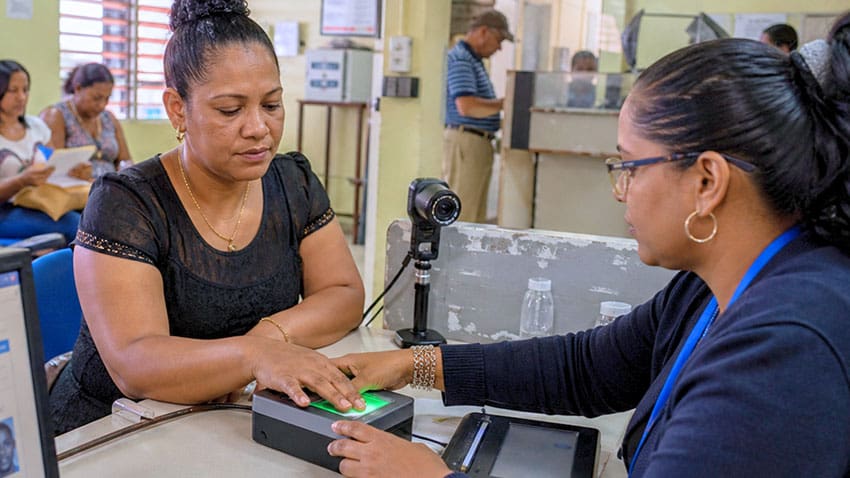
A resident of Georgetown, Guyana, waiting to register for the country’s new electronic ID card has probably never heard the name Sheikh Ahmed Dalmook Al Maktoum.

Nothing about the card would suggest it. Guyana’s government awarded the US$34 million contract to Veridos, a German identity-technology firm, in March 2023, and among the parties at the signing ceremony stood the Emirati royal, a detail recorded by Stabroek News at the time. His role went no further than that on the public record, yet the pattern it fits repeats across a striking number of countries.

Sheikh Ahmed Dalmook Al Maktoum chairs Inmā Emirates Holdings, a Dubai-based investment group, and separately maintains a private office that shows up at the formation stage of government deals from South America to South Asia. Neither entity builds ID cards, ports, or power plants itself. What they supply, on the firm’s telling, is the connective tissue: capital, sovereign-linked partners, and a willingness to commit for decades in places international investors tend to pass through quickly. Tracing where that telling can be checked against public records, and where it cannot, is the best way to understand what these deals mean for the people living alongside them.

How Sheikh Ahmed Dalmook Al Maktoum’s Name Reaches a Signing Page

Deals like Guyana’s tend to begin years before any contract, in visits that draw little attention. Guyana’s Ministry of Natural Resources recorded one such visit in October 2020, when a high-level team from his private office met the minister to scope investment across oil and gas, mining, forestry, and agriculture. Two and a half years separated that meeting from the e-ID signing ceremony.

That gap is the method. Rather than bidding on projects a government has already defined, the office cultivates the relationship first and lets specific ventures emerge from it. A scoping visit costs little; what it buys, sometimes, is a seat at the table when a contract finally comes together.

Advertisement

Inmā claims that method has spread far beyond Guyana. Among the ventures the firm lists are device manufacturing facilities in Nigeria, Angola, and Equatorial Guinea, meant to assemble phones and laptops near the people who will use them instead of importing finished hardware. Coverage of those facilities so far appears in the firm’s own materials rather than independent reporting, which is worth remembering when mapping where the model has verifiably landed versus where it is claimed to operate.

A Traveler in Bridgetown Would Notice Nothing Yet

Grantley Adams International Airport in Barbados shows the same pattern at an earlier, slower stage. A memorandum of understanding signed in 2023 joined the airport’s state operator with the Office of H.H. Sheikh Ahmed Dalmook Al Maktoum and the Chilean firm Agencias Universales, sketching a partnership the government valued near BDS$300 million, spanning airport operations, a cargo hub, and new hotel capacity. More than two years later the deal remained in negotiation, delayed repeatedly over designs and financing, with the government saying it had arranged preliminary funding while investors weighed final designs.

For now, a passenger moving through the terminal sees no trace of any of it. Should the partnership close, the promised changes are the kind travelers feel without attributing: more air bridges, faster cargo handling, added hotel rooms. Should it stall permanently, it joins a long list of announced island infrastructure that never moved past a memorandum.

Power for Ghana’s Grid, With a Handover Built In

Ghana offers the oldest and most concrete case. Sheikh Ahmed Dalmook Al Maktoum’s firm Ameri Energy signed a deal with Ghana’s government in 2015 for a 250-megawatt gas-fired power plant, with Greek contractor Metka building and operating the facility under a five-year build-own-operate-transfer arrangement (African Energy). A BOOT structure works differently from a conventional independent power producer: the private side finances and runs the plant for a fixed term, then hands the asset to the state outright. Whatever else can be said about the arrangement, its endpoint was public ownership by design.

Advertisement

Electricity from a plant like that reaches households and factories with no label on it. A decade on, the deal reads as an early template for the longer-dated arrangements that followed: private capital up front, a government counterparty throughout, and ownership designed to land with the public side.

Syria and the Numbers Only the Firm Can See

Inmā describes property development work in Syria built on local partners and local hiring, an approach meant to tie its returns to whether the surrounding economy recovers. It also says independent reviewers check its project data, from jobs created to services delivered, rather than letting the firm certify its own results. Those descriptions come from the company alone; no outside account of the Syria work or the review process has been published.

The same caveat covers the portfolio’s headline figures. More than 35 projects, upward of 15 countries, project timelines said to average roughly 16 years: all are Inmā’s own tallies, unverified by any independent count. A reader weighing the firm’s reach has documented individual deals on one hand and self-reported totals on the other, and the difference between the two is worth keeping in mind.

The Distance Between a Signature and a Service

Guyana’s president said in September 2025 that the e-ID system was ready to begin rolling out within the month, two and a half years after the signing ceremony. For the resident in that Georgetown line, the wait is the story: the gap between a contract and a working card is where these long-horizon deals succeed or quietly fail. Most of the ventures connected to Sheikh Ahmed Dalmook Al Maktoum still sit inside that gap, somewhere between signature and service.

Advertisement

That makes the honest ground-level verdict an incomplete one. Where his deals have finished, in Ghana’s grid and soon in Guyana’s card readers, ordinary people use the results daily without knowing his name. Whether the far larger set of pending commitments reaches the same point is the part no signing ceremony can settle.

Advertisement
Continue Reading

Business

The latest fundraising and acquisition deals in Welsh business

Published

on

Business Live

Firms featured include Kubos Semiconductors, AerFin, Taylor Facilities Management and RGM Vehicle Body Repairs

Kubos Semiconductors has secured more than £1.5m in investment to accelerate the development of its novel compound semiconductor material technology.

The funding includes a Growth Catalyst project grant from Innovate UK, part of UK Research and Innovation, alongside matched investor funding from the Development Bank of Wales, the Low Carbon Innovation Fund 3 (LCIF3, a co-investment fund operated by the University of East Anglia,) and S4C Digital Media Limited.

The fundraise also includes follow-on investment from Kubos’ existing shareholders and brings the company’s total funding to around £6m.

Kubos is developing a patented compound semiconductor material aimed at enabling next-generation microscopic light-emitting diodes, known as microLEDs. The technology has potential applications in high-speed optical communications, AI and datacentre infrastructure, next-generation displays, augmented and virtual reality, and high-efficiency lighting.

Based at Cardiff University Kubos is part of the growing South Wales compound semiconductor cluster. The latest funding will help the company demonstrate improved production efficiency at scale, giving it a stronger pathway towards commercialisation and IP licensing within the microLED market.

Advertisement

The investment follows the Development Bank’s first backing for Kubos in 2024, when a £500,000 equity investment helped the company establish its Welsh base and strengthen its links with the region’s compound semiconductor expertise. That earlier round supported Kubos’ plans to bring its material technology to South Wales and recruit for specialist roles including testing engineering, device management and development.

This follow-on investment from the development bank has helped unlock further capital for the business, including the Innovate UK grant, and supports Kubos as it works towards its next technical and commercial milestones.

The support of LCIF3 also gives confidence that Kubos is making progress towards meeting its objectives in a key growth sector for South Wales.

Kubos deal: left to right, Susan Gormley, Kubos Semiconductors; Gareth Mayhead,Development Bank of Wales and David Wallis, Kubos Semiconductors.

Dr Susan Gormley, chief executive of Kubos, said:“We are deeply grateful to UKRI and our existing shareholders for this investment, which will accelerate the development of high-speed microLEDs for optical interconnects. The project perfectly complements Kubos’ ongoing development of a platform-material solution for high-efficiency microLEDs emitting across the visible wavelength spectrum.

Advertisement

“This is an exciting opportunity to strengthen Kubos’ pathway to commercialisation through the delivery of transformational technology for AI and datacentre infrastructure, next-generation displays and high-efficiency lighting.”

Gareth Mayhead, investment executive at the Development Bank of Wales, said:“Kubos is exactly the kind of Welsh tech venture that demonstrates the strength and potential of South Wales’ compound semiconductor sector. Since our first investment, the team has made encouraging progress in developing technology that could improve the efficiency and scalability of microLED production for global markets.

“Our follow-on funding is a relatively small investment, but it plays an important role in unlocking further capital, including Innovate UK grant support, and gives Kubos the runway it needs to continue proving its technology at scale. The continued support of LCIF3 also reflects confidence in the company’s progress and the opportunity for Wales to build on its growing reputation in this key growth sector.”

Taylor Facilities Management

Advertisement

Taylor Facilities Management MBO deal: Sam Macalister Smith and Mark Sommers, Development Bank of Wales; Pete Taylor, Leah Taylor, Chris Thomas and Trystan Lloyd, Taylor Facilities Management(Image: Mark Lewis)

Llanelli-based Taylor Facilities Management has been acquired in a management buyout backed with a £2.8m investment from the Development Bank of Wales that will also support its next growth phase .

The MBO has been led by long-term managers Trystan Lloyd, Pete Walsh, Jack Payne and Taylor Davies, along with Chris Thomas of SME Finance Partners. It has provides a partial equity exit for owners Pete and Leah Taylor.

Founded in 2013, Taylor Facilities Management has grown into a national facilities management company operating across the UK and Ireland. The business employs 70 people, and delivers a broad range of services and works with major commercial clients, alongside housing associations and local authorities.

The MBO strengthens the company’s leadership structure by introducing equity participation for key members of the management team. The new owners are central to delivering recently-secured contracts, and will play a leading role in driving further growth across the business.

Advertisement

Pete and Leah Taylor will retain a significant role within the business, continuing to lead operations and mentor the management team as it evolves under the new ownership structure. The transaction has been supported by SME Finance Partners, along with Barford Owen Davies and Blake Morgan.

Mr Taylor said: “We’ve built the business over the last decade and are incredibly proud of how far we’ve come. This investment allows us to recognise the contribution of the team that has helped drive that growth while putting the right structure in place for the future.

“The MBO gives our senior team a real stake in the business as we continue to expand and deliver new contracts across the UK and Ireland, while providing scope for an ambitious growth plan which will allow us to move into new sectors and create more jobs

Mr Lloyd, a member of the incoming ownership team and commercial director at Taylor Facilities Management, said: “As a group, we have been part of the business for a number of years. The family culture at the business means we’ve always felt comfortable in treating it as our own.

Advertisement

“This MBO has empowered us to move into management, allowing for continuity and ensuring our roles remain clear as we transition.

“Taking on ownership also gives us a start-up mentality – we see it as a new chapter with a strong foundation. It allows us to keep developing relationships and driving growth, without losing sight of where we’ve come from.”

Sam Macalister Smith, senior portfolio executive, and Mark Sommers, portfolio executive at the Development Bank of Wales, said: “Taylor Facilities Management is a strong example of a Welsh-founded business scaling successfully into a national operation.

This investment supports a well-planned management buyout that both rewards the founders and empowers the next generation of leadership, while keeping the business rooted in Wales and employing people locally

Advertisement

The business has secured high-profile contracts and demonstrated consistent growth, and we look forward to supporting the management team as they build on this momentum and continue to expand their footprint.”

RGM Vehicle Body Repairs

RGM

Family-owned accident repair specialist RGM Vehicle Body Repairs is under new ownership.

The business, which has been serving motorists across South Wales for more than 50 years, has been acquired by leading vehicle accident repair ventures the Vella Group, in a deal that gives it a presence in Wales for the first time.

Advertisement

The Vella Group were advised on the deal by the Cardiff office of FRP Corporate Finance. The value of the acquisition has not been disclosed. Vella’s acquisition has been backed by private equity firms Ama Capital and Keyhaven.

RGM Vehicle Body Repairs, which has repair workshops in Swansea and Haverfordwest, was originally founded by Robert Morgan and is now led by Paul Morgan.

As part of the transaction, Paul will remain with the business on a consultancy basis to help ensure a smooth transition for its 40 colleagues, its customers and partners.

FRP Corporate Finance, led by partner Thomas Edwards and manager Alexander Griffiths, advised on offer structure, project managed due diligence workstreams and led negotiations on equity price adjustments. This marks the fifth deal on which FRP Corporate Finance has advised the Vella Group.

Advertisement

Marc Holding, chief executive officer at The Vella Group, said: “We’re delighted to welcome Paul and everyone at RGM to the Vella Group. They’ve built a fantastic reputation over many years through hard work, integrity and consistently delivering for their customers. Businesses like RGM don’t earn that reputation overnight, and we’re committed to preserving everything that has made the business so successful while supporting its next chapter.”

Paul Morgan, director at RGM Vehicle Body Repairs said: “After 53 years in operation, finding the right home for the business was one of the most important decisions we’ve had to make.

” We wanted to work with a business that would value what we’ve built, look after our team and continue delivering the high standards our customers expect. From the outset, it was clear that the Vella Group shared those values, and I’m looking forward to supporting the business through the transition and seeing it go from strength to strength.”

Mr Griffiths, manager at FRP Corporate Finance said: “It has been a privilege to support the Vella Group as it has continued to grow and strengthen its position as one of the UK’s leading accident repair groups. This acquisition further demonstrates Vella’s commitment to strategic growth, expanding its geographic footprint and reinforcing its strong position in the market.

Advertisement

“RGM has become a well-established specialist provider over five decades, focusing on quality workmanship, investing in its people and always putting customers first. Those values closely align with the Vella Group’s own approach to building a sustainable, values-led business.”

Other advisers on the deal included, Broadfield (legal), and Crowe (due diligence).

AerFin

AerFin.(Image: Rhys Cozens)

Welsh headquartered aviation maintenance, repair and overhaul company, AerFin, is being acquired by a Japanese venture in a deal worth hundreds of millions of pounds.

Advertisement

Newport headquartered AerFin, a leading aftermarket specialist that buys, sells, leases and repairs aircraft, engines and parts, is being acquired by Japanese firm Orix Aviation. Subject to regulatory approval the deal is expected to be finalised towards the end of the year.

The deal comes after AerFin, which also has operations in Miami, Singapore and Dublin, posted strong financials in 2025 with revenues climbing 25% to around £276m and Ebitda up 33% to more than £52m. The value of the deal has not been disclosed, but with debt, is understood to be around £475m.

Last year Aerfin completed a relocation from Bedwas to a new larger HQ and maintenance facilities at Indurent Park in Newport.

The deal provides an exit for AerFin’s private equity backers and majority owner CataCap. Of AerFin’s global workforce of more than 230 around half are based in Newport.

Advertisement

Established in 1991, Orix Aviation owns and manages aircraft and provides comprehensive asset management services to Japanese and international investors and funds through its full-service operating lease platform.

Chief executive of AerFin Simon Goodson said; “I am delighted that AerFin is joining the Orix Group, a business that shares our values and belief in trusted partnerships, flexible solutions and finding the way ahead for our customers.

“I would like to take this opportunity to thank our founder Bob James (who set up the business in 2010 originally in Cardiff) for his vision and tenacity, our departing majority shareholders CataCap for their outstanding custodianship and guidance, and of course our customers, employees and partners who have made our business what it is today.

“Wales has played a defining role in AerFin’s growth story. From our beginnings in Cardiff, through our time headquartered in Caerphilly, to our Newport headquarters today, we have built a global aviation business with Welsh talent, ambition and values at its core.

Advertisement

“This agreement is a major milestone for AerFin, but it is also a reflection of the expertise, commitment and commercial strength we have developed here in Wales. As part of Orix Aviation, we will have the backing to keep growing internationally while remaining proud of where our journey began.”

Crestline Cyber Security

An expanding IT and telecoms provider to businesses and organisations in the UK has made a further strategic acquisition in South Wales.

ITCS (UK) has acquired Bridgend-based Crestline Cyber Security, which provides digital asset protection, security resources and consulting, for an undisclosed figure.

Advertisement

It is the eighth acquisition by ITCS since being founded by Brian Stokes, managing sirector, nearly 22 years ago.

With the Crestline transaction, ITCS, headquartered in Bridgend, now employs a total of 65 plus staff with a turnover of £8m-plus.

ITCS’ operational footprint extends through South Wales and the Midlands to a data centre in London’s Docklands.

Mr Stoke said: “The acquisition further strengthens ITCS’s already extensive cybersecurity capabilities, bringing together two highly experienced teams with a shared commitment to protecting organisations from an increasingly sophisticated cyber threat landscape.

Advertisement

“By welcoming Crestline Cyber Security into the ITCS family, customers will benefit from an even broader portfolio of specialist cybersecurity services, fractional SCO, expert consultancy, strategic guidance and advanced protection incident response capabilities.

“The combined expertise will enable ITCS to deliver even greater value, helping businesses of all sizes strengthen their cyber resilience, safeguard critical digital assets and confidently navigate evolving security challenges.

“This strategic acquisition reinforces ITCS’s long-term commitment to investing in industry leading talent, innovative technologies and comprehensive security solutions that empower organisations to operate securely and with confidence. The acquisition represents another exciting chapter in the ITCS growth story, further cementing our position as a trusted technology partner and a leading provider of cyber security solutions across the UK.”

Crestline is ITCS’ eighth acquisition and follows the recent acquisitions of Midas Solutions in Bridgend and Poundbury Systems in Poundbury.

Advertisement
Continue Reading

Business

Beach Energy Shares Rise As Oil Prices Surge Amid Ongoing Strait Of Hormuz Supply Fears

Published

on

Austal Shares Soar 17% After Hanwha's $1.2 Billion Takeover Bid

SYDNEY — Shares in Beach Energy Ltd climbed Tuesday, tracking a broader rally across ASX-listed oil and gas producers as global crude prices extended their advance amid continued uncertainty over shipping traffic through the Strait of Hormuz, a critical Middle East oil transit corridor.

The stock closed up 5.46% at 87 cents, after trading between 85 cents and 88 cents during the session, on volume of more than 16.4 million shares, giving the company a market capitalization of approximately $2 billion.

Tuesday’s gain came as global oil benchmarks continued climbing on concerns that a resolution to the standoff around the Strait of Hormuz remained elusive. Brent crude futures rose more than 1% on the news that a deal to reopen the strait to normal shipping traffic could still be some time away, extending a rally that has pushed prices well above levels seen just weeks earlier. The strait, through which roughly a quarter of the world’s seaborne crude oil and nearly a fifth of global liquefied natural gas shipments typically pass, has remained a focal point for energy markets since tensions between the United States and Iran escalated earlier this year.

The renewed uncertainty follows months of volatility in global oil markets tied to the broader conflict. Reports of fresh attacks on tankers and a disputed Iranian claim to control passage through the strait have kept traders on edge, with shipping data showing daily vessel movements through the corridor running at a small fraction of pre-conflict levels. That persistent disruption has kept a so-called war premium embedded in oil prices for much of the year, benefiting oil and gas producers with exposure to global benchmark pricing, including Beach Energy.

Advertisement

Beach Energy’s share price gain Tuesday came despite a more mixed recent run for the company following its full-year results, released last week. The Adelaide-based oil and gas producer reported sales revenue of 1.8 billion Australian dollars for the 2026 financial year, down 10% from a year earlier, alongside underlying EBITDA of 1 billion Australian dollars and underlying net profit after tax of 355 million Australian dollars. The company said the results reflected resilient operational performance despite flood-related disruptions in the Cooper Basin and severe rainfall earlier in the year that affected production. Total production for the year reached 19.4 million barrels of oil equivalent, down 2% from the prior year.

Despite the revenue decline, Beach Energy highlighted improved margins and strong cash generation for the year, with underlying EBITDA margin improving to 57% and operating cash flow reaching 890 million Australian dollars, aided by six cargoes shipped from its Waitsia liquefied natural gas project in Western Australia and stronger realized gas pricing. The company ended the year with net gearing of 10.6%, below its internal target of 15%, and closing cash reserves of 213 million Australian dollars.

Beach Energy shares had initially slipped following the results release, as investors focused on the year-over-year revenue decline despite the underlying operational improvements, but Tuesday’s session saw the stock recover ground alongside the broader sector-wide lift from rising oil prices.

The company’s Waitsia project, developed in partnership with Mitsui, has been a key focus for investors this year as it progresses toward full production, with LNG cargoes from the project already contributing meaningfully to cash flow. Beach Energy has also continued to emphasize cost discipline across its operated assets, alongside completion of a major offshore decommissioning campaign, known as the Equinox campaign, during the financial year.

Advertisement

Tuesday’s advance for Beach Energy formed part of a broader rally across the ASX energy sector, which has drawn sustained investor attention throughout 2026 given the sector’s direct sensitivity to swings in global oil and gas prices tied to the ongoing Middle East conflict. Other Australian energy names, including larger rival Santos, also posted gains during Tuesday’s session as crude prices continued climbing.

Looking ahead, analysts have said Beach Energy’s near-term share price performance is likely to remain closely tied to both the trajectory of global oil prices and the company’s ability to sustain the operational improvements highlighted in its recent results, particularly as the Waitsia project continues ramping toward full contribution. With the situation in the Strait of Hormuz still unresolved, market watchers say continued volatility in oil markets is likely to keep energy stocks like Beach Energy sensitive to fast-moving geopolitical headlines in the weeks ahead.

Continue Reading

Business

Info Edge shares jump 4% after strong Q1 show. What Nomura, Nuvama and other brokerages expect next

Published

on

Info Edge shares jump 4% after strong Q1 show. What Nomura, Nuvama and other brokerages expect next
The shares of Naukri and 99acres-parent Info Edge jumped more than 4% on Tuesday after the company released its results for the April-June quarter of FY27, with international brokerages reiterating their ‘Buy’ calls for the stock and some raising their target prices.

Info Edge shares gained over 4% to trade at Rs 1,337 apiece on the NSE on Tuesday morning after the release of the Q1 earnings. The company reported a 43% year-on-year rise in consolidated net profit to Rs 490 crore in the June quarter, aided by an exceptional gain from transferring Info Edge’s holding in Shopkirana to Udaan parent Trustroot, partly offset by an impairment charge.

The company’s standalone billings rose 14.4%, while operating profit before tax climbed 33.4% as overall costs grew less than 1%. Recruitment, which includes Naukri and accounts for most of Info Edge’s revenue, recorded a 17.5% rise in billings to Rs 553 crore. Revenues increased 13% to Rs 612 crore, while operating profit grew 25% to Rs 356 crore, taking the margin to 58.3%.

Also read | Info Edge Q1 profit rises 43% to Rs 490 crore as Naukri, 99acres gather pace

Advertisement

Nomura on Info Edge share price

Nomura noted that recruitment billings grew 17.5%, above its estimates, aided by better enterprise renewals, stable hiring, mostly replacement, with some incremental hiring, and continued strength in the premium segment. Roughly one-third of the growth came from volume, one-third from pricing and one-third from newer monetisation levers, the international brokerage noted.


It raised its earnings estimates following the Q1 results. Nomura maintained its ‘Buy’ call on Info Edge, but raised its target price to Rs 1,480 apiece, implying more than 15% upside potential.

Nuvama on Info Edge share price

Nuvama Institutional Equities maintained its ‘Buy’ rating on Info Edge with a target price of Rs 1,520 apiece, implying around 19% upside potential. The brokerage said the company delivered a decent Q1 performance.“Management indicated both Naukri and 99acres are reporting a pickup in billings growth, with revenue to follow a similar trajectory with a lag. We stay positive on the Info Edge story, with its long growth runway and pricing power, coupled with commercial adoption and monetisation of its new AI initiatives to support the next leg of growth,” it added.

Motilal Oswal on Info Edge share price

Motilal Oswal Financial Services maintained its Neutral call on Info Edge, but raised its target price to Rs 1,250 apiece, implying 2.5% downside potential. The domestic brokerage noted that the company delivered a better-than-expected Q1 performance and raised its earnings estimates.

Advertisement

“Margin visibility has improved, led by lower costs and better operating leverage, with 99acres also benefiting from lower competitive intensity. However, with recruitment growth still moderate and newer offerings yet to establish sustained monetisation, we see limited scope for a meaningful earnings upgrade from here. Current valuations also appear to capture much of the near-term improvement,” it added.

Info Edge share price

Info Edge shares gained around 6% in a week and 11% in a month, but remain marginally lower in 2026 so far. Over the longer term, the shares have delivered returns of more than 49% over three years and nearly 24% over five years.

Also read | Elon Musk vs Michael Burry: World’s richest man says AI internet traffic will outpace humans, market expert asks who is paying

(Disclaimer: Recommendations, suggestions, views and opinions given by the experts are their own. These do not represent the views of The Economic Times)

Advertisement
Continue Reading

Business

Benchmark reaffirms Shopify stock rating citing international growth

Published

on


Benchmark reaffirms Shopify stock rating citing international growth

Continue Reading

Business

Baby products company Frida is expanding into kids’ personal care

Published

on

Baby products company Frida is expanding into kids’ personal care

Baby products company Frida is expanding into a line of personal care products for kids ages 6 to 11 that will be sold in Walmart and on Amazon, the company told CNBC exclusively.

CEO Chelsea Hirschhorn said the launch marks the next natural step for the company, which has seen its first customers age into new categories, and offers an opportunity to secure shelf space in a category that’s largely untapped and unexplored.

“It really wasn’t necessarily only that there was this opportunity created in the retail environment or in culture, but it was really the dearth of genuine, thoughtful innovation for this stage of parenthood that felt like a rinse and repeat of our playbook in mother care and baby care,” Hirschhorn told CNBC.

Hirschhorn, who created the company when her first child was a baby, said the gap in the market is one she’s seen firsthand as a mother of four children. As her eldest child has grown, she said there were plenty of options in the baby aisle and teen aisle, but nothing in between to address the needs of young kids’ personal care.

Advertisement

While the new category marks a significant step for the company, she said it’s ensuring it’s not alienating core customers looking for baby products.

Since its launch, Frida has generated more than $2 billion in retail sales and grown roughly 30% annually over the past five years, the company told CNBC exclusively. Though it began as a baby products company, it’s now branched out into products for pregnancy, postpartum and now kids.

According to a report from Kings Research, the kids’ personal care market was valued at roughly $82 billion in 2022 and was expected to reach $137 billion by 2030 at a compound annual growth rate of nearly 7%.

Hirschhorn said Walmart has been curating and launching a new aisle dedicated to kids’ care, where parents can find products in between baby and adult options. That dedicated shelf space, along with Walmart’s reach across the country and emphasis on value, made it an ideal destination for Frida for Kids, she added.

Advertisement

“Walmart came to the table in a really exciting way and said, ‘We see an opportunity in a dedicated spot for everything from tween deodorant to shampoo, nail care and oral care because this parent deserves convenience above all else,’” she said.

The new products span categories including body wash, deodorant, electric flossers and more, in the price range of $6.99 to $19.99. Hirschhorn said each of the products was designed specifically for kids in this age cohort without relying on certain ingredients that might not be appropriate for their age.

“It’s a glaring gap,” she said. “When I’m done with tear-free baby shampoo, strolling the aisles of the personal care section, the only thing that jumps out is … the section for men.”

Retail innovation in the tween space has been expanding over the past few years. Companies like Sephora have seen explosive growth in kids’ interest in beauty, while apparel retailers have created more dedicated sizing for tweens.

Advertisement

It coincides with Generation Alpha reshaping some of the retail landscape, as the digitally native and online-savvy cohort becomes increasingly important for brands to capture and build loyalty with. Alpha roughly starts with babies born in 2010 and goes through babies born in 2025, according to Merriam-Webster, but those start and end dates are debated.

Hirschhorn said Frida is taking notice of that trend.

“This is otherwise a pretty fragmented shopping experience for parents who are ready to graduate the diaper aisle,” she said. “There’s no holistic experience for all of the personal care products for kids with that age, and so that was a really important part for us, just as it was in mother care.”

Advertisement
Continue Reading

Trending

Copyright © 2025