
Business
Jyske Bank buys back 53,588 shares in week 35




Workplace safety is often discussed as a set of duties: complete a risk assessment, keep records, train employees and review the paperwork.
Those actions matter, but treating them as the whole objective misses the commercial value of a well-designed safety system. The real advantage appears when safety information improves the way a business allocates resources, introduces change, manages contractors and responds to uncertainty. In that form, safety is not a separate administrative burden. It becomes part of how the organisation protects capacity, earns trust and makes decisions.
This distinction is especially important for growing companies. A new site, larger team, changed layout or faster delivery schedule can alter the risk picture before leaders notice it. Informal controls that worked in a small operation may become unreliable when more people, equipment and suppliers are involved. A business that waits for an incident, complaint or inspection to expose those weaknesses is forced to act under pressure. A business that reads the early signals can correct them while choices remain open and disruption is still limited.
Start with the Business, Not the Folder
A useful safety review begins by understanding how work creates value. Which activities must happen on time? Where do people, vehicles, machinery, customers and contractors interact? Which roles hold knowledge that is difficult to replace? What changes are planned over the next twelve months? These questions reveal the operational context in which hazards exist. They also prevent a common mistake: producing documents that describe an idealised workplace rather than the one employees actually experience.
The written system should then support the work. Policies clarify direction; risk assessments record important judgements; inspection forms capture evidence; and action logs make follow-up visible. None of these is valuable merely because it exists. A document earns its place when it helps someone recognise a problem, make a consistent decision or confirm that a control has worked. If employees cannot find the procedure, managers do not use the findings or actions disappear into email, the organisation has paperwork without control.
Connect Safety to Change Management
Change is one of the strongest predictors that an old assumption may no longer be safe. Businesses routinely evaluate the financial and customer effects of a move, refurbishment, new product or acquisition, yet the safety review may arrive after the decision. That sequence creates expensive redesign. An escape route is obstructed, equipment lacks adequate space, a contractor cannot isolate a system, or the planned staffing level cannot support emergency arrangements. Bringing safety questions into the project brief is faster and cheaper than correcting them after launch.
The trigger does not need to be dramatic. New shift patterns can create lone-working issues. A software change can increase screen time or work pressure. Additional storage can change manual-handling and fire risks. Rapid recruitment can dilute supervision and local knowledge. A reliable process identifies which types of change require review, who must be consulted and what evidence is needed before approval. It also includes a post-change check, because the real workplace often behaves differently from the design.
Give Leaders Decision-Ready Information
Senior managers rarely need every inspection detail. They need a concise view of significant risk, control reliability, overdue actions and barriers that require authority or investment. A long report can obscure these points. A stronger briefing identifies what could happen, who may be affected, what controls exist, why confidence is limited and what decision is required. It distinguishes an immediate danger from a longer-term improvement and makes uncertainty explicit rather than hiding it behind a traffic-light colour.
This approach changes board conversations. Instead of asking whether the business is “compliant,” leaders can ask whether high-consequence risks are understood, whether critical controls are tested and whether planned growth is creating new exposure. They can compare safety investment with operational priorities because the information is expressed in terms of consequence, reliability and continuity. The goal is not to turn every risk into a financial number, but to make the reasoning clear enough for responsible trade-offs.
Make Ownership Unmistakable
Safety weakens when responsibility is broadly stated but operational ownership is vague. Directors set expectations and provide resources, but they cannot personally close every action. Managers control local priorities, supervisors influence daily behaviour, and employees contribute knowledge about how work is really performed. Facilities, human resources, procurement and project teams also shape risk through maintenance, recruitment, purchasing and contractor selection. Each important control should therefore have an owner with authority, time and a clear definition of completion.
Ownership also needs resilience. If a fire-safety check stops when one manager is on leave, the process depends on memory rather than design. Deputies, escalation routes and handover rules are simple but powerful controls. The same applies to external advice. A competent adviser can analyse, challenge and recommend, but the client organisation still decides priorities and implements the response. Clear roles allow specialist support to strengthen management instead of becoming a place to outsource accountability.
Use Risk Assessment as a Management Tool
Good risk assessment is an exercise in observation and judgement, not form completion. The assessor should watch the task, inspect the environment, speak with the people doing the work and review relevant incidents, maintenance history and complaints. This evidence often reveals gaps that a generic template cannot see: an alarm that is difficult to hear, a delivery that blocks a route, equipment that encourages awkward handling, or a shortcut created by unrealistic production pressure.
The assessment should identify people who may be affected, including contractors, visitors, new starters, lone workers and anyone who may need additional support in an emergency. Controls should be proportionate and should favour removing or reducing the hazard before relying only on instructions or protective equipment. Significant findings need an action owner, priority and review trigger. Phrases such as “staff to take care” are not controls because they do not describe a reliable change in the conditions of work.
An assessment is most valuable when it is connected to other decisions. A refurbishment can affect fire precautions, access, electrical capacity, contractor management and business continuity at the same time. Reviewing each subject separately can create contradictions. A short coordinated meeting may discover that a proposed storage area conflicts with an escape route or that noisy work overlaps with customer hours. Coordination prevents one team from solving its problem by creating another team’s risk.
Turn Consultation into Early Warning
Employees see the weak signals that dashboards often miss. They know which door sticks, which instruction is confusing, where a queue causes people to improvise and which task has become harder since a process changed. Consultation gives managers access to that operational intelligence. It should not transfer responsibility to workers; it should make their experience part of the evidence used to design better controls.
Effective consultation is accessible and closes the loop. Office staff, mobile workers, temporary employees and night teams may need different routes to contribute. A short conversation during a site walk may work better than a formal meeting, while a confidential channel may be important for sensitive concerns. Whatever method is used, managers should acknowledge reports, explain interim measures, name the action owner and provide updates. Silence after reporting teaches people that raising an issue is pointless.
Design Training Around Capability
An attendance sheet proves that a session occurred, not that an employee can make the right decision. Training should begin with the capability required. Can the person recognise a damaged guard, isolate equipment, select a safe method, respond to an alarm or report a concern? The learning method can then be matched to that outcome: supervised practice, a short briefing, a scenario, a toolbox talk or formal instruction. A competence check should test understanding in the context where it will be used.
Training cannot compensate for poor design. If workloads make the safe method impractical, equipment is unavailable or supervisors reward speed over care, employees receive conflicting signals. Managers should investigate repeated errors as system evidence rather than assuming that another presentation will solve them. Refresher learning is most useful after a change, observed gap, incident or long absence from a task. This keeps training responsive to need instead of tied only to a calendar.
Manage Contractors at the Interface
Contractors introduce specialist expertise, but the greatest risk often sits between their work and the client’s operation. A technically capable contractor may not know the building, vulnerable occupants, traffic patterns or emergency arrangements. The client may not understand the hazards created by the contractor’s method, substances or isolations. Good control therefore begins before appointment, with a clear scope, proportionate competence checks and an exchange of relevant risk information.
On arrival, contractors need a site-specific briefing and a named contact. Higher-risk work may require permits, isolation controls or closer supervision. Changes to the method should be discussed rather than improvised. Completion is another critical point: someone should verify that guards, alarms, routes and services are restored and that any residual risks are communicated. A purchase order is not a complete contractor-management system; the system covers planning, coordination, monitoring and handback.
Learn from Near Misses Without Creating Blame
A near miss shows that the distance between normal work and harm was smaller than expected. Reporting should therefore be quick, proportionate and psychologically safe. If every report leads to a lengthy form or an assumption of fault, employees will remain silent. A short initial record can capture what happened, the possible consequence, immediate action and evidence. Events with serious potential or recurring features can then receive deeper investigation.
The investigation should look beyond the last person’s action. Workload, layout, maintenance, supervision, information, equipment and competing priorities may all shape behaviour. Correcting only the visible error leaves the underlying condition in place. Useful learning is specific enough to change work, shared without unnecessary personal detail and followed by a check that the action reduced risk. Closure means verified improvement, not simply that a task has been marked complete.
Measure Control, Not Just Injury
Injury figures matter, but they are late indicators and can be misleading when numbers are small. A quiet period may reflect strong control, good luck or weak reporting. Leading measures show whether the system is working before harm occurs. Examples include overdue high-priority actions, repeated defects, completion of planned maintenance, response time to hazard reports, quality of contractor inductions and the proportion of business changes reviewed before implementation.
The measure should lead to a decision. Too many metrics create administrative noise and encourage teams to chase numbers. A small set reviewed consistently is more useful. Leaders should ask what is worsening, why important actions remain open and whether workers trust the reporting process. Periodic sampling is essential: a dashboard may say training is complete, but observation can reveal whether the expected capability is present. Evidence should challenge assumptions, not decorate a meeting pack.
Recognise When Independent Support Adds Value
Internal teams understand the organisation’s history, relationships and operational pressures. External specialists add value when they bring independent challenge, deeper technical competence or capacity that the business does not hold. Useful triggers include rapid expansion, a serious incident, complex fire or construction work, unfamiliar requirements, repeated unresolved findings or the need to test whether an established system still reflects reality.
Working with Ablemarsh Safety Consultants can help an organisation translate broad concerns into site-specific priorities across areas such as risk assessment, competent-person support, fire safety, training and construction safety. The strongest engagement begins with the work itself. The adviser should explain scope, assumptions and limitations, distinguish urgent controls from longer-term improvements and produce actions that managers can realistically own.
When comparing a workplace safety consultancy UK businesses should look beyond the volume of documents promised. Relevant sector experience, clear communication, proportionate judgement and practical follow-through are more important. Ask who will perform the work, how employees will be involved, how findings will be prioritised and how success will be checked. A useful adviser builds the client’s capability and confidence rather than making ordinary decisions dependent on constant external approval.
A Practical Improvement Cycle
The first stage is to establish the baseline. Confirm leadership ownership and competent support, identify significant risks, review serious or recurring incidents and inspect the workplace with people who know the tasks. Address immediate danger first. Then create a limited priority list based on possible harm and the reliability of existing controls. Trying to rewrite every document before understanding the main weaknesses consumes energy without necessarily reducing risk.
The second stage is to strengthen the operating rhythm. Assign actions, deadlines and escalation thresholds. Make reporting easy, schedule proportionate inspections and connect safety checks to projects, procurement and maintenance. Review induction, contractor arrangements and emergency plans against real conditions. Remove duplicate forms and meetings that do not influence a decision. Simplicity is valuable when it improves consistency and makes responsibility visible.
The third stage is to verify and learn. Sample completed actions at the workplace, run a realistic emergency exercise, review one recent change and investigate a near miss for underlying causes. Ask employees whether communication has improved. Present leaders with remaining significant risks, barriers and decisions required. The aim is not a perfect system at a fixed date. It is a functioning cycle that notices change, makes proportionate decisions and checks whether those decisions worked.
Final Thoughts
Workplace safety becomes a business advantage when it creates visibility and discipline. Leaders understand which risks could interrupt the operation, managers know who owns the response, and employees can raise weak signals before they grow. Projects encounter fewer late surprises, contractors receive clearer information, and evidence supports better investment decisions. These benefits do not come from paperwork alone; they come from connecting safety to the way the business is managed.
The strongest system is rarely the most elaborate. It is proportionate, grounded in real work and kept alive through consultation, monitoring and learning. Compliance remains important, but it is the starting point rather than the finish line. When safety information is used to improve planning and everyday choices, the organisation protects people while also strengthening continuity, trust and its ability to grow.
Business
Commonwealth Bank Shares Rise Nearly 2 Percent as Banks Lead ASX Higher on Rate Hike Expectations
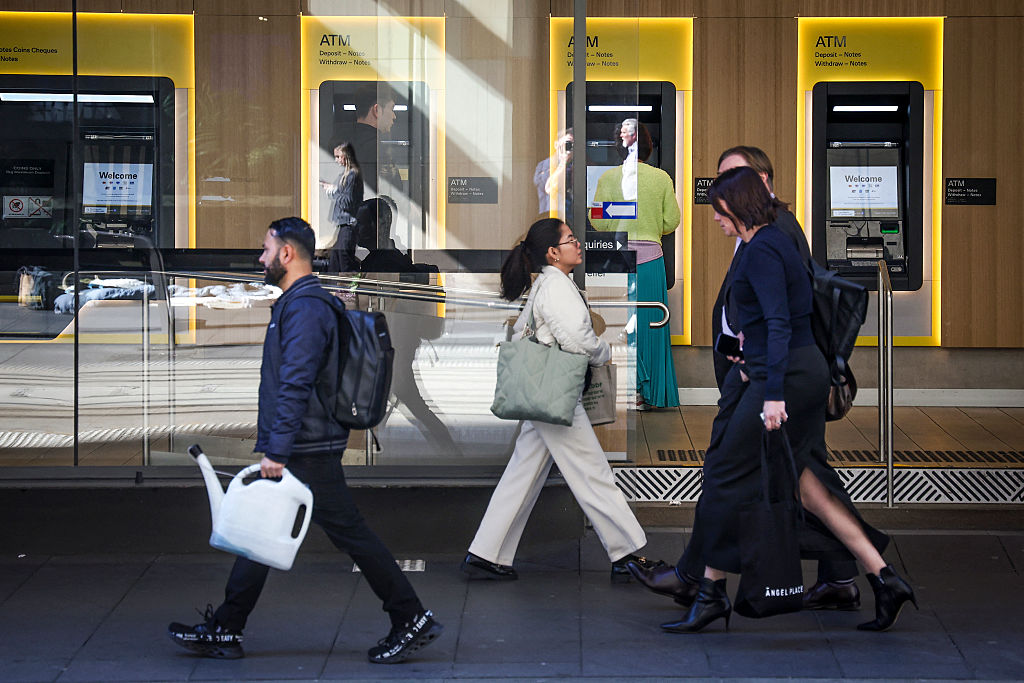
Shares of Commonwealth Bank of Australia rose nearly 2% Monday, leading gains across the country’s major lenders even as the broader share market struggled following renewed U.S. military action against Iranian targets in the Strait of Hormuz.
The stock traded at 159.90 Australian dollars, up 2.65 dollars, or 1.69%, on the Australian Securities Exchange. Commonwealth Bank’s advance came alongside similar gains of between roughly 1.5% and 2.1% for the country’s other major banks, including Westpac, ANZ and National Australia Bank, which together helped offset a weaker session for materials stocks and kept the benchmark ASX 200 from falling further, according to live markets coverage from ABC News.
Monday’s rally in bank stocks coincided with a notable shift in interest rate expectations. Morgan Stanley said in a research note that it now expects the Reserve Bank of Australia to raise its official cash rate at its next meeting on Sept. 29, forecasting a 25-basis-point increase to 4.6%. The investment bank’s Australian strategy team said stronger-than-expected July inflation data had “crystallised upside risks” the central bank had previously flagged, adding that the latest inflation print “meets the threshold for the ‘upside risks’ to inflation the RBA flagged at its August meeting and said it would act against.” Rising interest rates are generally viewed favorably for bank earnings, since lenders typically benefit from wider margins between the rates they charge borrowers and the rates they pay depositors when official rates climb.
The gains in bank shares came even as the broader ASX 200 struggled for direction Monday, weighed down by U.S. strikes on two Iranian rocket launchers on Larak Island in the Strait of Hormuz overnight, an action that rattled equity markets across the Asia-Pacific region and pressured resource-heavy sectors including materials, where major miners BHP and Rio Tinto both traded lower.
Commonwealth Bank’s share price gain builds on a period of record financial performance for Australia’s largest bank by market capitalization. The lender reported fiscal 2026 cash profit that rose 7% to a record 11 billion Australian dollars, according to Morningstar, with loan growth of 7% and steady net interest margins more than offsetting a 6% rise in operating expenses and a modest increase in loan impairment costs. The bank’s common equity tier 1 capital ratio, a key measure of financial strength, stood at 12.3%, and it lifted its interim dividend to 2.35 Australian dollars per share during the year.
Analyst sentiment on Commonwealth Bank has remained notably divided given the stock’s strong run over the past year. Goldman Sachs analyst Brendan Sproules initiated coverage of the bank with a sell rating and a price target of 130.18 Australian dollars, a level well below where the stock currently trades, reflecting concerns among some analysts that the bank’s valuation has become stretched relative to its growth prospects. Commonwealth Bank’s shares have traded in a 52-week range between roughly 146.98 and 185.59 Australian dollars, and the stock currently carries a price-to-earnings ratio of about 25.3, a premium valuation compared with many of its banking peers both domestically and internationally.
Commonwealth Bank operates across several core segments, including retail banking, business banking, institutional banking and markets, and a New Zealand division, offering products ranging from home loans and consumer finance to specialized services for business, agribusiness and high-net-worth private banking clients. The bank has continued to emphasize investment in technology and artificial intelligence tools as part of its broader strategy, alongside a series of asset divestments in wealth management and insurance in recent years aimed at sharpening its focus on core banking operations.
Despite Monday’s gains, the broader session underscored how closely tied Australian equity markets remain to developments overseas, with Middle East tensions weighing on resource stocks even as domestic factors, including shifting interest rate expectations, provided support for the financial sector. Investors are expected to continue watching both fronts closely in the coming days, alongside upcoming domestic economic data, including second-quarter GDP and July trade figures, that could further shape expectations ahead of the Reserve Bank’s September policy meeting.
Business
Massive 12 Terabyte Valve Leak Exposes a Decade of Unreleased Games and Possible Episode 3 Assets

A massive archive of roughly 12 terabytes of Valve development files began circulating online this weekend, offering an unprecedented look inside a decade of the company’s game development history and reigniting speculation about the long-canceled Half-Life 2: Episode 3.
The archive, which the gaming community has dubbed the “Steam2 Teraleak,” consists of files pulled from Steam2, Valve’s legacy content-delivery system that packaged and distributed game files using older formats before the company transitioned to its current SteamPipe infrastructure in March 2013, according to multiple outlets including Tom’s Hardware and Player.One. That migration explains why the archive’s contents stop abruptly at 2013, since games published after the switch were never stored on the older, now-exposed system in the first place.
Despite initial speculation that Valve had suffered a sophisticated cyberattack, researchers who have examined the leak say it did not result from a traditional hack. According to prominent Valve data miner Gabe Follower, who has been closely tracking the archive’s contents, the files were extracted from a legacy endpoint connected to Valve’s outdated infrastructure that had simply been left publicly accessible, rather than obtained through any unauthorized intrusion into the company’s systems. “No hacking involved, just verified that everything in Steam2 Teraleak was obtained via a publicly accessible endpoint,” Gabe Follower wrote on the social platform X. “It’s Valve’s fault.”
The scale of the archive has made it difficult for researchers to fully catalog its contents in the days since it began circulating online Aug. 29. A community-tracked catalog on GitHub had logged more than 387,000 individual entries as of this weekend, according to gaming outlet Player.One, with contributors still working to separate genuine discoveries from duplicate or placeholder files. Because the archive draws from Steam2, which stored content for every publisher using the platform during that era rather than only Valve’s own titles, the leak extends well beyond the company’s internal projects.
Among the confirmed discoveries are early builds and unreleased content tied to several of Valve’s own franchises, including a radically different Portal 2 beta, an early version of a canceled Portal sequel codenamed “F-Stop,” unreleased Counter-Strike: Global Offensive game modes and interface designs, and fully playable Left 4 Dead builds, according to reporting from Notebookcheck and GamesRant. Perhaps the most closely watched find involves a weapon asset referred to as the “Weaponizer,” which some researchers believe may be connected to Half-Life 2: Episode 3, the long-promised and ultimately abandoned continuation of Valve’s flagship series that has remained a subject of fan speculation for nearly two decades. As of this weekend, outlets covering the leak cautioned that a direct, confirmed connection to Episode 3 had not yet been established, and that no playable version of the game had surfaced in the archive.
The leak’s reach extends well beyond Valve’s own catalog. Community researchers digging through the data have identified early development files tied to numerous major third-party titles that were once distributed through Steam, including Fallout: New Vegas, Dragon Age: Origins, Batman: Arkham Asylum, Mirror’s Edge and a rare beta build of Sonic 4: Episode II, according to Notebookcheck and gaming outlet The Front Page. Because game development files often include enormous volumes of incidental material, textures, audio recordings, test maps, scripts and abandoned experimental assets, researchers have said the full scope of what the archive contains may not become clear for weeks.
Valve has not issued any public statement addressing the leak, its origin, or the authenticity of its contents as of this writing, according to multiple outlets tracking the situation. Some observers have noted that any official acknowledgment would effectively confirm a significant internal security lapse involving the company’s own infrastructure, rather than an external attack, a dynamic that may help explain the company’s continued silence.
The Steam2 leak is unrelated to a separate cybersecurity incident Valve disclosed earlier this month involving CEVA Logistics, a European shipping partner, in which customer personal information was exposed as the result of a breach at that third-party company. By contrast, the newly surfaced 12-terabyte archive stems entirely from an access-control failure on Valve’s own legacy systems, according to gaming outlet GamingProMax, and does not appear to include any current Steam user data or personal account information.
As researchers continue combing through the archive in the days ahead, the gaming community has largely treated the leak as an unexpected time capsule into the earlier years of PC game development, offering a rare glimpse at how some of the industry’s most recognizable titles evolved during production, even as questions remain about how much of the sprawling dataset has yet to be fully explored.
Business
(VIDEO) Pokemon GO Brings Back Armored Mewtwo After Six Years for GO Fest 2026 Mega Finale Raid Event

Pokemon GO is bringing back Armored Mewtwo for the first time in six years, developer Scopely announced this weekend, giving trainers a limited window to catch one of the mobile game’s rarest raid bosses during next month’s Pokemon GO Fest 2026: Mega Finale event.
The announcement came during the closing ceremonies of the 2026 Pokemon World Championships, held in San Francisco. Armored Mewtwo will appear in five-star raids beginning at 10 a.m. local time on Saturday, Sept. 5, and running through 6 p.m. local time on Sunday, Sept. 6, coinciding with the two-day Mega Finale event that closes out this year’s Pokemon GO Fest season.
“Mewtwo strikes back in Raid Battles…in that form!” Scopely wrote in an official blog post announcing the Pokemon’s return. “Armored Mewtwo, as seen in the movie Pokémon: Mewtwo Strikes Back – Evolution (released in 2019), is a version of Mewtwo whose power is suppressed and held back by armor. Even so, Armored Mewtwo possesses overwhelming strength that surpasses other Pokémon.”
Armored Mewtwo was first introduced to Pokemon GO in July 2019 to coincide with the release of the animated film “Pokemon: Mewtwo Strikes Back – Evolution,” which reimagined the franchise’s original 1998 movie. The variant returned briefly for Pokemon Day festivities in February 2020 before disappearing from the game entirely, making next month’s event its first appearance in six years. According to gaming outlet Sportskeeda, the raid boss previously carried a combat power of 41,299, with players able to catch a version boasting 1,821 combat power, or 2,276 under weather-boosted conditions.
Players hoping to add a Shiny Armored Mewtwo to their collection will be disappointed, however. Scopely confirmed in its announcement that the special color variant will not be available during the event, a decision several outlets covering the news, including ComicBook.com, described as a missed opportunity given that Shiny Mewtwo already holds a relatively narrow competitive niche and, unlike standard Mewtwo, cannot Mega Evolve.
Armored Mewtwo’s return is just one piece of a broader set of announcements tied to the Mega Finale event. According to details published by fan resource Leek Duck, the weekend will also feature Super Mega Raids starring Mega Mewtwo X on Saturday and Mega Mewtwo Y on Sunday, alongside the previously teased debuts of Mega Delphox, Mega Greninja and Mega Chesnaught. Pokemon caught from Mega Raids during the event may come with a special Mega Evolution-themed background, and all Mega-Evolved Pokemon will receive a temporary combat power boost throughout the weekend.
Scopely also announced that eligible Mega-Evolved Pokemon, including Mewtwo, will gain access to additional Charged Attacks and new “Adventure Effects” during the event, expanding their battle utility both in and outside of raids. Separately, the company confirmed that Mega Evolution is being incorporated into the GO Battle League, with the combat power of Mega-Evolved Pokemon set to be temporarily reduced when selected for special Mega Editions of the Great League and Ultra League, allowing them to participate within those competitive formats before their combat power reverts to normal following each battle.
The Mega Finale caps a season-long rollout for Pokemon GO Fest 2026 that was first teased in July, when Scopely announced the event’s dates without revealing most of its specific content. According to reporting from ComicBook.com, the company’s decision to hold back detailed information at that time now appears to have been intentional, given the scale of the announcements ultimately tied to the weekend event.
Unlike some past Pokemon GO Fest weekends, this year’s Mega Finale will be an unticketed, worldwide event, meaning players will not need to purchase a special pass simply to participate, though an optional GO Pass Deluxe: Mega Finale upgrade will offer additional bonuses and rewards, including an increased chance of encountering Shiny Pokemon from certain Mega Raids and other event-specific encounters throughout the weekend.
For longtime players who caught Armored Mewtwo during its original 2019 and 2020 appearances, next month’s event offers a rare second chance at a Pokemon that has remained absent from the game for years. For newer trainers who joined Pokemon GO after that window closed, Scopely and multiple outlets covering the announcement have framed the Mega Finale as one of the best opportunities yet to add one of the game’s most sought-after raid bosses to their collection, with no confirmation from the developer on when, or whether, Armored Mewtwo might return again after this weekend’s event concludes.

Baird upgrades STAG Industrial stock rating on valuation appeal
Business
Meghan Markle Reportedly Wants Nine Bedrooms and a Home Film Studio as Cotswolds House Hunt Begins

Meghan Markle and Prince Harry are searching for a sprawling countryside property in the Cotswolds as their move back to the United Kingdom takes on a more concrete shape, with reports describing a wish list that includes nine bedrooms and a private film studio.
The Duke and Duchess of Sussex landed at Birmingham Airport on Wednesday alongside their two children, Prince Archie, 7, and Princess Lilibet, 5, arriving by private jet before being taken from the airport in what the Daily Mail described as a small convoy of blacked-out vehicles. The family’s arrival marks the start of what has been described as an extended stay in Britain following more than six years based primarily in California.
According to the Daily Mail’s royal editor Rebecca English, Meghan’s list of requirements for the couple’s prospective UK home includes nine bedrooms and a film studio, while Harry is said to be prioritizing a substantial amount of private land. “As for their new home in the Cotswolds, I am told that Meghan wants nine bedrooms and a film studio and Prince Harry wants a lot, and I mean a lot, of land, and no footpaths going across it to protect their privacy,” English wrote, according to a report republished by Internewscast. English added that friends of the couple describe them as “all in” on establishing a new life in Britain, characterizing the effort as a kind of “Finding Freedom 2,” a reference to the 2020 biography that chronicled the couple’s original decision to step back from royal duties and relocate to North America.
The couple has been linked to a property valued at roughly 12 million pounds, or about 16 million dollars, though multiple sources cited by the Daily Mail insisted no deal has been finalized on that specific home. Separate reporting from GB News put the couple’s likely budget at a minimum of 8 million pounds for a property in the Cotswolds, an area that already includes royal connections: King Charles’ Highgrove estate sits within the region, as does Princess Anne’s longtime home at Gatcombe Park and a six-bedroom farmhouse owned by Princess Beatrice and her husband, Edoardo Mapelli Mozzi.
An agent is reportedly assisting the Sussexes as they begin touring properties in person, a step described as necessary given the scale of the homes under consideration. “There is an agent involved,” a source told the Daily Mail, adding that the couple had “not seen anywhere yet” in person, since online viewings had proven difficult given how large many of the available properties are. The source said the couple still needed to weigh practical questions about daily family life, including whether a particular home’s layout, down to details like a snug or kitchen, felt right for raising their children.
The report also indicated the couple has multiple properties to choose from given how much suitable real estate is currently available in the area, and that friends have insisted Harry and Meghan intend to retain both their Montecito, California, estate and their holiday home in Portugal even after establishing a new base in Britain. Their children are expected to enroll at a nearby preparatory school, according to the Daily Mail, with neighbors in the Cotswolds already reportedly discussing potential properties and school placements ahead of the family’s arrival.
The couple’s decision to prioritize privacy in their new home echoes concerns previously voiced by other members of the extended royal circle living in the same region. According to GB News, Harry’s stated desire to avoid public footpaths crossing his land reflects issues Princess Beatrice and her husband have reportedly encountered at their own Cotswolds property.
Neither Buckingham Palace nor representatives for Harry and Meghan have issued public comment on the specific details of the couple’s house search. As the family settles into life in Britain, the search for a permanent home is expected to remain a closely watched storyline in the weeks ahead, particularly given how it may shape broader questions about how long the couple intends to remain based in the country following their return.

A day can be the most incredible — all you need is energy, an inquisitive mind, a sense of camaraderie and a desire to try something different. This is how underneath and reflected the lifestyle of the case in hands Arina from Denver appears. She enjoys fitness, nature, travel, fashion, dining with friends, parties and entertainment. She likes to exercise but also she makes time for relaxing and socializing. Arina doesn’t let the monotony of her everyday lives pull her down; she finds little ways to spice up her day. Her lifestyle is a very interesting perspective of Arina Life in the USA.
Starting the Day with Energy
A good morning sets a tone for the whole day. Arina likes to make fitness part of her life by working out, walking, stretching or anything that helps to keep her active.
Fitness is more than a routine to her. It could also be a tool to declutter her mind and feel ready for whatever comes next. It gives her the energy she needs for whatever follows (from outside to meeting friends), and choosing movement first thing in the morning leaves space to nourish all kinds of magic.
The routine stays flexible so she can partake in different activities, but not live by the same exact schedule every day.
Making Time for Nature
Nature Gifts Us Arina Comes with An To Relax And Explore from Denver She loves spending time outside — and soaking in the sights. Not only can a peaceful walk help her to clear her mind, but it allows for exploring somewhere new, invoking the adventurer instinct inside of her.
Those outdoor moments are usually plain and ordinary, but they become memorable because of the experience that goes with it. Going out with friends during a period, discovering an interesting location or the picturesque sights could convert inner strength from an ordinary afternoon into extraordinary one.
The use of nature in its work also reveals her love for travel and exploration.
Travel Brings Fresh Experiences
Travel is essential for Arina Life in the USA. Arina also loves his experience of getting to new places because they break the routine. Traveling to different places gives her the opportunity to try new food, see new sights and participate in various activities and experiences.
And I do enjoy the freedom of going somewhere where I am no one. The meticulously planned all-day excursion may be thrilling but so is the unexpected detour. A new restaurant, a surprise stop or an on-the-fly change of plan can make some of the best memories.
Travel is an experience for Arina, not just a destination.
Fashion Adds Personality
Another hobby that brings creativity to Arina’s everyday life is fashion. She loves picking outfits that fit into her plans, and into what she’s feeling. Comfortable styles may be perfect for exercise or nature outing, and dinners, gatherings and entertainment occasions present moments to wear more elegant looks.
The way she dresses is a form of expression, self-confidence. She is excited to get ready for a night out and especially when she knows she will be getting together with friends or going somewhere exciting; the getting ready process just adds to it all.
It makes her life, which is already busy and sociable, that little bit more creative.
Friends, Dining, and Social Moments
A strong aspect of Arina is her social life, it has an influence on the fun experiences. She like to eat with friends — food brings people together and offers the chance to unwind, chat and laugh.
The best theoretical simple dinner does not always end up being simple. Conversations can keep flowing well beyond the meal and spontaneous plans might spontaneously involve some form of entertainment or a night out. Arina likes these moments because they help her feel connected and lacking the same routine everyday.
They also enable her to celebrate and enjoy parties, music, entertainment, and social events. In the presence of good friends, an otherwise average evening can become a memory not worth forgetting.
The Spirit of The Unicorn USA

The idea of The Unicorn USA encapsulates uniqueness, finds adventure in exploration, and revels in non-stereotypical experiences. And Arina’s way of life represents this attitude because she explores many pursuits.
Her schedule has a huge area reserved for fitness, nature, travel, fashion, dining, party and entertainment. She can enjoy a quiet afternoon without sacrificing an exciting evening. She can appreciate both.
This variety keeps her lifestyle exciting and provides the flexibility to choose how each day is like.
Turning Everyday Life into Memories
What really sets Arina from Denver apart from the rest is her capacity to have fun with mundane activities. Workout may become a cheerful morning, an outdoor walk might turn into a tiny adventure, dinner with friends could be a refreshing night.
Through her life in the USA with Arina Life, she shows that you don’t necessarily need extraordinary plans to have lasting memories. But often, the simplest of things can be made special simply because of those involved and the mindset brought to them.
All in all, Arina leads a busy social life and is quite an adventurous one. Fitness keeps her active–Nature brings peace–Travel, wonder–Fashion, expression tap the waters of Gold badges from Dining and Social vice grip up with value clicks. Excitement comes in the form of parties and fun, but spontaneous plans make for unpredictability during her days.
The outcome makes for a life where simple days abound with possibility. Through her creativity, curiosity, sociability and thirst for adventure — Arina from Denver makes the dull and seemingly mundane memorable. This is also her way of expressing the uniqueness and hopefulness that The Unicorn USA embodies but with a new lens of joyous living in America.

The brokerage views Leela as a play on India’s premiumisation trend, supported by growing demand for luxury and experiential travel, an expanding owned portfolio and greater exposure to leisure destinations.
Shares of Leela Hotels gained 2.72% to Rs 570.35 in early trade on August 31 following Jefferies’ coverage initiation, against the previous close of Rs 555.25.
Jefferies said constrained luxury-hotel supply and sustained premium-travel demand should support superior room-rate and RevPAR growth.
Strong growth outlook
Jefferies expects revenue to grow at a 20% CAGR between FY26 and FY29, from Rs 1,527 crore to Rs 2,651 crore.

EBITDA is forecast to rise at a 19% CAGR, from Rs 743 crore to Rs 1,253 crore, while adjusted profit is projected to grow at a 20% CAGR, from Rs 408 crore to Rs 703 crore.
Owned-property RevPAR is expected to grow at a 9-10% CAGR, including 13% growth in FY27 and about 8% annually in FY28 and FY29. Management-fee income could increase at a 30% CAGR as new hotels open and the Dubai property begins contributing.Pre-tax return on capital employed is forecast to improve from 8.7% in FY26 to 10.9% in FY29 as new assets start generating revenue.
The Rs 675 target values Leela at 21 times September 2028 EBITDA, a roughly 25% discount to Indian Hotels Company. Jefferies attributed the discount to Leela’s lower return ratios, asset-heavy expansion and high revenue concentration.
Owned-led expansion
Leela’s pipeline comprises 10 hotels and 1,095 rooms, implying a 5% CAGR in total room inventory through FY31.
Owned rooms are expected to grow at an 8% CAGR, increasing their share of the portfolio from 44% in FY26 to around 50% by FY31.
Eight of the 10 planned hotels are focused on leisure destinations, including Agra, Ranthambore, Srinagar, Jaisalmer and Ayodhya. The share of rooms in leisure markets is projected to rise from 36% to 43% by FY31.
The pipeline also includes a 250-room Leela Palace in Mumbai’s BKC and the company’s first international hotel in Dubai.
Brookfield backing
Jefferies sees Brookfield’s ownership as a key advantage, giving Leela access to long-term capital, global hospitality expertise and institutional governance.
Brookfield manages more than $1 trillion in assets and has a hospitality portfolio of around 170 hotels with 43,000 rooms. Its support is visible in the Dubai venture, where it owns 75% of an approximately $500-million transaction, and the proposed mixed-use development in Mumbai’s BKC.
Comfortable balance sheet
Leela’s net debt fell to Rs 1,270 crore in FY26 from Rs 2,530 crore in FY25, reducing net debt-to-EBITDA to 1.7 times.
Jefferies expects net debt to rise to around Rs 1,720 crore by FY28 as expansion spending continues, before declining to Rs 1,460 crore in FY29. Dubai branded-residence sales could generate about Rs 650 crore between FY29 and FY31, supporting deleveraging.
Despite the expansion programme, net debt-to-EBITDA is expected to remain broadly stable at 1.6-1.7 times through FY28.
Key risks include delays in hotel openings, slower-than-expected ramp-up at new properties, travel disruptions and a material economic slowdown.
(Disclaimer: Recommendations, suggestions, views and opinions given by the experts are their own. These do not represent the views of The Economic Times.)

Brent Oil tests $91.50 resistance with exhaustion signs: Live levels
Business
Nomura initiates coverage on Clean Max Enviro with Buy call. Check upside potential, key reasons

Analysts at the firm expect the company to deliver revenue and EBITDA CAGRs of 39% and 50%, respectively, over FY26-29F. It sees India’s skewed tariff structure as a key driver of the commercial and industrial (C&I) renewable energy opportunity, with C&I consumers paying 60-120% more than subsidised segments.
This gap allows independent power producers such as Clean Max to offer power directly to consumers at rates below grid tariffs, creating a durable cost-saving proposition, Nomura added.
According to Nomura, C&I renewable power can deliver savings of 20-60% for customers while also helping them meet sustainability goals, while developers benefit from higher tariffs and equity returns.
Clean Max’s FY26 average tariff is around Rs 4/kWh, compared with below Rs 3/kWh for vanilla solar and below Rs 3.5/kWh for vanilla wind in reverse auctions, giving the C&I model superior tariff economics alongside a capital-efficient structure.
Clean Max Q1 results snapshot
The company reported a net profit of Rs 55 crore for the June quarter, compared with a loss of Rs 17 crore in the year-ago period, as higher revenue and operating leverage supported earnings.
Revenue from operations more than doubled, rising 107% year-on-year to Rs 832 crore in Q1 FY27 from Rs 402 crore in Q1 FY26. The growth was driven by a larger operational asset base and a ramp-up in the renewable energy (RE) Services segment.The company said its Q1 FY27 profit after tax was supported by operating leverage and a larger base of stabilised assets. CleanMax’s total contracted capacity, including the RE Services segment, stood at 6.8 GW as of June 30, 2026.
“We added a record new capacity of over 500 MW in the first quarter, and are well on track to meet our guidance of adding a minimum of 1,500 MW of new capacity during the year,” Kuldeep Jain, Founder and Managing Director of CleanMax, said in the statement.
(Disclaimer: Recommendations, suggestions, views and opinions given by the experts are their own. These do not represent the views of The Economic Times)
I Asked 100 Companies for My Data. I Got Deletion Notices Instead

TRADE UR WAY TO SUCCES #bitcoin #crypto #cryptocurrency #viral #commodities #cryptonews

Turning Workplace Safety from a Compliance Exercise into a Business Advantage

Weekend Open Thread – Corporette.com

Weekend Open Thread: Brooks Brothers

London Mayor Sadiq Khan handed a peerage by Keir Starmer alongside 15 other Labour figures… just days before the PM leaves No10
TRADE UR WAY TO SUCCES #bitcoin #crypto #cryptocurrency #viral #commodities #cryptonews

Inside the Home of YouTube’s Biggest Finance Creator

#bitcoin #btc #crypto #cryptocurrency #akademicrypto #margincall #timothyronald #kalimasada #ai #fyp
-

 Crypto World5 days ago
SpaceX stock could rise 75% to $240, JPMorgan says
-

 Fashion3 days ago
Weekend Open Thread: Maeve – Corporette.com
-

 Crypto World3 days ago
Bitcoin’s 22% rally now needs real demand to outlast Treasury liquidity boost
-

 Crypto World5 days ago
Warsh Jackson Hole keynote puts financial innovation first
-

 Crypto World6 days ago
A $30 Billion AI Fund Implodes, Now the SEC Is Investigating Wall Street’s Role
-

 Business3 days ago
Salesforce Stock Soars 19% as Blowout Earnings and Agentforce AI Growth Silence Software Skeptics
-

 Crypto World5 days ago
Did Trump Just Move SpaceX Stock With One Truth Social Post?
-

 Crypto World4 days ago
Elon Musk Grok Bot Promise: We Will Make You Whole if AI Loses Your Money
-

 Business3 days ago
Apple Confirms September 9 Keynote and Reveals Its Full Pre-Order Schedule
-

 Business5 days ago
Walmart takes aim at younger shoppers with new fashion brand
-
 NewsBeat5 days ago
Lindsay Clancy jury braces for closing arguments as judge tells court: ‘You’ve heard all the evidence’ – Live updates
-

 Crypto World2 days ago
Bitcoin price tests $82K resistance as Brandt stays long
-

 Business5 days ago
Thailand’s Eastern Economic Corridor Capital City (EECiti): Key Developments and Investment Opportunities
-

 Crypto World4 days ago
NVIDIA revenue hits $96.2B as AI demand doubles
-

 Business2 days ago
Onto Innovation Stock: AI’s Next Bottleneck Is Yield (NYSE:ONTO)
-

 Business7 days ago
Moderna CEO warns China is pouring state money into mRNA technology
-

 Business6 days ago
NVIDIA Stock Drops Nearly 2 Percent to $210 on Seventh Losing Day Ahead of Critical AI Earnings
-

 Business3 days ago
iPhone 18 Pro Pre-Orders Could Shift to Saturday as Apple Reportedly Avoids September 11 Anniversary
-

 NewsBeat5 days ago
Trump’s trade truce with China faces test with Iran effort
-
 Crypto World4 days ago
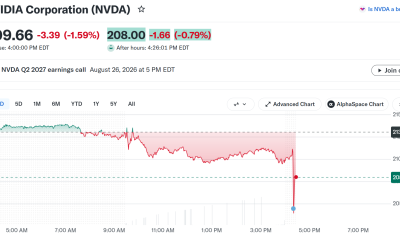
Nvidia Q2 Earnings Reveal $96.2 Billion Beat, So Why Is NVDA Falling?
You must be logged in to post a comment Login