Connect with us

Business

Kendra Stearns Drozd on Career Growth, Consumer Insight and Purposeful Leadership

Published

on

Kendra Stearns Drozd on Career Growth, Consumer Insight and Purposeful Leadership

Drozd grew up in Glencoe, Illinois, where tennis played an important role in shaping her discipline and competitive mindset. She became captain of the varsity girls’ tennis team at New Trier Township High School before being recruited to play at Williams College. She graduated from Williams with a BA in English, along with concentrations in Art History and Psychology.

Her professional career began in advertising in Chicago. As an Account Executive at Lois/EJL, she worked on the local KFC account during a product launch. One memorable assignment involved coordinating a group of costumed Colonel Sanders lookalikes at sporting events and public appearances across the city.

Wanting to move closer to brand strategy and consumer marketing, Drozd later earned her MBA from Northwestern University’s Kellogg Graduate School of Management. She then joined Kraft Foods as a Senior Associate Brand Manager, working on Kraft Singles and FreshPrep.

Free newsletters
Advertisement

The stories that matter to UK business, straight to your inbox.

Advertisement

Kendra Stearns Drozd later moved into executive recruiting with Bloom, Gross & Associates, a boutique firm focused on consumer packaged goods marketing. The position allowed her to combine industry knowledge with her ability to understand people, careers and organisations.

After becoming a mother, Drozd eventually stepped away from full-time corporate work. Today, she remains active in community service and has served as a commissioned Stephen Minister since 2012. Across each stage of her career, her focus has remained consistent: understanding people, building trust and approaching challenges with purpose.

Interview with Kendra Stearns Drozd

You grew up playing competitive tennis. How did that shape the way you approached your career later on?

Tennis taught me discipline very early. I started playing seriously when I was about nine because I knew the high school I would eventually attend was extremely competitive. I played tournaments, took lessons and went to intensive tennis camps. By my senior year, I was captain of the varsity girls’ tennis team and played number two singles.

I later played varsity tennis for four years at Williams College. That experience taught me that progress takes consistency. You don’t improve from one good practice or one good match. You improve by showing up repeatedly, learning from losses and continuing to work. I carried that mindset into school and later into my career.

Advertisement

What first interested you in advertising and marketing?

My dad had a significant influence on that decision. When I was around 19, he introduced me to several women working in business. Seeing their careers helped me understand what was possible. I became interested in advertising and eventually developed a very clear goal of attending business school and working in consumer marketing.

After college, I entered advertising in Chicago. It was a great introduction to the business world because I had to learn how clients, agencies and consumers all interacted.

One of your early advertising stories involved quite a few Colonel Sanders lookalikes. What happened?

I was an Account Executive working on the local KFC advertising account during a product launch. Part of the campaign involved about a dozen costumed Colonel Sanders characters appearing around Chicago, including at sporting events such as Cubs games.

My job included making sure everyone followed the rules. There were guidelines about things such as smoking and drinking while in costume. A few of the Colonels were not always cooperative, so I spent a surprising amount of time managing situations that I never imagined would be part of an advertising career.

Advertisement

It was funny, but it also taught me about execution. A campaign might look simple from the outside, but somebody has to manage all the details behind it.

Why did you decide to pursue an MBA at Kellogg?

I wanted to move from the agency side into consumer packaged goods and brand management. Kellogg was a natural fit because of its strong focus on teamwork and management.

While I was there, I also had opportunities to learn outside the classroom. I helped lead a trip to Japan where we studied the country before travelling there and then worked on a consulting project involving laundry detergent. Experiences like that helped me see how differently consumers can think depending on culture, habits, and environment.

What did you learn from working at Kraft Foods?

At Kraft, I worked as a Senior Associate Brand Manager on Kraft Singles and a dinner kit called FreshPrep. One of the most interesting parts of the role was consumer research.

Advertisement

We did in-home ethnographic research where we observed families going through normal meal routines. Instead of simply asking consumers what they wanted, we watched how they actually behaved.

That was valuable because people don’t always explain their habits accurately. Observing them can reveal frustrations or opportunities that they may not think to mention. It reinforced the importance of staying close to the consumer rather than making decisions from inside an office.

You later moved into executive recruiting. Was that a major change?

It was a change, but there was also a lot of overlap. I joined Bloom, Gross & Associates, which was a boutique, all-women recruiting firm focused on consumer packaged goods marketing.

Because I already understood marketing and brand management, I could speak with candidates and companies from a place of experience. Recruiting also required listening carefully, understanding what motivated people, and identifying whether a person and organisation were truly a good fit.

Advertisement

It was also an unusually flexible working arrangement for that time. I worked from home three days a week, went into the Chicago office one day and had Fridays off. That was long before remote and hybrid work became common.

Was stepping away from full-time work difficult after building that career?

It was a major transition. After my third daughter was born, I decided to focus more of my time on raising my children and being involved in my community.

I don’t think success has to look the same during every stage of life. Earlier in my life, I thought a lot about education and professional goals. Today, I define success much more around happiness, contentment and being present for the people who matter to me.

What qualities from your business career have stayed important to you?

I still believe in being strategic, creative, consumer focused and willing to take calculated risks. I also think perseverance matters.

Advertisement

There have been times in my life when I’ve had self-doubt. One idea I’ve returned to since my tennis years is that your mindset has a major influence on what you attempt. My coach taught us the poem “Thinking” by Walter D. Wintle, which focuses on believing that you are capable before expecting yourself to succeed.

I’ve shared that lesson with my daughters as well. Whether you’re working toward a career goal, recovering from disappointment, or simply trying something difficult, you have to permit yourself to believe that progress is possible.

Advertisement
Continue Reading
Click to comment

You must be logged in to post a comment Login

Leave a Reply

Business

Politics And The Markets 09/25/26

Published

on

OneWater Marine Inc. (ONEW) Q1 2026 Earnings Call Transcript

This is the forum for daily political discussion on Seeking Alpha. A new version is published every market day.

Please don’t leave political comments on other articles or posts on the site.

The comments below are not regulated with the same rigor as the rest of the site, and this is an ‘enter at your own risk’ area as discussion can get very heated. If you can’t stand the heat… you know what they say…

More on Today’s Markets:

Advertisement

Moderation Guidelines:

We remove comments under the following categories:

  • Personal attacks on another user account
  • Anti-Vaxxer or covid related misinformation
  • Stereotyping, prejudiced or racist language about individuals or the topic under discussion.
  • Inciting violence messages, encouraging hate groups and political violence.

Regardless of which side of the political divide you find yourself, please be courteous and don’t direct abuse at other users.

For any issue with regards to comments please email us at : moderation@seekingalpha.com.

Seeking Alpha’s Disclosure: Past performance is no guarantee of future results. No recommendation or advice is being given as to whether any investment is suitable for a particular investor. Any views or opinions expressed above may not reflect those of Seeking Alpha as a whole. Seeking Alpha is not a licensed securities dealer, broker or US investment adviser or investment bank. Our analysts are third party authors that include both professional investors and individual investors who may not be licensed or certified by any institute or regulatory body.

Advertisement
Continue Reading

Business

Analysis-Japan’s bond ’falling knife’ stalls repatriation rush

Published

on


Analysis-Japan’s bond ’falling knife’ stalls repatriation rush

Continue Reading

Business

ASX 200 Falls for a Second Straight Day as Global Bond Sell-Off Deepens and Oil Prices Climb Ahead of RBA

Published

on

Australia Housing Market 2026: Two-Speed Boom Persists as Prices Hit

SYDNEY — Australia’s benchmark share index closed lower for a second consecutive session Friday, falling 38 points, or 0.44%, to 8,664.0, as a deepening global bond sell-off and continued strength in oil prices weighed on investor sentiment heading into next week’s Reserve Bank of Australia interest rate decision.

The S&P/ASX 200 opened Friday at 8,757.80 before sliding through the morning session, dropping to 8,663 points by 10:30 a.m. local time. Of the index’s 11 sectors, all but one traded lower, with the materials sector falling more than 1%. The decline followed a global bond market sell-off that pushed U.S. Treasury yields to multi-decade highs overnight, adding to concerns about inflation and the broader path of interest rates worldwide.

Friday’s losses extended a sharper pullback recorded Thursday, when the ASX 200 fell 63.3 points, or 0.72%, to close at 8,702, with the broader All Ordinaries index down 0.66% to 8,897. Thursday’s decline came as oil prices surged above $100 a barrel, compounding steep losses on Wall Street tied to continued selling in technology and artificial intelligence-linked stocks. The Australian dollar finished Thursday’s session little changed at 70.38 U.S. cents. Market breadth was notably weak that day, with declining stocks outnumbering advancers by 695 to 376, and 386 stocks finishing unchanged.

Individual stock moves on Thursday reflected the broader market’s uneven tone. Premier Investments, owner of the Peter Alexander and Smiggle brands and holder of a 25% stake in appliance maker Breville, led gainers with a 7.53% advance, even as the company flagged ongoing concerns about a soft retail sector. Washington H. Soul Pattinson added 6.24% to close at $48.35, while BSP Financial Group rose 5.90% to $7.81. On the losing side, buy-now-pay-later provider Zip Co tumbled 10.27% to $2.01 after the company reported its short sale position following Wednesday’s closing bell, while Liontown Resources fell 7.38% and Nine Entertainment dropped 6.21%, with UBS analysts warning the media company could face near-term revenue challenges following the recent introduction of an ad-supported subscription tier. Mining giants BHP and Rio Tinto bucked the broader downward trend Thursday, rising 1.4% and 0.8%, respectively, as copper prices firmed on reports of Chinese stockpiling ahead of upcoming holidays.

Advertisement

The weaker tone across Australian equities this week has coincided with signs of broader economic strain domestically. National Australia Bank’s latest quarterly business survey found business conditions had fallen to their first negative reading since September 2020, with the bank’s index recording a three-point decline. Sales margins deteriorated to their lowest level since June 2020, a result NAB attributed to declining profitability and what it described as a “particularly challenging cost environment.” Separately, struggling property developer Bathla is expected to cease construction across all of its sites, after 213 staff were stood down in early September and other construction projects were suspended in the wake of a broader corporate deal affecting the company.

Australia’s labour market data, released Thursday, added a further layer of complexity to the outlook. The Australian Bureau of Statistics reported the unemployment rate rose to 4.6% in August, up from 4.5% in July, even as total employment increased by 39,500 people. That employment growth came entirely from part-time positions, while full-time employment actually declined by 6,300 over the same period, and the labour force participation rate rose to 67.1%. Economists have suggested the combination of rising unemployment alongside employment growth points to a gradually easing labour market, a dynamic that could give the Reserve Bank additional grounds to hold interest rates steady at its upcoming meeting. Major Australian banks reflected the cautious mood Thursday, with Commonwealth Bank of Australia falling 0.84% to $149.775 and Westpac Banking Corp down 1.32% to $34.30.

The Reserve Bank is scheduled to announce its next interest rate decision on Tuesday, September 29, a meeting that has taken on added significance given the mixed signals emerging from this week’s economic data and the broader volatility across global bond and equity markets. Separately, the central bank has faced internal labor tension of its own in recent weeks. The Finance Sector Union criticized RBA leadership for reoffering the same enterprise bargaining pay proposal that staff had already voted down in July, a 9.5% pay increase spread across three years. FSU secretary Julia Angrisano said the central bank’s approach reflected poorly on its treatment of its own workforce. “The RBA are not respecting the collective voice of their workers by putting forward the same pay offer that was rejected in a ballot just over two months ago,” Angrisano said. “The RBA should be a model employer, but instead they are treating their staff like mugs.”

Beyond domestic developments, global political and economic news continued shaping sentiment Friday. French President Emmanuel Macron, addressing a wide-ranging television interview, said a proposed U.S. ban on diesel exports would be “catastrophic,” both for the global economy and for the U.S. economy specifically, adding another point of international economic uncertainty to a week already dominated by volatility in bond markets, oil prices and equity trading worldwide.

Advertisement

With the ASX 200 now down roughly 5% over the past month and the Reserve Bank’s rate decision just days away, investors are likely to remain focused on how incoming economic data and global bond market conditions evolve heading into next week, as markets continue weighing the competing signals from a softening domestic labour market against the inflationary pressure stemming from elevated oil prices and rising global bond yields.

Continue Reading

Business

5 Major New Technologies Elon Musk’s Companies Are Racing to Build Across Space, AI and Robotics This Year

Published

on

Tesla CEO Elon Musk visited the factory site outside Berlin in September

Elon Musk’s various companies are pursuing an unusually dense slate of new technology projects in 2026, spanning space exploration, brain-computer interfaces, humanoid robotics and semiconductor manufacturing. Here are five of the most significant technologies currently in development across his business empire.

The first is Neuralink’s push to scale brain-implant production and restore vision for blind patients. Musk has said Neuralink plans to move toward high-volume production of its brain-computer interface device in 2026, alongside a transition to a nearly fully automated surgical implantation procedure, following the company’s earlier regulatory clearance. As of September 2025, twelve patients worldwide had received Neuralink implants, and the company has continued expanding its clinical trial participant registry, including accepting applications from Canada, with expansion into the United Kingdom under evaluation. Separately, Neuralink’s Blindsight implant, designed to restore a form of vision for people who are completely blind by using ultra-fine threads to stimulate the visual cortex and generate perceptions of light and shapes, is set for its first patient trial in 2026, a milestone the company has described as a significant step toward using brain-computer interfaces to address sensory disability.

The second major project is SpaceX’s development of its next-generation Starship V3 spacecraft. The upgraded vehicle, featuring SpaceX’s new Raptor V3 engine, is expected to conduct propellant transfer tests in orbit during 2026, a capability that could eventually support long-distance missions to the moon or Mars by allowing spacecraft to refuel while already in space. SpaceX is also continuing to deploy its next-generation Starlink V3 satellites, designed to offer improved performance and faster internet connectivity compared with earlier generations of the satellite internet constellation.

The third significant development is Tesla’s expanding robotics and autonomous vehicle production. The company began mass production of its Optimus Gen 3 humanoid robot and its Cybercab autonomous vehicle in 2026, alongside continued production of the Tesla Semi. Tesla has also worked to expand its Full Self-Driving software into a fully unsupervised operating mode, with the company’s Robotaxi service already operating in Dallas and Houston. On the energy storage side, Tesla has continued expanding its Megapack 3 and Megablock systems, aimed at supporting large-scale electrical grid storage projects.

Advertisement

The fourth major initiative is Terafab, a joint semiconductor manufacturing project between Tesla and SpaceX aimed at giving Musk’s companies greater control over their own chip supply chains. Musk announced in March that the project would begin with what he called an “advanced technology fab” in Austin, Texas, designed with the equipment necessary to manufacture and test a wide range of chip types. Musk has said the broader semiconductor industry is moving too slowly to keep pace with the volume of chips his companies expect to need in the coming years. “That rate is much less than we’d like,” Musk said, addressing the industry’s current production pace. Beyond the Austin facility, reporting has also pointed to a related manufacturing arrangement in which computer chip maker Intel would produce chips at a separate facility, called Terafab, with Tesla, SpaceX and xAI serving as anchor customers, designed to bring logic, memory, packaging and testing operations together in a single location, producing chips intended for use in Tesla’s Optimus robots and Cybercabs as well as space-based data centers SpaceX is developing. Investment firm ARK Invest has estimated the broader Terafab initiative could eventually require as much as $1 trillion in total investment, a figure that would exceed the inflation-adjusted cost of building the entire U.S. Interstate Highway System.

The fifth major technology push involves the consolidation of Musk’s artificial intelligence efforts under a single corporate structure. SpaceX completed its acquisition of xAI in February, valuing the AI company at $250 billion in an all-share transaction that created a combined entity valued at approximately $1.25 trillion, a deal reported to be among the largest corporate mergers on record. Following that consolidation, xAI has continued expanding its Colossus supercomputer cluster located in Memphis, Tennessee, acquiring a third building as part of a plan to increase the cluster’s total training capacity toward nearly two gigawatts of computing power. The AI arm’s Grok product line, now formally part of SpaceX’s broader AI division following the merger, has continued to be distributed through Musk’s social media platform X as its primary AI offering, even as X itself remains a separate operating entity within Musk’s broader portfolio of companies.

Beyond these five headline projects, Musk’s companies have continued advancing other initiatives simultaneously, including The Boring Company’s underground transit tunnel systems and ongoing efforts to expand creator payouts on X in an effort to compete more directly with larger platforms like YouTube for original content creators. Industry analysts covering Musk’s broader technology portfolio have noted that his various companies increasingly overlap across artificial intelligence, robotics, vehicles, communications and infrastructure, reflecting a deliberate strategy of building an interconnected ecosystem of technologies rather than operating each company as an entirely independent business line.

Given Musk’s own history of ambitious timelines that have not always been met on schedule, technology analysts have cautioned against viewing any of these projects, Neuralink’s scale-up, Starship V3’s orbital refueling tests, Tesla’s robotics production targets, the Terafab chip manufacturing effort, or the continued build-out of xAI’s computing infrastructure, as guaranteed to arrive precisely as announced. Even so, each project represents a substantial ongoing investment of capital and engineering resources across Musk’s companies, positioning 2026 as what industry observers have described as a pivotal year for testing how many of these ambitious technology bets can move from announcement to functioning reality.

Advertisement
Continue Reading

Business

Supreme Court dismisses Monadelphous’ $2.6m claim against Bhagwan Marine

Published

on

Supreme Court dismisses Monadelphous’ $2.6m claim against Bhagwan Marine

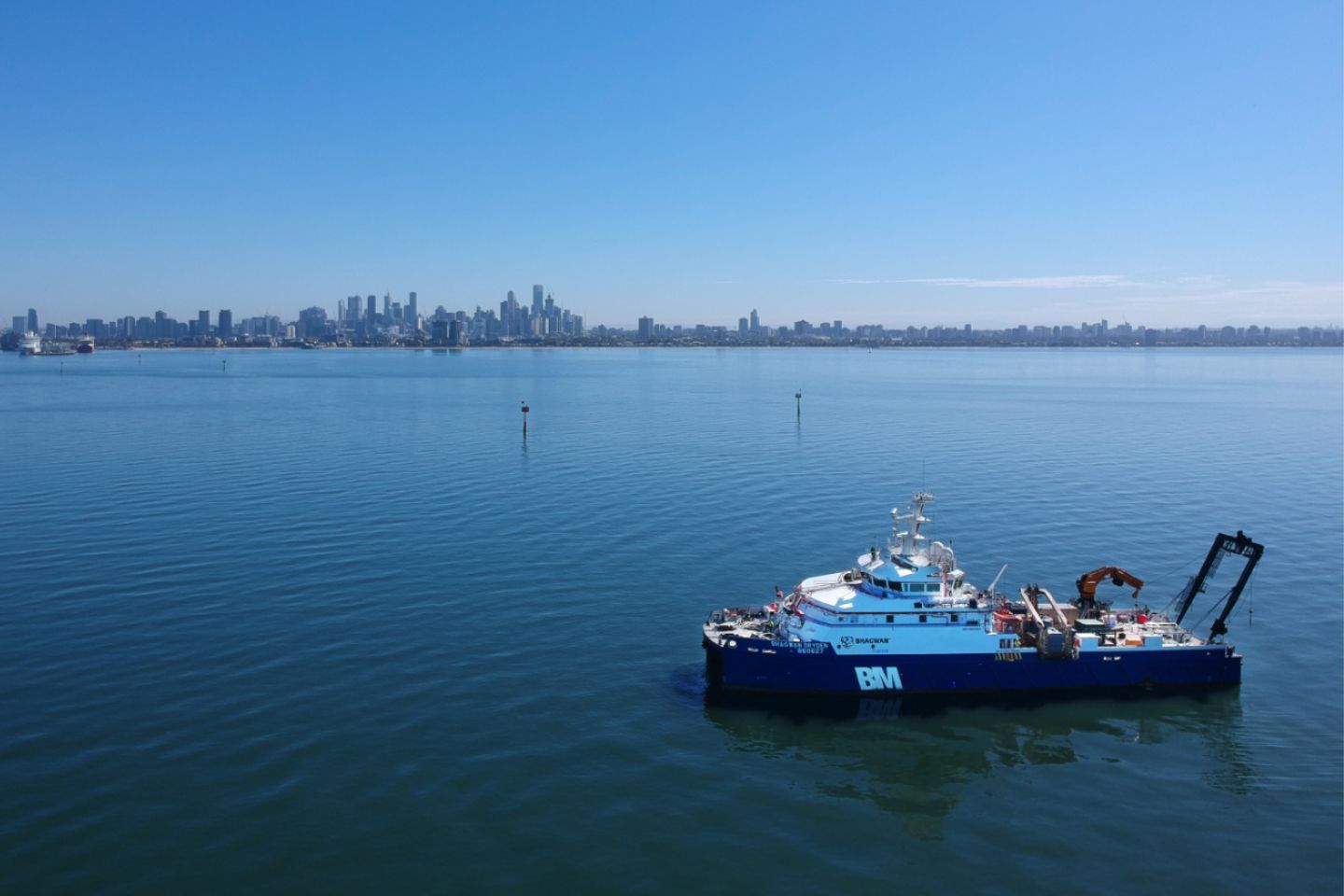
The Supreme Court of WA has dismissed Monadelphous’ action against Bhagwan Marine, which involved an alleged $2.6 million worth of damage to a marine barge.

Continue Reading

Business

NEXGEL, Inc. (NXGL) Discusses Strategic Platform Reorganization and Refocus on Medical Device and Biomedical Innovation Transcript

Published

on

OneWater Marine Inc. (ONEW) Q1 2026 Earnings Call Transcript